• 10 Reasons to Remember…
  • A Brief Word About…
  • About
  • For One Week Only
  • Happy Birthday
  • Monthly Roundup
  • Old-Time Crime
  • Other Posts
  • Poster of the Week
  • Question of the Week
  • Reviews
  • Trailers

thedullwoodexperiment

~ Viewing movies in a different light

thedullwoodexperiment

Tag Archives: Romance

Entanglement (2017)

16 Friday Feb 2018

Posted by dullwood68 in Movies

≈ Leave a comment

Tags

Comedy, Diana Bang, Drama, Jason James, Jess Weixler, Review, Romance, Suicide, Thomas Middleditch

D: Jason James / 85m

Cast: Thomas Middleditch, Jess Weixler, Diana Bang, Randal Edwards, Marilyn Norry, Eric Keenleyside, Johannah Newmarch, Jena Skodje, Shauna Johannesen

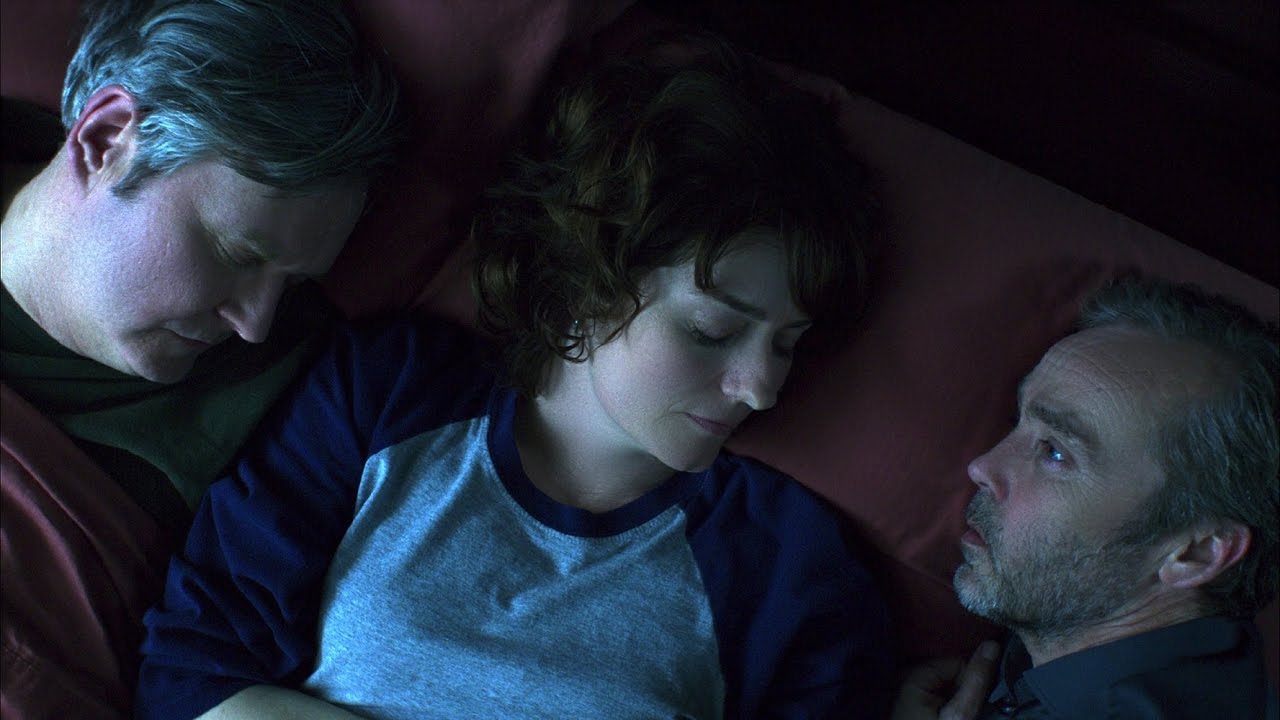
When we first meet Ben Layten (Middleditch), he’s trying to kill himself. He’s recently divorced, increasingly depressed, and all alone. But death isn’t going to let him off so easily, and despite cutting his wrists, Ben survives. As he begins to get his life back on track, he learns he almost had a sister: his parents (Norry, Keenleyside), believing they wouldn’t have children of their own, had adopted a baby girl. But on the very day the baby was given to them, Ben’s mother discovered she was pregnant. The baby was returned for adoption, Ben was born nine months later, and now Ben has a mission: to find his near-sister and see how she’s turned out, and if he’s lucky, to establish a brother-sister relationship with her. His search leads him to Hanna Weathers (Weixler), a free-spirited young woman who slowly brings Ben out of his shell. In the process, Ben begins to find more and more reasons to continue living, and ways of putting the past behind him. But then he learns a truth about Hanna that challenges his perception of his new-found happiness…

Entanglement is the kind of indie movie that comes along several times a year, plays at various festivals, gets a good buzz behind it, and then goes out into the big wide world of cinema releases or VOD, and then promptly vanishes from people’s radar. It’s not the movie’s fault – after all, there are just sooooo many movies out there, all jostling for our attention – but it does make finding such a movie all the more rewarding. This is the case here, with the combination of Jason Filiatrault’s adroit, cleverly constructed screenplay, and Jason James’ easy-going yet focused direction. Between them they ensure that Ben’s attempts to make sense of his life and where it’s going aren’t just the actions of a pretentious, navel-gazing nebbish (which could have easily been the case), but a sincere and heartfelt look at how easy and difficult it can be to find the courage to move on after a traumatic experience. Deep down, Ben knows he can move on, but he doesn’t know how to; being with Hanna helps him find out – just not in a way he ever expected. (Some viewers may find themselves ahead of Ben for most of the movie, but rest assured, this doesn’t detract from the enjoyment to be had in waiting for him to catch up.)

The movie isn’t afraid to throw in some whimsical fantasy elements, such as the planets on a bowling alley wall that begin to rotate while Hanna speaks to Ben, or the puppet in the office of Ben’s therapist that takes him to task over his relationship with Hanna. These elements serve as psychological cues for Ben’s state of mind, and are introduced at various points in the narrative, but with a great deal of circumspection attached. Are these signs of progress, or backward steps? Filiatrault wisely leaves it up to the viewer to decide. By the time the truth about Hanna is revealed, the movie has become intriguing and absorbing, and thanks in no small part to the performances of Middleditch and Weixler. Middleditch is self-contained and vulnerable as Ben, giving a shy, diffident portrayal that is affecting and quietly impressive. Weixler, an actress who deserves to be better known, is more extrovert but in a way that is considered and entirely apt for her character. There’s good support too from Bang as Tabby, Ben’s neighbour and one true friend. The whole thing plays out at a good pace, there’s sterling work from DoP James Liston, and it’s all topped off by a terrific soundtrack.

Rating: 8/10 – a movie about connections, including the ones we can’t see but which have the most impact in our lives, Entanglement is a light-hearted, comic, yet earnest movie that achieves its modest ambitions with ease; quirky and intelligent, plausible and deftly handled, it’s another indie movie wih buckets of charm and a winning sensibility.

Share this:

  • Click to share on X (Opens in new window) X
  • Click to share on Facebook (Opens in new window) Facebook
  • More
  • Click to print (Opens in new window) Print
  • Click to email a link to a friend (Opens in new window) Email
Like Loading...

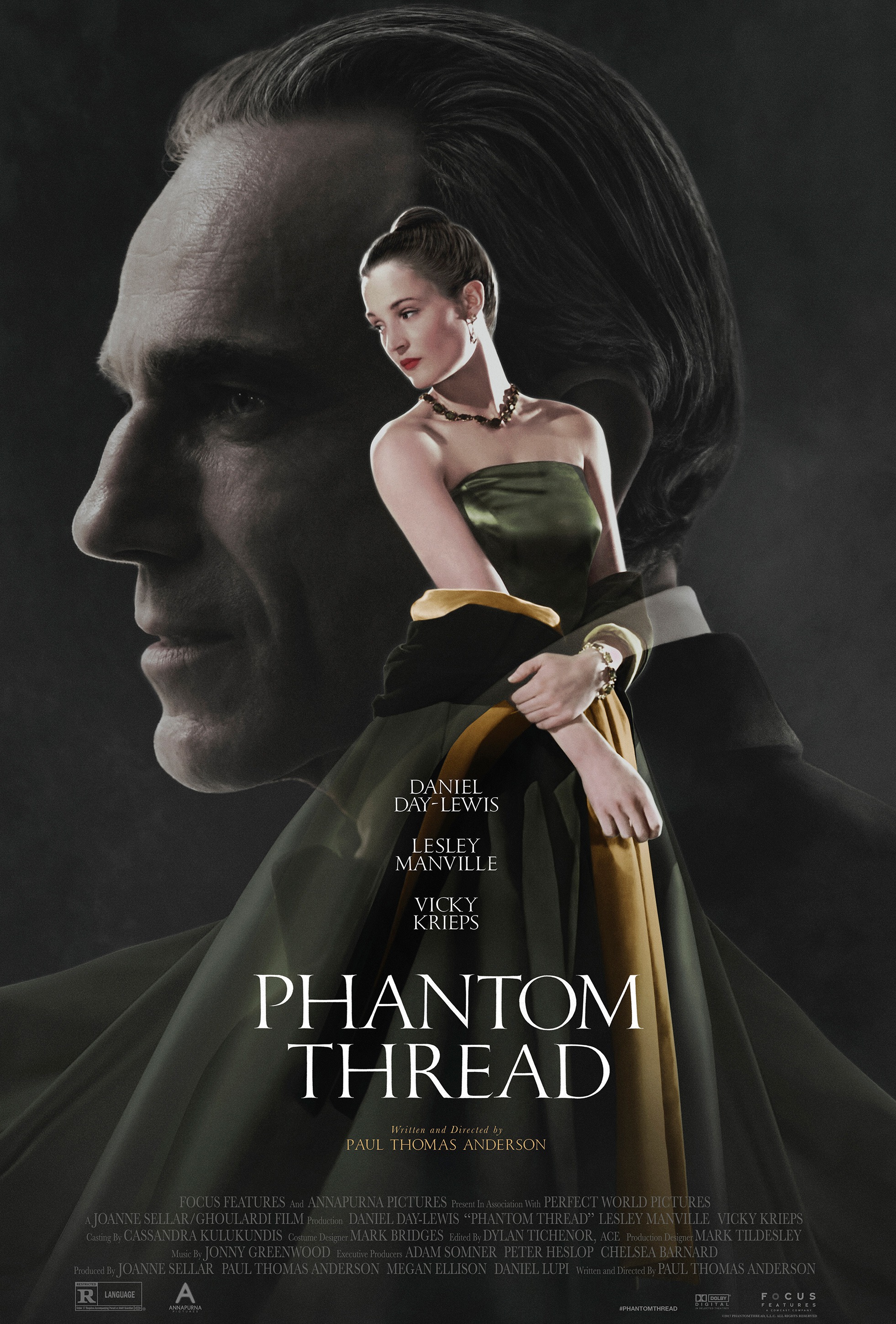
Phantom Thread (2017)

14 Wednesday Feb 2018

Posted by dullwood68 in Movies

≈ 2 Comments

Tags

Daniel Day-Lewis, Drama, Haute couture, Lesley Manville, Paul Thomas Anderson, Review, Romance, The Fifties, The House of Woodcock, Vicky Krieps

D: Paul Thomas Anderson / 130m

Cast: Daniel Day-Lewis, Vicky Krieps, Lesley Manville, Camilla Rutherford, Gina McKee, Brian Gleeson, Harriet Sansom Harris, Lujza Richter, Julia Davis

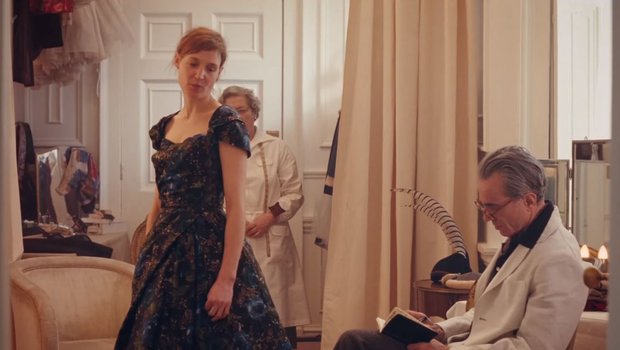
In Paul Thomas Anderson’s latest movie, we’re introduced to the splendidly named Reynolds Woodcock (Day-Lewis), a London-based couturier to those with money and prestige and power. Woodcock’s name is a byword for quality, and his meticulous designs and ability to match the outfit to the client has brought him his own versions of his clients’ money, prestige and power. He is fastidious, particular, uncompromising, and resolute. When he meets a waitress, Alma (Krieps), a relationship develops between them, and she moves into the home which also serves as his fashion house. Alma becomes Woodcock’s lover, and also his muse and assistant. But Woodcock proves to be a difficult partner to please. His daily routines are ingrained and not to be interfered with, and his idea of a relationship is that it comes second to the work he does. Alma rails against this, but it’s only when Woodcock falls ill and she nurses him back to health that their mutual need for each other becomes apparent and things improve between them. But Woodcock’s mercurial yet pedantic nature soon reasserts itself, and Alma’s importance in his life becomes even more precarious…

Coco Chanel once said, “Dress shabbily and they remember the dress; dress impeccably and they remember the woman.” In the world of Reynolds Woodcock, he would no doubt amend Chanel’s statement to read “remember the designer.” Woodcock is a creative genius who basks in the reflected glory of the outfits he designs, his position within the upper echelons of 50’s London high society assured because of the work ethic he has devised, and because he doesn’t deviate from that work ethic. And he expects everyone around him to fit in with that work ethic also; for Woodcock, nothing is more important than the dress or the outfit he’s creating. The beauty of Anderson’s foray into The House of Woodcock is the challenge to his authority from Alma. Can she break through the barriers that Woodcock has erected over the years, and can she get him to focus on her rather than his designs? Anderson wants you to think she can, but at the same time he won’t make it easy for her, and his script is often a series of brutal rebuttals punctuated by moments of calm that offer both Alma and the viewer a sense of hope. Alma, though, is just as stubborn as Woodcock, and just as tenacious in what she wants. This is force majeure for lovers.

Anderson is on dazzling form here, his own considerable creative energies in service to a story that is formed of strong emotional undercurrents and perceptive examinations of the shifting balances of power within a relationship that is both mutually beneficial and destructive. It all plays out against a rarefied world that’s much like love itself: heightened and demanding, but also incredibly rewarding. Woodcock and Alma battle against each other for dominance, and their war brooks no attrition, and yet Anderson never allows the viewer to lose sight of the fact that they are in love with each other. It’s a compelling, sometimes devastating story, and each twist and turn is superbly orchestrated by Anderson, and delivered impeccably by Day-Lewis and Krieps, their performances drawing you in and making you understand fully the characters and their motivations. They’re ably supported by Manville as Woodcock’s no-nonsense yet sensitive sister Cyril, tremendous cinematography and production design (by an uncredited Anderson, and Mark Tildesley respectively), and yet another hugely impressive score by Jonny Greenwood. This is a beautiful, meticulously assembled movie that looks austere from the outside, but which has an energy and a passion seen all too rarely in modern cinema.

Rating: 9/10 – a movie that explores a world few of us will have any direct knowledge of, but which guides us through it with so much assurance, Phantom Thread is like a love letter to a different age: enchanting, exhilarating, and exquisitely depicted; on this evidence, Anderson is possibly the finest writer/director working today, such is the confidence he shows here in detailing both the narrative and the characters.

Share this:

  • Click to share on X (Opens in new window) X
  • Click to share on Facebook (Opens in new window) Facebook
  • More
  • Click to print (Opens in new window) Print
  • Click to email a link to a friend (Opens in new window) Email
Like Loading...

The Space Between Us (2017)

04 Sunday Feb 2018

Posted by dullwood68 in Movies

≈ Leave a comment

Tags

Asa Butterfield, Britt Robertson, Carla Gugino, Catch Up movie, Drama, Gary Oldman, Mars, Peter Chelsom, Review, Romance, Sci-fi

D: Peter Chelsom / 121m

Cast: Asa Butterfield, Gary Oldman, Carla Gugino, Britt Robertson, BD Wong, Janet Montgomery, Gil Birmingham, Colin Egglesfield

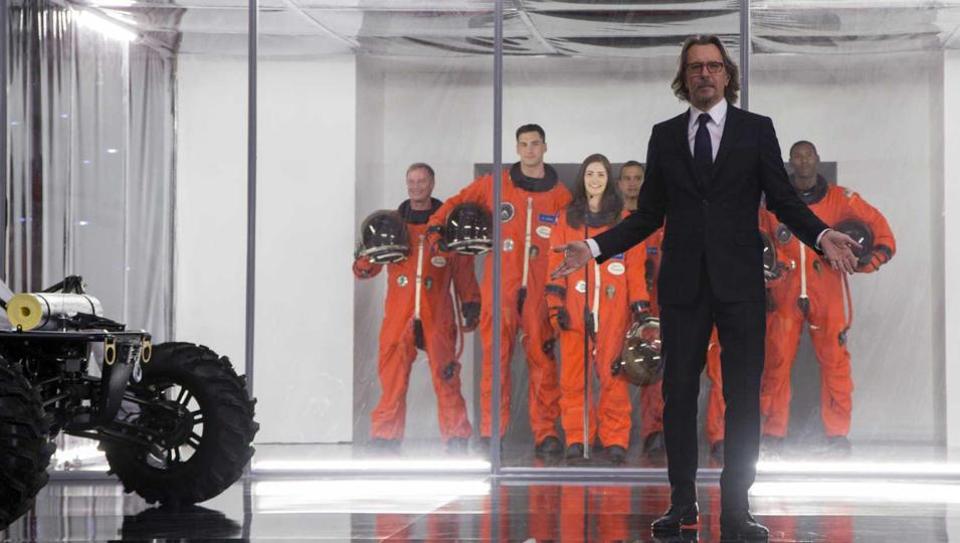
In a strange version of the future that appears to be happening today, space exploration bigwig Nathaniel Shepherd (Oldman) announces the latest mission to Mars, and the crew that are going there to continue the Red Planet’s colonisation. But in one of those “What if?” scenarios that jump start way too many movies, the lone female astronaut, Sarah Elliot (Montgomery), proves to be pregnant. She gives birth to a son on Mars, and promptly dies from eclampsia. And from that moment on, The Space Between Us throws all sense and logic out of the window, and gallops headlong towards absurdity with all the gusto of a starving man at an all-you-can-eat buffet. It’s unsurprising to learn that the movie has been in development in one form or another since 1999, when it was titled Mainland and its central protagonist was a boy born on the Moon. Put in turnaround until it was picked up again in 2014, the basic idea has remained the same – boy born in space wants to visit Earth – but the idea that his physiology would be compromised, perhaps fatally, has also remained. Tough break for the kid, huh? Just don’t think it about it too much, though – no, really, don’t.

The Space Between Us is a movie that wants to tell its cute romantic story against a backdrop of new-fangled technological advancement and old school moral dilemmas. It’s a movie that bounces from scene to scene with no clear through line, and which lets its lovers on the run scenario get sillier and sillier as Gardner and his only friend on Earth, Tulsa (Robertson), avoid capture by stealing cars at every turn staying one step ahead of a pursuing Shepherd and astronaut-nominally-playing-stepmother-to-Gardner Kendra (Gugino) (with all the technology at Shepherd’s disposal you wonder how he’s so bad at catching up to them). Gardner’s mission on Earth is to find his father, something that should be easy enough as he has a photo of the man with his mother, but the script throws huge curve balls in the way of this, including a detour to a shaman (Birmingham), and a sidetrip to an ER where Gardner’s bone implants (don’t ask) barely register as a concern. And along the way, Gardner gets a crash course in human relationships including how not to sound weird, and losing your virginity (not to be funny, but does anyone remember that Eighties movie, Earth Girls Are Easy?).

There are far too many moments and scenes where the average viewer will be asking themselves, Really? Most of them involve Oldman, whose performance can best be described as desperately seeking relevance. Stuck with some of the movie’s worst dialogue, the more than capable Oldman has no redress against the inanities of both the script and his character. It’s a similar situation for Butterfield, playing a role that requires him to be a science whizz on the one hand but one who’s learned absolutely zero social skills while growing up on Mars (yes, he’s smart and dumb at the same time). Gugino and Robertson have interchangeable roles once you take out the sex, and everyone else has no option but to go along with it all and hope for the best. In the director’s chair, Chelsom keeps things moving in the haphazard way the script (by Allan Loeb) dictates, but he appears to lose interest early on, while Barry Peterson’s sharp and detailed cinematography proves to be one of the movie’s few blessings. At several points, Gardner asks people, What’s your favourite thing about Earth? One answer seems obvious: being able to avoid seeing this inane, stupid movie.

Rating: 3/10 – with its tortured science (just think about the environment Gardner has been living in since birth and ask yourself, would he really suffer on Earth?), and equally tortured YA theatrics, The Space Between Us is a movie that trips over itself continually in its efforts to tell a coherent, relatable story; a waste of everybody’s time and effort, the hint should have been taken back in 1999 when rewrites on the original Mainland script proved unworkable.

Share this:

  • Click to share on X (Opens in new window) X
  • Click to share on Facebook (Opens in new window) Facebook
  • More
  • Click to print (Opens in new window) Print
  • Click to email a link to a friend (Opens in new window) Email
Like Loading...

The Clapper (2017)

02 Friday Feb 2018

Posted by dullwood68 in Movies

≈ 1 Comment

Tags

Amanda Seyfried, Comedy, Dito Montiel, Drama, Ed Helms, Infomercials, Literary adaptation, Review, Romance, Tracy Morgan

D: Dito Montiel / 90m

Cast: Ed Helms, Amanda Seyfried, Tracy Morgan, Adam Levine, Russell Peters, P.J. Byrne, Brenda Vaccaro, Leah Remini

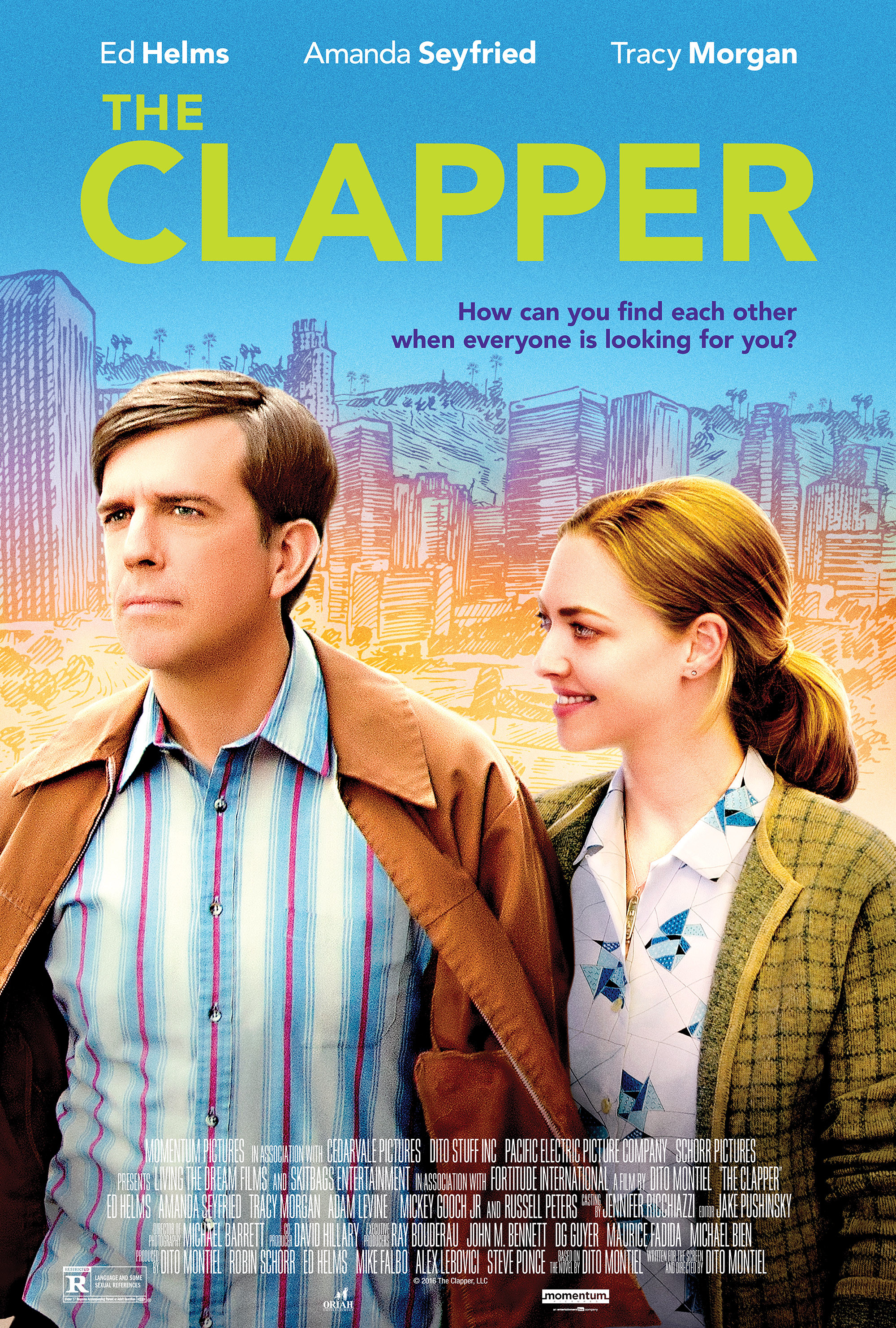
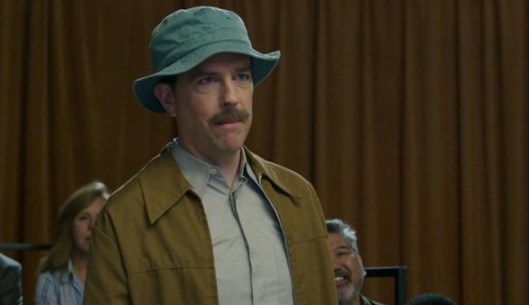
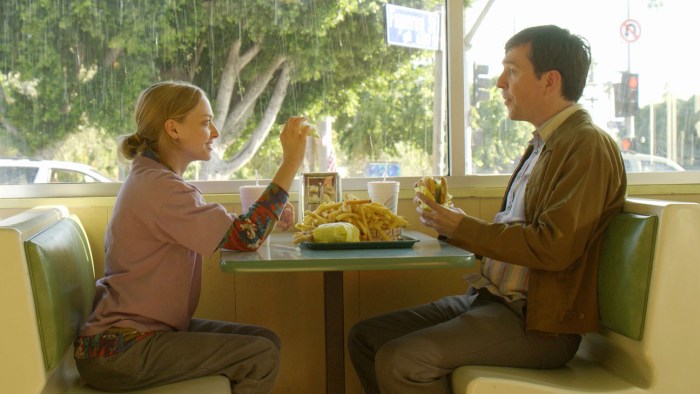
Eddie Krumble (Helms) is a professional clapper, a paid audience member of informercials who sometimes gets paid extra for asking a question, or standing out from the crowd in some other way. It’s not the best paid job in the world, but Eddie is kept busy, and along with his best (and only) friend, Chris (Morgan), he makes a good enough living to suit his needs. He’s also struck up an unlikely friendship with a young woman, Judy (Seyfried), who works at a gas station. But just as they begin dating, a late night TV show shines a spotlight on Eddie’s clapper activities, and asks the question, Who is the Clapper? This unwanted attention causes problems for Eddie as he doesn’t want the exposure, and it leads to Judy being fired from her job at the gas station. Not knowing how to contact her, and with the TV show still trying to track him down, Eddie hits on an idea that he thinks will keep everyone happy: he’ll appear on the show and ask people to help him find Judy. But Eddie’s efforts backfire, and soon it looks as if he and Judy are destined never to be reunited.

snap1.44861.4

In adapting his own novel, writer/director Dito Montiel has crafted an uneven yet enjoyable movie that tries to take a number of heavy-handed potshots at lowest common denominator television, while also featuring a sweetly nuanced romance, and a deft exploration of the lasting effects of overwhelming grief. In targeting the exploitative nature of some US TV shows, Montiel’s approach feels a little old and past its time, and it lacks the satirical bite that’s needed for his barbs to hit home with the required effect. The burgeoning romance between Eddie and Judy is handled with a lightness of touch that is magnified by the just-this-side of overbearingly cute performances by Helms and Seyfried. In their capable hands, what could have been sickly and off-putting is instead winning and delightful, a meeting of unsure hearts and minds with each needing to protect themselves as much as possible while also trying to find the courage to make a commitment. Their romance is touching and sincere, and the awkwardness each feels is tenderly expressed on both sides, with Eddie’s nervous ramblings a perfect foil for Judy’s equally nervous uncertainty.

But where the movie really works is in its depiction of the emotional troubles affecting Eddie, and his consternation at being singled out. Helms is terrific as Eddie, a man just trying to get along without being noticed, and trying to put a devastating trauma behind him. There’s a frailty and an anger and a desperation in Eddie, and they all threaten to leak out and overwhelm him, and Helms is at his best when showing us how his character is trying to keep all these feelings in check. There are moments when it seems as though Montiel has let Helms run with a scene, and if this is true, then it was a wise decision; this is one of Helms’s finest performances. However, it’s a performance that can’t make up for some of the other decisions Montiel has made, such as the late inclusion of Vaccaro as Eddie’s mother (there just to push Eddie into a necessary narrative corner), and the length of time that Eddie remains anonymous (when she wants to, Judy finds his agent/manager with ease; yet the TV show struggles for weeks to do the same thing). The tone of the piece changes too often as well, with the disparate storylines not always fitting well together. Nevertheless, this is diverting enough to warrant maybe a repeat watch, just for the pleasure of seeing Helms at his best.

Rating: 7/10 – that man Helms rescues The Clapper from a lower score purely by the strength and subtlety of his performance, and Montiel’s inspired decision to cast him; Morgan too is on good form, and so is Seyfried (even if she’s given less and less to do as the movie progresses), but narrative inconsistencies, and a sense that Montiel hasn’t fully locked in the script, undermine the good work on show elsewhere, leaving the movie feeling likeable yet also incomplete.

Share this:

  • Click to share on X (Opens in new window) X
  • Click to share on Facebook (Opens in new window) Facebook
  • More
  • Click to print (Opens in new window) Print
  • Click to email a link to a friend (Opens in new window) Email
Like Loading...

Monthly Roundup – January 2018

31 Wednesday Jan 2018

Posted by dullwood68 in Movies

≈ 2 Comments

Tags

Adrian Molina, Alexander Payne, Animation, Anthony Gonzalez, Awakening the Zodiac, Chadwick Boseman, Christoph Waltz, Coco, Comedy, Darkest Hour, Downsizing, Drama, Dylan Minnette, Fabrice du Welz, Family Fever, Gael García Bernal, Gary Oldman, Germany, Hallie Meyers-Shyer, History, Home Again, Horror, Jaume Collet-Serra, Joe Wright, Jonathan Wright, Kathrin Waligura, Kristin Scott Thomas, Lee Unkrich, Leslie Bibb, Liam Neeson, Matt Angel, Matt Damon, Meryl Streep, Message from the King, Mexico, Michael Sheen, Nico Sommer, Peter Trabner, Pixar, Reese Witherspoon, Reviews, Romance, Serial killer, Shane West, Steven Spielberg, Suzanne Coote, The Commuter, The Open House, The Pentagon Papers, The Post, The Washington Post, Thriller, Tom Hanks, True story, Vera Farmiga

Awakening the Zodiac (2017) / D: Jonathan Wright / 100m

Cast: Shane West, Leslie Bibb, Matt Craven, Nicholas Campbell, Kenneth Welsh, Stephen McHattie

Rating: 4/10 – no one knew it at the time but the notorious (and uncaptured) Zodiac killer filmed the murders he committed, something cash-strapped couple Mick and Zoe Branson (West, Bibb) discover when they come into possession of one of the reels, and then find themselves and those around them targeted by the Zodiac killer himself; there’s the germ of a good idea lurking somewhere in Awakening the Zodiac, but thanks to a sloppy script, wayward direction, and an indifferent approach to the Zodiac killer himself (by the end he’s just a generic movie-made serial killer), this never gets out of first gear, and settles for trundling along and signposting each narrative development with all the skill and style of a one-legged man at an ass-kicking contest.

Home Again (2017) / D: Hallie Meyers-Shyer / 97m

Cast: Reese Witherspoon, Michael Sheen, Candice Bergen, Pico Alexander, Jon Rudnitzky, Nat Wolff, Lake Bell

Rating: 7/10 – when middle-aged fledgling interior designer Alice (Witherspoon) splits from her unreliable husband (Sheen), the last thing she expects to do is allow three young men trying to break into the movie business to move into her guest house – and then become romantically involved with one of them (Alexander); it’s hard to criticise Home Again because despite it being almost drama-free and the very definition of innocuous, it also just wants to give audiences a good time, and on that very basic level it succeeds, but it’s still possibly the most lightweight romantic comedy of 2017.

Downsizing (2017) / D: Alexander Payne / 135m

Cast: Matt Damon, Christoph Waltz, Hong Chau, Kristen Wiig, Rolf Lassgård, Udo Kier, Søren Pilmark, Jason Sudeikis

Rating: 5/10 – the answer to the world’s population crisis is revealed to be shrinking people to the point where they’re five inches tall, something that sad-sack occupational therapist Paul Safranek (Damon) agrees to with alacrity, but being small proves to be no different from being normal-sized, and soon Paul is having to re-think everything he’s ever thought or believed; a closer examination of Downsizing (under a microscope perhaps) reveals a movie that contains too many scenes that pass by without contributing anything to the overall storyline, and a satirical approach to the idea itself that lacks purpose, and sadly for Payne fans, his trademark wit, making it all a dreary, leaden experience that goes on for waaaaaay too long.

Family Fever (2014) / D: Nico Sommer / 71m

Original title: Familien fieber

Cast: Kathrin Waligura, Peter Trabner, Deborah Kaufmann, Jörg Witte, Jan Amazigh Sid, Anais Urban

Rating: 7/10 – when two sets of parents get together for the weekend at the request of their respective children (who are a couple), none of them are able to deal with the fallout that comes with the revelation of a secret that threatens the security of both marriages; a German comedy/drama that doesn’t always go where the viewer might expect it to, Family Fever revels in the awkwardness and frustration felt by its quartet of main characters, and though it sadly runs out of steam in the last fifteen minutes, by then it’s done more than enough to provide plenty of wicked laughs and affecting drama.

Coco (2017) / D: Lee Unkrich, Adrian Molina / 105m

Cast: Anthony Gonzalez, Gael García Bernal, Benjamin Bratt, Alanna Ubach, Renee Victor, Jaime Camil, Alfonso Arau

Rating: 8/10 – Miguel (Gonzalez) is a young boy whose family has rejected any kind of music in order to focus on selling shoes, which leads him into all sorts of trouble in the Underworld on Mexico’s Day of the Dead, trouble that could also mean his never returning to the land of the living; right now you’re never quite sure how a Pixar movie is going to work out, but Coco is a treat, its mix of clever character design, beautifully rendered animation (naturally), heartfelt storylines, and memorable songs making it one to savour time and again… though, be warned, you will be in tears towards the end.

Darkest Hour (2017) / D: Joe Wright / 125m

Cast: Gary Oldman, Kristin Scott Thomas, Lily James, Stephen Dillane, Ben Mendelsohn, Ronald Pickup, Nicholas Jones, Samuel West

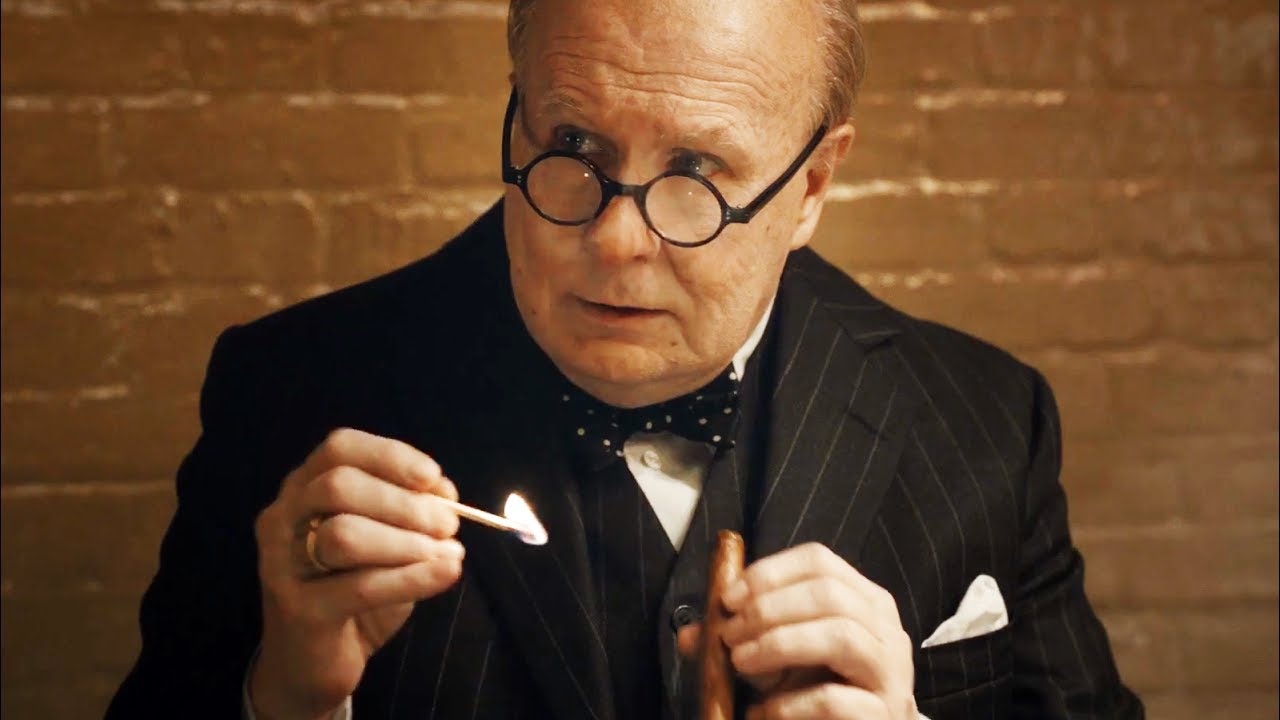
Rating: 8/10 – it’s 1940 and Great Britain is faced with a challenge: who is to lead them against the fast-approaching menace of the Nazis, and if it has to be Winston Churchill (Oldman), then what can be done to undermine him and his authority?; the answer is quite a bit – for the most part – but history is firm on Churchill’s success, and so Darkest Hour, while featuring a superb performance from Oldman, has no choice but to succumb to retelling events that have already been retold numerous times before, and in doing so doesn’t offer the viewer anything new except for a number of very good performances and assured, and surprisingly sinewy direction from Wright.

Message from the King (2016) / D: Fabrice du Welz / 102m

Cast: Chadwick Boseman, Luke Evans, Alfred Molina, Teresa Palmer, Natalie Martinez, Arthur Darbinyan, Lucan Melkonian, Diego Josef, Tom Felton, Chris Mulkey, Jake Weary

Rating: 5/10 – when his younger sister dies in suspicious circumstances in Los Angeles, South African cab driver Jacob King (Boseman) travels there to find out who caused her death and why – and exact revenge; a throwback to the kind of blaxploitation movies made in the Seventies, Message from the King at least refers to King as an angry brother in the traditional sense, but the movie’s plot is hollow, and the likes of Evans and Molina are wasted in roles that might have seemed fresh (again) in the Seventies, but here feel like caricatures for the movie to focus on in between bouts of King exacting his violent revenge.

The Commuter (2018) / D: Jaume Collet-Serra / 105m

Cast: Liam Neeson, Vera Farmiga, Patrick Wilson, Jonathan Banks, Sam Neill, Elizabeth McGovern, Killian Scott, Shazad Latif, Andy Nyman, Clara Lago, Roland Møller, Florence Pugh

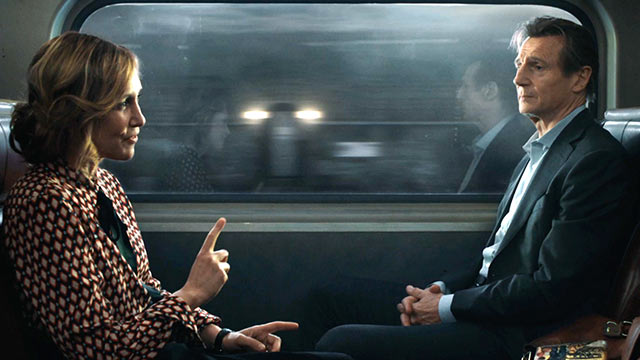
Rating: 4/10 – ex-cop turned insurance salesman Michael MacCauley (Neeson) is approached by a mysterious woman (Farmiga) on his train home and tasked with finding a complete stranger who’s also on the train – what could possibly go wrong?; everything as it turns out, with The Commuter going off the rails soon after, and never getting back on track, something confirmed (if there was any doubt before then) when the script throws in an “I’m Spartacus/I’m Brian” moment (take your pick), as well as reminding everyone that Neeson really is too old for this kind of thing.

The Post (2017) / D: Steven Spielberg / 116m

Cast: Meryl Streep, Tom Hanks, Sarah Paulson, Bob Odenkirk, Tracy Letts, Bradley Whitford, Bruce Greenwood, Matthew Rhys, Alison Brie, Carrie Coon, Jesse Plemons, David Cross, Zach Woods, Pat Healy

Rating: 9/10 – the publication of the Pentagon Papers, which exposed the level of deceit the US government had perpetrated on its citizens about its involvement in Vietnam, is explored through the days leading up to the Washington Times‘ courageous decision to publish despite the threat of imprisonment for treason that the White House was prepared to enforce; Streep is publisher Kay Graham, Hanks is legendary editor Ben Bradlee, and Spielberg is on excellent form, giving The Post a sense of immediacy and potency that other historical dramas can only dream of (and the relevance to today’s US political scene doesn’t even need to be made obvious).

The Open House (2018) / D: Matt Angel, Suzanne Coote / 94m

Cast: Dylan Minnette, Piercey Dalton, Patricia Bethune, Sharif Atkins, Aaron Abrams, Edward Olson, Katie Walder

Rating: 3/10 – a recent widow (Dalton) and her mopey son (Minnette) get away from their grief and their problems at a house that’s up for sale – and find strange things going on there right from the start; an awful thriller that just refuses to make any sense or make either of its two main characters sympathetic, The Open House does everything it can to make you look away… and not in a good way.

Share this:

  • Click to share on X (Opens in new window) X
  • Click to share on Facebook (Opens in new window) Facebook
  • More
  • Click to print (Opens in new window) Print
  • Click to email a link to a friend (Opens in new window) Email
Like Loading...

Foreign Moon (1996)

26 Friday Jan 2018

Posted by dullwood68 in Movies

≈ Leave a comment

Tags

Chen Daming, Chen Hsaio-hsuan, Drama, Harrison Liu, London, Music student, Review, Romance, Zeming Zhang

D: Zeming Zhang / 87m

Cast: Chen Hsiao-hsuan, Harrison Liu, Chen Daming, David Tse, Hong Xiang, Jian Rui Chao, Tanya Broome, Vanessa Earl

Arriving in London from Mainland China, Lan Lan (Chen Hsiao-hsuan) is a music student finding herself stranded at Waterloo Station when her sponsor doesn’t show up to collect her. She approaches a Chinese man, Su Tong (Liu), who helps her find her sponsor’s home, but when she learns her sponsorship comes with a major string attached – marriage to her sponsor’s son, Charles (Tse) – she soon leaves. With nowhere else to go she turns again to Su Tong who finds her somewhere to live and helps her navigate the confusing requirements of college scholarships and living in London. In time, Su Tong persuades her to live with both him and his younger friend, Deng Lin (Chen Daming), and help them with their new Chinese takeaway/delivery business. Despite Su Tong having a wife and a young son back in China, Lan Lan begins to develop feelings for him, feelings that he appears to have for her in return. With both of them too afraid to reveal their feelings for each other, it takes a violent intervention to highlight the strength of the emotional bond they’ve developed, but also why they shouldn’t act on it…

What first appears to be an examination of the experiences of a Chinese student coming to London for the first time, Foreign Moon soon morphs from a promising (if lightweight) fish out of water tale into something quite different. Unconcerned with making Lan Lan’s story one that sees her hampered by bureaucracy – which would have been a more predictable path to take – writer/director Zeming instead develops it into a delicate romantic drama, one that retains a healthy respect for Chinese norms of behaviour, while also recognising that China and its influences are a long way off.

The trio of central characters all act and behave in ways that are understandable given the close quarters that all three live and work in, and Zeming ensures that the drama that unfolds as strains are placed on all of them – Lan Lan tries to hide her feelings for Su Tong, he has to deal with the disappointment of his wife and child having to remain in China, Deng Lin allows his hedonistic lifestyle to get him into trouble – isn’t allowed to become melodramatic, but remains realistic instead. Zeming achieves this through close attention to the characters’ emotional states, and dialogue that remains naturalistic throughout.

It’s a shame then that the performances aren’t always able to match the quality of Zeming’s script. Chen Hsiao-hsuan makes her feature debut here, and though she’s a beguiling and appealing presence, there are moments where her inexperience catches her out, and the demands of the role remain unfulfilled. Similarly, Daming Chen, though exuding confidence in his role as a young Chinese man with only three things on his mind: sex, money, and a passport, is allowed to overdo the angry young man that Deng Lin is required to be at times. Liu however, is a strong focal point, his grasp of the emotional and cultural responsibilities facing Su Tong adding gravitas to a role that could have been far less complex, and easily so. On the plus side, Zeming doesn’t make London another character in the drama, but uses it as an ordinary backdrop (though Piccadilly Circus does get more than the one look-in). The interiors are equally well handled, stage sets that don’t feel like stage sets, and they’re explored more throughly than expected thanks to Lik Lu’s probing camerawork, creating a verité feel that grounds the action effectively and with a fine attention to detail.

Rating: 8/10 – with its story of two not-quite lovers wanting to connect with each other but afraid to do so, Foreign Moon isn’t an original piece by any means, but it has a sincerity and a humanity that singles it out from other, similar movies; Zeming directs with a directness that doesn’t allow for ambiguity or misunderstanding – which in some ways is refreshing – while his cast, despite the drawbacks mentioned already, help make this a perceptive and engaging viewing experience.

NOTE: Sadly, there’s no trailer available for Foreign Moon.

Share this:

  • Click to share on X (Opens in new window) X
  • Click to share on Facebook (Opens in new window) Facebook
  • More
  • Click to print (Opens in new window) Print
  • Click to email a link to a friend (Opens in new window) Email
Like Loading...

The Shape of Water (2017)

19 Friday Jan 2018

Posted by dullwood68 in Movies

≈ 1 Comment

Tags

Baltimore, Cold War, Creature, Doug Jones, Drama, Guillermo del Toro, Michael Shannon, Michael Stuhlbarg, Music, Octavia Spencer, Review, Richard Jenkins, Romance, Sally Hawkins, Sci-fi, The Sixties

D: Guillermo del Toro / 123m

Cast: Sally Hawkins, Michael Shannon, Richard Jenkins, Octavia Spencer, Michael Stuhlbarg, Doug Jones, David Hewlett, Nick Searcy, Lauren Lee Smith

A romantic fairy tale set during the Cold War era of the Sixties, Guillermo del Toro’s latest feature is set in a secret government laboratory in Baltimore. Elisa Esposito (Hawkins) is a cleaner who works the night shift. She’s also mute from birth. One night the laboratory receives a new “asset”, an amphibious creature (Jones) captured in the Amazon river by military man Richard Strickland (Shannon). The creature proves to be humanoid, and though it’s ostensibly dangerous, Elisa develops a bond with it, and even uses sign language to communicate with it on a basic level. With the creature able to breathe in and out of water, the intricacies of its anatomy lead to the decision to have it vivisected. Elisa is horrified by this, and with the aid of her fellow cleaner, Zelda (Spencer), and her neighbour, elderly artist Giles (Jenkins), she determines to free the creature and return it to the sea. As she puts her plan into action, she finds unexpected assistance from one of the scientists at the laboratory, Dr Hoffstetler (Stuhlbarg), and unwanted attention from Strickland.

Fully and firmly back on track after the disappointment that was Crimson Peak (2015), Guillermo del Toro has made perhaps his best movie yet. The Shape of Water is a veritable treasure trove of delights. By turns funny, dramatic, sad, tender, exciting, joyous, imaginative, bold, romantic, uplifting, and poignant, it’s a movie that crams so much into its two hour running time that it should feel heavy-handed. Instead it feels like the lightest of confections, even with the overtly darker undertones that are threaded throughout the narrative and which help the movie add a credible and palpable sense of menace to the overall tone. del Toro has long wanted to make a movie inspired by Creature from the Black Lagoon (1954), but it’s unlikely even he could have predicted just how good the end result would be. From Paul D. Austerberry’s masterful period production design, to the efforts of the set dressers (so much detail), this is a movie that is constantly inviting the viewer to come nearer and peer closely at all the objects that fill each frame. And then there are the small yet seemingly effortless moments that pepper the movie, moments such as Elisa and Giles’ seated dance routine, or the man at the bus stop with the partially eaten cake. It all adds up to a richness of texture that is nigh-on faultless.

But the movie isn’t just beautiful to look at, it’s also an old-fashioned love story (an inter-species love story, to be fair, but hey, so what? As Joe E. Brown says at the end of Some Like It Hot (1959), “Nobody’s perfect”). It would have been so easy to misjudge the tone and the mood in presenting this romance, but del Toro and co-screenwriter Vanessa Taylor handle it perfectly, combining elements of magical realism and the aforementioned fairy tale aspect to wonderful effect. Hawkins – for whom the role of Elisa was written – gives a mesmerising performance, passionate and vulnerable, determined and caring, and capable of expressing any of Elisa’s emotions through the delicate shading of her features. As the principal villain, Shannon gets to add unexpected psychological layers to the role of Strickland, something that keeps the part from being that of a stereotypical bad guy, while Jenkins provides the majority of the laughs (and a great deal of pathos) as Giles, an elderly gay man still hoping to find love himself. Everything is rounded off by the music, as del Toro harks back to the golden era of Hollywood musicals. And just when you think he can’t squeeze in anything else, he gives us a black and white dance number featuring Elisa and the creature which is a tribute to Follow the Fleet (1936). This all leaves just one option: this much confidence must be applauded.

Rating: 9/10 – made with an intense amount of love and affection for its central characters, and with an elegance that shines throughout, The Shape of Water is a triumph of both style and substance; look closely, though, and you’ll find del Toro being quietly and unobtrusively subversive: ask yourself – which other movie are you likely to see where the heroes are in turn disabled, gay, black, and a Communist?

Share this:

  • Click to share on X (Opens in new window) X
  • Click to share on Facebook (Opens in new window) Facebook
  • More
  • Click to print (Opens in new window) Print
  • Click to email a link to a friend (Opens in new window) Email
Like Loading...

Mustang Island (2017)

14 Sunday Jan 2018

Posted by dullwood68 in Movies

≈ Leave a comment

Tags

Comedy, Craig Elrod, Drama, John Merriman, Lee Eddy, Macon Blair, Relationships, Review, Romance, Texas

D: Craig Elrod / 86m

Cast: Macon Blair, Lee Eddy, John Merriman, Molly Karrasch, Jason Newman, Byron Brown, Haley Alea Erickson

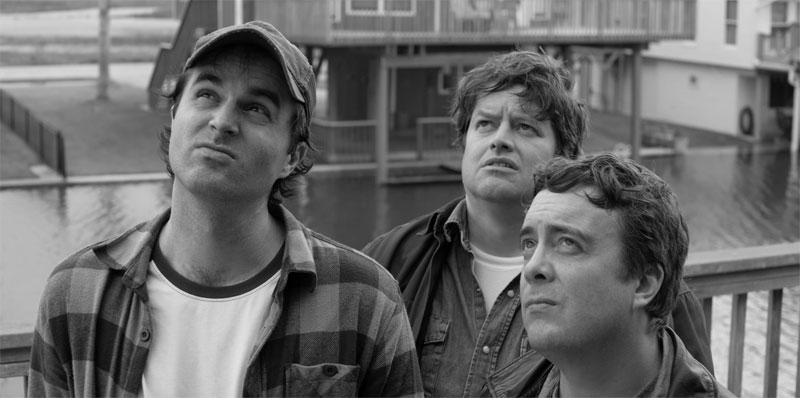
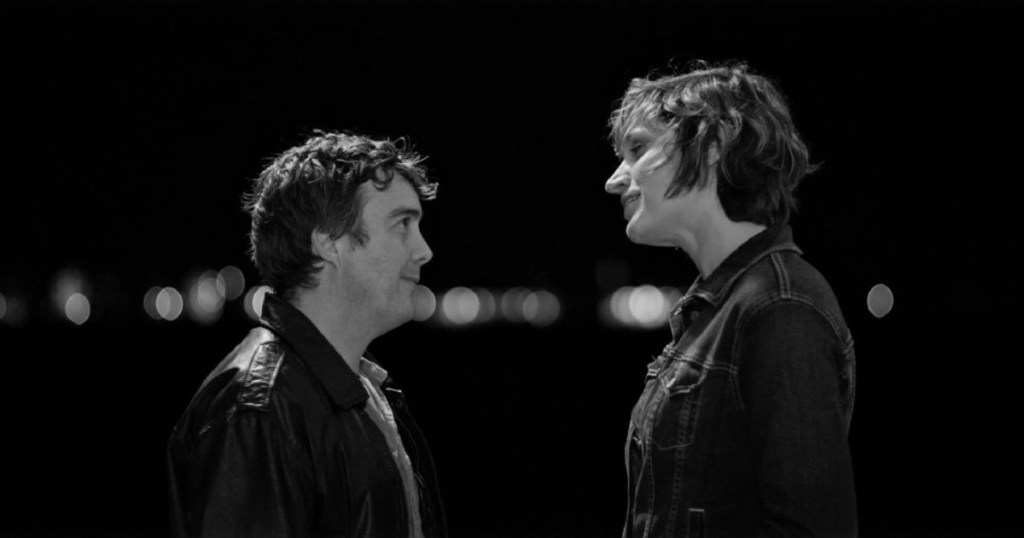
In Mustang Island, the second feature from writer/director Craig Elrod, Bill (Blair) and his girlfriend Molly (Karrasch) break up on New Year’s Eve. Reduced to uncontrollable tears by this event, Bill crashes his car into a boat, breaks his arm and flees the scene before he’s arrested by the police. Later, he learns that Molly may have gone to her family’s place on Mustang Island. Rounding up his brother, John (Merriman), and John’s friend and co-worker Travis (Newman), the trio set off for the island with Bill intending to make things right with Molly. When they get there, the house is empty and there’s no sign that Molly has even been there. Bill decides to stay a while in the hope that Molly shows up, and John and Travis stay with him. At a local diner, John spies a waitress, Lee (Eddy), that he’s attracted to. But John is painfully shy and despite Bill’s attempts to bring them together, it soon becomes clear that Lee likes Bill instead of John. Bill finds that he has feelings for Lee as well, but as ever with Bill, there are problems to overcome…

Set on the real Mustang Island (which is located on the Gulf Coast of Texas), Elrod’s follow up to The Man from Orlando (2012) is a quirky, understated tale that relies heavily on nuance and tone in order to tell its simple yet engrossing story. Elrod’s script calls for dozens of moments where the camera lingers on a character’s face and the viewer is given the time to realise and understand what that character is feeling or thinking. It’s these quiet moments that are of the greatest importance, as the characters are not as articulate as they would like to be, and expressing their emotions is uncomfortable and scary for them. By focusing on their features and the range of expressions that play across them, Elrod and his talented cast ensure that the viewer is in no doubt as to what anyone is thinking or feeling. This allows for moments of sadness, heartbreak, vulnerability, and poignancy as the characters strive to make sense of their own feelings while trying not to hurt anyone else’s. It’s a subdued, reflective movie that offers hope amidst the setbacks experienced by its characters, and is shot through with a winning sense of humour, particularly in a diner scene where Bill thinks everyone is looking at him.

Headed by Blair, the main cast members offer impressive, detailed performances that are sincere and refreshingly unspoiled by notions of “acting”. Blair and Eddy are married in real life, and this adds a sensitivity to their portrayals that makes them all the more convincing. Merriman is one of the movie’s best assets, though, his solid, restrained performance a sheer pleasure to watch whenever he’s on screen, and his expressions of happiness and delight are to be treasured thanks to the childlike innocence they convey. The movie’s real trump card, however, is the decision to shoot in black and white. This adds another level of detail to Elrod’s already meticulously assembled screenplay, and the use of light and shade to complement the characters’ moods, emotions and desires, adds depth to all those aspects. And the movie is simply beautiful to look at, with as many striking compositions encompassing the island surroundings as there are devastating close-ups (especially the final one). It’s all rounded off by a well chosen soundtrack, and a warm and thoughtful score by first-timer Benjamin Prosser.

Rating: 8/10 – assembled with care and intelligence and a surfeit of confidence, Mustang Island is a beautifully observed romantic comedy drama that does justice to all those elements, and which has so much to offer viewers, it’s a stone’s throw from being embarrassing; Elrod and everyone else involved are to be congratulated for making a movie that is genuinely, unashamedly heartfelt in places, and unswervingly affectionate toward its delightful cast of characters.

NOTE: Surprisingly, there is no trailer available for Mustang Island.

Share this:

  • Click to share on X (Opens in new window) X
  • Click to share on Facebook (Opens in new window) Facebook
  • More
  • Click to print (Opens in new window) Print
  • Click to email a link to a friend (Opens in new window) Email
Like Loading...

Floating! (2015)

12 Friday Jan 2018

Posted by dullwood68 in Movies

≈ 2 Comments

Tags

Anna König, Comedy, Drama, Jakob Renger, Julia Becker, Julia C. Kaiser, Relationships, Review, Romance, Sperm donor

Original title: Das Floß!

D: Julia C. Kaiser / 86m

Cast: Julia Becker, Jakob Renger, Anna König, Till Butterbach, Rhon Diels, Christian Natter, Nina Bernards, Sina Bianca Hentschel

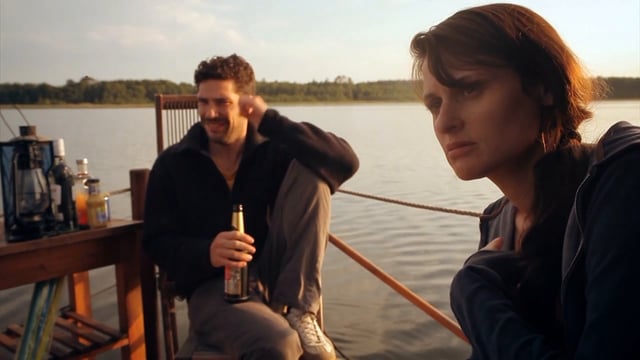
German movies haven’t really been too conspicuous in recent years. In the new millennium, and though the German movie industry has climbed out of the doldrums brought about by the rise in home viewing in the 1990’s, on the international stage, German movies have rarely made an impact. The arrival of Toni Erdmann (2016) was a much needed fillip for the industry, but for the movie buff who is prepared to do a little digging, there are other movies out there that are worth a look and a mention. One such movie is Floating!, the first feature of writer/director Julia C. Kaiser. The set up is a simple one: Katha (Becker) and Jana (König) have decided to get married and to have a child via artificial insemination. They’ve even chosen a sperm donor, called Momo (Renger). One weekend, both have their bachelor/bachelorette parties. Katha heads off to the countryside to meet her brother Tobi (Natter), her oldest friend Charly (Butterbach), and friend and work colleague, Ken (Diels), for a trip on a motorised raft. Jana meanwhile, stays at their flat and has several of her friends over. But unexpected guests at both parties – Momo at the raft, Jana’s ex-partner Susan (Bernards) at the flat – threaten to cause both women to question their relationship.

Floating! is exactly the kind of feature that’s needed to remind people that German movie makers can produce the same astute, enjoyable, and carefully crafted movies that their European counterparts can make. Focusing on the pre-marital doubts that could affect any couple, straight or gay, Kaiser’s gently probing script gives the us time to get to know the characters and understand enough of their back stories so that we can sympathise with the emotional issues that they find themselves facing. Katha, surrounded by males who all view her differently, finds herself wondering if there’s any merit in being straight (or at least finding out what it might be like). She’s comfortable with their bloke-ish camaraderie and easy-going behaviour. She even comes to appreciate Momo’s presence, even though she makes it clear he won’t have a role in the baby’s life. With copious amounts of alcohol to help confuse matters further, Katha becomes unsure of herself and her commitment to Jana. Meanwhile, Jana is shocked by the presence of Susan at her party, and though she does all the right things in trying to avoid her/get rid of her, when Susan explains why she’s there, Jana – who walked out of their relationship – begins to doubt the wisdom of her past actions. And she too finds herself torn between what she has and what she could have.

This being a romantic drama with suitable helpings of comedy to make it more agreeable, Floating! remains a consistently plausible and thoughtful examination of the natural doubts any couple might have before making that final commitment to each other. There’s a lightness of touch and emphasis in Kaiser’s direction that allows us to feel like we’ve known the characters all their lives, and the cast respond accordingly, giving natural, appealing performances that further enhance the sense that these are all people you could meet at any time, and anywhere. The dialogue is entirely natural sounding too, and very little feels forced or contrived. It’s all shot by DoP Dominik Berg using an autumnal colour palette that emphasises the possibility of change within the characters as well as the season, and Nicole Weber’s editing ensures that the pace of the movie is reflected in the bustle of Jana’s party and the laconic ease of the raft party.

Rating: 8/10 – a wry, sympathetic, and engaging look at love found and nearly lost, Floating! is a delightful movie anchored by finely balanced, intuitive performances, and Kaiser’s confident direction; one not only for fans of German cinema, but for anyone who wants to see a movie that tells its tale with an understated grace and in a very simple, yet very effective fashion.

NOTE: The trailer below doesn’t have English subtitles.

Share this:

  • Click to share on X (Opens in new window) X
  • Click to share on Facebook (Opens in new window) Facebook
  • More
  • Click to print (Opens in new window) Print
  • Click to email a link to a friend (Opens in new window) Email
Like Loading...

Call Me by Your Name (2017)

30 Saturday Dec 2017

Posted by dullwood68 in Movies

≈ 2 Comments

Tags

Armie Hammer, Drama, First love, Italy, Literary adaptation, Lombardy, Luca Guadagnino, Michael Stuhlbarg, Review, Romance, Timothée Chalamet

D: Luca Guadagnino / 132m

Cast: Armie Hammer, Timothée Chalamet, Michael Stuhlbarg, Amira Casar, Esther Garrel, Victoire Du Bois, Vanda Capriolo, Antonio Rimoldi

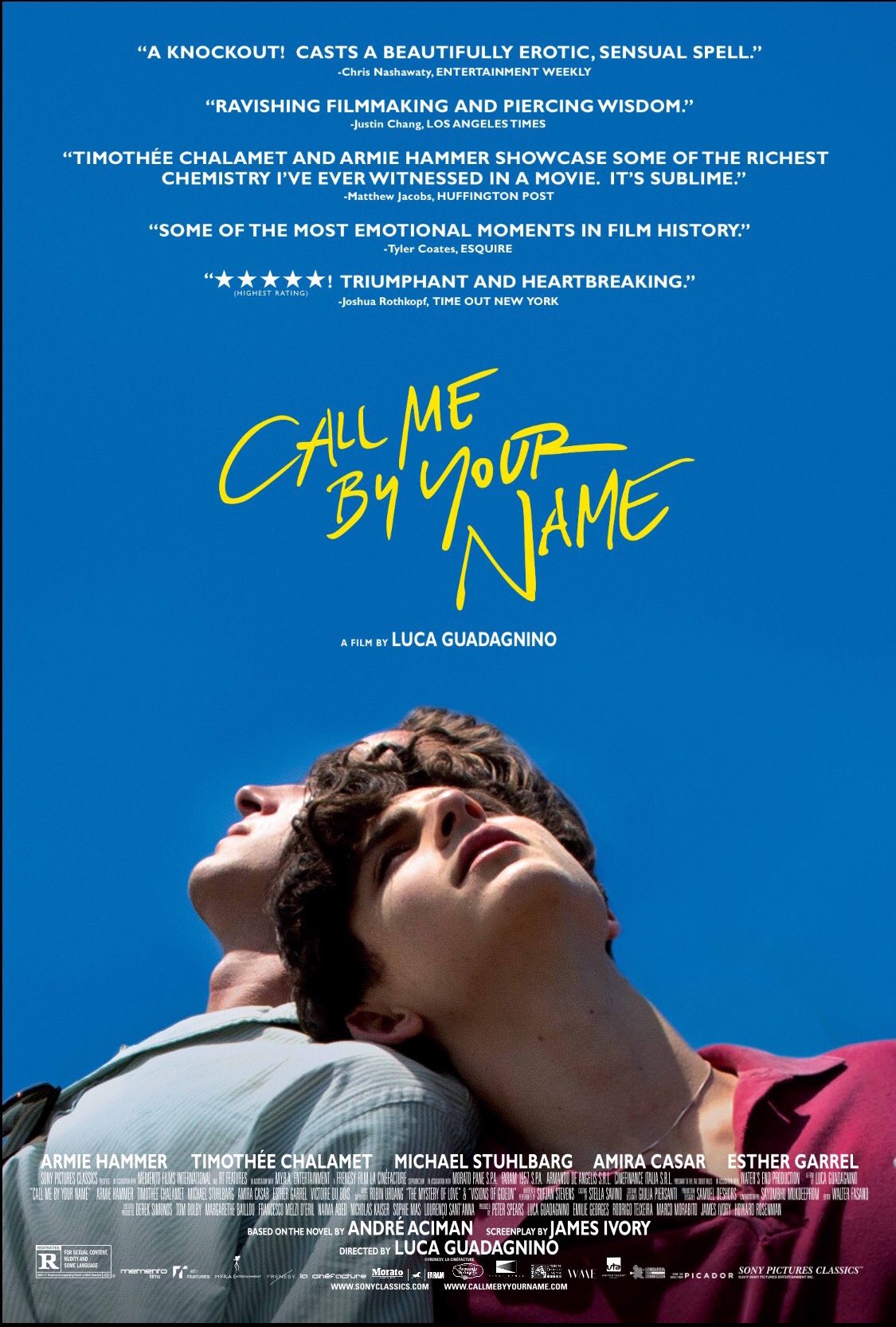
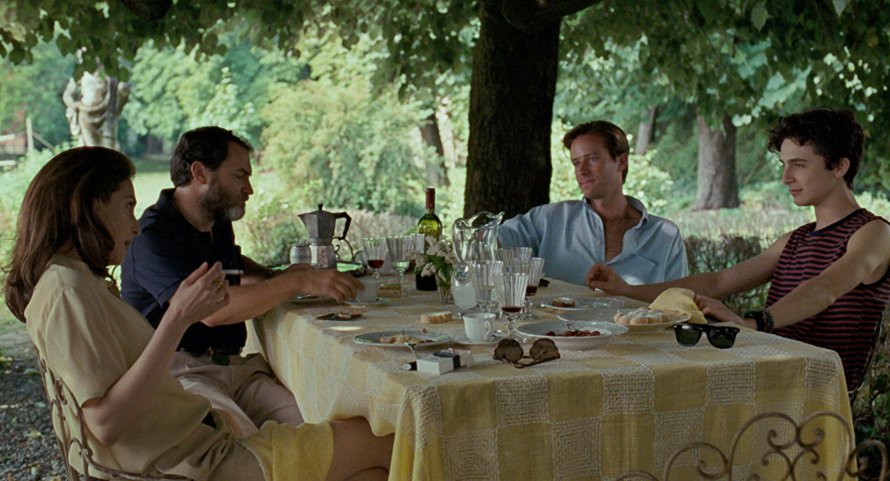
In this beautifully shot, written, directed, and acted adaptation of the novel by André Aciman, the setting is Northern Italy in the summer of 1983. Oliver (Hammer), a graduate student of archaeology and Greco-Roman culture arrives at the home of Professor Perlman (Stuhlbarg) and his family – wife Annella (Casar) and son Elio (Chalamet) – to assist the professor for six weeks with his academic paperwork. Oliver is outgoing, confident and charming, and soon wins over everyone except for Elio. Elio is Oliver’s polar opposite: reserved, insular, unsure of himself, and envious of Oliver’s ebullient nature. But Elio finds himself unexpectedly attracted to Oliver, something that both frightens and excites him. Lacking in any kind of sexual experience at seventeen, and torn between his burgeoning feelings for Oliver as well as the attentions of Marzie (Garrel), a close friend, Elio tries to navigate the treacherous waters of first love, and the realities inherent in accepting feelings and emotions that are completely overwhelming.

A project that has been in development since the movie’s main producers, Peter Spears and Howard Rosenman, saw an early galley of Aciman’s novel (his first) back in 2007, Call Me by Your Name is perhaps one of the most visually and emotionally ravishing movies of the year – or indeed any year. Shot in a variety of locations around Crema in Lombardy, this is a beautiful movie to watch, perfectly capturing the hazy, laidback existence of the Perlman family and their idyllic, rural home, and constantly providing the viewer with some absolutely magnificent imagery. Director Luca Guadagnino, in collaboration with DoP Sayombhu Mukdeeprom, has made a movie that is almost painterly in its design and execution. Shots are so perfectly framed that the amount of information in any given scene is breathtaking. With such a wealth of detail on offer, it’s a triumph of cinematography yes, but also of production design, and art and set decoration.

But this movie isn’t just about the world that it so richly creates. It’s an examination of the joys and cruelties associated with first love, that horrible wonderful period in a person’s life when the world seems turned upside down and all the surety and confidence they’ve accrued counts for nothing in the face of having to let down their defences and hope their hopes and feelings aren’t rejected wholesale. The movie addresses this directly in a scene where Annella reads from a German translation of Marguerite of Navarre’s Heptaméron, where the question is asked, “Is it better to speak or to die?” This is the dilemma Elio faces: does he reveal his feelings to Oliver, or does he remain silent and in doing so forgo the relationship he seeks. It’s a familiar plight, and one that the movie treats with an appropriate sympathy and sense of consideration. Elio’s uncertainty facilitates a kind of dance between the pair as they circle around each other, both providing hints for the other and neither of them trusting their instincts far enough to take that first, all-important step.

Guadagnino ensures that the nature of this dance and the intricacy of its turns and swirls is played out in contrast to Elio’s relationship with Marzie, which is just as hesitant and just as confusing for Elio as his feelings for Oliver. Faced with opposing emotions and unable to reconcile them, Elio is equally unable to take responsibility for them. The script – a remarkable achievement courtesy of James Ivory – has him do what any confused and horny teenager would do, and indulge his desires wherever and however they might appear. It doesn’t lessen his sense of ambiguity about his sexuality, or his need for Oliver, but it does lead him to make some questionable decisions, and while there are moments where he appears unable to overcome his own culpability, the fact that his behaviour is so easily recognisable and understandable, allows the viewer to remain hopeful that things will work out for him.

It helps that Ivory’s script and Guadagnino’s direction don’t pass judgment on any of the characters, and instead provides them with a cinematic safe haven for their troubles to play out. It’s also refreshing that the movie focuses on a gay relationship that runs its course – as inevitably it must do, Oliver is only there for six weeks – and there’s no threat or peril attached, either from Elio’s parents or any of the locals (though a handful of scenes set in Bergamo where Elio and Oliver spend some time together give the impression that something bad will happen at some point). It’s worth noting that this is a movie where prejudice isn’t allowed to raise its unwelcome head at any time, and though you could argue that this doesn’t sound entirely realistic given the period, it’s still encouraging to have that particular hoary old plot device ignored completely. The dynamic between Elio and Oliver is what’s important, and once Elio has made his choice to either speak or die, the movie rightly focuses on them and the fledgling steps they take in their relationship.

All of this, though, would be for nothing if it weren’t for the two mesmerising performances given by Hammer and Chalamet. For Hammer this is a major step up in his career, his portrayal of the apparently worldly-wise Oliver strengthened by his ability to show the character’s own insecurities and vulnerable side. There’s a scene where Oliver begins to have doubts about the longevity of his relationship with Elio, and the way in which Hammer expresses this uncertainty pulls at the heartstrings in a way that’s completely unexpected. Chalamet is equally as impressive as Elio, the camera lingering on him for long stretches, catching each fleeting emotion and sharply expressed moment of self-awareness. For Chalamet, the key scene is one that involves a peach, and it’s thanks to his skill as an actor that the scene works as incredibly well as it does; in the hands of some movie makers and actors, it would have killed the movie stone dead. Together, both actors support and encourage each other in their scenes, and the freedom they exhibit is hugely impressive. Again, without them, all the good work achieved in other areas would be for naught, and this would be a movie about which we would all be saying, “Ah well, good try.” That we’re not is a triumph for all concerned.

Rating: 9/10 – a superb adaptation of Aciman’s novel that is languid in pace yet deeply emotional in tone, Call Me by Your Name is also an amazingly affecting movie that grips like a thriller and which presents its characters as average human beings struggling with common human problems, but particularly, how to commit to someone else wholeheartedly; beautifully made on all levels, this is Guadagnino’s best movie yet, and one that resonates with, and rewards and reassures viewers by providing recognisable characters that we can all identify and sympathise with – because we’ve all been there ourselves.

Share this:

  • Click to share on X (Opens in new window) X
  • Click to share on Facebook (Opens in new window) Facebook
  • More
  • Click to print (Opens in new window) Print
  • Click to email a link to a friend (Opens in new window) Email
Like Loading...

Stronger (2017)

17 Sunday Dec 2017

Posted by dullwood68 in Movies

≈ 1 Comment

Tags

Biography, Boston Marathon bombing, David Gordon Green, Drama, Erin Hurley, Jake Gyllenhaal, Jeff Bauman, Literary adaptation, Miranda Richardson, Review, Romance, Tatiana Maslany, True story

D: David Gordon Green / 119m

Cast: Jake Gyllenhaal, Tatiana Maslany, Miranda Richardson, Clancy Brown, Richard Lane Jr, Nate Richman, Lenny Clarke, Patty O’Neil, Kate Fitzgerald, Danny McCarthy, Frankie Shaw, Carlos Sanz

Following in the wake of Patriots Day (2016), Peter Berg’s excellent recreation of the manhunt for the Boston Marathon bombers, we have Stronger, a movie that focuses on one of the victims on that occasion, a Costco employee called Jeff Bauman (Gyllenhaal). Adapted from the book he wrote about his experiences after losing both his legs from above the knee down, Bauman’s tale is one of physical and emotional hardship, but most of all, how his relationship with on again, off again girlfriend, Erin Hurley (Maslany), made all the difference to his rehabilitation. It’s another true story of triumph over adversity, but while Jeff’s story – by itself – is inspiring, the movie itself isn’t quite as satisfactory.

Biopics often have a hard time avoiding the clichés of the genre. In recounting the trials and tribulations of someone who has suffered greatly through personal trauma, there’s usually a list of stock situations to be worked through. Most of them adhere to the various stages of grief, and so audiences can almost tick off these stock situations as they go along, but while Stronger does its best to avoid these clichés, in doing so it actually robs the movie of a lot of what would involve the audience more. Sure, we see Jeff falling off the toilet because his centre of gravity is out of whack, and yes, he tries to push Erin away because of self-pity, and of course, he misses rehab appointments because he can’t motivate himself, but while these are all established staples, here they’re downplayed to the point where the movie runs the risk of feeling a little detached from its subject matter and main character. There’s a matter-of-fact approach adopted by director David Gordon Green that stops the viewer from fully engaging with Jeff and his struggle to walk again.

Partly this is due to the way in which John Pollono’s script tackles the various stages of Jeff’s recovery. It always feels like a piecemeal attempt to tell a larger story, and while the focus on Jeff and Erin’s fractious relationship is to be commended, it doesn’t take long for the viewer to realise that without it the movie would be a lot shorter and a lot less interesting. Stripped of this central relationship, and once he’s lost his legs, the movie would consist merely of scenes between Jeff and his alcoholic mother, Patty (Richardson), a handful of other scenes featuring Jeff and his friends, Jeff being feted as a living breathing incarnation of the Boston Strong ideal, and further scenes where he’s told off for not going to his rehab appointments. All these are exactly the kind of things you’d expect to see in a movie such as this, and in that respect, the movie doesn’t disappoint. But there have been far too many other movies made along similar lines, and there’s not enough effort made to make this stand out from the crowd.

Bauman’s story, however, is made more interesting through his relationship with Erin. Pre-bombing, Jeff isn’t the most committed of boyfriends, but Erin has always allowed herself to give him another chance after splitting up with him. The irony of what happened to Jeff isn’t lost on the movie, as the only reason he was near the finishing line when the first bomb went off, was because he was there to support Erin (who was taking part in the race), and to show that she could rely on him more than in the past. Their connection is strengthened by Erin’s innate decency in supporting Jeff through the days and months that follow, and also by his need to have someone capable of looking after him; Patty is a semi-functioning alcoholic who admits she hasn’t been the greatest of mothers. With his father, Jeff Sr (Brown), reduced to hanging around in the background the longer the movie goes on, Jeff leans on Erin quite heavily, and as the dynamic of their relationship shifts and changes, it’s Erin’s own sense of self-respect that allows her to make a decision that, along with meeting the man who saved his life, Carlos Arredondo (Sanz), helps Jeff to dig himself out of the mire of self-pity and self-doubt that he’s surrounded himself with.

As Jeff, Gyllenhaal puts in another committed, powerful performance that sees the actor express Jeff’s confusion and anguish and dismay and anger at being placed in such a difficult position. However, his commitment to the role is hampered by the script’s determination not to make things too difficult for Jeff, as each obstacle he encounters is quickly overcome so that he can move on to the next – and overcome that one just as easily. If anything, this approach comes as something of a surprise, especially when it becomes obvious that Maslany’s portrayal of Erin is the movie’s strong suit, instead of Gyllenhaal’s portrayal of Jeff. It’s a career best performance from Maslany, who takes charge of the role and makes Erin the movie’s heart and soul. She’s simply mesmerising, and she finds new and different ways to make Erin more than the eternally supportive and self-sacrificing (i.e. stock) girlfriend that she could have been in other hands. In their scenes together, Maslany is so good that she’s always the focus and not Gyllenhaal; when the camera’s on him, you want it to shift back to her as quickly as possible.

There are many elements that are allowed to play out without any resolution, and a lot of things that are left unaddressed, such as the marital status of Jeff’s parents (are they divorced, separated, taking a break?), and though Green directs with his usual flair for exploiting emotional undercurrents, he’s not given too many occasions where he can do this. Certain scenes lack purpose – the script could have done with some judicious pruning – and there are times when Jeff’s family and friends seem present only to provide the movie with a sense of humour, but the overall problem with the movie is that its efforts to avoid the clichés of the genre don’t always work. And when you have a character who needs to learn to walk again but on prosthetic legs, and that aspect is reduced to a smattering of scenes, that raises another issue: just what is the movie’s focus if it isn’t that?

Rating: 6/10 – neither great nor awful but somewhere maddeningly in between, Stronger cleaves to audience expectations of what is, in cinematic terms, a very familiar story, and only manages to deviate from it when examining Jeff and Erin’s relationship; good performances all round help to alleviate the feeling of déjà vu that pervades the material and which holds it back from being more effective, leaving the whole thing feeling like a missed opportunity, and a curious one at that.

Share this:

  • Click to share on X (Opens in new window) X
  • Click to share on Facebook (Opens in new window) Facebook
  • More
  • Click to print (Opens in new window) Print
  • Click to email a link to a friend (Opens in new window) Email
Like Loading...

Hickey (2016)

06 Wednesday Dec 2017

Posted by dullwood68 in Movies

≈ Leave a comment

Tags

Alex Grossman, Comedy, Cy's Auto Sound and Stereo, Drama, Flavia Watson, Indie movie, Review, Romance, Troy Doherty, Zedrick Restauro

D: Alex Grossman / 80m

Cast: Troy Doherty, Flavia Watson, Zedrick Restauro, Raychel Diane Weiner, Alex Ashbaugh, Ross Mackenzie, Tommy “Tiny” Lister, Janie Haddad Tompkins, Nicholas Azarian, Danny Chambers, Herb Isaacs

Low-budget independent movies have been with us since the beginning of cinema itself, and have ranged from cheap and nasty horrors to poorly imagined sci-fi movies, and that glorious institution, the teen comedy. Some of these movies have managed to transcend their restrictive budgets and become successful – The Blair Witch Project (1999) is perhaps the best example – but most receive a fleeting moment in the spotlight before fading into obscurity, or appearing at odd hours of the night on cable or satellite channels that most people don’t even know are transmitting. The casts and crews that make these movies are often doing it for experience, the outside chance of being in a bona fide hit (or festival darling), or for the love of it (and sometimes all three). Whatever the reasons, there are thousands of these low-budget features made every year. And for any of them to stand out from the crowd, they’ve got to have something that most, if not all, the others don’t have.

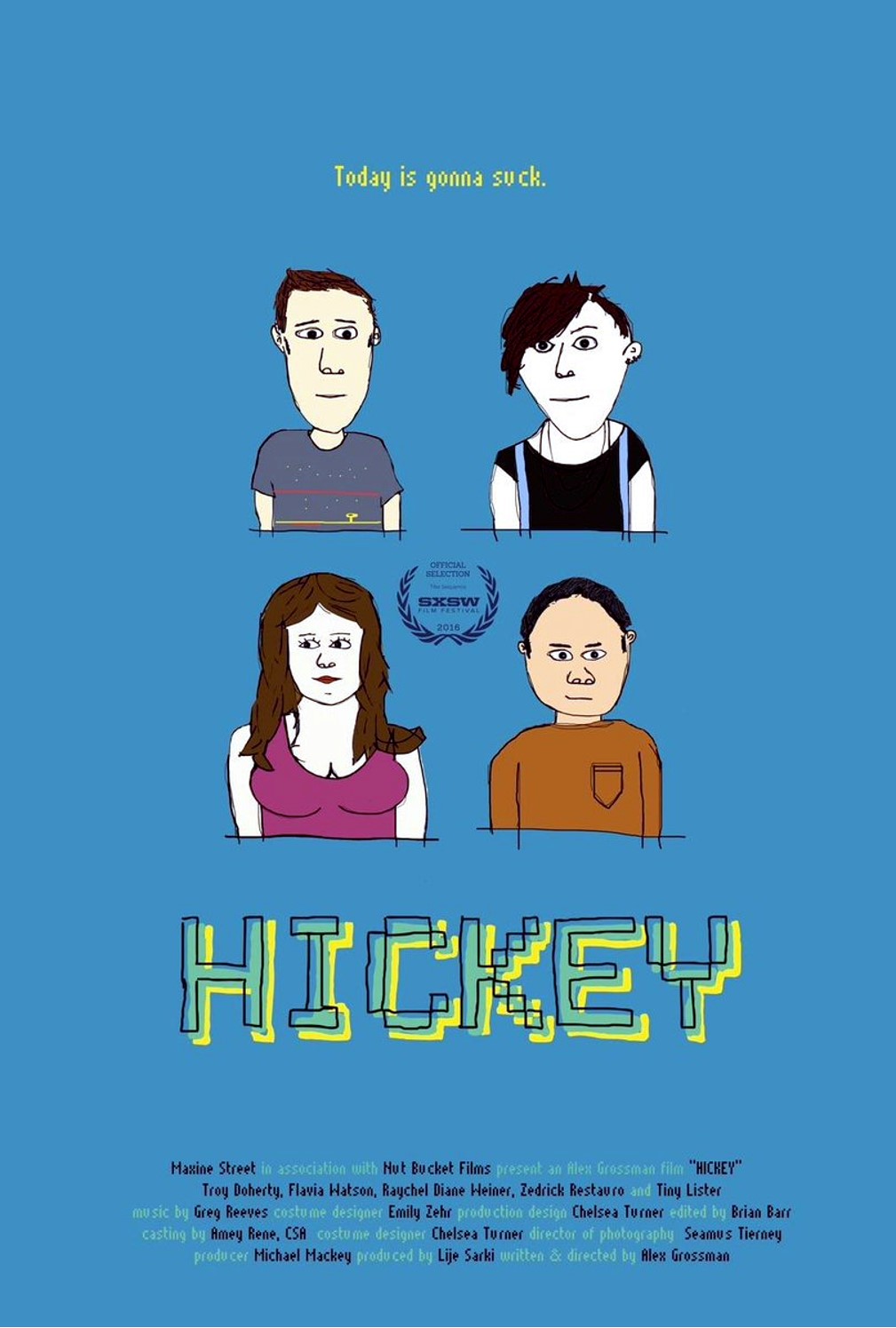
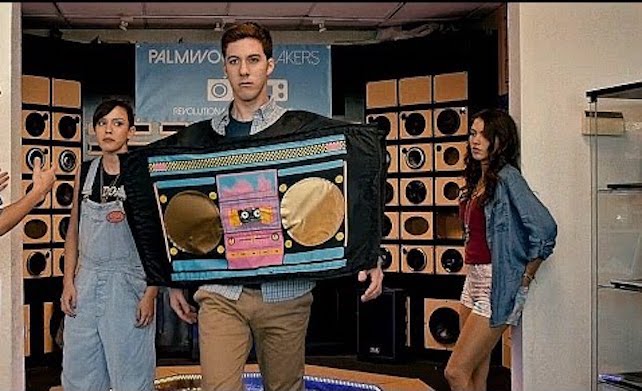
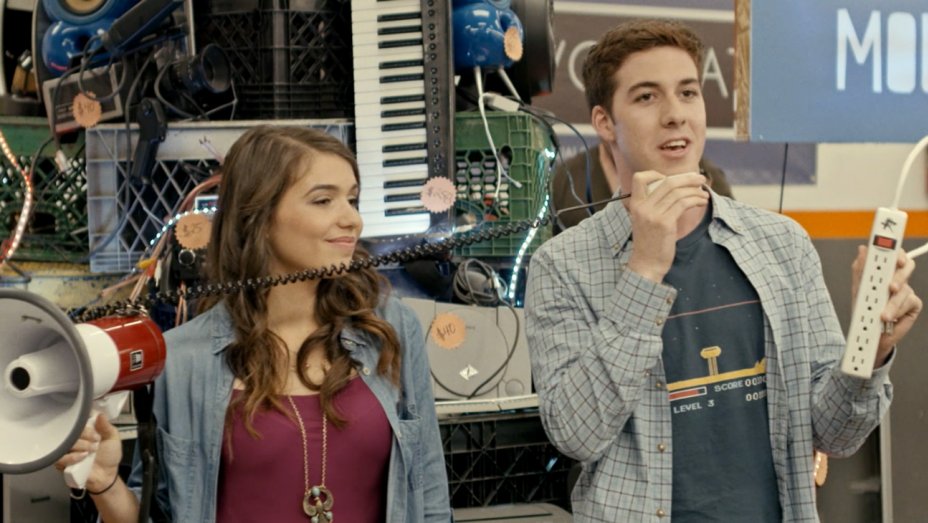
In the case of Alex Grossman’s first feature, which was made for under $200,000, that something isn’t too easy to define. His tale is a fairly simple one: boy loves girl, girl doesn’t know, boy faces losing girl, boy comes up with risky scheme to keep her around until he plucks up the courage to tell her he loves her. Here, the boy is Ryan (Doherty), a bit of a maths whizz who works at Cy’s Auto Sound and Stereo alongside the girl he’s fallen in love with, Carly (Watson). Ryan is a few months away from going to MIT, but a far more pressing and urgent matter prompts Ryan into speeding up his efforts to make his feelings known. The store is marked for closure for failing to meet its sales targets, but undeterred by this, Ryan arranges for the store to have a massive one-day sale to help a) show that the store is still viable, and b) give him the opportunity to confess his attraction to Carly. Aided by his colleague and friend, Jeremy (Restauro), Ryan sets about saving the store, and his potential future relationship with Carly. But, of course, there are more than a few obstacles along the way, including regional manager Brady (Ashbaugh), and the news that he and Carly once dated…

Written and directed by Grossman, Hickey is a confident, freewheeling mix of comedy, drama and romance that is appealing and likeable, while not exactly reinventing the wheel. The movie is a collection of stock characters and situations that sometimes border on being clichés, but thanks to a combination of Grossman’s direction and his cast’s enthusiasm, the movie doesn’t suffer too much even though there are glaring moments where originality clearly wasn’t the order of the day. Thankfully, these moments don’t detract from the overall enjoyment to be had from watching Ryan and his often humorous efforts to save the store, and the romantic longueurs that pepper the script on various occasions. But be warned: there are points in the story where the momentum that Grossman has built up grinds to a halt, and the movie teeters on the brink of losing the viewer’s interest. This seems to be as much about Grossman’s inexperience in directing features – he was a commercials director before this – as it is about the way he’s structured the material over its eighty minute runtime. But again, there’s more here that works than doesn’t.

The milieu will be familiar to most viewers – a band of quirky underachievers take on a seemingly hopeless situation – but this is one of those movies where the visual and character shorthand that comes with it, makes the viewing experience all the more enjoyable. There aren’t too many moments where you’ll find yourself laughing out loud  (wry smiles would seem to be more appropriate), and the drama of the looming store closure never really feels like it’s locked in as solidly as it should be, but Grossman scores highly with his characters. Ryan is the romantically awkward, gawky teenager whose heart is in the right place but whose confidence with the opposite sex is hiding right behind it, and terrified to come out. Carly is the seemingly carefree love interest who can see past Ryan’s gauche behaviour and nerdish looks and who will, inevitably, realise she loves him too. The supporting characters are (largely) well integrated into the narrative, with Jeremy’s prickly, occasionally inappropriate behaviour allowed to stand out because of his connection to Ryan. The only character who doesn’t ring true is Brady, the erstwhile villain of the piece whose demeanour feels cartoonish and forced.

In telling his somewhat lightweight story, Grossman at least ensures that the viewer remains invested in what’s going to happen next, even if some of the plot developments come across as laboured. There are times throughout when it’s clear that Grossman is striving for more than his budgetary constraints will allow him, but it’s all in service to the material, and in trying to make the movie as good as possible. Where some movie makers settle for what they can achieve without making that extra effort to improve things, Hickey‘s creator is at least aiming for more. That he’s not always successful is a shame, as the movie has a lot of heart and a clutch of winning characters. A more polished script would have helped too, but it’s still hard to knock a movie that’s clearly trying, and which doesn’t want to disappoint its audience too much or too often.

In the end, Hickey is a likeable movie that won’t make much of an impact, and which is likely to fall into that category of unfortunate features that people discover by accident while channel hopping, or trawling through the movies available on Netflix or Amazon Prime. It’s not obscurity as such, but it is a sad fate for many movies, though Hickey doesn’t deserve it. With its amiable approach, and wistful romantic idealism at the forefront of the narrative, the movie is another example of what can be achieved on a very low budget indeed. Seamus Tierney’s cinematography is a bonus, his framing and use of medium shots often adding to the emotion of a scene, and there’s a wonderful score by Gregory Reeves that complements the material without being unnecessarily intrusive. In assembling his first feature, Grossman is to be congratulated for doing so well, even if he’s not been able to overcome some of the more obvious drawbacks.

Rating: 6/10 – a movie that shows promise in terms of where its writer/director’s career is heading, Hickey is a teen comedy/romance/drama that makes great efforts to stand out from the crowd, and avoid being labelled “so-so”; with good performances from its (mostly) young cast, it’s a sweet-natured, agreeable movie that may not garner a huge following, but which should still attract viewers that will appreciate its modest charms.

Share this:

  • Click to share on X (Opens in new window) X
  • Click to share on Facebook (Opens in new window) Facebook
  • More
  • Click to print (Opens in new window) Print
  • Click to email a link to a friend (Opens in new window) Email
Like Loading...

The Only Living Boy in New York (2017)

11 Saturday Nov 2017

Posted by dullwood68 in Movies

≈ Leave a comment

Tags

Affair, Callum Turner, Cynthia Nixon, Drama, Jeff Bridges, Kate Beckinsale, Marc Webb, Pierce Brosnan, Review, Romance, Writing

D: Marc Webb / 89m

Cast: Callum Turner, Jeff Bridges, Kate Beckinsale, Pierce Brosnan, Cynthia Nixon, Kiersey Clemons, Bill Camp, Wallace Shawn, Tate Donovan, Anh Duong, Debi Mazar, Ben Hollandsworth, John Bolger

Pity poor Thomas (Turner). He’s the quintessential college graduate who can’t work out what he wants to do with his life. His father, Ethan (Brosnan), is a brusque senior editor at a publishing firm, and his mother, Judith (Nixon) appears to be a nervous soul who surrounds herself with people from the arts in order to offset her nervous disposition. Thomas has been discouraged by his father from becoming an author, and he doesn’t seem to have a fall-back career to help him move forward. Instead he spends time with his best friend Mimi (Clemons). He’s in love with Mimi, but his love isn’t reciprocated. One day, Thomas meets W.F. (Bridges), who’s just moved into his building. They strike up a friendship, and soon Thomas is sharing his woes and actively seeking advice from his new-found friend. Soon after, while Thomas and Mimi are out together one evening, they see Ethan in the company of another woman. From this, Thomas decides to find out who the woman is, and to stop any affair she and her father may be having.

The woman is Johanna (Beckinsale), a freelance book editor who has been working on and off with Ethan over the past year. Thomas tells W.F. about his father’s affair, but instead of being equally outraged or supportive of Thomas’s efforts to sabotage the affair, W.F. questions his motives, asking him if he, Thomas, wants to sleep with Johanna instead, and making it plain that this is the reason why Thomas wants to put an end to the affair… Of course, this is all true, and in the way that only the movies can offer, Johanna proves receptive to Thomas’s advances and they begin their own relationship. It’s at this point in the movie when it’s likely that many viewers will throw their hands up in the air and cry, Wish Fulfilment! It’s also the moment when the movie, struggling already to make us care about Thomas or any of the other characters, throws in the towel and decides to play out its insubstantial narrative with all the emotional finesse of an after hours drinking contest.

It’s always hard to work out just who qualifies as the potential audience for a movie like The Only Living Boy in New York, with its self-torturing central characters, middle class aspirations, mock intellectualising (W.F. quotes Ezra Pound at one point), and lazy approach to character building. Oh, and let’s not forget the usual number of occasions where people talk in riddles and never… explain… themselves… fully. It’s hard to understand just why so many of these movies get made, especially when the aim is to try to make these tortured souls and their mock-important lives relevant to the average viewer. Even if this is exactly the social milieu that you inhabit, and even if many of the characters on display reminded you of people you actually know, would you still be interested in watching them whine about how hard done by they are, or how sad or lonely or misunderstood they are? (It’s probably very unlikely.) So if even the people this truly relates to aren’t likely to engage with this particular story, why should anyone else?

Granted, some viewers might be attracted to the movie by the talent involved. Actors of the stature of Jeff Bridges and Pierce Brosnan will always garner interest in any movies they appear in, but on this occasion, they’re at the mercy of a script that challenges the audience to be emotionally involved at nearly every turn. No matter how good the performances – and Brosnan is very good (which is really nice to see after some of the movies he’s made in recent years) – if the script isn’t up to it, or isn’t as compelling as it should be, then no amount of acting experience can compensate for a story that carries little or no emotional weight. And Allan Loeb’s screenplay has exactly that problem: it’s dry and superficial, and any sympathies for Thomas et al. can only be arrived at by a huge amount of effort on the viewer’s part, and an effort that isn’t rewarded at any point during the movie. Even when the movie tries to be clever with the introduction of a back story that, once mentioned, gives away a large chunk of the plot, it stumbles on looking for a payoff that won’t feel forced or intrusive (hint: it doesn’t succeed).

Following on from the much more engaging experience that was Gifted (2017), director Marc Webb does his best to make the various plot developments more interesting than they are, but too often finds himself trying to coax some much needed animation into the material, and struggling to provide any sense that all this is happening in the real world and to “real” people. He’s not helped by Turner’s less than stellar performance, his interpretation of Thomas unnecessarily making viewers wonder just why Johanna would sleep with him, or why Mimi – in a plot “twist” that can be seen coming from space, let alone a mile away – eventually decides she really does love him. It’s a role that unfortunately exposes Turner’s limited range as an actor, and especially in his scenes with Bridges, and it sometimes he does more harm to the movie than even the script. Bridges is good value as always, Beckinsale is trapped by a character arc that is actually one long downward spiral, Nixon does anxious (and should be on medication) because that’s the only thing we know about Judith, and Clemons shows flashes of inspiration as she attempts to make Mimi more than just the best friend whose knowing comments get ignored by the main character.

In the end it all builds to a confrontation that lacks energy, emotion, and purpose (except to help wind things up quickly). An awkward, and unnecessary, coda undermines everything that’s gone before, and is so dramatically redundant that it’s like a slap in the face to the viewer. It reinforces the notion that whatever message the movie is trying to make, whether it be about relationships and how hard they can be, or finding one’s way in the world (by sleeping with your father’s mistress; always a good starting point), or even selecting a career based on what you know you can’t do, the movie itself hasn’t fully made up its mind what that message is, or even if it’s sure about it. In that way it’s a lot like Thomas himself: confused, hoping for inspiration to strike, and held back by so many missed opportunities to do the right thing.

Rating: 4/10 – a glossy snapshot of a semi-privileged lifestyle that proves as empty as the shallowness of the characters and their wretchedly expressed desires, The Only Living Boy in New York is pretentious on one side, and wilfully obtuse on the other; a tale that lacks passion despite its use of affairs and sexual exploitation, it’s another exercise in trying to make middle class angst interesting when we’ve seen it waaaaay too many times before.

Share this:

  • Click to share on X (Opens in new window) X
  • Click to share on Facebook (Opens in new window) Facebook
  • More
  • Click to print (Opens in new window) Print
  • Click to email a link to a friend (Opens in new window) Email
Like Loading...

Love of My Life (2017)

10 Friday Nov 2017

Posted by dullwood68 in Movies

≈ Leave a comment

Tags

Anna Chancellor, Brain tumour, Comedy, Drama, Ex-husband, Hermione Norris, James Fleet, Joan Carr-Wiggin, John Hannah, Review, Romance

D: Joan Carr-Wiggin / 106m

Cast: Anna Chancellor, John Hannah, James Fleet, Hermione Norris, Hannah Emily Anderson, Katie Boland, Greg Wise

Extended families, eh? What can you do with them? (Run as fast and as far away as you can is the best answer.) In the movies, there’s another answer: use them to ask questions about love and fate and dying and the meaning of a life, and much more besides. This is the main idea behind Love of My Life, an uneven look at what happens when a middle-aged woman, Grace (Chancellor), is told that she has a brain tumour that, hopefully, surgeons can remove in five days’ time – or maybe not. Grace is an architect, and she’s married to Tom (Fleet), her second husband after her marriage to prize winning author Richard Feekery (Hannah) broke down when he had an affair with Tamara (Norris). Grace and Richard had a daughter together, Zoe (Boland); she lived with her father who married Tamara. Grace married Tom and they had a daughter as well, Kaitlyn (Anderson). Now, Grace’s ill health brings them all together over the course of the few days before her operation.

Everyone has a different reaction to the news, of course. Grace tries to be optimistic and carry on as usual, going to work and making sure that the latest project she’s overseeing continues as planned. Tom goes to pieces, and hits the bottle in order to numb his feelings of despair (and also because he’s a bit of an alcoholic anyway). Kaitlyn is concerned, obviously, but allows herself to be reassured by her mother. Richard turns up unexpectedly, professing his love for Grace and intent on winning her back. Zoe comes with him, and though she too is upset by the news, she has her own problems that occupy her thoughts more. And then Tamara arrives as well, convinced – correctly – that Richard wants to seduce Grace, while also suspecting that Grace wants him to. As the day of the operation approaches, old animosities and betrayals are aired with ever increasing frequency, relationships shift and slide in the wake of secrets revealed and feelings expressed, life changing decisions are made, and one character does something so irretrievably stupid and selfish that you can’t believe you’re seeing it. There’s definitely a lot going on, but is it enough?

Curiously, the answer is sometimes yes, sometimes no, and it largely depends on which character is speaking at any given time. Grace is meant to be the voice of reason, the sensible one treading a median line through all the tantrums and the emotional wreckage that’s been cast up by the news of her tumour. She’s also the audience’s connection to the material, and how she behaves governs how the audience responds to it all. She’s attractive, intelligent, has terrific relationships with her daughters, can be self-deprecating when needed, clearly loves Tom despite his being a bit of a bumbling, blithering idiot (note to casting directors: is James Fleet the only actor who can play these roles?), and comes to realise that the work she’s doing as an architect hasn’t been challenging her – so she changes things for the better. In essence, she’s exactly the kind of person you’d want to be if you found out you have a brain tumour that might prove to be inoperable. In the capable hands of Anna Chancellor, she’s also witty, charming, and a delight to spend time with.

But this is the movies, and inevitably, there have to be challenges, obstacles for Grace to overcome on her way to the operation. And this is where the movie begins to wobble. If we had been presented with a portrait of a woman whose illness prompts her to reassess her life and change things for the better, this could and should have been a warm, endearing movie about the power of self-belief and second chances. That would have been a drama worth seeing. Instead, we have a “dramedy” where Grace (and the audience) has to contend with a collection of supporting characters who, Kaitlyn aside, are self-indulgent, self-important, and relentlessly self-flagellating in their efforts to make you feel sorry for them. Richard is the misunderstood genius – with words at least – using every trick he knows to remind Grace of the wonderful time they had when they were married, as if all that negates the affair he had with Tamara. Richard’s level of self-interest is at least consistent, and is actually more convincing than when he begins to reveal a more sincere, and more soulful side to his relentless self-aggrandising.

At least, though, some effort has gone into writer/director Joan Carr-Wiggin’s script into making Richard at least halfway interesting, and something of an acceptable foil for Grace’s more credible behaviour. If there hadn’t been that effort, we would have been left with a handful of supporting characters seemingly designed to test our patience and our sympathies. Tom is, as already mentioned, a bumbling, blithering idiot, and he behaves stupidly throughout, making you wonder why Grace is with him in the first place. Tamara, played by Norris as a combination of Wicked Witch and jealous harpy, is manipulative in a way that can only be regarded as comic, while Zoe might as well have “airhead” tattooed across her forehead, such is the vacuity that she expresses at pretty much every turn. Kaitlyn survives by virtue of being as level-headed as her mother, something that the viewer has to be thankful for, as the only other character of note is Grace’s boss, Ben (Wise), who she may or may not have hidden feelings for. Seeing these characters interact so ungraciously, and with scant regard for each other’s emotions or histories, isn’t very appealing, and Carr-Wiggin rarely stops them from trying to impose their own ideas and desires on each other, and without any moral imperative to stop them (that Grace has a brain tumour and might just die seems to carry no weight at all with any of them).

The script does try to make some informed (or what seems like informed) comments on life and love, and envy and lust and regret, but it does so in such a way that any effect is muted by the attitudes of the characters. There’s always a degree of sermonising in this kind of movie, and it’s often trite and unprepossessing; Love of My Life embraces this kind of posing and tries to be relevant and incisive all at the same time. That it’s not successful in its aims is purely down to the way in which Carr-Wiggin manipulates her happy bunch of malcontents into acting and sounding like children who’ve been naughty and had their favourite toy taken away as punishment. Against this, only Chancellor and Anderson emerge unscathed, with Chancellor proving that she’s a much better actress than the material she’s working with, and Anderson giving a measured performance that some of her more experienced co-stars could have done well to adopt for themselves (to be fair, though, Hannah tries his best, and gives an earnest portrayal as Richard, but he’s just not sympathetic or likeable enough for anyone to care). In the end, what happens to the people orbiting around Grace fails to engage the viewer, and this takes away from learning more about Grace herself, and what makes her (actually) so intriguing.

Rating: 5/10 – with some obvious humour, a spirited if slightly curtailed performance by Chancellor, and a jumping off point that could have led to something more, Love of My Life ends up being yet another movie where a number of self-absorbed characters bemoan their lots in life – and as if this was anywhere near interesting; a muddled time frame doesn’t help (there are moments when five days seem to be four), and a dull, uninspired visual design helps even less, leaving the movie feeling less than the sum of its parts, and straining too hard to be relevant or meaningful.

Share this:

  • Click to share on X (Opens in new window) X
  • Click to share on Facebook (Opens in new window) Facebook
  • More
  • Click to print (Opens in new window) Print
  • Click to email a link to a friend (Opens in new window) Email
Like Loading...

Guest in the House (1944)

08 Wednesday Nov 2017

Posted by dullwood68 in Movies

≈ Leave a comment

Tags

Aline MacMahon, Anne Baxter, Cuckoo in the nest, Drama, John Brahm, Ralph Bellamy, Review, Romance, Ruth Warrick, Thriller

aka Satan in Skirts

D: John Brahm / 121m

Cast: Anne Baxter, Ralph Bellamy, Aline MacMahon, Ruth Warrick, Scott McKay, Marie McDonald, Jerome Cowan, Margaret Hamilton, Percy Kilbride, Connie Laird

A semi-remote house on the cliffs of Maine, a psychiatric patient who can’t help her manipulative ways, a family about to be torn apart thanks to jealousy and the propagation and belief of certain lies, and a dark, brooding atmosphere to cap it all off. Welcome to the psycho-noir theatrics of Guest in the House, a movie that is as brazen and as wanton as it can be given the decade it was produced, and which was unfairly derided on its initial release. Time hasn’t been entirely kind to the movie, as seeing it in its original full length is now very difficult – most extant prints run around one hundred minutes – but it’s definitely one to seek out and admire for its fervid tone and rampant paranoia.

Adapted for the stage by Hagar Wilde and Dale Eunson, from a story by Katherine Albert, this screen adaptation by the wonderfully named Ketti Frings (who would go on to write the screenplays for The File on Thelma Jordon (1950) and Come Back, Little Sheba (1952) amongst others), and with an uncredited contribution by André De Toth, is a cuckoo in the nest tale that concerns Evelyn Heath (Baxter), who suffers from a heart condition and a traumatic past. She’s been a patient under the care of Dr Dan Proctor (McKay), and now they’re engaged. Having decided that she needs peace and quiet in order to recover from a recent bout of ill health, Dan brings her to his home on the Maine coast, and persuades his family to let her stay there indefinitely. Although she’s initially fearful of her new environment, and stays in her room a lot, Evelyn soon earns the sympathy of Dan’s family – his artist brother, Douglas (Bellamy), Douglas’s wife, Ann (Warrick), their daughter, Lee (Laird), and Dan and Douglas’s aunt Martha (MacMahon) – as well as their good friends, Miriam (McDonald), who lives there and works as a model for Douglas, and Mr Hackett (Cowan).

Douglas is an attentive and supportive substitute for Dan, and though she has feelings for Dan, she soon decides that she needs to clear the way in order that she and Douglas can be together permanently. She begins by insisting that Dan returns to the clinic where they met and continue his work there; she also maintains that she’ll be reunited with him when she’s better (so no patient-doctor dilemma there). With Dan out of the way, Evelyn sees to it that, one by one, everyone else is either forced to leave the house or leaves of their own accord thanks to the web of lies she weaves. A once happy and carefree household becomes a hostile, prejudicial environment where not even Lee is safe from Evelyn’s machinations. And as Douglas becomes more and more withdrawn from the people who love him, and falls victim to Evelyn’s plan, his antipathy and anger towards them appears to be the one thing, that if it remains unchecked, will see Evelyn achieve everything she’s aiming for.

Guest in the House is a movie that betrays its stagebound origins at almost every turn, and while there’s an awful lot of scenes that require the cast to go up and down stairs as if it’s going to break out into a farce at any minute, these scenes do serve to highlight the increasing aloofness of the characters from each other, and the dramatic significance of what goes on behind the closed doors on the house’s upper level. The house is used in quite a clever way, looking and feeling bright and airy and welcoming (particularly to Evelyn) at the beginning, but becoming increasingly claustrophobic as the movie continues. This is helped tremendously by Lee Garmes’ cinematography, which adds more and more shadows to bolster that sense of claustrophobia, and which acts as a measure of the psychological effect that Evelyn’s plotting has on all concerned. The weather too transforms from bright and sunny to dark and stormy, further adding to the sense of impending disaster, and in the hands of director John Brahm (himself brought in after original director Lewis Milestone fell ill, and second choice John Cromwell was unavailable), the movie’s tone becomes equally as dramatic and the characters more and more isolated thanks to their location.

As a psychological thriller, its success or failure rests entirely on the character of Evelyn, and though there are times when her manipulation of others is likely to strike viewers as entirely too obvious, and Baxter’s performance borders too often on being overly melodramatic, in the end it’s the effect she has on the other characters that is compelling rather than whether or not she’s credible in her actions and her dialogue. Seeing Douglas and Ann’s marriage unravel makes for disturbing viewing, not just for the ease with which Evelyn makes it happen, but for the way in which Douglas – our hero, at least at the beginning – embraces it. Overlooked for the most part, it’s Douglas’s descent into antagonsim and dissent that is the movie’s strong suit, and the psycholgical underpinnings that allow him to do so are exploited superbly, making Bellamy’s performance much better than usual – it’s a far cry from the second-string romantic roles he played in movies such as Dance, Girl, Dance (1940) and Affectionately Yours (1941).

The cast as a whole contribute solid, considered performances, and there’s fine supporting work from the likes of MacMahon and Warrick, and Hamilton as the housekeeper whose morality is offended by the lies that Evelyn fosters. It all races to an over the top finale that stretches credibility quite a bit, but where a degree of ambiguity may have made for a better ending, what there is is satisfying (for the most part) on a dramatic level, if not a psychological one. Brahm orchestrates the sometimes over-ripe material to maximum effect, and throws in odd visual moments that are startling in their appearance, such as Evelyn looking intently out of a rain-swept window. Elsewhere, there are times when certain scenes wouldn’t feel out of place in a Hitchcock movie, and despite its often florid approach, it maintains a mordaunt sensibility that keeps the viewer in thrall to the unfolding narrative.

Rating: 8/10 – not a masterpiece by any means, but still a terrific example of what might be described today as a “home invasion” thriller, Guest in the House is subtler than it looks, and more gripping than you’d expect; with a troubling, unsettling subtext relating to sexual desire to make it even more interesting, it’s a movie that deserves to be rediscovered, and hopefully in its full length version.

NOTE: At present, there is no trailer for Guest in the House.

Share this:

  • Click to share on X (Opens in new window) X
  • Click to share on Facebook (Opens in new window) Facebook
  • More
  • Click to print (Opens in new window) Print
  • Click to email a link to a friend (Opens in new window) Email
Like Loading...

Breathe (2017)

04 Saturday Nov 2017

Posted by dullwood68 in Movies

≈ Leave a comment

Tags

Andrew Garfield, Andy Serkis, Claire Foy, Drama, Mechanical respirator, Polio, Review, Robin Cavendish, Romance, Tom Hollander, True story

D: Andy Serkis / 118m

Cast: Andrew Garfield, Claire Foy, Tom Hollander, Stephen Mangan, Hugh Bonneville, Jonathan Hyde, Ed Speleers, Steven O’Donnell, Miranda Raison, Harry Marcus, Dean-Charles Chapman, Sylvester Groth, Diana Rigg

In December 1958, while working in Kenya, twenty-eight year old tea broker Robin Cavendish (Garfield) was struck down by polio, leaving him paralysed from the neck down and dependent on a mechanical respirator in order to remain alive. He was brought back to England where at first he was given three months to live, and then a year. His own reaction was to have his respirator turned off. He saw no future for himself and wanted his wife, Diana (Foy), whom he’d recently married and who was still only twenty-five, a chance at a better future for herself. To her credit, and his good fortune, Diana refused to entertain the idea, and told Robin in no uncertain terms that she wasn’t going to give up, even if he wanted to. They also had an infant child, Jonathan, to consider. Still facing a bleak future though, Robin’s only wish was to leave the hospital where he was effectively confined. Against the advice of his doctor (Hyde), he left the hospital, and the Cavendish’s moved into their own home in the countryside, where Diana took on the roles of wife, mother and nurse with the help of friends such as Colin Campbell (Speleers), and her twin brothers Bloggs and David (both Hollander).

In the way that only real life can manufacture, that could, and perhaps should have been the end of Robin’s story, but a truncated lifespan wasn’t on the cards. With the aid of his friend, Oxford professor Teddy Hall (Bonneville), Robin conceived the idea of a wheelchair with a built-in respirator that would allow him to leave the house, and eventually go on trips with the further aid of a converted van. Now more mobile than he could have ever predicted, Robin decided to show the progress he’d achieved to other disabled people, and the medical community. Thanks to private funding, Hall was able to construct a fleet of wheelchairs such as Robin’s, and these enabled other disabled people to leave hospital, and to function in the “outside” world. Robin soon became an advocate and champion for the rights of the disabled, and by the time of his death in 1994, was regarded, quite rightly, as a medical phenomenon, having lived with his deteriorating condition for thirty-six years.

The directorial debut of Andy Serkis – it should have been his version of The Jungle Book, but delays on that production have pushed it back to 2018 – Breathe is exactly what it looks like from the poster and anything you may have heard about it: a tale of inspiration and personal courage. Though Serkis is best known for his motion capture performances as Gollum, King Kong and Caesar, as a director he’s clearly learnt a lot from those he’s worked with over the years because the movie is an assured, likeable production that tells its story in a measured, positive manner that allows the viewer to fully understand Robin’s plight, and the feelings that come with it. Thanks to an equally assured script by William Nicholson, Breathe tackles the various issues related to quadriplegia (though it studiously avoids the issue of sex) with sympathy and no small amount of understanding, most of which is provided by yet another excellent performance by Andrew Garfield. Following on from impressive turns in Silence (2016) and Hacksaw Ridge (2016), Garfield makes sure that every emotion, every feeling, every consideration or decision that Robin makes is clearly expressed so there can be no misunderstanding for the viewer. It’s a performance that also reflects the innate humanity that Robin possessed, and his complete and utter love for Diana, something that could have caused the movie to become cloying and overly sentimental, but which Serkis avoids through a combination of his knowing direction and Garfield and Foy’s awareness of, and immersion in, the characters.

Inevitably, it’s not all triumph over adversity and lives lived happily ever after. This is a movie that starts off on a bright summer’s day at a cricket match where Robin and Diana meet. It couldn’t be more lovely, a replication of happier days when falling in love seemed so easy and uncomplicated. But once he’s struck down by polio and his lifestyle is curtailed, Robin’s life takes on an urgency and a scariness that makes for a number of scenes that are nail-biting even though we know the outcome must favour Robin. At home, their dog catches the lead to the respirator and pulls it out of the electrical socket. We already know that he can’t survive for more than two minutes without it (or someone using a manual respirator), and Serkis plays out those two minutes to the second, creating tension even though we know everything will be fine, but still making the viewer apprehensive and nervous as to how he’ll be saved.

Other moments such as the wheelchair respirator blowing up on a trip to Spain, and the deterioration of the lining of Robin’s lungs, serve as reminders as to the reality of his situation, and they’re used for maximum impact. But if there’s one scene, one image that highlights both Robin’s past predicament, and those of thousands of disabled people across the world at that time, the Sixties, it comes during a visit to a German hospital that is highly regarded for its treatment of the disabled. It’s the movie’s most impressive moment, one of tragedy and despair as we see rows of disabled people like Robin stacked on top of each other in gleaming iron lungs. And when Robin enters the room, the reaction of the head doctor (Groth) is one of horror and embarrassment: horror at the difference between Robin and his patients, and embarrassment at being so badly caught out for treating said patients so appallingly. It’s moments like this one, where the movie challenges the medical and social attitudes of the time that adds depth to the narrative and reminds us all that Robin wasn’t just making these improvements to his life for his own sake, but for the thousands of others just like him.

Breathe is also one of the most beautifully realised movies of the year, with Serkis and cinematographer Robert Richardson combining to provide a richly detailed series of shots and compositions that are often breathtaking in their simplicity, and in their ability to add an emotional layer to scenes that accentuate and support the performances at every turn. The score by Nitin Sawhney is another aspect of the production that Serkis uses to good effect, never allowing the music to overwhelm a scene or prove intrusive, using it instead to provide another sensitive layer to the proceedings. Garfield and Foy have a definite chemistry that makes the enduring love between Robin and Diana entirely credible, and there are terrific supporting turns from Hollander and Mangan (as Robin’s doctor in later life). In covering nearly forty years of one man’s life, the movie is necessarily episodic, and there are occasional lulls in the drama as the story moves from one period to the next, but other than this and some of the supporting characters having little to do except hang about marvelling at Robin’s progress, this is an admirable and accomplished feature debut by Serkis that isn’t afraid to “go dark” when it needs to, and which is inspiring without sounding like it’s preaching.

Rating: 8/10 – a sincere and affecting look at a man’s life and the positive choices that can be made even in the face of extreme adversity, Breathe is a testament to Robin Cavendish’s determination to still lead a fulfilling life, and the equal determination of his wife, Diana, that he should be able to; a moving and immensely entertaining movie, it bodes well for any future turns behind the camera that Serkis embarks on, and is one of the few “lead character with a disability” movies that doesn’t seem like it’s been made just so it can garner nominations and win awards in the year ahead.

Share this:

  • Click to share on X (Opens in new window) X
  • Click to share on Facebook (Opens in new window) Facebook
  • More
  • Click to print (Opens in new window) Print
  • Click to email a link to a friend (Opens in new window) Email
Like Loading...

Hampstead (2017)

03 Friday Nov 2017

Posted by dullwood68 in Movies

≈ Leave a comment

Tags

Brendan Gleeson, Comedy, Diane Keaton, Drama, Hampstead Heath, Harry Hallowes, Joel Hopkins, Lesley Manville, Review, Romance, Squatter, True story

D: Joel Hopkins / 103m

Cast: Diane Keaton, Brendan Gleeson, Lesley Manville, Jason Watkins, James Norton, Simon Callow, Adeel Akhtar, Alistair Petrie, Hugh Skinner, Will Smith, Brian Protheroe, Rosalind Ayres, Deborah Findlay, Peter Singh, Phil Davis

Hampstead is a curious movie, one that’s inspired by a true story, but structured in such a way that it seems to be deliberately insulting the memory of the real-life person that Brendan Gleeson’s character is based on. That man was called Harry Hallowes, an Irishman who was evicted from his flat in Highgate, London in 1987 and who built a makeshift home for himself in a corner of Hampstead Heath. When property developers tried to evict him, the case went to court and he was able to claim squatter’s rights because he had been “resident there” for over twelve years. In 2007 he was awarded the deed to the half-acre of land on which he was living; it was worth over £2 million. Hampstead takes that story and makes it into a lightweight romantic comedy that flits along unobtrusively and in banal fashion while making it more about Diane Keaton’s American widow in London, Emily Walters, than it does the movie’s fictional Harry Hallowes, Donald Horner.

Emily lives in an apartment building overlooking Hampstead Heath. Her husband has died leaving her in financial difficulties that she’s doing her best to ignore. She works part-time in a charity shop, but otherwise is fairly aimless, and spends much of her spare time trying to avoid her friend, Fiona (Manville), who also lives in the building and who is doing her best to set up Emily with a new man. One day, while looking through her husband’s things in the attic room she finds a pair of binoculars and uses them to look out over the heath. She spots Horner’s makeshift home, and becomes intrigued enough to continue spying on it, and eventually him. When she sees him being attacked, she calls the police, but doesn’t come forward until a few days later when she sees him in Highgate Cemetery. They become uneasy friends at first, then a romance develops, but it’s when Emily learns about the efforts to evict Donald that she finds a new purpose in her life and determines to help Donald whether he likes it or not.

It’s a measure of Robert Festinger’s underwhelming screenplay that Donald’s plight can only be addressed through the intervention of a woman who’s looking for some meaning in her life. That she takes on his cause for herself is both selfish and self-serving, but the script ignores this in its efforts to make Emily appear selfless instead. As a result, she isn’t quite as sympathetic a character as perhaps was intended, and she comes across as a busybody with good intentions rather than the supportive friend (and eventual lover) that she’s meant to be. It makes watching long stretches of the movie difficult as Emily, under the guise of making a difference, does so in order to make herself feel better about her life. In other movies this might be acceptable – it’s a standard character arc, after all – but when this is in service to someone else’s story, someone who actually existed, then it comes across as insensitive and inconsiderate. Was Hallowes’ story so undramatic that it needed a fictional character, and a self-centred character at that, to give it relevance and/or meaning?

The answer is obviously No, but still, it’s the path the movie has chosen to take in its efforts to tell a version of Hallowes’ story. On that basis though, the movie is still unsuccessful in its aims as it tries to create a romance out of convenience, and a drama out of necessity (there’s broad humour in there too but it’s not the movie’s strongest suit). The movie ambles along during its first half, building the relationship between Emily and Donald, and making it all so innocuous and inoffensive that when they eventually sleep together, it’s hard to actually believe that they did anything more than just sleep together. In this particular rendition of “normal life”, sex is something to be referenced but not explored, or regarded as believable. This further undermines the credibility of the relationship between Emily and Donald, and makes it seem even more artificial than Festinger and director Joel Hopkins would like.

With the central relationship so hamstrung by the needs of the script, and with Hopkins unable to make more of it than there is on the page, it’s left to Keaton and Gleeson to do what they can with the material and hopefully flesh it out. But neither of them is able to do much more than provide the odd frisson to their roles, and despite their best efforts, both Emily and Donald remain as insubstantial at the end as they were at the beginning. Character traits are embedded from the word go, and they remain firmly in place throughout. Emily may appear emotionally tougher by the end, but it’s not because of her time with Donald, but because she has no choice in the matter; she either toughens up or goes under, and the script naturally chooses the former for her. Donald though, remains the same throughout, and in a chauvinistic approach that the movies love to continue peddling, gives Emily no choice in how their relationship will continue after the court case (it also makes Emily look as if she hasn’t been paying attention to anything Donald has told her about his lifestyle, and why he lives the way he does).

In the end, Hampstead doesn’t have enough substance and/or depth to make it all work, and the movie ambles along quite predictably and with a soupçon of charm to help guide it over the rough spots. The courtroom scenes are played for humour rather than the drama that’s required, the supporting cast all meld into one with the exception of Manville’s deliberately obtuse friend and Watkins’ would-be Romeo to Emily’s Juliet, and there are too many occasions where the movie is trying way too hard to appear whimsical or poignant. Felix Wiedemann’s cinematography is a welcome bonus, as is Stephen Warbeck’s score, both elements helping to give the movie a boost from the obvious nature of the material, but when all’s said and done, this is a movie that takes a remarkable story and uses it as a backdrop in order to tell an unremarkable story that, sadly, we’ve seen hundreds of times before.

Rating: 4/10 – amiable, and watchable enough if you approach it with few expectations, Hampstead rarely gets out of first gear, and when it does it’s only to slip into neutral, where it stays out of being comfortable; Keaton and Gleeson’s performances are undermined by the paucity of the material (and Hopkins’ static direction), and the extraordinary circumstances surrounding the real-life Harry the Hermit are given less than their due, something that should have been addressed before even the first draft was considered.

Share this:

  • Click to share on X (Opens in new window) X
  • Click to share on Facebook (Opens in new window) Facebook
  • More
  • Click to print (Opens in new window) Print
  • Click to email a link to a friend (Opens in new window) Email
Like Loading...

Monthly Roundup – October 2017

31 Tuesday Oct 2017

Posted by dullwood68 in Movies

≈ Leave a comment

Tags

Action, Biopic, Chanel Cresswell, Comedy, Dean Devlin, Dean Israelite, Drama, Dutchboy, Edward H. Griffith, Fantasy, Gavin Boyter, Geostorm, Gerard Butler, International Space Station, Jack Lee, James Dunn, Jillian Bell, Jim Sturgess, Joan Collins, Joan Crawford, Josh Helman, Leslie Arliss, Louis J. Gasnier, Lucia Aniello, Michael Baumgarten, Miss Tulip Stays the Night, Murder, My Name Is Lenny, Mystery, No More Ladies, Power Rangers, Reviews, Robert Montgomery, Romance, Ron Scalpello, Rough Night, Scarlett Johansson, Sci-fi, Sparks and Embers, Sunset Murder Case, The Guest House, The Living Ghost, Turn the Key Softly, Weather satellites, William Beaudine, Yvonne Mitchell

Miss Tulip Stays the Night (1955) / D: Leslie Arliss / 68m

aka Dead by Morning

Cast: Diana Dors, Patrick Holt, Jack Hulbert, Cicely Courtneidge, A.E. Matthews, Joss Ambler

Rating: 6/10 – a crime writer (Holt) and his wife (Dors) discover that a weekend break in the country is no guarantee that murder won’t come calling to disturb them, and so it proves when the garrulous Miss Tulip (Courtneidge) is found dead in the cottage; an amiable if too leisurely paced murder mystery, Miss Tulip Stays the Night relies on hoodwinking the viewer from the start and keeping a vital piece of information all to itself until the end, but as a vehicle for Dors it isn’t quite as successful as may have been hoped originally, as the actress is too often sidelined in favour of having Holt attempting to solve the mystery before the police do.

Power Rangers (2017) / D: Dean Israelite / 124m

Cast: Dacre Montgomery, Naomi Scott, RJ Cyler, Ludi Lin, Becky G, Elizabeth Banks, Bryan Cranston, Bill Hader, David Denman

Rating: 4/10 – five teens discover the remains of a space ship buried in a hillside, and also find that they have been chosen to defend the Earth from an evil alien called Rita Repulsa (Banks), something that means wearing colourful outfits and playing with super powers; as if the likes of the Transformers or Teenage Mutant Ninja Turtles franchises hadn’t already shown that there is a dwindling audience for this kind of thing, Power Rangers goes ahead and makes the same narrative mistakes as its confederates, and only makes a decent fist of things when it’s focusing on the inter-relationships of the teens, and not the frankly ridiculous storyline that needed four writers to work on it.

Sunset Murder Case (1938) / D: Louis J. Gasnier / 60m

aka High Explosive

Cast: Sally Rand, Esther Muir, Vince Barnett, Paul Sutton, Lona Andre, Mary Brodel, George Douglas, Reed Hadley, Kathryn Kane, Dennis Moore, Henry King

Rating: 4/10 – when her policeman father is murdered, a showgirl, Kathy O’Connor (Rand), decides to pose as a fan dancer at a nightclub in an effort to find out who killed him; Rand’s presence is the only interesting thing about this deadly dull drama that stops too often for musical interludes, and which seems to run longer than it actually does, making Sunset Murder Case a disappointing exercise that lacks for thrills  and any kind of appeal that might make it look or sound better.

The Guest House (2012) / D: Michael Baumgarten / 82m

Cast: Ruth Reynolds, Madeline Merritt, Tom McCafferty, Jake Parker, Jennifer Barlow
Rating: 3/10 – wild child Rachel (Reynolds), stuck at home for the weekend after splitting up with her boyfriend, gets to know her father’s new employee, Amy (Merritt), when she comes to stay in the guest house…and not just as a friend; a low budget insult to any lesbians who happen to watch this farrago, The Guest House is ludicrous in the way it depicts lesbian lovemaking, and ludicrous in the way that writer/director Baumgarten could have ever thought that his script was even halfway adequate enough to make this worth watching – and that’s without the two terrible performances at the movie’s centre.

Sparks and Embers (2015) / D: Gavin Boyter / 88m

Cast: Kris Marshall, Annelise Hesme, Waleed Akhtar, Valda Aviks, Sean Baker, Len Trusty
Rating: 4/10 – five years after they met while stuck in a lift, Tom (Marshall) and Eloise (Hesme), meet up again just as she’s on the verge of leaving London to go off and marry another man, making this Tom’s last chance to win her back after their relationship has ended; a movie that wants so much to say something profound about love (but doesn’t know how to), Sparks and Embers wastes its two co-stars’ time, and the audience’s, on a story that lacks any kind of spark, and which sees the couple wandering along London’s South Bank, aimlessly back and forth, and oddly, at different times of the year, which is no mean feat when Tom has just forty-five minutes to persuade Eloise not to leave.

My Name Is Lenny (2017) / D: Ron Scalpello / 91m

Cast: Josh Helman, Michael Bisping, Chanel Cresswell, Charley Palmer Rothwell, Nick Moran, John Hurt, Rita Tushingham, Frankie Oatway, George Russo, Martin Askew, Jennifer Brooke

Rating: 4/10 – the story of British bare knuckle boxer Lenny McLean (Helman) as he tries to deal with the demons that still haunt him from his childhood, while also trying to keep his marriage from falling apart, and defeat main rival Roy Shaw (Bisping) – and all at the same time; a raucous, cheaply made biopic that has a good sense of the period it’s set in, My Name Is Lenny is undermined by Helman’s decision (supported no doubt by director Scalpello) to portray McLean as a constantly gurning nutjob with all the self-awareness of, well, someone who’s taken too many punches to the head, and a number of violent scenes that are there to make the movie more interesting (though only briefly) than it actually is.

The Living Ghost (1942) / D: William Beaudine / 61m

aka Lend Me Your Ear; A Walking Nightmare

Cast: James Dunn, Joan Woodbury, Paul McVey, Vera Gordon, Norman Willis, J. Farrell MacDonald, Minerva Urecal, George Eldredge, Jan Wiley, Edna Johnson

Rating: 5/10 – when a wealthy businessman disappears only to return in a semi-comatose state that no one can explain, ex-detective Nick Trayne (Dunn) is persuaded to investigate; eerie goings-on coupled with a lot of broad comedy makes The Living Ghost more entertaining than it has any right to be, particularly as the script flits from one ill-thought out idea to another, and the more than competent Dunn is left to carry the picture on his own, a situation that isn’t any good for him or the audience.

Turn the Key Softly (1953) / D: Jack Lee / 78m

Cast: Yvonne Mitchell, Terence Morgan, Joan Collins, Kathleen Harrison, Thora Hird, Dorothy Alison, Glyn Houston

Rating: 7/10 – three women – lovelorn Monica (Mitchell), selfish Stella (Collins), and good-natured Granny Quilliam (Harrison) – are released from prison on the same day, but though all three have plans to stay on the right side of the law, temptations put them all in jeopardy of landing right back where they started; a nimbly executed drama that poses some unexpected questions about the likelihood of prison being a place of reform, Turn the Key Softly benefits from the performances of Mitchell, Collins and Harrison, and by an assured use of London as a backdrop to the action.

No More Ladies (1935) / D: Edward H. Griffith / 80m

Cast: Joan Crawford, Robert Montgomery, Charles Ruggles, Franchot Tone, Edna May Oliver, Gail Patrick, Reginald Denny, Vivienne Osborne, Joan Fontaine, Arthur Treacher

Rating: 5/10 – lovesick Marcia (Crawford) finally lands the man of her dreams, committed Lothario Sherry (Montgomery), only to find that being married hasn’t dampened his ardour for the company of other women; though the script is by Donald Ogden Stewart and Horace Jackson, neither man can make this turgid tale of jealousy and vengeful scheming as credible as it needs to be, and despite the best efforts of Crawford and Montgomery, it fails to impress, leaving only Ruggles and Oliver to elevate the material, and then merely by being present and on fine form.

Rough Night (2017) / D: Lucia Aniello / 101m

Cast: Scarlett Johansson, Jillian Bell, Zoë Kravitz, Ilana Glazer, Kate McKinnon, Paul W. Downs, Ryan Cooper, Ty Burrell, Demi Moore

Rating: 6/10 – when five friends get together for a bachelorette party, they don’t plan on the male stripper they’ve hired ending up dead, or how difficult it will be to dispose of the body without anyone finding out; an uneasy mix of sweet-natured girl power and the kind of gross-out material that always makes for an equally uneasy combination, Rough Night features a great cast as the five friends (McKinnon is on good form as usual), but often leaves them stranded while the next set up is… set up, making this a comedy that relies on too much exposition to be truly effective, and which is only occasionally funny – though when it is, it is funny.

Geostorm (2017) / D: Dean Devlin / 109m

Cast: Gerard Butler, Jim Sturgess, Abbie Cornish, Andy Garcia, Ed Harris, Alexandra Maria Lara, Daniel Wu, Eugenio Derbez, Amr Waked, Adepero Oduye, Robert Sheehan, Talitha Eliana Bateman, Richard Schiff

Rating: 5/10 – when a satellite system (called Dutchboy) that controls the Earth’s weather starts to malfunction, causing all sorts of catastrophes, it’s up to warring brothers Jake (Butler) and Max Lawson (Sturgess) to save the day, and to uncover the person behind it all – which might just be the US President (Garcia); despite having a ton of sincerity poured all over it, Geostorm is still as silly and as earnestly po-faced as you’d expect, with Butler in full-on macho mode, Sturgess doing perpetual anguish, Cornish wondering if her career will survive this, and all in support of a number of disaster porn episodes that, frankly, have lost the ability to impress thanks to all the other disaster porn movies that have come before it (some of which writer/director Devlin will be all too familiar with).


Share this:

  • Click to share on X (Opens in new window) X
  • Click to share on Facebook (Opens in new window) Facebook
  • More
  • Click to print (Opens in new window) Print
  • Click to email a link to a friend (Opens in new window) Email
Like Loading...

The Big Sick (2017)

29 Sunday Oct 2017

Posted by dullwood68 in Movies

≈ 3 Comments

Tags

Comedy, Drama, Holly Hunter, Kumail Nanjiani, Medically induced coma, Michael Showalter, Ray Romano, Review, Romance, Stand-up, True story, Zoe Kazan

D: Michael Showalter / 120m

Cast: Kumail Nanjiani, Zoe Kazan, Holly Hunter, Ray Romano, Anupam Kher, Zenobia Shroff, Adeel Akhtar, Bo Burnham, Aidy Bryant, Kurt Braunohler, Vella Lovell, Myra Lucretia Taylor

Any budding romance can have its pitfalls and obstacles that need to be overcome, but the romance between Kumail Nanjiani, an aspiring stand-up comedian, and Emily V. Gordon, an aspiring therapist, is surely one that can’t be typical. How many other fledgling romances can lay claim to the fact that things were put in doubt by a combination of Kumail’s cultural background (being of Pakistani origin he’s expected to commit to an arranged marriage), and Emily’s falling ill and having to be put into a medically induced coma in order to save her life? If there’s another couple out there who have been through the same situation and come out the other side and still gotten married, and if they thought their experiences might be the stuff of a terrific small-scale movie, then they’re too late: Kumail and Emily have beaten them to it.

Based on the early days of their relationship, The Big Sick charts how Kumail (Nanjiani) and Emily (Kazan) first meet at one of his stand-up gigs. He’s still finding his feet on the comedy circuit in Chicago, while Emily is a post-grad student about to begin her own career. They take to each other immediately, but though they enjoy each other’s company, and Kumail in particular is smitten, Emily is more guarded. She doesn’t really see herself being in a relationship just yet, and when she finds a cigar box full of pictures of the women Kumail’s mother has tried to set him up with, it’s the excuse she needs to end things, especially as he reveals that he hasn’t told his parents about her. Later that same night, Kumail receives a call from one of Emily’s friends telling him that Emily has been admitted to hospital. When he gets there, he finds that she has a serious infection in her lungs and that she needs to be put into a coma in order that she can be properly treated. Kumail signs the consent form, and then contacts Emily’s parents, Beth (Hunter) and Terry (Romano)…

In telling the story of their romance, and the problems that nearly kept them apart forever, Nanjiani and Gordon – happily wed since 2007 – have constructed a screenplay that relates their story in a simple, heartfelt way that is both appealing and funny, but which also reflects the drama inherent in both Kumail’s family and cultural background, and Emily’s illness. Any movie that attempts to mix comedy, drama and romance and give each element its due, is a brave movie, but this is so successfully structured and played out that it almost looks easy (which it couldn’t have been; could it?). Part of the appeal of the movie is that it never tries to be anything more than a faithful reflection of the two main characters’ experiences and feelings at the time, while raising pertinent observations about relationships, Pakistani culture, the persistence of love in times of adversity, and finding our place in the world. And even if only ten per cent of what we see in the movie is what actually happened, it doesn’t matter: there’s an emotional truth here that trumps all other considerations.

It is instructive though just how confident Nanjiani and Gordon are in their material, with the comedy elements (Kumail’s relationship with his family, adversarial but still borne out of affection) and the dramatic elements (Emily’s life-threatening illness, and the obvious distance between her parents) blending effectively and with a surety that is constantly effective, with director Michael Showalter displaying a fine sense of timing and allowing the story and the characters the room to breathe. The movie is somewhat slow in places, but it’s a deliberate approach that allows the audience to get to know the characters and to become involved in what’s happening to them. This makes the main characters sympathetic and believable, from Kumail’s reluctance to tell his parents about Emily, to Beth’s passionate outbursts when she feels a wrong has been committed (as when Kumail is heckled by an audience member who tells him to “go back to ISIS”), and even to some of the supporting characters such as Chris (Braunohler), Kumail’s roommate and “the worst” of the stand-up comics that he hangs out with (their collective opinion).

In relation to the issues surrounding arranged marriages, the script makes some solid observations about the cultural need to maintain traditions when weighed against modern conceptions of love and marriage, and how these two opposing approaches can affect even the strongest of family relationships, but Nanjiani is clever in that he doesn’t make this the dramatic focus of the movie, even though he does address the issues cogently and with a great deal of sympathy for both sides. Humour is the order of the day, and the scene where he comes home to challenge his being kicked out of the family, and uses pre-written cards to do so, is a perfect example of the script knowing how to balance both comedy and drama. It’s laugh-out-loud funny and entirely serious in its intentions all at the same time. Likewise the scenes between Kumail and Beth and Terry at the hospital, largely dramatic in tone but with a wistful quality to them that helps anchor the emotional undercurrents. The scenes at the hospital show Beth and Terry reacting differently to each new development, and there’s not one false note about their reactions, so well written are they and so believable as individuals.

The performances are terrific, though Hunter does stand out as Beth, her portrayal not based on Emily’s real-life mother at all, and actually all the better for it, allowing Hunter to freewheel through certain scenes with a sincerity and a credibility that is hugely impressive. As himself, Nanjiani is much like his portrayals of characters in other movies, and you get the sense that the script is making it easier for him to play the role than if he were playing someone else. That said, he understands the material in ways that another actor wouldn’t have, and so his casting is a wise choice, even though he’s not really an actor. This and a couple of minor quibbles aside – why does Kumail keep the photos of the women his mother has tried to set him up with is never explained (making it seem like an awkward McGuffin), and Terry making a confession to Kumail never quite feels credible – the movie is a genuine pleasure to watch, and often has more going on than in two or three other movies altogether. You’ll be glad you decided to spend time with Kumail and Emily, and you’ll root for them while you do, so engaging are they, and so relatable as well.

Rating: 9/10 – beautifully written and beautifully realised, The Big Sick is the best romantic comedy drama of 2017, a delightful, insightful, and incisive movie that proves there’s still life in the old rom-com-dram yet; with knowing performances, astute direction, a pleasing visual sense courtesy of cinematographer Brian Burgoyne, and an impressive sense of its own simplicity, this is one of the most enjoyable movies in some time, and a worthy tribute to Nanjiani and Gordon’s love for each other.

Share this:

  • Click to share on X (Opens in new window) X
  • Click to share on Facebook (Opens in new window) Facebook
  • More
  • Click to print (Opens in new window) Print
  • Click to email a link to a friend (Opens in new window) Email
Like Loading...

Literally, Right Before Aaron (2017)

22 Sunday Oct 2017

Posted by dullwood68 in Movies

≈ Leave a comment

Tags

Cobie Smulders, Comedy, Drama, Ex-girlfriend, John Cho, Justin Long, Kristen Schaal, Review, Romance, Ryan Eggold, Ryan Hansen, Wedding

D: Ryan Eggold / 102m

Cast: Justin Long, Cobie Smulders, Ryan Hansen, John Cho, Kristen Schaal, Dana Delany, Peter Gallagher, Lea Thompson, Luis Guzmán, Malcolm Barrett, Briga Heelan, Charlyne Yi, Charlotte McKinney, Parvesh Cheena, Dov Tiefenbach, Manu Intiraymi

How you feel about Adam (Long), Literally, Right Before Aaron‘s main protagonist, may depend largely on your reaction to something that his ex-girlfriend, Allison (Smulders) says as he replays their first meeting: “I can’t tell if you’re charming, or just being an asshole”. It’s a salient point, as Adam is, by and large, an asshole, another of cinema’s eternal losers, the guy who not only loses the girl but also loses a big part of his identity as well. He behaves inappropriately at times, is ignored and/or put upon by others, and has at least one friend (Cho) who isn’t afraid to point out the obvious: that he’s an asshole and one of [life’s] eternal losers. He’s a hard character to like, and to spend time with, and despite several attempts by writer/director Eggold, it’s hard to feel any sympathy for him. He’s the author of his own downfall on too many occasions, and seems intent on making the same mistakes over and over.

In terms of the movie, Adam’s first big mistake is to accept Allison’s invitation to her upcoming wedding to Aaron (Hansen), literally the next guy she dated after breaking up with Adam. Adam is naturally conflicted. It’s been eighteen months since he and Allison split up, and though he has a new girlfriend, Julie (Heelan), he still loves Allison and still wants to be with her. He accepts the invitation in the hope of getting her to change her mind and start over, but his own indecision and social awkwardness keeps him from making any kind of impassioned plea that might do the job. He gets to spend a little time with Allison, reminisces about all the fun times they had, and then does nothing. Heartsick, and doomed to witness Allison and Aaron get married, Adam does allow his friend to provide him with a plus one, dollmaker Talula (Schaal), but the wedding goes ahead as planned. It’s not until the reception and a combination of too much alcohol and being desperate that Adam decides to do anything at all…

Eggold is returning to the characters and milieu he first created through an award-winning short movie of the same name that was released in 2011. Like so many features expanded from an original short movie, Literally, Right Before Aaron suffers from a surfeit of extraneous scenes – Adam runs into an old college friend (Barrett) at the library and feigns knowledge of Allison and what’s she’s up to, and then does the same with his mother (Thompson), literally two scenes later – and loses some of the impact that a shorter running time requires. And instead of exploring the characters and their motivations in greater detail, Eggold the writer paints them in broad strokes and has them repeat the same actions or mistakes over and over. One question is likely to be at the forefront of viewers’ minds right from the start – why did Adam and Allison split up after eight years together? – but when it is finally addressed, the answer is conveniently interrupted. It’s important to know because it’s Allison’s wish that they remain friends; but why if they broke up, and as it appears from the opening scene, they haven’t seen each other since they split up.

Adam’s misplaced sense of relationship masochism sends him to the wedding, and while that’s understandable as an urge to try and restore things to happier times – Adam is often asked if he’s happy, and mostly because he doesn’t look it – once there Eggold has no choice but to make things even more difficult for Adam, and whether it’s a credulous hotel clerk (Cheena), or the all-encompassing charisma of Aaron himself, Adam is left trailing in everyone’s wake, invisible or simply not worth acknowledging. And strangely, Adam is made an accomplice to all this, his weak-natured sense of self respect leading him into awkward situations and a degree of emotional distress that he almost encourages by remaining silent. It’s not until the reception and several drinks that Adam takes courage from a piece of graffiti – Carpe diem – and finds the wherewithal to confront Allison over the cause of their break up. And though by then you might still be interested in hearing her answer, it really doesn’t matter because you’ll have decided, rightly, that it was because Adam was just “being an asshole”.

As the beleaguered Adam, Long copes well with the demands of a character who is inherently obtuse, and his innate likeability as an actor goes some way to offsetting Adam’s emotional stubbornness, but he’s unable to overcome Eggold’s insistence that the character remain churlish and insipid (a difficult combination to pull off at the best of times) right up until almost the very end. With Adam being the primary focus – he’s in nearly every scene – Allison is reduced to a secondary character, the deus ex machina that drives the story forward but Eggold doesn’t make her involvement or her situation as vital, even though her motivations should be more integral to the story. Smulders has only one scene in which to shine, but thanks to Eggold’s limitations as a writer, even then she’s given far too little to work with. The rest of the cast provide solid if unremarkable performances, with the likes of Delany, Thompson, and Guzmán making what amount to cameo appearances.

As well as wearing a director and a screenwriter’s hat, Eggold also co-produces and edits the movie, and contributes to the score alongside David Goldman, and though it’s admirable that he’s taken on all these roles, it’s tempting to feel that maybe he’s taken on more than he can adequately deal with. As a writer, he’s not as focused or as insightful as he could have been, though as a director he’s on much firmer ground, guiding the story in a simple, immediate fashion that doesn’t rely on directorial frills or fancy camera work to show off what he’s capable of. It’s an approach that suits the material as well. As an editor though, Eggold doesn’t always know when it’s right to cut from one character to another in a scene, and there are times – mostly during the reception sequences – where it’s hard to tell if an issue is due to the editing or the continuity. For the most part the movie is appealing to watch thanks to Seamus Tierney’s cinematography, and San Francisco is exploited to good effect, but overall this is a movie that, like it’s central character, is “a little rough around the edges”, but not enough to make it more successful.

Rating: 5/10 – a comedy that’s only sporadically funny, and a drama that’s only sporadically dramatic, Literally, Right Before Aaron is a mixed bag thanks to its having a main character who’s hard to engage with; there are flashes of what could have been, and some of the minor characters make it more enjoyable, but Eggold’s feature debut also consists of too much padding to be truly effective.

Share this:

  • Click to share on X (Opens in new window) X
  • Click to share on Facebook (Opens in new window) Facebook
  • More
  • Click to print (Opens in new window) Print
  • Click to email a link to a friend (Opens in new window) Email
Like Loading...

Thelma (2017)

20 Friday Oct 2017

Posted by dullwood68 in Movies

≈ 1 Comment

Tags

Drama, Eili Harboe, Ellen Dorrit Petersen, Henrik Rafaelsen, Joachim Trier, Kaya Wilkins, Mystery, Norway, Review, Romance, Thriller

D: Joachim Trier / 116m

Cast: Eili Harboe, Kaya Wilkins, Henrik Rafaelsen, Ellen Dorrit Petersen, Grethe Eltervåg, Vanessa Borgli

Selected as Norway’s entry for the Best Foreign Language Film at next year’s Oscars, Thelma is a curious mix of genres that starts off slowly but which quickly gathers momentum as it examines the life of its titular character (Harboe), and explores the mystery that surrounds a series of strange phenomena that occur around her. It’s an often beguiling movie, a drama that shifts its narrative focus from time to time in order to wrong foot the viewer, and to keep them guessing as to the true nature of said strange phenomena. As well as a drama it’s a psychological thriller, a romance, a muted horror, and these are all wrapped up in a mystery that draws them together to provide a slow burn experience that is increasingly effective even when it seems that it’s not going to offer much in the way of anything really new.

Thelma is a student who has moved to Oslo to complete her studies. She’s quiet, a little removed from the other students, but otherwise there’s nothing to distinguish her outwardly from anyone else. She’s studious, speaks to her parents (Rafaelsen, Petersen) regularly, and doesn’t drink or smoke because of her religious beliefs – which are really her parents’ beliefs. Her father is a doctor, and her mother is in a wheelchair following an accident that we don’t get to know about until near the end of the movie. Thelma allows herself to be instructed by them in how to behave socially, and if she deviates in any way from the pattern her life is fitting into, then they behave suspiciously about her motives and actions until she can reassure them. More important still, she has to take the medication her father has prescribed for her since she was a child.

Things begin to change when she notices Anja (Wilkins), a fellow student. A mutual attraction develops between them, and as their relationship becomes more intimate, Thelma begins to experience strange dreams and reveries that hark back to her childhood. Increasingly confused and concerned about these experiences, Thelma submits to various medical tests but they prove inconclusive while adding to the stress she’s increasingly feeling. Her fear and uncertainty also leads to her breaking many of her parents’ rules, but the consequence of this is that her relationship with Anja begins to suffer. Needing to find some answers to the visions she’s experiencing, Thelma finds that those answers are much closer to home than she could have ever expected. (The audience will already have garnered as much from the movie’s opening scene, where a young Thelma (Eltervåg) has a rifle pointed at her by her father while he decides whether or not to pull the trigger.)

Trier is a director who likes to introduce an uncomfortable tension into the most mundane of circumstances or moments, and Thelma is no different. Thelma’s quiet, modest demeanour is reflected in the way that Trier presents the world around her, an equally quiet, modest part of Oslo that acts as the perfect backdrop for a story that slowly reveals a darkness both inside its main character and lurking around her almost like a living thing. Thelma herself is a young woman who’s almost a blank slate when we first meet her, but as the movie progresses we begin to find that she’s also a young woman who has modest personal ambitions, and who wants to break away from the religious yoke that’s been imposed on her by her parents. But this religious yoke has a reason behind it, as does the medication she takes, and as the mystery of the strange phenomena that happen around her begins to take shape and Thelma is revealed to be much more of a danger to herself and others – particularly others – Trier increases the tension within the narrative, and keeps the viewer unwittingly on the edge of their seat. You might be able to work out what’s going on, and Trier isn’t too concerned if you do, but what he does so well is to draw in the viewer and make them eager to see where Thelma’s story is going to end.

It’s clear that the movie is heading toward a tragedy, but along the way, the movie adds further tragedy to the mix, making Thelma’s emotional awakening something to be feared rather than admired. There are echoes of Carrie (1976) here, as Thelma learns something startling and frightening about herself, and there are moments of dread that are powerful and disturbing. Trier orchestrates these moments with an efficient disregard for Hollywood or mainstream conventions, and mounts them with a clear-eyed focus on the emotional traumas that arise from them. These moments carry an impact that becomes more oppressive with each reverie or actual occurrence, and by the movie’s end, Trier has successfully reached a pitch that highlights the full nature of the tragedy hidden in Thelma’s childhood. But as bleak and as uncompromising as the movie gets toward the end, Trier is able to offer the viewer a measure of hope amidst all the misfortune that befalls Thelma and the people around her.

As Thelma, Harboe – making only her second feature in a leading role (take note, BFI staff) – gives a studied, sympathetic performance that bodes well for the actress’s future. Her open gaze and gauche approach to the character works well in the opening scenes, and as Thelma begins to find herself, Harboe gives full expression to the blossoming that the character undergoes and the mixture of happiness and disorientation that she experiences; it’s like watching a teenage girl slowly coming to terms with becoming an adult, and all that that entails. Wilkins is an ethereal presence at times, with a wistful look that is enticing, and in their scenes together, she and Harboe exhibit a natural chemistry that makes their characters’ relationship all the more credible. Visually, the movie is quite austere, though deliberately so, with Jakob Ihre’s cinematography perfectly matching the emotional astringence shown at the movie’s beginning, and then subtly changing to then match the more emotional and dramatic elements seen later on. There’s also a somewhat disconcerting but effective score courtesy of Ola Fløttum that provides a further layer of unease to Trier’s poignant love story and Thelma’s journey of self-discovery.

Rating: 8/10 – some of Trier’s inspirations for Thelma will be obvious, but he uses them in such unexpected and unforced ways that they always feel suitable to the material and not just for show; a movie that gathers an inexorable momentum as it goes, this is the kind of intelligent psychological romantic horror thriller that doesn’t come along too often, but which you’ll be glad to have seen now that it has.

Share this:

  • Click to share on X (Opens in new window) X
  • Click to share on Facebook (Opens in new window) Facebook
  • More
  • Click to print (Opens in new window) Print
  • Click to email a link to a friend (Opens in new window) Email
Like Loading...

The Hero (2017)

04 Wednesday Oct 2017

Posted by dullwood68 in Movies

≈ Leave a comment

Tags

Actor, Brett Haley, Cancer, Comedy, Drama, Krysten Ritter, Laura Prepon, Nick Offerman, Review, Romance, Sam Elliott, Western Appreciation Guild

D: Brett Haley / 93m

Cast: Sam Elliott, Laura Prepon, Nick Offerman, Krysten Ritter, Katharine Ross, Max Gail

Ah, mortality. It gets us all in the end, sometimes without warning, and sometimes it gives us plenty of time to get used to the idea (or not). For Lee Hayden (Elliott), an aging actor best known for his appearances in Westerns during the Seventies and Eighties, work is a little on the slow side. Movie offers have dried up, and his agent can only get him voice over work on radio ads. Lee spends most of his time mooching around his home in the hills outside Los Angeles, or smoking pot with his friend, Jeremy (Offerman), who co-starred with him in a TV series called Cattle Drive. Lee is divorced, and has a daughter, Lucy (Ritter). He doesn’t see either of them very much as he was a poor husband and father. One day he receives good news and bad news. The good news is that a Western Appreciation Guild want to honour him with a Lifetime Achievement award. The bad news is that he has pancreatic cancer.

The news that he has a terminal condition sends Lee into a bit of a tailspin. He makes an attempt at telling his ex-wife, Valarie (Ross – Elliott’s real life wife), but can’t bring himself to say the words. He makes a further attempt to reconnect with Lucy, and she agrees to have dinner with him the following week. Meanwhile he meets a woman, Charlotte (Prepon), at Jeremy’s house, and later they bump into each other. They begin a relationship, one that’s more tentative on his part than hers, and she agrees to go with him to the guild ceremony. There, his acceptance speech – which isn’t what people were expecting – goes viral, and suddenly, movie offers are coming in, with one in particular looking as if it will thrust him back into the spotlight. However, while his career appears to be getting back on track, his personal life remains a mess. He misses his dinner with Lucy, takes exception to Charlotte using their relationship as part of her stand-up routine, and keeps putting off making a decision about his oncology treatment.

Some roles are written with specific actors or actresses in mind, and Lee Hayden seems like he was written with Sam Elliott at the top of the list of actors to be considered. It’s on these occasions that wondering how the movie would have turned out if someone else had taken the role, proves to be an impossible task, as the actor who is in the role is so good you can’t even begin to replace them with someone else. Such is the case here. While there are a small handful of actors who could have played Lee Hayden, it’s unlikely that any of them could have done as good a job as Sam Elliott. It’s a performance that perfectly gauges the doubts and insecurities and fears of a man in his early seventies who no longer trusts good things will happen to him, and who is hesitant about accepting them when they do. Elliott captures the character’s sense of having been alone for so long that even the idea of engaging emotionally with his family is painful to him, or with someone new like Charlotte. Lee also hopes that if he doesn’t talk about his condition, then he won’t have to deal with it (at one point Lee researches a procedure that could extend his life expectancy by five years, but is put off by pictures of how he would look after the surgery).

Elliott’s laconic, gravel-voiced delivery is also perfect for the role, as is his tall, rangy physique. If you’re going to employ someone to play an aging Western actor, then Elliott has got to be top of the list after Clint Eastwood, but here there’s a level of introspection and vulnerability that Eastwood probably wouldn’t have been able to make convincing. Elliott also embodies the role of Lee in such a way that there’s not one false note to be seen or heard, and if anyone has any doubts as to his ability as an actor, then two scenes should be enough to dissuade them: Lee’s acceptance speech at the guild ceremony, and Lee’s reading of lines from Galactic, the YA sci-fi epic that could be his ticket back to the big time. In both scenes, Elliott wrings out every last drop of nuance and emotion, and his delivery is impeccable. And then there’s Lee’s qualms about his relationship with Charlotte, and why she’s with him. It all adds up to a performance that is completely awards worthy (and yet, it will likely go unrewarded come the awards season in a few months’ time).

Elliott’s performance aside, there is much else to savour, with the script by director Haley and co-writer Marc Basch, confident in its handling of the other characters, and with a series of dreams Lee has that reflect on his glory days in the only movie he’s ever been proud of (The Hero), and his hope that he’ll be able to make one last movie that’s on a par with it. These dream sequences are vivid and affecting, and speak to Lee’s state of mind throughout, just as a handful of scenes set at the ocean’s edge see him contemplating just walking into the waves and foregoing any further pain. The movie isn’t just a bittersweet drama, however, but also an understated comedy, with moments of inspired humour such as Lee and Charlotte being stoned at the guild ceremony, and Lee being asked to “do one more” line reading for a barbeque sauce ad (when he’s just done “one more”).

Though the movie as a whole is engaging and holds the viewer’s interest and attention with ease, it has to be noted that there’s not a lot that’s new or hasn’t been tried before in The Hero. Fast approaching mortality isn’t exactly an unexplored theme in the movies, and neither is the idea of a relationship with an extended age gap, but Haley and Basch have done more than enough to offset any familiarity by investing heavily in the characters, and by concentrating on providing them with believable dialogue. Ultimately, it’s a movie about legacies and second chances and coming to terms with just how much actual control anyone has over these aspects of our lives, and on that level, it’s very successful indeed.

Rating: 8/10 – Elliott is The Hero‘s MVP, and he dominates the movie in a way that raises the material and makes it more impressive than its basic premise would suggest; backed by good performances from Prepon and Offerman, a very poignant use of the Edna St Vincent Millay poem Dirge Without Music, and vibrant cinematography courtesy of Rob Givens, this is a movie that is quietly potent and well worth finding the time for.

Share this:

  • Click to share on X (Opens in new window) X
  • Click to share on Facebook (Opens in new window) Facebook
  • More
  • Click to print (Opens in new window) Print
  • Click to email a link to a friend (Opens in new window) Email
Like Loading...

The Incredible Jessica James (2017)

02 Monday Oct 2017

Posted by dullwood68 in Movies

≈ Leave a comment

Tags

Chris O'Dowd, Comedy, Drama, Jessica Williams, Jim Strouse, Lakeith Stanfield, Love, Noël Wells, Relationships, Review, Romance, Romantic comedy

D: Jim Strouse / 84m

Cast: Jessica Williams, Chris O’Dowd, Lakeith Stanfield, Noël Wells, Taliyah Whitaker

Despite having their name plastered all over the advertising, potential viewers of The Incredible Jessica James can rest easy – this is not a Netflix original. Instead it’s a movie that Netflix picked up for distribution after it debuted at this year’s Sundance Film Festival. With that near miss taken care of, it’s unsurprising to learn that the latest from the writer/director of People Places Things (2015) is on a par with that movie, and head and shoulders above many other so-called romantic comedies released this year. Shot through with Strouse’s gift for natural-sounding dialogue, the movie brings together two characters who are trying hard to deal with the fallout from relationships that have recently ended. How good are they at doing this? Does the phrase “cyber stalking” give you a clue?

The title character, Jessica James (Williams), has split up from her boyfriend, Damon (Stanfield). She’s not sure how it happened, but she is sure she still has feelings for him. Well, confused feelings, as she arranges dates with guys on Tinder and meets them in places where she knows she’s likely to bump into Damon, just so she can tell him how well she’s doing without him (she also continues to follow him on social media). Three and a half months have passed since their relationship ended, and while it seems Damon has moved on, Jessica is so critical of anyone else she meets that she might as well not bother. Then her friend, Tasha (Wells), suggests Jessica go on a blind date with someone she knows called Boone (O’Dowd). Boone is eight months divorced, and is prone to following his ex’s Instagram account, as well as hanging around outside the apartment she shares with her new partner. Their date doesn’t go too well at first, but once they agree to talk honestly about their previous relationships, the pair find themselves hitting it off. So well, in fact, that they end up spending the night together.

The rest is almost entirely predictable, and follows such a standard arc that the average viewer could probably describe it in their sleep. But in amongst the familiar tropes and romantic ups and downs, Strouse weaves a charming tale of burgeoning love that is anything but formulaic, and which owes a lot of its success to Strouse’s gifts as a writer, and the easy way in which he translates his screenplay into well structured yet seemingly carefree incidents. We follow Jessica as she navigates this new friendship with Boone, as well as teaching at a children’s theatre workshop, and trying to get her work as a playwright recognised by a theatre company. She’s smart, she’s intelligent, she’s sexy, she’s trying hard not to be a slave to her emotions, and she’s taking it all one step at a time. Two things stop her from moving forward with confidence or the appropriate speed: her mixed feelings for Damon, and Boone’s mixed feelings for his ex, Mandy Moore (not the singer/actress).

Boone is plagued by similar doubts, but of the two of them he seems to be the more prepared to commit to Jessica and forge a new relationship. Inevitably there’s a stumbling block, a situation that pulls them apart before they’re reunited at the end, but it’s all done with an honesty and a simplicity that is in many ways, quite refreshing to witness. Strouse uses dialogue as a way of exploring the characters’ emotional needs, and to draw out small but effective contributions to the way in which both of them deal with disappointment and pain, and being hurt. They’re both vulnerable people, determined to be honest with each other as a relationship “best policy” and to protect themselves, and Strouse is on fine form when it’s just the two of them, happily tiptoe-ing through the minefield of a new romance and largely unafraid of losing a metaphorical limb.

Strouse is helped immensely by relaxed, detailed performances by Williams and O’Dowd, a romantic “odd couple” you probably wouldn’t have put together in a million years. And yet, there’s a definite chemistry there (if not a completely convincing physical one; when they kiss it’s like watching two people trying it out for the first time and getting the basic idea from a manual). Williams has a very likeable screen presence, and she uses her expressive features and comic timing to very good effect. Those viewers who only know her from US TV’s The Daily Show (where she’s played roles as varied as Abraham Lincoln and Lorena Bobbitt), may well be surprised by the way in which she handles the more serious elements of Strouse’s script, but when she is called upon to jettison the comedy and hit up the drama, you can see just what an all-rounder she really is. She’s in good company with O’Dowd, who, no matter what movie he appears in, is pretty much the definition of relaxed and easy-going. He’s proven his range on many occasions, and though Boone is something of a supporting character, O’Dowd plays him as if he’s integral to the whole movie, and makes him both inherently credible and hugely sympathetic; you want Boone to find happiness with Jessica (and vice versa).

Strouse, who’s work as a writer/director seems to get better and better with every movie, handles a number of subplots with aplomb as well, gaining extra mileage from the situations his romantic duo find themselves in when they’re not together. Jessica tries to persuade the mother of one of her pupils of the importance of the class itself, while Boone is confronted by his ex-wife’s new partner and only barely survives the encounter without sounding like a complete ass. Strouse isn’t afraid as well to make Jessica initially unsympathetic, with her treatment of potential suitors brought into question by her abrupt manners and rude dissemination of why she doesn’t want to be there. But as she begins to find love with Boone, Jessica mellows and allows herself to trust a lot more, and the character blossoms as a result. Again, it’s all held together by the quality of Strouse’s writing, and the quality of Williams’ and O’Dowd’s portrayals, and in the end, the movie ends up being a more than pleasant way of spending eighty-four minutes, and one that makes you wonder just what kind of a life the pair will have long after the credits roll.

Rating: 8/10 – somewhat of a surprise (though it shouldn’t be given Strouse’s involvement), The Incredible Jessica James is a sure-fire winner that doesn’t have a lot to shout about on the surface (in terms of originality), but which is deceptively graceful below it; a low-key experience that rewards dramatically and comedically, this is a movie that works to its strengths throughout, and in doing so, stakes a claim to being one of the most intelligent and pleasurable romantic comedies of the year.

Share this:

  • Click to share on X (Opens in new window) X
  • Click to share on Facebook (Opens in new window) Facebook
  • More
  • Click to print (Opens in new window) Print
  • Click to email a link to a friend (Opens in new window) Email
Like Loading...

Appropriate Behavior (2014)

24 Thursday Aug 2017

Posted by dullwood68 in Movies

≈ 1 Comment

Tags

Bisexuality, Comedy, Desiree Akhavan, Drama, Halley Feiffer, Rebecca Henderson, Relationships, Review, Romance

D: Desiree Akhavan / 86m

Cast: Desiree Akhavan, Rebecca Henderson, Halley Feiffer, Ryan Fitzsimmons, Anh Duong, Hooman Majd, Arian Moayed, Justine Cotsonas, Scott Adsit, Maryann Urbano, Aimee Mullins, Rosalie Lowe, James C. Bristow

The basic premise of Appropriate Behavior, the feature debut of director, producer, screenwriter and actress Desiree Akhavan, is one that many of us will be familiar with: the break-up of that all-important first, serious relationship. This being an indie romantic comedy-drama, though, there’s an inevitable twist, but one that Akhavan handles with a great deal of skill: her central character, Shirin (Akhavan), is a bisexual woman of Iranian heritage struggling to make sense of her relationships –  familial, social, emotional – while attempting to deal with the fallout from a relationship that she thought was going well. So with all the usual relationship issues to deal with, Shirin also has to find a way of dealing with the way her sexuality impacts on her life (and the lives of those around her), and the entrenched beliefs of her family. (There’s nothing like stacking the odds against a character for a bit of extra added dramatic effect.)

At the start of the movie, Shirin’s relationship with Maxine (Henderson) has ended after a bitter falling out over Shirin’s inability to come out to her parents, and other issues surrounding Maxine’s expectations of their relationship. Shirin finds herself homeless, unemployed, newly single, and still maintaining a façade with her morally strict, culturally retentive parents (Duong, Majd). Thanks to her friend, Crystal (Feiffer), Shirin finds a place to live, renting a room in an apartment owned by a couple of avant-garde performance artists. In time, she also finds a job (of sorts) teaching movie making to five year olds (only in New York…). But working her way through the minefield of her emotions proves to be far more complex and demanding a proposition than she could have ever imagined. First there are her residual feelings for Maxine, which prompt Shirin to try and win her back. Second, there’s the expectations of her family, muted yet still supportive on her parents’ side, more acerbic on her brother’s side (Shirin’s mother: “She was the only freshman in high school who could swim in the varsity team. And she didn’t even take lessons.” Shirin’s brother: “Wow! That’s a real resumé builder right there”). And then there’s the further burden of trying to date and possibly build a new relationship from scratch.

Shirin really doesn’t know whether she’s coming or going, and it’s this confusion that drives the movie forward, as Akhavan puts her heroine through the wringer in one embarrassing scene/encounter after another. Shirin is the kind of rootless, semi-aimless twenty-something who should be annoying because of her general lack of self-awareness, and passive-resistant personality. But Akhavan is clever enough to balance Shirin’s less attractive qualities with a genuine likeability borne out of the character’s underlying vulnerability; she’s someone you can imagine spending time with and enjoying the experience. The same might not be true for Shirin, though, as she’s always looking for that deeper, more permanent connection that will help her make sense of her place in the world. If only she can make that connection, she reasons, then everything else will fall into place.

Of course, nothing is that easy, and Shirin finds that making the kind of progress in her life that she needs to, is hampered by the whims and foibles and personal idiosyncrasies of the people around her. Maxine is more self-contained and outwardly confident, but has an ambition that may or may not be her life’s goal; if it is then it’s going to make her relationship with Shirin that much more complicated (Akhavan deftly avoids dealing with this issue in just the way people would do in real life). Her friend, Crystal, is very supportive but doesn’t have any answers, while her parents occupy a protective bubble of their own making, equally as supportive as Crystal but equally as lacking in answers. Shirin attempts to connect with new people, such as party pick-up Henry (Bristow), and sexually adventurous couple Brendan (Fitzsimmons) and Jackie (Urbano), but she’s so unaware of what she really wants that her discomfort really shows through (the threesome scene is perhaps the most awkward, uncomfortable ménage à trois ever portrayed in a movie). Throughout it all, Akhavan keeps Shirin moving forward, even if she has no real sense of direction and is just doing her best to connect with whomever comes along.

One of the best things about Appropriate Behavior is the way in which Shirin’s bisexuality isn’t an issue but a statement of fact that needs no further examination. It may explain her pan-sexual approach to relationships (casual or otherwise), but it’s not an “issue” as it might have been in the hands of less intuitive movie makers (Akhavan has based much of her movie on her own experiences but Shirin’s story isn’t autobiographical). With this acceptance set up from the beginning, the movie is free to explore the issues and crises and dynamics of modern day relationships. If there is a message Akhavan is trying to get across it’s that contemporary relationships rise and fall in often spectacular fashion because individual selfishness always gets in the way. Shirin may be looking for love, but like Maxine (with whom she has much more in common than she realises), it has to be on her own terms and to meet her needs before her partner’s. With the inevitable clashes that will always arise from this kind of emotional dynamic, it’s no wonder that Shirin feels stranded and unfulfilled.

Akhavan proves equally adept at comedy as she does with drama, and peppers her script with some terrific one-liners and biting exchanges (see above). She also makes some witty observations about the contemporary New York social scene, and the upmarket pretensions of Brooklyn’s Park Slope community with its moviemaking classes for ten year olds (“We are doing a shot for shot remake of a scene from The Birds”). Elsewhere, the perils of dating are addressed with acuity and appropriate amounts of dissemblance, while Akhavan draws together Shirin’s cultural background, family history and lack of adherence to both to good effect through her performance and those of Duong and Majd. As the star and the writer and the director, Akhavan shows good instincts in her choice of material, and its structure, but it’s her knowing critique of Shirin’s environment and lifestyle that scores most highly. Reconnecting with Shirin in ten years’ time may not be on Akhavan’s agenda, but on this basis, it would definitely be intriguing to see where Life has taken her.

Rating: 8/10 – an enjoyable piece of indie navel-gazing, Appropriate Behavior is smart, funny, occasionally waspish, but always entertaining; Akhavan is a talent to look out for, and based on this evidence alone, could well be a movie maker whose future sees her going from strength to strength.

Share this:

  • Click to share on X (Opens in new window) X
  • Click to share on Facebook (Opens in new window) Facebook
  • More
  • Click to print (Opens in new window) Print
  • Click to email a link to a friend (Opens in new window) Email
Like Loading...

Everything, Everything (2017)

19 Saturday Aug 2017

Posted by dullwood68 in Movies

≈ Leave a comment

Tags

Amandla Stenberg, Anika Noni Rose, Drama, Fantasy, Literary adaptation, Nick Robinson, Review, Romance, SCID, Stella Meghie

D: Stella Meghie / 96m

Cast: Amandla Stenberg, Nick Robinson, Anika Noni Rose, Ana de la Reguera, Taylor Hickson, Danube Hermosillo, Sage Brocklebank

The latest romantic drama to involve teenagers, Everything, Everything is a movie that wants to tug at the heartstrings (and this may work with teenage girls, or those with a very low tolerance for this sort of thing), and put across the obvious message that true love is both everything (as the title suggests) and able to overcome any and all obstacles. There’s a definite market for this type of movie, and the bigger the obstacle, the more likely it is that teenage audiences will flock to see just how said obstacle is dealt with on the road to true, everlasting love. Often bearing little relation to the real world, these movies play out in a fantasy land that we can all recognise, but which remains just that: a fantasy land, with clearly observed roles and dilemmas and backdrops. And Everything, Everything subscribes to that idea and that fantasy world very closely.

Adapted from the novel of the same name by Nicola Yoon, the movie introduces us to Madeleine ‘Maddy’ Whittier (Stenberg), a seventeen year old who lives with her mother, Pauline (Rose), in their hermetically sealed home. Maddy can’t leave the house because she has Severe combined immunodeficiency (SCID), a condition that means she has a compromised immune system that makes her extremely vulnerable to infectious diseases; any contact could potentially be fatal. Maddy seems to have adapted to being at home all the time, but she’s not totally alone. She has a nurse, Carla (de la Reguera), who visits every day, and Carla’s daughter, Rosa (Hermosillo), is allowed to come over as well. Otherwise, Maddy is on her own. Things change, however, with the arrival of new neighbours next door, including teenage son Olly (Robinson). It isn’t long before Olly takes an interest in Maddy, and she takes an interest in him. They text, they e-mail, he plays amusing games with a bundt cake. Soon, Maddy wants him to come over, and convinces Carla to allow it.

Olly’s visits give the now eighteen year old Maddy such a boost that she begins to consider what it might be like if she went outside. Before then, her mother finds out about Olly’s visits and puts more draconian measures in place to keep Maddy ‘safe’. But Maddy won’t be put off, and she devises a plan whereby she and Olly will go on a short break to Hawaii. Once there, their relationship develops from a fraternal one to a physical one, but there’s a consequence: Maddy falls ill and is hospitalised. Back home, her mother tells Maddy that there’s no future in her relationship with Olly, as he is bound to meet someone else who isn’t as restricted in her movements as she is. Seeing the logic in this, Maddy doesn’t encourage Olly any further and doesn’t respond to his entreaties to contact him. And then Maddy receives a call that changes everything…

In assembling Everything, Everything, writer J. Mills Goodloe and director Stella Meghie have retained as many of the novel’s fairy tale elements as they can, and in doing so have made a movie that operates at a remove from our own world and in a place that constantly makes the viewer question what they’re seeing. Maddy is the beleaguered princess, locked up like Rapunzel in a glass prison (we see her looking out of windows for most of the movie’s first half). Olly is the dashing prince, come to rescue the princess out of true love (though in a pick-up truck and not on a white charger). SCID translates as the curse that keeps the princess imprisoned, while there are no prizes for guessing which role Maddy’s mother occupies. The parallels are there for everyone to see, and the movie makes no real effort to hide them, but as a result, the movie becomes an easy one to anticipate as it progresses steadily along its time-worn path.

Watching as events unfold, the viewer will likely find themselves asking lots of awkward and annoying questions (annoying because of the frequency with which they’ll pop up). Questions such as, if she never leaves the house, why does Maddy have shoes? Or why does she have a hundred white tops? Or, just how much credit would an eighteen year old be given on her first credit card? And would it be enough to pay for flights to Hawaii, or an obviously 5-star hotel room, or cover their expenses while they’re there? More importantly, if Maddy’s condition makes her susceptible to any and all infectious diseases, how can she or her mother or Carla (or anyone for that matter) be sure they don’t have an infectious disease each time they arrive at the house (going through some kind of airlock at the front of the house just doesn’t seem to cover it). But over and above all these issues, one question will soon be paramount in the minds of viewers everywhere: why don’t Maddy and Olly ever just talk to each other on their phones instead of texting all the time?

Despite all these distractions, Everything, Everything is likeable enough, with a couple of minor fantasy sequences where Maddy and Olly’s text conversations are acted out in Maddy’s head using the backdrops of architectural models that she’s created as part of her home learning. The movie as a whole is brightly lensed by DoP Igor Jadue-Lillo, with the Hawaii sequences (actually shot in Mexico) displaying a crisp, immersive quality, and Meghie, while not called upon to do anything too spectacular, does draw out appealing performances from Stenberg and Robinson. The romantic aspects range from sappy to heartfelt, but manage to avoid any unnecessary gooey sentimentality, and the outcome is never in doubt. All in all, it’s a movie that knows what it’s doing, does it competently enough, and will attract fans who don’t need their movies to be any more complicated than girl-meets-boy, girl-loses-boy, girl-regains-boy.

Rating: 6/10 – another teen romance that brings very little that’s new to the table, Everything, Everything is still watchable, albeit in an undemanding, none too stressful way; sufferers with SCID will scoff at the way it’s portrayed, and the ease with which Maddy and Olly get to Hawaii should raise more than a few eyebrows, but again this is a romantic fantasy drama, and on that level, it’s effective enough for the receptive viewer.

Share this:

  • Click to share on X (Opens in new window) X
  • Click to share on Facebook (Opens in new window) Facebook
  • More
  • Click to print (Opens in new window) Print
  • Click to email a link to a friend (Opens in new window) Email
Like Loading...

Operator (2016)

12 Saturday Aug 2017

Posted by dullwood68 in Movies

≈ Leave a comment

Tags

Chicago Neo-Futurists, Christine Lahti, Comedy, Drama, Logan Kibens, Mae Whitman, Martin Starr, Nat Faxon, Review, Romance, Welltrix

D: Logan Kibens / 91m

Cast: Martin Starr, Mae Whitman, Nat Faxon, Cameron Esposito, Christine Lahti, Kris D. Lofton, Kate Cobb, Retta

One of modern society’s worst innovations is the automated answering service. You know the drill: you call a company or an organisation and you have to listen to a list of seemingly endless options before being connected to a real live human being. Or worse still, there isn’t a live human being at the end of it at all, as the automated system seeks to wrangle you into fitting your square problem into their round solution. And all the while reminding you that your call is important to the company or organisation that doesn’t want to speak to you in the first place. This technological misstep is at the heart of first-time writer/director/editor Logan Kibens’ Operator, but instead of challenging the system as it exists currently, Kibens is more interested in exploring the idea that an artificial creation can replace a human being on a relationship level.

The movie’s central protagonist is a computer programmer called Joe Larsen (Starr). The company Joe works for is in the doghouse over an automated answering service they’ve created for Welltrix, a medical health organisation. Feedback from customers points to the service, and in particular the choice of phrasing used by the “operator”, as being too clinical and lacking in warmth and sympathy. Charged with finding a voice that is more empathetic (and given a week to do so), Joe hits on the idea of using his wife’s. For Joe, his wife Emily (Whitman), is the perfect candidate: she works as a concierge at a hotel and has a calm, likeable manner that even the most annoyed or angry customer is assuaged by. Emily agrees to help out and she provides Joe and his colleagues with valuable insights into the sorts of things that people like to hear in difficult or challenging circumstances. But when the client likes what they hear and gives the go ahead for Joe’s company to roll out a full programme, Emily’s voice work and successful audition with an experimental theatre group, the Neo-Futurists, causes Joe to grow anxious about the future of their relationship.

His anxiety is exacerbated by his mother, Beth (Lahti), being diagnosed with Addison’s disease, and Emily’s success with the Neo-Futurists. Their individual workloads sees them spending less and less time together, and Joe’s reliance on Emily to ease his panic attacks and feelings of helplessness sees him connecting more and more with the answering system version of Emily than with Emily herself. Able to listen to soothing phrases such as “I’m with you” whenever he needs to, Joe begins to distance himself from Emily, and she in turn becomes unhappy with his growing need to speak and listen to a recorded version of her that, as she puts it, “isn’t her”. But Joe refuses to listen to his real wife and continues to fixate on what he reasons is the ideal version of her. And when Emily vents some of her frustration at the situation through her theatre work – even though she’d promised Joe she’d never use their life together as part of the show – Joe’s inability to understand her feelings and forgive her leads to their splitting up, and Joe becoming more and more fixated on her “replacement”.

Our interaction with others, whether personal, professional, occasional, or unexpected, is a fundamental part of our social awareness, and the way in which we communicate says a lot about our personalities and our view of the world. However, it’s unlikely that many people would obsess about an ersatz person in the way that Joe does, so what Kibens has to do in her script, and which is unfortunate in the way it is presented and in how it develops, is to give Joe a mental health issue right from the start. Joe doesn’t just have crippling anxiety attacks, he’s unable to connect with people in the same way that the original version of the answering service was. He lacks empathy, and talks about regular hopes and fears about relationships – and particularly as expressed by his boss, Gregg (Faxon) – in terms that a research psychologist would understand, but dismissively as well, as if the “data” he’s presenting is obvious. With this in place it’s hard to understand just how Joe and Emily got together in the first place, let alone got married.

By making Joe such an aloof figure – and as the movie progresses he becomes increasingly and disturbingly more insular and emotionally distant – the movie also finds itself struggling to keep him on the right side of sympathetic. That it doesn’t is due to the corner it paints itself into thanks to his obsession, which seems cruel and unnecessarily vindictive. Viewers won’t be surprised by how the movie resolves the breakdown of Joe and Emily’s marriage, as the manner of its resolution is signposted in great big neon letters quite early on, and when it happens it happens just as awkwardly as many other scenes play out. As Joe, Starr tries to play him as both a wide-eyed innocent and an inconsiderate, self-absorbed asshole, but never manages to connect the two successfully, although Joe’s dead-eye stare is impressive by itself. Like Whitman, he’s hampered by the vagaries of Kibens’ screenplay and its lack of dramatic focus, as when Joe’s obsession with the fake Emily is transposed into an addiction that sees him staggering along the street begging strangers to use their mobile phones.

There’s the germ of a good idea here, but Kibens’ lack of experience shows through all too often, and she’s unable to smooth over the cracks that pepper her screenplay. Starr and Whitman make for a nice couple, and their early scenes together have a lightness of touch that’s appropriate for what looks set to be a romantic comedy, but when things become darker, Kibens’ direction becomes less convincing. At this stage, the change in tone may put off some viewers, but with Kibens trying and failing to make clever statements about technology and our dependency on it, and its invasive nature, it becomes a moot point altogether. Add a tired storyline that centres around Gregg’s getting fit to impress an ex-girlfriend who’s now a lesbian, and the inclusion of Joe’s mother falling ill (which leads nowhere other than to explain why Joe is the way he is), and you have a movie that appears to have a lot going on, but which on closer inspection, doesn’t really amount to much.

Rating: 5/10 – a tighter and more focused script would have allowed Operator to make more cogent points about our dependency on modern technology, but Kibens doesn’t have as sure a handle on things as she needs; more confident in its humour than its drama, the movie is bolstered by a charming score by Sage Lewis, and Esposito’s turn as a Neo-Futurist with a severe haircut and bags of attitude, but even with these positives to help it along, it’s a movie that stutters too much in its execution to prove as rewarding as it should.

Share this:

  • Click to share on X (Opens in new window) X
  • Click to share on Facebook (Opens in new window) Facebook
  • More
  • Click to print (Opens in new window) Print
  • Click to email a link to a friend (Opens in new window) Email
Like Loading...

A Date for Mad Mary (2016)

04 Friday Aug 2017

Posted by dullwood68 in Movies

≈ Leave a comment

Tags

10 Dates with Mad Mary, Charleigh Bailey, Comedy, Darren Thornton, Drama, Friendship, Ireland, Review, Romance, Seána Kerslake, Tara Lee, Wedding

D: Darren Thornton / 79m

Cast: Seána Kerslake, Tara Lee, Charleigh Bailey, Denise McCormack, Siobhán Shanahan, Barbara Brennan

In recent years, Ireland has produced a slew of movies that have wowed audiences at film festivals around the world, won numerous awards, garnered heaps of critical praise, and shown that the country is capable of making smart, well-made, impressive movies on relatively small budgets but with bags of talent and ingenuity. In 2016 alone, Ireland brought us Sing Street, Love & Friendship, The Young Offenders, and South. And it also gave us A Date for Mad Mary, a movie about friendship, first love, and false assumptions. It’s a movie that takes a well established dramatic template – what happens when best friends stop being best friends – and fashions a winning narrative (itself based on the play 10 Dates with Mad Mary by Yasmine Akram), that proves to be a hugely enjoyable experience.

The Mad Mary of the title is Mary McArdle (Kerslake), recently released from a six month spell in prison. Her best friend is Charlene (Bailey), and all Mary can think about is seeing her as soon as she’s back in their home town of Drogheda. But Charlene is busy with her impending wedding (for which Mary is the maid of honour), and they don’t meet up until the next day. Charlene is a little reserved but blames it all on the preparations for the wedding. She asks Mary to make some of the arrangements, and then adds that she’s given away Mary’s plus one to someone else. Mary protests and Charlene relents, but this leaves Mary in a quandary: she doesn’t have a boyfriend, and doesn’t particularly want one, but as Charlene has inferred she won’t be able to find one, Mary is determined to find a man to go with her. While she sets about going on blind date after blind date, Mary meets Jess (Lee), an aspiring singer who also does wedding videos.

A chance encounter with Charlene leads to Mary telling her she has a man in her life, called John Carter. But he doesn’t exist, and Mary does her best to make him seem real, to the point of persuading a blind date to act as him when Charlene sees them together. Her plan backfires though, and Mary is back to square one. Meanwhile, she becomes friends with Jess, and starts spending time with her when Charlene keeps putting her off. Mary accompanies Jess on a weekend away at a wedding Jess is videoing, and the two become closer. Back in Drogheda, Mary’s behaviour begins to alienate both Jess and Charlene as she struggles to come to terms with her feelings for her old friend and her new one. Things go from bad to worse, and on the night before the wedding she and Charlene have a row that leads to Mary’s best friend telling her a few home truths, home truths that will either aid Mary in moving forward, or leave her powerless to overcome the behaviour that is holding her back.

A Date for Mad Mary is one of those movies that comes along and shows audiences just how easy it is to juggle comedy and drama at the same time, and with an apparent minimum of effort. Director Darren Thornton, along with his co-screenwriter and brother Colin, has done a marvellous job in adapting Akram’s one-woman play (which he also directed), and has opened it up with a keen eye that keeps the focus on Mary and her emotional journey. At the beginning Mary is akin to a tomboy, dressing in a way that de-emphasises her femininity, and wanting to go to clubs and drink a lot. She has a quick temper, and is even quicker to take offence. She can’t understand why Charlene doesn’t want to spend time with her, and can’t see that while she’s been in prison that Charlene no longer wants to indulge in drunken antics and foolish conduct. Mary believes that everything can and should continue as it did before she went to prison, but is missing what seems obvious: that Mary’s prison spell has been a wake-up call for Charlene.

Throughout these early sequences, with Mary being rebuffed by Charlene at every turn and only being included in the wedding preparations if it’s absolutely necessary (Charlene even writes Mary’s maid of honour speech for her), Mary begins to behave more and more like a jilted suitor, acting petulantly and showing her jealousy of Leona (Shanahan), Charlene’s bridesmaid (who does get to spend time with her). Switching her attention to Jess, Mary ends up on a journey of self-discovery, and in doing so, begins to understand that she has to make the same kind of changes that Charlene has. Again, this is a pretty standard template that Thornton has decided on, but it’s tackled with such understated verve that you can’t help but go along with it. Mary is someone we can all identify with, even if we’re nothing like her, because all she wants to do is belong, and being Charlene’s best friend is the only way she knows of achieving this. When Charlene rejects her, she has no way of dealing with the emotional fallout that overwhelms her. But Jess proves to be a welcome distraction…

It’s a measure of Thornton’s confidence in the material that the emerging relationship between Mary and Jess isn’t allowed to dominate the movie’s second half. Instead it plays out in much the way you’d expect but with a bittersweet poignancy that reflects both women’s sense of being alone (though for very different reasons). Mary’s friendship with Charlene remains front and centre, and thanks to both the material and some exemplary work from Kerslake and Bailey, their beleaguered relationship never feels forced or contrived. Kerslake is terrific as Mary, balancing a deep-rooted vulnerability behind a solidly defensive exterior and taking no prisoners when she feels the need to. It’s a role that requires Kerslake to soften gradually and open up more and more, and she achieves this with such acuity and precision that it seems like the most natural progression in the world, and better still, one that you’re not even aware of until it’s happened.

Rating: 8/10 – a comedy drama that is successful in both departments (and then some), A Date for Mad Mary makes a virtue of its familiar set up and provides viewers with enough genuine laughs (particularly one involving Mary’s mother and a sniper) and moments of pathos to keep anyone satisfied; assembled with obvious love, care and attention by Thornton and his very talented cast and crew, it’s a movie that sneaks up on you and makes you oh so thankful that you’ve seen it.

Share this:

  • Click to share on X (Opens in new window) X
  • Click to share on Facebook (Opens in new window) Facebook
  • More
  • Click to print (Opens in new window) Print
  • Click to email a link to a friend (Opens in new window) Email
Like Loading...

Enough Said (2013)

29 Saturday Jul 2017

Posted by dullwood68 in Movies

≈ Leave a comment

Tags

Catch Up movie, Catherine Keener, Comedy, Divorce, Drama, James Gandolfini, Julia Louis-Dreyfus, Nicole Holofcener, Review, Romance, Toni Collette

D: Nicole Holofcener / 93m

Cast: Julia Louis-Dreyfus, James Gandolfini, Catherine Keener, Toni Collette, Ben Falcone, Tracey Fairaway, Tavi Gevinson, Eve Hewson, Michaela Watkins, Toby Huss, Kathleen Rose Perkins

The career of writer/director Nicole Holofcener has been an interesting and successful one, with plenty of plaudits for her movies, and healthy box office returns. She makes movies that rely on a sense of realism that you don’t see too often in other, similar-minded indie movies, and thanks to Holofcener having hired Catherine Keener for every feature that she’s made, she’s regarded as someone who makes chick flicks. Chick flicks that are intelligent and character-driven, but still… chick flicks. When the producers of Enough Said approached Holofcener with an offer to produce her next movie, they had one proviso: it had to be more mainstream than her previous movies. Holofcener rose to this somewhat insensitive challenge, and in doing so, made her most accessible, and most enjoyable movie to date.

The movie’s central character is a middle-aged, ten-year divorced masseuse called Eva (Louis-Dreyfus). She has a teenage daughter, Ellen (Fairaway), who’s about to leave home to go to college, and she’s not seeking a new partner or husband or significant other. At a party she attends with her friends, Sarah and Will (Collette, Falcone), she meets Marianne (Keener), a poet, and the two hit it off. Later on, Eva tells Sarah and Will there isn’t a single man there that she’s attracted to. Until she’s introduced to Albert (Gandolfini), that is. Within a day or two, Eva has been contacted by Marianne who wants a massage, and she learns from Sarah that Albert has asked for her number. Eva and Albert arrange to have dinner together, and the evening is a success. She begins a relationship with Albert, while at the same time she learns about Marianne’s failed marriage to a man who always pushed the onions in guacamole off to the side of the bowl before eating it. Marianne remains hyper-critical of her ex-husband, and tells Eva more and more about his “digusting habits”.

Soon, Eva begins to put two and two together, and realises that Albert is the ex-husband that Marianne disparages so much. But instead of revealing her connection to both of them – she and Marianne have become friends – Eva keeps quiet, but allows Marianne’s complaints about Albert to colour her judgment about him and their relationship. At a dinner party with Sarah and Will, Eva makes embarrassing comments about Albert’s weight, all of which lead to him asking her the question, why did it seem like he’d spent the evening with his ex-wife? Eva has no answer for her behaviour, and their relationship cools a little. It’s only when Eva finds herself at Marianne’s place and her daughter, Tess (Hewson) (who Eva has already met on a lunch date with Albert), reveals the truth about her relationship with Albert, that things come to a head. But will Albert be as forgiving of Eva as she needs him to be?

It isn’t long before Enough Said begins to exert a sincere and yet powerful fascination on the viewer, as the wit and perspicacity of Holofcener’s script begins to take hold and for once – for once – it becomes clear that this will be a movie where the characters are entirely recognisable, and where the dialogue they voice has the freshness and the vitality of everyday speech. This isn’t a movie where characters get to expound on how they feel at length, or say pithy, clever remarks that perfectly encapsulate their emotions or sum up their situation. Instead this is a movie where the central character allows their built-in neuroses and their lack of confidence in a new relationship to undermine the happiness they’re building up, and does so in a way that’s entirely regrettable but also entirely human. Holofcener based her script on some of her own experiences as a divorced, middle-aged mother of two, and with Enough Said she’s crafted a knowing, sympathetic tale that carries with it an emotional heft and a low-key, semi-jaundiced view of starting afresh when all you can focus on is the possibility of past mistakes repeating themselves.

When we first meet Eva she’s stuck in a rut of her own choosing. Ten years after her divorce she’s resigned herself, deliberately, to being a parent and a masseuse and a friend, all roles that involve being of service to others. Albert’s arrival in her life throws all that up in the air, and Holofcener’s script, aided by a shrewd performance from Louis-Dreyfus, highlights just how much his presence rattles her, even while it’s the best thing that’s happened to her in years. Eva’s confidence is further undermined by Marianne’s descriptions of Albert as the less-than-perfect husband, and with a little knowledge comes great doubt as Eva allows herself to be swept up in the possibility that her relationship with Albert will be an echo of his marriage to Marianne. It all leads to Eva sabotaging their affair and endangering the happiness she hasn’t had for so long. And Louis-Dreyfus makes it all so plausible, thanks to some detailed shading in her performance, and a willingness to risk making Eva appear unsympathetic.

The role of Albert was of course Gandolfini’s last screen portrayal, and it’s a pleasure to watch his performance, one that’s relaxed and where he’s clearly enjoying the opportunity to shrug off his bad guy image and play a gentler, more vulnerable kind of character. He and Louis-Dreyfus have an easy-going chemistry together, and though Holofcener’s script is full of naturalistic, convincing dialogue, it’s the moments where they’re improvising that provide some of the movie’s more memorable (and quotable) exchanges. Elsewhere, the bickering between Sarah and Will will be familiar to anyone who’s been in a long-term relationship, though Eva’s unofficial “adoption” of Chloe occasionally stretches Holofcener’s carefully crafted credibility. There are also minor themes relating to alienation between a parent and a child, peer pressure amongst teenagers, and undisguised snobbery, all of which have their moments and all of which add to the rich texture of Holofcener’s story. But it’s the relationship between Eva and Albert that works best of all, because it’s relatable, it’s sensitively handled, and it’s the kind of middle-aged romance that rarely turns up on our screens, and rarely with such vivid, impressive authority.

Rating: 9/10 – a beautifully written tale of love under unnecessary pressure, Enough Said is insightful, vital, immensely satisfying, and features two superb performances from Louis-Dreyfus and Gandolfini; that said, Holofcener is the real star here, and it’s a shame that there haven’t been any other producers banging on her door with the same enthusiasm since, especially as this movie is, so far at least, the very talented writer/director’s finest work to date. (27/31)

Share this:

  • Click to share on X (Opens in new window) X
  • Click to share on Facebook (Opens in new window) Facebook
  • More
  • Click to print (Opens in new window) Print
  • Click to email a link to a friend (Opens in new window) Email
Like Loading...

The Face of Love (2013)

25 Tuesday Jul 2017

Posted by dullwood68 in Movies

≈ Leave a comment

Tags

Annette Bening, Arie Posin, Bereavement, Catch Up movie, Döppelganger, Drama, Ed Harris, Grief, Review, Robin Williams, Romance

D: Arie Posin / 92m

Cast: Annette Bening, Ed Harris, Robin Williams, Jess Weixler, Amy Brenneman

What if you had the chance to relive the love you once had but lost? What if Fate afforded you the opportunity to continue living the romantic life you’d taken for granted? And what if that romantic life, or a newer version of it at least, wasn’t intrinsically healthy, but you had to embrace it, or lose more of yourself than you could ever realise? What would you do? Would you still try for happiness under those circumstances, or would you take a step back, avoid committing yourself, let Life take you in another direction? Or would the mere contemplation of taking a different, more appropriate path, persuade you to try for that renewed happiness? And if you did commit yourself to revisiting a once treasured relationship, how would that decision make you feel, and what would be the emotional toll of such a decision?

These are all questions asked by The Face of Love, a romantic drama that centres around the grief experienced by Nikki Lostrom (Bening) after the death of her husband, Garret (Harris), after thirty years of marriage. Five years on from his unexpected death from drowning while on holiday in Mexico, Nikki is still grieving, still devoted to his memory, still living in the house he built for her, and still wishing he was alive. She has become resigned to being on her own; the only “man” in her life is an old friend of Garret’s called Roger (Williams) who uses her pool (Garret used to swim, and Roger’s using their pool is another way of retaining a connection with her late husband). A random trip to an art gallery she and Garret used to visit leads to a fateful discovery: a man (Harris) who looks exactly like Garret, sitting on a bench. Nikki is shocked, but mostly energised by the possibility that he might serve as a replacement for Garret, a döppelganger she can pretend is her dead husband come back to life.

She discovers the man’s name is Tom Young, and that he’s an art professor at a local college. An attempt to enrol in one of his classes backfires, partly because it’s already halfway through the semester, and partly because she becomes overwhelmed. But she engineers another “chance” meeting, and she hires Tom as a private art tutor. From there they begin a relationship, one that becomes more and more serious, and one that she hides from Roger, and her daughter, Summer (Weixler). She also hides the truth about Tom’s uncanny resemblance to Garret, knowing instinctively that no one else will understand the need she has to keep him in her life. As time goes on, Tom falls in love with Nikki, while her obsession with Garret threatens to undermine the love she feels for Tom. As she strives – and fails – to keep her relationship with Tom from developing into a full-blown obsession, Summer meets Tom accidentally and doesn’t react well to his presence, while a trip to Mexico doesn’t go as Nikki planned either…

When it comes to depicting grief, the movies tend to go for big, emotionally devastating scenes that are constructed with the express desire of wringing out the audience and leaving them feeling hollow inside – in a good way, of course. Pixar took this idea to the nth degree with the opening montage in Up (2009), a sequence so perfectly judged and executed that it can instil tears no matter how many times you see it. But Arie Posin’s second feature after the quirky, indie-flavoured The Chumscrubber (2005), isn’t interested in grand emotional gestures but quietly devastating ones instead. Nikki’s grief is compounded by her inability to deal with being a widow, and the gloomy knowledge that she is on her own again after thirty years. She works, she potters around at home, she does her best to support her daughter who has her own relationship issues, but still she lacks purpose. She trades on her memories to keep her going, and every day is the same: another day where she misses Garret fiercely.

Posin and co-screenwriter Matthew McDuffie are keen to show the dilemma that Nikki faces when she sees Tom for the first time. Her initial shock soon gives way to desire, a physical craving to have Garret’s double in her life, to give her back the purpose she lacks, and to allow herself to feel whole once more. Nikki experiences a number of complex, emotional reactions to the possibility of spending more time with “Garret”, and as her desire descends slowly into obsession (at one point it becomes clear she’d rather have Tom in her life than her own daughter), the viewer is forced to watch Nikki deny her own grief and clutch at the hope of a relationship she knows in her heart can’t last. She’s both aware of, and in denial of, the feelings that are trapping her in an ever increasing spiral of deceit. With all this emotional upheaval going on it’s a good job that Bening was chosen for the role, as she is nothing short of incredible, making Nikki both horrifying and sympathetic at the same time, a monstrous figure borne of overwhelming selfishness and unseemly desire.

It’s not too far off to say that Nikki is psychologically abusive, to herself and to Tom, and the script effectively explores the nature of that abuse and its effect on everyone concerned. Harris is solid and dependable as Tom, and more ebullient as the Garret we see in flashbacks. As he becomes more and more suspicious of Nikki’s need for him, we witness Tom’s own vulnerability from being alone, and the personal importance his romance with Nikki takes on. But while the central relationship builds on an achingly effective sense of co-dependency, elsewhere the narrative isn’t as confident or compelling. Secondary characters such as Williams’ romantically hopeful friend, and Weixler’s bright but narratively redundant daughter are given short shrift by the script and pop up only when said script remembers to include them (though not always in a way that advances the story or plot). Posin the director concentrates on Nikki almost to the exclusion of everything else, and while this does allow Bening to give another of her exemplary performances, it doesn’t help that many scenes look and feel contrived, and the narrative suffers any time Nikki avoids telling Tom the truth about why she’s seeing him. Posin never really finds a solution for these problems, and they end up harming the movie, making it seem unnecessarily superficial in places, and yet far more successful as a study in the mechanics of obsessive need. A detailed, somewhat complex movie then, but undermined by its clumsy structure and random attempts to broaden the narrative.

Rating: 7/10 – Bening is the main attraction here, riveting and plausible in equal measure, and giving The Face of Love such a boost it’s hard to envision the movie without her; narrative problems aside, this is still a movie that packs an emotional wallop in places, and which shows that romantic dramas aren’t exclusively the domain of twentysomethings or disaffected teenagers. (23/31)

Share this:

  • Click to share on X (Opens in new window) X
  • Click to share on Facebook (Opens in new window) Facebook
  • More
  • Click to print (Opens in new window) Print
  • Click to email a link to a friend (Opens in new window) Email
Like Loading...

The Card (1952)

24 Monday Jul 2017

Posted by dullwood68 in Movies

≈ Leave a comment

Tags

Alec Guinness, Bursley, Catch Up movie, Comedy, Countess of Chell, Drama, Glynis Johns, Literary adaptation, Review, Romance, Ronald Neame, Valerie Hobson

aka The Promoter

D: Ronald Neame / 91m

Cast: Alec Guinness, Glynis Johns, Valerie Hobson, Petula Clark, Edward Chapman, Veronica Turleigh, George Devine

How many times does it happen? Just when you think you’ve seen all but the most obscure entries in an actor or actress’s filmography, then up pops a movie that elicits a blank-faced response and mutterings along the line of, “No, I’ve seen it… I must have seen it”. The Card is such a movie, an outing for Alec Guinness that somehow slipped through the cracks of the last forty years. Oh, the shame! The horror! The – okay, that’s enough hysterical melodrama. There’s an upside to this kind of situation, though, a silver lining in the dark cloud of feature blindness, and that’s the joy at discovering there’s still a movie starring a favourite actor or actress that you haven’t seen, a movie to savour at a point when you thought there wouldn’t be any more movies to catch up on. Of all the movies in this month’s strand, this has provided the most pleasure in terms of its being “discovered”.

It’s an adaptation of the novel of the same name by Arnold Bennett, and tells the tale of an ambitious young man called Edward Henry Machin (Guinness), but known as Denry by his friends, family and work colleagues. Denry wants to get ahead in Life, and isn’t above a little cheating in order to further his ambitions. He forges his exam results to get into a better school, and when he’s a young man he uses a lost wallet to get his foot in the door at the office of Herbert Duncalf (Chapman), town clerk and solicitor. One day, Denry meets the Countess of Chell (Hobson), one of Duncalf’s clients. Denry is smitten by her, and determines to win her patronage however he can. Charged by Duncalf with sending out invitations to a grand municipal ball the Countess is hosting, Denry ensures he has an invitation himself. Needing a dress suit he provides an invitation to the tailor, and needing dance lessons, he provides an invitation to his instructor, Miss Ruth Earp (Johns). At the ball, Denry accepts a challenge to dance with the Countess. He does so, and this earns him a reputation as a “card” (in other words, a “character”).

His attendance at the ball enrages Duncalf who fires him, but not before Denry spots an opportunity to work for himself. He offers his services as a rent collector to one of Duncalf’s dissatisfied clients, and quickly realises he can make money for himself by advancing loans to tenants and reaping the benefits of a profitable interest rate. His success secures him another landlord’s list of tenants, one of whom turns out to be Miss Earp. Despite her efforts to avoid paying her rent arrears, and despite Denry’s every effort to get her to do so, they find themselves engaged. On a trip to Llandudno in Wales – accompanied by Nellie Cotterill (Clark), Miss Earp’s friend and chaperone – Denry becomes aware of just how avaricious his fiancée really is (he’s had enough clues by now) and they part company. Denry returns to his home town of Bursley and starts up the Five Towns Universal Thrift Club, which allows members to buy on credit from certain shops. Using this as a platform to enhance his social standing, Denry becomes a councillor, persuades the Countess to act as patroness of the Thrift Club, gets involved with Bursley’s ailing football club, and looks ahead to running for Mayor. But who will he choose as the woman to share it all with – Miss Earp, the Countess, or young Nellie?

This was Guinness’s first outing as a romantic lead, but Guinness being Guinness he’s not the most romantic lead you’ve ever seen. Adopting a dreamy, wistful, semi-surprised look for most of the movie, Guinness does his best to look beatific even when things aren’t going entirely Denry’s way. It’s a performance full of light touches and broad brush strokes, charm and unassuming wit, with Guinness looking eternally cheerful and eternally optimistic. It’s often a carefree, overly relaxed portrayal, with Guinness opting for nonchalance instead of keen involvement, and it matches the light, frivolous nature of the material. This is a comedy, through and through, and one that’s played at just the right level – bordering on farce – by all concerned. You can reckon on the cast imbuing the characters with exactly the right mannerisms and exactly the right motivations, whether it’s Johns’ mercenary dance teacher, Chapman’s unctuous public official, or Hobson’s stately yet approachable Countess. They offer the cinematic equivalent of comfort food, and he experience of watching the movie is all the better for it.

But even though it’s an outright comedy, there are still dramatic elements that add depth to the material, such as an underlying critique of social conventions that’s dropped onto centre stage at times just to remind the audience that there’s more to the movie than laughs aplenty (even if most of those elements are steamrollered into submission by the end). Also there are moments where Denry’s plans look as if they might all tumble around him, and the movie adopts a plaintive, melancholy tone before Denry extricates himself in such a way that he comes out ahead (and make no mistake, Eric Ambler’s screenplay is firmly behind Denry all the way). And then there are the romantic antics of Denry and Miss Earp, an adversarial relationship that somehow seems fortuitous and yet ineluctably doomed at the same time. Guinness and Johns spar with each other delightfully, and the conclusion to their Llandudno trip – “I only said Rockefeller” – is beautifully judged and executed.

What drama there is, though, is completely overwhelmed by the movie’s earnest desire to entertain its audience purely and thoroughly. This isn’t a movie that will have you mulling over its finer points for weeks afterwards, nor is it a movie where its parochial backdrop serves as anything more than just that, a backdrop for the rags to riches tale of Denry’s success as a social climber. It’s directed nimbly and with a keen eye by Neame for the absurdity of having a whey-faced cheat as its “hero”, and he and Guinness have created a loveable seducer to hang their story on. Buoyed by crisp cinematography by the ever-reliable Oswald Morris, and with a singsong, happy-go-lucky score by William Alwyn, this is marvellous entertainment that doesn’t need to be anything more than it is: a silly, giddy, unpretentious piece of fun.

Rating: 8/10 – Guinness is on fine form (as always), and though he’ll never convince as a romantic lead, he does convince as a conniver and an opportunist, and retains a likeability that’s hard to ignore; easy-going and happy to be nothing more than a bit of fluff to be enjoyed for what it is, The Card is a genuinely cheerful experience, and proof yet again that they don’t make ’em like that anymore. (22/31)

NOTE: Sadly, there isn’t a trailer available for The Card.

Share this:

  • Click to share on X (Opens in new window) X
  • Click to share on Facebook (Opens in new window) Facebook
  • More
  • Click to print (Opens in new window) Print
  • Click to email a link to a friend (Opens in new window) Email
Like Loading...

Jack Goes Boating (2010)

11 Tuesday Jul 2017

Posted by dullwood68 in Movies

≈ Leave a comment

Tags

Amy Ryan, Catch Up movie, Comedy, Daphne Rubin-Vega, Drama, John Ortiz, Limo driver, Philip Seymour Hoffman, Review, Romance

D: Philip Seymour Hoffman / 91m

Cast: Philip Seymour Hoffman, Amy Ryan, John Ortiz, Daphne Rubin-Vega, Tom McCarthy, Salvatore Inzerillo

When actors make the transition from appearing in front of the cameras to working behind them as directors, their first attempts at building a secondary career have a tendency to be remarkable debuts. Think Charles Laughton and The Night of the Hunter (1955), or Kevin Costner and Dances With Wolves (1990), or Sarah Polley and Away from Her (2006) (just to name a few). Well, you can add Philip Seymour Hoffman and Jack Goes Boating to the list. A movie that clearly shows that Hoffman could have had an equally lustrous career as a director as well as an actor (this was his only outing as a director), Jack Goes Boating sees him deftly handling comedy, drama, and romance in his screen version of the play by Robert Glaudini. It’s an unsurprising choice as Hoffman, along with Ortiz and Rubin-Vega, appeared in the original Off-Broadway production in 2007. The main cast’s familiarity with the material – similar to that with Fences (2016) – helps tremendously, but Hoffman is astute enough to transpose the action so that at no point does it feel stage-y or contrived.

The movie is terrifically understated from the start, with Hoffman’s shy, reticent Jack working as a limo driver for his uncle. He works with his best friend, Clyde (Ortiz), and the two have an easy going relationship that is affectionate and endearing. Clyde is married to Lucy (Rubin-Vega), but their relationship is on rocky ground, though they both help set up Jack with one of Lucy’s co-workers, Connie (Ryan). Connie is similar to Jack in that she’s shy and diffident; she also has some intimacy issues. Their first meeting goes well, and by the end of it they’re talking about doing something during the summer, such as boating. Neither of them have done anything like this before, and Jack is especially worried as he can’t swim. Clyde agrees to teach him, and in the process, Jack learns about positive visualisation, which helps him have the confidence to overcome his fears.

An incident involving Connie leads to Jack agreeing to make dinner for her, something nobody – aside from her mother – has ever done before. Clyde helps out again by giving Jack the name of a chef nicknamed The Cannoli (Inzerillo), who’ll show him how to cook a meal. But there’s more to The Cannoli than Jack is initially aware of, and as the night of the meal for Connie draws nearer, Jack learns more about his friends’ marriage than he was ever prepared for, while his own relationship with Connie grows stronger. On the night of the meal, the various stresses and strains affecting Clyde and Lucy come to the fore, and the evening descends into chaos, one that has repercussions for Clyde and Lucy, and has a profound effect on Jack and Connie…

What’s immediately apparent from Jack Goes Boating is the surety that Hoffman shows in guiding the material from its opening scenes where the script’s dry humour is given room to breathe, through the middle section where Jack and Connie’s romance takes centre stage, and then on into the final stretch where it becomes a stinging drama. Hoffman handles each stage of the movie with due care and attention to the characters and, more importantly, their inner lives. As a director, Hoffman is incredibly generous to his cast, giving them the room to explore their roles and instill them with small details that enhance both their performances and the movie at the same time. What this means for the viewer is a movie that delights and captivates in equal measure, and has the ability to leave said viewer wearing a happy grin for most of the movie. Hoffman and Ryan in particular do more with a look and a glance than some actors can do with a four-hour movie and two hundred pages of expository dialogue.

The romance between Jack and Connie is handled with a great deal of finesse, as the pair gingerly and carefully get to know each other, and try to overcome their lack of confidence in being part of a couple. Opening up to each other and trusting each other, the pair behave in a winsome manner that sees them warily circling around the idea of being together while at the same time, being eager to move forward as quickly as possible – as long as they’re both okay with that. In contrast, Clyde and Lucy are at the kind of loggerhead where intimacy is painful and recriminations for past misdeeds are just a breath away. Clyde grows to be jealous of his best friend’s good fortune in finding Connie, and his unhappiness threatens to ruin the meal. Lucy too is unhappy, and like Clyde, is dealing with her feelings in a way that’s detrimental to the possibility of their staying together. Lucy’s unhappiness also threatens to ruin the meal, and when things do begin to unravel, it’s Lucy whose anger finds its full expression in an excoriating attack on Clyde. As the warring couple, Ortiz and Rubin-Vega give outstanding performances, each imbuing their character with a potent mix of pained acceptance (that things are unalterably wrong between them), and a desperate need to wipe the slate clean (which they’ve tried and failed to achieve).

While there’s little here that’s new or hasn’t been covered before – Marty (1955) is an obvious forerunner – it’s the way in which Hoffman and his very talented cast handle the material that makes Jack Goes Boating so emotionally vivid and deceptively compelling. Jack and Connie are characters you can’t help but like, and you can’t help but root for them all the way through. And though they’re at odds with each other, Hoffman ensures that Clyde and Lucy deserve our sympathy as well. It’s all supplemented by a wonderfully expressive soundtrack that mixes an often poignant score by Grizzly Bear, and a handful of Fleet Foxes songs that contribute greatly to the movie’s overall tone and mood.

Rating: 9/10 – Hoffman’s death in 2014 robbed us of an inspired actor and director, and after viewing Jack Goes Boating, that sense of loss is more keenly felt than ever; beautifully observed and endlessly affecting, the movie is funny, romantic, tragic, and a terrific showcase for all concerned. (11/31)

Share this:

  • Click to share on X (Opens in new window) X
  • Click to share on Facebook (Opens in new window) Facebook
  • More
  • Click to print (Opens in new window) Print
  • Click to email a link to a friend (Opens in new window) Email
Like Loading...

Destiny (1921)

10 Monday Jul 2017

Posted by dullwood68 in Movies

≈ Leave a comment

Tags

Bernhard Goetzke, Catch Up movie, China, Death, Drama, Fritz Lang, Lil Dagover, Review, Romance, Silent movie, The Middle East, Venice, Walter Janssen

Original title: Der müde Tod: ein deutsches volkslied in 6 versen

aka Behind the Wall

D: Fritz Lang / 94m

Cast: Lil Dagover, Walter Janssen, Bernhard Goetzke, Hans Sternberg, Karl Rückert, Max Adalbert, Wilhelm Diegelmann, Erich Pabst, Rudolf Klein-Rogge, Károly Huszár

Fritz Lang fled Germany in 1933 following a meeting with Josef Goebbels where Lang was offered a position as the head of the German movie studio, UFA. Up until that point he had made sixteen movies – seventeen if you include the French version of The Testament of Dr. Mabuse (1933) – and he was the most successful German director of the Twenties and early Thirties, both critically and commercially. He made movies that were beautiful examples of the Expressionist movement, and he introduced many future staples of sci-fi cinema such as the countdown to lift-off (Ten, nine, etc.) which was first seen in Woman in the Moon (1929). Destiny was the second movie he made with his wife, the actress Thea von Harbou, and their collaboration helped Lang display a better understanding of women than he’d shown previously, making this movie more relatable for female audiences as a result.

A young couple (Dagover, Janssen) arrive at a village where Death (Goetze) is in the process of erecting a great wall around the land he has purchased. While they spend time in the tavern, the girl is distracted and her lover disappears. Later, while she weeps by the wall, she sees a ghostly procession of souls pass through the wall, and the last of them is her lover. She exhorts Death to release him to her but instead he leads her into a dark room and shows her three candles, all lit, but each at a different stage of burning. Death tells her that each candle represents a life. If the girl can save just one of these lives then Death will restore her lover to life. The girl agrees to Death’s wager, and finds herself in a Middle Eastern city during Ramadan. Now a princess, Zobeide, she has to secure the life of her lover, the Frank (Janssen), but she fails in the attempt and he is killed.

Next, the girl finds herself in Venice as a noblewoman, Monna. She too has to protect the life of her lover, Gianfrancesco (Janssen), from the murderous intentions of her fiancé, Girolamo (Klein-Rogge). In this she fails again, and next the girl finds herself in China as a magician’s assistant, Tiao Tsien. The magician has another assistant, Liang (Janssen), who is Tiao Tsien’s lover. When the Emperor of China (Huszár) tries to seduce her she rejects him, and attempts to flee the palace with Liang. But Liang is killed and the girl has to face Death knowing that she has failed his challenge. But Death gives her one last chance: if she can persuade someone from the village to trade their life for hers, then the lovers will be reunited. Of course, she accepts, but will she be able to persuade anyone to make such a sacrifice?

For a movie that contains three sections that might be regarded as fantasies, Destiny’s framing storyline exists in a dream all by itself. Taking place “in some time and some place”, Lang invites us to follow his two young lovers as they arrive in a picturesque little village, unaware of the fate that awaits them. Even the appearance of the mysterious hitchhiker can’t dampen their enjoyment of life and love. But Lang has other plans for them, and soon happiness is replaced by grief and the lovers’ dream-like reality becomes a nightmare. Lang was always fascinated by the idea of Death as a spectral, other-worldly figure, and the character appears in a number of his movies, but this was the first time Lang brought him to the screen. Goetze’s gaunt features and fixed stare are a disturbing, unnerving sight, and the actor imbues the character with an impassive, worrying stillness, as if he’s always waiting for that next victim of “God’s will” – and it could be anyone. Lang makes Death an implacable, emotionless adversary for Lil Dagover’s heartsick protagonist, and the contrast between their acting styles adds a fine juxtaposition to their relationship in the movie.

The opening section, with its idyllic setting and array of “colourful” village stereotypes, seems very like Lang attempting to wrong foot the audience. But Death’s presence is an augur that all isn’t as it seems, and the wall he erects around the land he’s purchased gives rise to that. But the young lovers remain unaware of the darker forces around them, until it’s too late, and Dagover is pleading for mercy for the life of her paramour. Happiness, Lang seems to be saying, is fleeting and can’t be relied upon. But if you want it badly enough, you’ll do whatever you can to keep hold of it. And so, Dagover’s chastened young woman must endure a series of travails that the audience can see will be doomed to failure, but which she must put her heart and soul into. There’s a phrase, Love Conquers All, but for most of the movie, Lang seems to be saying, Don’t you believe it. It’s this overtly pessimistic point of view that drives the movie forward, as each new scenario sees love thwarted at every turn, and Dagover’s determined character suffers more and more.

The three scenarios that the young woman becomes involved in all have an element of the fantastical about them, and depict a romantic idealism that reflects the feelings of the young lovers. Unavoidable fate and tragedy are the outcome of each tale, and Lang is resolute in denying the young woman any joy during these episodes. But the art direction – by Robert Herlth, Walter Röhrig, and Hermann Warm – along with Heinrich Umlauff’s striking costume designs – is a joy. Silent movies in 1921 were rarely charged with such expressive and impressive imagery, and it’s equally rare for a silent movie of the period to overcome the impression of appearing fake or overly theatrical (though Dagover does do histrionic with gleeful abandon from time to time). Lang was a master when it came to the visual styling of his movies, and Destiny doesn’t disappoint in this area. Allied to a script that deftly explores notions of love as an immutable force, and the will to endure for love, it features good performances from its cast, and strong, passionate direction from Lang.

Rating: 8/10 – a tight, purposeful script allows Lang to expand and build on the promise of his career up until that point, and he shows that there are no lessons wasted or ignored in his tale of love under threat; emotionally redolent and deceptively poignant in places, Destiny is a terrific example of a director finding his “groove” and having found it, never looking back. (10/31)

Share this:

  • Click to share on X (Opens in new window) X
  • Click to share on Facebook (Opens in new window) Facebook
  • More
  • Click to print (Opens in new window) Print
  • Click to email a link to a friend (Opens in new window) Email
Like Loading...

Fading Gigolo (2013)

07 Friday Jul 2017

Posted by dullwood68 in Movies

≈ Leave a comment

Tags

Comedy, Drama, Escort, John Turturro, Liev Schreiber, Review, Romance, Sharon Stone, Sofía Vergara, Vanessa Paradis, Woody Allen

D: John Turturro / 90m

Cast: John Turturro, Woody Allen, Vanessa Paradis, Liev Schreiber, Sharon Stone, Sofía Vergara, Tonya Pinkins, Bob Balaban

Question: when is a Woody Allen movie not quite a Woody Allen movie? Answer: when it’s written and directed by John Turturro… who’s had help from Woody Allen in assembling the script. A broad romantic comedy with a large helping of sympathy for its characters, Turturro’s fifth outing in the director’s chair is an engaging, likeable movie that has all the hallmarks of a Woody Allen movie, but then tweaks them in varied and surprising ways.

It begins with Turturro’s character, Fioravante, helping his friend, Murray (Allen), with the closure of his bookstore. Looking for a new business opportunity, Murray reveals that his dermatologist, Dr Parker (Stone), revealed to him during an appointment that she and a girlfriend of hers, Robbie (Vergara), are looking to engage in a ménage à trois. As Dr Parker is willing to pay for the experience, Murray suggests that Fioravante is the man they need, but he’s initially resistant to the idea. Eventually, Murray convinces his friend to take the “job” and contacts Dr Parker. She decides to meet Fioravante on her own to see if he will be suitable. He passes the test and soon, Dr Parker is recommending his services to some of her friends, while Murray is drumming up clients in his own fashion.

Fioravante’s success as an escort leads to an unexpected encounter. Through Murray, Fioravante meets the widow of a Hassidic Jew, Avigal (Paradis). They begin a tentative relationship that attracts the attention of Dovi, who works for Shomrim, a neighbourhood patrol. He has been in love with Avigal since they were teenagers, and he begins to follow her when she leaves the neighbourhood. While Fioravante and Avigal spend more and more time together, Dr Parker finally decides the time is right for the planned threesome to go ahead. But just at the point that Fioravante realises that he’s in love with Avigal, Dovi grabs Murray off the street and takes him to face a Rabbinic court. His involvement with Avigal is questioned, and it takes an unexpected intervention to resolve matters once and for all.

From the very beginning, Fading Gigolo is a genial, simple, romantic comedy drama that does what it does with equanimity, and which never tries to go beyond its basic remit. It’s this self-awareness that helps the movie immensely, and while the characters are largely stereotypical and written in broad brush strokes, Turturro’s direction encourages his talented cast to portray them with small, idiosyncratic details that help enhance the material as a whole. Turturro, both as director and actor, is generous with his cast, and his lack of selfishness in front of the camera is reflected in his largesse behind it.  Turturro also encourages his cast to underplay their emotions and provide more subtle character beats than would be expected (Stone in particular is good as a confident professional whose vulnerability is revealed during her first meeting with Fioravante). There’s a lot going on below the surface a lot of the time, and more is relayed to the viewer by the characters’ expressions than by the dialogue.

This allows the viewer to respond to the material to a much greater degree than might be expected. As a result, the movie gains increasing credibility as a romantic drama, and the cast respond accordingly. As it slips off its comedic mantle in favour of dealing properly with the emotional and relationship issues that have arisen, Turturro ensures each development is accorded the relevant amount of sincerity and pathos (except for Balaban’s appearance as Murray’s lawyer at the Rabbinic court, a turn that is resolutely out of place, and is the one major lapse in Turturro’s direction). The emerging friendship between Fioravante and Avigal is treated with a tenderness and a subtlety that mirrors the mutual uncertainty that both are feeling, and Paradis perfectly expresses the sadness and the hope that Avigal feels as both a widow and a woman. In comparison, Turturro keeps his performance reined in, barely moving, and keeping his dialogue to a minimum, and yet still expressing his character’s anxieties and sense of anticipation. The outcome of their relationship is never in doubt – such is the entirely foreseeable nature of the screenplay – but when it comes it, it’s a brief and affecting moment that in a very succinct fashion, highlights exactly why the outcome is what it is.

Allen’s participation is unusual in that he rarely appears in other people’s movies these days – the last time was in Alfonso Arau’s Picking Up the Pieces (2000), which also featured Stone – but what isn’t a surprise is that he plays yet another minor variation on the neurotic Jewish intellectual-cum-nebbish he’s been playing for over fifty years. He does infuse the role with a desperate, greedy quality we haven’t seen before, but otherwise it’s business as usual. Fortunately, Allen’s presence doesn’t overwhelm things, and his supporting role is integrated effectively into the main storyline. Again, there are many similarities between this movie and others that Allen has made over the years, enough perhaps to make him feel comfortable in taking on the part. But though his involvement in the script has been confirmed by Turturro, this isn’t a movie that anyone could say Allen directed. Turturro has his own style, and he approaches the characters in a very different way from the way that Allen does. And faced with such a predictable plot to begin with, that Turturro does overcome it is a sign of the actor’s confidence in being a director.

Rating: 7/10 – funny and dramatic in equal measure, Fading Gigolo never loses sight of what’s important and at the heart of its tale: how much we want to connect, and how much we’re willing to give of ourselves in order to make that connection; Turturro makes it all look relatively easy, and does so by remembering that every character (even Murray) is looking for love in some form or other, and that even if it’s provided by an escort, it can still be fulfilling and/or the right choice. (7/31)

Share this:

  • Click to share on X (Opens in new window) X
  • Click to share on Facebook (Opens in new window) Facebook
  • More
  • Click to print (Opens in new window) Print
  • Click to email a link to a friend (Opens in new window) Email
Like Loading...

Baby Driver (2017)

29 Thursday Jun 2017

Posted by dullwood68 in Movies

≈ 2 Comments

Tags

Action, Ansel Elgort, Atlanta, Crime, Drama, Edgar Wright, Jamie Foxx, Jon Hamm, Kevin Spacey, Lily James, Review, Romance, Thriller

D: Edgar Wright / 113m

Cast: Ansel Elgort, Kevin Spacey, Lily James, Jon Hamm, Jamie Foxx, Eiza González, Jon Bernthal, CJ Jones, Flea, Lanny Joon, Sky Ferreira, Paul Williams

There are very few times when directors manage to achieve fully the vision they have for their movies. Some have pet projects that they wait years to bring to the big screen, but when they do, they’re not always successful. Some movies have audiences wondering what on earth the director was thinking of, some can be filed under glorious failures, while others achieve the distinction of gaining a cult following. None of these apply to Edgar Wright’s Baby Driver, a movie that zooms onto our screens like a gust of fresh air designed to blow away all the horrendously bloated blockbuster movies that have been foisted on us so far this year.

Wright’s ode to fast cars, old-fashioned meet-cute romance and killer tunes is quite simply, a blast. If this is your kind of movie then you are going to have an amazing time. And if this isn’t your kind of movie… well, that’s a shame, as you’re missing an absolute treat. Wright has made a movie that is energetic, soulful, visually arresting, and chock full of great performances, from Spacey’s criminal mastermind to Foxx’s psycho with extra attitude. The story is a simple one: Baby (Elgort) owes Doc (Spacey) for trying to steal his car when Baby was younger. By being the driver on bank robberies that Doc has set up, Baby’s debt diminishes with each job. With one last job to go before the debt is fully paid, Baby meets waitress Debora (James), and suddenly he has a reason to move on with his life.

Baby takes a job as a pizza delivery driver (no one’s going to get a free pizza after thirty minutes if he’s delivering), and he begins to make plans for himself and Debora to leave Atlanta and hit the road, travelling to wherever it takes them. But Doc appears with another job, one that could see Baby earning a lot more money than before; he’s also aware of Baby’s relationship with Debora and makes it clear that he’s not giving Baby a choice in taking part or not. Doc has assembled Bats (Foxx), Buddy (Hamm) and his wife Darling (González) to carry out the robbery, with Baby as the driver. But in prepping the job, Baby begins to have second thoughts about going through with it. He tries to get away and hit the road with Debora, but he’s outwitted by Buddy and Bats, leaving him with only one choice: take part in the robbery or see Debora come to harm. And then the robbery goes horribly wrong…

From the start, Wright displays a flair and a confidence that elevates the material to greater heights than anyone could have expected. Expanding on an idea he had back in 1994 – and which he first explored in the 2003 video for Mint Royale’s Blue Song – Wright has written, constructed, and brought to life a movie that celebrates love, and a passion for music that is a form of love in itself. Baby suffers from tinnitus, a “hum in the drum”, and he uses music to drown it out. This gives Wright the chance to flood the soundtrack with an array of carefully and aptly chosen songs that punctuate and inform the mood at any given time. Some choices might seem counter-intuitive (Focus’s Hocus Pocus for a foot chase? The Damned’s Neat Neat Neat for a robbery getaway?) but they all work, adding to the clever visual and aural stylings that Wright employs throughout.

But while the soundtrack is the key to much of what is going on emotionally in the movie, it’s the look of it that clinches our involvement. Wright is supremely confident when it comes to placing and moving the camera, and some of the angles and shots that he conjures up are nothing short of breathtaking. An early scene where Baby waits outside a bank and is listening to Bellbottoms by Jon Spencer Blues Explosion offers the viewer a bravura expression of Baby’s love for music and the way it can motivate and uplift him. This is only Elgort’s eighth movie, but his performance is a far cry from his usual pouty roles in a variety of YA movies. The pout is still here but it’s reined in for the most part, and seeing `Baby “rock out” to various songs in the apartment he shares with his deaf foster father (Jones) shows an ease and a loosening of attitude that is a good sign for any future roles.

But Baby Driver isn’t just a visually arresting movie with a terrific soundtrack, it’s also a tender romance and a cracking thriller. The relationship between Baby and Debora could have been a little too saccharine in comparison to the more muscular action elements (of which there are plenty), but Wright is wise to this and keeps it all light and dreamy, a forever fairy tale approach that works well against the macho posturings of the crews Doc assembles. James and Elgort have an easy-going chemistry, and their scenes together are funny and sweet and engaging. On the other side of the fence, Foxx is brusque and confrontational as psycho-without-an-off-switch Bats, Bernthal is another crew member who picks on Baby to no avail, while Hamm goes from amiable robber to avenging killer once the final robbery goes wrong. These are all good performances but they’re topped by Spacey’s sinister yet urbane Doc, a character you actually want to see more of, but who Wright wisely uses sparingly.

The action scenes are all very well choreographed, with the first car chase at the beginning of the movie (and which features that manoeuvre from the trailer) proving to be one of the best action sequences you’re likely to see all year. Wright shows a tremendous sense of space and distance in these sequences, and the camerawork by DoP Bill Pope is magnificent, propelling the viewer along with Baby et al, and providing enough breathtaking moments for two movies. And even when Wright slows things down in order to advance the plot, there’s still a sense of energy waiting to be released, of power straining at the gate to be let loose. And with the next squeal of tyres there it is, and off we go again.

This isn’t a movie though where the characters are secondary to the action, or play second fiddle to a script that doesn’t make sense. It’s a fairly simple, straightforward movie that looks amazing but still manages to retain a heart and a soul thanks to its romantic elements, and to the way in which the characters interact with each other. There are moments of humour, too – how could there not be in a movie by Edgar Wright – and they fit right in with all the other elements, unforced, and keeping the tone from becoming too serious. Wright balances all these elements to perfection, and there aren’t any scenes that either feel extraneous or tonally at odds with the rest of the movie. All in all, a tremendous achievement, and one that at long last proves that mainstream moviemaking doesn’t have to be loud, brash, overly reliant on CGI, and devoid of a coherent story and plot. Hollywood – take notice.

Rating: 9/10 – the first bona fide all-round success of 2017, Baby Driver is a triumph of style, visuals, acting, directing, writing – hell, everything, and a movie to be savoured just as much for the things it doesn’t do as the things it does; and of course it has possibly the coolest soundtrack of the year as well, a feast for the ears that contains so many gems that you won’t be able to decide which one to hum as you leave the cinema.

Share this:

  • Click to share on X (Opens in new window) X
  • Click to share on Facebook (Opens in new window) Facebook
  • More
  • Click to print (Opens in new window) Print
  • Click to email a link to a friend (Opens in new window) Email
Like Loading...

Table 19 (2017)

16 Friday Jun 2017

Posted by dullwood68 in Movies

≈ Leave a comment

Tags

Anna Kendrick, Comedy, Craig Robinson, Drama, Jeffrey Blitz, June Squibb, Lisa Kudrow, Randoms, Relationships, Review, Romance, Stephen Merchant, Tony Revoroli, Wedding

D: Jeffrey Blitz / 87m

Cast: Anna Kendrick, Lisa Kudrow, Craig Robinson, Stephen Merchant, June Squibb, Tony Revolori, Wyatt Russell, Amanda Crew, Thomas Cocquerel, Margo Martindale

Eloise McGarry (Kendrick) is in a difficult place: with her best friend Francie’s wedding fast approaching, her boyfriend (and Francie’s brother) Teddy (Russell) dumps her, but she still receives an invitation to the wedding. She decides to attend but at the reception, finds that she’s been allocated a seat at Table 19, the furthest table away from the bride and groom’s. There she meets Bina and Jerry Kepp (Kudrow, Robinson), diner owners who know the groom’s father; Jo Flanagan (Squibb), who was Francie’s first nanny; Renzo (Revolori), whose parents are acquaintances of the groom’s family; and Walter (Merchant), a cousin of Francie’s father. Together they are the Randoms, the people who don’t fit in with any of the other tables. And as Jerry points out, it’s the table nearest the toilets.

As the reception gets under way, Eloise and Teddy argue over her being there, Renzo reveals that his parents have pushed him into going in order to meet a girl, Walter reveals a criminal past, Jo reflects on the good times she had as Francie’s nanny, and Bina and Jerry’s marriage shows signs of being under strain. As they learn more and more about each other they begin to find common ground, and band together when it’s clear that no one else at the reception will miss them or engage with them. A stranger (Cocquerel) makes a brief but telling connection with Eloise, Jo persuades most of the group to take medical marijuana with her, Bina surprises Jerry with the real reason why she agreed to attend the wedding, Renzo makes increasingly inappropriate overtures to one of the younger female guests, and Walter throws caution to the wind and comes out of the shell his family have imposed on him. By the end of the night, all their lives will have changed, and mostly for the better, with Eloise making a very big decision, and her actions emboldening everyone else who was assigned to Table 19.

On the face of it, Table 19 has all the hallmarks of an amiable comedy of manners that opts for easy laughs and doesn’t try too hard to entertain its audience. And on the face of it, that’s entirely true. For the most part, the movie is entirely predictable, plays it safe in terms of characterisations and its by-the-numbers storyline, and offers little in the way of wit or sophistication. Viewers who like this sort of thing will be able to guess who Eloise ends up with right from the start, and there are several scenes that exist just to provide unnecessary exposition instead of pushing the various subplots forward. Some of the movie is also unbearably trite, and there are moments where director Jeffrey Blitz – making only his second feature after Rocket Science (2007) – seems unable to combat the curious sense of inertia that settles over the movie and halts its momentum.

But buried amongst all the familiar rom-com tomfoolery and wacky behaviour of Kendrick et al, there’s a relationship drama unfolding that perhaps should be the focus of an entirely separate movie. When we first meet Bina and Jerry they’re sitting in adjacent booths in their diner, and with their backs to each other. They bicker about attending the wedding, and conclude their bickering by giving each other the finger. It’s amusing (to a point), but an early indication of the disparity that’s grown to the fore in their marriage. Jerry is supremely confident about most things, while Bina is subdued and quick to challenge Jerry’s assertions. As the evening draws on, we see how unhappy Bina is, and how oblivious Jerry is to her unhappiness. At one stage he tells her he hasn’t changed, as if it was a badge of pride. But Bina’s argument is much more succinct: if he believes he hasn’t, then why is she so unhappy? The only real dramatic element in a movie that tries hard to make a virtue of being twee and genially subversive at the same time, Bina and Jerry’s fractured marriage is also the only element that is likely to engage the audience and offer any real reward or satisfaction. As the couple-at-odds, Kudrow and Robinson deliver confident and touching performances, and their scenes together are absorbing for being so different from the rest of the movie (which is a good thing). It’s a pleasure to see two actors who are known more for their appearances in comic roles, commit so completely to examining the interior lives of two supporting characters, and achieve so much in the process. Simply put, they make the viewer care about both of them.

Blitz has written the screenplay based on a story he’s collaborated on with the Duplass brothers, Jay and Mark. This is likely the reason that Bina and Jerry’s story has such resonance, as the dialogue between the two regularly steps outside the range of a mid-budget, mainstream romantic comedy. It’s a shame then that their story has to rub shoulders with the rest of the movie, and take a back seat to the trials and tribulations experienced by Eloise, and the rest. The good news is that the ensemble cast has been well chosen, with all six Table 19-ers (except Kendrick) triumphing over the screenplay’s stock situations and tired characterisations. And the movie does at least have its visual moments thanks to Ben Richardson’s skillful cinematography and Timothy David O’Brien’s clever production design, which takes a modern day wedding reception and keeps it looking like a throwback to the Eighties. But these are plusses in a movie that otherwise contents itself with being only occasionally effective.

Rating: 5/10 – worth watching for the dynamic between Bina and Jerry alone, Table 19 is let down by its generic rom-com approach and laboured sense of humour; a sharper, more detailed script would have benefited the movie greatly, but as it stands, it’s yet another wasted opportunity released to audiences who will have seen this sort of thing too many times for comfort.

Share this:

  • Click to share on X (Opens in new window) X
  • Click to share on Facebook (Opens in new window) Facebook
  • More
  • Click to print (Opens in new window) Print
  • Click to email a link to a friend (Opens in new window) Email
Like Loading...

My Cousin Rachel (2017)

12 Monday Jun 2017

Posted by dullwood68 in Movies

≈ 1 Comment

Tags

Cornwall, Daphne du Maurier, Drama, Holliday Grainger, Iain Glen, Literary adaptation, Poison, Rachel Weisz, Remake, Review, Roger Michell, Romance, Sam Claflin, Thriller

D: Roger Michell / 106m

Cast: Rachel Weisz, Sam Claflin, Holliday Grainger, Iain Glen, Pierfrancesco Favino, Simon Russell Beale, Tim Barlow

Philip Ashley (Claflin) is a young man whose guardian, Ambrose Ashley, owns a large Cornish estate. When Ambrose travels to Italy, his letters home tell of a woman he’s met, their mutual cousin, Rachel (Weisz). They are married, but it’s not long before Ambrose falls ill. His letters become increasingly paranoid, with claims that Rachel is watching him closely and that he can trust no one, and so Philip travels to Italy and the villa where Ambrose is living. There he meets Rainaldi (Favino), a friend of Rachel’s who tells Philip that Ambrose has died of a brain tumour. Philip returns home without meeting Rachel, and once there, he inherits the estate. Blaming Rachel for Ambrose’s death (he doesn’t believe there was a brain tumour), he makes it clear that if they ever meet he will exact a punishment on her. Not long after, though, Rachel arrives at the estate, and despite his vengeful intentions, Philip finds himself fascinated by her.

A relationship begins to develop between them, a friendship at first, and one that is welcomed by his godfather, Nick Kendall (Glen). Philip soon becomes infatuated with Rachel, and reacts poorly to tales of her misbehaviour in Italy with Rainaldi. Goaded by such gossip, Philip ensures she has an allowance (which she spends too rapidly), and at an estate party, wears a pearl necklace that was his mother’s. Kendall is none too happy with this, but Rachel returns them without any fuss. With his twenty-fifth birthday approaching – when he can do whatever he likes with his inheritance – Philip has a transfer written whereby Rachel becomes the estate’s owner. In return he expects Rachel to marry him, but she denies him, and despite their friendship having become intimate. And then Philip falls ill, and the similarities between his illness and Ambrose’s leads him to suspect that Rachel is now poisoning him…

A late arrival in the remake stakes, My Cousin Rachel appears sixty-five years on from its predecessor, and offers several good reasons for the gap being longer. Based on the novel by Daphne du Maurier, Roger Michell’s adaptation is a heady exercise in turgid melodrama that does little with its “Did she? Didn’t she? Is she? Isn’t she?” storyline, and instead of concentrating on the thriller elements, turns to a one-sided romance for its focus. This means there are plenty of scenes where Claflin’s love-sick booby hovers over and around Weisz’s prideful widow, and with the worst kind of eager beaver-itis. That Philip goes from determined avenger to smitten teenager (even though he’s twenty-four) in the blink of an eye, should alert viewers that this isn’t going to be an engrossing Gothic-tinged chiller, but a romantic drama with all the fizzle of a sparkler reaching the end of its lifespan. Philip’s actions in pursuit of Rachel’s affections become more and more absurd the longer they go on, until they culminate in his climbing up to her bedroom window in order to bestow on her the family jewellery (and in the process  his own jewels). (Oh, and he climbs down again the next morning.)

In between all this uninspiring swooning, the movie remembers to include scenes that paint Rachel as some kind of predatory black widow (as well as Ambrose’s sad demise, her first husband was killed in a duel). This secondary plot (which should be the movie’s primary one), relies heavily on Ambrose having left hidden notes and letters in his clothing and books, and their being conveniently found just when Rachel’s potential perfidy needs a nudge in the right direction. Out of this, any ambiguity is brushed aside as Michell’s script lacks the panache to sow doubt in the mind of the viewer. And if you’re familiar with the novel or Henry Koster’s 1952 version, then you’ll already know the outcome, something that Michell fumbles badly thanks to a very, very clumsy piece of foreshadowing, and an equally clumsy denouement.

Against this, Weisz delivers an arresting performance that in many ways highlights the paucity of ideas and the lack of energy that the movie exhibits elsewhere. Weisz’s career can safely be described as eclectic, and in recent years she’s done some of her best work. As Rachel, Weisz is an hypnotic presence, her round, moon-faced features expressing vulnerability, pride, determination, gratitude and forbearance in equal measure. As the naïve Philip, Claflin has the harder task, and he doesn’t always succeed, but this is due more to the script than his portrayal, as the character is more callow than necessary, and he operates on a dramatic level that never allows the viewer to feel sorry for him. Grainger (as Kendall’s daughter) and Glen offer solid support, while there’s a terrific turn from Barlow as the estate’s chief overseer, Secombe. It’s all wrapped up in a bucolic haze that’s further enhanced by Mike Eley’s evocative cinematography and Alice Normington’s impressive production design.

Rating: 5/10 – a movie that could have been a whole lot better had its writer/director tried harder to make it more compelling, and more of a psychological thriller, My Cousin Rachel is undermined by its inability to seem more than a stifled piece of moviemaking; Weisz’s performance almost makes up for its obvious shortcomings, but if you have to see this then adjust your expectations accordingly.

Share this:

  • Click to share on X (Opens in new window) X
  • Click to share on Facebook (Opens in new window) Facebook
  • More
  • Click to print (Opens in new window) Print
  • Click to email a link to a friend (Opens in new window) Email
Like Loading...

Whisky Galore! (2016)

22 Monday May 2017

Posted by dullwood68 in Movies

≈ Leave a comment

Tags

Comedy, Drama, Eddie Izzard, Ellie Kendrick, Gillies MacKinnon, Gregor Fisher, Home Guard, Kevin Guthrie, Remake, Review, Romance, Sean Biggerstaff, Shipwreck, Todday, World War II

D: Gillies MacKinnon / 98m

Cast: Gregor Fisher, Eddie Izzard, Sean Biggerstaff, Kevin Guthrie, Ellie Kendrick, Naomi Battrick, Michael Nardone, James Cosmo, Fenella Woolgar, Brian Pettifer, Iain Robertson, Anne Louise Ross

During World War II, on the remote Scottish island of Todday, a terrible thing happens to the residents: they run out of whisky. With rationing in force, and the chances of the island being resupplied looking far from likely, the inhabitants – well, mostly the men – soon fall into despair. Forced to make do with tea, their spirits appear broken, with even the arrival home of Sergeant Odd (Biggerstaff), and the prospect of a wedding between postmaster’s daughter Catriona Macroon (Kendrick) and teacher George Campbell (Guthrie), failing to interest them.

Salvation arrives in the form of an unexpected shipwreck, when the SS Cabinet runs aground a short way from shore. The crew manage to get off the stranded vessel and head for Todday; as they do so, they let on to some of the islanders who have come out to help them, that their cargo included fifty thousand cases of whisky bound for America. News of this windfall reaches the rest of the island and plans are put in motion immediately to recover as many cases as possible before the ship sinks for good. But the small matter of it being the Sabbath day means the islanders have to wait twenty-four hours before they can put their rescue plan into operation.

During this time, Catriona’s sister, Peggy (Battrick) renews her acquaintance with Sergeant Odd and romance quickly blossoms; her father learns that the SS Cabinet was carrying other valuable cargo that must be retrieved; Home Guard leader, Captain Waggett (Izzard), determines that he should prevent any looting; and George Campbell does battle with his strict Calvinist mother (Ross) over her refusal to acknowledge his impending marriage to Catriona. And a mysterious man called Brown (Nardone) takes an interest in the wreck that arouses suspicion of his motives for being on the island. The whisky is saved (and with it the island), and all that remains is for the islanders to find as many hiding places as they can for it, while Captain Waggett makes it his personal mission to find those many hiding places and confiscate all the whisky…

The first reaction upon hearing that someone has gone ahead and produced a remake of a movie that is a bona fide classic – and a bona fide Ealing classic at that – may well be one of complete and utter disbelief. Such news may also provoke feelings of horror and revulsion; after all these years (and the original was released in 1949), to do so may well be thought of as tantamount to sacrilege, or at the very least, just plain unnecessary. The Coen brothers tried the same thing with their version of The Ladykillers (2004), and now it’s generally regarded as one of their poorer efforts. But at least that remake had a touch of the bizarre about it, a sensibility that was far removed from that of Ealing Studios when they made the 1955 original. Here, there’s nothing out of the ordinary to make the movie stand out, and despite the makers’ intention to make a “modern interpretation” of Alexander Mackendrick’s masterful comedy, they hew too closely to the style of the original for that to be true.

What this all amounts to is a movie that is a pale shadow of its former incarnation, and a project that should have remained in the development hell that it was rescued from a few years ago. In the hands of director MacKinnon and screenwriter Peter McDougall, this “modern interpretation” lacks all the requisite energy needed to engage with an audience, and much like last year’s other reboot of an English comedy classic, the execrable Dad’s Army, fails at the one thing it should be doing above all else: making its audience laugh. Like the island without its whisky, the movie is a dry, barren experience where the most that any unlucky and/or unprepared viewer can hope for is a wry smile or a short chuckle. The humour should be built into the storyline, but you have to search long and hard for it, and after a while the feeling takes hold that you’re searching in vain.

It’s a strange realisation to make. It’s not as if the cast isn’t already well versed in the art of making people laugh. Fisher is better known as Rab C. Nesbitt, the alcoholic Glaswegian and self-confessed “sensitive big bastard”. But as Macroon the island postmaster, Fisher is restrained by a role that requires him to be avuncular and quietly persevering, while all around him get to explore a wider range of emotions and character arcs. It’s as if the producers’ cast him in the role without any real appreciation of his skills as a comic actor. Instead of being at the fore, he’s too often reduced to playing second fiddle or fading into the background. And then there’s Eddie Izzard, a comedian who can take the most mundane of topics and reduce audiences to tears with his inspired musings on said topics. But if you didn’t know about his career, and how good he is as a stand-up comedian, then seeing Izzard in this would prompt most people to ask, what’s so special about him? And they would be right, because in this, Izzard just isn’t funny. Instead he’s set adrift in a sea of humdrum material and there’s no sign of land to spur him on.

In the end it’s McDougall’s bland, pedestrian script that lets him down, allied with MacKinnon’s inability to instill any energy into the proceedings. This leaves Whisky Galore! relying unhealthily on some unexpected delights, chief of which is Fenella Woolgar’s terrific performance as Captain Waggett’s wife, Dolly. Dolly is a woman whose understanding of the islanders exceeds her husband’s, and who offers up the kind of observations that only someone who retreats often into her own world could come up with. But alas, Woolgar isn’t on screen very often, and the movie plods along in neutral for much of its running time, so much so that it becomes an endurance exercise: can you make it to the end without losing the will to watch? It’s a close one, but this really isn’t a movie to start watching when you’re really tired and sleep is the better option.

Perhaps remakes shouldn’t be attempted unless something really new or different can be brought to the project, something that’s able to stop audiences from reflecting on the strengths of an older, more well regarded movie and judging the newer version accordingly. However, this definitely isn’t one of those occasions, and though there’s a clear improvement afforded by seeing some truly beautiful Scottish scenery in colour, it’s not enough to overcome the movie’s deficiencies in pretty much every other department. When the movie you’re remaking is an acknowledged classic, and you don’t employ your A-game, then this is the likely result: a movie that could stand as the dictionary definition of tedious.

Rating: 3/10 – whatever ambitions its makers had for it, Whisky Galore! lacks the wherewithal to achieve them, and the entire cast (bar the delightful Woolgar) look as if they’d rather be doing anything else, anywhere else; woeful in the way that only modern British comedies can be, this is a remake that serves no other purpose than to remind viewers just how good the 1949 version is.

Share this:

  • Click to share on X (Opens in new window) X
  • Click to share on Facebook (Opens in new window) Facebook
  • More
  • Click to print (Opens in new window) Print
  • Click to email a link to a friend (Opens in new window) Email
Like Loading...

Folk Hero & Funny Guy (2016)

16 Tuesday May 2017

Posted by dullwood68 in Movies

≈ Leave a comment

Tags

Alex Karpovsky, Comedy, Drama, Friendship, Jeff Grace, Melanie Lynskey, Meredith Hagner, Relationships, Review, Road tour, Romance, Wyatt Russell

D: Jeff Grace / 91m

Cast: Alex Karpovsky, Wyatt Russell, Meredith Hagner, Melanie Lynskey, Michael Ian Black, Hannah Simone, Heather Morris, David Cross

Paul Scott (Karpovsky) used to work in advertising, but he’s given it all up to be a stand-up comedian. His new career has its moments, but it’s still early days and he still has to refer to a notebook on stage for his material. Paul’s best friend since they were children is folk singer Jason Black (Russell). Jason’s career has brought him a degree of fame and popularity, and he’s the kind of carefree, live-for-the-moment guy that’s the complete opposite of Paul’s more grudging, dissatisfied approach to life (it doesn’t help that Paul’s just been dumped by his girlfriend). Seeing that his friend needs a bit of a lift, and some encouragement, Jason suggests Paul open for him on his upcoming solo tour. Paul thinks it might be a bit odd, a comedian opening for a folk singer, but Jason reassures him it’ll all be fine.

They set off in Jason’s battered old Volvo (his regular tour bus is too expensive for just the two of them), and on the first night of their trip they find themselves in a bar in Tom’s River, NJ, that has an open mic night. After hearing a very talented singer called Bryn (Hagner), Jason is cajoled into performing. While he does, Paul strikes up a conversation with Bryn, and they hit it off. The next morning, Paul is surprised to learn that Jason has invited Bryn along with them on the tour, and that she’s the new opening act, with Paul going on second. He’s a little flummoxed by it all, as he thought the tour was a chance for two old friends to spend some time together, but he’s also pleased because he’s attracted to Bryn and wants to get to know her better.

As the tour progresses, Paul and Bryn become good friends, while Jason pursues his usual vices. Bryn’s act goes down well with audiences, but Paul struggles to find the kind of form onstage that he can produce offstage. He begins to have second thoughts about being on the tour, and whether or not he should continue to pursue his dream. He and Bryn become closer still, until the revelation that she and Jason slept together that first night they all met, threatens to sever old and new friendships as Paul finds he’s unable to deal with it all…

Writer/director Jeff Grace – here making his feature debut – is also a stand-up comedian. Adam Ezra, who provides the movie’s original soundtrack, is a musician who it just so happens went on tour with Grace as his opening act. Using this as the basis of his screenplay, Grace has fashioned a perceptive, entertaining movie that has many pertinent things to say about the nature of old friendships, love and romance, and the downside of ambition. It’s a semi-serious comedy that isn’t afraid to show its three main characters in a less than flattering light, and it’s a very funny drama that highlights the difficulties involved in trying to start a relationship when you can’t articulate what you need from that relationship.

Paul is almost a classic underachiever, his personal life littered with regrets and misunderstandings that he can’t get past or overcome, and his new professional life proving to be just as frustrating. Part of the problem in both areas is that Paul doesn’t do enough to make things work in the way that they should. He makes the minimum effort required, and doesn’t see that this intransigence is what’s stopping him from achieving his goal as a stand-up, or committing fully to relationships. Even when he does try to commit, it’s done in such a way that the relationship is bound to founder as a result. Ultimately, Paul doesn’t trust in his own happiness, and he finds ways to sabotage things when they seem to be going well.

Jason is the exact opposite: confident, spontaneous, a risk taker, and someone who doesn’t overthink things. The tour is Jason’s idea of helping Paul regain some of the self-confidence that he had when he worked in advertising. He sees that Paul is down in the dumps, that his negative attitude needs challenging, but in the same way that Paul works against himself and any chance of contentment, Jason has the best of intentions but lacks the skill to reinvigorate his best friend’s life. He tries, but his efforts always backfire because he just can’t put himself in Paul’s shoes. Jason lacks the awareness that what pleases him and keeps him happy, isn’t going to work in the same way with Paul. There are times when you wonder just what it is that has kept them friends for so long, and Grace’s judicious script skirts this issue until the last night of the tour and the inevitable confrontation between the folk hero and the funny guy.

Grace handles the comedic elements with unsurprising aplomb, putting Paul on stage and letting him bomb in the same kamikaze way each time (“What is up with e-vites?”). It’s funny, sad and frustrating all at the same time, because before he gets to that point in his act, he always does so well. But Grace isn’t interested in making things easy for Paul – hell, even Paul isn’t interested in making things easy for himself – and Paul’s pent-up frustration leads to his being properly funny only when he lets things blow. It’s a good indication of the kind of stand-up comedian Paul could or should be, and Grace appears to be leading the audience in this direction when in fact he’s clever enough to steer everyone to a different place altogether. This makes the movie more intriguing than expected, and opens up the possibility that in good old indie movie fashion, things may not turn out so well for everyone at all.

Along the way, Grace gives Karpovsky some great routines to have fun with (until the rot has to kick in), and allows Russell and Hagner the chance to impress on more than one occasion with their soulful singing styles. All three give good performances in the kind of well written roles that only seem to come along in the indie sector these days, and in a brief supporting role, Melanie Lynskey proves yet again why she is one of the best character actresses working today. Grace does extremely well for a first-time director, drawing out the subtleties of his script with a sure hand and managing to avoid making it all look too obvious. If Paul’s intransigence becomes wearing after a while – and it does – then it’s a small price to pay for a movie that deals so effectively in portraying Paul’s downbeat persona, and counter-balancing it with Jason’s more hedonistic approach to everything. It all adds up to a movie brimming with heart and soul, and which never short changes its characters or its audience.

Rating: 8/10 – an appealing and thoughtful movie about the nature of unequal male friendships, Folk Hero & Funny Guy is also an irresistible road movie-romantic comedy-drama; with a great soundtrack and score, it’s a movie that signals Grace as a moviemaker to watch, confirms Russell to be an actor with an engaging, amiable screen presence, and features a screenplay that’s sympathetic and non-judgmental to all three of its main characters.

Share this:

  • Click to share on X (Opens in new window) X
  • Click to share on Facebook (Opens in new window) Facebook
  • More
  • Click to print (Opens in new window) Print
  • Click to email a link to a friend (Opens in new window) Email
Like Loading...

This Beautiful Fantastic (2016)

14 Sunday May 2017

Posted by dullwood68 in Movies

≈ Leave a comment

Tags

Andrew Scott, Drama, Gardening, Horticulture, Jeremy Irvine, Jessica Brown Findlay, Review, Romance, Simon Aboud, Tom Wilkinson

D: Simon Aboud / 91m

Cast: Jessica Brown Findlay, Tom Wilkinson, Andrew Scott, Jeremy Irvine, Anna Chancellor, Eileen Davies, Paul Hunter

Bella Brown (Findlay) was a foundling child, abandoned in a park and kept alive by ducks. She has grown up to be a young woman with obsessive compulsive disorder, and an ambition to be an author. She works at her local library where her love of books has made her a valiuable, if persistently late, member of staff. Her home is a modest property with an expansive garden, one that she doesn’t maintain due to an extreme aversion to flora. She is shy, modest, inquisitive, and in the words of her neighbour, Alfie Stevenson (Wilkinson), has been “sent here to test us”.

One day at the library, Bella meets Billy (Irvine), a young man interested in the works of Leonardo Da Vinci. He leaves behind a piece of paper that Bella can see has the imprint of a drawing on it. She takes it home and uses a pencil to raise the image, which is of a bird. As she gazes on it, the window to the garden flies open due to a storm outside, and the drawing is whisked away into the branches of a tree. Plucking up courage, Bella goes into the garden and retrieves it. In the process she falls and loses consciousness. When she comes to, Bella finds herself in the home of her neighbour, Alfie, and being tended to by his doctor, Milly (Davies), while in turn, Alfie is being tended to by his housekeeper, Vernon (Scott). Alfie is an old curmudgeon, and berates Bella for the condition of her garden, calling her a “horticultural terrorist”.

Alfie’s displeasure at the state of Bella’s garden leads to Vernon working for her instead, which in turn leads to a battle of wills as Alfie tries to browbeat Bella into letting Vernon go back to him. Soon after, Bella receives a visit from her landlord, Mr O’Brien (Hunter), who tells her that unless her garden is kept to a reasonable standard, then she’ll be evicted. Bella has a month to make good on this condition, and with the help of Vernon and Alfie she begins to tackle the momentous job of clearing and redesigning the garden before O’Brien returns. Meanwhile, she begins a relationship with Billy, who proves to be an inventor. But when she sees him with another woman, she suffers such a sense of betrayal and loss that her commitment to the garden is put in jeopardy, and with O’Brien’s return getting closer and closer, it’s going to take a small miracle to keep Bella in her home.

Although This Beautiful Fantastic is only the second movie written and directed by Simon Aboud – after Comes a Bright Day (2012) (itself well worth checking out) – it’s not a feature that falls foul of “difficult second movie syndrome”. Instead it’s an appealing, sweet-natured, even goofy at times, romantic-comedy-drama that does its best to put a smile on its audience’s faces, and all with a lightness of touch that makes it an undeniable pleasure to watch. Aboud’s “movie in microcosm” is such a delight from start to finish that it’s like having cheesecake ahead of a main course at a restaurant: it’s definitely a movie to savour.

And it’s all so simply constructed and put together, with Aboud’s confidence behind the camera matching the quality of his screenplay, and the performances fitting perfectly into the whimsical nature of the material. This isn’t a movie that springs any surprises on its audience, and it’s definitely not a movie that tries to be different, but it does have a tremendous amount of quiet, understated charm, and a delightfully winning way about it. From its opening scenes, which offer a brief appraisal of Bella’s childhood coupled with Alfie’s sniping comments about her, This Beautiful Fantastic is a movie that sets out its stall from the start, and which doesn’t disappoint as it expands on its contemporary fairy tale theme and keeps its narrative wrapped tightly around its quartet of main characters.

In keeping with its lightness of touch and playful nature, the romance between Bella and Billy is engaging and kept just this side of annoyingly saccharine, with Irvine’s eager puppy of a young man a perfect foil for Findlay’s more restrained, and yet attentive Bella. Their relationship fits the bill in terms of boy-meets-girl, boy-loses-girl-through-unfortunate-mix-up, and then regains-girl-through-apologetic-explanation-of-mix-up, but again it’s all done with the full acknowledgment by all concerned that this is a fairy tale, and in fairy tales there are certain rules that have to be followed, and one of them is that the princess always gets her prince.

With the romantic elements having been taken care of, Aboud is free to create dozens of comedic moments that act as an undercurrent to the central drama of Bella making sure her garden doesn’t remain an eyesore. Alfie’s cantankerous, acidic nature is portrayed by Wilkinson with a deftness of touch that makes a virtue out of waspish pomposity, and the character’s arrogant outward appearance belies a romantic soul whose passion for horticulture is more personal than expected. As Vernon, Scott delivers a mannered, sympathetic portrayal of a widower with two twin girls whose sense of self-worth has taken a bit of battering thanks to Alfie’s bullying ways. But there’s a way back for him, and Scott makes sure that Vernon’s recurring way of dealing with Alfie is one of the movie’s more pleasing highlights. For her part, Findlay is something of a “straight woman”, and though she gives a fine, rounded performance, she’s not required to “dazzle” as much as her male co-stars, and has to leave the comedy to Chancellor, who plays her boss, Mrs Bramble (her insistence on complete silence within the library leads to a great sight gag three quarters in).

The drama is concerned with Bella’s voyage of self-discovery through gardening, as evidenced by her checking obsessively that her front door is closed every time she leaves home, and which falls by the wayside as she begins to experience love for the first time (though whether being in love really constitutes a cure for OCD is a bit of a stretch). Bella gains in confidence, and her ambitions as a writer, stalled until the arrival of Billy, allow her to blossom even further beyond the confines of her garden. Aboud ensures that Bella’s journey is punctuated with the necessary number of setbacks, all of which allow for and encourage her personal (allegorical) growth at the same time that the garden begins to flourish also. Alfie develops too, although his development is less about personal growth and more about acknowledging the past and its lasting effect on him. Again, Aboud handles all these elements with a great deal of skill and compassion for his characters, and the end result is a movie that will make you laugh a lot, cry on occasion, and feel glad that you took a chance on a movie that could have missed its target by a country mile.

Rating: 8/10 – with a couple of last-minute revelations that unfortunately undermine the good work Aboud has put in in assembling his movie, This Beautiful Fantastic is still a movie that provides a very pleasant viewing experience indeed; one of those movies that make you feel great if you’ve found it without help from critics or word of mouth, it’s a lovely piece that knows its limitations and works within them to provide a beautifully designed and established visual delight – just like Bella’s garden.

Share this:

  • Click to share on X (Opens in new window) X
  • Click to share on Facebook (Opens in new window) Facebook
  • More
  • Click to print (Opens in new window) Print
  • Click to email a link to a friend (Opens in new window) Email
Like Loading...

The Comedian (2016)

03 Wednesday May 2017

Posted by dullwood68 in Movies

≈ Leave a comment

Tags

Comedy, Community Service, Danny DeVito, Drama, Edie Falco, Harvey Keitel, Leslie Mann, Review, Robert De Niro, Romance, Stand-up, Taylor Hackford

D: Taylor Hackford / 120m

Cast: Robert De Niro, Leslie Mann, Harvey Keitel, Edie Falco, Danny DeVito, Patti LuPone, Charles Grodin, Cloris Leachman, Veronica Ferres, Lois Smith

Jackie Burke (De Niro) is an aging stand-up comedian who is famous for having appeared in a very successful sitcom thirty years ago, called Eddie’s Home. His career is somewhat in the doldrums, with his agent, Miller (Falco), unable to get him any really well-paid gigs. But he’s well liked and respected on the comedy circuit, and his act – as an insult comedian – is well received also. But one night, while he’s on stage he’s heckled by a member of the audience. The heckling takes a more serious turn when Jackie assaults the man responsible and winds up in court. Tasked with making a sincere apology to the man, Jackie refuses, and is sent to prison for thirty days. And when he’s released he has to perform a hundred hours community service.

Community service turns out to be helping at a mission, serving food and providing clothing to the local homeless. There, Jackie meets Harmony Schiltz (Mann), who is there because she assaulted her boyfriend and the woman he was having an affair with. There’s an attraction there on Jackie’s part, but not on Harmony’s. He does persuade her to go out with him (as an appointment, not a date), and Harmony has such a good time, she agrees to go with him to his niece’s wedding. They miss the actual ceremony, but are in time for the reception, where Jackie – at his neice’s insistence but to the horror of her parents Jimmy (DeVito) and Florence (LuPone) – gives a speech. It’s peppered with swear words, deliberately offensive, but by and large, is exactly what his niece wanted.

The next night, Jackie acts as a birthday present for Mac Schiltz (Keitel), Harmony’s father. He’s a big fan of Eddie’s Home, and can’t resist pushing Jackie to recite some of the character’s catchphrases. Mac also harangues Harmony over her community service, and tells her she can complete it in Florida where she can also resume the work she did at a retirement home her father owns. Jackie takes exception to the way Mac treats her, and they leave earlier than planned. A few drinks later, and back at Harmony’s apartment, their relationship takes an unexpected turn. The next day, Harmony has left for Florida, and Jackie resumes looking for the kind of work that will pay handsomely and restore his standing with bookers and club owners. But when he tries to contact Harmony, she doesn’t reply to his calls or his texts…

Every now and again, a movie comes along that provokes antipathy and dissatisfaction in equal measure, and which causes the viewer to wonder why on earth said movie was even made in the first place. The Comedian is such a movie. It’s one of those movies that doesn’t make sense when you consider the talent involved, and the potential it holds. But this really is a movie that makes so little impact, and which has so little meaning that it’s hard to understand why everyone involved in its making didn’t spot it sooner. The original story and screenplay is by the producer Art Linson, and he’s been aided and abetted by Richard LaGravenese, Lewis Friedman and Jeff Ross. That’s a talented group of people, but between them they’ve written a flat, uninspired screenplay that’s replete with redundant scenes, a minimum of effort in terms of the characters (say hello to more borderline stereotypes in one movie than you’ve seen in a very long time indeed), yet another of Hollywood’s bizarre and unconvincing attempts at portraying a May-December relationship, and perhaps unsurprisingly given the project’s long gestation period, jokes that would have been funny five or six years ago, but which now sound stale and in need of a rethink.

This is first and foremost meant to be a drama, as Jackie struggles to maintain a livelihood that doesn’t have anything to do with, or depend upon, Eddie’s Home. He hates reciting the catchphrases, complains bitterly at how much his TV success is ruining his stand-up career, and behaves in a churlish, emotionally dysfunctional way that is unattractive, unendearing, and unapologetic. He’s not quite a relic from a different age of entertainment, but in a time when diversity is a key component of social interaction, Jackie is so far behind in his thinking it’s unlikely he’ll ever catch up. His material is offensive at times, and not because Jackie doesn’t understand context (which might make his jokes more acceptable), but because he doesn’t care enough about context to include it. And this leads to much of his stand-up material being as far from funny as you can get. There’s an incredibly awkward, uncomfortable scene in Mac Schiltz’s retirement home that sees Jackie improvise an act around the elderly residents and their sexual proclivities (or Jackie’s idea of their proclivities), and reworking the song “Makin’ Whoopee” into “Makin’ Poopee”. It’s hard to know who to feel the more sorry for: De Niro for playing the scene and not being able to make it work, or the writers for including it and thinking it could work.

Jackie’s relationship with Harmony is another area where the script struggles to make any headway, aiming for a mixture of cute flirtations and meaningful glances to provide the (un)necessary romantic shorthand, and failing to convince audiences that Harmony would be attracted to Jackie at any point, let alone take him back to her apartment after she’s been drinking a lot and do something she “wants to do”. This is the kind of lazy dialogue screenwriters come up with when they have no credible basis for a character to behave in such a way, and it’s disheartening to see the main female character treated in such a cavalier fashion (Mann does what she can, but sadly it’s not much in the face of such blatant sexism.) And try as they might, De Niro and Mann don’t exactly light up the screen with their chemistry together.

Making only his third feature since the Oscar-winning Ray (2004), Taylor Hackford gives no indication that he’s engaged with the material, and the movie coasts along in first gear for much of its running time, muddling through its contentious romantic scenario without any recourse to enthusiasm, and staging the stand-up routines with all the flair of a director who’s heard that the camera doesn’t have to be static but who doesn’t trust it all the same. The Comedian was never going to be a visually arresting movie, even with Oliver Stapleton behind the lens (he’s Lasse Hallström’s cinematographer of choice), but it’s such a bland, unappealing movie to watch that you end up being unsurprised. After all, if the material is bland and unappealing then what chance does any other production aspect have?

Even the participation of real life comedians such as Brett Butler, Hannibal Buress and Jim Norton doesn’t add any verisimilitude to proceedings, because Grodin’s Friars Club bigwig aside, everyone loves Jackie and his act. And so too does the Internet, with three(!) videos of him going viral in quick succession and each time boosting his flagging career. It would have been a sloppy plot device if it was used just the once, but three times reeks of desperation, and each time it happens it doesn’t help propel the story forward because the script resolutely refuses to exploit the idea in any sensible or confident way. Jackie becomes even more famous than he already is – and that’s about it. No character development (or at least none that isn’t trite and/or clichéd), and no reason to believe that any might be forthcoming. Like the movie as a whole, it doesn’t matter what happens to Jackie because whatever it is, it will be of little consequence, and as a result, will have no effect on the audience either.

Rating: 4/10 – dramatically poor and comedically estranged, The Comedian is a movie that feels tired from the off, and which never has the energy to drag itself up out of the same doldrums where Jackie’s career is stranded; with no ambition or sense of its own inconsequence, it’s a movie that plays for two hours and barely registers as an experience, so slight and insubstantial is it.

Share this:

  • Click to share on X (Opens in new window) X
  • Click to share on Facebook (Opens in new window) Facebook
  • More
  • Click to print (Opens in new window) Print
  • Click to email a link to a friend (Opens in new window) Email
Like Loading...

Rules Don’t Apply (2016)

15 Saturday Apr 2017

Posted by dullwood68 in Movies

≈ Leave a comment

Tags

Alden Ehrenreich, Comedy, Drama, Howard Hughes, Lily Collins, Matthew Broderick, Review, Romance, Screen test, Warren Beatty

D: Warren Beatty / 127m

Cast: Warren Beatty, Lily Collins, Alden Ehrenreich, Matthew Broderick, Annette Bening, Martin Sheen, Candice Bergen, Haley Bennett, Megan Hilty, Paul Schneider, Alec Baldwin, Oliver Platt, Taissa Farmiga, Ed Harris, Amy Madigan, Paul Sorvino, Dabney Coleman, Steve Coogan

Not counting the TV short, Dick Tracy Special (2010), this is Warren Beatty’s first time behind the camera since Bulworth (1998). That movie was a pithy, satirical look at (then) modern US politics, but eighteen years on, Beatty’s skill as a director isn’t on quite such good form. Rules Don’t Apply focuses on Howard Hughes’ life between 1958 and 1964, and adds a fictional romance to bolster the main storyline (which the movie can’t decide on). It’s not a bad movie per se, just one that isn’t sure which one of three stories it wants to focus on.

The first story concerns Frank Forbes (Ehrenreich), who has just started for Hughes as a driver. He has a fianceé back home, Sarah (Farmiga), and a dream to build affordable housing at an undeveloped location just outside Los Angeles. Working for Hughes, though, is somewhat limiting, and for the most part he acts as a chauffeur for some of the actresses Hughes has under contract. The second story concerns one of those actresses, the fresh from Virginia, Marla Mabrey (Collins). Accompanied by her mother, Lucy (Bening), Marla is excited to meet the great Howard Hughes, and screen test for a movie called Sally Starlight. But as time goes on, she doesn’t get to meet him, and the screen test seems increasingly unlikely to happen. But she and Frank hit it off, and soon there’s the beginning of a romance. Her mother, however, returns home, leaving Marla to navigate the treacherous waters of reachable fame – and with Frank’s help.

The third story has Hughes showing signs of the strange behaviour that will eventually see his ownership of Trans-World Airlines (TWA) challenged by the US government. He refuses to see people, makes appointments that he doesn’t keep, and generally acts as if the concerns of other people are irrelevant. But eventually he and Marla meet, and he meets Frank also. Hughes takes a shine to Marla, and he begins to trust Frank, and it seems their careers are set. But their relationship takes an unexpected turn, and they grow estranged from each other. Meanwhile, Hughes becomes more and more withdrawn from the world, and begins to show clear signs of dementia, demanding things like all the available quantity of a certain flavour of ice cream (and then wanting another), and repeating himself over and over. What seemed eccentric only a few years before, now seems detrimental to both his health and his wealth. Frank stands by him, now as a personal assistant, while Marla moves away to start her life over…

On paper, Rules Don’t Apply has all the hallmarks of a very good movie indeed. It has Beatty in the role of Howard Hughes (a project he’s been planning for around forty years), a supporting cast who all do a terrific job, a recreation of the period that includes broad vistas of cities such as Los Angeles and London as they were at the time, individual scenes that carry both emotional weight and poignancy, and provides a somewhat caustic examination of wished-for fame and fortune. But the movie also has difficulty in making Hughes, or indeed any of the characters, sympathetic, and it flits between each of the storylines without always allowing them to flourish or become integral to the overall narrative.

The romance between Marla and Frank starts typically for the period with lots of exchanged glances and oblique references to the relevance of sex before marriage (Frank has, Marla hasn’t). It’s an old-fashioned courtship, made slightly more awkward by Hughes’ insistence that if any of his employees take any kind of interest in his actresses, then they’ll be fired. However, although this is mentioned on several occasions (as if the audience won’t get it the first time), in the end it makes no difference, as Hughes has no idea about them, and the few people who do know – fellow driver, Levar (Broderick), Hughes’ personal secretary, Nadine (Bergen) – don’t say anything anyway. There’s plenty of unnecessary repetition in terms of Hughes not seeing people, or making strange decisions, and it all pads out the movie, making it feel unfocused and willfully disjointed.

In the end, it’s Beatty’s script, and some of it is really, really good, but some scenes could have been excised and it wouldn’t have made any difference to the overall story. It would have made it a lot tighter, though, and kept the audience more involved. As the romance between Marla and Frank begins to crumble, and Hughes’ dispute with potential investors in TWA takes centre stage, the movie attempts to show Hughes both in decline and also more self-aware than people believed at the time. (Beatty’s script avoids the uncomfortable fact that at this period in his life, Hughes had already taken to spending long periods of time alone and naked watching movies in places such as a bungalow at the Beverly Hills hotel.) Beatty’s intention seems to be to idolise the man while at the same time admitting that he was flawed, a circumstance that causes the movie to seem undecided in terms of what audiences should make of him.

This all leaves the movie feeling and sounding less dramatic than it should be, with only the occasional confrontation jolting things out of the cosy, straightforward approach that Beatty adopts as director. Inert in certain stretches, and lacking depth in others, the movie is rescued from being completely disappointing thanks to its cast. As the billionaire who marries in order to avoid being committed to an insane asylum, Beatty steals every scene he’s in because he still has that old-time star charisma. There’s a good-natured, yet inherently pathological bent to his performance, and Hughes’ unpredictable nature, complete with vacant stares, bemused glances and paranoid outbursts, is explored with the kind of range and subtlety – in both diction and movement – that makes Beatty still such a good actor. Unfortunately, both Marla and Frank, being original characters created for the movie, don’t feel as well-rounded, and their romance is tepid, and not entirely believable, as Collins and Ehrenreich – very good individually – don’t have the chemistry necessary to make audiences believe in them as a couple.

Elsewhere, Broderick and Bening are superb, there are lots of blink-and-you’ll-miss-them appearances from the likes of Sorvino, Harris and Coleman, and a very funny cameo from Coogan as a British pilot forced to sit back and watch Hughes deliberately cause the engines to fail while up in the sky for a joyride. There are other humorous moments in the movie, many in fact, and most of them are in service to the characters, but as they’re mixed in with the drama and the romance and aren’t always played out at the best moments, some viewers may find that the comedy is forced rather than organic. Ultimately, and despite the best efforts of Beatty as writer and director, the various elements on display don’t gel to good enough effect, and this makes the movie less compelling and (often) too bland. A more immediate approach, and a more historically accurate one, may have made for a better movie – we’ll never know – but what is certain is that Beatty’s passion project, after forty years, isn’t as passionate an experience as he may have hoped it would be.

Rating: 5/10 – slow and repetitive aren’t the best of bedfellows when it comes to creating a drama about one of the most intriguing and distinctive billionaires of the twentieth century, and Rules Don’t Apply suffers accordingly; Beatty the actor is terrific, but is let down by Beatty the writer and director, and although the first half hour is briliantly executed, the rest of the movie falls short of that initial promise and settles instead for the kind of soap opera theatrics that never ring true, no matter how hard everyone tries.

Share this:

  • Click to share on X (Opens in new window) X
  • Click to share on Facebook (Opens in new window) Facebook
  • More
  • Click to print (Opens in new window) Print
  • Click to email a link to a friend (Opens in new window) Email
Like Loading...

A United Kingdom (2016)

28 Tuesday Mar 2017

Posted by dullwood68 in Movies

≈ Leave a comment

Tags

Amma Asante, Bamangwato tribe, Bechuanaland, David Oyelowo, Drama, Historical drama, Jack Davenport, Literary adaptation, Marriage, Politics, Review, Romance, Rosamund Pike, Ruth Williams, Seretse Khama, Tom Felton, True story

D: Amma Asante / 111m

Cast: David Oyelowo, Rosamund Pike, Jack Davenport, Tom Felton, Laura Carmichael, Terry Pheto, Jessica Oyelowo, Vusi Kunene, Nicholas Lyndhurst, Arnold Oceng, Anastasia Hille, Charlotte Hope, Theo Landey, Abena Ayivor, Jack Lowden, Anton Lesser

In 1947, Prince Seretse Khama of Bechuanaland (Oyelowo) was studying law in England when he met and fell in love with Ruth Williams (Pike), a clerk at a London-based law firm. Poised to inherit the position of King, Seretse’s relationship with a white woman caused concern among both the British government (who ruled over Bechuanaland as a proctectorate), and Seretse’s uncle, Tshekedi (Kunene), who was ruling as regent until Seretse was ready to ascend the throne. Faced with opposition on all sides – Ruth’s father effectively disowned her – the couple ignored warnings and approbation and eventually married in September 1948.

A political maelstrom ensued, and all intended to ensure that Seretse never became King. The British government, in the form of Alistair Canning (Davenport), their representative in South Africa, attempted to bully Seretse into renouncing his claim, but he stood firm, and both he and Ruth travelled to Bechuanaland (now modern day Botswana) to begin their life together. They received a muted welcome, with Ruth being treated with hostility by Seretse’s family, and Seretse’s uncle refusing to accept the marriage, or Seretse’s wish for them to work together to solve their country’s problems. With the people of Bechuanaland supporting Seretse’s claim to the throne (and his marriage), the British government tricked him into travelling to Britain, where in 1951, he was promptly informed that he and Ruth were being exiled from his home country for a period of five years (fortunately, Ruth stayed behind).

Back in Bechuanaland, Ruth discovered that she was pregnant. Her predicament proved beneficial in that it brought her closer to Seretse’s family, particularly his sister, Naledi (Pheto). With the women of Bechuanaland beginning to support her as well, Ruth did her best to support Seretse from afar, but with the British government proving intransigent in their attitude toward him, the would-be King was hindered at every turn. Eventually he found backing and support from members of the Labour Party, including Tony Benn (Lowden), and pressure was brought to bear. With the people of Britain voicing their dismay at the way in which Seretse and Ruth were being treated, a solution seemed on the horizon when Winston Churchill, ahead of the next General Election, announced he would rescind Seretse’s exile if the Conservatives won. They did win, but Seretse’s exile became even more of a political hot potato…

The story of Seretse Khama and Ruth Williams has been filmed before, as a TV drama in 1990 called A Marriage of Inconvenience. But where that version ran to an hour and focused more on their romance than the political upheaval that surrounded them, Amma Asante’s follow up to Belle (2013) aims to be a more comprehensive look at the trials and tribulations that affected both Seretse and Ruth, and an entire country. But as with so many historical dramas that have been made in recent years – The Birth of a Nation (2016), J. Edgar (2011), The Monuments Men (2014) – getting the balance right between historical accuracy and telling a compelling story is often the biggest problem of all. And so it proves with A United Kingdom, a movie that sets out to tell a fascinating tale wherein true love really does conquer all, but which somehow manages to fall short of making the impact it that should.

It begins well, placing the audience firmly in heritage picture-land, with convincing depictions of post-war London: its foggy streets, stoic populace, and rationing-led austerity. Seretse and Ruth’s courtship is depicted with a great deal of charm and it’s easy to see why these two fell in love with each other so easily and so readily, and despite the obvious social disapproval they would encounter (and on both sides of the racial divide, a theme that continues in Bechuanaland). Oyelowo and Pike have an easy-going chemistry, and it’s a delight to see them bring Seretse and Ruth together. Even the introduction of Davenport’s sneering, arrogant government representative can’t derail or diminish their love for each other. But this isn’t just a love story, it’s also a political drama, and once the movie switches from the gloomy back streets of London to the colourful plains of Bechuanaland, the movie changes tone and emphasis, and in doing so, loses sight of what has, up until now, made it so effective.

The trouble is that Seretse and Ruth’s relationship actually ceases being as relevant as it was before their arrival in Bechuanaland. Once there, the movie has to deal more directly with tribal politics, colonial do’s and don’t’s, government machinations, and the consequences of exile. Against all this and as a couple, Seretse and Ruth are required to take a back seat, as the wider world becomes more and more involved in their plight. Canning’s ruses and double dealings keep them marginalised, while the key to all their worries, Seretse’s uncle, disappears from the movie for around an hour. It’s left to British politicians to make the difference that’s needed, while Seretse lets himself become a figurehead for national change in Bechuanaland. And Ruth doesn’t fare any better, becoming a mother and gaining tribal respect. While this is important for the character, it has less impact than Guy Hibbert’s screenplay may have intended, and Pike is too often called upon to smile hopefully and talk in short, clichéd bursts.

Playing yet another important black historical figure after Dr Martin Luther King Jr in Selma (2014), Oyelowo is earnest, forthright, passionate in his dealings with Seretse’s people, and as the movie progresses, just a little on the dull side. It’s not Oyelowo’s fault; rather it seems that, by the time Seretse has been exiled, we’ve seen all there is to him. It’s a disconcerting thing to realise, and makes the movie’s second half more than a little disappointing as both central characters take an effective back seat in their own lives. Dramatically this is somewhat necessary – after all, they couldn’t be involved in all the background political manoeuvrings that occurred – but the downside is that the movie’s philosophical tagline, “No man is free who is not master of himself”, doesn’t feel quite as affirmative as it sounds.

Asante at least makes all those political manoeuvrings more interesting than expected (and easy to follow), and there’s some degree of humour to be derived from the way in which Canning and the rest of the British establishment receive their deserved come-uppance, but the movie ends on a triumphalist note that is a tad more simplistic than necessary (though it will send audiences away in a happy frame of mind). She also makes good use of the Botswanan locations, shooting in Seretse and Ruth’s real home at the time, and in the hospital where Ruth gave birth to their first child. Sam McCurdy’s cinematography is suitably drab and claustrophobic when in London, and beautifully airy when in Bechuanaland, making the movie hugely attractive to watch, and highlighting the impressive efforts of production designer Simon Bowles and costume designers Jenny Beavan and Anushia Nieradzik.

Rating: 7/10 – despite some prolonged stretches where the narrative either maintains the same tone from scene to scene, or it repeats itself (any scene between Seretse and Canning), A United Kingdom is still a movie that holds the attention and treats its real-life characters with respect and admiration; though not as powerful as it could have been, it’s still a movie that has the undeniable charm of a well-mounted heritage picture, and more besides.

Share this:

  • Click to share on X (Opens in new window) X
  • Click to share on Facebook (Opens in new window) Facebook
  • More
  • Click to print (Opens in new window) Print
  • Click to email a link to a friend (Opens in new window) Email
Like Loading...

Mini-Review: Why Him? (2016)

25 Saturday Mar 2017

Posted by dullwood68 in Movies

≈ Leave a comment

Tags

Boyfriend, Bryan Cranston, Comedy, James Franco, John Hamburg, Keegan-Michael Key, Megan Mullally, Review, Romance, Video games, Zoey Deutch

D: John Hamburg / 111m

Cast: Bryan Cranston, James Franco, Megan Mullally, Zoey Deutch, Griffin Gluck, Keegan-Michael Key, Cedric the Entertainer, Zack Pearlman, Adam Devine, Kaley Cuoco

It’s any father’s nightmare: that the daughter he adores meets a man that she adores but whom the father hates. Such is the case in Why Him?, where Bryan Cranston’s struggling businessman dad, Ned Fleming (he owns a printing company), and his wife, Barb (Mullally) are invited to meet their daughter’s new boyfriend. Their daughter, Stephanie (Deutch), has kept quiet about her new boyfriend, Laird Mayhew (Franco), but as it’s Xmas, she thinks it’s a good idea for everyone to start getting to know each other. But Laird, who owns a video game company and is very, very successful, is also a bit of a loose cannon. He swears a lot, behaves inappropriately, appears to have few or no filters at all, and spends his money seemingly at random and on random things.

Despite his efforts to impress Ned, Laird doesn’t make it easy for himself, and soon learns that Ned doesn’t trust him. Furthermore, when Laird asks for Ned’s blessing so he can propose to Stephanie, the answer is an emphatic No. Laird is persistent, though, and tells Ned that by the time it’s Xmas Day (three days later), he will have won over Ned, and he’ll have his blessing. Ned thinks that is highly unlikely. A wager is made, and Laird does his best to get Ned to like him, but it’s not so easy, and the road to mutual respect is littered with the best of intentions, a few misunderstandings, and the appearance of two real-life rock stars.

However you look at it, Why Him? is a reasonably funny, yet also stupidly awful comedy that relies on its very talented cast to get itself out of quite a few holes (plot- and otherwise). It’s also an awkward mix of culture and generational clashes that rely heavily on clichés and predictable responses from both Ned and Laird as it chugs steadily along the path of least dramatic resistance in its need to be as heartfelt as it is puerile. This is the movie’s biggest flaw: it wants to be humorously crude and shocking in the same fashion as, say, some of Franco’s other recent work (that is, as bluntly as possible), and yet it also wants to be warm-hearted and decent. In the end, decent wins out, but there’s always the feeling that writer/director Hamburg and his screenwriting cohort Ian Helfer didn’t actually know at first which way things were going to work out.

But the movie has a trump card in the form of its casting, with Cranston playing the uptight dad to perfection, and providing the equally perfect foil to Franco’s crass, whacko video game designer. Mullally, who some may remember as the self-serving über-bitch Karen from TV’s Will & Grace, is kept largely in the background but then excels in an hilarious scene where she attempts to seduce Cranston while completely drunk. Deutch does well as the movie’s nominal “straight man”, and Gluck combines the best attributes of both Cranston and Franco’s characters as Stephanie’s younger brother, Scotty. But as is so often the case, it’s one of the supporting characters who proves the most effective. Step forward Keegan-Michael Key as Gustav, Laird’s estate manager who also doubles as this movie’s version of Cato from the Pink Panther series. The movie steps up a notch every time he appears, and if there has to be a spin-off, then Why Gustav? might not be such a bad idea.

Rating: 6/10 – not as obvious or objectionable as it appears to be, Why Him? struggles to maintain a consistent tone throughout, but has a good success rate when it comes to providing big laughs; good performances help paper over some very rough cracks indeed, but overall it’s an enjoyable movie that often tries too hard in its efforts to be edgy, and which doesn’t always seem able to rein itself in for the better.

Share this:

  • Click to share on X (Opens in new window) X
  • Click to share on Facebook (Opens in new window) Facebook
  • More
  • Click to print (Opens in new window) Print
  • Click to email a link to a friend (Opens in new window) Email
Like Loading...

Monthly Roundup – February 2017

01 Wednesday Mar 2017

Posted by dullwood68 in Movies

≈ Leave a comment

Tags

Alexis Wajsbrot, Alycia Debnam-Carey, Barbara Hale, Bill Douglas, Black mirror, Boys' school, Bryce Dallas Howard, Comedy, Damien Macé, David Lowery, Disney, Don't Hang Up, Drama, Edwin L. Marin, Fantasy, Friend Request, Gambling, Garrett Clayton, Gregg Sulkin, Horror, Insomnia, Internet, Joanna David, Lady Luck, Lawrence Huntington, Life on the Road, Literary adaptation, Marius Goring, Mr. Perrin and Mr. Traill, Oakes Fegley, Pete's Dragon, Prank calls, Remake, Reviews, Ricky Gervais, Robert Young, Romance, Saxon Logan, Simon Verhoeven, Sleepwalker

Life on the Road (2016) / D: Ricky Gervais / 96m

aka David Brent: Life on the Road

Cast: Ricky Gervais, Ben Bailey Smith, Tom Basden, Jo Hartley, Tom Bennett, Mandeep Dhillon, Andrew Brooke, Andy Burrows, Steve Clarke, Michael Clarke, Stuart Wilkinson

gallery-1460024286-david-brent-life-on-the-road

Rating: 5/10 – post-Wernham Hogg, David Brent (Gervais) is now a salesman with dreams of becoming famous by putting together a band, Foregone Conclusion, and going on tour; the gulf between Life on the Road and The Office (2001-03) can be gauged within the first ten minutes as Gervais treats his most enduring (and sympathetic) character with a complete disregard for Brent’s development, and by being unnecessarily cruel to everyone else, making this a chore to sit through, and only slightly more enjoyable than Special Correspondents (2016).

Pete’s Dragon (2016) / D: David Lowery / 103m

Cast: Bryce Dallas Howard, Oakes Fegley, Wes Bentley, Karl Urban, Oona Laurence, Robert Redford, Isiah Whitlock Jr

nekjooahknoxop_1_a

Rating: 7/10 – following a car crash that kills his parents and leaves him lost in the woods, a young boy called Pete is “adopted” and cared for by Elliot, who just happens to be a dragon, a situation that continues until civilisation comes calling in the form of a logging operation; a good-natured remake of the 1977, Pete’s Dragon original offers good performances all round, beautiful New Zealand backdrops, a lovable dragon, and keeps it all light and airy, all of which compensates for a script that wavers too often in its attempts to put Elliot in any real danger from Urban and his men.

Mr. Perrin and Mr. Traill (1948) / D: Lawrence Huntington / 92m

Cast: Marius Goring, David Farrar, Greta Gynt, Raymond Huntley, Edward Chapman, Mary Jerrold, Ralph Truman

de23013771395642cc6946f7ec5881e3-1000x563

Rating: 8/10 – when a new teacher at an all-boys’ school, Mr Traill (Farrar), proves more popular with the pupils, and the school nurse (Gynt), than the older Mr Perrin (Goring), personal and professional jealousies lead to an unexpected tragedy; an adaptation of the novel by Hugh Walpole, Mr. Perrin and Mr. Traill expertly creates a hothouse environment for its title characters, but never comes down fully on the side of either, making this a surprisingly jaundiced view of male rivalry, and a movie that features an exemplary performance from Goring.

Don’t Hang Up (2016) / D: Alexis Wajsbrot, Damien Macé / 83m

Cast: Gregg Sulkin, Garrett Clayton, Bella Dayne, Jack Brett Anderson, Parker Sawyers, Sienna Guillory

dont-hang-up-3

Rating: 5/10 – two phone pranksters, Sam (Sulkin) and Brady (Clayton), find themselves on the receiving end of a psycho(?) who’s willing to play their own game against them, with increasingly disturbing and violent results; basically the first ten minutes of Scream (1996) stretched to breaking point, Don’t Hang Up will soon have you rooting for the psycho as Sam and Brady behave as stupidly as you might expect, even to the point of continually picking up the phone, or answering their mobiles, just so the story can advance a bit further.

Lady Luck (1946) / D: Edwin L. Marin / 97m

Cast: Robert Young, Barbara Hale, Frank Morgan, James Gleason, Don Rice, Harry Davenport, Lloyd Corrigan

6770-2

Rating: 7/10 – Mary (Hale), who’s staunchly anti-gambling marries Scott (Young), who does his best to reform, but a trip to Las Vegas – on their honeymoon, no less – soon puts their marriage in jeopardy; a lightweight romantic comedy featuring smooth performances and a pleasing sense of its own absurdity, Lady Luck is carefree, populist piece of entertainment that hits a few dramatic potholes along the way to its final scene, but is nevertheless an enjoyable way to spend ninety-seven minutes.

Friend Request (2016) / D: Simon Verhoeven / 92m

Cast: Alycia Debnam-Carey, William Moseley, Connor Paolo, Brit Morgan, Brooke Markham, Sean Marquette, Liesl Ahlers, Shashawnee Hall, Nicholas Pauling

friend-request

Rating: 4/10 – the suicide of one of her classmates leads Laura to regret unfriending her on social media, a decision that has dire consequences for her and her friends, as her classmate’s ghost seeks revenge from beyond the grave; in amongst the horror motifs and distressed editing techniques that are now a depressing norm of the genre, Friend Request does have some pertinent things to say about popularity and the perils of social media, but it’s done in such a ham-fisted, unconvincing way that all that effort goes to waste very quickly.

Sleepwalker (1984) / D: Saxon Logan / 50m

Cast: Joanna David, Bill Douglas, Nickolas Grace, Heather Page, Fulton Mackay, Michael Medwin, Raymond Huntley

sleepwalker-sleepwalking

Rating: 7/10 – two couples at an isolated farmhouse share an evening deriding each other’s class and social values, unaware that the sleepwalking tendencies of one of them will lead to blood being spilt; part curdled Abigail’s Party and part baroque thriller, Sleepwalker has much to say about middle class angst, the antagonism inherent in middle class relationships of the time, and sets it all against the backdrop of a social evening from hell.

Share this:

  • Click to share on X (Opens in new window) X
  • Click to share on Facebook (Opens in new window) Facebook
  • More
  • Click to print (Opens in new window) Print
  • Click to email a link to a friend (Opens in new window) Email
Like Loading...

The Happiest Day in the Life of Olli Mäki (2016)

25 Saturday Feb 2017

Posted by dullwood68 in Movies

≈ Leave a comment

Tags

1962, Biography, Boxing, Championship bout, Drama, Eero Milonoff, Finland, Hymyilevä mies, Jarkko Lahti, Juho Kuosmanen, Oona Airola, Review, Romance, True story

images-w1400

Original title: Hymyilevä mies

D: Juho Kuosmanen / 92m

Cast: Jarkko Lahti, Oona Airola, Eero Milonoff, Joanna Haartti, Esko Barquero, Elma Milonoff, Leimu Leisti, Hilma Milonoff, John Bosco Jr

Shot in gorgeous black and white, The Happiest Day in the Life of Olli Mäki opens in Finland in 1962. Olli (Lahti) is an amateur boxer turned professional whose manager, Elis Ask (Milonoff), is on the verge of clinching a deal that will see Olli fight in a bout against the World Boxing Association featherweight champion, Davey Moore (Bosco Jr). If it goes ahead, it will be the biggest sporting event in Finnish history. But Olli has other things on his mind, particularly his friend Raija Jänkä (Airola). At a wedding they both attend, Olli discovers he’s attracted to her, but at first he doesn’t know what to do or say about his new feelings. When the bout is agreed, Olli finds himself too busy to spend much time with Raija, who is reduced to the role of onlooker by Elis’s insistence that Olli focus on the bout and nothing else.

There’s also the issue of Olli’s weight, which needs to come down in order for him to be able to fight, but which he doesn’t seem to be concentrating on. With Elis arranging for a documentary film crew to record Olli’s preparations, it’s a further distraction for the boxer, and adds to the dissociation he feels with Raija. She too begins to feel the same thing, as Elis’ behaviour pushes her further and further away from Olli, almost to the point where she feels that she’s in the way. Meanwhile, Olli is forced to attend various dinners and promotional photo-shoots, adding to the disenchantment he’s feeling about the whole process. As the bout draws nearer, Raija returns to her home town, while Olli becomes increasingly withdrawn.

the-happiest-day-in-the-life-of-olli-maki-1

Unable to train any further, Olli follows Raija and declares his feelings for her. Giving Elis no option, he stays with Raija and trains at his own pace, even fighting to get his weight down. At the weigh-in he just comes in under the required weight, and afterwards he proposes to Raija. Buoyed by this he approaches the bout with a renewed sense of optimism. And as he enters the ring, the stage is set for a career- and life-defining moment – but will it prove to be the happiest day of his life?

If you’re not Finnish, and more specifically, up to speed on Finland’s boxing history, then it’s unlikely that you’ll have heard of Olli Mäki. His career was a succession of ups and downs, beginning with his winning the European lightweight title as an amateur in 1959, his bout with Moore, and his European Boxing Union light welterweight title win in 1964. He continued boxing until 1973 when he retired to become a boxing coach and manager. At first glance, his life doesn’t seem to warrant a biopic being made out of one particular period in his life, even if it does include a championship title bout. But this is a boxing movie that isn’t about boxing, even though it inhabits that world. Instead, director Kuosmanen (making his full-length feature debut) and co-writer Mikko Myllylahti have turned their attention onto Mäki himself, his doubts and fears and longings outside the ring, and in doing so, have wrought an accomplished, intelligent, and compassionate portrait of a man fighting for more than just a title.

the_happiest_day_in_the_life_of_olli_maki_36000515_st_8_s-high

From the beginning, Mäki seems bemused and oh-so-bored by all the media circus that surrounds him, a necessary evil he must endure on his way to the title bout. But he knows the ropes as it were, and goes along with Elis’ conditions and demands, trusting in the man who’s got him to this point. But the eagle-eyed viewer will soon spot that Elis is working as much to his own agenda as he is for Olli, and a scene late on where Elis is forced to take his children (and Mäki) with him on a rainy night to visit some of his backers, leaves the distinct feeling that there’s some form of corruption going on behind the scenes. But it’s enough to know that it’s there, because wisely, Kuosmanen doesn’t let this side trip upset the delicate balance he’s established by focusing on Mäki’s warring emotions.

Mäki’s dilemma revolves around whether he should be a lover or a fighter, or whether he can be both. It’s clear that he wants to be both, but if he has to make a choice – and an irrevocable one at that – then it’s obvious that he’ll be a lover. But boxing still has a hold over him, one that’s stronger than his loyalty to Elis, and letting go isn’t as easy as he may have believed. It takes Raija’s complete absence from his training camp to push him in the right direction, and for a moment the movie teeters on the edge of discarding the title fight altogether in favour of a happy ending. But Raija, despite her reservations about the world of boxing, believes in Mäki, and it’s this that allows him to return to his training and make the weigh-in. What happens next may not be entirely unpredictable, and definitely not if you’re familiar with Mäki’s career, but it has a pleasing symmetry with what’s gone before.

170209_film_thehappiestdayinthelifeofollimaki_5-912x513

As the eponymous boxer, Lahti wears a worn-down expression for the most part, but it’s in keeping with Mäki’s bemused resignation, and the actor inhabits the role with a weary sincerity. He also makes Mäki’s coiled physicality a part of his performance, as if the character is waiting for the right moment to explode but isn’t quite sure – outside of the ring at least – when that should be. As Raija, Airola (who in certain shots looks like Marion Cotillard’s younger sister) has an air of detachment and melancholy that again suits the movie’s mood and her character’s dwindling sense of importance when measured against Mäki’s training regime. But she also gets a chance to explore Raija’s more winsome, frivolous side in a party scene that fully explains why Mäki falls in love with her. As the main rival for Mäki’s “affections”, Milonoff is equally as good as his co-stars, portraying Elis as a man desperately trying to hide how much this fight means to him both professionally and personally. It could have been a two-dimensional role in comparison to Lahti and Airola’s, but Milonoff takes the bare bones of what appears to be a stock character and fleshes him out with sympathy and understanding.

Kuosmanen’s decision to make The Happiest Day in the Life of Olli Mäki in black and white proves to be a perfect choice for the material, and the depth and the richness of the images is further ensured by his use of a Kodak film stock that was never meant for feature length movies. The result is a movie that is frequently beautiful to watch, and which offers the viewer a variety of arresting images. Kuosmanen makes a number of other, equally important decisions, from the movie’s disciplined, elegant framing to the careful way in which he teases out each of the main characters’ feelings and desires in such a way that leaves them vulnerable and yet still secure. Add in themes around personal sacrifice and professional responsibility, as well as the pressures of an entire country’s expectations of an individual, and you have a movie that quietly and effortlessly draws in the viewer and rewards them in a variety of unexpected ways, not the least of which is a dry, diffident sense of humour.

Rating: 9/10 – a movie that speaks to the heart and tells a wonderful love story in the process, The Happiest Day in the Life of Olli Mäki is a modest, yet enthralling movie that somehow failed to be nominated for an Oscar this year (though it did win the Prize Un Certain Regard at Cannes last year); putting all that aside, this should be on everyone’s list of must-see movies, and a welcome reminder that sometimes it’s the movies that receive the least fanfare that can often be the ones to have the most impact.

Share this:

  • Click to share on X (Opens in new window) X
  • Click to share on Facebook (Opens in new window) Facebook
  • More
  • Click to print (Opens in new window) Print
  • Click to email a link to a friend (Opens in new window) Email
Like Loading...

La La Land (2016) and the Return of the Classic Musical

13 Monday Feb 2017

Posted by dullwood68 in Movies

≈ 5 Comments

Tags

Actress, Auditions, Damien Chazelle, Dance, Drama, Emma Stone, J.K. Simmons, Jazz, John Legend, Musical, Pianist, Review, Romance, Ryan Gosling

1

D: Damien Chazelle / 128m

Cast: Ryan Gosling, Emma Stone, John Legend, Rosemarie DeWitt, Finn Wittrock, Josh Pence, Callie Hernandez, Jessica Rothe, Sonoya Mizuno, Tom Everett Scott, J.K. Simmons

A bona fide awards magnet, La La Land is the movie that’s grabbing accolade after accolade, award after award, and more recognition than you can shake a well-timed dance step at. It’s lively, it’s precocious, it’s endearing, it’s alluring, it’s beautiful to watch, it’s often breathtaking, and it’s absolutely deserving of all the praise that has been heaped on it since it was first screened at the Venice Film Festival back in August 2016. In short, it’s a triumph.

Movie makers – in recent years at least – have somehow managed to forget what makes a musical so enjoyable, what elevates them above all the comedies and the romantic dramas and the sincerity-driven historical biographies that we see year in and year out, never quite offering audiences anything new or different, or breaking free of their self-imposed comfort zones. Movies such as Sweeney Todd: The Demon Barber of Fleet Street (2007) or Into the Woods (2014) – adaptations of successful stage incarnations – were too dark to warrant “enjoyment” as such, while the animated movie became the bolthole for musical numbers needed to pad out already short running times. Some musicals did try to be different – the “hip-hop” opera Confessions of a Thug (2005), splatterpunk/rock extravaganza Repo! The Genetic Opera (2008), biographical comedy-drama The Sapphires (2012) – but it was only fan favourites like Mamma Mia! (2008) and Les Misérables (2012) that made any impact at the box office or garnered any awards.

lala1

What modern movie makers failed to recognise when making these movies, was what made all those famous, much-loved musicals of the Forties and Fifties so beloved of contemporary audiences, and today’s aficionados. It wasn’t just the sight of Fred Astaire dancing effortlessly, and sublimely, with Cyd Charisse, or Gene Kelly pushing the boundaries of what could be achieved in a dance routine; it wasn’t even the sheer joy and enthusiasm of the singers and dancers, or the dizzying, dazzling cinematography that made each routine a small kinetic masterpiece all by themselves. What made those movies work was a shared love for the medium, a heartfelt commitment to making the best musicals they could, and by attempting to infuse these movies with a wonder and a magic you wouldn’t find anywhere else. If you need any further proof that the Forties and Fifties were a Golden Age for the movie musical, then take a look at any of the following: On the Town (1949), An American in Paris (1951), or The King and I (1956). Now, those are musicals.

Which brings us to La La Land. A shot in the arm for the modern musical, La La Land succeeds because it combines the look and feel of those long-ago musicals with a more up-to-date sensibility, and in doing so, breathes new life into a largely moribund genre, and gives audiences the best of both worlds. By ensuring they honour the conventions of the musical, Chazelle and his talented cast and crew have created a movie that pays homage to those great movie musicals of the past, while also having one foot planted very firmly in modern musical aspirations. And there’s a trenchant, beautifully observed love story at its heart, a tale of two aspiring entertainers who come together by chance, and explore what it means to be in love through a series of primary colour-drenched sequences that provide audiences with an endorphin rush of happiness. You can’t help but tap your fingers, or your toes, as jazz pianist Sebastian (Gosling) and aspiring actress Mia (Stone) sing and dance and fall in love against a fantasy LA backdrop that is both dreamlike and alluring.

LLL d 12 _2353.NEF

Chazelle has chosen his leads well, with Gosling and Stone displaying an easy chemistry together, a comfortable vibe that translates to the screen and makes their affair all the more believable. There are too many times when stars look at each other and the viewer can see there’s just no connection there whatsoever, but here that’s not the case (and this isn’t the first time that Gosling and Stone have been an on-screen item: check out Crazy, Stupid, Love. (2011) for further evidence of how well they look together). With the central relationship served perfectly by its award-winning duo, La La Land is free to present the couple with the necessary obstacles that challenge their love, and their desire for each other. As they navigate the treacherous waters that Love and Life can put in people’s way, Sebastian and Mia transform from musical archetypes into fully-grown characters we can sympathise with, empathise with, and wish all the best for. We know them, and somewhat intimately, because we recognise ourselves – our better, more devotedly romantic selves – in them, and we want their relationship to succeed, and for their personal dreams to succeed as well.

But the course of true love never runs smooth, and La La Land‘s bittersweet ending may be upsetting for some, but it’s a perfect way to show just how passionate and all-consuming love can be, an experience akin to lightning in a bottle. Sebastian and Mia are lovers in the moment, bewitched by each other, and when the inevitable cracks begin to appear in their relationship, you’ve become so invested in their future together that you can’t believe there’s trouble ahead; in fact, you don’t want there to be any trouble. But this is a romantic musical drama, and there has to be sadness and tears amid the laughter and exultation. Chazelle, though, is confident enough to include melancholy in his tale of love, and love in his melancholy denouement.

la-la-land-movie-720p-wallpaper

He’s also made the music and dance elements work independently of the main story, but at the same time, ensured they’re intrinsically connected in such a way that they elevate Sebastian and Mia’s love affair. You can watch only the musical sequences and gain an understanding of the emotions and feelings the couple are experiencing, but as  expressions of their love for each other, they take on an extra weight when interlaced with the main narrative, as each strives to be successful at what they love (or at the expense of each other). Desire and sacrifice are often two sides of the same coin when it comes to intense love affairs, and Chazelle shows how these two facets can co-exist for a time before they take on a disastrous over-importance in the couple’s lives.

La La Land is an amazing visual experience, a gorgeous, splendid ode to the Land of Dreams and an inspiring dreamland all by itself. It’s a bright, happy, sad, poignant, beautiful, wonderful confection that wraps up the viewer in its warm embrace and keeps you there as it makes you laugh and cry and feel a myriad of unexpected emotions. There’s not a wasted moment in La La Land, and Chazelle has created a world where each second is infused with meaning and significance, and the beauty of two people finding each other becomes paramount. For once, it’s an award winner that fully deserves all the acclaim that’s been afforded it, and is that rare thing: a modern classic musical.

Rating: 9/10 – ravishing, and astonishing for how delightfully beguiling it is, La La Land is a treat for the senses, a movie that keeps on giving and giving and giving; bold and exciting, there’s no room for churlish brickbats or grumbling sentiments, this is a lively, handsomely mounted movie that has, or will have, no comparable, contemporary equal, either now or in the future.

Share this:

  • Click to share on X (Opens in new window) X
  • Click to share on Facebook (Opens in new window) Facebook
  • More
  • Click to print (Opens in new window) Print
  • Click to email a link to a friend (Opens in new window) Email
Like Loading...

All About Them! (2015)

21 Saturday Jan 2017

Posted by dullwood68 in Movies

≈ Leave a comment

Tags

Anaïs Demoustier, Á trois on y va, Comedy, Drama, Félix Moati, Jérôme Bonnell, Love, Relationships, Review, Romance, Sophie Verbeeck

1224511_full

Original title: Á trois on y va

D: Jérôme Bonnell / 86m

Cast: Anaïs Demoustier, Félix Moati, Sophie Verbeeck, Patrick d’Assumçao

Mélodie (Demoustier) is a young defence lawyer working and living in Lille. She’s also in a relationship with Charlotte (Verbeeck) that’s lasted for five months. Unfortunately, Charlotte has also been in a relationship with Micha (Moati) for four years. Mélodie and Charlotte have managed to keep their affair a secret from Micha, but for Mélodie it’s reached a point where she wants Charlotte to commit to her. Charlotte has been a little distant recently, and following Micha’s return from a trip away, an evening spent together leads to Micha unexpectedly declaring to Mélodie that he has feelings for her. Against her better judgement she kisses him.

Over the next few days, Mélodie becomes further involved with Micha, while both of them attempt to maintain their individual relationships with Charlotte. They take chances that could lead to them being found out, and Mélodie does the same with Charlotte. While all this is going on, Mélodie receives bad news from her boss, William (d’Assumçao); he needs to let her go due to the likelihood of his being disbarred. He does at least recommend her to another law firm based in Paris, but with everything that’s happening, she doesn’t know if she wants to take up the offer.

a-trois-on-y-va

Things almost come to a head at a party that all three attend. Charlotte invites Mélodie who initially begs off because of work, when instead she’s arranged to meet up with Micha. Micha has told Charlotte that he’s going out with work colleagues; she’s told him that she’s tired and will be staying at home. Micha and Mélodie arrive together, but she manages to make it look as if she’s come alone, and Charlotte remains unsuspicious of any relationship between her boyfriend and her lover. Later that night, and back at Micha and Charlotte’s apartment, both of them sneak into Mélodie’s room on separate occasions and attempt to reassure her that each will try and convince Mélodie to live with them now her job is winding up. But when she’s called out to provide defence counsel for someone she’s defended before, it triggers a response for honesty in Mélodie that brings matters to the fore, and the trio to a place that none of them could have predicted.

Ah, the French – they do love an off-beat, quirky romance, especially if it involves two women and a man. Over the years they’ve explored probably every possible twist and complicated convolution in their efforts to provide a wide-ranging exploration of love and romance and the highs and lows that go with them. But All About Them! is possibly the first time that the phrase ménage à trois has turned out to be a completely inadequate description for writer/director Bonnell’s charming, if mostly too broad, romantic drama. By making the inter-relationships between Mélodie, Micha and Charlotte so complicated in terms of arranging the characters from scene to scene, there are times when the movie borders on farce, though thankfully it never falls into the trap completely.

all_of_them_still

But while Bonnell’s screenplay tries to play it straight with the characters’ feelings, some of the motivations remain obscured by the dramatic need for secrecy between them. Mélodie’s work as a defence lawyer reveals a pride in winning; we see her winning cases involving a pervert and a suspected terrorist. Her ability to avoid the truth of her clients’ innocence or guilt goes some way to explaining why she keeps her relationship with Charlotte a secret, but at the same time she clearly enjoys getting her own way. Why she’s allowed things between them to go on for so long is never properly addressed. Equally, Charlotte’s inability to choose between Mélodie and Micha smacks more of convenience that an actual emotional dilemma. And Micha’s admission of his feelings for Mélodie, although clearly the means by which the main narrative is set up, never loses the sense of its being engineered rather than an organic development.

With the various romantic entanglements lacking any appreciable depth, the movie is rescued by its trio of central performances. Demoustier is a particular delight, her pale, delicate features capable entirely of showing the various degrees of romantic confusion and commitment that Mélodie experiences throughout, as well as a moment of tearful epiphany after she’s called out to attend the local police station. There are times when Demoustier’s open, expressive face tells the viewer everything you need to know about how Mélodie is feeling at any given moment, and it’s her skills as an actress that often elevates the material. As Micha, Moati has the enviable task of being in love with two striking women at the same time, and he plays the role with obvious relish, though not without recognising the often callow nature of his romance with Mélodie. In some ways it’s an awkward role, precisely because of Micha’s carefree, unconcerned attitude towards betraying Charlotte, but Moati makes him surprisingly likeable. As the third member of the trio, Verbeeck has the least to do, and beyond looking melancholy and withdrawn for the most part, plays Charlotte as a free spirit drawn into relationships that she doesn’t feel entirely comfortable with. Even though it’s the minor role of the three, Verbeeck’s distant glances and sanguine approach to the character makes her the most interesting, and when she’s on screen the viewer can’t help but be drawn to her.

1427469962057

Bonnell orchestrates the various “near misses” with easy-going aplomb, though he does misjudge a scene where Mélodie and Charlotte are kissing in a bar and Micha is outside, oblivious to their presence behind him. Otherwise he avoids banality by peppering the script with witty observations on romance and the craziness of the characters’ situation. The drama remains parboiled throughout but is absorbing enough, though the movie ends too suddenly with one of the characters making an abrupt decision that allows for an unnecessary, and too pat, resolution. By this stage, though, Bonnell and his talented cast have done enough to involve the audience to the degree that they’ll want to know how things pan out (even though they may find themselves feeling disappointed). There are a couple of subplots threaded into the narrative, but Mélodie’s reacquaintance with her pervert client aside, they remain largely ineffective, and add little to the overall proceedings.

Rating: 6/10 – a romantic drama suffused with awkward comic moments, All About Them! shows a lot of promise, but ultimately lets itself down on the drama front by making each relationship less than absorbing; good performances from Demoustier, Moati and Verbeeck keep Bonnell’s semi-effective script from falling down completely, and there’s enjoyment to be had from the various ways that Bonnell keeps his characters in the dark about each other, but otherwise this won’t meet most viewers’ expectations.

Share this:

  • Click to share on X (Opens in new window) X
  • Click to share on Facebook (Opens in new window) Facebook
  • More
  • Click to print (Opens in new window) Print
  • Click to email a link to a friend (Opens in new window) Email
Like Loading...

Kids in Love (2016)

05 Thursday Jan 2017

Posted by dullwood68 in Movies

≈ Leave a comment

Tags

Alma Jodorowsky, Cara Delevingne, Chris Foggin, Comedy, Drama, Jamie Blackley, Love, Preston Thompson, Relationships, Review, Romance, Romantic drama, Sebastian De Souza, Will Poulter

kids-in-love-movie-poster

D: Chris Foggin / 87m

Cast: Will Poulter, Alma Jodorowsky, Jamie Blackley, Sebastian De Souza, Preston Thompson, Cara Delevingne, Gala Gordon, Geraldine Somerville, Pip Torrens

Ahhh… to be young and in love… Movies about teenagers attempting to deal with their feelings when in the flush of first love are plentiful, so any new movie trying to tell such a well established story needs to bring something new to the table. Kids in Love, co-scripted by co-stars De Souza and Thompson, does its best but while it’s enjoyable enough and features a terrific performance from Poulter, the drama is lacking and the romance is too bittersweet.

Poulter plays Jack, heading off to university but taking a gap year to travel to South America with his best friend, Tom (Blackley), and take up an internship at a law firm. His life seems set on its course: gap year, university, work as a lawyer (probably marriage and 2.4 children), but Jack is a little restless. He’s not sure he wants the life his parents (Somerville, Torrens) expect of him, but he doesn’t know how to change things. With doubt nagging away at the back of his mind, fate steps in in the form of French girl, Evelyn (Jodorowsky). Carefree and open-minded, she’s the antithesis of the girls Jack knows, and when she invites him to drop in anytime at a bar she frequents, he’s quick to take up the offer.

kidsinlove-h_2016

Through Evelyn and her group of friends – Cassius (Thompson), Viola (Delevingne) and Elena (Gordon) – Jack is introduced to a world that completely alters the way he views his own life. Free-spirited and seemingly impervious to the more mundane aspects of everyday life, Evelyn et al pursue and enjoy a never-ending party-style existence where responsibility is positively discouraged. Jack finds himself being won over by this hedonistic lifestyle, so much so that his home life and friendship with Tom begins to falter. Smitten with Evelyn – though she has a boyfriend, Milo (De Souza) – Jack spends more and more of his time with this new group of friends he’s made, and in the process he tells Tom he doesn’t go to South America anymore, and he quits the internship before he even starts.

He also learns something about Milo that Evelyn doesn’t know about, but resists telling her. Making the decision to leave home, he heads for Viola and Elena’s place (where everyone hangs out during the day) hoping to crash there, and arrives just as Evelyn and Milo have had a huge row. Viola suggests the two of them get away for a while at her family’s place in the country. Jack and Evelyn take off, but when they arrive, their first night alone together leads to what may well prove to be a mistake that ruins their relationship irrevocably.

kids-in-love-movie-1-1

Again, movies about young love are plentiful, and Kids in Love, though made with an obvious amount of care and thought, still manages to fall short in its aspirations. That’s because there are only so many ways you can make a compelling story out of “boy-meets-girl, boy-falls-in-love-with-girl, girl-loves-boyfriend, boy-waits-for-chance-to-be-with-girl” and make it seem fresh. To be fair, it appears that co-writers Thompson and De Souza are aware of this, which is why it’s a shame that the movie isn’t more successful in achieving its aims, but given the path they’ve taken narratively, it’s not surprising. And while Jack is engaging and enjoyable company – thanks in no small measure to Poulter’s winning performance – Evelyn is the enigma that he, and the audience, have to contend with.

By making Evelyn so “complex” – or awkward, depending on your point of view – Thompson and De Souza paint themselves and the character into a corner. Her relationship with Milo is clearly an unequal one, and he’s abusive towards her at almost every opportunity. The script never manages to explain why she stays with him, or why an alternative life/relationship with Jack is so impossible. Without these distinctions, Evelyn’s interest in Jack becomes a convenience that keeps the storyline going, but which proves frustrating for the audience. And any prolonged interest in Jack’s pursuit of her – which means his looking forlornly at her at every opportunity – wears thin also. In the end it’s a relationship you can’t actually root for.

kidsinlove

With the central romance lacking the necessary spark to keep it interesting, the audience has to look for distractions elsewhere. Thankfully, Thompson and De Souza do manage to make the carefree, wild-child lifestyle of Jack’s new friends look and sound like something we’d all want to be a part of, and though things never get too hedonistic (the beginnings of a threesome in a bathroom is the closest it gets), there aren’t any darker strands involving drugs either. Milo’s “occupation” is the nearest the movie gets to being edgy or upsetting, and even then it’s all over in the blink of a scene. Add to that a clumsy “break up” between Jack and Tom (“Why are you in my room, Tom?”), and you can appreciate that Thompson and De Souza’s inexperience as writers is the movie’s biggest handicap.

Overseeing it all is first-time feature director Foggin. Best known as third assistant director on movies such as The Iron Lady (2011) and The World’s End (2013), Foggin exercises a steady control over the material but keeps things bland and unremarkable for the most part, and there are certain scenes that should be much more affecting and dramatic than they actually are. It’s not hard to watch overall, and Foggin is helped by good performances all round, especially from Poulter who makes Jack’s initial, unaffected nervousness a joy to behold, but when everything is put together the movie lacks cohesion or a central relationship that is strong enough to carry the rest of the material along with it. In fact, sometimes it feels very much like it’s the other way round.

Rating: 6/10 – an appealing, funny, low-key movie with lively performances and a good sense of the milieu it wants to portray, Kids in Love nevertheless falls short of being the terrific little charmer it should have been; that said, it’s still head and shoulders over most of the low budget movies being made in the UK, and it at least tries, something that on this occasion, should be applauded.

Share this:

  • Click to share on X (Opens in new window) X
  • Click to share on Facebook (Opens in new window) Facebook
  • More
  • Click to print (Opens in new window) Print
  • Click to email a link to a friend (Opens in new window) Email
Like Loading...

Indignation (2016)

03 Tuesday Jan 2017

Posted by dullwood68 in Movies

≈ Leave a comment

Tags

Drama, James Schamus, Korean War, Literary adaptation, Logan Lerman, Philip Roth, Religion, Review, Romance, Sarah Gadon, Tracy Letts, Winesburg

indignation

D: James Schamus / 111m

Cast: Logan Lerman, Sarah Gadon, Tracy Letts, Linda Emond, Danny Burstein, Philip Ettinger, Ben Rosenfield, Pico Alexander, Noah Robbins

In New Jersey in the early Fifties, Marcus Messner (Lerman), the son of a local butcher, has been awarded a scholarship to attend Winesburg College in Ohio. His father (Burstein) is over-protective and fearful that something will happen to Marcus when he’s there, but Marcus is having none of it; he can’t wait to get away. At Winesburg he finds himself boarding with two other Jewish students, Ron Foxman (Ettinger) and Bertram Flusser (Rosenfield). He throws himself into his studies, takes on a job at the college library, and generally keeps himself to himself. He doesn’t socialise, and when he’s offered a chance to join a largely Jewish fraternity, he refuses.

Marcus is drawn out of his self-contained world by the presence of Olivia Hutton (Gadon), an elegant fellow student he’s immediately attracted to. He plucks up the courage to ask her out on a date; at the evening’s end, Olivia surprises him by doing something so unexpected that he doesn’t know what to think of Olivia, or how to assimilate what happened within his limited experience of girls. He decides to avoid Olivia while he comes to a decision about how he feels, but this has the consequence of Olivia believing he doesn’t like her. Simmering tensions with his roommates come to a head in the meantime, and his decision to find alternative lodging within the college brings him to the attention of the dean, Hawes D. Caudwell (Letts). During a meeting between them, the conversation becomes heated, with Marcus decrying some of Winesburg’s traditions, including the mandatory attendance of chapel each week, especially as Marcus regards himself as an atheist. As he attempts to leave, he collapses and ends up in hospital thanks to a ruptured appendix.

41333076-jpg

Olivia makes several visits, and their relationship develops further. She reveals a secret about herself, one that complicates matters when he receives a visit from his mother (Emond) as well. The two women are introduced to each other, which makes an initially nervous Marcus quite happy. But his mother warns him that he should have nothing further to do with Olivia, a piece of advice that he ignores once he’s allowed out of the hospital. But his pursuit of Olivia, and his making a foolish decision in relation to attending chapel, leads to another encounter with the Dean, one that will have far-reaching consequences.

Adaptations of novels by Philip Roth have proven a mixed bunch in recent years, with the likes of Elegy (2008) and The Humbling (2014) receiving a lukewarm welcome with critics and audiences alike. And at first, Indignation seems as if it’s going to buck the trend of its predecessors. It opens with a sequence set during the Korean War, with Korean soldiers attempting to kill a US soldier. The soldier appears to avoid being killed, and we’re then transported to Newark and the funeral of a young Jewish soldier. We meet Marcus, fresh-faced, and anxious to get away from the stifling attention of his father. He’s well-liked in the neighbourhood, obviously bright, and will be the first Messner to attend college. It’s a neat, concise set up, and writer-director Schamus introduces us to the Messners and their milieu with a minimum of effort and a maximum of probity.

rs-indignation-e4f64d10-c97c-4acc-94a4-3dce010ece85

Once at Winesburg, though, and Schamus’s efforts begin to unravel. Marcus becomes a withdrawn, mirthless individual, and not without a degree of arrogance about his manner. This change of character is disturbing, as it challenges the viewer’s ability to feel sympathy for Marcus as the movie unfolds. His interaction with his fellow roommates borders on petulant, while he pursues Olivia with an eagerness that borders on obsession (he’s won over by the sight of her bare leg dangling over the arm of a chair). Only his inexperience with girls and obvious social naïvete spares him from being regarded as a jerk, but it’s a close run thing. His dismay at Olivia’s behaviour only adds to the impression of Marcus as a bemused but intolerant, shallow young man, and Schamus doesn’t do enough to offset that belief with anything more convincing or conclusive.

The encounter between Marcus and Dean Caudwell is the movie’s highlight, a near-fifteen minute masterclass in screen acting and writing that eclipses everything that comes before and after it. It’s somewhat of a shame that the scene is that good, because it exposes Marcus’s contempt for the college, and his disaffection with everything around him. This is where the “indignation” of the title is supposed to be revealed, from Marcus being made to do things that he doesn’t like or want to do (like join a fraternity), and railing against them. But Marcus’s indignation is misplaced and misappropriated; he’s an angry young man fighting for what he believes is just and right, but based on too little experience of life and the demands it can make on a person. He’s the classic angry young man/anti-authority figure, cocksure and heading for a fall.

indig_c0-10-3000-1759_s885x516

And so it plays out, with Schamus guiding Marcus – and the viewer – to an inevitable downfall, one where Roth, via Schamus, reveals the truth behind Marcus’s animosity: that he’s the victim of his own poor choices, and has no one else to blame but himself. There’s a wider argument: that when we make decisions we do so mostly without giving those decisions proper consideration, and Marcus’s story is a perfect example. But in adapting Roth’s novel, Schamus – known as a screenwriter and making his directorial debut here – pares back the drama so that there are long stretches where Marcus’s search for recognition (of his needs in others) occupies too much screen time. The tentative romance between Marcus and Olivia is also an issue, as Olivia’s dialogue is almost entirely given over to evasive, tissue-thin comments about relationships, and sidestepping questions about herself. And there’s a grim inevitability to it all that Schamus isn’t able to hide or exploit, despite the tragedy that surrounds her.

Thankfully, Schamus is well-served by his cast. Lerman, who despite appearances in movies such as Noah (2014) and Fury (2014), still carries the aura of being Percy Jackson with him, here embraces Marcus’s faults and growing cynicism with such confidence that it’s perhaps his most intuitive and perceptive performance to date. He’s not able to engender too much sympathy as Marcus, but perhaps that’s the point, that Marcus shouldn’t be too likeable, because if he was, his attitude and displeasure with college life (and much else) wouldn’t be as strident. In support, Gadon is radiant, her blonde hair, marbled skin and ruby red lips – such perfection – covering a damaged soul whose emotional needs are unlikely to ever be met. And then there’s Letts, his stern yet worryingly blank features proving the perfect foil for Lerman’s anguished expressions in their mid-movie encounter, his stillness and slightly menacing approach to his dialogue adding unexpected layers to the performance.

While Indignation does touch on elements and notions of anti-semitism, sexual mores, and the wider political and social worries of the time, including the shadow of the Korean War, at its heart it’s the story of a broken romance. Marcus and Olivia are a good match, one of them with too little experience of the world, one with too much; one of them has yet to make any real, life-changing decisions in their life, the other has made one too many. Again, as Roth says, it all comes down to choices, and when we make them, how we respond when they don’t work out. The consequence for Marcus can be seen at the movie’s end, and if there’s a degree of justice in that consequence, then should we be surprised?

Rating: 7/10 – with too many of its source novel’s subtleties and nuances jettisoned in favour of a more straightforward retelling, Indignation doesn’t have the impact that it should, and as a result, it only delivers emotionally and/or dramatically on a few, isolated occasions; bolstered by a trio of very good performances, and a feel for the period that helps ground the narrative, the movie struggles to make you care about Marcus or his “indignation”, and is only gripping when Marcus and the Dean go toe to toe.

Share this:

  • Click to share on X (Opens in new window) X
  • Click to share on Facebook (Opens in new window) Facebook
  • More
  • Click to print (Opens in new window) Print
  • Click to email a link to a friend (Opens in new window) Email
Like Loading...

Mini-Review: Passengers (2016)

29 Thursday Dec 2016

Posted by dullwood68 in Movies

≈ 3 Comments

Tags

Avalon, Chris Pratt, Drama, Homestead II, Jennifer Lawrence, Laurence Fishburne, Michael Sheen, Morten Tyldum, Review, Romance, Sci-fi, Spaceship

passengers_profil

D: Morten Tyldum / 116m

Cast: Jennifer Lawrence, Chris Pratt, Michael Sheen, Laurence Fishburne, Andy Garcia

The spaceship Avalon is on its one hundred and twenty year journey from Earth to colony planet Homestead II. On board are two hundred and fifty-eight crew and five thousand passengers, people looking to build new lives on the colony planet. Everyone is in a state of suspended animation, asleep in hibernation pods until the Avalon is a few months from reaching its destination. Thirty years into the journey, the ship is struck by a massive meteorite. Following this, one of the passengers, engineer Jim Preston (Pratt) is woken from hibernation. The only passenger who’s awake, and with no way of resetting the hibernation pod to put him back to sleep, Jim finds the only company he has is that of an android barman named Arthur (Sheen).

After a year by himself, Jim is joined by Aurora Lane (Lawrence), a writer looking to find a story in the migration from Earth. As time goes by, a romance develops between them. But the ship is constantly malfunctioning, sometimes to the extent of putting Jim and Aurora’s lives at risk. They do what they can to fix things as they happen, but it becomes obvious that there’s a bigger problem to contend with – they just don’t know what it is. When crew member Gus Mancuso (Fishburne) is also awoken by mistake, the trio begin to make a concerted effort to locate the source of all the malfunctions. But when they do, the potential arises for one of them to have to make the ultimate sacrifice in order to save the ship…

passengers

Ostensibly a sci-fi movie about a stricken ship and the stranded souls on board, Passengers works best as a romantic drama, but even then it lacks the depth and the courage of its own convictions. Jim and Aurora make for a seemingly perfect couple, but thanks to the way in which the movie is advertised, what you don’t learn until seeing the movie is that their relationship is founded on a lie. So you have a broad, generic romance where two people inevitably fall in love, and just as inevitably part ways before coming together again for the sake of the movie’s big finish (and an unnecessary coda). Lawrence and Pratt work well together, and there’s a certain amount of chemistry between them, but unfortunately the emphasis is on the spaceship rather than their characters’ straightforwardly handled romance.

Tyldum’s last feature was The Imitation Game (2014), another movie that lacked a sense of tension (or urgency) as it told its story, and his work here is no different, failing to make the ever-expanding crisis on board into the pulse-pounding race against time it needs to be to be fully effective. Instead, Jon Spaihts’ script has Pratt mouthing romantic platitudes at every opportunity, while Lawrence endeavours to make her character’s novelistic intentions at all interesting. Only Sheen rises above the blandness of the material, and he does so by means of some very detailed micro-expressions. Unsurprisingly, the movie looks very good indeed, with Rodrigo Prieto’s cinematography highlighting and complementing the sterling production design of Guy Hendrix Dyas. But when a movie fails to make you care if either or both of the main characters lives or dies, then there’s definitely something that’s not working as it should be.

Rating: 5/10 – a decent premise that’s handled with too many broad brush strokes, Passengers wastes its cast on a characters in peril narrative that should have been given more prominence, and a romance that remains tepid throughout; Lawrence and Pratt do their best, but even they look as if they’ve lost interest by the time the third act hoves into view, and Tyldum never quite seems to know how to knit everything together into a satisfying whole.


Share this:

  • Click to share on X (Opens in new window) X
  • Click to share on Facebook (Opens in new window) Facebook
  • More
  • Click to print (Opens in new window) Print
  • Click to email a link to a friend (Opens in new window) Email
Like Loading...
← Older posts
Newer posts →

Blog Stats

  • 491,736 hits

Recent Posts

  • 10 Reasons to Remember Bibi Andersson (1935-2019)
  • Fantasia (1940)
  • Dances With Wolves (1990) – The Special Edition
  • Kiss of the Spider Woman (1985)
  • The Three Musketeers (1973)

Top Posts & Pages

  • The Tip of the Iceberg (2016)
    The Tip of the Iceberg (2016)
  • Cardboard Boxer (2016)
    Cardboard Boxer (2016)
  • The Black Panther (1977)
    The Black Panther (1977)
  • The Corpse of Anna Fritz (2015)
    The Corpse of Anna Fritz (2015)
  • Lost for Life (2013)
    Lost for Life (2013)
  • Death in High Heels (1947)
    Death in High Heels (1947)
  • Groundhog Day (1993)
    Groundhog Day (1993)
  • Happy Birthday - Jamie Lee Curtis
    Happy Birthday - Jamie Lee Curtis
  • Cake (2014)
    Cake (2014)
  • Dawn of the Planet of the Apes (2014)
    Dawn of the Planet of the Apes (2014)
Follow thedullwoodexperiment on WordPress.com

Blogs I Follow

  • Rubbish Talk
  • Film 4 Fan
  • Fast Film Reviews
  • The Film Blog
  • All Things Movies UK
  • Interpreting the Stars
  • Let's Go To The Movies
  • Movie Reviews 101
  • TMI News
  • Dan the Man's Movie Reviews
  • Film History
  • Jordan and Eddie (The Movie Guys)

Archives

  • April 2019 (13)
  • March 2019 (28)
  • February 2019 (28)
  • January 2019 (32)
  • December 2018 (28)
  • November 2018 (30)
  • October 2018 (29)
  • September 2018 (29)
  • August 2018 (29)
  • July 2018 (30)
  • June 2018 (28)
  • May 2018 (24)
  • April 2018 (21)
  • March 2018 (31)
  • February 2018 (25)
  • January 2018 (30)
  • December 2017 (30)
  • November 2017 (27)
  • October 2017 (27)
  • September 2017 (26)
  • August 2017 (32)
  • July 2017 (32)
  • June 2017 (30)
  • May 2017 (29)
  • April 2017 (29)
  • March 2017 (30)
  • February 2017 (27)
  • January 2017 (32)
  • December 2016 (30)
  • November 2016 (28)
  • October 2016 (30)
  • September 2016 (27)
  • August 2016 (30)
  • July 2016 (30)
  • June 2016 (31)
  • May 2016 (34)
  • April 2016 (30)
  • March 2016 (30)
  • February 2016 (28)
  • January 2016 (35)
  • December 2015 (34)
  • November 2015 (31)
  • October 2015 (31)
  • September 2015 (34)
  • August 2015 (31)
  • July 2015 (33)
  • June 2015 (12)
  • May 2015 (31)
  • April 2015 (32)
  • March 2015 (30)
  • February 2015 (37)
  • January 2015 (39)
  • December 2014 (34)
  • November 2014 (34)
  • October 2014 (36)
  • September 2014 (25)
  • August 2014 (29)
  • July 2014 (29)
  • June 2014 (28)
  • May 2014 (23)
  • April 2014 (21)
  • March 2014 (42)
  • February 2014 (38)
  • January 2014 (29)
  • December 2013 (28)
  • November 2013 (34)
  • October 2013 (4)

Blog at WordPress.com.

Rubbish Talk

Film 4 Fan

A Movie Blog

Fast Film Reviews

The Film Blog

The official blog of everything in film

All Things Movies UK

Movie Reviews and Original Articles

Interpreting the Stars

Dave Examines Movies

Let's Go To The Movies

Film and Theatre Lover!

Movie Reviews 101

Daily Movie Reviews

TMI News

Latest weather, crime and breaking news

Dan the Man's Movie Reviews

All my aimless thoughts, ideas, and ramblings, all packed into one site!

Film History

Telling the story of film

Jordan and Eddie (The Movie Guys)

Movie Reviews & Ramblings from an Australian Based Film Fan

Privacy & Cookies: This site uses cookies. By continuing to use this website, you agree to their use.
To find out more, including how to control cookies, see here: Cookie Policy
  • Subscribe Subscribed
    • thedullwoodexperiment
    • Join 481 other subscribers
    • Already have a WordPress.com account? Log in now.
    • thedullwoodexperiment
    • Subscribe Subscribed
    • Sign up
    • Log in
    • Report this content
    • View site in Reader
    • Manage subscriptions
    • Collapse this bar
 

Loading Comments...
 

    %d