• 10 Reasons to Remember…
  • A Brief Word About…
  • About
  • For One Week Only
  • Happy Birthday
  • Monthly Roundup
  • Old-Time Crime
  • Other Posts
  • Poster of the Week
  • Question of the Week
  • Reviews
  • Trailers

thedullwoodexperiment

~ Viewing movies in a different light

thedullwoodexperiment

Tag Archives: True story

Professor Marston and the Wonder Women (2017)

18 Sunday Feb 2018

Posted by dullwood68 in Movies

≈ Leave a comment

Tags

Angela Robinson, Bella Heathcote, Drama, Lie detector, Luke Evans, Psychology, Rebecca Hall, Review, Sexuality, True story, Wonder Woman

D: Angela Robinson / 108m

Cast: Luke Evans, Rebecca Hall, Bella Heathcote, Connie Britton, JJ Feild, Oliver Platt, Chris Conroy, Alexa Havins

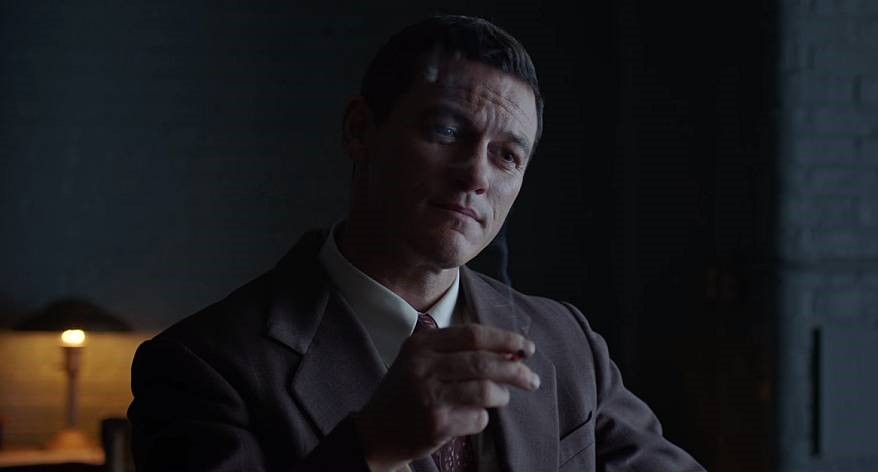
The creation of Wonder Woman, or at least, the source of her creation, is the kind of story that should be filed under “so incredible it must be true”. And that’s exactly right. Wonder Woman was the lasso-twirling, tiara-wearing brainchild of ex-Harvard faculty member William Moulton Marston (Evans), a psychology professor who also invented the systolic blood pressure cuff used with lie detectors (though he forgot to patent it). Wonder Woman was born out of Marston’s belief that women could only truly be happy by “submitting to a loving authority”, i.e. a husband. As a result, the early Wonder Woman comic strips were full of scenes of bondage, domination and spanking, with the majority of the female characters passively accepting their situations. Some of this was due to the structure of Marston’s private life. He was married to Elizabeth (Hall), also a professor of psychology, and they in turn lived with a research assistant of Marston’s who became their joint lover, Olive Byrne (Heathcote). Both women had children by Marston, and for a number of years their living arrangements went unquestioned. This polyamorous relationship led to Marston’s creation of the Amazonian princess, but even though the Wonder Woman comic strip was enormously popular, its content ensured that it would fall under the spotlight of Josette Frank (Britton) and the Child Study Association of America, and find itself at risk of public censure…

In telling Marston’s story, and that of Elizabeth and Olive, Angela Robinson’s earnest biopic relates a story of a ménage à trois that succeeded on its own terms, and in flagrant defiance of the societal norms of the period. This is the movie’s focus: not the creation of Wonder Woman, but the creation of a three-way relationship that withstood both internal and external pressures, the addition of children (four in total), long periods where Marston was reliant on his writing to bring in money (Elizabeth was a better breadwinner), and which did so because of the trio’s commitment to each other (though inevitably, there’s a blip). Robinson’s screenplay is firmly on the side of Marston and his two Wonder Women, and the personal and sexual explorations they undertook in order to make their relationship work, and if there isn’t too much in the way of judgment or objective criticism about the nature of their private lives, then it doesn’t hurt the story overall. But there are moments where the narrative seems in need of a dramatic push, and Robinson obliges accordingly.

But this is a movie about feelings, and emotions, and the best way of expressing them. Refreshingly, and aside from a closing scene in a hospital room that seems to go on for far too long (see if you think someone should have come in at some point), the characters make their points succinctly and quickly before moving on the next, and despite some occasionally clunky expository dialogue, the cast all give strong, skillful performances. It’s good to see Evans taking on a more meatier role than of late, and he expertly navigates the twin poles of Marston’s personality, aiming for dominance in his public and working lives, while being submissive in private. Hall is terrific as Elizabeth, hiding her vulnerability and insecurities behind a fearsome exterior, and Heathcote is equally impressive as Olive, the young woman neither Marston nor his wife can live without. As a framing device, Marston’s meeting with Frank doesn’t always tie up with what amount to flashbacks of his life up until then, but it does give the viewer a better understanding of Marston’s views on relationships and submission and all areas in between. This is a movie that’s unafraid to explore issues surrounding marriage and polygamy and notions of what constitutes individual pleasure, and in doing so proves itself to be intelligent and thought-provoking, though a little too matter-of-fact in its approach.

Rating: 7/10 – purposeful and intense for the most part, Professor Marston and the Wonder Women plays it straight, and in doing so, does justice to its trio of lead characters and their unconventional lifestyles; Bryce Fortner’s cinematography adds a layer of nostalgia to things, and Robinson is to be congratulated for interpreting Marston’s life in such a way that the majority of the movie remains plausible if not always entirely convincing.

Share this:

  • Share on X (Opens in new window) X
  • Share on Facebook (Opens in new window) Facebook
  • More
  • Print (Opens in new window) Print
  • Email a link to a friend (Opens in new window) Email
Like Loading...

Goodbye Christopher Robin (2017)

15 Thursday Feb 2018

Posted by dullwood68 in Movies

≈ Leave a comment

Tags

A.A. Milne, Domhnall Gleeson, Drama, Kelly Macdonald, Margot Robbie, Review, Simon Curtis, True story, Winnie the Pooh, Writing

D: Simon Curtis / 107m

Cast: Domhnall Gleeson, Margot Robbie, Kelly Macdonald, Will Tilston, Alex Lawther, Stephen Campbell Moore, Richard McCabe, Geraldine Somerville, Phoebe Waller-Bridge

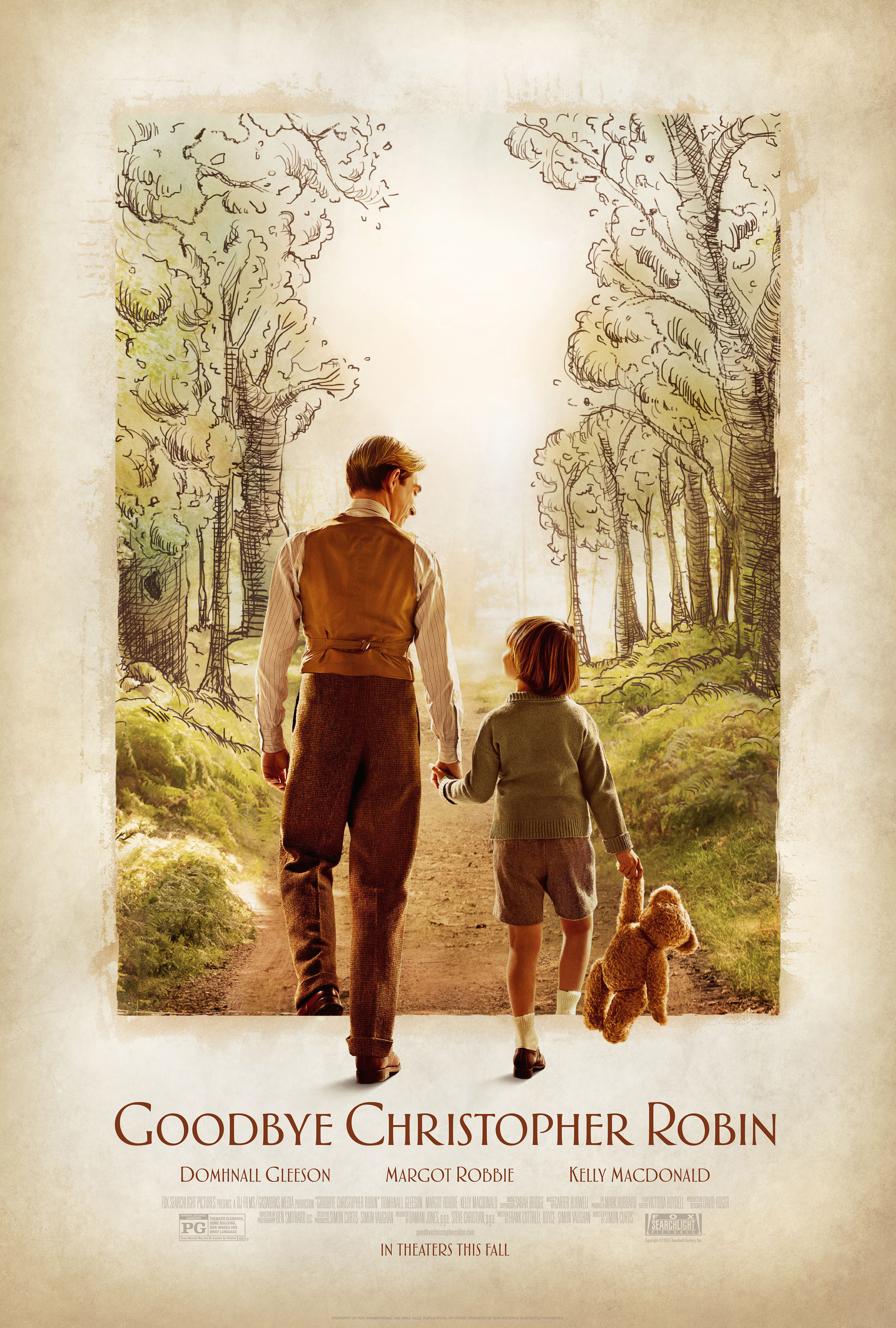
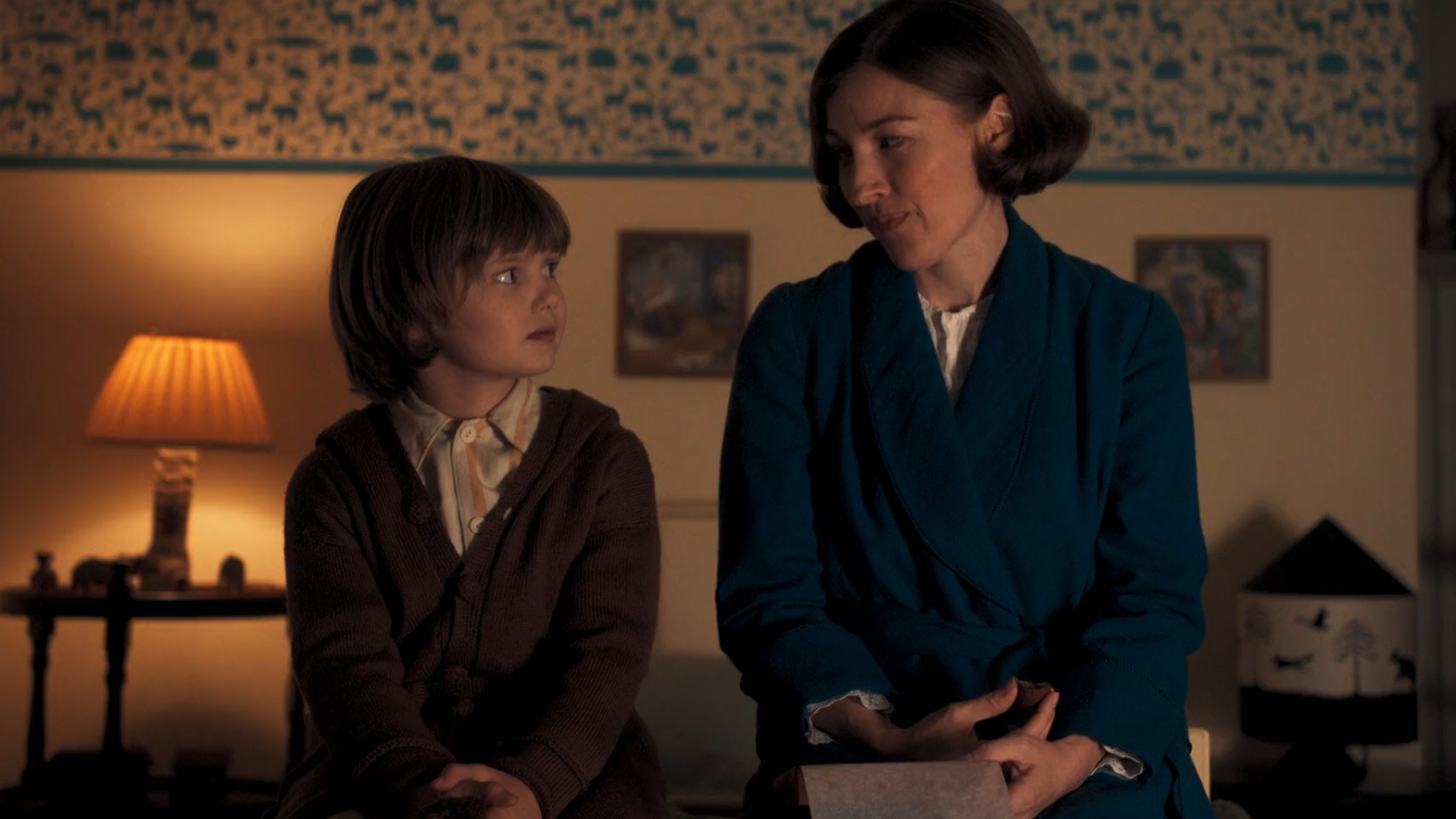
After fighting in the First World War, the playwright A.A. Milne (Gleeson) has difficulty adjusting to post-War life in the same way that his contemporaries have. While they behave as if the war had never happened, Milne suffers from delayed shell shock and debilitating flashbacks of his time at the Somme. Unable to reconcile his recent past with the demands of the present, Milne struggles to resume his writing; even the arrival of his first child, Christopher, is unable to make a difference. With a nanny, Olive (Macdonald), to look after Christopher (but called Billy), Milne moves his family to a secluded house in the Sussex countryside. When circumstances collude to leave Milne and Billy (Tilston) by themselves, their time together leads to Milne writing a series of books based around Billy’s toys, books whose main character is Christopher/Billy himself. But their success comes at a price, and Milne and his wife, Daphne (Robbie), allow Billy to become a part of the media circus that springs up around them, a decision that will have unexpected consequences when World War II brings things full circle…

From the outset, Goodbye Christopher Robin has all the hallmarks of a classic British heritage picture. With its impeccable period production design (courtesy of David Roger), sharply detailed costumes, attention to the social and political mores of the time, beautifully composed and lit cinematography (from Ben Smithard), and a surfeit of stiff upper lips, the movie has nostalgia running through it like a plumb line. This is a movie that looks and feels as if you could step into it at any moment and join A.A. Milne and his young son on their walks throught the Hundred Acre Wood. Luckily though, the script – by Frank Cottrell Boyce and Simon Vaughan – isn’t content with just recreating a bucolic time gone by. Instead it wants to paint a darker picture, one that encompasses PTSD, the expoitation of childhood innocence, remote parenting, the pitfalls of fame, and emotional disconnection. But while these issues serve to make the movie less superficial than it might be otherwise, even when they’re combined they don’t quite provide enough depth to stop the movie from feeling like a carefully selected box of confectionery. Make no mistake, it’s a lovely selection, but after a while you begin to realise that all the centres have the same flavour.

That’s not to say that the movie is a bad one, or that it fails somehow in its ambitions. Rather it’s a case of a movie doing exactly what is expected of it and very little more. There are the requisite number of moments where a loud noise sends Milne back to the trenches, the long-delayed moment when Olive tells her employers what she thinks of their parenting skills, and several more moments when Billy brings Milne out of his moody, self-imposed shell just by being a smiling young moppet. It’s attractively put together by director Simon Curtis, who shows more engagement with the subject matter than he did with his last feature, Woman in Gold (2015), and he coaxes a terrific performance from first-timer Tilston. Gleeson glowers in silence a lot but is effective as Milne, Macdonald shines in the kind of servant role she can do in her sleep now, Moore contributes a sensitive turn as Winnie the Pooh’s original illustrator, E.H. Shepard, but Robbie’s turn as Daphne is spoilt by the character’s unrelentingly mean-spirited and mercenary nature; the actress has nowhere to go with it. All in all though, the movie is an enjoyable one, with a strong emotional core to it, and a good sense of the childhood wonder that helped create such enduring and much-loved characters as Winnie the Pooh, Tigger and Piglet.

Rating: 7/10 – beautifully shot and edited, and with keenly expressed moments of insight into the creative process, Goodbye Christopher Robin nevertheless struggles to keep its dramatic elements meaningful or to the fore; thankfully it gets by on much else besides, including a magical vibe that’s maintained throughout, and the committed performances of its cast.

Share this:

  • Share on X (Opens in new window) X
  • Share on Facebook (Opens in new window) Facebook
  • More
  • Print (Opens in new window) Print
  • Email a link to a friend (Opens in new window) Email
Like Loading...

I, Tonya (2017)

11 Sunday Feb 2018

Posted by dullwood68 in Movies

≈ 1 Comment

Tags

Allison Janney, Craig Gillespie, Crime, Drama, Figure skating, Jeff Gillooly, Margot Robbie, Nancy Kerrigan, Olympics, Review, Sebastian Stan, Tonya Harding, True story

D: Craig Gillespie / 120m

Cast: Margot Robbie, Sebastian Stan, Allison Janney, Julianne Nicholson, Paul Walter Hauser, Bobby Cannavale, Bojana Novakovic, Caitlin Carver, Mckenna Grace, Anthony Reynolds, Ricky Russert

When a movie is said to be based on a true story, then chances are it won’t bear any resemblance to what actually happened. The movie becomes an approximation, an interpretation of events that took place, of conversations that people had, and their outcomes. Many movies use this idea to tell their own version of what they think happened and why, but often it’s in disservice to the original – and correct – story. If you want the truth, purists might argue, go see a documentary (like they don’t have their own biases). With so many movies released each year that are based on true stories, it’s often difficult to determine which ones are more accurate than others. But the makers of I, Tonya address this issue right from the start, with a caption that states: Based on irony free, wildly contradictory, totally true interviews with Tonya Harding and Jeff Gillooly. It’s a clever, and very effective tactic. By the movie’s end, and with no two individuals agreeing completely on the events that led to Tonya Harding’s fall from grace, the viewer is left to make up their own mind about what really happened. It’s akin to doing cinematic jury service.

Harding’s story (again if true) is another one that’s concerned with achieving the American dream, but it’s also a story that highlights the unspoken class divide that exists in the US and is still prevalent today. Born on the wrong side of the tracks and with a fearsome, domineering mother, LaVona (Janney), Harding (Robbie) was always going to find it difficult to adapt to and fit in with the somewhat rarefied surroundings of US professional figure skating, but even her ability to carry off a triple axel jump (she was the first American female figure skater to do so in competitions) couldn’t offset the disdain that her behaviour both on and off the ice prompted in both judges and followers of the sport. What didn’t help was her relationship with her husband, Jeff Gillooly (Stan). Harding was often the victim of domestic violence – something the movie goes to some uncomfortable lengths to illustrate – and the battles she waged at home were reflected in her demeanour during competitions. The movie doesn’t shy away from any of this, and Harding’s struggles to maintain an acceptable balance on the ice (no pun intended), point toward the reason why she was never entirely accepted by the figure skating cognoscenti.

Steven Rogers’ extremely fascinating and absorbing screenplay tells a mostly linear story but isn’t afraid to take detours that allow the characters to express themselves more fully during recorded interviews. There are other moments where the fourth wall is broken, but these again allow the characters to provide their own opinions on what’s happening, and it’s largely this approach to the material that keeps the movie from feeling routine or a best available reconstruction of recent history. The performances are uniformly superb, with Robbie and Stan giving career-best turns, while Janney almost steals the movie from everyone (everyone that is apart from Hauser, who plays Harding’s bodyguard, and self-professed “spy”, with such unorthodox charm that the character’s innate stupidity remains likeable throughout). Gillespie, bouncing back after the less than stellar The Finest Hours (2016), gives the movie a pace and a vibrancy that is upheld by Nicolas Karakatsanis’s stylish cinematography, and Tatiana S. Riegel’s flawless editing, while the soundtrack is peppered with songs that relate both to the period the movie covers and to the emotional peaks and troughs threaded throughout the screenplay. If Tonya Harding’s story is one that you’re unfamiliar with, then this is a great place to start if you want to find out how someone goes from being arguably the best female figure skater in the world, to someone who ends up being banned from the sport for life.

Rating: 9/10 – a dazzling concoction that mixes high drama with low comedy, and which also has time to be poignant, mournful, ecstatic, sad, joyous, profane, and reproachful, I, Tonya is a whirlwind of a movie that impresses at every turn; based on a true story, and open and honest about its various source materials, this gives everyone involved a voice and treats them all with respect, even when they do things that are irretrievably dumb – and that happens a lot.

Share this:

  • Share on X (Opens in new window) X
  • Share on Facebook (Opens in new window) Facebook
  • More
  • Print (Opens in new window) Print
  • Email a link to a friend (Opens in new window) Email
Like Loading...

Dan Dream (2017)

07 Wednesday Feb 2018

Posted by dullwood68 in Movies

≈ Leave a comment

Tags

Casper Christensen, Comedy, Denmark, Drama, Electric car, Frank Hvam, Hope Whisper, Jesper Rofelt, Marcus Millang, Niclas Vessel Kølpin, Review, True story

D: Jesper Rofelt / 98m

Cast: Casper Christensen, Frank Hvam, Marcus Millang, Niclas Vessel Kølpin, Louisa Yaa Aisin, Stine Schrøder Jensen, Lars Hjortshøj, Jelina Moumou Meyer, Peter Gantzler, Mia Lyhne, Jacob Lohmann

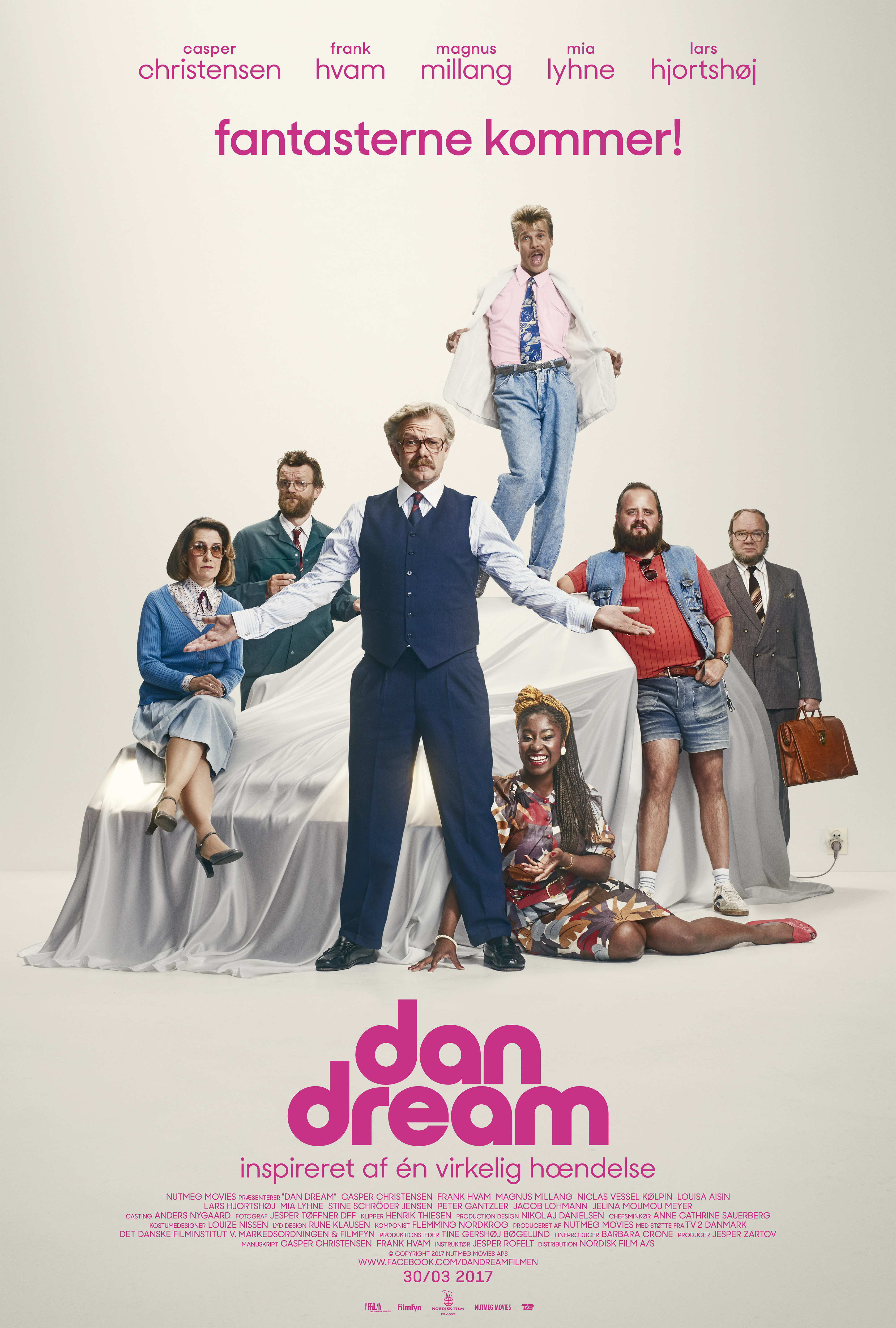
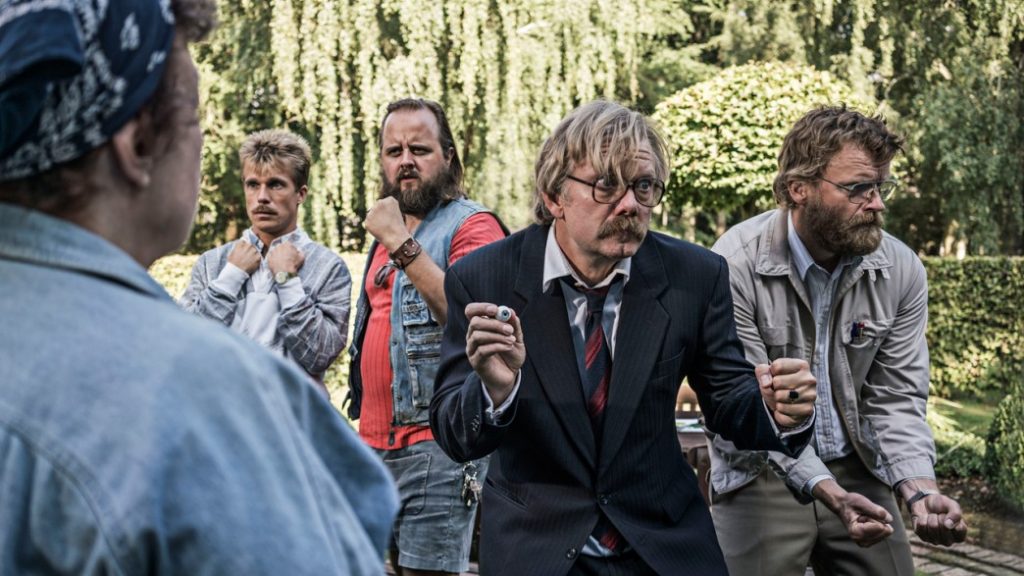
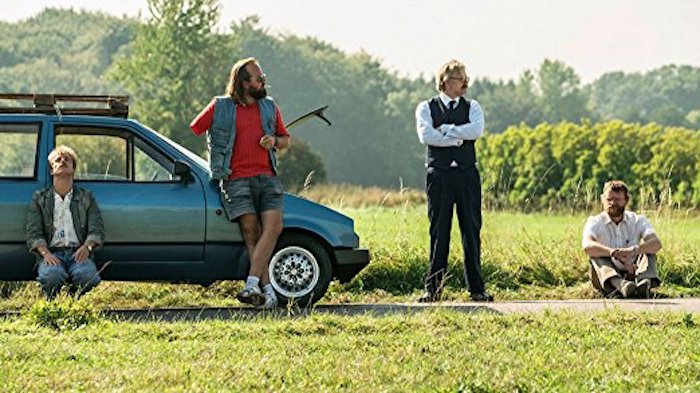
Outside of Denmark it’s unlikely that anyone has heard of Whisper Electronic Car A/S, but back in the early Eighties, this company attempted to design and manufacture a Danish electric car intended for mass consumption. They even got so far as to introduce the first version, called the Hope Whisper, at a premiere event in front of then Danish Prime Minister, Poul Schlüter. The fact that the Hope Whisper isn’t a household name the world over (or even in Denmark) should give you an idea of just how successful it was, but in Dan Dream, whether or not it succeeds or fails is beside the point. Tired of being patronised or ignored by his bosses, sales executive Thorkil Bonnesen (Christensen) quits his job and following a chance encounter with engineer Jens Knagstrup (Hvam) and his electric bicycle, decides to give Denmark their first electric car. Using Jens’ battery design, Thorkil enlists the aid of a one-armed mechanic, Vonsil (Millang), and ex-colleague Henrik (Kølpin), and together they move to the quiet country town of Bjerringsund to set up shop and build their (Dan) dream car.

There’s some local opposition at first, even though the town’s mayor, Kai Ove (Hjortshøj), is behind them a hundred per cent. But Thorkil charms them enough to win them over to his side, and the car’s production proceeds smoothly until the fateful day of the premiere. Along the way, director Rofelt and co-writers (and co-stars) Christensen and Hvam provide us with a hugely entertaining movie that wears its heart on its sleeve from the beginning, and which proves to be one of the unsung “heroes” of 2017. There’s drama to be had from the setbacks that have to be overcome, but this is less about the creation and launch of a revolutionary mode of transport, but a look at how it affects the lives of those involved (well, some of them; Vonsil and Henrik remain much the same throughout). It’s interesting to note that of the three male characters most affected – Thorkil, Jens and Kai – each has issues relating to their wives. One is a bully in need of a comeuppance, one learns his wife has had an affair since arriving in Bjerringsund, while the last treats his wife badly in a moment of weakness. Some of this allows for trenchant comments about the racist and sexist atttudes of the time, and the script isn’t afraid to have Thorkil et al look stupid or unwittingly insensitive.

But first and foremost, Dan Dream is a comedy whose easy-going material revolves around the notion that “everything is impossible until it’s been done”, a bright, positive statement that reflects well on the team’s efforts, even in the face of subsequent disaster. The humour is light and unforced, and reliant on its cast’s abilities to play bemused, baffled, and flustered in equal measure while also retaining a naīvete that allows for sympathy and the viewer’s support in their efforts. Making his feature debut, Rofelt directs with a flair for capturing the minor details in a scene, details that add credibility to the often whimsical nature of the script, and he deftly handles the underlying seriousness of much of the material. He’s supported by a cast who all play their roles with a terrific awareness of when too much is enough, and who are clearly having a great deal of fun in the process. This transfers itself to the viewer, and the movie remains amusing and involving throughout. It’s amiable and far from overly dramatic, but it is a gently unfolding piece that is confidently handled, wonderfully consistent, and a very pleasant way to spend ninety-eight minutes.

Rating: 8/10 – smart, amusing, and providing a wry commentary on the times (in Denmark at least), Dan Dream is a movie that offers a number of simple pleasures throughout its run time, all of which make it immensely enjoyable; one of those movies that absolutely should be given a chance when you come across it, it proves that some movies don’t have to be profound to make an impact, or have a message to justify their existence.

NOTE: There’s no trailer with English subtitles available at present.

Share this:

  • Share on X (Opens in new window) X
  • Share on Facebook (Opens in new window) Facebook
  • More
  • Print (Opens in new window) Print
  • Email a link to a friend (Opens in new window) Email
Like Loading...

Monthly Roundup – January 2018

31 Wednesday Jan 2018

Posted by dullwood68 in Movies

≈ 2 Comments

Tags

Adrian Molina, Alexander Payne, Animation, Anthony Gonzalez, Awakening the Zodiac, Chadwick Boseman, Christoph Waltz, Coco, Comedy, Darkest Hour, Downsizing, Drama, Dylan Minnette, Fabrice du Welz, Family Fever, Gael García Bernal, Gary Oldman, Germany, Hallie Meyers-Shyer, History, Home Again, Horror, Jaume Collet-Serra, Joe Wright, Jonathan Wright, Kathrin Waligura, Kristin Scott Thomas, Lee Unkrich, Leslie Bibb, Liam Neeson, Matt Angel, Matt Damon, Meryl Streep, Message from the King, Mexico, Michael Sheen, Nico Sommer, Peter Trabner, Pixar, Reese Witherspoon, Reviews, Romance, Serial killer, Shane West, Steven Spielberg, Suzanne Coote, The Commuter, The Open House, The Pentagon Papers, The Post, The Washington Post, Thriller, Tom Hanks, True story, Vera Farmiga

Awakening the Zodiac (2017) / D: Jonathan Wright / 100m

Cast: Shane West, Leslie Bibb, Matt Craven, Nicholas Campbell, Kenneth Welsh, Stephen McHattie

Rating: 4/10 – no one knew it at the time but the notorious (and uncaptured) Zodiac killer filmed the murders he committed, something cash-strapped couple Mick and Zoe Branson (West, Bibb) discover when they come into possession of one of the reels, and then find themselves and those around them targeted by the Zodiac killer himself; there’s the germ of a good idea lurking somewhere in Awakening the Zodiac, but thanks to a sloppy script, wayward direction, and an indifferent approach to the Zodiac killer himself (by the end he’s just a generic movie-made serial killer), this never gets out of first gear, and settles for trundling along and signposting each narrative development with all the skill and style of a one-legged man at an ass-kicking contest.

Home Again (2017) / D: Hallie Meyers-Shyer / 97m

Cast: Reese Witherspoon, Michael Sheen, Candice Bergen, Pico Alexander, Jon Rudnitzky, Nat Wolff, Lake Bell

Rating: 7/10 – when middle-aged fledgling interior designer Alice (Witherspoon) splits from her unreliable husband (Sheen), the last thing she expects to do is allow three young men trying to break into the movie business to move into her guest house – and then become romantically involved with one of them (Alexander); it’s hard to criticise Home Again because despite it being almost drama-free and the very definition of innocuous, it also just wants to give audiences a good time, and on that very basic level it succeeds, but it’s still possibly the most lightweight romantic comedy of 2017.

Downsizing (2017) / D: Alexander Payne / 135m

Cast: Matt Damon, Christoph Waltz, Hong Chau, Kristen Wiig, Rolf Lassgård, Udo Kier, Søren Pilmark, Jason Sudeikis

Rating: 5/10 – the answer to the world’s population crisis is revealed to be shrinking people to the point where they’re five inches tall, something that sad-sack occupational therapist Paul Safranek (Damon) agrees to with alacrity, but being small proves to be no different from being normal-sized, and soon Paul is having to re-think everything he’s ever thought or believed; a closer examination of Downsizing (under a microscope perhaps) reveals a movie that contains too many scenes that pass by without contributing anything to the overall storyline, and a satirical approach to the idea itself that lacks purpose, and sadly for Payne fans, his trademark wit, making it all a dreary, leaden experience that goes on for waaaaaay too long.

Family Fever (2014) / D: Nico Sommer / 71m

Original title: Familien fieber

Cast: Kathrin Waligura, Peter Trabner, Deborah Kaufmann, Jörg Witte, Jan Amazigh Sid, Anais Urban

Rating: 7/10 – when two sets of parents get together for the weekend at the request of their respective children (who are a couple), none of them are able to deal with the fallout that comes with the revelation of a secret that threatens the security of both marriages; a German comedy/drama that doesn’t always go where the viewer might expect it to, Family Fever revels in the awkwardness and frustration felt by its quartet of main characters, and though it sadly runs out of steam in the last fifteen minutes, by then it’s done more than enough to provide plenty of wicked laughs and affecting drama.

Coco (2017) / D: Lee Unkrich, Adrian Molina / 105m

Cast: Anthony Gonzalez, Gael García Bernal, Benjamin Bratt, Alanna Ubach, Renee Victor, Jaime Camil, Alfonso Arau

Rating: 8/10 – Miguel (Gonzalez) is a young boy whose family has rejected any kind of music in order to focus on selling shoes, which leads him into all sorts of trouble in the Underworld on Mexico’s Day of the Dead, trouble that could also mean his never returning to the land of the living; right now you’re never quite sure how a Pixar movie is going to work out, but Coco is a treat, its mix of clever character design, beautifully rendered animation (naturally), heartfelt storylines, and memorable songs making it one to savour time and again… though, be warned, you will be in tears towards the end.

Darkest Hour (2017) / D: Joe Wright / 125m

Cast: Gary Oldman, Kristin Scott Thomas, Lily James, Stephen Dillane, Ben Mendelsohn, Ronald Pickup, Nicholas Jones, Samuel West

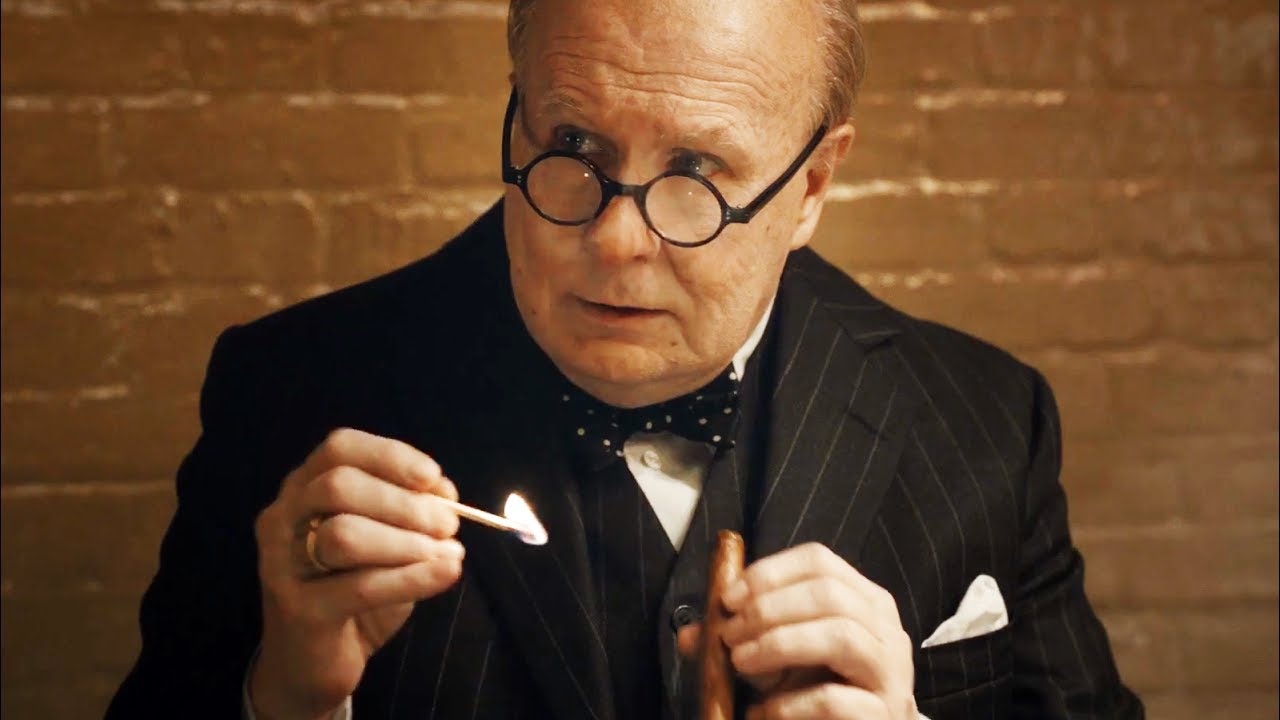
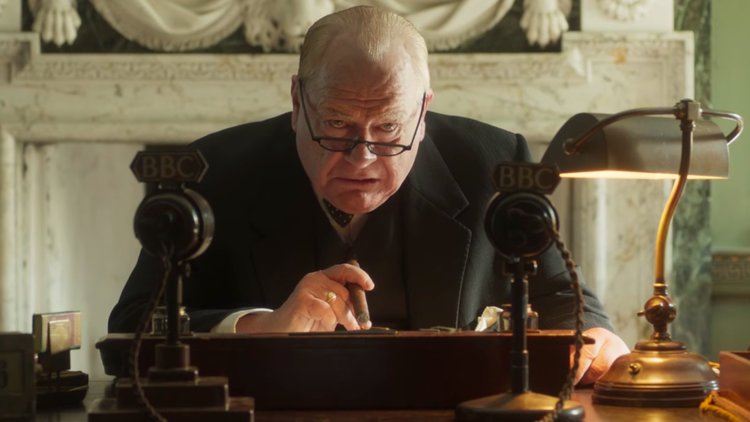
Rating: 8/10 – it’s 1940 and Great Britain is faced with a challenge: who is to lead them against the fast-approaching menace of the Nazis, and if it has to be Winston Churchill (Oldman), then what can be done to undermine him and his authority?; the answer is quite a bit – for the most part – but history is firm on Churchill’s success, and so Darkest Hour, while featuring a superb performance from Oldman, has no choice but to succumb to retelling events that have already been retold numerous times before, and in doing so doesn’t offer the viewer anything new except for a number of very good performances and assured, and surprisingly sinewy direction from Wright.

Message from the King (2016) / D: Fabrice du Welz / 102m

Cast: Chadwick Boseman, Luke Evans, Alfred Molina, Teresa Palmer, Natalie Martinez, Arthur Darbinyan, Lucan Melkonian, Diego Josef, Tom Felton, Chris Mulkey, Jake Weary

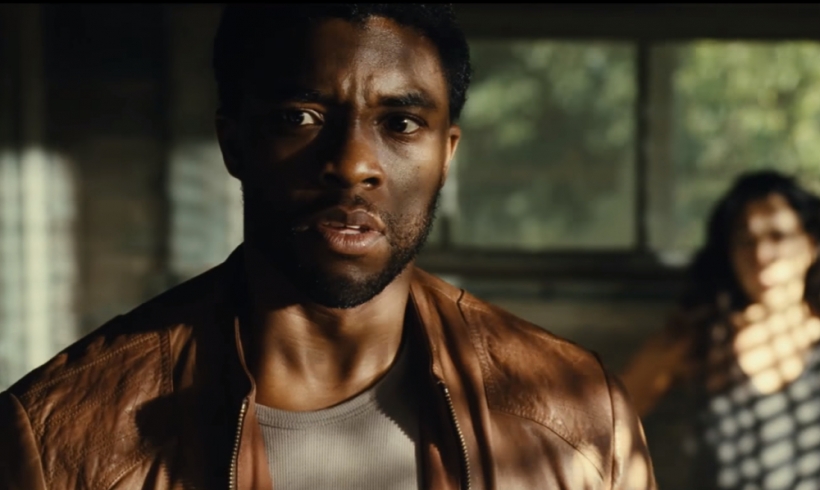
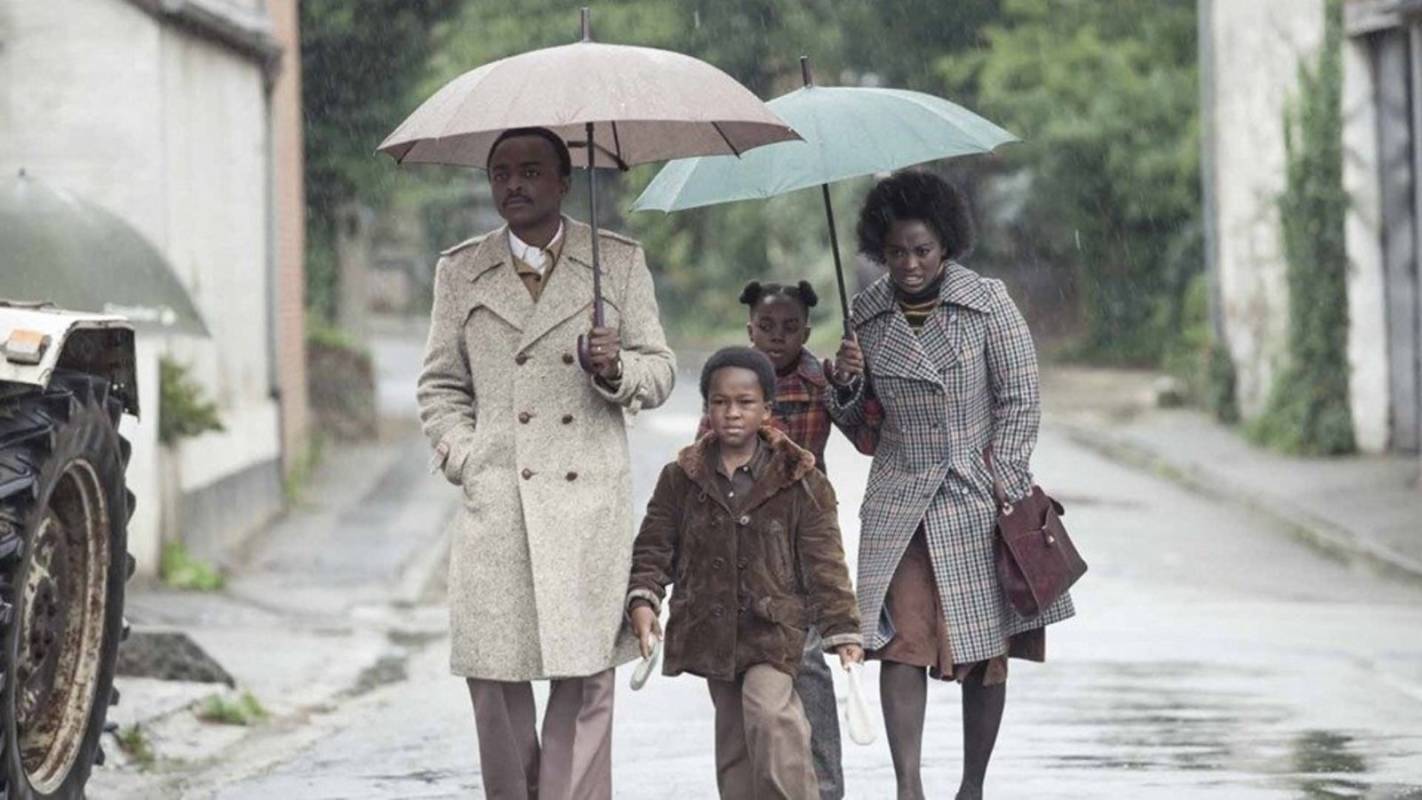
Rating: 5/10 – when his younger sister dies in suspicious circumstances in Los Angeles, South African cab driver Jacob King (Boseman) travels there to find out who caused her death and why – and exact revenge; a throwback to the kind of blaxploitation movies made in the Seventies, Message from the King at least refers to King as an angry brother in the traditional sense, but the movie’s plot is hollow, and the likes of Evans and Molina are wasted in roles that might have seemed fresh (again) in the Seventies, but here feel like caricatures for the movie to focus on in between bouts of King exacting his violent revenge.

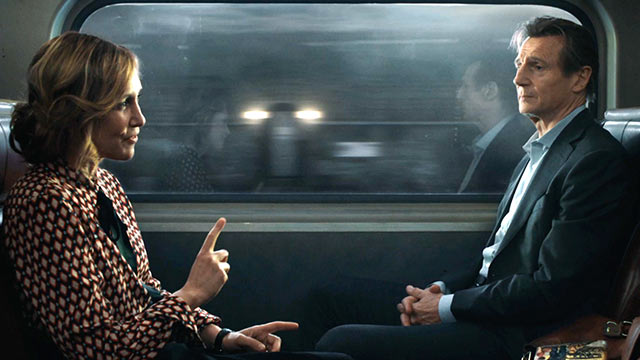
The Commuter (2018) / D: Jaume Collet-Serra / 105m

Cast: Liam Neeson, Vera Farmiga, Patrick Wilson, Jonathan Banks, Sam Neill, Elizabeth McGovern, Killian Scott, Shazad Latif, Andy Nyman, Clara Lago, Roland Møller, Florence Pugh

Rating: 4/10 – ex-cop turned insurance salesman Michael MacCauley (Neeson) is approached by a mysterious woman (Farmiga) on his train home and tasked with finding a complete stranger who’s also on the train – what could possibly go wrong?; everything as it turns out, with The Commuter going off the rails soon after, and never getting back on track, something confirmed (if there was any doubt before then) when the script throws in an “I’m Spartacus/I’m Brian” moment (take your pick), as well as reminding everyone that Neeson really is too old for this kind of thing.

The Post (2017) / D: Steven Spielberg / 116m

Cast: Meryl Streep, Tom Hanks, Sarah Paulson, Bob Odenkirk, Tracy Letts, Bradley Whitford, Bruce Greenwood, Matthew Rhys, Alison Brie, Carrie Coon, Jesse Plemons, David Cross, Zach Woods, Pat Healy

Rating: 9/10 – the publication of the Pentagon Papers, which exposed the level of deceit the US government had perpetrated on its citizens about its involvement in Vietnam, is explored through the days leading up to the Washington Times‘ courageous decision to publish despite the threat of imprisonment for treason that the White House was prepared to enforce; Streep is publisher Kay Graham, Hanks is legendary editor Ben Bradlee, and Spielberg is on excellent form, giving The Post a sense of immediacy and potency that other historical dramas can only dream of (and the relevance to today’s US political scene doesn’t even need to be made obvious).

The Open House (2018) / D: Matt Angel, Suzanne Coote / 94m

Cast: Dylan Minnette, Piercey Dalton, Patricia Bethune, Sharif Atkins, Aaron Abrams, Edward Olson, Katie Walder

Rating: 3/10 – a recent widow (Dalton) and her mopey son (Minnette) get away from their grief and their problems at a house that’s up for sale – and find strange things going on there right from the start; an awful thriller that just refuses to make any sense or make either of its two main characters sympathetic, The Open House does everything it can to make you look away… and not in a good way.

Share this:

  • Share on X (Opens in new window) X
  • Share on Facebook (Opens in new window) Facebook
  • More
  • Print (Opens in new window) Print
  • Email a link to a friend (Opens in new window) Email
Like Loading...

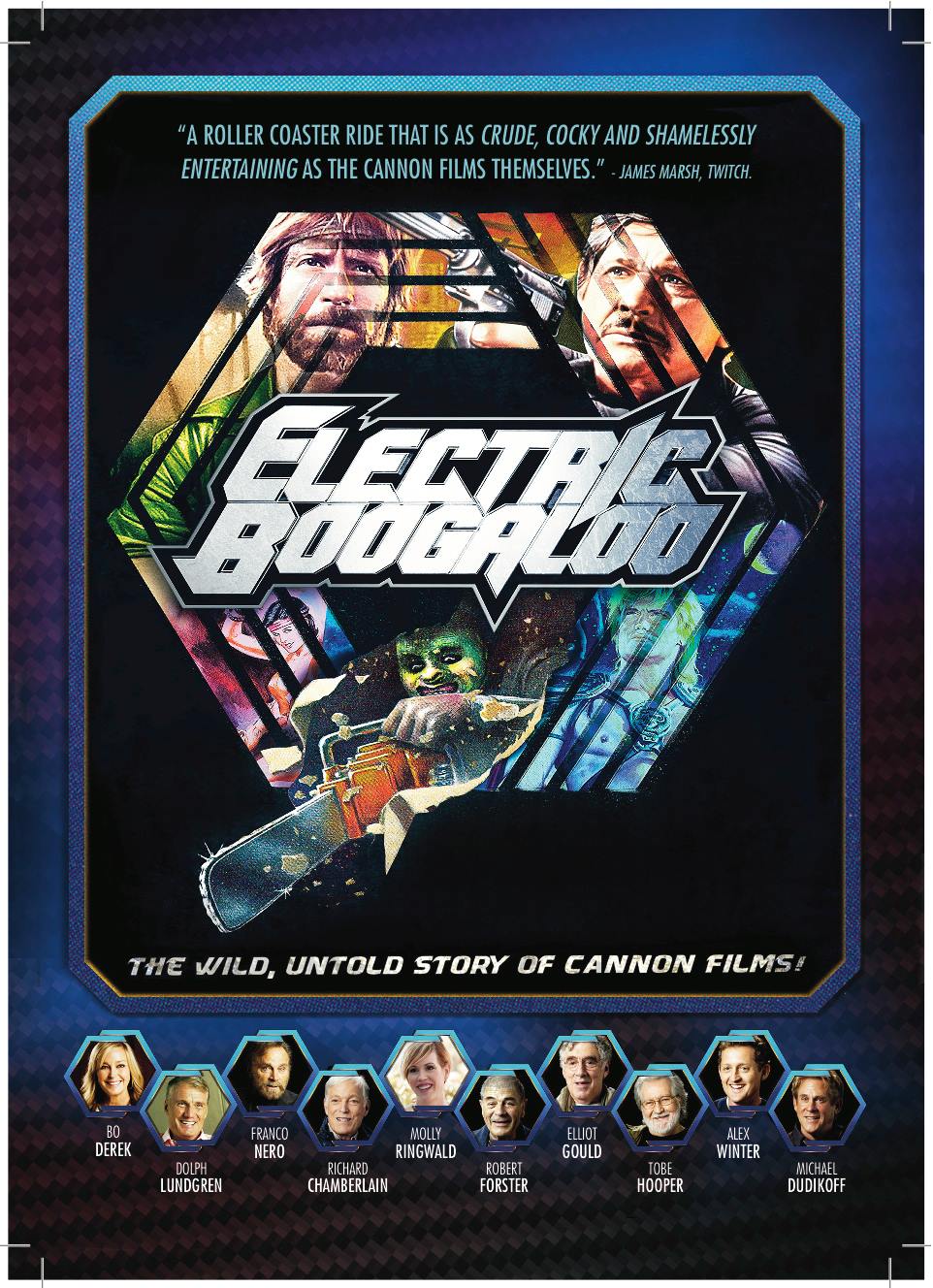
Electric Boogaloo: The Wild, Untold Story of Cannon Films (2014)

29 Monday Jan 2018

Posted by dullwood68 in Movies

≈ Leave a comment

Tags

Catch Up movie, Documentary, Exploitation, Mark Hartley, Menahem Golan, Movies, Review, The Cannon Group Inc, True story, Yoram Globus

D: Mark Hartley / 106m

With: Sam Firstenberg, Boaz Davidson, Mark Helfrich, John Thompson, Mark Rosenthal, Christopher Pearce, David Engelbach, Pieter Jan Brugge, Lance Hool, Frank Yablans, Rusty Lemorande, Avi Lerner, Stephen Tolkin

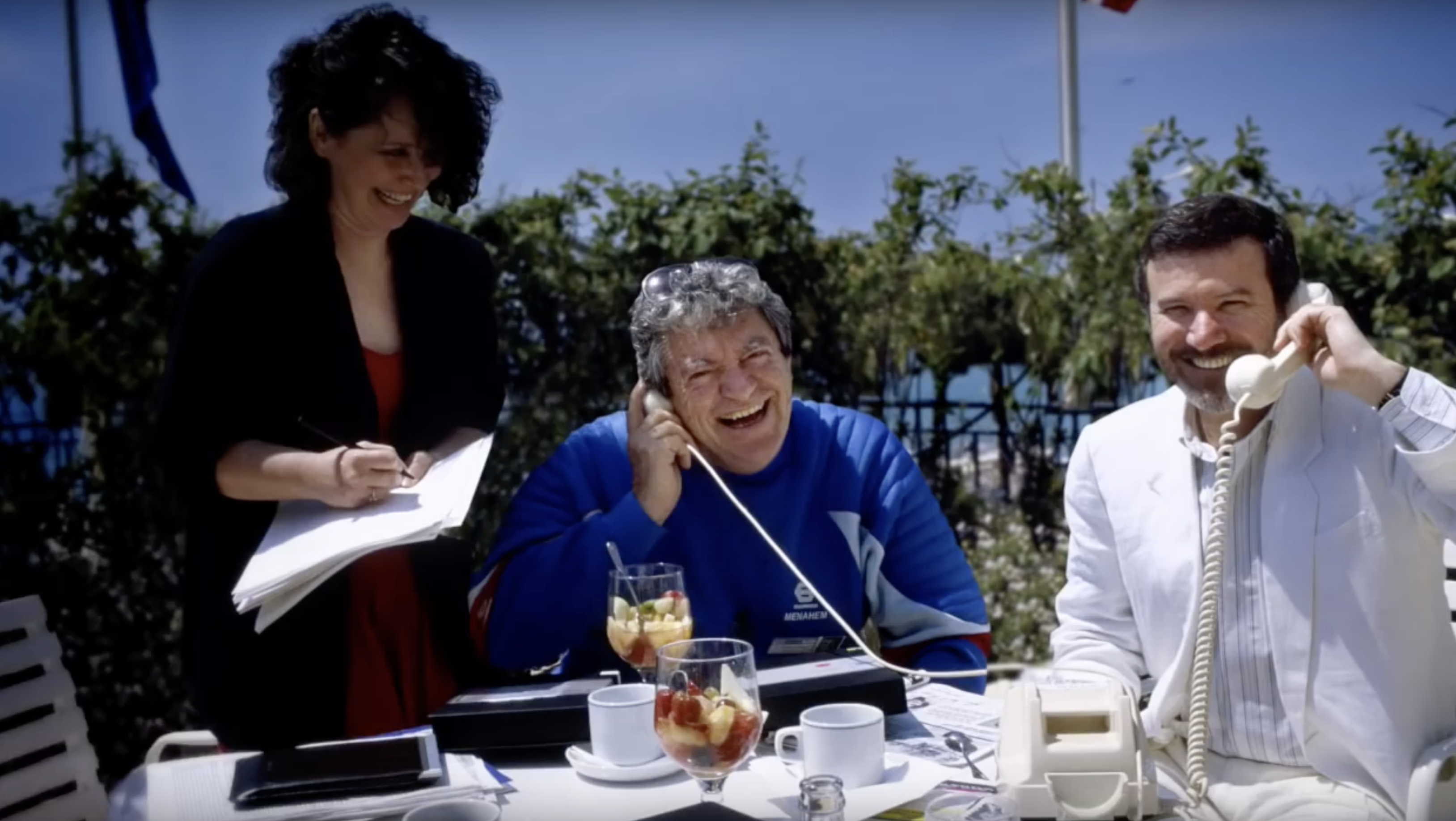
There’s a saying that if you remember the Sixties then you weren’t really there. In a similar fashion, if you remember the Eighties but never saw a Cannon movie then you’re not really a movie buff (though in reality you probably did but just didn’t realise it). Cannon, run by Israeli cousins Menahem Golan and Yoram Globus, were the ne plus ultra of awful, low budget movies, often taking the most basic of ideas and using as little money as possible in order to get the finished product out there. Did they worry about the quality of the movies they produced? Most of the time, no. But they did know what they were doing, and between 1979 and 1994, Cannon Films released a succession of movies that played poorly in cinemas, were slammed by critics, but which were perfect for the home video market. Titles such as Dr. Heckyl and Mr. Hype (1980), The Seven Magnificent Gladiators (1983), and The Naked Cage (1986) were all movies you’d normally cross the street to avoid, but thanks to Cannon’s continuous and unerring ability to make the worst movies possible, their output became the cinematic equivalent of a car wreck: you just had to see how bad they could be.

In Mark Hartley’s latest documentary to explore the wider reaches of low budget movie making – after Not Quite Hollywood: The Wild, Untold Story of Ozploitation! (2008) and Machete Maidens Unleashed! (2010) – the story of the Cannon Group and their feckless approach to movie making is given a thorough deconstruction thanks to the people who were there: the production executives, the screenwriters, the directors, and the stars. The very existence of Cannon Films, and the fact that it survived as long as it did as a producing entity is a testament to the stubbornness of Golan and the financial smarts of Globus. Their business model was simple: sell the distribution rights for one movie and use that money to make another. Occasionally they worked with some very well-known stars (Richard Chamberlain, Charles Bronson, even Katharine Hepburn), and gave some directors the chance to make movies they couldn’t make elsewhere (John Cassavetes, Jean-Luc Godard, Franco Zeffirelli). They were as much an enigma to themselves perhaps as they were to everyone else. For Golan and Globus it was all about being successful, and being seen to be successful. The movies? In the end, merely the tools to achieve that success.

Electric Boogaloo presents a fair and balanced overview of the life of Cannon, and the wider impact such a company had on Hollywood during the Eighties when their movies were being distributed by MGM. It also allows those who were involved with Cannon to air their views and opinions in a way that appears consistently derogatory (there are only so many ways you can say a Cannon movie is bad), but which also as the documentary progresses, reveals a common fondness for the so-called Go-Go Boys and the movies they made. There are plenty of humorous anecdotes to be had, and some stories would be hard to believe if they were about another studio or production company, but with Golan and Globus often unsure themselves as to what constituted a Cannon movie – they were both unaware that Tobe Hooper’s The Texas Chainsaw Massacre 2 (1986) was intended as a comedy – the stark reality of just how little they knew about what they were doing comes across as plainly as the awful special effects in Superman IV: The Quest for Peace (1987) (they wanted to match the quality of the first three movies, but on a fraction of the budget needed). Like many of the interviewees, you’ll be shaking your head at some of the revelations, and at the same time telling yourself, “it could only be them.”

Rating: 8/10 – plenty of clips and archival footage as well as a plethora of talking heads means Electric Boogaloo: The Wild, Untold Story of Cannon Films covers a lot of bases and does so with a great deal of affection and an earned respect; Golan and Globus may have given us some of the worst movies ever made, but there were times when their luck and their movie making acumen paid off in spades, though you have to admit that after ruining Superman on the big screen, thank [insert preferred deity here] they never got the chance to ruin Spider-Man as well.

Share this:

  • Share on X (Opens in new window) X
  • Share on Facebook (Opens in new window) Facebook
  • More
  • Print (Opens in new window) Print
  • Email a link to a friend (Opens in new window) Email
Like Loading...

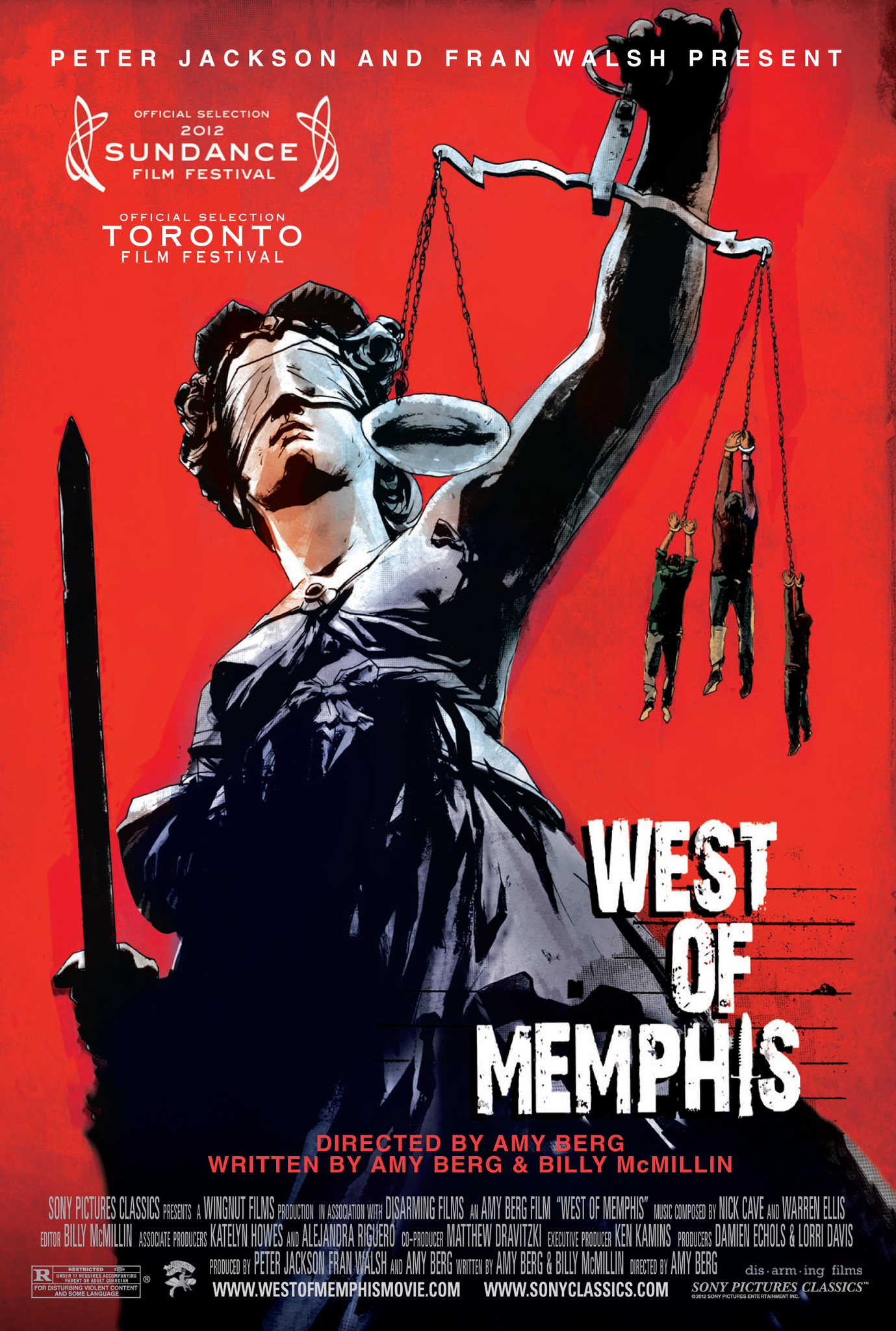
West of Memphis (2012)

15 Monday Jan 2018

Posted by dullwood68 in Movies

≈ Leave a comment

Tags

Amy Berg, Crime, Damien Echols, Documentary, Jason Baldwin, Jessie Misskelley Jr, Lorri Davis, Miscarriage of justice, Pam Hobbs, Review, Robin Hood Hills, True story

D: Amy Berg / 149m

With: Pam Hobbs, Terry Hobbs, Damien Echols, Lorri Davis, Jessie Misskelley Jr, Jason Baldwin, John Mark Byers, David Burnett, Peter Jackson, David Jacoby, Holly Ballard

The case of the West Memphis Three – Echols, Baldwin and Misskelley Jr – is one that has attracted a lot of media attention in the years since they were convicted of the murders of three young boys in the Robin Hood Hills area of West Memphis. Their convictions occurred in 1994. Misskelley Jr was tried separately from his friends and sentenced to life plus forty years in prison. Baldwin was sentenced to life in prison, while Echols, regarded as the ringleader, was sentenced to death. Throughout the police investigation and the trials, there was no physical evidence linking the three teenagers to the murders, other potential suspects were ignored, and so-called “experts” on Satanic cults gave evidence that ascribed all three defendants’ behaviours and interests as consistent with involvement in Satanism and ritual sacrifice. The three young men were convicted on a combination of local hearsay, prejudice, police incompetence, and judicial lethargy. The phrase, “miscarriage of justice”, couldn’t be more apt.

There have been three previous documentaries that have followed the case from beginning to near end, and while these are impressive in their own right for being of the moment and for the access to the various people involved – the families of the victims, the police, the lawyers on both sides, interested parties etc. – none of them are able to do what West of Memphis can do, and that’s tell the whole story in one fell swoop. It also has contributions from the likes of Eddie Vedder and Henry Rollins, and one of this movie’s producers, Peter Jackson, as they explain their involvement in trying to get the trio’s convictions overturned. Part of this documentary’s allure is the sense of outrage that it maintains, as each twist and turn in the story prompts an ever-increasing disbelief that the police and the legal system could have knowingly conspired to send three young men to jail on the flimsiest of evidence – and feel justified in doing so. And then continue to see them remain incarcerated even as more and more evidence is discovered that should exonerate them. By the movie’s end, and the details of their eventual release after eighteen years, your faith in the US legal system should be in tatters, so tarnished is its reputation.

Fortunately, in assembling this movie, director Amy Berg has also gained the trust and cooperation of two very important people in this story: Pam Hobbs, mother of Stevie Branch, one of the victims, and Lorri Davis, a young woman who befriended Damien Echols while he was in prison, and who eventually married him. Watching Pam come to terms with her grief and her growing belief in the trio’s innocence, while also trying to come to terms with the mounting evidence that her husband, Terry, may have killed the children, is often heartbreaking to watch. Lorri, meanwhile, is a tireless advocate for Echols, and as she shares her feelings about him, she also reveals an inner strength that is reflected in Pam’s need to know the truth about her son’s death. Both are admirable women, and in their different ways, have managed not to be subsumed by the events of 5 May 1993, when the children were murdered. Berg addresses all the theories about those murders, including other potential killers that the police failed to follow up on, and she keeps a strict focus on the inability of the law and jurisprudence to behave in any other way than appallingly. The West Memphis Three may have their freedom, but as this sincere and gripping documentary points out, the cost to them and everyone associated with that terrible event twenty-five years ago, will remain, and despite an outwardly “happy” ending, the movie also makes it clear that moving on may not be entirely possible for anyone.

Rating: 9/10 – the human element is kept to the fore in Berg’s excellent documentary about a murder case that, despite three convictions, remains unsolved, and which remains endlessly fascinating; with new evidence, new sources, and a fresh take on the whole godawful mess, West of Memphis is the kind of documentary you don’t want to take your eyes from in case you miss something important, and which will have you praying you’re never charged with murder in the state of Arkansas.

Share this:

  • Share on X (Opens in new window) X
  • Share on Facebook (Opens in new window) Facebook
  • More
  • Print (Opens in new window) Print
  • Email a link to a friend (Opens in new window) Email
Like Loading...

Marshall (2017)

13 Saturday Jan 2018

Posted by dullwood68 in Movies

≈ Leave a comment

Tags

Chadwick Boseman, Dan Stevens, Drama, Historical drama, James Cromwell, Josh Gad, Kate Hudson, NAACP, Rape trial, Reginald Hudlin, Review, Sterling K. Brown, True story

D: Reginald Hudlin / 118m

Cast: Chadwick Boseman, Josh Gad, Kate Hudson, Sterling K. Brown, Dan Stevens, James Cromwell, Keesha Sharp, Roger Guenveur Smith, Derrick Baskin, Barrett Doss, Marina Squerciati, John Magaro, Ahna O’Reilly, Jeffrey DeMunn

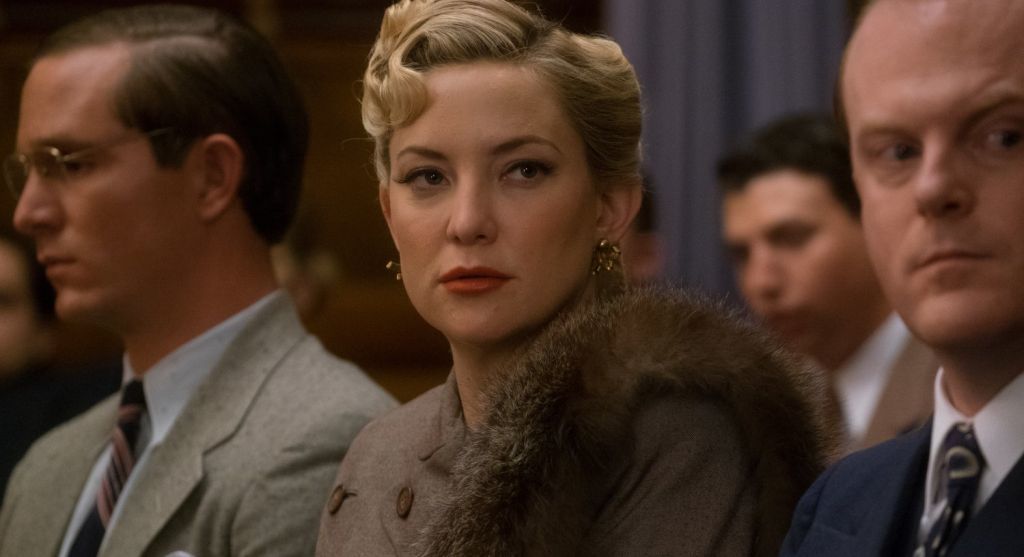
Thurgood Marshall (Boseman) was a lawyer who worked across the US for the National Association for the Advancement of Coloured People (NAACP) during the Thirties and Forties. During his time with the NAACP he tried cases in front of the US Supreme Court, and won twenty-nine out of thirty-two of them. His most famous case was Brown v Board of Education, Topeka in 1954, in which the the educational segregation of whites and blacks was deemed unconstitutional. It was a landmark case, and a major victory for the Civil Rights Movement. But instead of telling that story, the makers of Marshall have opted to tell the story of The State of Connecticut v Joseph Spell, a lurid rape case that occurred in 1940. The movie, capably directed by Reginald Hudlin from a screenplay by father and son team Michael and Jakob Koskoff, also makes the decision to change things around so that Marshall himself is the focus and not the original trial lawyer, Sam Friedman (Gad). Does this really matter in a movie that’s based on a true story? Let’s answer that with another question: what’s wrong with the true story by itself?

The differences between what actually happened and what occurs in the movie are many (as you might expect), but one aspect that leaves a bitter after taste is the treatment of Sam Friedman. Here he’s Marshall’s flunky, criticised repeatedly, and treated in such a poor way for so long that bullying becomes the only word for it. In a role reversal that would be outrageous if it weren’t so credulous, Marshall treats Friedman as if their racial positions were reversed: Marshall is the master and Friedman is the slave. Friedman was a more than capable lawyer who in 1940 had more trial experience than Marshall, and who was hired by the NAACP to defend Joseph Spell (Brown). Marshall was sent as a consultant, and the legal liberties the movie takes to reduce his presence in court while at the same time making him look like a puppet master pulling Friedman’s strings, is objectionable. While it’s good to see an educated, strong, confident, and positive example of a black man on our screens, did it really have to be at the expense of the white man who actually did all the heavy lifting?

Things aren’t helped by the predictable plotting, and the stereotypical characters, from Stevens’ arrogant prosecution lawyer to Cromwell’s obstructionist, authoritarian judge. The trial scenes have a certain amount of energy to them, as do the flashbacks to the night of the rape (Spell was a chauffeur who was accused by his employer’s wife, Eleanor Strubing (Hudson), of rape and attempted murder), but away from the courtroom, much of the movie is perfunctory, and the visuals are quite drab. It’s also a movie that recounts the more tawdry aspects of the alleged rape with a degree of detachment, and what should be shocking sounds more as if it were unrelated to anyone who’s actually involved in it all. As Marshall, Boseman adds another real-life person to his resumé, and invests the character with a lot of passion and vigour, but as the movie finally gets round to giving Friedman his due, Marshall becomes a secondary character and his impact diminishes. Gad handles the enforced comic aspects of his character with his usual amiable skill, but doesn’t always look comfortable doing so. Hudson brings a degree of ambiguity to her role as Eleanor, and Brown is a solid, dependable presence throughout. In dramatic terms, the verdict is a given, and it’s a mark of the movie’s lacklustre approach, that when that verdict is announced, the response from the viewer is likely to be “Okay” instead of Oh my God!”

Rating: 6/10 – patchy and hesitant in parts, Marshall beefs up its main character’s involvement in a rape trial and spends much of its time reminding the viewer that Thurgood Marshall was a better man than anyone else depicted in the movie; a hagiography then – though not the first – and one that, by adopting such an approach, reinforces that old newspaper saying, “If you can’t print the truth, print the legend”.

Share this:

  • Share on X (Opens in new window) X
  • Share on Facebook (Opens in new window) Facebook
  • More
  • Print (Opens in new window) Print
  • Email a link to a friend (Opens in new window) Email
Like Loading...

Victoria & Abdul (2017)

11 Thursday Jan 2018

Posted by dullwood68 in Movies

≈ Leave a comment

Tags

Ali Fazal, Drama, Eddie Izzard, History, Judi Dench, Mohur, Munshi, Queen Victoria, Review, Stephen Frears, Tim Pigott-Smith, True story

D: Stephen Frears / 111m

Cast: Judi Dench, Ali Fazal, Eddie Izzard, Tim Pigott-Smith, Adeel Akhtar, Michael Gambon, Paul Higgins, Olivia Williams, Fenella Woolgar, Julian Wadham, Robin Soans, Simon Callow

There’s a saying that “history repeats itself”, and it’s an apt concept when discussing the latest slice of heritage cinema concerning Queen Victoria and the post-Albert years that saw her decline in health if not in will. In Victoria & Abdul, the Queen (Dench) has been a widow for twenty-six years. It’s also 1887 and the British Empire is celebrating fifty years of Victoria’s reign. As part of the celebrations, two Muslims are sent from India to present a mohur, a special gold coin, to the Queen. One is a prison clerk, Abdul Karim (Fazal). Bored with the fawning antics of her inner circle and courtiers, Victoria develops an interest in Abdul and makes him her “munshi”, a native language teacher. Soon, Abdul is teaching her Urdu and instructing her in the Quran. Of course, this horrifies the Queen’s household, as well as her son, Bertie (Izzard), and efforts are made to discredit Abdul or reduce the increasing influence he has on Victoria through their friendship. But the Queen refuses to listen, and Abdul remains at her side for the remainder of her reign…

Much of that previous sentence could be rewritten to reflect the turbulent friendship that Victoria experienced with John Brown, her Scottish manservant. That relationship occurred post-Albert and pre-Abdul, but there are remarkable similarities between the two men that would make watching this and Mrs. Brown (1997) something of an exercise in deliberately instilled déjà vu. Suffice it to say, the similarities don’t end there. The active racism of the period is front and centre, as is the general xenophobia of the Queen’s household, but the distaste with which Abdul’s presence is regarded is pushed to the fore on too many occasions for it to remain effective. It’s a given that there’s going to be a resistance from the Establishment over Abdul’s perceived influence, but in the end this is the main focus of the movie and the source of much of the drama, whether it’s Eddie Izzard’s churlish Bertie looking miffed behind his beard, or Tim Pigott-Smith’s equerry, Sir Henry Ponsonby, being rebuffed at every turn in his efforts to undermine Abdul’s position. Efforts are made or attempted to have Abdul removed, Victoria stands firm against these impositions, and then – repeat. This does allow the movie to maintain a certain rhythm, but the repetitive nature of the screenplay (plus the story’s inevitable ending) leaves the movie feeling more and more dramatically redundant as it progresses.

But while the material may feel a little fusty, there’s no denying the energy of Stephen Frears’ direction, or the merits of the performances. Frears is too experienced to let the predictable nature of the material get in the way of stopping him from making an entertaining and enjoyable movie, and this is the case with Victoria & Abdul. Frears has the confidence to alter the mood of a scene on the turn of a sentence or the change of a look, and he does so on several occasions, and often through observing the characters in repose or in thought. Judi Dench gives another exemplary portrayal of Victoria, and it’s one that reveals several hidden layers to the character, all of which highlight the often lonely and fragile nature of the Queen at that time, while also reinforcing her reputation for being obstinate and direct. As Abdul, Fazal has much less to do, but still makes a good impression in a portrayal that, despite being that of a title character, is effectively a supporting role. The rest of the cast, all seasoned professionals who could carry off this sort of thing in their collective sleep, encourage the familiarity of the period and the material, and it’s all beautifully rendered by DoP Danny Cohen, who is something of an unsung hero in the world of cinematography.

Rating: 7/10 – though put together with enough due care and attention to ensure that watching it is a gratifying experience for the most part, Victoria & Abdul remains a standard piece of history-telling that won’t surprise viewers in any way at all; the cinematic equivalent then of a pair of comfy slippers, this avoids being bland and unremarkable thanks to the talent involved, and because everyone still enjoys seeing the Establishment being thwarted at every turn in its machinations.

Share this:

  • Share on X (Opens in new window) X
  • Share on Facebook (Opens in new window) Facebook
  • More
  • Print (Opens in new window) Print
  • Email a link to a friend (Opens in new window) Email
Like Loading...

Molly’s Game (2017)

08 Monday Jan 2018

Posted by dullwood68 in Movies

≈ 1 Comment

Tags

Aaron Sorkin, Biography, Drama, Gambling, Idris Elba, Jessica Chastain, Kevin Costner, Poker, Review, True story

D: Aaron Sorkin / 140m

Cast: Jessica Chastain, Idris Elba, Kevin Costner, Michael Cera, Jeremy Strong, Chris O’Dowd, J.C. MacKenzie, Brian d’Arcy James, Bill Camp, Graham Greene, Jon Bass

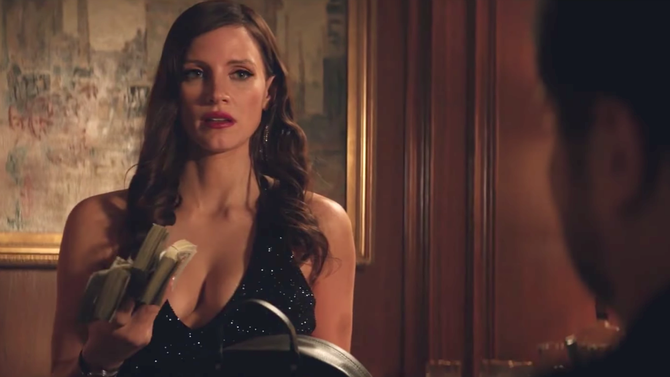
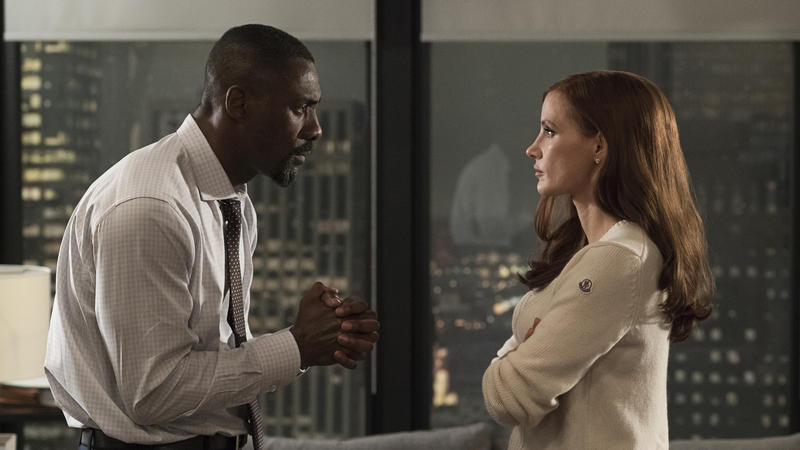
With the issue of women trying to get ahead in a “man’s world” receiving so much attention right now, the arrival of Aaron Sorkin’s debut as a director seems like very good timing indeed. Based on the true story of Molly Bloom (Chastain), a potential Olympic-class skier forced to retire through injury, and how she came to run one of the world’s most exclusive high-stakes poker games – twice, Sorkin’s debut is a dazzling whirl through the twilight world of underground gambling where fortunes are won and lost at the turn of a card. Molly begins her second career while working for Dean Keith (Strong), a struggling businessman who hosts his own underground game, and who tells her to oversee the game each week. When her relationship with Keith becomes irretrievably strained, she starts up her own game, steals away one of his main players, an actor referred to as Player X (Cera), and begins to make a name for herself. Avoiding taking a cut of the money being wagered, Molly isn’t doing anything illegal, but she falls foul of Player X’s ego and the game is taken away from her. She moves to New York where she starts another game but this time she begins to take a cut. She bows out after a couple of years, but two years later, finds herself being arrested and charged with, amongst other things, money laundering. Enter the man who will represent her in court, Charlie Jaffey (Elba)…

Like many biopics, Molly’s Game doesn’t tell Bloom’s real story, but instead uses its bare bones to explore a world where gambling is its own addictive drug of choice, and the players wage obscene amounts of money for the thrill of it. It’s a world that Sorkin portrays with a great deal of fidelity, but while it’s an interesting and compelling world to spend time in – and the movie spends as much time there as it can – it does mean that Molly herself is placed firmly in the background. There are too many times where she’s the observer, watching the players while offering a pointed commentary on their habits and foibles. The movie is on firmer ground when it’s showing the process by which Molly and Jaffey spar their way to a workable defence strategy, with her refusal to implicate others or break her own self-imposed ethical code, proving at odds with Jaffey’s efforts to keep her out of jail. The scenes between Chastain and Elba crackle with an urgency and an intensity that isn’t always there when Molly’s past is being recounted, and while Sorkin the director in conjunction with editors Alan Baumgarten, Elliot Graham, and Josh Schaeffer, keeps things moving at quite a lick (the running time doesn’t feel like it’s anywhere near two hours and twenty minutes), the movie’s non-linear approach does undercut any potential or hard-earned momentum.

But if there’s one area of the screenplay that no one should worry about, it’s the dialogue. This is a movie where the dialogue is so well structured and so well held together through the various vocal rhythms associated with the characters, that not one word feels false or sounds awkward when it’s spoken. Sorkin’s good ear works its magic as usual, and there are times when it’s easy to believe that Molly et al spoke these actual words during the real-life situations being depicted. Even a scene late on between Molly and her uncompromising father (Costner), a scene that screams plot contrivance at the top of its lungs, is so deftly written that you can almost forgive the hackneyed nature of it. Sorkin is also well served by his cast, with Chastain and Elba both giving terrific performances, and they in turn are given equally terrific support from the likes of Costner, Cera, and O’Dowd. This is a confident debut feature from Sorkin, and even though some of it feels a little stretched in terms of “did it really happen that way?” there’s no denying the energy and the appeal of seeing one woman carving out her own niche in a man’s world and sticking to her own principles while she does it.

Rating: 8/10 – top-notch performances from Chastain and Elba added to another script full of riches from Sorkin (and his surprisingly flexible direction) make Molly’s Game a hugely enjoyable movie even when it steers perilously close to Movie Biopic Clichés 101; if you’re not into poker some of this will go way over your head, and there are a few silly missteps along the way, but otherwise this is a fast-paced, freewheeling, and above all fun experience that doesn’t rely on depth or subtexts at all in telling Bloom’s story.

Share this:

  • Share on X (Opens in new window) X
  • Share on Facebook (Opens in new window) Facebook
  • More
  • Print (Opens in new window) Print
  • Email a link to a friend (Opens in new window) Email
Like Loading...

Mark Felt: The Man Who Brought Down the White House (2017)

02 Tuesday Jan 2018

Posted by dullwood68 in Movies

≈ Leave a comment

Tags

Deep Throat, Diane Lane, Drama, FBI, Liam Neeson, Marton Csokas, Peter Landesman, Review, True story, Watergate

aka The Secret Man

D: Peter Landesman / 103m

Cast: Liam Neeson, Diane Lane, Marton Csokas, Tony Goldwyn, Ike Barinholtz, Josh Lucas, Wendi McLendon Covey, Kate Walsh, Brian d’Arcy James, Maika Monroe, Michael C. Hall, Tom Sizemore, Bruce Greenwood, Eddie Marsan, Noah Wyle

To have lived in America during the late Sixties and early Seventies was to have lived in troubled times. The country was experiencing seismic shifts in practically all areas: sexually, racially, politically, socially. But if there was one constant, one small part of the US that could be counted on to remain the same, no matter what was occurring anywhere in the country, it was the FBI. The FBI under J. Edgar Hoover remained apart from political bias or influence, an autonomous body that answered to no one, but which involved itself – if needed – in the lives of everyone. If you ever wanted to know just how much Hoover was feared, you only have to watch the first scene in Mark Felt: The Man Who Brought Down the White House. In it, the FBI’s Deputy Associate Director Mark Felt (Neeson) is called to the White House for a meeting with John Dean (Hall) and two of his colleagues in the Nixon administration, John Mitchell and John Ehrlichmann. When they infer that Hoover should step down as Director of the FBI, it’s Felt who chillingly reminds them about Hoover’s secret files, the ones that contain everybody’s dirty laundry. What would happen, Felt counter infers, if those files were made public. The idea of Hoover retiring is quickly dropped.

The scene serves two purposes: one, to show just why the FBI was so autonomous, and two, to make it clear to the viewer that even if Hoover wasn’t around, Felt would be, and he was just as much a keeper of the secrets as Hoover was. It’s a necessary distinction to make, as what follows in the wake of Hoover’s death on 2 May 1972, is a watershed in US history, and Felt’s involvement in that watershed is crucial to the events that led to President Nixon’s resignation from office. Make no mistake: without Felt’s involvement, and without the decision he ultimately took in becoming “Deep Throat”, the US political landscape would have continued to change irrevocably for the worse. It’s a theme that runs throughout the movie, and which has modern day parallels. After Hoover’s death, and the discovery of the Watergate break-in, the White House did its best to influence the FBI and stop it from carrying out a thorough investigation (sound familiar?). And the White House’s efforts would have succeeded – if it hadn’t been for Mark Felt.

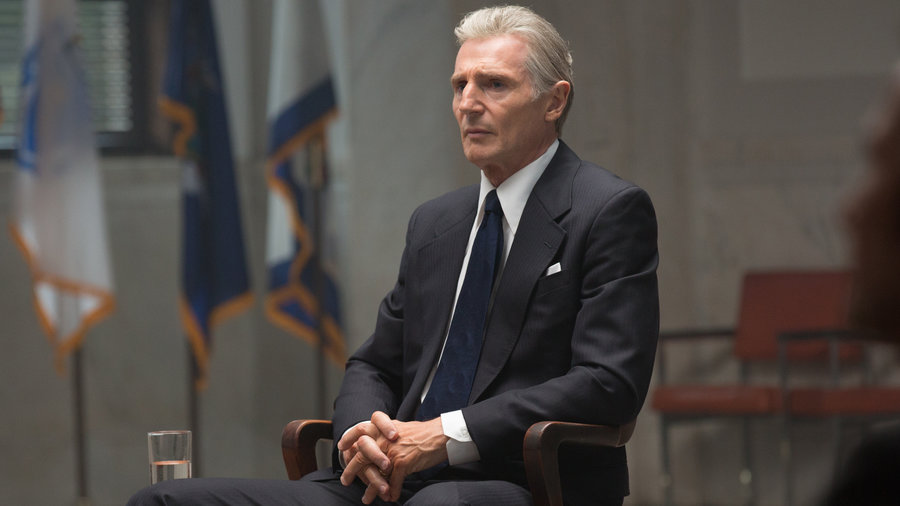
And so we have Felt portrayed by Liam Neeson in a political drama that goes behind the scenes at the FBI during the two years between Hoover’s death and Nixon’s resignation. Based largely on A G-Man’s Life (2006), a memoir Felt wrote with John O’Connor, Peter Landesman’s latest movie is ultimately a strange beast, neither compelling enough to grab its audience and guide it safely through the political upheaval of the time, or clear enough on the details of just how Nixon was caught in a web of his own deception. Instead, Landesman’s script focuses on the need to keep Acting Director L. Patrick Gray (Csokas) in the dark about the investigation, the search for the mole in the FBI who’s leaking information to Time and The Washington Post, and on a personal front, Felt’s search for his runaway daughter, Joan (Monroe). These three strands lead to a lot of repetition as Felt repeatedly goes behind Gray’s back, accusations of someone being “Deep Throat” fly thick and fast through the FBI offices with almost everyone being accused at one point or another, and Felt reassuring his wife, Audrey (Lane), that Joan will be found safe and well.

It’s all done in a watchable, unpretentious way, with Landesman apparently content to play out the story as if he were doing it by the numbers. There’s energy here in the way that people around Felt seem to be rushing around but to no obvious purpose (Felt gives out lots of instructions but rarely receives any related feedback), and the pace of the movie is quick enough that boredom is never likely to set in, but it all seems like a missed opportunity. It’s another movie where we all know the outcome in advance (or at least should do), and so it’s also a movie where the script’s ability to create tension and maintain it is undermined from the word go. Even when Felt falls under suspicion of being “Deep Throat” and Gray implies that Felt is being bugged because of this, all it leads to is a few minutes of Felt searching his office and his home for hidden microphones, and then it’s all forgotten. In his efforts to include as much as possible that occurred during that tumultuous two-year period, Landesman has forgotten to ensure that what is included is both relevant and advances the narrative. As a result, there are too many occasions where said narrative stalls and needs to be kickstarted again.

In the title role, Neeson is square-jawed, determined, strikingly gray-haired, and a bit of a dull date. Spending time with Felt eventually becomes something of a chore. He’s not the most expressive of men – though when he becomes angry about something, his outbursts are like the tantrums of a six year old, or someone trying out being angry for the first time – and his stolid, rigid demeanour doesn’t exactly warm you to him, but where Neeson does succeed with the character is in showing his commitment to the FBI and the depth of his affiliation with it. The script hints at Felt becoming a whistleblower because of what was happening to the FBI rather than any disgust at Nixon’s criminal behaviour, but it falls short of exploring this idea fully, and instead paints Felt as a kind of Gary Cooper figure who has to do the right thing, no matter what. Neeson is also lumbered with some gloriously tedious dialogue, though the moment where he gets to say, “No one can stop the driving force of an FBI investigation, not even the FBI”, is one to cherish.

There’s good support from the likes of Lucas and Monroe, but Csokas comes across as too heavy handed as the out of his depth Gray. Lane, meanwhile, apparently gave such a great performance as Felt’s troubled wife that most of her scenes ended up on the cutting room floor, which is a shame as Lane provides easily the movie’s best performance in spite of this. Visually the movie is quite restrained, with a dark, limiting colour palette that is probably meant to represent the gloominess of the times, but which in reality makes the movie look unnecessarily dreary. In the end it’s a competently made movie but not one that stands out from the crowd despite its subject matter.

Rating: 5/10 – a movie that has all the potential to be a riveting political thriller is instead a rather uninspired trek through a period of US history that was anything but humdrum; Mark Felt: The Man Who Brought Down the White House lacks drive and ambition in its attempts to tell Felt’s story, and settles early on for playing it safe and pedestrian in terms of its willingness to amble instead of soaring.

Share this:

  • Share on X (Opens in new window) X
  • Share on Facebook (Opens in new window) Facebook
  • More
  • Print (Opens in new window) Print
  • Email a link to a friend (Opens in new window) Email
Like Loading...

Stronger (2017)

17 Sunday Dec 2017

Posted by dullwood68 in Movies

≈ 1 Comment

Tags

Biography, Boston Marathon bombing, David Gordon Green, Drama, Erin Hurley, Jake Gyllenhaal, Jeff Bauman, Literary adaptation, Miranda Richardson, Review, Romance, Tatiana Maslany, True story

D: David Gordon Green / 119m

Cast: Jake Gyllenhaal, Tatiana Maslany, Miranda Richardson, Clancy Brown, Richard Lane Jr, Nate Richman, Lenny Clarke, Patty O’Neil, Kate Fitzgerald, Danny McCarthy, Frankie Shaw, Carlos Sanz

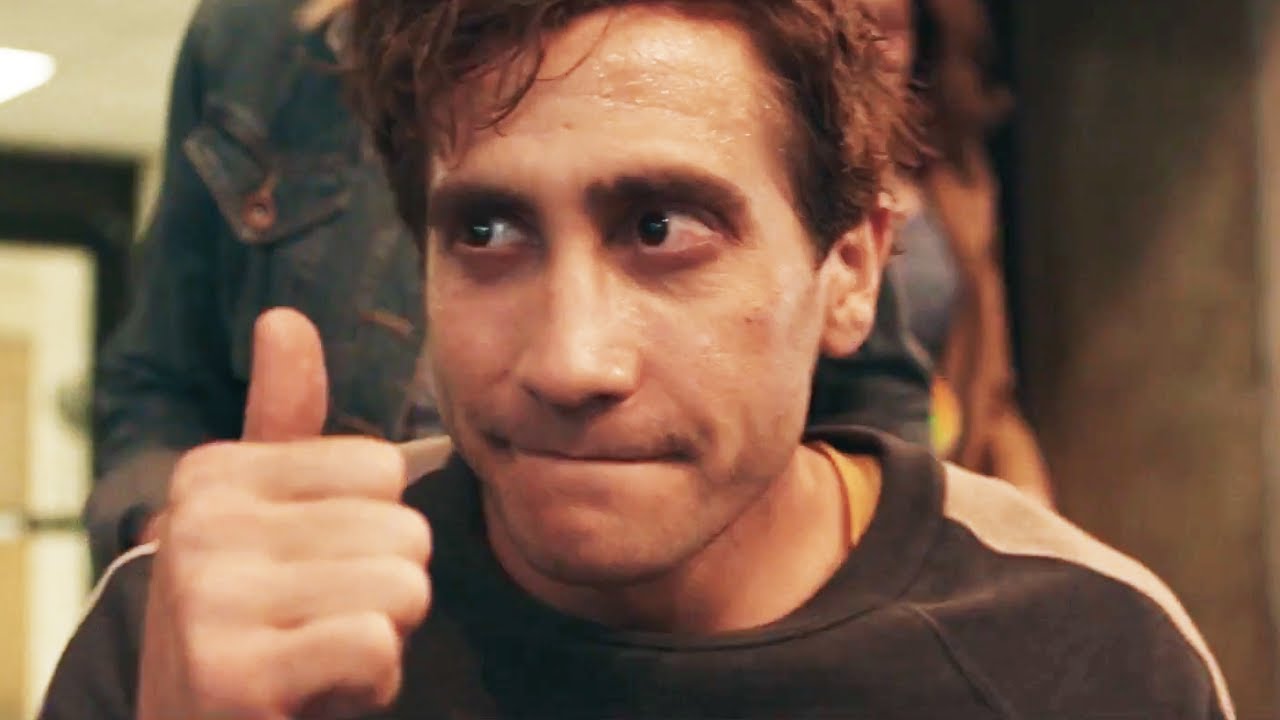
Following in the wake of Patriots Day (2016), Peter Berg’s excellent recreation of the manhunt for the Boston Marathon bombers, we have Stronger, a movie that focuses on one of the victims on that occasion, a Costco employee called Jeff Bauman (Gyllenhaal). Adapted from the book he wrote about his experiences after losing both his legs from above the knee down, Bauman’s tale is one of physical and emotional hardship, but most of all, how his relationship with on again, off again girlfriend, Erin Hurley (Maslany), made all the difference to his rehabilitation. It’s another true story of triumph over adversity, but while Jeff’s story – by itself – is inspiring, the movie itself isn’t quite as satisfactory.

Biopics often have a hard time avoiding the clichés of the genre. In recounting the trials and tribulations of someone who has suffered greatly through personal trauma, there’s usually a list of stock situations to be worked through. Most of them adhere to the various stages of grief, and so audiences can almost tick off these stock situations as they go along, but while Stronger does its best to avoid these clichés, in doing so it actually robs the movie of a lot of what would involve the audience more. Sure, we see Jeff falling off the toilet because his centre of gravity is out of whack, and yes, he tries to push Erin away because of self-pity, and of course, he misses rehab appointments because he can’t motivate himself, but while these are all established staples, here they’re downplayed to the point where the movie runs the risk of feeling a little detached from its subject matter and main character. There’s a matter-of-fact approach adopted by director David Gordon Green that stops the viewer from fully engaging with Jeff and his struggle to walk again.

Partly this is due to the way in which John Pollono’s script tackles the various stages of Jeff’s recovery. It always feels like a piecemeal attempt to tell a larger story, and while the focus on Jeff and Erin’s fractious relationship is to be commended, it doesn’t take long for the viewer to realise that without it the movie would be a lot shorter and a lot less interesting. Stripped of this central relationship, and once he’s lost his legs, the movie would consist merely of scenes between Jeff and his alcoholic mother, Patty (Richardson), a handful of other scenes featuring Jeff and his friends, Jeff being feted as a living breathing incarnation of the Boston Strong ideal, and further scenes where he’s told off for not going to his rehab appointments. All these are exactly the kind of things you’d expect to see in a movie such as this, and in that respect, the movie doesn’t disappoint. But there have been far too many other movies made along similar lines, and there’s not enough effort made to make this stand out from the crowd.

Bauman’s story, however, is made more interesting through his relationship with Erin. Pre-bombing, Jeff isn’t the most committed of boyfriends, but Erin has always allowed herself to give him another chance after splitting up with him. The irony of what happened to Jeff isn’t lost on the movie, as the only reason he was near the finishing line when the first bomb went off, was because he was there to support Erin (who was taking part in the race), and to show that she could rely on him more than in the past. Their connection is strengthened by Erin’s innate decency in supporting Jeff through the days and months that follow, and also by his need to have someone capable of looking after him; Patty is a semi-functioning alcoholic who admits she hasn’t been the greatest of mothers. With his father, Jeff Sr (Brown), reduced to hanging around in the background the longer the movie goes on, Jeff leans on Erin quite heavily, and as the dynamic of their relationship shifts and changes, it’s Erin’s own sense of self-respect that allows her to make a decision that, along with meeting the man who saved his life, Carlos Arredondo (Sanz), helps Jeff to dig himself out of the mire of self-pity and self-doubt that he’s surrounded himself with.

As Jeff, Gyllenhaal puts in another committed, powerful performance that sees the actor express Jeff’s confusion and anguish and dismay and anger at being placed in such a difficult position. However, his commitment to the role is hampered by the script’s determination not to make things too difficult for Jeff, as each obstacle he encounters is quickly overcome so that he can move on to the next – and overcome that one just as easily. If anything, this approach comes as something of a surprise, especially when it becomes obvious that Maslany’s portrayal of Erin is the movie’s strong suit, instead of Gyllenhaal’s portrayal of Jeff. It’s a career best performance from Maslany, who takes charge of the role and makes Erin the movie’s heart and soul. She’s simply mesmerising, and she finds new and different ways to make Erin more than the eternally supportive and self-sacrificing (i.e. stock) girlfriend that she could have been in other hands. In their scenes together, Maslany is so good that she’s always the focus and not Gyllenhaal; when the camera’s on him, you want it to shift back to her as quickly as possible.

There are many elements that are allowed to play out without any resolution, and a lot of things that are left unaddressed, such as the marital status of Jeff’s parents (are they divorced, separated, taking a break?), and though Green directs with his usual flair for exploiting emotional undercurrents, he’s not given too many occasions where he can do this. Certain scenes lack purpose – the script could have done with some judicious pruning – and there are times when Jeff’s family and friends seem present only to provide the movie with a sense of humour, but the overall problem with the movie is that its efforts to avoid the clichés of the genre don’t always work. And when you have a character who needs to learn to walk again but on prosthetic legs, and that aspect is reduced to a smattering of scenes, that raises another issue: just what is the movie’s focus if it isn’t that?

Rating: 6/10 – neither great nor awful but somewhere maddeningly in between, Stronger cleaves to audience expectations of what is, in cinematic terms, a very familiar story, and only manages to deviate from it when examining Jeff and Erin’s relationship; good performances all round help to alleviate the feeling of déjà vu that pervades the material and which holds it back from being more effective, leaving the whole thing feeling like a missed opportunity, and a curious one at that.

Share this:

  • Share on X (Opens in new window) X
  • Share on Facebook (Opens in new window) Facebook
  • More
  • Print (Opens in new window) Print
  • Email a link to a friend (Opens in new window) Email
Like Loading...

The Disaster Artist (2017)

27 Monday Nov 2017

Posted by dullwood68 in Movies

≈ 5 Comments

Tags

Comedy, Dave Franco, Drama, Greg Sestero, James Franco, Literary adaptation, Review, Seth Rogen, The Room (2003), Tommy Wiseau, True story

D: James Franco / 103m

Cast: Dave Franco, James Franco, Alison Brie, Seth Rogen, Ari Graynor, Paul Scheer, Josh Hutcherson, Jacki Weaver, Zac Efron, Jason Mantzoukas, Hannibal Buress, Nathan Fielder, Megan Mullally, Sharon Stone, Melanie Griffith, Bryan Cranston

Every now and then a movie comes along that defies both its own creation and its own inherent drawbacks to achieve cult status amongst movie fans. Instead of disappearing into obscurity, perhaps never to be seen again (or only in the early hours of the morning on channels such as Movies 4 Men when they haven’t got a poorly dubbed spaghetti western to show) some movies take on a life and a reputation all their own, and succeed against – or in spite of – all the odds. One such movie is The Room (2003), written, produced, directed by and starring Tommy Wiseau. Generally regarded as one of the worst movies ever made, and critically lambasted on its initial release, The Room plays regularly at midnight showings throughout the US, and has the kind of dedicated fans who dress up like their favourite characters and throw items at the screen at relevant moments. Think The Rocky Horror Picture Show (1975), but without the wit or the ingenuity (or indeed, the songs).

Wiseau made the movie with and for his friend, Greg Sestero, who eventually wrote about his experiences being Wiseau’s best friend, and making The Room, in a book called, The Disaster Artist: My Life Inside The Room, the Greatest Bad Film Ever Made. And now we have an adaptation of that book, and a recreation of the making of the movie, that is both entertaining and irresistible. In the hands of James Franco, The Disaster Artist is a fresh, appealing movie that looks at the dangers of following your dreams, and how those dreams can become the source of bitterness and disappointment. It’s a movie that works on a number of levels, and thanks to a perceptive screenplay by Scott Neustadter and Michael H. Weber, it’s a fully rounded piece that embraces drama, comedy, and darker facets of both in its tale of deluded ambition.

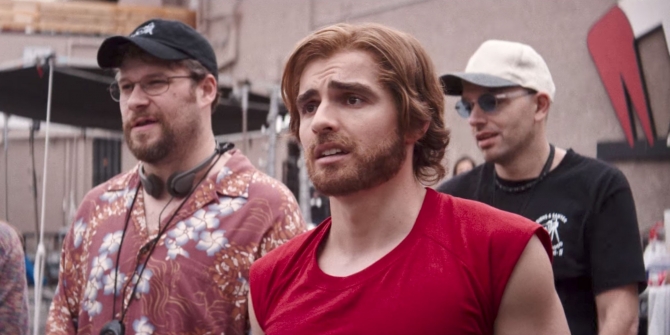
The movie begins in 1998, with Tommy (James Franco) and Greg (Dave Franco) meeting at acting classes and forming a strange, unorthodox friendship. Tommy is secretive and elusive, making out that he’s from New Orleans when he clearly has an Eastern European accent, and insisting that he’s the same age as Greg when clearly he’s much older. There’s also the matter of his being independently wealthy. Where does his money come from? Nobody knows. They move to Los Angeles, where they both try to break into Hollywood. Greg quickly gains an agent (Stone) but finds his career stalling just as quickly. Tommy remains unemployable as an actor, but can’t understand why. All he sees is his talent going unrecognised. Eventually they decide to make a movie on their own, a movie that will star Tommy and Greg and make their fortune. Tommy writes the script, and in 2002, production begins. And what a production it proves to be…

This being a good movie about the making of a bad movie, it’s tempting to wonder just how accurate this movie is in recreating the details of the production itself. There are moments of pure comedy, such as shooting Tommy’s first scene (“What is line?”), or the awkward mechanics of a sex scene (“Why is he having sex with her belly button? He knows where her vagina is, right?”), but there are also much darker moments when Tommy behaves like a dictator and riles the crew with his indifference and misplaced anger. It’s at these moments that Tommy is shown as a selfish, manipulative child, and none more so than when he refuses to let Greg have a day off to appear in an episode of Malcolm in the Middle (and at the request of Bryan Cranston himself). Tommy’s jealous intransigence casts a sallow light on his behaviour and his character, but it’s a measure of both the script and Franco’s performance that Tommy remains a figure to pity rather than be angry with.

What comes across is the importance of his friendship with Greg and the determination to make the movie he wants to make. When challenged about his on-set behaviour, Tommy cites Hitchcock and Kubrick as directors who didn’t care about their actors, but without realising that they had talent to make up for their callow attitudes. At every turn, Tommy doesn’t understand anything about what he’s doing, and he can’t see that the decisions he’s making are undermining almost everything that he’s trying to do. Everyone around him sees this, but Tommy’s insecurity won’t let him acknowledge it. He’s a lonely man looking for approbation, and though his friendship with Greg goes some way to meeting his emotional needs, it’s a much wider appreciation that he’s searching for. And the movie makes it clear that this is the dream he really has; the movie is just a means to that end. Franco nails the accent, and Wiseau’s own off-centre thought processes, and gives one of his best performances: at times sad, defensive, jealous – of Greg’s relationship with girlfriend, Amber (Brie) – antic, effusive, melodramatic, and emotionally shallow.

He’s matched by an intuitive and likeable portrayal of Greg by his younger brother, and there are plenty of enjoyable supporting performances, including Rogen as the script supervisor who becomes the de facto director when Tommy is “acting”, and Graynor as the female lead who possesses the aforementioned “belly button”. Elsewhere there are plenty of cameos and talking heads (at the beginning) to keep viewers on their toes, but it’s the recreation of those hectic days when The Room was being shot that proves the most compelling, and Franco the director assembles it all with an eye for the absurdity of it all and the misguided passion that pushed Wiseau to make the movie in the first place. An auteur’s folly, then, but one that has survived and prospered over the years, and which has afforded Wiseau exactly what he wanted: recognition. But as The Disaster Artist proves, passion without talent is just passion, and dreams often require luck as well as a determination to succeed.

Rating: 8/10 – a wonderfully bizarre tale given the kind of respectful treatment that only highlights how unlikely it all was at the time, The Disaster Artist doesn’t need anyone to see The Room before watching it, as the off-camera turmoil is captured with aplomb by Franco and his cast and crew; a testament to the power of friendship (and pinky swears), as well as not giving up on your dreams, this is also a cautionary tale about what can happen when ambition becomes obsession, and the pursuit of fame turns everything (temporarily) sour.

Share this:

  • Share on X (Opens in new window) X
  • Share on Facebook (Opens in new window) Facebook
  • More
  • Print (Opens in new window) Print
  • Email a link to a friend (Opens in new window) Email
Like Loading...

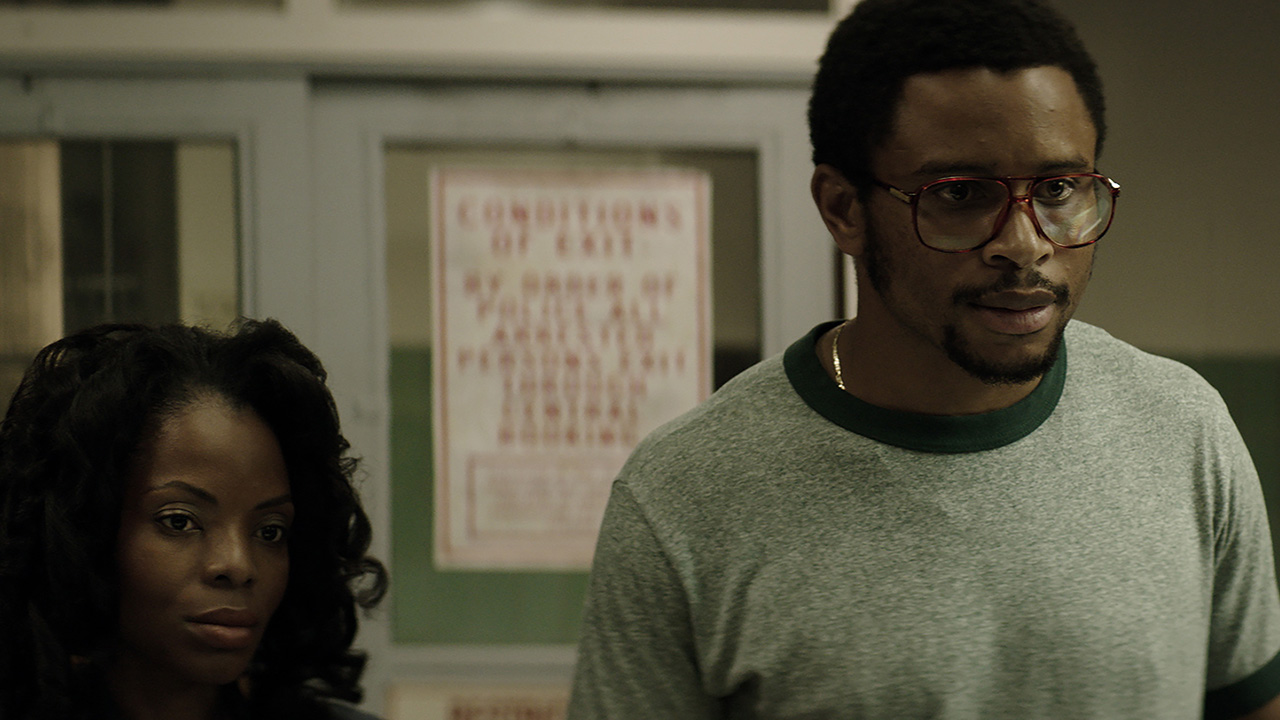
Crown Heights (2017)

22 Wednesday Nov 2017

Posted by dullwood68 in Movies

≈ Leave a comment

Tags

Carl 'KC' King, Colin Warner, Drama, Lakeith Stanfield, Matt Ruskin, Miscarriage of justice, Murder, Natalie Paul, Nnamdi Asomugha, Review, True story

D: Matt Ruskin / 100m

Cast: Lakeith Stanfield, Nnamdi Asomugha, Natalie Paul, Amari Cheatom, Marsha Stephanie Blake, Bill Camp, Luke Forbes, Zach Grenier, Josh Pais, Ron Canada, Nestor Carbonell, Skylan Brooks, Sarah Goldberg, Adriane Lenox

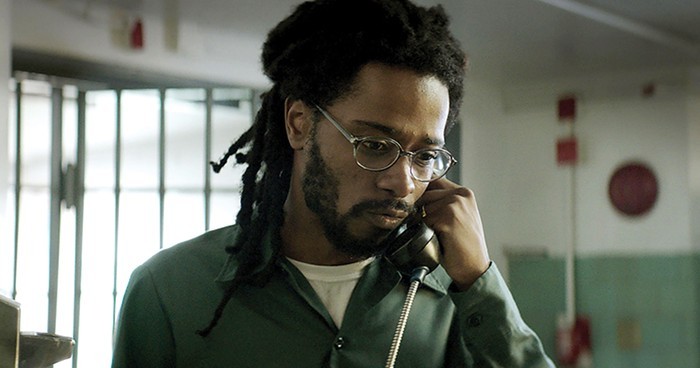
Crown Heights ends with a sobering statistic: of the 2.4 million people currently in prison in the US, it’s estimated that 120,000 are likely to be innocent. The movie, winner of the Audience Award for US Dramatic Film at this year’s Sundance Film Festival, examines a case that, though it all began back in April 1980, could still be relevant today, both for its victim and his friends and family. Following the murder of sixteen year old Melvin Grant in a reported drive-by shooting, eighteen year old Colin Warner (Stanfield), is arrested and accused of being the driver when the murder was committed. Despite his protests, the police tell Colin that they have an eyewitness and they know he’s guilty. The case proceeds slowly but inexorably to trial, where the eyewitness, fourteen year old Clarence Lewis (Brooks), retracts his original testimony and clears Colin of any involvement. But it makes no difference. With Colin connected to his co-defendent (and actual shooter) Anthony Gibson (Forbes), he’s convicted and sentenced to fifteen years to life.

And so begins twenty-one years of incarceration thanks to a combination of mistaken identity, perjury and official misconduct. The police aren’t interested in whether or not Colin is innocent, the district attorney is in cahoots with the police, and it doesn’t matter that there’s no physical evidence or actual eyewitness testimony to place Colin at the scene of the crime – his fate has miscarriage of justice written all over it. Once in prison, Colin pins his hopes on various appeals but they’re all denied. On the outside, his friend Carl ‘KC’ King (Asomugha), tries his best to have Colin’s conviction overturned but encounters setback after setback. It’s not until Carl meets attorney William Robedee (Camp) that there’s a glimpse of light at the end of the tunnel. Robedee examines the case and determines that the only way for Colin to have a chance of being released is not to try and have his conviction overturned, but to reinvestigate the case and prove once and for all that Colin wasn’t involved in the murder of Melvin Grant.

How Robedee and Carl achieve this is forms the basis of the movie’s final half hour, but before then director and screenwriter Matt Ruskin confidently and credibly explores the way in which Colin was effectively framed by the police, first as Melvin’s killer, and then, when Gibson was arrested and admitted committing the murder, as his accomplice. The relentless nature of the police’s efforts to see Colin convicted is reflected in scenes where the lead detective (Grenier) goads and intimidates potential witnesses (whether they are or not) into identifying Colin as the killer. And in some of them the district attorney (Pais) hovers in the background, impassive and implacable. It’s a tragic situation, made all the worse by the implicit sense of impotency that soon settles on Colin as his fate slowly unfolds and the enormity of the injustice he’s facing becomes more and more apparent, and more and more soul-destroying. Once in prison, Colin struggles to find his place, briefly uniting with his Trinidadian brethren, and challenging the authority of the guards before settling into a more stoic existence.

Further injury is added to the insult he’s already experienced when his parole hearing focuses on his previous bad behaviour rather than the strides he’s made since then. Even a blossoming romance involving Antoinette (Paul), a young woman from his neighbourhood (the Crown Heights of the title), isn’t enough to completely dispel the despair Colin begins to feel more strongly as the years pass by. As the beleaguered Colin, Stanfield plays him throughout and is quietly impressive, drawing out a solid portrayal of a man betrayed and ignored by an unjust system, and sometimes justifiably angry at the way he’s treated. It’s not a showy, attention-seeking performance, but rather an attempt to reflect the ways in which Colin sought to keep himself from submitting to self-pity or just giving up altogether (though he comes perilously close to doing both at times). Ever since his debut in the original, short version of Short Term 12 (2008), Stanfield has become an actor to watch, and here he shows an empathy and an understanding for Colin’s situation that is both intuitive and well judged, impassioned and subtly observed as well.

The movie stays with Colin for most of the first hour, and charts the various setbacks he experiences, until it shifts the focus to Carl and his renewed efforts to see his friend restored to freedom. This section of the movie is just as much about one man’s determination to see justice done as it is about the price that justice demands. Carl nearly loses his wife, Briana (Blake), and his children in his efforts to free Colin, and the movie asks the question, is such a selfless and dogged pursuit ever worth the potential pitfalls or drawbacks? Sensibly it leaves the answer for the viewer to decide, but Carl’s commitment and the subsequent drawing together of the people who can prove Colin’s innocence is assembled with a methodical adherence to the rules of evidentiary procedure, and proves unexpectedly gripping. As the final pieces of the puzzle fall into place, the viewer should be asking themselves, why didn’t the police do this in the first place?

Questions such as these arise throughout the movie, but Ruskin is wise not to explore them too closely or for too long. He even avoids highlighting the obvious issue of the institutionalised racism prevalent in the police force at the time, and leaves it unsaid, more of a given than something that needs explaining. Similarly the pressures of being in prison are given expression through Colin’s attempts to fit in, and Ruskin allows these moments to play out matter-of-factly and with few overly dramatic embellishments. The movie remains steadfast in its approach from start to finish, with Ruskin displaying a command of the material that makes it all the more effective, and all the more emotive when it needs to be. Aside from a handful of sequences where Colin imagines he’s free – sequences that have a hallucinatory, visually powerful feel to them – the movie has a dour, unsettling visual style to it that reflects Colin’s mindset and situation, and which is used with an admirable sense of restraint. Ruskin has put together a modest, yet haunting movie that tells its tale simply but with a depth that’s borne out of the writing and the performances, both of which complement and dovetail around each other with a modest skill that is the hallmark of the movie as a whole.

Rating: 8/10 – a low-key gem that sneaks up on the viewer and gradually reveals just how good it really is, this could have been yet another angry tirade against an uncaring and unfair system, but Crown Heights is more than that, and it deserves a much wider exposure than it’s likely to receive; with Stanfield and Asomugha heading up a splendid cast, and Ruskin able to subvert or overcome so many of the clichés that are inherent in this type of movie, this is sincere, moving, and if those statistics are to be believed, entirely relevant as a commentary on the current US criminal justice system.

Share this:

  • Share on X (Opens in new window) X
  • Share on Facebook (Opens in new window) Facebook
  • More
  • Print (Opens in new window) Print
  • Email a link to a friend (Opens in new window) Email
Like Loading...

Battle of the Sexes (2017)

20 Monday Nov 2017

Posted by dullwood68 in Movies

≈ 1 Comment

Tags

Andrea Riseborough, Billie Jean King, Bobby Riggs, Drama, Emma Stone, Jonathan Dayton, Review, Sexism, Sport, Steve Carell, Tennis, True story, Valerie Faris

D: Valerie Faris, Jonathan Dayton / 121m

Cast: Emma Stone, Steve Carell, Andrea Riseborough, Natalie Morales, Sarah Silverman, Bill Pullman, Alan Cumming, Elisabeth Shue, Austin Stowell, Eric Christian Olsen, Jessica McNamee

Ah, the Seventies, a golden era for cinema, but not quite so good if you were a woman, or more specifically, a sportswoman. The disparity between what the men were paid and what the women were lucky to receive, by comparison with modern standards, was insulting. Battle of the Sexes, the latest from the directors of Little Miss Sunshine (2006), is very loosely based on the efforts of women tennis players such as then champion Billie Jean King (Stone) and several of her fellow players to break away from the United States Lawn Tennis Association, and establish their own independent, Women’s Tennis Association. In doing so, they not only challenged the entrenched male perspective that women’s tennis was somehow “inferior” to men’s tennis, but also that “people” didn’t want to watch women’s tennis because it wasn’t exciting enough.

This patriarchal view was espoused by the likes of Jack Kramer (Pullman), the head of the USLTA. It was refuted by Billie Jean and her (apparent) agent/manager Gladys Heldman (Silverman). Kramer’s blackballing of the women players who refused to play in any of the USLTA’s tournaments proved to be an unintended blessing in disguise, as it allowed them to find their own sponsorship and play in their own tournaments, and for more approrpriate sums of money (when Billie Jean won the US Open in 1972 she received $15,000 less than men’s champion Ilie Năstase). The movie depicts the effectiveness of this approach in establishing the quality of women’s tennis, and bringing it to a wider public, but then along comes Bobby Riggs (Carell), a one-time world tennis champion in the late Thirties and Forties. Riggs, a tireless self-promoter, challenges King to an exhibition match, asserting that he can beat any of the top women players purely because he’s a man. King initially declines his offer, but when he beats her rival, and current world number one, Margaret Court (McNamee), Billie Jean feels she has no option but to play him, and hopefully, advance the cause of women tennis players immensely. But if she were to fail…

Battle of the Sexes is an enjoyable mix of comedy and drama that has an ambitious streak that’s about a mile wide. Not only does it focus on tennis’s version of the glass ceiling, but it also finds time to explore the wider sexism of the time, as well taking a sideswipe at the era’s unhappy approach to gender equality and sexual liberation. Alongside the grandstanding of the match itself, King’s burgeoning awareness of her true sexual identity is dealt with by her having an affair with a hairdresser, Marilyn Barnett (Riseborough). This aspect of the movie is played out with a great deal of restraint, not just in how it’s presented physically, but also emotionally, with Billie Jean trying to put the genie back in the lamp and pretending nothing has happened. She can’t, of course, but the movie does make the viewer wait for her to stop pretending; after all, everyone else around her knows what’s been going on, including her husband, Larry (Stowell). In the end, the relationship becomes less and less important in the grand scheme of things, and the idea that it was somehow better to address the issue of Billie Jean’s sexual preferences than not, becomes more and more apparent.

Sadly though, and while the movie is enjoyable, it’s ultimately too lightweight for its own good. With themes such as sexism and sexual politics thrown into the mix, there’s ample opportunity for the movie to provide probing examinations of both these themes, but instead it skirts around them, looking to come up with a telling bon mot rather than something more substantial (in one of the movie’s more corny moments, Alan Cumming’s unsurprisingly gay fashion designer, Ted Tinling, tells Billie Jean that one day, they’ll both be able to love freely). There’s also no real sense that anyone is being held back or hampered from doing anything, or that any obstacles can’t be overcome (and at the first opportunity). Billie Jean’s affair with Marilyn relies on Larry being completely understanding about “everything” and not causing a fuss, while Gladys gets their first tour up and running with ease, and every run in with Kramer sees him being knocked down a peg by King at every turn, leaving him looking and sounding like a sexist bogeyman, something that is too simplistic an approach to work effectively (and which even Pullman struggles to pull off). All the real drama is saved for the match, but by then it has to work extra hard to reel in the viewer, who probably has a good idea (if not an actual one) as to the outcome.

Stone is terrific, rescuing some of the milder and less interesting portions of the movie by virtue of her commitment to playing Billie Jean and her ability as an actress to fold herself into the character, so that she brings her own vulnerability as a person to the role and uses her own feelings to establish that character’s interior life. It’s a much subtler performance than you might expect, and Stone is to be congratulated for the layers she brings to her portrayal, shading Billie Jean’s personality in such a way that it helps overcome the script’s more pedestrian moments. Matching her for commitment and sincerity is Carell, a perfect choice for Riggs who plays him as a man whose public persona is used to hide the insecurities he feels since retiring from the one thing that he’s good at (he does play the senior circuit but is unfulfilled by it). Carell has a great deal of fun with the role, and the viewer has every right to have fun right along side him, but Carell also ensures there’s an air of melancholy about Riggs that’s equally affecting.

Faris and Dayton assemble the material with a deft appreciation for the period it’s set in, and the politics of the time, but it’s Simon Beaufoy’s subdued screenplay that holds them back from making this entirely successful (which makes one wonder how the movie would have turned out if original choice Danny Boyle had been able to direct it). Still, they do manage to elicit good performances from the cast, and if there’s not enough in the way of truly emotional or dramatic highs and lows, they do keep things ticking over with a great deal of style and visual panache thanks to Oscar-winning DoP Linus Sandgren. If the movie doesn’t quite achieve its own ambitions, it’s still a good effort that can be enjoyed and appreciated for what it is, even if the material does lack depth and it decides not to take a more extensive look at its various themes and topics.

Rating: 7/10 – a movie that tries hard to draw parallels with modern day issues surrounding sexual politics, Battle of the Sexes is buoyed by Stone and Carell’s performances, and a giddy sense of the absurdity of the whole situation surrounding the “battle”; but while it’s enjoyable on a basic level, any attempt to look deeper under the surface will reveal a movie that trades too heavily on what’s superfluous and not enough on what’s meaningful.

Share this:

  • Share on X (Opens in new window) X
  • Share on Facebook (Opens in new window) Facebook
  • More
  • Print (Opens in new window) Print
  • Email a link to a friend (Opens in new window) Email
Like Loading...

Only the Brave (2017)

13 Monday Nov 2017

Posted by dullwood68 in Movies

≈ 2 Comments

Tags

Arizona, Drama, Firefighters, Granite Mountain Hotshots, Jeff Bridges, Jennifer Connelly, Joseph Kosinski, Josh Brolin, Miles Teller, Review, True story

D: Joseph Kosinski / 134m

Cast: Josh Brolin, Miles Teller, Jeff Bridges, Jennifer Connelly, James Badge Dale, Taylor Kitsch, Andie MacDowell, Geoff Stults, Alex Russell, Thad Luckinbill, Natalie Hall

What to say, and how to say it…

Only the Brave tells the story of the Granite Mountain Hotshots, a group of firefighters who were part of the Prescott, Arizona fire department. They attained elite hotshot status in 2008, only six years after they were first formed. A hotshot crew can be called upon to fight large, high priority fires in any part of the US, and due to the training they receive, are often required to work for long periods of time, in remote areas, and with little in the way of logistical support. They are quite simply, the best at what they do. And until 30 June 2013 and the Yarnell Hill fire, so were the Granite Mountain Hotshots. Led by their superintendent, Eric Marsh (Brolin), nineteen of the twenty Hotshots found themselves cut off from their escape route and having to deploy their fire shelters as the blaze swept towards them. It was not enough. All nineteen men perished.

In telling their story, Only the Brave does what a lot of biographical dramas do, and that’s focus on the good points of all concerned, tell their individual stories (well, some of them at least) with a good deal of easy-going charm, and paint a picture of deep-rooted camaraderie allied to unwavering support from their families and friends. Oh, and the rest of the Prescott townsfolk are similarly unwavering in their support. With everyone on the same page or side – as it were – the movie has to overcome the minor problem of where to find the drama it needs to tell the Hotshots’ story, and effectively. It’s a peculiar bind for a true life drama to find itself in, and it’s one that Joseph Kosinski’s direction, from a script by Ken Nolan and Eric Warren Singer (itself based on the GQ article No Exit by Sean Flynn), finds it difficult to overcome. In truth, the Hotshots’ tale is one full of drama and excitement, but here, it’s all a little too tepid for comfort, and a little too restrained in terms of any urgency. These are firefighters, operating in some of the most challenging conditions known to man, and yet – and yet – even when they’re in mortal danger, the movie fails to convince the viewer that they’re anywhere even near mortal danger.

Part of the problem with the narrative, and the wider material as a whole, is that it lacks urgency in its firefighting sequences, and its homebound elements are moribund and unappealing. Away from the forest fires, the movie maintains two distinct subplots, both of which involve children, albeit for different reasons. Marsh is staunchly against having kids, but his wife, Amanda (Connelly), is becoming less and less agreeable to this, and wants to start a family. Meanwhile, rookie firefighter and junkie trying to go straight Brendan McDonough (Teller), has just become a father even though at first, Natalie (Hall), the young woman who has given him a daughter, wants nothing to do with him. But while Brendan tries to be a good father, Eric ensures he avoids any discussion with Amanda about having kids. These storylines are meant to provide texture and depth to the proceedings, and to help the viewer get to know these characters as real people, with real lives and real feelings. But these storylines exist in a vacuum, wheeled out between scenes of firefighting in order to give the cast something more to do than trudge around New Mexico (where the movie was shot).

There’s more than a faint whiff of soap opera about these scenes, with Brendan unable to connect with his infant daughter because firefighting keeps him away from home for long stretches, and Amanda driving home one night and falling asleep at the wheel (the car’s a write-off but she walks away with barely a scratch). Minor incidents like these come and go, but these too exist in a kind of vacuum, introduced by the script and then quickly abandoned because their dramatic potential is limited. Even when Brendan is bitten by a rattlesnake, what could have been a nerve-shredding race against time to get him to a hospital is glossed over in a matter of minutes, and has all the impact of watching an infomercial. There’s bags of potential in the Hotshots’ story and their tragic demise, but it’s all wasted thanks to the tepid nature of the script and the distant nature of Kosinski’s direction. There are long periods where the movie feels flat and lifeless, as if it’s going through the motions, and even the CGI-augmented forest fires lack a true sense of their enormity and the devastation they must have caused. And if the depiction of raging, out of control fire isn’t gripping, then how is anything else in the movie going to work anywhere near as effectively?

While the ball is dropped dramatically and often, leaving the viewer to wonder why this movie was made in the first place – this is, after all, another US movie that celebrates failure by calling it heroism – the above calibre cast do their best, but aren’t helped by some redundant dialogue (“I’ll probably be home by lunchtime,” says Eric on the day of the Yarnell Hill fire), or paper-thin characterisations (Bridges’ role as a supporter of the Hotshots is remarkable for his not being given a reason for being so). Brolin gives a solid but unspectacular performance, Teller does the same, all of which leaves it to Connelly to inject some much needed energy into the often dull, often banal proceedings. (Kudos though to the casting team of Jo Edna Boldin and Ronna Kress for hiring an actor called Forrest Fyre to play the Prescott mayor.)

As a tribute to the fallen firefighters of the Granite Mountain Hotshots – Brandon was the group’s only survivor – Only the Brave defaults towards being trite and devoid of meaning on too many occasions for the movie to be anywhere near successful. This is hammered home by a scene where Amanda puts aside her grief to help prop up Brandon and disavow his (understandable) sense of guilt at being alive. It’s a scene that screams Hollywood! at the top of its voice, so lacking in subtlety and credibility is it. Sadly, the movie also coasts along for much of its running time as well, and by the end, you’ll be wondering if any of this will have been worth it. The firefighters’ story could have been an exciting, terrifying tale of extreme bravery and making the ultimate sacrifice. Instead, any bravery is smoothed aside, and as for an ultimate sacrifice, it’s a shame that the firefighters’ sacrifice has led to this turgid and shallow exercise in hagiography being made in the first place.

Rating: 4/10 – top heavy with dramatic clichés, and enough soap opera dialogue to stun the fiery bear Marsh sees in his dreams, Only the Brave is a disappointing addition to the “men in peril” sub-genre of true stories; with Kosinski unable to connect with the material, neither can the viewer, making this an uneasy recreation of a group’s tragic, and unwanted, claim to fame.

Share this:

  • Share on X (Opens in new window) X
  • Share on Facebook (Opens in new window) Facebook
  • More
  • Print (Opens in new window) Print
  • Email a link to a friend (Opens in new window) Email
Like Loading...

Breathe (2017)

04 Saturday Nov 2017

Posted by dullwood68 in Movies

≈ Leave a comment

Tags

Andrew Garfield, Andy Serkis, Claire Foy, Drama, Mechanical respirator, Polio, Review, Robin Cavendish, Romance, Tom Hollander, True story

D: Andy Serkis / 118m

Cast: Andrew Garfield, Claire Foy, Tom Hollander, Stephen Mangan, Hugh Bonneville, Jonathan Hyde, Ed Speleers, Steven O’Donnell, Miranda Raison, Harry Marcus, Dean-Charles Chapman, Sylvester Groth, Diana Rigg

In December 1958, while working in Kenya, twenty-eight year old tea broker Robin Cavendish (Garfield) was struck down by polio, leaving him paralysed from the neck down and dependent on a mechanical respirator in order to remain alive. He was brought back to England where at first he was given three months to live, and then a year. His own reaction was to have his respirator turned off. He saw no future for himself and wanted his wife, Diana (Foy), whom he’d recently married and who was still only twenty-five, a chance at a better future for herself. To her credit, and his good fortune, Diana refused to entertain the idea, and told Robin in no uncertain terms that she wasn’t going to give up, even if he wanted to. They also had an infant child, Jonathan, to consider. Still facing a bleak future though, Robin’s only wish was to leave the hospital where he was effectively confined. Against the advice of his doctor (Hyde), he left the hospital, and the Cavendish’s moved into their own home in the countryside, where Diana took on the roles of wife, mother and nurse with the help of friends such as Colin Campbell (Speleers), and her twin brothers Bloggs and David (both Hollander).

In the way that only real life can manufacture, that could, and perhaps should have been the end of Robin’s story, but a truncated lifespan wasn’t on the cards. With the aid of his friend, Oxford professor Teddy Hall (Bonneville), Robin conceived the idea of a wheelchair with a built-in respirator that would allow him to leave the house, and eventually go on trips with the further aid of a converted van. Now more mobile than he could have ever predicted, Robin decided to show the progress he’d achieved to other disabled people, and the medical community. Thanks to private funding, Hall was able to construct a fleet of wheelchairs such as Robin’s, and these enabled other disabled people to leave hospital, and to function in the “outside” world. Robin soon became an advocate and champion for the rights of the disabled, and by the time of his death in 1994, was regarded, quite rightly, as a medical phenomenon, having lived with his deteriorating condition for thirty-six years.

The directorial debut of Andy Serkis – it should have been his version of The Jungle Book, but delays on that production have pushed it back to 2018 – Breathe is exactly what it looks like from the poster and anything you may have heard about it: a tale of inspiration and personal courage. Though Serkis is best known for his motion capture performances as Gollum, King Kong and Caesar, as a director he’s clearly learnt a lot from those he’s worked with over the years because the movie is an assured, likeable production that tells its story in a measured, positive manner that allows the viewer to fully understand Robin’s plight, and the feelings that come with it. Thanks to an equally assured script by William Nicholson, Breathe tackles the various issues related to quadriplegia (though it studiously avoids the issue of sex) with sympathy and no small amount of understanding, most of which is provided by yet another excellent performance by Andrew Garfield. Following on from impressive turns in Silence (2016) and Hacksaw Ridge (2016), Garfield makes sure that every emotion, every feeling, every consideration or decision that Robin makes is clearly expressed so there can be no misunderstanding for the viewer. It’s a performance that also reflects the innate humanity that Robin possessed, and his complete and utter love for Diana, something that could have caused the movie to become cloying and overly sentimental, but which Serkis avoids through a combination of his knowing direction and Garfield and Foy’s awareness of, and immersion in, the characters.

Inevitably, it’s not all triumph over adversity and lives lived happily ever after. This is a movie that starts off on a bright summer’s day at a cricket match where Robin and Diana meet. It couldn’t be more lovely, a replication of happier days when falling in love seemed so easy and uncomplicated. But once he’s struck down by polio and his lifestyle is curtailed, Robin’s life takes on an urgency and a scariness that makes for a number of scenes that are nail-biting even though we know the outcome must favour Robin. At home, their dog catches the lead to the respirator and pulls it out of the electrical socket. We already know that he can’t survive for more than two minutes without it (or someone using a manual respirator), and Serkis plays out those two minutes to the second, creating tension even though we know everything will be fine, but still making the viewer apprehensive and nervous as to how he’ll be saved.

Other moments such as the wheelchair respirator blowing up on a trip to Spain, and the deterioration of the lining of Robin’s lungs, serve as reminders as to the reality of his situation, and they’re used for maximum impact. But if there’s one scene, one image that highlights both Robin’s past predicament, and those of thousands of disabled people across the world at that time, the Sixties, it comes during a visit to a German hospital that is highly regarded for its treatment of the disabled. It’s the movie’s most impressive moment, one of tragedy and despair as we see rows of disabled people like Robin stacked on top of each other in gleaming iron lungs. And when Robin enters the room, the reaction of the head doctor (Groth) is one of horror and embarrassment: horror at the difference between Robin and his patients, and embarrassment at being so badly caught out for treating said patients so appallingly. It’s moments like this one, where the movie challenges the medical and social attitudes of the time that adds depth to the narrative and reminds us all that Robin wasn’t just making these improvements to his life for his own sake, but for the thousands of others just like him.

Breathe is also one of the most beautifully realised movies of the year, with Serkis and cinematographer Robert Richardson combining to provide a richly detailed series of shots and compositions that are often breathtaking in their simplicity, and in their ability to add an emotional layer to scenes that accentuate and support the performances at every turn. The score by Nitin Sawhney is another aspect of the production that Serkis uses to good effect, never allowing the music to overwhelm a scene or prove intrusive, using it instead to provide another sensitive layer to the proceedings. Garfield and Foy have a definite chemistry that makes the enduring love between Robin and Diana entirely credible, and there are terrific supporting turns from Hollander and Mangan (as Robin’s doctor in later life). In covering nearly forty years of one man’s life, the movie is necessarily episodic, and there are occasional lulls in the drama as the story moves from one period to the next, but other than this and some of the supporting characters having little to do except hang about marvelling at Robin’s progress, this is an admirable and accomplished feature debut by Serkis that isn’t afraid to “go dark” when it needs to, and which is inspiring without sounding like it’s preaching.

Rating: 8/10 – a sincere and affecting look at a man’s life and the positive choices that can be made even in the face of extreme adversity, Breathe is a testament to Robin Cavendish’s determination to still lead a fulfilling life, and the equal determination of his wife, Diana, that he should be able to; a moving and immensely entertaining movie, it bodes well for any future turns behind the camera that Serkis embarks on, and is one of the few “lead character with a disability” movies that doesn’t seem like it’s been made just so it can garner nominations and win awards in the year ahead.

Share this:

  • Share on X (Opens in new window) X
  • Share on Facebook (Opens in new window) Facebook
  • More
  • Print (Opens in new window) Print
  • Email a link to a friend (Opens in new window) Email
Like Loading...

Hampstead (2017)

03 Friday Nov 2017

Posted by dullwood68 in Movies

≈ Leave a comment

Tags

Brendan Gleeson, Comedy, Diane Keaton, Drama, Hampstead Heath, Harry Hallowes, Joel Hopkins, Lesley Manville, Review, Romance, Squatter, True story

D: Joel Hopkins / 103m

Cast: Diane Keaton, Brendan Gleeson, Lesley Manville, Jason Watkins, James Norton, Simon Callow, Adeel Akhtar, Alistair Petrie, Hugh Skinner, Will Smith, Brian Protheroe, Rosalind Ayres, Deborah Findlay, Peter Singh, Phil Davis

Hampstead is a curious movie, one that’s inspired by a true story, but structured in such a way that it seems to be deliberately insulting the memory of the real-life person that Brendan Gleeson’s character is based on. That man was called Harry Hallowes, an Irishman who was evicted from his flat in Highgate, London in 1987 and who built a makeshift home for himself in a corner of Hampstead Heath. When property developers tried to evict him, the case went to court and he was able to claim squatter’s rights because he had been “resident there” for over twelve years. In 2007 he was awarded the deed to the half-acre of land on which he was living; it was worth over £2 million. Hampstead takes that story and makes it into a lightweight romantic comedy that flits along unobtrusively and in banal fashion while making it more about Diane Keaton’s American widow in London, Emily Walters, than it does the movie’s fictional Harry Hallowes, Donald Horner.

Emily lives in an apartment building overlooking Hampstead Heath. Her husband has died leaving her in financial difficulties that she’s doing her best to ignore. She works part-time in a charity shop, but otherwise is fairly aimless, and spends much of her spare time trying to avoid her friend, Fiona (Manville), who also lives in the building and who is doing her best to set up Emily with a new man. One day, while looking through her husband’s things in the attic room she finds a pair of binoculars and uses them to look out over the heath. She spots Horner’s makeshift home, and becomes intrigued enough to continue spying on it, and eventually him. When she sees him being attacked, she calls the police, but doesn’t come forward until a few days later when she sees him in Highgate Cemetery. They become uneasy friends at first, then a romance develops, but it’s when Emily learns about the efforts to evict Donald that she finds a new purpose in her life and determines to help Donald whether he likes it or not.

It’s a measure of Robert Festinger’s underwhelming screenplay that Donald’s plight can only be addressed through the intervention of a woman who’s looking for some meaning in her life. That she takes on his cause for herself is both selfish and self-serving, but the script ignores this in its efforts to make Emily appear selfless instead. As a result, she isn’t quite as sympathetic a character as perhaps was intended, and she comes across as a busybody with good intentions rather than the supportive friend (and eventual lover) that she’s meant to be. It makes watching long stretches of the movie difficult as Emily, under the guise of making a difference, does so in order to make herself feel better about her life. In other movies this might be acceptable – it’s a standard character arc, after all – but when this is in service to someone else’s story, someone who actually existed, then it comes across as insensitive and inconsiderate. Was Hallowes’ story so undramatic that it needed a fictional character, and a self-centred character at that, to give it relevance and/or meaning?

The answer is obviously No, but still, it’s the path the movie has chosen to take in its efforts to tell a version of Hallowes’ story. On that basis though, the movie is still unsuccessful in its aims as it tries to create a romance out of convenience, and a drama out of necessity (there’s broad humour in there too but it’s not the movie’s strongest suit). The movie ambles along during its first half, building the relationship between Emily and Donald, and making it all so innocuous and inoffensive that when they eventually sleep together, it’s hard to actually believe that they did anything more than just sleep together. In this particular rendition of “normal life”, sex is something to be referenced but not explored, or regarded as believable. This further undermines the credibility of the relationship between Emily and Donald, and makes it seem even more artificial than Festinger and director Joel Hopkins would like.

With the central relationship so hamstrung by the needs of the script, and with Hopkins unable to make more of it than there is on the page, it’s left to Keaton and Gleeson to do what they can with the material and hopefully flesh it out. But neither of them is able to do much more than provide the odd frisson to their roles, and despite their best efforts, both Emily and Donald remain as insubstantial at the end as they were at the beginning. Character traits are embedded from the word go, and they remain firmly in place throughout. Emily may appear emotionally tougher by the end, but it’s not because of her time with Donald, but because she has no choice in the matter; she either toughens up or goes under, and the script naturally chooses the former for her. Donald though, remains the same throughout, and in a chauvinistic approach that the movies love to continue peddling, gives Emily no choice in how their relationship will continue after the court case (it also makes Emily look as if she hasn’t been paying attention to anything Donald has told her about his lifestyle, and why he lives the way he does).

In the end, Hampstead doesn’t have enough substance and/or depth to make it all work, and the movie ambles along quite predictably and with a soupçon of charm to help guide it over the rough spots. The courtroom scenes are played for humour rather than the drama that’s required, the supporting cast all meld into one with the exception of Manville’s deliberately obtuse friend and Watkins’ would-be Romeo to Emily’s Juliet, and there are too many occasions where the movie is trying way too hard to appear whimsical or poignant. Felix Wiedemann’s cinematography is a welcome bonus, as is Stephen Warbeck’s score, both elements helping to give the movie a boost from the obvious nature of the material, but when all’s said and done, this is a movie that takes a remarkable story and uses it as a backdrop in order to tell an unremarkable story that, sadly, we’ve seen hundreds of times before.

Rating: 4/10 – amiable, and watchable enough if you approach it with few expectations, Hampstead rarely gets out of first gear, and when it does it’s only to slip into neutral, where it stays out of being comfortable; Keaton and Gleeson’s performances are undermined by the paucity of the material (and Hopkins’ static direction), and the extraordinary circumstances surrounding the real-life Harry the Hermit are given less than their due, something that should have been addressed before even the first draft was considered.

Share this:

  • Share on X (Opens in new window) X
  • Share on Facebook (Opens in new window) Facebook
  • More
  • Print (Opens in new window) Print
  • Email a link to a friend (Opens in new window) Email
Like Loading...

Jungle (2017)

01 Wednesday Nov 2017

Posted by dullwood68 in Movies

≈ 1 Comment

Tags

Alex Russell, Amazon Rain Forest, Bolivia, Daniel Radcliffe, Drama, Greg McLean, Joel Jackson, Literary adaptation, Review, Survival, Thomas Kretschmann, Thriller, True story, Yossi Ghinsberg

D: Greg McLean / 116m

Cast: Daniel Radcliffe, Thomas Kretschmann, Alex Russell, Joel Jackson, Yasmin Kassim, Luis Jose Lopez, Lily Sullivan, Jacek Koman, Angie Milliken, John Bluthal

After serving three years in the Israeli military, and forgoing his father’s wish that he study to become a lawyer, Yossi Ghinsberg (Radcliffe) travelled to South America where he spent time travelling around the region until he wound up in Bolivia in 1981. There he made two new friends, Swiss school teacher Marcus Stamm (Jackson), and Marcus’s friend, Kevin Gale (Russell), an American and an avid adventurer-cum-photographer. Yossi also met an Austrian named Karl Ruchprecter (Kretschmann). Karl persuaded Yossi and his two new friends to go on an expedition into the jungle to find a lost Indian tribe that Karl was certain could be found. They set off on foot, and were soon miles from any kind of human habitation. But the dynamic of the group began to sour, especially when Marcus’s feet became badly blistered and he became unable to keep up the pace. With the expedition only partly completed, Karl announced that he was going back on foot, but that the others could use a raft to traverse the river that would take them to their destination. Marcus went with Karl, and Yossi and Kevin put together a raft and set off. But when the current proved too strong, and an accident caused the two to be separated, it left Yossi alone in the jungle, and with no tools to help him survive or find his way to safety…

As Jungle is based on the book of the same name by Ghinsberg himself, there’s no surprise in how the movie ends, but what is surprising is how compelling it all is once Ghinsberg is separated from Kevin, and the perils of being lost in the jungle become all too apparent. However, before all that, the viewer has to wade through some fairly tortuous scenes in the first hour, where the four main characters are introduced but without providing them with any appreciable depth, or Yossi aside, any clear motivations as to why they’re all there in the first place. Karl remains a mystery right until the end, when we learn something very important about him, while Kevin and Marcus come across as the unfortunate tag-alongs who share part of Yossi’s trials and tribulations, but whose own dilemmas don’t rate as much interest in Justin Monjo’s straightforward screenplay.

Once tensions arise within the group, it’s Yossi’s unintended lack of sympathy for Marcus’s plight that provokes the turning point where the quartet split up, but once that happens, the movie seems to breathe a huge sigh of relief, as if now it can concentrate on the story it really wants to tell. And aided by yet another impressive performance from Daniel Radcliffe, the movie quickly comes into its own and puts both Yossi and the viewer through the wringer as days pass and Yossi’s situation worsens with every step. He has to combat starvation, fatigue, disorientation, hallucinations, jungle predators, and the likelihood that he will wander round and round in circles without ever coming close to being found. It’s a horrifying situation to be in, and the script (perhaps unfairly) revels in giving Yossi moments of hope only to have them dashed a moment later. But these occasions also help to sharpen the narrative and accentuate the idea that the jungle has no time for sympathy if you’re unprepared for what it can do.

As the beleaguered Yossi, Radcliffe provides further evidence that he’s a more than capable actor, and though the role of Ghinsberg could be considered as just another in the long line of physical endurance roles that actors take on from time to time, thanks to Radcliffe’s commitment and understanding of the effects these rigours can have, Yossi’s deteriorating physical appearance and fast-eroding mental stability is made all the more credible and shocking when at last he reveals the extent of his (admittedly CGI enhanced) malnourishment. Ghinsberg somehow managed to survive for nineteen days before he was found, and though McLean fumbles the moment of discovery through some poor editing choices, there’s still an emotional kick to be found that is undeniable.

In telling such a dramatic true story, McLean and Monjo have crafted an old-fashioned survival story that focuses (eventually) on its central character’s will to cheat death and find their way back to civilisation, no matter how remote. McLean knows how to maintain dramatic tension – even if he hasn’t applied that ability to some of his more recent movies; The Darkness (2016) anyone? – and he uses close ups and an always unsettling, always encroaching soundscape to highlight both the pressure and the impending sense of doom that Yossi is experiencing. It’s a shame then that all this tension and pressure doesn’t come into play until around the halfway mark, and that McLean hasn’t been able to make Munjo’s script as compelling from the first page as it is to the last. Still, it’s a movie that goes someway to redeeming McLean’s “street cred” as a director, and there are plenty of moments where his skill as a director can be recognised in the claustrophobic nature of the jungle itself, and the ease with which he integrates Yossi’s hallucinations into the narrative so that they look and feel like an organic part of the whole.

True stories ultimately stand or fall based on the risks a movie maker is willing to take with the material, and though McLean has been stuck in something of a creative rut in recent years, here those risks relate to the various hallucinations/dream sequences that Yossi has, some of which provide some much needed humour into the mix. By taking Yossi, and the viewer, away from the threatening environment of the jungle, McLean gives both a chance to grab a breather and prepare themselves for the next part of Yossi’s heroic journey. The jungle itself is a fearsome opponent, and helped by cinematographer Stefan Duscio, McLean disorients and distracts both Yossi and the viewer so that each new setback to his finding safety increases the sense of fearfulness and increasing despair that the real Yossi must have felt all those years ago. That his predicament has proven so effective in terms of his will to survive, is as much a testament to the man himself, as it is – for the most part – to the movie itself.

Rating: 7/10 – an unfortunate first hour aside, Jungle is a harsh, unblinking look at a stranger in a strange land and the unwise decisions that cause him to be lost and alone in an inhospitable and deadly setting; Radcliffe is the main draw here, and then it’s McLean, and though McLean could have been tougher with some of the narrative decisions that were made, all in all this is a tough, unsentimental true story that impresses more than it disappoints.

Share this:

  • Share on X (Opens in new window) X
  • Share on Facebook (Opens in new window) Facebook
  • More
  • Print (Opens in new window) Print
  • Email a link to a friend (Opens in new window) Email
Like Loading...

The Big Sick (2017)

29 Sunday Oct 2017

Posted by dullwood68 in Movies

≈ 3 Comments

Tags

Comedy, Drama, Holly Hunter, Kumail Nanjiani, Medically induced coma, Michael Showalter, Ray Romano, Review, Romance, Stand-up, True story, Zoe Kazan

D: Michael Showalter / 120m

Cast: Kumail Nanjiani, Zoe Kazan, Holly Hunter, Ray Romano, Anupam Kher, Zenobia Shroff, Adeel Akhtar, Bo Burnham, Aidy Bryant, Kurt Braunohler, Vella Lovell, Myra Lucretia Taylor

Any budding romance can have its pitfalls and obstacles that need to be overcome, but the romance between Kumail Nanjiani, an aspiring stand-up comedian, and Emily V. Gordon, an aspiring therapist, is surely one that can’t be typical. How many other fledgling romances can lay claim to the fact that things were put in doubt by a combination of Kumail’s cultural background (being of Pakistani origin he’s expected to commit to an arranged marriage), and Emily’s falling ill and having to be put into a medically induced coma in order to save her life? If there’s another couple out there who have been through the same situation and come out the other side and still gotten married, and if they thought their experiences might be the stuff of a terrific small-scale movie, then they’re too late: Kumail and Emily have beaten them to it.

Based on the early days of their relationship, The Big Sick charts how Kumail (Nanjiani) and Emily (Kazan) first meet at one of his stand-up gigs. He’s still finding his feet on the comedy circuit in Chicago, while Emily is a post-grad student about to begin her own career. They take to each other immediately, but though they enjoy each other’s company, and Kumail in particular is smitten, Emily is more guarded. She doesn’t really see herself being in a relationship just yet, and when she finds a cigar box full of pictures of the women Kumail’s mother has tried to set him up with, it’s the excuse she needs to end things, especially as he reveals that he hasn’t told his parents about her. Later that same night, Kumail receives a call from one of Emily’s friends telling him that Emily has been admitted to hospital. When he gets there, he finds that she has a serious infection in her lungs and that she needs to be put into a coma in order that she can be properly treated. Kumail signs the consent form, and then contacts Emily’s parents, Beth (Hunter) and Terry (Romano)…

In telling the story of their romance, and the problems that nearly kept them apart forever, Nanjiani and Gordon – happily wed since 2007 – have constructed a screenplay that relates their story in a simple, heartfelt way that is both appealing and funny, but which also reflects the drama inherent in both Kumail’s family and cultural background, and Emily’s illness. Any movie that attempts to mix comedy, drama and romance and give each element its due, is a brave movie, but this is so successfully structured and played out that it almost looks easy (which it couldn’t have been; could it?). Part of the appeal of the movie is that it never tries to be anything more than a faithful reflection of the two main characters’ experiences and feelings at the time, while raising pertinent observations about relationships, Pakistani culture, the persistence of love in times of adversity, and finding our place in the world. And even if only ten per cent of what we see in the movie is what actually happened, it doesn’t matter: there’s an emotional truth here that trumps all other considerations.

It is instructive though just how confident Nanjiani and Gordon are in their material, with the comedy elements (Kumail’s relationship with his family, adversarial but still borne out of affection) and the dramatic elements (Emily’s life-threatening illness, and the obvious distance between her parents) blending effectively and with a surety that is constantly effective, with director Michael Showalter displaying a fine sense of timing and allowing the story and the characters the room to breathe. The movie is somewhat slow in places, but it’s a deliberate approach that allows the audience to get to know the characters and to become involved in what’s happening to them. This makes the main characters sympathetic and believable, from Kumail’s reluctance to tell his parents about Emily, to Beth’s passionate outbursts when she feels a wrong has been committed (as when Kumail is heckled by an audience member who tells him to “go back to ISIS”), and even to some of the supporting characters such as Chris (Braunohler), Kumail’s roommate and “the worst” of the stand-up comics that he hangs out with (their collective opinion).

In relation to the issues surrounding arranged marriages, the script makes some solid observations about the cultural need to maintain traditions when weighed against modern conceptions of love and marriage, and how these two opposing approaches can affect even the strongest of family relationships, but Nanjiani is clever in that he doesn’t make this the dramatic focus of the movie, even though he does address the issues cogently and with a great deal of sympathy for both sides. Humour is the order of the day, and the scene where he comes home to challenge his being kicked out of the family, and uses pre-written cards to do so, is a perfect example of the script knowing how to balance both comedy and drama. It’s laugh-out-loud funny and entirely serious in its intentions all at the same time. Likewise the scenes between Kumail and Beth and Terry at the hospital, largely dramatic in tone but with a wistful quality to them that helps anchor the emotional undercurrents. The scenes at the hospital show Beth and Terry reacting differently to each new development, and there’s not one false note about their reactions, so well written are they and so believable as individuals.

The performances are terrific, though Hunter does stand out as Beth, her portrayal not based on Emily’s real-life mother at all, and actually all the better for it, allowing Hunter to freewheel through certain scenes with a sincerity and a credibility that is hugely impressive. As himself, Nanjiani is much like his portrayals of characters in other movies, and you get the sense that the script is making it easier for him to play the role than if he were playing someone else. That said, he understands the material in ways that another actor wouldn’t have, and so his casting is a wise choice, even though he’s not really an actor. This and a couple of minor quibbles aside – why does Kumail keep the photos of the women his mother has tried to set him up with is never explained (making it seem like an awkward McGuffin), and Terry making a confession to Kumail never quite feels credible – the movie is a genuine pleasure to watch, and often has more going on than in two or three other movies altogether. You’ll be glad you decided to spend time with Kumail and Emily, and you’ll root for them while you do, so engaging are they, and so relatable as well.

Rating: 9/10 – beautifully written and beautifully realised, The Big Sick is the best romantic comedy drama of 2017, a delightful, insightful, and incisive movie that proves there’s still life in the old rom-com-dram yet; with knowing performances, astute direction, a pleasing visual sense courtesy of cinematographer Brian Burgoyne, and an impressive sense of its own simplicity, this is one of the most enjoyable movies in some time, and a worthy tribute to Nanjiani and Gordon’s love for each other.

Share this:

  • Share on X (Opens in new window) X
  • Share on Facebook (Opens in new window) Facebook
  • More
  • Print (Opens in new window) Print
  • Email a link to a friend (Opens in new window) Email
Like Loading...

6 Days (2017)

21 Saturday Oct 2017

Posted by dullwood68 in Movies

≈ Leave a comment

Tags

Abbie Cornish, DFRLA, Drama, Hostages, Iranian Embassy, Jamie Bell, Kate Adie, Literary adaptation, London, Mark Strong, Review, Rusty Firmin, SAS, Thriller, Toa Fraser, True story

D: Toa Fraser / 94m

Cast: Jamie Bell, Mark Strong, Abbie Cornish, Martin Shaw, Ben Turner, Emun Elliott, Aymen Hamdouchi, Andrew Grainger, Colin Garlick, Te Kohe Tuhaka, Tim Pigott-Smith

Between 30 April and 5 May 1980, the Iranian Embassy in London came under siege from six armed men whose aim was to secure the release of ninety-one Arab prisoners being held in Iran. Taking twenty-six hostages, they also demanded safe passage out of the United Kingdom once their goal was achieved. Of course, the outcome was very much different from what they were hoping for. Following the killing of one of the hostages, the order was given to send in the SAS. On the evening of the sixth day of the siege, they stormed the building and in the ensuing seventeen minutes killed five of the six armed men, rescued all but one of the remaining hostages (five had been released over the previous days), and gave notice to the world that the UK would not tolerate terrorism on any level.

What 6 Days does is to cover that dramatic period from a variety of angles in an effort to provide the viewer with a comprehensive overview of what was going on at the time both inside the embassy and outside it. So we see the six members of the Democratic Revolutionary Front for the Liberation of Arabistan (DRFLA), led by Salim (Turner), as they try to control the situation from an ever decreasing state of authority, as well as the Metropolitan Police’s chief negotiator, Max Vernon (Strong), as he does his best to keep things from escalating out of control. We also see the SAS teams that would eventually end the siege gathering intelligence on how best to enter the building, BBC reporter Kate Adie (Cornish) establish her reputation as a serious news journalist, and the political manoeuvring that went on behind the scenes involving the Home Secretary, William Whitelaw (Pigott-Smith), and the various decision makers who would debate and interpret the government’s policy of non-compliance in terrorist matters.

With such an intense, dramatic situation, and one whose violent conclusion was played out – deliberately – in front of a number of assembled news cameras, you might expect 6 Days to be as equally intense and dramatic, but sadly, whatever tension is achieved is arrived at accidentally. Glenn Standring’s screenplay, adapted from the awkwardly titled Go! Go! Go!: The SAS. The Iranian Embassy Siege. The True Story (2011) by Rusty Firmin and Will Pearson, alternates between each angle with an initial promise that soon falls away to offer routine exchanges between all concerned, a worrying number of occasions where we see the SAS fail in their preparations, Cornish’s role as Kate Adie built up so that her billing is made more credible, and negotiations between Vernon and Salim that consist of Vernon reassuring Salim that he wants to help, while Salim insists that he’ll kill a hostage if his demands aren’t met – over and over. (If there was ever any intention of exploring the psychological aspects of hostage negotiation, they certainly didn’t make it into the final script.)

There are other problems, some that relate to the movie’s pacing, and others that relate to director Toa Fraser’s handling of the material. Fraser made the enjoyably quirky Dean Spanley (2008), but here the confidence he showed with that movie appears to have deserted him. With an array of characters and situations to be exploited, Fraser leaves many scenes high and dry in terms of their potential effectiveness, opting for a flatness of tone that proves wearying the more it happens. As a result, he often leaves his talented cast looking as if they’ve been cast adrift from the narrative and are wondering where the lifeboats are. Bell, as the same Rusty Firmin whose book this is based on, can’t quite convince as a lance corporal in the SAS, and he’s too bland a character to make much of an impact. Cornish is kept on standby until the siege is broken, which is the point at which Adie came into her own and sealed her journalistic reputation by reporting events as they happened (though the movie has her standing heroically out in the open, whereas in reality Adie wisely hid behind a car door). Cornish also attempts a vocal interpretation of Adie that is off-putting to say the least.

But if you have to spare a thought for anyone in the movie it’s Mark Strong, a fine actor with an impressive range, but here reduced to staring continually in anguished sincerity while his character tries to keep things from going very wrong very quickly. In comparison with much of the rest of the movie, he’s one of the best things in it, but he’s hamstrung by the demands of the script and his director’s inability to make each scene anything more than flat and undemanding. This inattention leads to the movie having an equally flat and undemanding tone that negates any sense of urgency about the siege and the political machinations surrounding it. It’s not until the SAS storm the building that the movie wakes up and remembers it’s as much a thriller as a political drama, but even then there’s a great deal of confusion as to what’s happening where and, in the case of the SAS themselves, to whom.

Again, there are pacing issues as well, and too much repetition to make 6 Days anything other than a pedestrian representation of an event that made international headlines and kept a nation glued to their televisions and radios throughout its duration. There are flashes of humour that are largely muted (though a comment from an embassy staff member to Firmin is priceless by itself), the odd attempt at post-ironic commentary, contemporary footage that sits side by side with the movie’s recreations of the same images, and an eerily effective opening shot that sees the six terrorists passing by the Royal Albert Hall, but they’re not enough on their own to make the movie more engaging or gripping. There’s a great deal of earnestness and melodramatic sincerity on display, but it’s all in service to a script that feels as if it’s trying to tell its story at a remove from the actual events, and which compresses those fateful six days into an hour and a half and still finds the need to pad out the narrative with unnecessary detours and longueurs.

Rating: 4/10 – muddled and far from absorbing, 6 Days is an undemanding viewing experience that doesn’t try too hard to make its true story anything other than perfunctory and banal; by the time the SAS storm the embassy you’ll be thinking “at last” – not because the movie is finally going to be halfway exciting, but because it means the movie is close to being over.

Share this:

  • Share on X (Opens in new window) X
  • Share on Facebook (Opens in new window) Facebook
  • More
  • Print (Opens in new window) Print
  • Email a link to a friend (Opens in new window) Email
Like Loading...

Devil’s Knot (2013)

10 Tuesday Oct 2017

Posted by dullwood68 in Movies

≈ Leave a comment

Tags

Alessandro Nivola, Atom Egoyan, Colin Firth, Drama, Literary adaptation, Murder, Reese Witherspoon, Review, Robin Hood Hills, True story, West Memphis

D: Atom Egoyan / 114m

Cast: Colin Firth, Reese Witherspoon, Alessandro Nivola, James Hamrick, Seth Meriwether, Kristopher Higgins, Amy Ryan, Robert Baker, Rex Linn, Bruce Greenwood, Dane DeHaan, Kevin Durand, Stephen Moyer, Elias Koteas

There are times when the very existence of a movie proves puzzling, puzzling because the content of the movie has already been covered in greater depth, and with far more fidelity, elsewhere. Such is the case with Devil’s Knot, an exploration of the Robin Hood Hills Murders that took place in West Memphis, Arkansas on 5 May 1993. On that fateful day, three eight year old friends – Stevie Branch, Christopher Byers, and Michael Moore – disappeared. Their bodies were found in a muddy creek the following day. It didn’t take long for the police and the local community to ascribe the murders to a Satanic cult believed to be operating in the area. It wasn’t long either before the police had three suspects firmly in their sights: teenagers Damien Echols, Jason Baldwin, and Jesse Misskelley Jr. After Misskelley Jr was interrogated for twelve straight hours, he confessed that all three were involved in the deaths of the children, and all three were subsequently arrested. At their trials, Misskelley Jr and Baldwin were sentenced to life imprisonment, while Echols was sentenced to be executed.

The problem with Devil’s Knot is not just that it’s another movie “based on a true story” and with all the limitations that usually apply, but that the story of the Robin Hood Hills murders and the West Memphis Three (the accused) have been so well documented elsewhere. There are currently four documentaries available that cover the case, and which do so in more depth, and with greater clarity of purpose. They are Paradise Lost: The Child Murders at Robin Hood Hills (1996), its sequel, Paradise Lost 2: Revelations (2000), a further sequel, Paradise Lost 3: Purgatory (2011), and a separate entry which covers the whole story, West of Memphis (2012). With all these excellent documentaries on offer (particularly the first one, which is nothing short of exceptional for the access the makers had), it remains surprising that Devil’s Knot was actually greenlit in the first place, let alone made.

Adapted from the book of the same name by Mara Leveritt, Devil’s Knot benefits greatly from having Atom Egoyan perched, however precariously, in the director’s chair. He’s a very talented movie maker, but he’s never seemed as comfortable as when he’s working from a script he’s written himself, and this proves to be the case here. Making the most of a script that doesn’t really tell us anything new and which can be found dramatically twiddling its thumbs from time to time, Egoyan shows occasional flashes of the erudite and ambitious director who has given us such modern classics as Exotica (1994) and The Sweet Hereafter (1997). But these are few and far between, and there are long periods where Egoyan feels like a jobbing director who hasn’t been able to connect with the material – and doesn’t know how to. And yet, conversely, there are moments where he does, and these contain a quiet power that is indisputably effective (and affecting).

Somewhat inevitably, the script tries to pull in various different directions, and by doing so, tries to cover too much ground all at once. This leads to scenes feeling unnecessarily truncated, and others feeling like filler. In its efforts to tell as much of the story as possible, the movie proves disjointed in its approach to the victims’ families – only Witherspoon’s grief-stricken mother, Pamela Hobbs gets a look in, and then only because she begins to believe Echols and co aren’t guilty – while the holes in the police investigation (and there are dozens of them) are allowed to go by remarked upon but under-emphasised. The trial scenes take up most of the second half of the movie but serve only to show that justice is not only blind in some US courts but sometimes half asleep as well, a situation that we’re already way too familiar with for these scenes to carry any appreciable weight. Egoyan gamely makes his way through them, throwing in an occasionally interesting shot, but relaying events in a style that resembles a TV Movie of the Week instead of a fully-fledged feature.

With the screenplay trying to fit so much in (there’s a reason the documentaries all run longer), it’s inevitable as well that some characters come to feel like observers rather than participants. Terry Hobbs (Nivola), Stevie’s stepdad, flits in and out of the narrative and remains elusive until the movie’s end when we learn something unexpected that relates to him. By the time this happens though it’s too late to have much of an impact as we haven’t got to know him well enough. Likewise for Durand’s scary-stary John Mark Byers, a potential alternative suspect whose day in court is remarkable for the way in which he’s let off the hook by all concerned (even the defence lawyers). Egoyan regular Koteas pops up as an expert on Satanic cults, Linn is the police official who knows his case is full of holes but pushes on regardless, and then there’s DeHaan as another potential suspect, Chris Morgan, who confesses then recants and is allowed to do so while Misskelley Jr does the same and ends up in prison for life. All these roles feel incidental to the overall aim of the movie, which in itself isn’t clear. As an undeniable miscarriage of justice, the movie does more than enough to get that across through some of the evidence that’s presented, but elements such as the local community’s willingness to accept the presence of Satanic cults despite there being no concrete evidence to support this, lands with a thud every time it’s mentioned.

More curious still is the decision to focus much of the movie on an outsider, Firth’s crusading legal investigator, Ron Lax. We see him challenging everyone around him to do their jobs properly, and he behaves like a man with a Messiah complex at times, but if the idea is that he’s the viewer’s guide through the maze of “evidence” and supposition that sees the West Memphis Three convicted, then it’s unfortunate but we don’t need him. There’s an awkward scene in the Robin Hood Hills woods between Lax and Pam Hobbs that is pure Hollywood speculation and has no place in a movie that’s striving to be taken seriously as a re-enactment of true events. It’s moments like these, where the script is trying to manipulate its audience, that it undermines its overall effectiveness and leaves the viewer wondering if the movie will ever settle for a consistent tone it can work with. The answer is a resounding No, and like so many other moments or issues this movie has, it’s in too much of a hurry to squeeze in the major plot points, however indifferently at times, and without giving them room to breathe.

Rating: 5/10 – as the movie equivalent of an unnecessary footnote, Devil’s Knot is only sporadically engaging, and on a severely reduced par with the likes of its documentary brethren; perfunctory in a way that shouldn’t be the case when you consider the story it’s trying to tell, this remains an ill-advised project that could have been a lot worse if it weren’t for the occasionally mindful ministrations of its director.

Share this:

  • Share on X (Opens in new window) X
  • Share on Facebook (Opens in new window) Facebook
  • More
  • Print (Opens in new window) Print
  • Email a link to a friend (Opens in new window) Email
Like Loading...

Churchill (2017)

24 Sunday Sep 2017

Posted by dullwood68 in Movies

≈ Leave a comment

Tags

Brian Cox, Drama, Gallipoli, John Slattery, Jonathan Teplitzky, Julian Wadham, Miranda Richardson, Normandy landings, Operation Overlord, Review, True story, World War II

D: Jonathan Teplitzky / 105m

Cast: Brian Cox, Miranda Richardson, John Slattery, Julian Wadham, Ella Purnell, Richard Durden, James Purefoy, Danny Webb

Based on a true story. Possibly one of the worst phrases you can see appear on screen at the beginning of a movie. Based on a true story. Which means… what exactly? That the makers of the movie have taken a true story and made their own version? Well, if that’s the best definition, then the makers of Churchill have done precisely that: they’ve taken a true story, the lead-up to the Normandy landings on June 6, 1944, and woven a tale that paints Winston Churchill (Cox) as a self-aggrandising blowhard, his wife Clementine (Richardson), as a dutiful yet exasperated woman who nearly comes to leave him, and puts both of them at the centre of a turgid retelling of an event that determined the course of human history.

Winston Churchill has been portrayed on screen many, many times in the past, but always as the fearless leader who guided Great Britain through World War II, and who helped bring about the demise of Hitler and the Nazis. For the British, he was a hero, a public figure they trusted and the only man who could lead the country during those terrible times. But this version of Churchill is the tortured, reluctant hero so consumed by guilt and self-doubt that he thinks it’s a great idea for both he and King George VI (Purefoy) to sail at the forefront of the Normandy landings as a sign of commitment to their troops. This is the version of Churchill who behaves like a spoilt child who can’t get his own way, who puts his own needs ahead of the needs of his country, and who isn’t above throwing a childish tantrum when his needs aren’t met. This is Churchill deconstructed and reassembled as a potential liability. Look, the movie is saying, look how close Churchill came to ruining Great Britain’s war effort.

Except, inevitably (there’s that word again, regular readers), very, very little of it is actually true. In fact, so much of Churchill is inarguably wrong that it’s hard to work out why the movie was made, and why everyone involved thought the approach taken by screenwriter Alex von Tunzelmann was a good idea. The movie is a deliberate attempt to create a fictional drama out of a situation that doesn’t need to be rewritten at all; if the lead up to D-Day isn’t dramatic enough without all these fabrications, then someone is really missing the point. For UK audiences it should be even more galling. Not content with casting aspersions about Churchill’s character at a time when he was fully supportive of the aims and objectives of Operation Overlord, the production seeks to promote the idea that Winston and Clementine had an unhappy marriage, and that some kind of coup has taken place in the run up to D-Day, with General Eisenhower firmly in charge of the whole plan, and Churchill reduced to sitting belligerently on the sidelines voicing concerns he didn’t have.

In order to provide some kind of psychological grounding for Churchill’s misgivings, the script refers repeatedly to the 1915 Gallipoli campaign, which in this version he tried hard to stop (when in fact, he was very much in favour of it, and even recommended sending obsolete warships against the superior German fleet). Cue blood-tinged tides and Churchill looking sad. But it never rings true as a reason for Churchill’s behaviour within the movie itself, and despite a tremendous amount of effort by the script to convince us otherwise, it’s an argument that falls flat every time it’s mentioned. It’s as if everyone around him – including the viewer – can see the necessity of the Normandy landings, but somehow, this astute, politically and militarily aware man doesn’t get it at all. Can we really expect this to be the case, and does it make sense even within the parameters of von Tunzelmann’s alternate wartime reality?

Sadly, the answer is no, and what’s even sadder is that the movie limps along from one scene where Churchill abuses the people around him to another, and with all the dramatic flair of an episode of a reality TV show. Teplitzky offers several moments where melodrama creeps in uninvited, and others where the unlikelihood of what transpires is shocking, such as Field Marshal Montgomery (Wadham) calling Churchill a “bastard” to his face, or typist Helen Garrett (Purnell) putting a halt to Churchill’s doom and gloom predictions of untold slaughter on the Normandy beaches by mentioning her fiancé is on one of the ships taking part (this has a further, and even more unlikely payoff later when Churchill lets Helen know her fiancé is okay and that he “sends her his love” – all during the midst of the first wave of landings). All this makes Churchill an uneasy and unconvincing mix of psychological drama and wartime soap opera.

But if the level of fabrication is weirdly impressive, what is truly impressive is Cox’s portrayal of the man himself, which despite the implausibilities and repetitious nature of von Tunzelmann’s script, is an acting tour-de-force, one that magnifies the (perceived) insecurities and guilt-ridden anguish that propel Churchill on, and which saves the movie from being completely and irrevocably execrable. Cox has long wanted to play Churchill, and the wait has been worth it, even if the material itself isn’t worthy of, or a match for, his performance. He’s ably and effectively supported by Richardson who also transcends the material with her performance as the (perceived) long-suffering Clementine Churchill, the character’s exasperation at her husband’s antics something that the viewer can appreciate entirely. But two performances, even ones as good as these, can’t stop Churchill from being a facetious way to treat a story that could have been told as it happened, and far more credibly.

Rating: 3/10 – based on a true story which here means let’s make a movie that distorts the truth (which is ironic coming from the author of Reel History: The World According to the Movies), Churchill is factually inaccurate, often insipid, slackly directed, and lacks any appreciable depth for viewers to latch onto; Cox and Richardson save the movie from being a complete disaster, and there’s reason to congratulate David Higgs for his sterling cinematography, but otherwise this is one for history buffs to avoid, and for non-history buffs to take with a huge pinch of salt.

Share this:

  • Share on X (Opens in new window) X
  • Share on Facebook (Opens in new window) Facebook
  • More
  • Print (Opens in new window) Print
  • Email a link to a friend (Opens in new window) Email
Like Loading...

The African Doctor (2016)

19 Tuesday Sep 2017

Posted by dullwood68 in Movies

≈ Leave a comment

Tags

Aïssa Maïga, Comedy, Doctor, Drama, France, Julien Rambaldi, Kamini, Marc Zinga, Marly-Gomont, Review, Seyolo Zantoko, True story, Zaire

Original title: Bienvenue à Marly-Gomont

D: Julien Rambaldi / 96m

Cast: Marc Zinga, Aïssa Maïga, Bayron Lebli, Médina Diarra, Rufus, Jonathan Lambert, Jean-Benoît Ugeux

The fish out of water movie is a such a staple of movie making that it’s hard to get it wrong, and The African Doctor, which is based on a true story, covers familiar narrative ground with ease, while providing a lightweight yet enjoyable experience for the casual viewer. Try as you might, to rail against this movie because of its simple premise and equally simple mise en scene is like railing against the air for being intangible: there’s just no point in doing so. Combining drama and comedy to good effect, it’s a movie that has no trouble in entertaining its audience, even though it tells a familiar story.

Based on the reminiscences of the comedian/singer Kamini when he was a child in the Seventies, the movie introduces us to his father, Seyolo Zantoko (Zinga), on the day that he graduates from medical school in Paris. Originally from Kinshasa in Zaire (now the Democratic Republic of the Congo), Seyolo is unsure of where his future will take him, but having been offered the role of personal physician to Zairean president, Joseph-Desiré Mobutu, and turned it down, he finds himself being offered the role of physician in the small, rural village of Marly-Gomont. A position that’s offered to him by the mayor (Ugeux), Seyolo takes it because he doesn’t want to become corrupted by being so close to Mobutu, and to give his children a better life than they might have under Mobutu’s rule. His wife, Anne (Maïga), and two children, Kamini (Lebli) and Sivi (Diarra), travel from Zaire to be with him, and are less than impressed by their new surroundings.

Inevitably, Seyolo’s presence in the town is seen as unnecessary and unwanted, as the villagers hold fast to their entrenched beliefs and avoid going to him when they’re unwell. Seyolo ingratiates himself with some of the menfolk but to no avail; he still can’t attract any patients. In order to have money coming in he goes to work for a local farmer, Jean (Rufus), and it’s not until he delivers a baby that he’s accepted and the villagers begin coming to him with their medical issues. But political machinations – the role of mayor is up for election – see Seyolo barred from practicing medicine until certain immigration issues related to his seeking French citizenship are overcome. It’s not until the day of the election that Seyolo discovers just how highly regarded he is by the village, and what a difference a school play can make in determining his and his family’s future.

The key strength of The African Doctor – a clumsy title that doesn’t do the movie itself justice – is Rambaldi’s relaxed, almost carefree directorial style, a major plus for a movie that deals with its more dramatic moments in a quietly authoritative way, and which doesn’t descend into melodrama when it could so easily have done so on several occasions. Seyolo’s struggle to be accepted and to make a success of the clinic he’s been asked to run has its ups and downs (as expected), but it’s not the run-ins with the villagers that makes his struggle so difficult but the effect it has on him and his family. Seyolo faces a greater struggle in convincing Anne that he’s made the right decision for their family, and his bringing them to Marly-Gomont has been achieved under false pretences (they don’t know about the offer of being Mobutu’s personal physician). He also doesn’t learn from his mistakes: when Anne learns that they could have stayed in Kinshasa, it causes a rift in their relationship that is damaged further when he agrees to remain in the village at the mayor’s request and he doesn’t consult her about it.

The family dynamic is one that the script – by Rambaldi, Benoît Graffin, and Kamini himself – keeps returning to, and a subplot involving Sivi’s desire to play football (which she’s very good at) is allowed to take centre stage towards the end. It’s here that Seyolo realises his true worth to the community, and where his misguided attempts at making decisions for his family are left behind. It’s also at this point that Seyolo’s journey, one that began when he came to France to study medicine, reaches its true end stage, and his “arrival” in Marly-Gomont is complete. The subtle themes of acceptance and rejection that have been threaded throughout the narrative are given due acknowledgment, and the material as a whole, which has been buoyant even in its most dramatic moments, ends on a bittersweet note that is entirely fitting in relation to what’s gone before.

For many viewers, The African Doctor will feel derivative and/or predictable, and while much of what takes place isn’t exactly new, that’s not the point. Kamini, with the support of Rambaldi and an experienced cast, has made a tribute to his father that is both heartfelt and unafraid to show the man as less than perfect. His story may be one that we’ve seen before, but there’s a quiet dignity about Seyolo that stands out, and it’s given full expression via a captivating performance from Zinga, who captures the man’s sense of pride and determination to succeed, and the humility he experiences towards the end. Zinga is matched by a terrific performance by Maïga, who perfectly expresses the resentment and anger Anne feels towards her husband for treating her so poorly. Balanced against these portrayals however is an unnecessarily smarmy and wince-inducing turn from Lambert as the mayor’s chief political rival, an uninspired visual style, and an annoying, often grating score from Emmanuel Rambaldi (the director’s brother) that sounds as if it was composed for another, more whimsical movie altogether. These are problems that Rambaldi cannot solve (and could be said to have encouraged), but overall, it’s the quality of Seyolo’s story that wins out, and which makes this a movie to look out for.

Rating: 7/10 – an engaging movie about fitting in and finding a place in the world that suits both an individual’s needs and aspirations, The African Doctor is a small-scale, yet largely enjoyable love letter from a son to his father; though cultural and racial divisions abound, this isn’t about one man overcoming feckless hostility, but instead it’s about one man’s commitment to himself and his family, a universal theme that is played out with a great deal of charm and sincerity.

Share this:

  • Share on X (Opens in new window) X
  • Share on Facebook (Opens in new window) Facebook
  • More
  • Print (Opens in new window) Print
  • Email a link to a friend (Opens in new window) Email
Like Loading...

American Made (2017)

04 Monday Sep 2017

Posted by dullwood68 in Movies

≈ 1 Comment

Tags

Adventure, Barry Seal, CIA, Comedy, Domhnall Gleeson, Doug Liman, Drama, Drugs smuggling, Medellin Cartel, Nicaragua, Pilot, Review, Sarah Wright, Tom Cruise, True story

D: Doug Liman / 115m

Cast: Tom Cruise, Domhnall Gleeson, Sarah Wright, Jesse Plemons, Caleb Landry Jones, Jayma Mays, Lola Kirke, William Mark McCullough, Alejandro Edda, Mauricio Mejía, Benito Martinez

Yet another true story where the emphasis is on reinventing the story, American Made arrives in the wake of possibly Tom Cruise’s worst movie ever, a movie so bad it may just have killed off an entire franchise before it’s even begun. In many respects, The Mummy (2017) was a little outside of Cruise’s comfort zone, and the movie’s attempts to shoehorn Cruise’s increasingly broad style of acting into its mix foundered after his first scene. But the true story of Barry Seal, however much it’s rewritten and reinvented, is a project that does give Cruise the chance to redeem himself for recent mistakes. So – does he?

Predictably, the answer is both yes and no. When given a script and a character that stretches him as an actor, Cruise always finds a way to meet the requirements of the role, but in the past decade the only movie that’s come anywhere near to pushing him as an actor has been Valkyrie (2008), where he played another real life person. Otherwise, Cruise has been content to, well, cruise his way through a number of high concept features that may have cemented his credentials as an action hero, but have also allowed people to forget that, once upon a time, he was an actor who took quite a few chances with his career. Now, he works to protect his action hero status, while taking the occasional time out to play the likes of airline pilot turned drugs smuggler Barry Seal. Here, Cruise gets to turn on his megawatt smile, have a lot of fun, and give his fans exactly what he thinks they want to see: a man in his mid-Fifties behaving as if he was twenty years younger (thank goodness there’s only Seal’s wife, Lucy (Wright) to worry about on the female side).

While Cruise is still able to play the fun-loving ne’er-do-well with a heart of gold and a winning smile, here it’s in service to a real-life person who wasn’t exactly the charming good ole boy which is Cruise’s – and the script’s – interpretation. But like a lot of movies “based on a true story”, the makers are only concerned with getting it right when they do so accidentally, and where the “spirit of the thing” is more important than telling a factual story (which would have been more interesting). Barry is outed early on by outwardly diffident CIA agent, Monty Schafer (Gleeson), when he’s a TWA pilot smuggling Cuban cigars into the country for peanuts. Faced with an offer he doesn’t want to refuse, Barry goes to work for the CIA using one of their planes to take reconnaissance photographs over South America. When the Medellin Cartel becomes aware of Barry’s activities, they persuade him to transport drugs back to the US. Thus the next few years of Barry’s life involve him trying to ensure that neither side finds out about what he’s doing, while he stashes away his ill-gotten gains by the trunkload.

Of course, things begin to get out of hand, whether it’s the cartel’s demands for more smuggled product, or the arrival of Lucy’s wastrel younger brother, JB (Jones), whose light fingers eventually cause Barry more problems than he’s worth. Soon, a whole raft of law enforcement departments descend on Barry and they all try to claim jurisdiction. But in a twist that nobody, let alone Barry, could have anticipated, certain jail time is replaced by community service, and the chance to juggle gun-running with drugs smuggling and money laundering proves too much of an opportunity for Barry to pass up, and though there’s the small matter of providing evidence against the cartel – one of whose members is the easily irritated Pablo Escobar (Mejía) – Barry goes along with whatever he’s asked.

The tone of American Made is one that says it’s okay to be a criminal if you’re having fun while you’re doing it, and as long as you’re providing for your family then that’s okay too. It’s hard to take a movie like this seriously when it won’t take the basis of its real-life story seriously either. It’s a movie that wants to have its cake and eat it… or in this case fly its drugs and snort them. It’s a cavalier approach that wants to attract audiences with its freewheeling approach and carefree attitude, and though there’s nothing wrong with a bit of harmless escapism from time to time, this is ultimately a movie that glamourises crime for the sake of it, and which encapsulates its approach to the material in the scene where a recently arrested Barry promises Cadillacs to a group of law enforcement officers before being allowed to go free. “Should have taken the Caddies,” he quips as he leaves, and in doing so, reveals for anyone who wasn’t sure, just how serious the movie is about celebrating its hero’s misdeeds and moral laxity.

But while Cruise is clearly having fun, the same can’t be said of the rest of the cast. Gleeson’s spook pops up every now and then to drive the plot forward and give Barry his next set of Government-sanctioned shenanigans, while Wright plays his long-suffering wife with some style, but remains as vapid at the end as she is at the start (and she adapts to her husband’s new “career path” with undue haste). Jones is the only other character to make an impact, and strangely, his pale, lank-haired appearance gives the narrative a much-needed boost whenever he’s on screen. In comparison with the rest of the cast, Jones is practically a major supporting character, and everyone else does a perfunctory job of playing to the script’s demands for a host of generic role players. Liman, reuniting with Cruise after Edge of Tomorrow (2014), keeps things moving, and tries to imbue Gary Spinelli’s script with an energy that he believes can only be achieved in fits and starts. And with so much of Barry’s story remaining at odds with official versions, it remains a frustrating movie to watch, and not just for the awkwardly structured narrative, but for the compelling notion that Barry Seal’s story would have been better served as a straight-up drama than as a low-key comedy.

Rating: 6/10 – another movie built around Cruise’s action comedy persona (but with the action dialled right down), American Made is a lightweight, easily forgettable look at a period in US law enforcement where deals were struck with almost anyone if it provided even the slightest benefit to the US; with too many scenes that pad out the already generous running time, the movie has a tendency to coast when it should be sprinting, and it never really puts its central character through the wringer – until the end, that is.

Share this:

  • Share on X (Opens in new window) X
  • Share on Facebook (Opens in new window) Facebook
  • More
  • Print (Opens in new window) Print
  • Email a link to a friend (Opens in new window) Email
Like Loading...

Detroit (2017)

30 Wednesday Aug 2017

Posted by dullwood68 in Movies

≈ 3 Comments

Tags

12th Street riot, Algee Smith, Algiers Motel, Drama, John Boyega, Kathryn Bigelow, Review, The Dramatics, True story, Will Poulter

D: Kathryn Bigelow / 143m

Cast: John Boyega, Will Poulter, Algee Smith, Anthony Mackie, Jacob Latimore, Jason Mitchell, Kaitlyn Dever, Hannah Murray, Ben O’Toole, Jack Reynor, Malcolm David Kelley, Nathan Davis Jr, Peyton ‘Alex’ Smith, Austin Hébert, John Krasinski, Jeremy Strong

Like many extreme incidents of violence and aggression, the 12th Street riot began in somewhat innocuous fashion with a raid on an unlicensed underground club, a “blind pig” frequented by blacks. As everyone at the club was being loaded into police vans, a crowd gathered and began throwing rocks at the police, and when they had left the scene, the crowd – now more of an unruly mob – began destroying and looting any and all surrounding stores and properties. This was 23 July 1967. It was the beginning of one of the worst recorded outbreaks of civil disobedience in the entire history of the US. It lasted for five days, and during that time forty-three people died, 1,189 were injured, over 7,200 were arrested, and over 2,000 buildings were destroyed. Only the 1863 New York City draft riots, and the 1992 Los Angeles riots were worse.

By the third night, the situation had grown so bad that President Johnson authorised the use of federal troops in aiding the police in their attempts to quell the rioting. With the city of Detroit under a quasi-martial law, the looting and the destruction and the violence continued. Against this backdrop, director Kathryn Bigelow has chosen to tell the story of the Algiers Motel incident, a tragic event that saw three people die, and a trio of police officers arrested for murder. Working again with Mark Boal, the screenwriter of her previous two movies – The Hurt Locker (2008), Zero Dark Thirty (2012) – Bigelow has fashioned an incredibly tense, incredibly gripping thriller that grabs the viewer’s attention from the start, and thrusts them into the midst of the violent upheaval that occurred that fateful summer.

Bigelow is a bravura movie director, and she makes Detroit a visceral experience, hard-hitting and uncompromising, blending contemporary footage with the movie’s recreation of the period to brilliant effect. It’s the closest anyone is likely to get to being in an urban war zone, and Bigelow knows just how to ramp up the tension and make the movie as gripping as possible. From the moment when a young man named Carl (Mitchell) decides to have fun with the National Guard and the police by firing a starter pistol out of a window at the Algiers Motel, and in their direction, the sense of impending doom is palpable. It’s just the excuse that two particular cops, Krauss (Poulter), and Flynn (O’Toole), need: to be the heroes who apprehend the “sniper” at the Algiers Motel. Along with a third officer, Demens (Reynor), they soon make their presence felt at the motel, and within moments, one black man is dead and everyone else the cops have discovered are being forced to stand face first against a wall and keep quiet so that Krauss and his fellow officers can track down the sniper. What follows is a powerful examination of implicit racism applied in a pressure cooker environment. Krauss won’t believe anyone who says they didn’t see a sniper, or who says they didn’t even see a gun. He has to be sure, and what better way to get at the truth than by intimidating, bullying, abusing and beating the truth out of them?

As the movie continues, Detroit‘s sympathies lie very obviously with the people at the motel, including two white girls, Karen (Dever) and Julie (Murray), and a handful of black men, including would-be singer Larry Reed (Smith). As the tension grows, Bigelow successfully avoids making these characters mere ciphers, and uses the situation to inculcate audiences with just how they behave or react, whether it’s defiantly, bravely, or by being just plain scared. As Krauss’s psychopathy keeps everyone praying to be spared, a game of intimidation spirals out of control and the barely thought out motivations of Krauss and his fellow cops is exposed for the superficially “clever” institutional racism that dictates their every move. It’s horrifying to watch, and is made all the more horrifying by the casual evil displayed by Poulter as the intentionally duplicitous Krauss (it’s worth noting that Poulter is still only twenty-four, and his performance, while atypical, is also astounding).

With the inherent tension in place and Bigelow tightening the screws at every turn, the wider cultural and social implications of the events that night are allowed to seep out around the narrative and add a further layer of discomfort to what the viewer is witnessing. Providing a counterpoint to Krauss’s predatory racism is the passive presence of store security guard Melvin Dismukes (Boyega). Drawn to the Algiers by the sound of the “gunfire”, Dismukes at first appears to be our eyes and ears on the inside, a witness to the horrors perpetrated by the police. But Dismukes’ presence proves disconcerting, as he soon adopts the role of quiescent observer, ever watchful but effectively complicit in what takes place. The initial bravery and diligence he shows when we first meet him is shorn away to reveal a man who shrinks before our eyes as the movie progresses. In contrast we see the unprompted heroism of the two young white girls, trapped in the wrong place at the wrong time and victims of violence, sexist rhetoric and inverse racism. Bigelow isn’t making any comments about “good whites and bad blacks”, or even “bad whites and good blacks”, instead she’s making the point that the decisions we make in extreme circumstances, such as the Algiers Motel incident, affect us all differently in the long run (though in Krauss’s case you’d have to argue that there’s no effect at all).

Valid notions of causality and pre-determinism aside, Detroit works best by not appearing to judge why the riots happened, or to provide a wider historical and cultural context for what did happen. That’s for another movie altogether, and Bigelow and Boal are right to keep their focus on events at the Algiers Motel, and for using them to explore the riots in microcosm, whether it’s through the yielding eyes of Dismukes, or the desperate, traumatised eyes of Larry Reed. Some viewers may find the aftermath of the riots more disturbing than the riots themselves, as Detroit picks itself up and dusts itself down and restores order in the best way it knows how: by refusing to acknowledge that “the establishment” did anything wrong. That’s an issue that is very much in the contemporary eye right now, and if Bigelow ever intended to make a political statement through her movie, that would be it.

Rating: 9/10 – a movie that burns brightly in its attempts to provide immediacy with a contemplation of the events of 25 July 1967, Detroit is a fierce, intelligent, provocative, and often incendiary piece of movie making from an equally fierce, intelligent and provocative movie maker; with exemplary cinematography from Barry Ackroyd, and practically precision-tooled editing from William Goldenberg and Harry Yoon, this is a movie that lingers in the mind and provides enough food for thought for three movies, let alone one.

Share this:

  • Share on X (Opens in new window) X
  • Share on Facebook (Opens in new window) Facebook
  • More
  • Print (Opens in new window) Print
  • Email a link to a friend (Opens in new window) Email
Like Loading...

Monthly Roundup – July 2017

01 Tuesday Aug 2017

Posted by dullwood68 in Movies

≈ 2 Comments

Tags

47 Meters Down, Action, Alain Desrochers, Animation, Antonio Banderas, Ben Kingsley, Brian Fee, Cars 3, Claire Holt, Comedy, Crime, Cristela Alonzo, Daniel Brühl, Danny Glover, Day of the Mummy, Drama, Girls Trip, Horror, Jessica Chastain, Johannes Roberts, Johnny Tabor, Lesley Selander, Malcolm D. Lee, Mandy Moore, Matthew Goode, Niki Caro, Owen Wilson, Peggie Castle, Phil Daniels, Queen Latifah, Quincannon Frontier Scout, Regina Hall, Reviews, Robbery, Ronnie Thompson, Security, Sharks, The Hatton Garden Job, The Zookeeper's Wife, Thriller, Tony Martin, True story, Warsaw Zoo, Western, William McNamara

The Hatton Garden Job (2017) / D: Ronnie Thompson / 93m

Cast: Matthew Goode, Phil Daniels, Larry Lamb, Clive Russell, David Calder, Joely Richardson, Stephen Moyer, Mark Harris, Jack Doolan

Rating: 6/10 – a group of aging ex-cons decide to rob an underground safe deposit facility in London’s Hatton Garden, but find that too many interested parties want in on the job, and the proceeds; based on the actual robbery that occurred in April 2015, The Hatton Garden Job is a light-hearted, and often lightweight version of actual events, but gets by thanks to some winning performances, a sense that it’s all too, too implausible, and a broad sense of humour that suits the material well enough despite its low budget origins.

The Zookeeper’s Wife (2017) / D: Niki Caro / 126m

Cast: Jessica Chastain, Johan Heldenbergh, Daniel Brühl, Michael McElhatton, Timothy Radford, Val Maloku, Efrat Dor, Iddo Goldberg, Shira Haas

Rating: 4/10 – at the outbreak of World War II, the Warsaw Zoo, run by Antonina and Jan Zabinski (Chastain, Heldenbergh), is commandeered by the Nazis, but it becomes a hiding place for Jews, and an even more dangerous place without its animals; a true story undone by telling it across the whole course of the war, The Zookeeper’s Wife is a turgid, painfully dull movie that is only sporadically interesting and which wastes the talents of its cast by making their characters’ plight seem like its been lifted from an unsuccessful soap opera.

Day of the Mummy (2014) / D: Johnny Tabor / 77m

Cast: Danny Glover, William McNamara, Andrea Monier, Eric Young, Philip Marlatt, Michael Cortez, Brandon deSpain

Rating: 4/10 – an archaeological trip into the Egyptian desert in search of a lost tomb sees its members at the mercy of a mummy, while they try and find a sacred stone said to be worth millions; a found-footage movie that like most doesn’t know how to make the most of the format, Day of the Mummy stretches its audience’s patience at every turn, and literally reduces Glover’s role to the bottom left hand corner of the screen, something that could be construed as “video-phoning” in his performance.

Security (2017) / D: Alain Desrochers / 92m

Cast: Antonio Banderas, Ben Kingsley, Liam McIntyre, Gabriella Wright, Chad Lindberg, Cung Le, Katharine de la Rocha, Jiro Wang

Rating: 5/10 – ex-Army veteran Eddie (Banderas) takes a night security job at a mall, and on his first night, finds himself fighting off a band of mercenaries hired to kill the teenage girl who’s taken refuge there; another Die Hard rip-off (when will they stop coming?), Security does have committed performances from Banderas and Kingsley as hero and villain respectively, but lacks sufficient invention to make this anything other than a pale echo of similar and better movies.

Quincannon, Frontier Scout (1956) / D: Lesley Selander / 84m

aka Frontier Scout

Cast: Tony Martin, Peggie Castle, John Bromfield, John Smith, Ron Randell, John Doucette, Morris Ankrum, Peter Mamakos, Edmund Hashim

Rating: 6/10 – when the Army discovers someone is selling rifles to the Indians, it’s down to experienced scout Quincannon (Martin) to get to the bottom of it all; while there’s nothing new here, thanks to Selander’s astute direction, Quincannon, Frontier Scout zips along at a decent pace and delivers on its basic premise, but not even Selander can mitigate for a pretty awful performance from Martin, a singer who really should have ignored his agent on this one.

Cars 3 (2017) / D: Brian Fee / 102m

Cast: Owen Wilson, Cristela Alonzo, Chris Cooper, Nathan Fillion, Larry the Cable Guy, Armie Hammer, Ray Magliozzi, Tony Shalhoub, Bonnie Hunt

Rating: 6/10 – Lightning McQueen’s days on the race track are numbered, but only he doesn’t get it, until racing for a new team begins to show him that there’s more to life than being Number One; Pixar redeem themselves somewhat after the complete and utter disaster that was Cars 2, but this is still tepid stuff that struggles to make the impact it needs, leaving Cars 3 looking nostalgic for the first movie, and trading on that movie’s glories to make itself look good.

Girls Trip (2017) / D: Malcolm D. Lee / 122m

Cast: Regina Hall, Queen Latifah, Jada Pinkett Smith, Tiffany Haddish, Mike Colter, Kate Walsh, Larenz Tate, Deborah Ayorinde

Rating: 6/10 – self-help guru Ryan (Hall) decides it’s time that she and her three best friends (Latifah, Smith, Haddish) should reconnect while in New Orleans for the annual Essence Festival, but having a good time proves more difficult than she, or they, could have ever imagined; yet another female-centric variation of The Hangover, Girls Trip wants to be raunchy and out there (the urination scene), but ends up instead as a warm and fuzzy ode to sisterhood that conforms to expectations, but is rescued by the committed performances of the “girls” themselves.

47 Meters Down (2017) / Johannes Roberts / 89m

Cast: Mandy Moore, Claire Holt, Matthew Modine, Chris Johnson, Yani Gellman, Santiago Segura

Rating: 6/10 – two sisters (Moore, Holt) on vacation in Mexico find themselves stranded in a shark cage at the titular depth, and they only have an hour to save themselves before their oxygen runs out; better than it sounds thanks to Roberts’ hand on the tiller, 47 Meters Down isn’t beyond making some silly mistakes (let’s have Modine’s captain recite the perils of nitrogen narcosis – twice), being too repetitive once on the sea bed, and building up tension only to allow it to dissipate to no great effect.

Share this:

  • Share on X (Opens in new window) X
  • Share on Facebook (Opens in new window) Facebook
  • More
  • Print (Opens in new window) Print
  • Email a link to a friend (Opens in new window) Email
Like Loading...

RKO 281 (1999)

19 Wednesday Jul 2017

Posted by dullwood68 in Movies

≈ Leave a comment

Tags

Benjamin Ross, Catch Up movie, Drama, History, James Cromwell, John Malkovich, Liev Schreiber, Melanie Griffith, Orson Welles, Review, RKO Pictures, True story, William Randolph Hearst

D: Benjamin Ross / 87m

Cast: Liev Schreiber, James Cromwell, Melanie Griffith, John Malkovich, Brenda Blethyn, Roy Scheider, Liam Cunningham, David Suchet, Fiona Shaw, Anastasia Hille

In 1939, Orson Welles (Schreiber), the “boy wonder”, signed a movie contract with RKO Pictures. He was given unprecedented freedom to make whatever movie he wanted (though RKO hoped he would make a movie version of his infamous War of the Worlds radio broadcast). After two attempts at making his first picture, Welles, along with old friend and writer Herman J. Mankiewicz (Malkovich) came up with the idea of making a loosely fictionalised version of the life of publishing magnate William Randolph Hearst (Cromwell). Welles regarded Hearst as a hypocrite and a monster, a man richly deserving of being exposed in much the same way that Hearst’s newspapers had done to others. Welles considered he had nothing to lose by making such a movie, but before long it became something much more personal, and with a great deal of meaning for him. RKO 281 – Citizen Kane‘s production number – shows how the movie came to be made, some of the pitfalls along the way, and the pressure Hearst tried to exert in order to make the movie disappear without the public ever seeing it.

Like many an acknowledged classic, Citizen Kane didn’t just appear out of nowhere. In RKO 281, we see the genesis of both the myth and the legend, and the movie itself. After a year in Hollywood, and with nothing to show for his efforts, Welles was already being looked upon as a failure, a circumstance that didn’t bother him in the slightest, but which would spur him on to make a movie that is generally regarded as the best American movie ever made. Based in part on the documentary The Battle Over Citizen Kane (1996), RKO 281 begins with Welles’ arrival in Hollywood, his fame preceeding him. Persuaded to come out there by RKO head George J. Schaefer (Scheider), Welles attends a dinner held by Hearst and is appalled by the man’s attitude and takes immediate offence. Soon he’s telling Mankiewicz that Hearst is the perfect subject for his first movie. But Mankiewicz isn’t so sure and tries to warn Welles of the trouble he’ll face if he goes ahead with his plan.

Soon, however, they have a screenplay, and though the two men have a falling out over Mankiewicz’s name being removed from the final script, the movie goes ahead and production begins in earnest. But Welles is soon behind, his quest for perfection causing delays and production overspends. The industry, still unaware of the content of Welles’ movie, predicts it will be a disaster. It’s only when news of its focus reaches the ears of Hearst that the possibility of its truly being a disaster becomes more likely. Determined to ensure that the movie, originally titled American, is never shown in cinemas, Hearst brings pressure to bear on the heads of the other studios, partly by playing the race card – that the heads were all Jewish wasn’t widely known or acknowledged – and partly by threatening to expose the immoral activities of their stars. While everyone else around him views Hearst as being entirely capable of destroying Welles’ career, and their own if he so wishes, it’s left to Welles to fight for his movie. Help, though, comes in an unexpected form…

The story behind the making of Citizen Kane is often as fascinating as the actual movie itself, and though RKO 281 uses The Battle Over Citizen Kane as its template for John Logan’s vigorous screenplay, there’s still a sense that this is a movie going over old ground, and without achieving the same effect. Logan certainly hits his mark as it were, and there are some priceless lines of dialogue – Mankiewicz on San Simeon, the massive estate where Hearst lived: “it’s the place God would have built if he had the money” – but once Hearst becomes aware of just how much of his life Welles has appropriated for Citizen Kane, the movie makes an unjustified attempt at becoming a thriller, with Welles’ career on the line versus Hearst’s reputation. And despite a passionate performance by Schreiber, and with the outcome already known in advance, the movie struggles to make Hearst’s threats as worrying as they must have been at the time, and he comes across as a petulant control freak. The same can be said for Welles also, and the movie makes the point several times over that the two men were very similar, but in doing this so often, it lessens the impact of what the movie is trying to say.

Before then, the movie focuses on the making of Citizen Kane, and here the movie is on firmer ground, replicating the ups and downs of the production with a great deal of enthusiasm, and recreating events such as the time that Welles had a massive hole dug in the studio floor to facilitate a particular low-level shot he wanted (apparently he never thought of raising the set instead). His relationship with the cinematographer, Gregg Toland (Cunningham) is also explored, but ultimately it’s his friendship with Mankiewicz that gets the most screen time, and the ways in which Welles exploited his friend’s talent. Both Schreiber and Malkovich relish the dialogue they’re given in their scenes together, and these scenes are some of the best in the movie, with both men sparking and feeding off each other to very good effect. Cromwell injects a little bit of pathos into his portrayal of Hearst, but it’s not enough to offset the idea that here is a man whose monomania – himself – has become a lifestyle choice. As the former silent actress Marion Davies, Griffith gives a sympathetic and sincere performance, while Scheider is equally good as the put-upon studio head who puts his career on the line to ensure Welles succeeds in getting his own off the ground.

The movie is attractively shot and lit by DoP Mike Southon, and there are some well chosen contemporary numbers on the soundtrack, but though the script is good enough to tell the story in a slightly lumbering fashion (there are very few highs and lows to help capture the intensity of the production itself), Ross’s direction is too pedestrian to elevate the material above that of solid and dependable. Too many scenes lack the energy to push the narrative forward with any real conviction, while others are repetitive in nature, as if the audience wouldn’t understand things the first time. And that’s without the scene near the end where the story contrives to have Welles and Hearst alone in an elevator – let the verbal sparring commence! It’s an unnecessary cinematic cliché that’s included in a movie about another movie that was anything but clichéd.

Rating: 7/10 – a mixed bag of a movie, with good performances overcoming several narrative slip-ups, RKO 281 is mostly intriguing if you don’t know the story, and fairly run of the mill if you do; still, it’s a movie that’s largely entertaining despite itself, and as a passive recreation of the making of one of the most influential features of all time, it’s effective without being too demanding. (18/31)

Share this:

  • Share on X (Opens in new window) X
  • Share on Facebook (Opens in new window) Facebook
  • More
  • Print (Opens in new window) Print
  • Email a link to a friend (Opens in new window) Email
Like Loading...

A Dangerous Method (2011)

14 Friday Jul 2017

Posted by dullwood68 in Movies

≈ 1 Comment

Tags

Affair, Carl Jung, Catch Up movie, David Cronenberg, Drama, Historical drama, Keira Knightley, Michael Fassbender, Psychoanalysis, Sabina Spielrein, Sigmund Freud, True story, Viggo Mortensen

D: David Cronenberg / 99m

Cast: Keira Knightley, Viggo Mortensen, Michael Fassbender, Vincent Cassel, Sarah Gadon

A movie examining the intellectual and professional battle between Carl Jung (Fassbender) and Sigmund Freud (Mortensen) may not be the most obvious choice for David Cronenberg to direct, but there’s long been a psycho-sexual element to his movies that fits in quite easily with Jung and Freud’s combative attitudes about notions of sexual repression (though even they may have balked at some of the ideas Cronenberg came up with during his Seventies output). What emerges though is a movie that concentrates as much on the machinations of the mind as it does on the pleasures of the flesh.

The movie opens in 1902, with the arrival of Sabina Spielrein (Knightley) at the Burghölzli, a psychiatric hospital in Zurich. Sabina displays extreme manic behaviour and contorts her body into uncomfortable positions as an expression of her illness. She is placed in the care of a young doctor, Carl Jung. He begins treating her using various techniques including dream interpretation (though mostly he just asks her how certain events in her childhood made her feel). Sabina responds to the treatment and soon she makes a breakthrough in understanding the root cause of her mania. Wishing to be a psychanalyst (the term Jung uses), Sabina begins to help Jung with his research. Soon, he begins corresponding with Freud, and before long they have a mentor/pupil relationship despite some of the differences in their approach to psychoanalysis (the term Freud uses).

When Freud recommends Jung treat one of his patients, Otto Gross (Cassel), the man’s indulgence of his sexual desires and his insistence that sexual repression is at odds with living a normal, healthy life, serves to make Jung confront his desire for Sabina. They embark on an affair, one that Jung’s wife, Emma (Gadon), tolerates, while Jung himself continues his professional and personal relationship with Freud. However, at the same time that their friendship begins to deteriorate over their different opinions about psychoanalysis, Jung is struck by guilt and seeks to end his affair with Sabina. She involves Freud on her behalf but while he sympathises with her (and more so because Jung has lied to him about the affair), he is unable to intervene. Soon, he and Jung end their relationship, and Sabina strikes out on her own as a psychoanalyst.

Adapted partly from the book, A Most Dangerous Method by John Kerr, and partly from screenwriter Christopher Hampton’s play, The Talking Cure, A Dangerous Method is a beautifully shot movie (by DoP Peter Suschitzky) that features a marvellous, deftly arranged score by Howard Shore (based on leitmotifs from Wagner’s Siegfried), and a richly detailed recreation of early 20th century Europe (some parts of which didn’t need to be de-modernised at all). It’s also a movie that outlines and explains in simple terms the differences between Freud and Jung’s different approaches to psychoanalysis, while at the same time doing so in a way that maintains the mystique that surrounded their differing approaches (and for many people, still does). It’s all down to Hampton’s intelligent, precise screenplay and Cronenberg’s effortless way of telling the story. There’s not a wasted scene or moment in the whole movie.

Cronenberg shows a sure hand throughout, and as the inter-relationships between Jung and Freud, and Jung and Sabina, and eventually Sabina and Freud, begin to grow more and more intense, he allows the viewer a glimpse inside the mind and the motivations of each character, whether it’s Jung’s fear of professional repudiation, or Freud’s unyielding pragmatism, or even the enjoyment Sabina derives from being humiliated. These are characters, real life people, that we can understand and, to a degree, sympathise with. They were all involved in the creation of a field of medicine that has since been of benefit to millions upon millions. That they had their own problems shouldn’t be a surprise, anf thanks to Hampton’s erudite and very adroit script, those problems are fleshed out with tremendous skill, and in Cronenberg’s hands, delivered with impeccable attention to professional and emotional detail. Jung may have been more willing to explore other avenues relating to the way in which our subconscious works, but even Freud’s rigid demeanour and intellect are presented credibly and with no small amount of rigour.

The director is aided by a trio of superb performances. Mortensen, playing older, gives Freud a shrewd gravitas, appearing always thoughtful, always seeking to understand the impulses that drive everyone around him (and especially Jung). It’s a role that requires the actor to appear ruminative for long stretches, passively observing and deducing, and Mortensen carries it off with his usual skill and ingenuity. He’s also the source of much of the movie’s dry, offhand humour. Mortensen is such a thoughtful, articulate actor that his presence acts almost as a guarantee of quality, and working with Cronenberg for the third time – after A History of Violence (2005) and Eastern Promises (2007) – he renews that acquaintance to incredibly good effect. As Jung, Fassbender gets the lion’s share of the narrative, and gives a detailed, insightful performance that shows the doubts and concerns that Jung had in terms of his work, and his marriage, and his relationship with Sabina. It’s a well rounded portrayal, not lacking in emotional precision, and gives the actor a chance to impress in a role that requires much of the character’s feelings to be expressed internally, as befits both the period and contemporary public expectations.

How different then for Keira Knightley, who right from the very beginning has to provide an hysteric performance, one that pushes her as an actress and one that pushes the audience’s acceptance of her as a dramatic actress (there’s no doubt that Knightley can act; it’s just that it gets easily forgotten when she’s also a celebrity). She brings a passion and a commitment to the role of Sabina that is powerful and uncomfortable to watch in her early scenes, and even though she gets “better”, the character’s mania remains there, just under the surface and ready to release itself at a moment’s notice. Here, Knightley’s angular features are used to strikingly good effect as Cronenberg keeps her looking as if every moment is a struggle to continue to be “normal”. She and Fassbender work well together, and their scenes are some of the most potent in the whole movie.

As a movie dealing with the birth of psychoanalysis as we know it today, the arguments for and against the theories of Jung and Freud are presented in a way that makes them both intriguing, and elusive, in terms of their true efficacy. Both men were convinced their own approaches were the correct ones, but the movie doesn’t side with either of them, leaving the viewer to make up their own minds as to which man is “right” and which man is “wrong”. Cronenberg orchestrates these discussions with admirable finesse, and if some scenes seem too clinical or distant from the heated passions they’re depicting, it’s in keeping with the notion that Jung and Freud, and even Sabina, were first and foremost observers, and that their own lives were just as worthy of inspection (or introspection) as anyone else’s. And perhaps even more so.

Rating: 8/10 – a vivid and captivating examination of the ways in which early forms of psychoanalysis drew on the experiences and sentiments of its practitioners, A Dangerous Method is absorbing and exhilarating in equal measure; with Cronenberg handling the material so sensitively and without over-simplifying things, it’s a movie that stands out for being about complex ideas as to what makes us tick, and isn’t just a vapid exploration of carnal desires. (14/31)

Share this:

  • Share on X (Opens in new window) X
  • Share on Facebook (Opens in new window) Facebook
  • More
  • Print (Opens in new window) Print
  • Email a link to a friend (Opens in new window) Email
Like Loading...

Murder on a Sunday Morning (2001)

09 Sunday Jul 2017

Posted by dullwood68 in Movies, Review

≈ Leave a comment

Tags

Ann Finnell, Brenton Butler, Confession, Documentary, Jacksonville, Jean-Xavier de Lestrade, Murder trial, Oscar winner, Patrick McGuinness, Review, True story

Original title: Un coupable idéal

D: Jean-Xavier de Lestrade / 111m

With Patrick McGuinness, Ann Finnell, James Williams, Michael Glover, Dwayne Darnell, Brenton Butler, Melissa Butler, James Stephens

On May 7th 2000, outside a Ramada Inn in Jacksonville, Florida, a vacationing couple, James and Mary Ann Stephens, were accosted by a black man with a gun. Within seconds he had shot Mary Ann Stephens in the face, killing her instantly. He ran off with her bag, which contained her purse (which had around $1200 inside it), and other items. The murder took place at approximately 7:30 in the morning. A description of the assailant was broadcast to police vehicles in the area, with the warning that he was likely to be armed and dangerous. Around two and a half hours later, fifteen-year-old Brenton Butler was stopped by two officers in a police cruiser; he was on his way to a local Blockbuster Video store to drop off a job application. He was taken to the Ramada Inn where James Stephens identified him as the man who had killed his wife. Butler was duly arrested, and during his questioning by the detectives assigned to the case, he signed a confession. The case went to trial later on in 2000.

An open and shut case, yes? Certainly the Jacksonville Sheriff’s Department thought so. Thanks to James Stephens and the certainty he showed in identifying Butler as the killer, the police looked no further than the teenager they had in custody. Not so surprising you might say. And you’d wouldn’t necessarily be wrong. But Murder on a Sunday Morning highlights the dreadful way in which the detectives on the case, James Williams and Dwayne Darnell, along with a colleague, Michael Glover, did nothing to properly investigate the case, but did all they could to coerce Butler into making a confession (which, in reality, he never did). As a miscarriage of justice, it’s frightening. As a cautionary tale about the perils of “swift justice” it’s also alarming. As a vindication of “the best legal system in the world” (a direct quote from the trial judge, Wendell Waddell III), it’s on shakier ground. This is a case that should never have gone to trial. The police knew they didn’t have a case, the State Attorney knew they didn’t have a case, but the trial went ahead anyway.

Thank heavens then, for Patrick McGuinness and Ann Finnell, two lawyers appointed by the Public Defenders Office to represent Butler at trial. It didn’t take them long to realise that the prosecution’s case was flimsy, and it didn’t take them long to work out a strategy for Butler’s defence that would be effective in exposing the police investigation for what it really was: non-existent. And thanks to Jean-Xavier de Lestrade’s excellent documentary, we can see how McGuinness and Finnell took on the prosecution’s case and dismantled it piece by piece. de Lestrade and his French crew were there from the time McGuinness and Finnell were appointed, all the way through the pre-trial period as they made their own enquiries, and then at the trial itself, recording the key exchanges that highlighted the police’s laissez faire attitude and their unwillingness to mount a proper investigation.

The movie adopts a straightforward, linear approach that allows the viewer to become increasingly involved with the case and the trial, and with Butler’s family as they try to come to terms with the enormity of what’s happened to their son. The courtroom scenes are mesmerising. McGuinness is like a quietly spoken pitbull, prodding and poking at the detectives and getting them to admit to their own inadequacies as police officers. Away from the courtroom, the chain-smoking McGuinness reveals his disdain for the detectives, and points out that if he has no respect for a police officer then he won’t address him by his rank; McGuinness wants that officer to be annoyed, to become antagonistic perhaps, because then they’ll trip themselves up and make his job that much easier. He doesn’t have to worry, or put so much effort in. Williams and Darnell and Glover – they do all the work for him. Their complacency is his best weapon.

As well as its linear approach, the movie is free from any frills or unnecessary embellishments, and it’s this plain and simple way of addressing the material that makes Murder on a Sunday Morning such a compelling documentary. When the story is this good, you don’t need to make it overly dramatic or accentuate certain points to be effective, and de Lestrade is wise enough to let the story tell itself. As the depth and breadth of the police’s ineptitude is revealed, the viewer is likely to be shaking their head in disbelief and wondering how on earth Butler’s arrest and subsequent trial could have been allowed to happen in the first place. But de Lestrade and his team show you exactly how it happened, and why (hey, let’s make sure this murder doesn’t affect the number of tourists that visit each year), and they also ensure that nothing is either lost in translation or through Ragnar Van Leyden and Pascal Vernier’s rigorous editing. Each point that the defence raises in opposition to the prosecution’s case is recorded precisely and with as much impact as possible.

By the time the trial reaches its conclusion and the jury retires to consider its verdict, the movie has delivered a crushing blow to anyone who may have believed in law enforcement officers as fair-minded, dedicated, and professional (at least in the Jacksonville Sheriff’s Department). In exposing the failings of a murder investigation, and the officers who put more effort into railroading a fifteen-year-old into confessing to a crime he didn’t commit than they did looking for someone else who actually fitted the description James Stephens gave them originally, the movie proves compelling, gripping and powerful. And when the trial is over and the verdict is in, the movie has one more ace up its sleeve, a postscript that provides further evidence of the incompetence of the police.

Rating: 9/10 – sincere and expertly assembled, Murder on a Sunday Morning is absorbing, meticulous, moving, and profoundly shocking (count how many times Michael Glover lies under oath); the level of access that de Lestrade and his team had throughout the time that McGuinness and Finnell were involved is phenomenal, and even though this is a case that can be looked up on the Internet in seconds, it manages to keep you guessing as to what the verdict will be – and that’s no mean feat in today’s media-saturated society. (9/31)

Share this:

  • Share on X (Opens in new window) X
  • Share on Facebook (Opens in new window) Facebook
  • More
  • Print (Opens in new window) Print
  • Email a link to a friend (Opens in new window) Email
Like Loading...

Trailers – Bronx Gothic (2017), Stronger (2017) and The Hippopotamus (2017)

27 Tuesday Jun 2017

Posted by dullwood68 in Movies

≈ Leave a comment

Tags

Andrew Rossi, Boston Marathon bombing, Comedy, Dance piece, David Gordon Green, Documentary, Drama, Jake Gyllenhaal, Literary adaptation, Okwui Okpokwasili, Previews, Roger Allam, Stephen Fry, Tatiana Maslany, Trailers, True story

If you’ve seen the New York-based writer, performer and choreographer Okwui Okpokwasili then you’ll be aware of just how magnetic a stage presence she is, and how impressive is her ability to manipulate her frame in such a way as to give full expression to an incredible range of feelings and desires and emotions. In 2014, Okpokwasili performed her one-woman dance piece, Bronx Gothic, where she used a series of letters sent between two young girls in the Bronx – and her remarkable body – to illustrate how little one of them knew about her body, and how they were able to connect with each other. It was a tour-de-force performance, and is now the subject of Andrew Rossi’s latest documentary. Rossi, who also made Page One: Inside the New York Times (2011) and The First Monday in May (2016), goes behind the scenes of Bronx Gothic and examines the way in which Okpokwasili conceived and created the piece, and how she used elements from her own life in the process. This may not attract a particularly wide audience base, but it promises to be one of the more original and impressively mounted documentaries of 2017. And with Okpokwasili being such an incredible performer to watch, any chance to see her is absolutely worth taking.


Following on the heels (no pun intended) of Peter Berg’s gripping Patriots Day (2016), Stronger tells the smaller scale story of one of the victims of the 2013 Boston Marathon bombing. Jeff Bauman (played by Jake Gyllenhaal) was caught in the first blast and lost both his legs. The movie, based on the book of the same name written by Bauman and Bret Witter, charts Bauman’s recovery and readjustment to life in the wake of the tragedy, and how his rehabilitation affected him, and his relationship with his girlfriend, Erin Hurley (played by Tatiana Maslany). Without trying to denigrate or undermine Bauman’s efforts to learn how to walk again, and overcome the emotional trauma he experienced, the trailer for Stronger hints at the movie being a straightforward re-telling of Bauman’s struggle, and the trailer’s content seems to include all the clichés you’d expect, right down to the moment where Bauman cries, “I showed up for you!” Let’s hope then that director David Gordon Green has a tighter grip on the material than is evident from the trailer, and that Bauman’s story is given a better handling than what we’ve seen so far.


When he’s not appearing on television or in the movies, Stephen Fry is also a well regarded writer with a string of successful books to his name. The Hippopotamus was his second novel to be published, and if you’ve read it then you’ll know that it’s ripe for a big screen adaptation (or a small screen mini-series). And at last that big screen adaptation is here, and for once, with the perfect choice for its lead character, disgraced poet Ted Wallace, in the form of Roger Allam. Allam’s crumpled features and unimpressed demeanour are a terrific combination for the part, and from the trailer it’s clear that the actor has the measure of the role and is also enjoying himself immensely. Whether or not the script will allow him to be the singular focus of Fry’s typically erudite comedy of manners remains to be seen, but if so then this could be the movie that provides a well-earned boost to Allam’s career. Let’s hope then, that Fry’s eccentric yet amusing novel has been given the adaptation it deserves.

Share this:

  • Share on X (Opens in new window) X
  • Share on Facebook (Opens in new window) Facebook
  • More
  • Print (Opens in new window) Print
  • Email a link to a friend (Opens in new window) Email
Like Loading...

Brain on Fire (2016)

08 Thursday Jun 2017

Posted by dullwood68 in Movies

≈ Leave a comment

Tags

Anti-NMDA receptor encephalitis, Carrie-Anne Moss, Chloë Grace Moretz, Drama, Gerard Barrett, Journalist, Literary adaptation, New York Post, Review, Richard Armitage, Susannah Cahalan, Thomas Mann, True story

D: Gerard Barrett / 89m

Cast: Chloë Grace Moretz, Thomas Mann, Richard Armitage, Carrie-Anne Moss, Jenny Slate, Tyler Perry, Navid Negahban, Robert Moloney, Vincent Gale, Janet Kidder, Alex Zahara, Jenn McLean-Angus

Susannah Cahalan (Moretz) is a young reporter working at the New York Post. Life for Susannah is good: she’s working at her dream job, she still has the love of her divorced parents, Tom (Armitage) and Rhona (Moss), and she’s in a relationship with budding musician Stephen (Mann). At the Post, her boss, Richard (Perry), is encouraging and acknowledges her good work, while one of her colleagues, Margo (Slate), has become a firm friend. But one day, while celebrating her birthday with her parents, their respective new partners, and Stephen, Susannah experiences a dissociative moment where she’s unable to focus on what’s being said or whether she should be responding. The moment passes without anyone noticing, and Susannah forgets about it, thinking it’s just a one-off.

But it happens again. And again. And again. Soon, Susannah is experiencing these dissociative moments five or six times a day, but she doesn’t mention them to anyone. She does mention bites on her arm that she thinks are caused by bed bugs, but when anyone else looks at her arm, they don’t see anything there. One night, while she’s with Stephen, Susannah has a fit, but while he gets her to hospital, the tests they carry out don’t reveal anything wrong. She sees a doctor (Gale) who has further tests carried out, but when they come back normal as well, his diagnosis is that Susannah is drinking too much and her symptoms are those of alcohol withdrawal. Tom and Rhona aren’t impressed by this, and they take turns in looking after Susannah at their respective homes. But Susannah’s beahviour worsens and she becomes paranoid and delusional. Another fit ensures a longer stay in hospital, where her condition worsens. As she edges into a semi-catatonic state, the hospital staff admit they have no idea what’s causing Susannah’s illness. It’s only the last-minute attendance of physician Dr Najjar (Negahban) that offers Susannah a chance at regaining her life, and finding a solution – and a cure – to the illness that’s crippling her.

The disease that was eventually diagnosed as causing the dissociative moments, the hallucinations, the manic outbursts, the paranoia and the semi-catatonia, was anti-NMDA receptor encephalitis. It was also a disease that had only been identified a mere three years before Susannah Cahalan was diagnosed as having it. Her subsequent memoir, Brain on Fire: My Month of Madness (2012), told her story from the viewpoint of when she woke up after having been in hospital after a month and couldn’t remember anything that she’d done, or had happened, during that period. Gerard Barrett’s adaptation of Cahalan’s book eschews that approach for a more linear, traditional way of presenting her story. It’s not an entirely surprising direction for the movie to take, but it does mean that many of the standard tropes associated with good old-fashioned disease-of-the-week TV movies are all present and correct.

It also means that the viewer has to contend with an ill-advised and unalterably trite opening voice over that has Susannah forewarn them that something is going to go terribly, terribly wrong (as if we couldn’t have already worked that one out for ourselves), and a succession of scenes that reinforce the idea that Susannah is leading a wonderful life. But when Susannah begins “zoning out” she doesn’t say anything to anyone, and attempts to carry on as if her “zoning out” is a minor inconvenience. But then the disease pulls the rug out from under her: an assignment that she believes she’s written on a Thursday for inclusion in the Post on Saturday, is rubbished by her boss on the ensuing Monday – the day he’s received it. Watching Brain on Fire, this is the point at which many viewers will be saying to themselves, Why doesn’t she say anything? Sure, she goes to the doctor but when that proves inconclusive of anything and her illness begins to worsen, her behaviour is written off as either an alcohol problem or potentially psychiatric in nature.

That the various medical professionals who examine Susannah fail to diagnose her condition properly, makes for another staple of this kind of movie, but while it’s a familiar presentation, what makes it particularly invidious on this occasion is a caveat that the movie avoids providing. Anti-NMDA receptor encephalitis was only identified three years before Susannah was affected by it, and the number of patients who had been diagnosed up until then was relatively small. This allows for Dr Najjar’s actions to appear almost miraculous in relation to the rapid decline that Susannah experiences (in her book if not in the movie; here her illness and its development is allowed to take place over what seems far longer than a month). Again, this is tried and tested stuff, as predictable as it is anodyne, and Barrett makes sure the audience knows just how terrible it all is by having Moretz looking spaced out and/or wasted at every opportunity.

Susannah herself is given short shrift by Barrett’s script, with too much emphasis on the illness instead of the character. This leaves Moretz adrift for much of the movie, looking vacuous for the most part, and never ensuring that the audience really cares about Susannah and her plight. As she stumbles through her life, effectively dismantling it from the inside out as she goes, Susannah (as portrayed by Moretz) is a helpless witness to what’s happening, and where this should offer some poignancy or even outright sympathy, it never quite pays off as it should. The viewer can readily acknowledge that what’s happening to Susannah is terrible, but beyond that it’s difficult to maintain any empathy for her. Moretz struggles with a number of scenes where she’s under the influence of her illness and either self-diagnosing – “I’m bipolar; I have multiple personality disorder” – or attempting to deal with it on her own. By the time Susannah is in a semi-catatonic state, the audience could be excused for breathing a sigh of relief: now we’re getting somewhere…

The characters around Susannah are mostly stereotypical, with Stephen’s initial self-absorption giving way to his staying resolutely at her bedside, while Tom agonises over her situation at every turn and Rhona acts calmly yet decisively and keeps it all together. Her doctors are either blasé or baffled, Margo is the concerned friend who makes just the one visit to her in the hospital, and her boss, Richard, behaves in a manner that stretches credulity as when Susannah botches an important interview and he doesn’t fire her. Throughout all this, these characters remain cyphers, given just enough to do to avoid being bystanders to it all, but at the same time, not having any depth that would prompt a connection with the audience.

Barrett’s script lacks the edge or the energy to make Susannah’s story compelling enough for more than a cursory investment by the viewer, and there are several stretches – mostly where Susannah wanders the streets of New York in an apparent daze – where the editing needed to be more judicious. As a director, Barrett doesn’t seem to know how to build on the story to make it more affecting and effective, and there are times when the movie’s pace founders and becomes less measured than at other times. All in all, the movie fails to engage properly with its audience, and though it’s a valiant attempt by Barrett et al to tell a fascinating story, there’s not enough attention to detail, and not enough in place to make this stand out from the crowd.

Rating: 5/10 – with its less than gripping plot and inconsistent narrative, Brain on Fire is persistent in its efforts to bring its audience on board, though its under-developed script makes it hard to pull that off; Moretz’s strained performance, the movie’s pedestrian tone, and its preponderance of fugue moments, all serve to make this a potentially intriguing movie that never quite makes the most of its incredible real life story.

Share this:

  • Share on X (Opens in new window) X
  • Share on Facebook (Opens in new window) Facebook
  • More
  • Print (Opens in new window) Print
  • Email a link to a friend (Opens in new window) Email
Like Loading...

Monthly Roundup – May 2017

01 Thursday Jun 2017

Posted by dullwood68 in Movies

≈ Leave a comment

Tags

Action, Aloha Scooby-Doo!, Animation, Arnaud Larrieu, Contract to Kill, Dapper Jack, Drama, Frank Welker, His Lordship Goes to Press, Jean-Marie Larrieu, June Clyde, Keoni Waxman, Love Is the Perfect Crime, Mathieu Amalric, Melvin Van Peebles, Mystery, Nicolas Cage, Review, Scooby-Doo! Shaggy's Showdown, Steven Seagal, The Mystery Gang, Thriller, Tim Maltby, True story, USS Indianapolis: Men of Courage, Warner Bros., Wiki Tiki

USS Indianapolis: Men of Courage (2016) / D: Mario Van Peebles / 130m

Cast: Nicolas Cage, Tom Sizemore, Matt Lanter, James Remar, Thomas Jane, Brian Presley, Yutaka Takeuchi, Johnny Wactor, Adam Scott Miller, Cody Walker, Weronika Rosati, Currie Graham

Rating: 4/10 – five days after it delivers the atomic weaponry that would be used against Japan, the USS Indianapolis is torpedoed and sunk, leaving around three hundred crewmen hundreds of miles from land and at the mercy of starvation, dehydration and worst of all, marauding sharks; the true story that gave rise to that monologue in Jaws (1975), USS Indianapolis: Men of Courage betrays its low budget and scaled back production values at almost every turn, and lacks the necessary intensity to make it work properly, though it does allow Cage the chance to give a slightly better performance than we’ve recently been used to.

His Lordship Goes to Press (1938) / D: Maclean Rogers / 80m

Cast: June Clyde, Hugh Williams, Leslie Perrins, Louise Hampton, Romney Brent, Aubrey Mallalieu

Rating: 4/10 – an American journalist (Clyde) travels to England to write a story about farming, and while she’s en route, insults an Earl (Williams) who decides to teach her a lesson, one that involves his posing as a farmer on his own estate; what could and should have been a light-hearted romantic comedy gets bogged by the mechanics of its plot, and two lead performances that aren’t as interesting to watch as those of the supporting cast, all of which, unfortunately, makes His Lordship Goes to Press easily forgettable.

Scooby-Doo! Shaggy’s Showdown (2017) / D: Matt Peters / 79m

Cast: Frank Welker, Grey Griffin, Matthew Lillard, Kate Micucci, Melissa Villasenor, Carlos Alazraqui, Gary Cole, Kari Wahlgren, Stephen Tobolowsky, Max Charles

Rating: 7/10 – the latest outing for the Mystery Gang sees them head out west to a small town haunted by the terrifying ghost of Dapper Jack – who just happens to be one of Shaggy’s ancestors; one of the better entries in Warner Bros. ongoing series, Scooby-Doo! Shaggy’s Showdown is sharp, funny, has an intriguing storyline, and throws in more suspects than usual, making it slightly more difficult than usual to spot the villain (though you might argue it’s the person who gave the go ahead for two songs to be included).

Love Is the Perfect Crime (2013) / D: Jean-Marie Larrieu, Arnaud Larrieu / 110m

Original title: L’amour est un crime parfait

Cast: Mathieu Amalric, Karin Viard, Maïwenn, Sara Forestier, Denis Podalydès

Rating: 7/10 – Marc (Amalric) is a literature professor at the University of Lausanne who first becomes embroiled in the disappearance of a student, and then finds himself falling in love with her stepmother (Maïwenn); Amalric’s arrogant but often childish professor is matched by Viard’s casual malevolence as his sister, and while Love Is the Perfect Crime plays out like a mystery (that’s actually quite easy to solve), it’s really a drama about one man’s initially unwitting, then complicit attempt at self-destruction, a storyline that offers much in the way of subdued Gallic charm.

Contract to Kill (2016) / D: Keoni Waxman / 90m

Cast: Steven Seagal, Russell Wong, Jemma Dallender, Mircea Drambareanu, Sergiu Costache, Ghassan Bouz, Andrei Stanciu

Rating: 3/10 – a Mexican drug cartel helps Arab terrorists smuggle weapons and personnel into America, but they don’t reckon on CIA/DEA agent John Harmon (Seagal) and his team interfering with their plans; Contract to Kill is a Steven Seagal movie, with all that that entails, including Seagal himself reciting dialogue as if he was reading it off the back of a cereal box, the same tired, poorly edited actions sequences we’ve seen a dozen times or more in the past, and a plot that makes no coherent sense no matter how closely you examine it.

Aloha Scooby-Doo! (2005) / D: Tim Maltby / 74m

Cast: Frank Welker, Casey Kasem, Mindy Cohn, Grey DeLisle, Ray Bumatai, Tia Carrere, Teri Garr, Mario Lopez, Adam West

Rating: 5/10 – when Daphne (DeLisle) gets the chance to be a clothes designer for a company based in Hawaii, inevitably the rest of the gang go with her – and find themselves investigating the mystery of the ghostly Wiki Tiki; not the best movie in the series (the villain is so obvious it’s almost insulting), Aloha Scooby-Doo! strives to have Daphne in a bikini as often as possible, struggles to make its central mystery interesting, features little Tiki monsters that are funny rather than scary, and direction by Maltby that makes you wonder how involved he was throughout.

Share this:

  • Share on X (Opens in new window) X
  • Share on Facebook (Opens in new window) Facebook
  • More
  • Print (Opens in new window) Print
  • Email a link to a friend (Opens in new window) Email
Like Loading...

The Immortal Life of Henrietta Lacks (2017)

31 Wednesday May 2017

Posted by dullwood68 in Movies

≈ Leave a comment

Tags

Cells, Drama, George C. Wolfe, HeLa immortal cell line, History, Johns Hopkins, Medical research, Oprah Winfrey, Renée Elise Goldsberry, Review, Rose Byrne, True story

D: George C. Wolfe / 93m

Cast: Oprah Winfrey, Rose Byrne, Renée Elise Goldsberry, Reg E. Cathey, Courtney B. Vance, Rocky Carroll, Leslie Uggams, Reed Birney, John Douglas Thompson, Adriane Lenox, Roger Robinson, John Beasley, Peter Gerety, Gabriel Ebert, John Benjamin Hickey, Ruben Santiago-Hudson, Byron Jennings

Without the HeLa immortal cell line, it’s unlikely that many solutions to many medical conditions would have been arrived at as quickly as they have. A breakthrough in medical research, the cancer cells taken from then thirty-year-old Henrietta Lacks during the summer of 1951, have meant literally the difference between life and death for people all over the world. In the years since their discovery, it’s estimated that scientists have grown around twenty tons of Henrietta’s cells, and there have been approximately eleven thousand patents registered that involve HeLa cells. But even though Henrietta’s cells have contributed greatly to the advancement of medical research, the method of their attainment has been the cause of much debate about US medical ethics in the 1950’s, and the treatment of patients during that time. Put simply, Henrietta Lacks’s cells were taken from her by the staff at Johns Hopkins without her permission, or her being aware that it was happening.

Revelations surrounding the source of the HeLa immortal cell line arose during the 1970’s when Henrietta’s family were asked to provide blood samples in order to help researchers replace a batch of contaminated cells. A dinner table conversation in 1975 made the family aware that her cells were still being used. However, Henrietta’s family didn’t pursue the matter, and although Henrietta’s contribution to medical science began to be recognised more and more during the 1990’s, it wasn’t until Rebecca Skloot, a freelance science writer who’d already written two articles about HeLa in 2000 and 2001, approached the family through daughter Deborah Lacks with a view to writing a book about it all.

And so we have the movie version of Skloot’s multi-award-winning non-fiction book, The Immortal Life of Henrietta Lacks. In gestation since the book’s publication in 2010, the movie arrives courtesy of HBO and Oprah Winfrey (who plays Deborah), and seeks to examine the medical, ethical, moral and human dilemmas surrounding the harvesting of a person’s cells without their consent. And though these issues are raised at various times during the movie, it soon becomes obvious that these aren’t going to be the issues the movie focuses on. Instead, the focus is on Rebecca Skloot (Byrne) herself, and Deborah Lacks, a woman whose personal demons dictate a high level of erratic, and sometimes paranoid, behaviour.

What also becomes obvious is that in adapting Skloot’s book, screenwriters Peter Landesman, Alexander Woo, and director George C. Wolfe, have bitten off quite a bit more than they can chew. As the central character, Skloot deservedly takes centre stage, but we never really get to know too much about her other than that she’s using her own money to fund all her research into learning about Henrietta and what happened both to her, and to her family. Skloot’s motivation for pursuing the story remains unanswered (though the question is asked), and she’s often reduced to being a bystander, an observer on the periphery of everything. But then the script will bring her to the forefront, leaving the viewer to wonder just how important she is to what is happening on screen.

Byrne plays Skloot, at first, as an awkward, nervously grinning, seemingly out-of-her-depth journalist hooked on a great idea for a book but unsure if she can make it work when Henrietta’s family don’t exactly welcome her with open arms. She perseveres though (as does Byrne), but it’s all to too little effect; Skloot remains a cypher throughout, a stable character that everyone else can use as either a sounding board or an emotional punchbag. There are times when Byrne seems to be a little bit behind everyone else, as if she’s always running to catch up, and while her performance is adequate, there’s a feeling that the script has subordinated her character in order to give the movie’s first-billed star more room to impress.

As Deborah Lacks, Winfrey gives an impressive, emotive portrayal that serves as a reminder that when she’s engaged fully with a role, she’s a very fine actress indeed. Ironically though, her performance is so strong, and so compelling, that it dominates the rest of the movie entirely, and upsets the movie’s otherwise sedentary nature whenever Winfrey appears. It’s hard to tell if this has been a deliberate move on the part of Wolfe and his co-screenwriters, or the actress herself. Either way, the movie becomes more intense and more dramatic whenever she’s on screen, and then becomes quieter whenever she isn’t. Only Cathey as Deborah’s older brother Zakariyya matches her for intensity, and that’s largely because Zakariyya has acute anger issues that threaten to flare up at any moment.

There are further problems that centre around the movie’s focus, with too many subplots and minor storylines brought into play only to be left unexplored, and too many supporting characters given only a scene or two to make an impact. Wolfe and co. have attempted to cram in as much information, incident and development as they can but it all proves detrimental in telling a coherent and cohesive story. There’s outrage too, but instead of being directed at the way in which Henrietta was, and has been exploited all these years, it’s all to do with Deborah’s younger sister, Elsie, who was committed to the appallingly named Hospital for the Negro Insane when she was just eleven years old. And while this subplot works better than many others, it’s more about Deborah than it is Henrietta.

All in all, The Immortal Life of Henrietta Lacks is less about the unwitting donor of the HeLa immortal cell line than it is about her immediate family, and the journalist who felt compelled to reveal her story to a wider audience. Somewhere during the movie’s production the focus was allowed to shift away from Henrietta, and in letting that happen, the movie manages to do her a massive disservice. Perhaps it’s ironic, but in reducing Henrietta’s involvement in a movie about the most significant thing that ever happened to her, to that of a supporting role, the makers have continued to keep a woman of tremendous influence back in the shadows where she’s already spent too long.

Rating: 5/10 – a movie that never manages to work out which story it wants to tell at any given time, The Immortal Life of Henrietta Lacks flits from subplot to minor storyline in an effort to cram in as much as possible, but all to no avail; more of a tribute to the tenacity of Deborah Lacks in wanting to learn more about her mother than a tribute to Henrietta herself, it’s a patchwork piece where the sum of its parts doesn’t add up to a purposeful whole.

Share this:

  • Share on X (Opens in new window) X
  • Share on Facebook (Opens in new window) Facebook
  • More
  • Print (Opens in new window) Print
  • Email a link to a friend (Opens in new window) Email
Like Loading...

Aftermath (2017)

28 Sunday May 2017

Posted by dullwood68 in Movies

≈ Leave a comment

Tags

Arnold Schwarzenegger, Drama, Elliott Lester, Grief, Guilt, Judah Nelson, Maggie Grace, Plane crash, Review, Scoot McNairy, True story

D: Elliott Lester / 92m

Cast: Arnold Schwarzenegger, Scoot McNairy, Maggie Grace, Judah Nelson, Hannah Ware, Glenn Morshower, Mariana Klaveno, Martin Donovan, Jason McCune, Christopher Darga, Larry Sullivan, Kevin Zegers, Danielle Sherrick, Lewis Pullman

Based on a true story, that of the Überlingen mid-air collision which occurred on 1 July 2002, Aftermath examines the lives of two men affected by the tragedy. One is Roman Melnik (Schwarzenegger), a construction worker whose wife and pregnant teenage daughter (Sherrick) are aboard Flight AX112, and the other is Jacob “Jake” Bonanos (McNairy), the air traffic controller on duty when the collision happened. When Flight AX 112 and Flight DH616 collide, causing the deaths of two hundred and seventy-one people, both men’s lives are changed forever.

Roman is consumed by shock and anger and disbelief. He can’t understand how it happened, and some part of him still clings to the idea that his wife and daughter somehow survived the collision. He poses as a volunteer at the crash site, but in a cruel trick of fate, he finds the body of his daughter. Further subsumed by grief he waits for an apology from someone – anyone – from the airline companies involved, but is treated dismissively, and the compensation he’s offered is insulting. Of all the relatives of the victims, only Roman refuses to sign an agreement that effectively lets the airlines off the hook. Following his family’s funerals, he retreats from the world and remains at home.

While Roman is consumed by grief, Jake is consumed by guilt. Even though the circumstances of the crash were beyond his control, Jake hides away with his family – wife Christina (Grace) and young son Samuel (Nelson) – but even though they are supportive, his inability to deal with his feelings and the knowledge that so many people died “on his watch” causes his marriage to falter. When his bosses advise him to start afresh with a new identity somewhere else – for his own good – Jake takes the deal and begins a new life as a travel agent, Pat Dealbert. Meanwhile, Roman receives a visit from a journalist, Tessa Gorbett (Ware), who intends to write a book about the collision. She leaves copies of articles she’s written on previous plane crashes as evidence of her sincerity, and it leads Roman to become aware of Jake’s existence and his role in the tragedy. Soon, Roman blames Jake for everything.

A year passes, a year during which Roman gets by doing odd jobs as a carpenter, and Jake has settled into his new life. One day, Roman is contacted by Tessa who tells him her book is ready to be published. He asks her if she can find out Jake’s whereabouts; initially she refuses but eventually she agrees to tell him Jake’s new name and job, but not his address. Nevertheless, Roman manages to find out where he lives, and travels there to confront him. Unbeknownst to Roman, Jake is spending the evening with his wife and son, a situation that leads to further tragedy…

From the outset, Elliott Lester’s approach to the script by Javier Gullón is to provide audiences with the gloomiest, bleakest movie he can manage. Even before the crash, where Schwarzenegger’s gruff but friendly Roman is over the moon at being reunited with his wife and daughter, the visuals are uniformly subdued. Colours are muted, the lighting makes indoor scenes look as if a thunderstorm is coming, and even the costumes have the air of having been chosen deliberately for their nondescript appearance. And of course, Mark D. Todd’s original score is appropriately cheerless and troubling. But while this is a movie about grief and guilt and the way both emotions can eat away at a person, Lester has made a parlous mistake in terms of the way the movie looks. Grief and guilt are sombre topics, and can contribute to some seriously affecting drama, but do we really need everything to look and sound so dreary?

Because everything about Aftermath is dreary. It’s as if the movie is afraid that audiences will abandon it for want of trying, as if its focus on the mental anguish of two men connected by a terrible tragedy can’t be presented in any other way. But that’s not true, and Lester and his cast and crew have opted for the dour, oppressive leanings that are on show in the finished product. It’s as if someone, somewhere decreed that movies about negative emotions or tragedies or bad luck stories didn’t deserve to be produced in any other fashion. So, where does this leave Aftermath? The answer is simple: it makes it a proficient movie with two good central performances that never overcomes the style in which it was made.

Which is a shame as those two central performances – from Schwarzenegger and McNairy – are pretty much all that stand between Aftermath and a shorter shelf life. Since his retirement from politics, the former Governor of California has made a number of action movies (as expected), but in amongst them are a couple of low budget dramas that have required him to considerably up his game acting-wise and concentrate on character instead of fitting in amidst all the spectacle. Maggie (2015) showed he was more than up to the task, and now Aftermath shows that it wasn’t just a flash in the pan. There are still the occasional verbal mishaps – thanks to his accent more than anything else – but otherwise this is a quietly authoritative performance from Schwarzenegger that showcases an emotional range that’s improved since his appearance in Maggie and which makes him (now) the go-to guy for grieving father roles.

He’s ably supported by McNairy, an actor whose career keeps him popping up in all kinds of features and always to the movie’s advantage. Here he’s nervous, afraid, despairing and contrite – sometimes in the same scene – and on such good form that you’re never sure what he’s going to do next. The storyline plays out in much the same way that the real life story did, but what doesn’t work so well on screen is the antipathy toward Jake that Gullón’s script prompts the audience to feel. He’s not a bad man, but between the script, and Lester’s decision to present Jake as weak-willed where Roman is strong-minded, what should have been an even-handed look at how two men badly affected by a terrible tragedy regain the meaning in their lives, pivots more toward the real life outcome of their meeting, and seeing Roman getting “justice” for his family. Sadly, this isn’t the movie’s best scene, thanks to some very clumsy framing and editing, and the final coda – while not exactly unexpected – doesn’t match the tone of the rest of the movie. It’s a safe choice with which to end the movie, but, like a lot of other scenes, it’s not as effective as Lester probably hoped.

Rating: 6/10 – a real life tragedy given a visual drubbing, Aftermath takes a spartan approach to its subject matter, and only does it the barest of favours; away from its real life source material, the movie offers fine work from its two leads, a never say cut-and-dried stance that’s abandoned fifteen minutes from the end to the detriment of the movie as a whole, and the sense that a bit more time with both characters would have benefitted the movie greatly.

Share this:

  • Share on X (Opens in new window) X
  • Share on Facebook (Opens in new window) Facebook
  • More
  • Print (Opens in new window) Print
  • Email a link to a friend (Opens in new window) Email
Like Loading...

Monthly Roundup – April 2017

30 Sunday Apr 2017

Posted by dullwood68 in Movies

≈ Leave a comment

Tags

A Street Cat Named Bob, Aaron Eckhart, Action, Andy Mitton, Annette O'Toole, Anybody's Nightmare, Biography, Bob the Cat, Brad Peyton, Charles Barton, Chinook, Clark Freeman, Comedy, Crime, Crime Doctor, Dakota Johnson, Delayed Action, Documentary, Drama, Edward Dryhurst, Fifty Shades Darker, Gibb McLaughlin, Horror, Incarnate, Island of Doomed Men, James Foley, James Nunn, Jamie Dornan, Jason Bateman, Jesse Holland, John Harlow, Josh Gordon, Julie Suedo, June Thorburn, Kirby Dick, Kirby Grant, Literary adaptation, Luke Treadaway, Michael Gordon, Michael Powell, Mike Mizanin, Office Christmas Party, Patricia Routledge, Peter Lorre, Possession, Reviews, Robert Ayres, Roger Spottiswoode, Silent movie, The Claydon Treasure Mystery, The Marine 5: Battleground, The Night of the Party, The Woman from China, This Film Is Not Yet Rated, Tristram Powell, True story, Warner Baxter, We Go On, Will Speck, William Beaudine, WWE Films, Yukon Vengeance

Fifty Shades Darker (2017) / D: James Foley / 118m

Cast: Dakota Johnson, Jamie Dornan, Eric Johnson, Marcia Gay Harden, Eloise Mumford, Bella Heathcote, Rita Ora, Luke Grimes, Victor Rasuk, Max Martini, Kim Basinger

Rating: 4/10 – Christian Grey (Dornan) successfully woos back Anastasia Steele (Johnson), tries to go “straight” in the bedroom, and then narrowly avoids an attempt on his life – and that’s it for Round Two; flashy and trashy at the same time, Fifty Shades Darker continues the series’ commitment to providing two hours of inane, tedium-inducing material each time, and by never going as far as it might in the sexual activity department, making this yet another slickly produced teaser for the real thing.

A Street Cat Named Bob (2016) / D: Roger Spottiswoode / 103m

Cast: Luke Treadaway, Ruta Gedmintas, Joanne Froggatt, Anthony Head, Darren Evans, Beth Goddard, Ruth Sheen, Caroline Goodall, Bob the Cat

Rating: 7/10 – a recovering drug addict and talented busker, James Bowen (Treadaway), adopts a cat he calls Bob and in doing so finds a reason to stay off drugs and rebuild his life – with unexpected results; though A Street Cat Named Bob charts a particularly diffcult period in the life of the real James Bowen, the movie avoids being too depressing by emphasising the bond between Bob and his musician “owner”, and by resolutely aiming for feelgood, something at which it succeeds with a great deal of charm, and thanks to an endearing performance from Treadaway.

The Woman from China (1930) / D: Edward Dryhurst / 82m

Cast: Julie Suedo, Gibb McLaughlin, Frances Cuyler, Tony Wylde, Kiyoshi Takase
Rating: 7/10 – a Chinese criminal, Chung-Li (McLaughlin), kidnaps the girlfriend (Cuyler) of a ship’s lieutenant (Wylde) in order to satisfy his lust for her, but doesn’t reckon on one of his accomplices (Suedo) having feelings of her own for the same ship’s lieutenant; a late in the day silent movie, The Woman from China is a British production that has a Dickensian feel to it, narrowly avoids stereotyping its villain (very narrowly), and thanks to Dryhurst’s talent as a writer as well as a director, remains a well crafted thriller that is ripe for rediscovery.

We Go On (2016) / D: Jesse Holland, Andy Mitton / 85m

Cast: Annette O’Toole, Clark Freeman, Giovanna Zacarías, Jay Dunn, Laura Heisler, John Glover

Rating: 5/10 – Miles (Freeman) is terrified of dying and wants incontrovertible proof of life after death, so he offers a reward to anyone who can provide it, but the responses he gets aren’t exactly what he was expecting; a paranoid chiller that doesn’t quite have the focus it needs to be interesting throughout, We Go On nevertheless contains some really creepy moments, and a fiercely maternal performance from O’Toole that elevates the material whenever she’s on screen, but overall it falls short in too many areas, and particularly the way in which it’s been assembled, which leaves it feeling haphazard and hastily stitched together.

Yukon Vengeance (1954) / D: William Beaudine / 68m

Cast: Kirby Grant, Chinook, Monte Hale, Mary Ellen Kay, Henry Kulky, Carol Thurston, Parke McGregor, Fred Gabourie

Rating: 4/10 – when a lumber company’s wages keep being stolen while en route to the nearest town, Canadian Mountie Rod Webb (Grant) and his faithful sidekick Chinook are sent to investigate; a remake of Wilderness Mail (1935), Yukon Vengeance is also the last in a series of ten movies Grant and Chinook made together between 1949 and 1954, and is pleasant enough if you go in not expecting too much, but it’s hampered by poor performances from Hale and Kay, uninterested direction from Beaudine (usually much more reliable), and material that offers no surprises whatsoever (though that shouldn’t be a surprise either).

This Film Is Not Yet Rated (2006) / D: Kirby Dick / 98m

With: Kirby Dick, Kimberly Peirce, Matt Stone, John Waters, Kevin Smith, Maria Bello, Wayne Kramer, David Ansen, Mary Harron, Allison Anders

Rating: 6/10 – moviemaker Kirby Dick decides to try and find out just what goes on behind the secretive doors of the Motion Picture Association of America, and hires a private investigator to do so, while also eliciting the opinions of moviemakers who have had run-ins with the MPAA; Dick adopts a partisan approach to the material, but in the end, This Film Is Not Yet Rated doesn’t discover anything that viewers couldn’t have worked out for themselves without seeing it, and wastes a lot of time with Dick’s choice of private investigator as they sit outside the MPAA offices and take down car number plates for very little return (both investigative and cinematic).

The Claydon Treasure Mystery (1938) / D: H. Manning Haynes / 64m

Cast: John Stuart, Garry Marsh, Annie Esmond, Campbell Gullan, Evelyn Ankers, Aubrey Mallalieu, Finlay Currie, Joss Ambler, Richard Parry, Vernon Harris, John Laurie

Rating: 5/10 – following a disappearance and a murder, crime writer Peter Kerrigan (Stuart) becomes involved in a centuries old mystery at a country house, while attempting to work out just who is willing to kill to benefit from said mystery; what could have been a nimble little murder mystery is let down by Haynes’ solemn direction, and too much repetition in the script, but The Claydon Treasure Mystery does feature a handful of entertaining performances and a clever solution to the mystery.

Delayed Action (1954) / D: John Harlow / 58m

Cast: Robert Ayres, June Thorburn, Alan Wheatley, Bruce Seton, Michael Balfour

Rating: 5/10 – a suicidal man (Ayres) agrees to play the part of a businessman to meet the crooked demands of another (Wheatley), and forfeit his life at the end of the agreement, but doesn’t reckon on having a reason to live – a woman (Thorburn) – when the time comes; a sprightly little crime drama, Delayed Action never really convinces the viewer that Ayres’ character would agree so readily to the offer made to him, and Ayres himself is a less than convincing actor in the role, but the short running time helps, and Wheatley’s arrogant, preening master criminal is the movie’s trump card.

The Night of the Party (1935) / D: Michael Powell / 61m

aka The Murder Party

Cast: Malcolm Keen, Jane Baxter, Ian Hunter, Leslie Banks, Viola Keats, Ernest Thesiger, Jane Millican, W. Graham Brown, Muriel Aked
Rating: 5/10 – at a dinner party, hated newspaper proprietor Lord Studholme (Keen) is murdered, but which one of the many guests – all of whom had reason to kill him – actually did the deed, and why?; Powell was still finding his feet as a director when he made The Night of the Party, and though much of it looks like a filmed stage play (which it was), it’s exactly the movie’s staginess that robs it of a lot of energy, and stops it from becoming as involving and engaging as other movies of its ilk, and that’s despite some very enjoyable performances indeed.

Office Christmas Party (2016) / D: Josh Gordon, Will Speck / 105m

Cast: Jason Bateman, Olivia Munn, T.J. Miller, Jennifer Aniston, Kate McKinnon, Courtney B. Vance, Jillian Bell, Rob Corddry, Vanessa Bayer, Randall Park

Rating: 5/10 – with their office being threatened with closure, manager Clay (Miller) and several of his staff decide to throw a massive Xmas party in the hope that it will help secure a contract with businessman Walter Davis (Vance) and so save everyone’s jobs; only fitfully amusing, Office Christmas Party probably sounded great as an idea, but in practice it strays too far from the original concept, and has its cast going firmly through the motions in their efforts to raise a laugh, although McKinnon (once again) stands out as an HR manager who makes being uptight the funniest thing in the whole misguided mess of a movie.

The Marine 5: Battleground (2017) / D: James Nunn / 91m

Cast: Mike Mizanin, Anna Van Hooft, Nathan Mitchell, Bo Dallas, Curtis Axel, Heath Slater, Naomi, Sandy Robson

Rating: 4/10 – now a paramedic, Jake Carter (Mizanin) finds himself trapped in an underground car park and fending off a motorcycle gang who are trying to kill the injured man (Mitchell) who has just killed their leader; five movies in and WWE Films have used a low budget/low return formula to ensure that The Marine 5: Battleground remains a dreary, leaden-paced “action” movie that features a lot more WWE Superstars than usual, more glaring plot holes than you can shove the Big Show through, and proof if any were needed that playing hyper-realised athletes every week isn’t a good training ground for acting in the movies, no matter how hard WWE tries to make it seem otherwise.

Incarnate (2016) / D: Brad Peyton / 91m

Cast: Aaron Eckhart, Carice van Houten, Catalina Sandino Moreno, David Mazouz, Keir O’Donnell, Matt Nable, Emily Jackson, Tomas Arana

Rating: 4/10 – a scientist-cum-paranormal investigator (Eckhart) can induce himself into the minds of people possessed by demons and cast them out, but he comes up against a stronger adversary than any he’s encountered before: the demon that took the lives of his wife and son; a neat twist on a standard possession/exorcism movie, Incarnate suffers from the kind of muddled plotting, heavyhanded sermonising, and stereotypical characterisations that hamper all these variations on a horror movie theme, and in doing so, marks itself out as another nail in the coffin of Eckhart’s mainstream career, and a movie that lacks substance, style, wit, and credibility.

Crime Doctor (1943) / D: Michael Gordon / 66m

Cast: Warner Baxter, Margaret Lindsay, John Litel, Ray Collins, Harold Huber, Don Costello, Leon Ames, Dorothy Tree
Rating: 7/10 – a man (Baxter) found unconscious at the side of the road wakes with no memory of his past, but over time builds a new life for himself as a leading criminal psychologist – until his own criminal past comes calling; the first in the Crime Doctor series is a solid, suspenseful movie bolstered by strong performances, a surprisingly detailed script, and good production values, making it an above average thriller and hugely enjoyable to watch.

Island of Doomed Men (1940) / D: Charles Barton / 68m

Cast: Peter Lorre, Rochelle Hudson, Robert Wilcox, Don Beddoe, George E. Stone, Kenneth MacDonald, Charles Middleton
Rating: 6/10 – a Government agent (Wilcox) allows himself to be arrested and imprisoned in an effort to make it to an island owned by sadistic diamond mine owner Stephen Danel (Lorre), and then expose Danel’s use of ex-cons and parolees as slave labour; a seedy, florid atmosphere is encouraged and exploited by Barton as Island of Doomed Men allows Lorre to give one of his more self-contained yet intense performances, and which also shows that some Production Code-era movies could still be “exciting” for reasons that only modern day audiences would appreciate – probably.

Anybody’s Nightmare (2001) / D: Tristram Powell / 97m

Cast: Patricia Routledge, Georgina Sutcliffe, Thomas Arnold, Nicola Redmond, David Calder, Malcolm Sinclair, William Armstrong, Rashid Karapiet, Louisa Milwood-Haigh, Scott Baker
Rating: 5/10 – the true story of Sheila Bowler (Routledge) who in the early Nineties was arrested, tried and convicted of the death of her late husband’s aunt (despite a clear lack of evidence), and who spent the next four years fighting to have her conviction overturned; a miscarriage of justice story bolstered by Routledge’s dignified, sterling performance, Anybody’s Nightmare betrays its British TV movie origins too often for comfort, features some truly disastrous acting (step forward Thomas Arnold and Louisa Milwood-Haigh), but does make each twist and turn of Bowler’s legal case as shocking as possible, and in the end, proves once again that truth really is stranger than fiction.

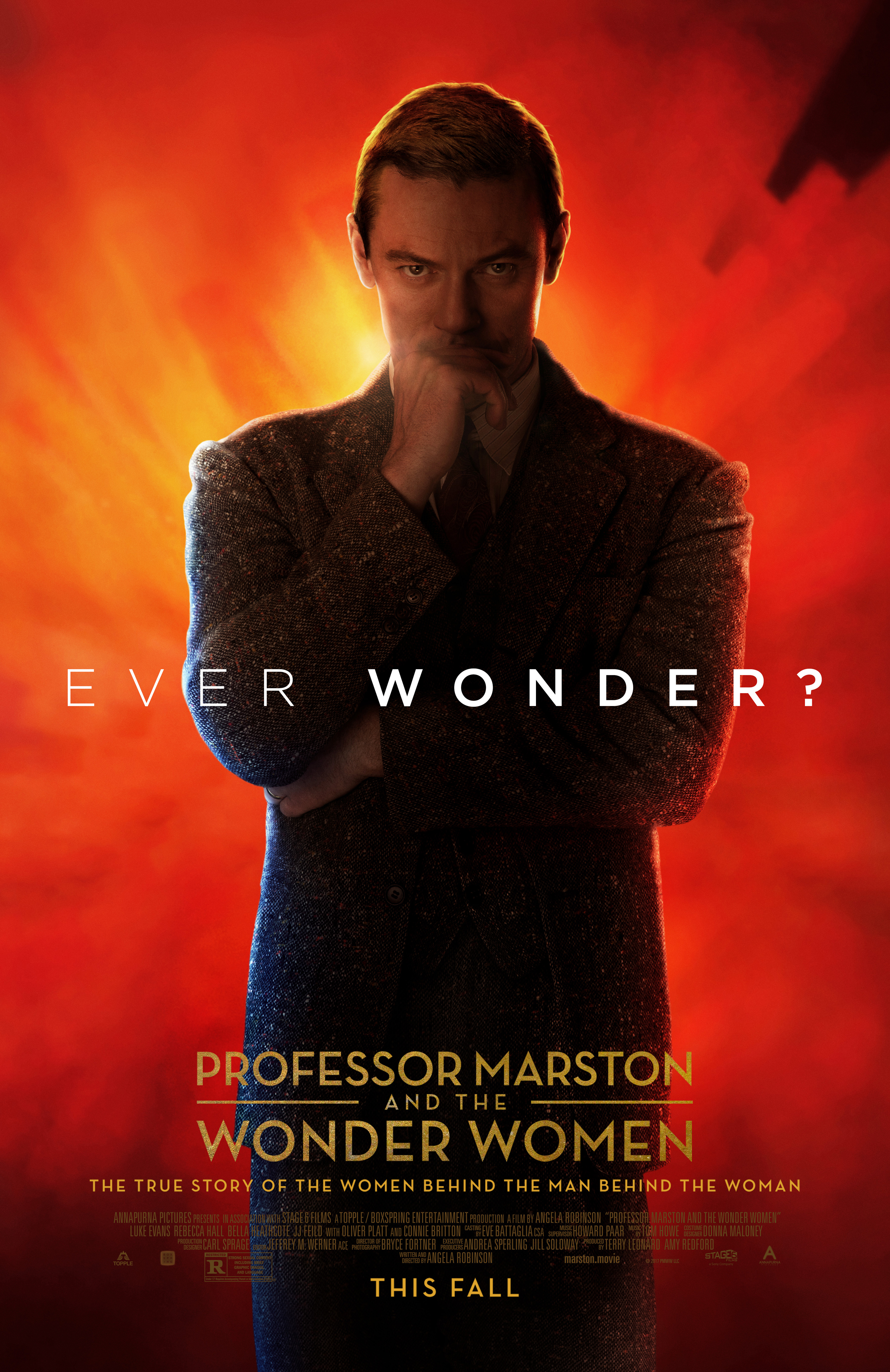
Share this:

  • Share on X (Opens in new window) X
  • Share on Facebook (Opens in new window) Facebook
  • More
  • Print (Opens in new window) Print
  • Email a link to a friend (Opens in new window) Email
Like Loading...

Mini-Review: Gold (2016)

27 Thursday Apr 2017

Posted by dullwood68 in Movies

≈ 1 Comment

Tags

Bryce Dallas Howard, Drama, Edgar Ramirez, Fraud, Indonesia, Matthew McConaughey, Review, Stephen Gaghan, True story, Washoe Mining

D: Stephen Gaghan / 121m

Cast: Matthew McConaughey, Edgar Ramírez, Bryce Dallas Howard, Corey Stoll, Toby Kebbell, Bill Camp, Joshua Harto, Timothy Simons, Craig T. Nelson, Macon Blair, Adam LeFevre, Frank Wood, Michael Landes, Bhavesh Patel, Rachael Taylor, Stacy Keach, Bruce Greenwood

Kenny Wells (McConaughey) is a struggling businessman trying to keep his father’s company, Washoe Mining, afloat. Working out of the bar where his girlfriend, Kay (Howard) works, Kenny’s efforts are proving fruitless. One night he has a dream of finding gold in the jungles of Indonesia. Inspired by this, and the recollection of having met a geologist, Michael Acosta (Ramírez), who works in the region, Kenny reaches out to Acosta and convinces him to go into partnership with him. Michael will find a drilling site, and Kenny will put up the funding (using every last penny he can muster). The gamble pays off handsomely: gold is discovered, and when the news reaches the outside world, there’s no shortage of people and companies willing to invest in the newly revitalised Washoe Mining.

The company makes billions overnight, trading high on the Stock Exchange. But soon, word reaches Kenny and his team that the gold find in Indonesia is a fraud. The gold hasn’t been mined, but is river gold, not of the same calibre and nowhere near as valuable. Also, Michael has disappeared, along with $164 million that he’s accrued by dumping stock over the past few months. The FBI become involved, and their investigation, led by Agent Jennings (Kebbell), has one all-important question to ask: was Kenny a part of the fraud or not?

Using the 1993 Bre-X mining scandal as the basis for its story, Gold is a cautionary tale of desperation leading to blind greed as everyone buys into the gold find and sees multiple dollar signs everywhere – and without looking too closely to see if it was all above aboard. In this version, the movie makes it clear: the signs were there but no one wanted to look at them. The message then is “be careful what you wish for”, or more appropriately perhaps, “all that glitters is not gold”. However, this message is all but buried by the movie’s focus on Kenny and his struggle to avoid failure. Kenny is not one of Life’s winners, and even when he does achieve success it’s short-lived. He’s a loser, grabbing at a last chance to honour his father’s legacy. This is all well and good, but in terms of the movie and the story it’s trying to tell, it’s not that compelling. Thanks to the combination of Patrick Massett and John Zinman’s drawn-out screenplay and Stephen Gaghan’s static direction, Gold doesn’t trade in any expected highs and lows, but instead, maintains an even keel throughout its two hour running time.

This leaves the cast, and the audience, with little to connect with. McConaughey gives a committed performance, putting on weight, shaving back his hairline, and adopting crooked teeth, but does his appearance add depth or nuance to the character? Sadly, the answer is no. The rest of the cast, even Ramirez, are left stranded by the script’s focus on Kenny, and they operate as satellites around his ever decreasing orbit. And no one is memorable enough to stand out. The bulk of the movie is set in 1988, but this doesn’t add anything either, and Gaghan’s efforts to add tension to the movie’s latter half also fall short of succeeding. Gold could have been about a combination of avarice and hubris bringing about one man’s particular downfall. Instead it comes across as a weak-minded morality tale where no one and everyone is to blame, and the only consequence to it all is a last-minute “twist” that undermines everything that’s gone before.

Rating: 5/10 – lacklustre in both design and execution, Gold benefits from some stunning location photography (with Thailand standing in for Indonesia), and a well chosen soundtrack, but otherwise fails to impress; a missed opportunity then, and a movie that doesn’t make much of an impact thanks to its undeveloped potential.

Share this:

  • Share on X (Opens in new window) X
  • Share on Facebook (Opens in new window) Facebook
  • More
  • Print (Opens in new window) Print
  • Email a link to a friend (Opens in new window) Email
Like Loading...

Christine (2016)

20 Thursday Apr 2017

Posted by dullwood68 in Movies

≈ 1 Comment

Tags

1974, Antonio Campos, Biography, Christine Chubbuck, Drama, Michael C. Hall, Rebecca Hall, Review, Sarasota, Tracy Letts, True story, TV News, WXLT

D: Antonio Campos / 119m

Cast: Rebecca Hall, Michael C. Hall, Tracy Letts, Maria Dizzia, J. Smith-Cameron, Timothy Simons, Kim Shaw, John Cullum

In the Spring of 1974, Christine Chubbuck (Hall) was a twenty-nine year old news reporter working for Channel WXLT in Sarasota, Florida. She was single, she lived with her mother, Peg (Smith-Cameron), and she had been given her own talk show on WXLT called Suncoast Digest, in which she would focus on local people and community activities. But Christine also suffered from depression, and could be up one moment and down the next (nowadays she would likely be diagnosed as having bi-polar disorder). Her depression could lead to extreme mood swings, and she would often push people away even though the few friendships she had were very important to her. And she regularly complained that the news stories she, and the station, were covering weren’t interesting enough, and that the station should focus more on regular people’s lives and what those lives were really like.

This kept her at odds with news director Mike Simmons (Letts), and the two would have regular run-ins as Christine tried to emphasise the various ways she felt the station wasn’t living up to its potential. Simmons wanted “juicier” stories about murder and other crimes; Christine felt the station should focus more on local people and the drama inherent in their lives. Simmons didn’t. Also at this time, the owner of WXLT, Bob Anderson (Cullum), was looking for two of the news team to transfer to Baltimore to a new station he’d recently purchased. Lead anchor George Peter Ryan (Hall) was a likely candidate, but Christine felt that she could be the other person Anderson was looking for.

Christine’s determination to be that other person led her to make some questionable decisions in relation to her work, and she came close to alienating Simmons for good. When she discovered that she wouldn’t be going to Baltimore (even after speaking directly to Anderson), Christine’s depression seemed to be under control. Her mood swings disappeared, she was more agreeable to her fellow co-workers, and she apologised to Simmons. She also asked to helm a Suncoast Digest piece direct to camera, something she’d never done before. Simmons agreed, and on the morning of 15 July 1974, Christine became a news story herself…

In telling the last few months in the life of Christine Chubbuck, Antonio Campos and screenwriter Craig Shilowich have fashioned the kind of Seventies-based journalistic enquiry that wouldn’t look out of place when compared to similar movies made at the time. With its drab Seventies decor and often drabber costume design (brown was definitely the colour back then), Christine pays homage to an era when news reporting in the US was heavily community-based – parochial even – and sensationalism was just beginning to take hold (when one of Christine’s reports is bumped in favour of a murder outside their area, she’s informed it’s because it’s what the viewers want to see). The movie eloquently and confidently recreates the period (in all its dreary glory), and provides a perfect backdrop for its tale of a real-life news reporter who could never understand why her work wasn’t as well-regarded as she expected.

Christine’s issues at work were exacerbated by her mental health issues, and the movie spends a lot of time reinforcing the idea that she was unwell. There are references to a previous “episode” that occurred before she and her mother moved to Sarasota; Christine herself acknowledges at times her own inability to connect with the people around her (she seems more confident with strangers, something that’s noted but not examined too closely); and her continual on-again, off-again reactions to her colleagues speak effectively of someone struggling to make sense of her place in the harried world of news journalism.

That Christine Chubbuck suffered from a variety of mental health issues is clear from Shilowich’s sympathetic and engrossing screenplay, and Hall gives a bravura performance, imbuing the troubled newswoman’s lack of social skills, and her off-kilter idea of professional balance with a scary, aggressive approach that initially makes her a hard character to like. But with the knowledge that she is ill, the movie is able to provide a sympathetic hook for the audience to hold on to, even when Christine is being manipulative and horrible to her mother, berating Simmons for treating her badly, or when she mistreats her best friend and colleague, Jean (Dizzia).Through all this and more, Hall never loses sight of the woman who is trapped behind the cold veneer of mental illness, and whose sense of self-worth is only as strong as the approbation she receives from the people around her (and which she then refutes). It’s an often distressing performance, and one that’s tempered by a refusal to soften the blow of certain scenes and images (it also makes you wonder how on earth Meryl Streep could have received an Oscar nomination for Florence Foster Jenkins when Hall’s portrayal is on another level entirely).

Other aspects of Christine’s personality, character and history are explored, such as the work she did with children with intellectual disabilities, adopting a puppet show approach to teaching them life skills. The movie uses these shows to explore the depth of Christine’s own feelings about various topics, and they retain an added poignancy thanks to the knowledge that though Christine is passing on sound advice, the viewer is aware that it’s advice she herself won’t be able to follow. In a scene where Ryan takes her to a trancendental analysis meeting, Christine expresses all the things that are wrong with her life, including the lack of a partner and/or children. This is the crux of the matter: she doesn’t want to be alone anymore. She’s fast approaching thirty, is to all intents and purposes alone in her life, can’t see a way forward, and decides on a course of action that will deal with everything that contributes to her being depressed.

Anyone aware of Christine Chubbuck and what she did that baleful July morning in 1974, will already know the movie’s outcome, but what’s remarkable about the period before that day, and the way that both Shilowich and Campos treat it, is that it’s not until the last ten or twelve minutes that Christine’s fate is sealed. There are a couple of foreshadowings that viewers who are “in the dark” may well pick up on, but as well as its self-destructive mental health theme, this is the story of a woman fighting for recognition in an industry that was inherently sexist, and which was on the verge of becoming less conventional and more exploitative. This subplot is given enough screen time that it adds to the sense of Christine being beleaguered from all sides, and her efforts to break free and get to Baltimore all the more understandable. But it’s also Christine’s last chance to salvage something from her time at WXLT, and it’s only then that her “solution” presents itself. With both her personal and professional lives coming to a standstill, her decision has an inevitability about it that the movie has avoided delving into up until then.

Throughout, Campos’ direction is solid, sympathetic and invigorating. He wisely keeps the focus on Hall, while giving the likes of Letts and Michael C. Hall plenty of room to flesh out their characters and make them as credible as they can (in reality, neither Ryan nor Simmons had as much involvement in Christine’s life as they do here, and sometimes it shows). The hustle and bustle of the newsroom is downplayed in favour of effective character beats, while Joe Anderson’s muted yet moody cinematography is a perfect match for the emotional troubles Christine experiences. There’s a whole lot of heart and craft here, and as an examination of one person’s bitter disappointment with the hand Life has dealt her, it’s also painfully affecting.

Rating: 8/10 – with a mesmerising and compelling performance from Hall (a career best in fact), and a wealth of sincerity and compassion when it comes to its central character, Christine is a remarkable movie let down only by its lack of back story, and some repetition in Christine’s dealings with Simmons; absorbing and vivid, and with a sly streak of humour running throughout, it’s also a movie that refuses to pass judgment on her, and which does its best to honour her memory without sensationalising it, something she would most likely have approved of.

Share this:

  • Share on X (Opens in new window) X
  • Share on Facebook (Opens in new window) Facebook
  • More
  • Print (Opens in new window) Print
  • Email a link to a friend (Opens in new window) Email
Like Loading...

Trailers – Detroit (2017), The Hitman’s Bodyguard (2017) and Atomic Blonde (2017)

16 Sunday Apr 2017

Posted by dullwood68 in Movies

≈ Leave a comment

Tags

12th Street riot, Action, Charlize Theron, Comedy, Drama, James McAvoy, Kathryn Bigelow, Previews, Ryan Reynolds, Samuel L. Jackson, Trailers, True story

It’s been five years since the directing/writing team of Kathryn Bigelow and Mark Boal brought us Zero Dark Thirty – and it’s about time they had something new for us. Thankfully, the trailer for Detroit looks as if they’re not going to let us down. A stinging, emotive, and visceral look at the 12th Street riot that occurred in July 1967 following events that took place at the Algiers Motel, the movie has already come under fire for not including any black women in its main cast. It’s a little early to tell if this is a deliberate piece of revisionism, but what is clear from the glimpses of violence seen in the trailer is that Bigelow has captured the atmosphere and the grim inevitability of a situation that quickly spiralled out of control and left three men dead, and nine others brutally injured. Bigelow has also assembled a great cast, including John Boyega as a security guard who gets caught up in the riot, Jack Reynor, John Krasinski, Anthony Mackie, and in what could be the role that catapults him to well-deserved stardom, Will Poulter as one of the three cops who ended up on trial for murder. One of the must-see movies of 2017, Detroit has all the potential to be an impassioned and excoriating feature that will leave audiences stunned and impressed in equal measure when it’s released in August.


Samuel L. Jackson is the hitman. Ryan Reynolds is the bodyguard. Gary Oldman is the dictator both men team up to defeat. The tone of the movie? Well, you only have to see the poster for The Hitman’s Bodyguard to work that one out: a parody of The Bodyguard (1992) with Reynolds subbing for Kevin Costner, and Jackson for Whitney Houston. The trailer drives the idea home with what is obviously a deliberate lack of subtlety, and though Tom O’Connor’s screenplay was included in the 2011 Black List of unproduced scripts, this looks likely to be an action comedy that is big on action set-pieces, but short on actual laughs (though Reynolds’ comment that Jackson’s character has ruined the word “motherfucker” has an ironic touch to it that bodes well). However it turns out, and the trailer’s mix of shouty humour, action beats and Roadrunner/Wile E. Coyote-style stuntwork doesn’t seem to say “instant classic”, this could still be the kind of dumb “Saturday-night-with-beers-and-a-pizza” movie that gains a loyal fanbase, and becomes a bona fide guilty pleasure in years to come.


After the success of John Wick (2014), it was perhaps inevitable that there would be a distaff version of that movie (literally) hitting our screens. And so we have Atomic Blonde, an adaptation of Antony Johnston’s graphic novel The Coldest City (the movie’s original title), and starring Charlize Theron as an MI6 agent tasked with retrieving a list of double agents being smuggled into the West prior to the fall of the Berlin Wall. The John Wick connection is cemented by David Leitch being in the director’s chair, and the trailer showcases a scene that has Theron taking out a roomful of assailants in much the same style as Wick. Whether there will be too many similarities between the two movies remains to be seen, and if there are it may hurt Atomic Blonde‘s chances with the critics, but if its sense of humour is as acerbic as its action sequences are full-on kinetic, then the movie has a chance of connecting with a wider, more appreciative audience. The presence of Sofia Boutella as a French operative Theron’s character “makes contact with”, plus James McAvoy as her operational ally in Berlin, and John Goodman as a less than friendly CIA agent, adds lustre to the movie, and the trailer can’t help but give potential audiences the impression that this may well turn out to be a very, very fun ride indeed.

Share this:

  • Share on X (Opens in new window) X
  • Share on Facebook (Opens in new window) Facebook
  • More
  • Print (Opens in new window) Print
  • Email a link to a friend (Opens in new window) Email
Like Loading...

Genius (2016)

30 Thursday Mar 2017

Posted by dullwood68 in Movies

≈ 1 Comment

Tags

Colin Firth, Drama, Editor, Jude Law, Laura Linney, Maxwell Perkins, Michael Grandage, Nicole Kidman, Review, Scribner's, Thomas Wolfe, True story

D: Michael Grandage / 104m

Cast: Colin Firth, Jude Law, Nicole Kidman, Laura Linney, Guy Pearce, Dominic West

If you’ve never heard of Maxwell Perkins (Firth) – and it’s very likely that you haven’t – then Genius, the debut feature by Michael Grandage, won’t actually tell you very much about him. You will discover that he was an editor at Charles Scribner’s & Sons during the Twenties and Thirties, and that he helped shape the writing careers of both F. Scott Fitzgerald (Pearce) and Ernest Hemingway (West). You’ll also learn that he had a wife, Louise (Linney), five daughters, and – apparently – never took off his hat, even at home. But these are just facts about the man. What made him tick, so to speak, what made him so passionate about books and writers, well, that’s another matter. And it’s one the movie, despite being based on A. Scott Berg’s National Book Award-winner Max Perkins: Editor of Genius (1978) and adapted by John Logan, fails to address.

Instead, the movie focuses on Thomas Wolfe (Law), an aspiring novelist whose first work of full-length fiction has been turned down by every other publishing house in New York except for Scribner’s. The novel, O Lost, is long, unwieldy, and overly descriptive in a grand romantic manner, but Perkins believes sincerely that it should be published, though with a fair bit of judicious pruning. Wolfe can’t believe his good luck, and agrees to working with Perkins to wrestle the novel into a more publishable form. Long months pass, and in 1929, Wolfe’s first novel is published to great acclaim with a new title, Look Homeward, Angel.

The two men are polar opposites. Perkins is quiet to the point of apparent catatonia, while Wolfe is brash, loud, and unapologetically hedonistic. He also writes like a man possessed, producing hundreds of pages of prose almost every day, but with no idea of how to corral that prose into a consistent format, or how to self-edit. Hence his need for Perkins to work with him. Wolfe’s success is compounded by his second novel (initially even more long, unwieldy and overly descriptive in a grand romantic manner), Of Time and the River, being just as well-regarded and received as his first. But now, jealousy and paranoia begin to take hold of Wolfe, and the idea that his books are only successful because of Perkins’ involvement, starts to nag at the author, and he takes steps to distance himself from Perkins and claim all the credit. This leads to an estrangement between the two men, as well as Wolfe signing with another publisher.

Genius moves at an agonisingly slow pace for the majority of its running time, and there are no end of scenes where Perkins sits reading manuscripts with nothing else happening within the frame. His is an interior, contemplative existence, allied to a contained, watchful existence that allows for few displays of honest emotion (when he raises his voice in anger to Louise at one point, it’s like a verbal slap across the face, such is the shock of it). Perkins may live most of his life through the pages of the books he edits, and he may be deliberately reclusive in terms of having a social life, but his skills as an editor can’t be challenged. The movie makes this point quite cleverly and quite succinctly, during a sequence where Perkins’ skill as an editor is given the spotlight. At first he reads out a passage Wolfe has written about the central character in O Lost falling in love at first sight. It’s overlong, and Perkins is unconvinced by much of Wolfe’s prose. And so he challenges Wolfe’s assertions at every turn, and soon the passage has been whittled down to a single, concise paragraph. And it’s so much better.

It’s also one of the very few occasions where the movie attempts to speed up or show a sense of urgency, but this is down to the editing of the sequence – step forward, Chris Dickens – rather than anything that Logan’s script or Grandage’s direction does. The slow, measured pace of the movie is its biggest obstacle to being liked, though the way in which Wolfe is introduced to the audience doesn’t help either. Where Firth underplays Perkins to silent perfection, Law is a bundle of energy as Wolfe, but in a way that soon proves wearing. He’s overly voluble, lacks filters, and is unconcerned if he upsets the people around him, a trait that become more and more entrenched the more successful he becomes. By the time Law has theatrically made his way through his third or fourth literary-style monologue, it’s clear that the template for the character has been set. Law is good as Wolfe, but his performance is one that Grandage doesn’t seem able to rein in when needed, and as a result, Law seems more in control of his performance than his director is.

While Linney is consigned to the background as Perkins’ demure, supportive wife, Kidman is given the more dramatic role of Wolfe’s lover, Aline Bernstein. Aline supported Wolfe when he was trying to get O Lost published, but as he found fame and fortune, their relationship became more and more adversarial, thanks largely to Aline’s feelings of betrayal and abandonment. Wolfe became dismissive of her feelings, and the disintegration of their relationship adds some much needed meat to the bones of Logan’s script. Kidman is caustic yet vulnerable as Aline, and it’s a shot in the arm for viewers who may have been thinking that the actress’s best work is behind her.

Despite the performances (Pearce is also on good form as a struggling Fitzgerald), the movie appears deliberately gloomy thanks to an almost monochrome colour scheme that’s been lit in equally dreary fashion by DoP Ben Davis. This makes the movie seem drier and even more constrained than it actually is, and again, Grandage doesn’t have any answers to combat this. Maybe it was a deliberate choice, and the movie is certainly consistent enough for this to be the case, but by making the movie look so unappealing and drab it has a knock-on effect on the material as a whole. It’s one of those occasions where you wonder if anyone was watching the dailies that closely.

In the end, the movie is less about Perkins and his talent as an editor, and it’s even less concerned with his legacy (trotting out scenes with Fitzgerald and Hemingway appears to be an attempt to do this, but these scenes are more about them than Perkins). The focus is on Wolfe and his need to write to the exclusion of all else that doesn’t further his writing. A scene midway through has Wolfe take Perkins to a jazz club. There the differences between the two men are highlighted, but in such a way that Perkins is left adrift as the scene concentrates on Wolfe. What Grandage and Logan have forgotten, it seems, is that Perkins is their main character, and not Wolfe, and this in turn makes one wonder: where was someone to shape and polish the script in the same way that Perkins shaped and polished the novels he helped publish? A fair point, maybe, but not one you’re likely to find an answer to.

Rating: 6/10 – good performances all round can’t help Genius avoid being labelled as tedious, tepid, or perfunctory; lacking emotions that might instil reactions from its audience, the movie is a dry, humdrum examination of literary excellence behind the scenes, and a love of the printed word aside, never takes flight in the way that it should do.

Share this:

  • Share on X (Opens in new window) X
  • Share on Facebook (Opens in new window) Facebook
  • More
  • Print (Opens in new window) Print
  • Email a link to a friend (Opens in new window) Email
Like Loading...

A United Kingdom (2016)

28 Tuesday Mar 2017

Posted by dullwood68 in Movies

≈ Leave a comment

Tags

Amma Asante, Bamangwato tribe, Bechuanaland, David Oyelowo, Drama, Historical drama, Jack Davenport, Literary adaptation, Marriage, Politics, Review, Romance, Rosamund Pike, Ruth Williams, Seretse Khama, Tom Felton, True story

D: Amma Asante / 111m

Cast: David Oyelowo, Rosamund Pike, Jack Davenport, Tom Felton, Laura Carmichael, Terry Pheto, Jessica Oyelowo, Vusi Kunene, Nicholas Lyndhurst, Arnold Oceng, Anastasia Hille, Charlotte Hope, Theo Landey, Abena Ayivor, Jack Lowden, Anton Lesser

In 1947, Prince Seretse Khama of Bechuanaland (Oyelowo) was studying law in England when he met and fell in love with Ruth Williams (Pike), a clerk at a London-based law firm. Poised to inherit the position of King, Seretse’s relationship with a white woman caused concern among both the British government (who ruled over Bechuanaland as a proctectorate), and Seretse’s uncle, Tshekedi (Kunene), who was ruling as regent until Seretse was ready to ascend the throne. Faced with opposition on all sides – Ruth’s father effectively disowned her – the couple ignored warnings and approbation and eventually married in September 1948.

A political maelstrom ensued, and all intended to ensure that Seretse never became King. The British government, in the form of Alistair Canning (Davenport), their representative in South Africa, attempted to bully Seretse into renouncing his claim, but he stood firm, and both he and Ruth travelled to Bechuanaland (now modern day Botswana) to begin their life together. They received a muted welcome, with Ruth being treated with hostility by Seretse’s family, and Seretse’s uncle refusing to accept the marriage, or Seretse’s wish for them to work together to solve their country’s problems. With the people of Bechuanaland supporting Seretse’s claim to the throne (and his marriage), the British government tricked him into travelling to Britain, where in 1951, he was promptly informed that he and Ruth were being exiled from his home country for a period of five years (fortunately, Ruth stayed behind).

Back in Bechuanaland, Ruth discovered that she was pregnant. Her predicament proved beneficial in that it brought her closer to Seretse’s family, particularly his sister, Naledi (Pheto). With the women of Bechuanaland beginning to support her as well, Ruth did her best to support Seretse from afar, but with the British government proving intransigent in their attitude toward him, the would-be King was hindered at every turn. Eventually he found backing and support from members of the Labour Party, including Tony Benn (Lowden), and pressure was brought to bear. With the people of Britain voicing their dismay at the way in which Seretse and Ruth were being treated, a solution seemed on the horizon when Winston Churchill, ahead of the next General Election, announced he would rescind Seretse’s exile if the Conservatives won. They did win, but Seretse’s exile became even more of a political hot potato…

The story of Seretse Khama and Ruth Williams has been filmed before, as a TV drama in 1990 called A Marriage of Inconvenience. But where that version ran to an hour and focused more on their romance than the political upheaval that surrounded them, Amma Asante’s follow up to Belle (2013) aims to be a more comprehensive look at the trials and tribulations that affected both Seretse and Ruth, and an entire country. But as with so many historical dramas that have been made in recent years – The Birth of a Nation (2016), J. Edgar (2011), The Monuments Men (2014) – getting the balance right between historical accuracy and telling a compelling story is often the biggest problem of all. And so it proves with A United Kingdom, a movie that sets out to tell a fascinating tale wherein true love really does conquer all, but which somehow manages to fall short of making the impact it that should.

It begins well, placing the audience firmly in heritage picture-land, with convincing depictions of post-war London: its foggy streets, stoic populace, and rationing-led austerity. Seretse and Ruth’s courtship is depicted with a great deal of charm and it’s easy to see why these two fell in love with each other so easily and so readily, and despite the obvious social disapproval they would encounter (and on both sides of the racial divide, a theme that continues in Bechuanaland). Oyelowo and Pike have an easy-going chemistry, and it’s a delight to see them bring Seretse and Ruth together. Even the introduction of Davenport’s sneering, arrogant government representative can’t derail or diminish their love for each other. But this isn’t just a love story, it’s also a political drama, and once the movie switches from the gloomy back streets of London to the colourful plains of Bechuanaland, the movie changes tone and emphasis, and in doing so, loses sight of what has, up until now, made it so effective.

The trouble is that Seretse and Ruth’s relationship actually ceases being as relevant as it was before their arrival in Bechuanaland. Once there, the movie has to deal more directly with tribal politics, colonial do’s and don’t’s, government machinations, and the consequences of exile. Against all this and as a couple, Seretse and Ruth are required to take a back seat, as the wider world becomes more and more involved in their plight. Canning’s ruses and double dealings keep them marginalised, while the key to all their worries, Seretse’s uncle, disappears from the movie for around an hour. It’s left to British politicians to make the difference that’s needed, while Seretse lets himself become a figurehead for national change in Bechuanaland. And Ruth doesn’t fare any better, becoming a mother and gaining tribal respect. While this is important for the character, it has less impact than Guy Hibbert’s screenplay may have intended, and Pike is too often called upon to smile hopefully and talk in short, clichéd bursts.

Playing yet another important black historical figure after Dr Martin Luther King Jr in Selma (2014), Oyelowo is earnest, forthright, passionate in his dealings with Seretse’s people, and as the movie progresses, just a little on the dull side. It’s not Oyelowo’s fault; rather it seems that, by the time Seretse has been exiled, we’ve seen all there is to him. It’s a disconcerting thing to realise, and makes the movie’s second half more than a little disappointing as both central characters take an effective back seat in their own lives. Dramatically this is somewhat necessary – after all, they couldn’t be involved in all the background political manoeuvrings that occurred – but the downside is that the movie’s philosophical tagline, “No man is free who is not master of himself”, doesn’t feel quite as affirmative as it sounds.

Asante at least makes all those political manoeuvrings more interesting than expected (and easy to follow), and there’s some degree of humour to be derived from the way in which Canning and the rest of the British establishment receive their deserved come-uppance, but the movie ends on a triumphalist note that is a tad more simplistic than necessary (though it will send audiences away in a happy frame of mind). She also makes good use of the Botswanan locations, shooting in Seretse and Ruth’s real home at the time, and in the hospital where Ruth gave birth to their first child. Sam McCurdy’s cinematography is suitably drab and claustrophobic when in London, and beautifully airy when in Bechuanaland, making the movie hugely attractive to watch, and highlighting the impressive efforts of production designer Simon Bowles and costume designers Jenny Beavan and Anushia Nieradzik.

Rating: 7/10 – despite some prolonged stretches where the narrative either maintains the same tone from scene to scene, or it repeats itself (any scene between Seretse and Canning), A United Kingdom is still a movie that holds the attention and treats its real-life characters with respect and admiration; though not as powerful as it could have been, it’s still a movie that has the undeniable charm of a well-mounted heritage picture, and more besides.

Share this:

  • Share on X (Opens in new window) X
  • Share on Facebook (Opens in new window) Facebook
  • More
  • Print (Opens in new window) Print
  • Email a link to a friend (Opens in new window) Email
Like Loading...

The Lost City of Z (2016)

24 Friday Mar 2017

Posted by dullwood68 in Movies

≈ 1 Comment

Tags

Adventure, Charlie Hunnam, Drama, Explorer, Hidden civilisation, Historical drama, James Gray, Perceval Fawcett, Review, Robert Pattinson, Sienna Miller, South America, Thriller, Tom Holland, True story

D: James Gray / 141m

Cast: Charlie Hunnam, Robert Pattinson, Sienna Miller, Tom Holland, Edward Ashley, Angus Macfadyen, Ian McDiarmid, Harry Melling, Franco Nero

A throwback to the kind of big budget adventure stories made in the Seventies and Eighties, with location filming designed to heighten the events shown, The Lost City of Z concerns the efforts of military man turned explorer Perceval “Percy” Fawcett (Hunnam) to find a city he believes is hidden somewhere in the Amazonian jungle. Covering the years between 1905 and 1925, the movie introduces us to Fawcett the military man while he’s posted to Ireland, and finding it difficult to advance through the ranks thanks to what a senior officer refers to as, “an unfortunate choice in ancestors”. Good fortune arrives in the form of a secondment to the Royal Geographical Society, where he is asked to map an area of jungle on the Brazil-Bolivia border.

Fawcett accepts the commission, and finds himself in the company of fellow military men Henry Costin (Pattinson) and Arthur Manley (Ashley). While they carry out their task, Fawcett finds what he believes is evidence of an advanced civilisation that once existed within the jungle but which has remained, until now, undiscovered. When he returns to England, and presents his findings to the RGS, they and he are ridiculed, and the idea that the indigenous tribes are anything but “savages” is dismissed. Fawcett does, however, find an ally in RGS member James Murray (Macfadyen), who agrees to fund a further expedition in search of what Fawcett is calling “the lost city of Z”. And so in 1911, Fawcett, accompanied again by Costin and Manley, and with Murray in tow, returns to the Bolivian jungle.

The expedition, however, suffers a series of setbacks, from the loss of equipment to Murray’s inability to deal with the harsh, uncompromising environment. Forced to turn back despite Fawcett’s conviction that they are close to finding the lost city, the trio return home just as war in Europe breaks out. They find themselves fighting together in France, and during a push across the Somme in 1916, Fawcett falls victim to a chlorine gas attack and is temporarily blinded. Invalided out of the Army, Fawcett believes his exploring days are now behind him. That is, until his son, Jack (Holland), convinces him that they should travel together to Bolivia, and make one more effort to find the lost city. And so, in 1925, the pair set off into the jungle in an effort to prove once and for all that the fabled city and its ancient civilisation did exist.

Based on the book The Lost City of Z: A Tale of Deadly Obsession in the Amazon (2009) by David Grann, James Gray’s adaptation is sincere, meticulously researched, beautifully shot by Darius Khondji, engaging on a Boys’ Own adventure level, and yet, despite everyone’s best efforts, not as interesting to watch as it should be. The tale of Fawcett’s obsession should be strong, compelling stuff, but thanks to Gray’s adaptation covering such a long period of time, the movie suffers from being episodic, and as a result, feels hesitant in some scenes and overly confident in others. Gray handles the material well, but the narrative’s stop-start approach – something that Gray in both roles as screenwriter and director fails to find a solution for – means that it’s always difficult for the viewer to maintain interest in a story that, ultimately, isn’t going to lead anywhere.

If you already know the outcome of Fawcett’s third expedition to the Bolivian jungle, then this movie won’t necessarily be of interest. Having to wade through a succession of failures before this point, the movie does its best to make each disappointment and setback in Fawcett’s life part of a never-give-up, never-say-die attitude that drives the man forward, but the key word in Grann’s title – “obsession” – never really applies, and that’s partly due to Gray’s script, which never portrays Fawcett as passionate in his beliefs. It’s also due to Hunnam’s less-than-charismatic performance, one that will have viewers wondering why Costin and Manley stick with Fawcett for so long, and how he managed to attract backers for his second and third expeditions. Watching the movie, it gives the impression that the idea of a hidden civilisation in the Bolivian jungle is more enticing than the idea of Fawcett being the man to lead the search.

The expeditions themselves lack any tension, even when Fawcett and his companions encounter a tribe of cannibals, and though Gray shows an impressive capacity for framing the jungle scenes in such a way that they feel other-worldly, these sections of the movie go by without making as much of an impact as Gray was no doubt aiming for. There are also signposted moments that are straight out of Predictable Storytelling 101, such as when Fawcett holds a book up in front of his face and an arrow pierces it, stopping just inches away from hitting him. Or the moment where Murray demands an apology from Fawcett, and he agrees to do so, and then turns and apologises to Costin and Manley instead.

Also problematical is Fawcett’s relationship with his wife, Nina (Miller). She accepts his going to Bolivia in 1906, and is supportive of the trip. But when it comes time for the 1911 trip, Nina wants to go with him, and the pair have an awkward argument where Fawcett plays down her physical ability to make the journey there and back, and she argues that she has endured childbirth (twice by now) and if she can weather that particular experience then the jungle shouldn’t be any worse. Again, it’s an awkward exchange that feels out-of-place – and designed to give Miller something to do other than play the otherwise doting wife – and feels even more out-of-place when their oldest son, Jack, suggests a third trip and she agrees without so much as a murmur. Perhaps Gray felt the need to include a slice of proto-feminism amongst all the testosterone flying around, but if so, it’s not something that works.

By the time Fawcett and his eldest son get to Bolivia, viewers will probably be wondering how this is all going to pan out. Those in the know will find Gray’s choice of endings (technically, there are three) unlikely, overly poignant, and at odds with the tone of the movie thus far. That said, Gray does give Miller another chance to stand out from the overwhelmingly male cast, and while wish fulfilment is the order of the day, it sits uncomfortably with what we know of Fawcett and that last trip.

Overall, The Lost City of Z is a sterile drama that never hits any emotional highs and struggles to provide the audience with a sense of just how important Fawcett’s search for a hidden civilisation really was back in the Georgian era (or even if it was). There’s the usual degree of sexism sitting alongside the kind of blinkered attitudes that seem to define the period, and though Gray keeps the movie interesting on a visual level, with spectacular scenery and beautifully composed individual shots aplenty, it’s on a dramatic level that the movie fails to gain traction, becoming a succession of scenes that aim for a classic adventure feel, but which lack the depth to elevate it to such lofty heights. An adventure then, but one that offers scant reward for both its characters’ efforts, and the audience’s.

Rating: 6/10 – not as compelling or as rich in detail as viewers will need in order to gain maximum enjoyment from it, The Lost City of Z wastes its potential by making Fawcett’s “obsession” a strictly pedestrian affair; Gray delivers on the production side but can’t seem to work his magic on his own script or the cast, leaving the movie feeling like it’s always about to step up a gear while remaining steadfastly in neutral.

Share this:

  • Share on X (Opens in new window) X
  • Share on Facebook (Opens in new window) Facebook
  • More
  • Print (Opens in new window) Print
  • Email a link to a friend (Opens in new window) Email
Like Loading...

Viceroy’s House (2017)

22 Wednesday Mar 2017

Posted by dullwood68 in Movies

≈ Leave a comment

Tags

Drama, Gillian Anderson, Gurinder Chadha, Hindus, Historical drama, Hugh Bonneville, Huma Qureshi, India, Manish Dayal, Michael Gambon, Muslims, Pakistan, Partition, Politics, Review, Sikhs, True story

D: Gurinder Chadha / 106m

Cast: Hugh Bonneville, Gillian Anderson, Manish Dayal, Huma Qureshi, Michael Gambon, Om Puri, Simon Callow, Lily Travers, Tanveer Ghani, Denzil Smith, Neeraj Kabi, Darshan Jariwala

The awkwardly titled Viceroy’s House opens with a quote by Winston Churchill: “History is written by the victors.” Bearing in mind the story that follows, it’s hard to see why this particular quote has been chosen to open the movie. Perhaps director Gurinder Chadha is using it in an ironic fashion; any winners borne out of the terrible circumstances and outcomes surrounding the partition of India in 1947 may not have been aware of their having “won” anything at the time – even those who wanted the creation of Pakistan.

One thing that soon becomes apparent from watching the movie is that it’s going to be a politics-lite experience, with little depth beyond that given to an adaptation being shown on UK Sunday evening television. This means that some viewers, especially those with little awareness of the period when the British withdrew from India, and the terrible consequences that followed, will take much of what the movie tells them to heart. What should be made clear from the start is that Viceroy’s House is better viewed as an impression of those events than as a recreation.

The problem here is that one of the most traumatic upheavals of the 20th Century that involved a country and fifteen million of its inhabitants – those who were displaced – is given an unremarkable soap opera sheen that paints the British as saviours, and the Indian people as the authors of their own downfall. As an interpretation of what actually occurred on the Indian sub-continent, the movie takes several factual liberties with the events surrounding partition, and panders to the idea that the frustration experienced by Lord Louis Mountbatten (known more familiarly as “Dickie”) (Bonneville) is somehow more affecting and deserving of our sympathy than the political and social upheavals being experienced by India’s Hindu, Muslim and Sikh communities. As a dramatic approach to the material, it’s akin to asking an audience to be more sympathetic towards someone with a slight case of sunburn than someone who’s lost a limb.

The obvious comparison here is with the TV series Upstairs, Downstairs (or Downton Abbey for that matter, which also stars Bonneville). By attempting to focus on both the political machinations going on above stairs and the social upheavals occurring below stairs, Viceroy’s House tries to show the effect of partition on the British and the Indians alike. But the script – by Paul Mayeda Berges, Moira Buffini, and Chadha – takes an uncomfortable approach to the historical material, and tries to add a standard Romeo and Juliet-style romance to proceedings through the attraction between valet Jeet Kumar (Dayal) and lady’s attendant Aalia Noor (Qureshi). Alas, and despite the best efforts of Dayal and Qureshi, their romance is a tepid affair that occupies too much screen time, and lacks the kind of epic passion that could be seen as a compelling reflection of the violent passions of a country expressing itself through mounting conflict.

Other members of the Viceroy’s staff have arguments and cause problems from time to time, and Mountbatten is seen to berate them as if they were all naughty children. It’s a condescending attitude that extends to Mountbatten’s meetings with India’s leading politicians. Whether it’s Nehru (Ghani), Jinnah (Smith) or Ghandi (Dabi), the movie has “Dickie” treating them as if they should all just get along because he needs them to. And as a sop to the current need for strong female characters in pretty much every movie being made, Lady Edwina Mountbatten (Anderson) is portrayed as the “brains of the outfit”, while at the same time falling victim to the idea that their predicament is worse than that of the Indian people (“How can it be getting worse under us?”).

As the inevitability of partition looms ever nearer, and outbreaks of violence become the norm, Mountbatten is pushed into a corner and forced to accept that there can’t be a united India. With Pakistan now a certainty, he’s required to divide India into two, and enlists British lawyer Sir Cyril Radcliffe (Callow) to carry out the task. But it proves too difficult, until he’s advised by General Ismay (Gambon), Mountbatten’s advisor on all things Indian and political, that there is a solution. It’s here that the movie cements its appreciation and sympathy for the Viceroy by showing him as having been tricked by the British Government and set up for a fall if the violence continues and/or escalates out of control. It’s a moment that should elicit a good deal of compassion for “poor old” Mountbatten, but instead makes the viewer realise that Chadha feels more for him than she does for the Indian people.

Much else in the movie is perfunctory stuff designed to move the story forward with the least amount of effort or acknowledgment as to how dry and uninvolving it all is. Chadha directs with a minimum of fuss or apparent enthusiasm, leaving some scenes feeling cursory and superficial. Against this, the cast can only do their best, though Anderson manages to imbue Lady Mountbatten with a supportive, agreeable nature that makes her feel like more of a fully rounded character than anyone else. Bonneville is a good choice for “Dickie” (though he doesn’t look anything like him), but even he’s held back by a script that paints Mountbatten, somewhat plainly, as a good man in a bad situation (though if you need someone to portray “pained frustration” then Bonneville’s your man).

For someone whose family were involved in the partition and the subsequent resettlement of so many people, Chadha doesn’t always seem interested in telling a coherent, responsible story. Muslims are unlikely to be happy about the way in which they are shown to be the main instigators of the violence depicted, while the religious enmities between Muslims and Hindus are reduced to petty squabbling, a direction that is extended to the encounters between Nehru and Jinnah – if you believe the movie, then neither man could be in the same room as the other without resorting to childish bickering. By reducing the key players’ importance in this way, and by playing up the ineffective nature of Mountbatten’s tenure as Viceroy, the movie ends up paying lip service to a terrible period in India’s history, a period that deserves a much more focused and intelligent approach than is featured here.

Rating: 4/10 – sporadically effective as a heritage picture, Viceroy’s House is let down by its one-sided consideration of British colonialism, and by its insistence on depicting Indians of the time as quarreling malcontents; nowhere is freedom from oppression expressed as forcibly as needed, and the movie’s tacit exoneration of Great Britain’s often brutal occupation makes for an uncomfortable viewing experience throughout.

Share this:

  • Share on X (Opens in new window) X
  • Share on Facebook (Opens in new window) Facebook
  • More
  • Print (Opens in new window) Print
  • Email a link to a friend (Opens in new window) Email
Like Loading...

Wolves at the Door (2016)

21 Tuesday Mar 2017

Posted by dullwood68 in Movies

≈ Leave a comment

Tags

1969, Drama, Elizabeth Henstridge, Horror, John R. Leonetti, Katie Cassidy, Manson Family, Tate murders, Thriller, True story

D: John R. Leonetti / 73m

Cast: Katie Cassidy, Elizabeth Henstridge, Adam Campbell, Miles Fisher, Lucas Adams, Spencer Daniels, Jane Kaczmarek, Chris Mulkey, Eric Ladin

Here on thedullwoodexperiment it’s often the case that a review will question why a movie was made in the first place. Sometimes it just seems incredible that no one – seriously, no one – saw how a movie was progressing during production and didn’t say anything along the lines of, “Hey guys, this isn’t really very good, shouldn’t we just call it quits and save ourselves the embarrassment?” With low-budget movies it’s a little more forgivable. Fewer resources and an inexperienced cast and crew should always be taken into consideration, even if the end result fails to meet any and all expectations; at least the movie makers have tried their best (and even if their best proves to be their worst). Good intentions can mean a lot.

But then there are movies that are made by established, world-renowned production companies such as New Line Cinema, and/or released by equally world-renowned distributors such as Warner Bros. These movies get a wider shot at audiences than those made by independents or first-timers, and have a wider chance of making their production costs back. But when you watch them, it’s like watching a movie where the least amount of thought and consideration has gone into them, from the script to the cinematography to the editing to the soundtrack to the acting to the directing to the whole tone of the thing. It’s like watching the movie version of a contractual obligation.

And so we have Wolves at the Door, the latest movie to fit the criteria listed above. Based on “true events”, the movie recounts what happened over two particular nights in Los Angeles in August 1969. First we witness the early morning home invasion of a couple (Kaczmarek, Mulkey) that results in the couple being frightened for their lives but suffering no actual physical harm. A detective (Ladin) tells them that there have been a lot of similar incidents recently, but that this is something different. Cue the next evening and four friends having dinner together. The quartet – eight months pregnant Sharon (Cassidy), and her friends, Jay (Fisher), and couple Abigail (Henstridge) and Wojciech (Campbell) – are commiserating over Abigail’s imminent trip to Boston. They head back to Sharon’s home, intending to continue their “commiserations”.

Another friend, Steven (Adams), is there too, but he’s spending more time with the property’s caretaker, William (Daniels), who lives in a separate building. When he parts company with William, Steven encounters a strange man and woman who stop him from leaving the estate. Meanwhile, Wojciech, upset by Abigail’s decision to move to Boston, decides to get some air. He too encounters the strangers. Inside, Jay settles on the sofa to watch TV while Sharon and Abigail begin to hear strange noises. At one point, they see a strange woman in the house. Though scared, they still attempt to find out why the woman is there, but soon they both realise that there’s more than just the one stranger, and that the four friends are all in danger.

If you made the effort you could watch Wolves at the Door without knowing anything about it; which would be a blessing of sorts. If you managed to avoid reading any reviews, or hearing any word of mouth reports, or even seeing the poster with its give-away tagline, then there’s a certain degree of intrigue that will attach itself to the viewing experience. You’d be asking yourself why is all this happening, and you’d also be waiting for the four friends to turn the table on their attackers and come out on top (after the requisite amount of violent reprisals and bloodshed). But this isn’t that kind of movie, and it’s that tagline that gives it all away. For yes, this isn’t based on “true events” in the sense that it takes something that happened and fashions a different story around those events. No, this is a movie that takes those events and purports to be a recreation of those events – mostly.

Putting aside the movie’s appropriation of the Tate murders for mild exploitation purposes, what is more distressing is the absence of any connection with the characters themselves, and especially as they’re based on real people. The movie leaves Sharon Tate and her friends with no discernible personalities, lets the cast behave like approximations of the people they’re portraying, and doesn’t even try to engage the audience’s sympathy for the terrible things that happen to them. The viewer can only watch, distant and uninvolved, as the Manson Family members terrorise and attack the four friends (and Steven), and keep their motives unexplained (until the movie’s coda). It could all be happening to any group of strangers, and again it’s odd that with the movie being based on “true events”, the producers have decided to adopt an approach that reduces the impact of real people being attacked and killed to that achieved by a below-average slasher movie.

It doesn’t help that Gary Dauberman’s script is uninterested in telling a coherent story in the first place. The story of the Tate murders is one that’s ripe for a powerful, impactful movie, but this plods along employing standard horror movie clichés and failing to provide any tension. Despite the short running time, there are still plenty of scenes that could be removed and not be missed thanks to Dauberman’s disjointed approach to structure, and the absence of any appreciable imagination. He also has a tin ear for dialogue, saddling the cast with the kind of lines that would defeat even the most inspired casting. In terms of the cast, Cassidy and Henstridge are the nominal stars, but they’re soon reduced to crying, hiding, running about and making stupid decisions without any regard for logic or credibility, while everyone else involved has to hope that their performances survive the arbitrary decisions made by director Leonetti and editor Ken Blackwell at the assembly stage.

As the director, John R. Leonetti reminds audiences why he’s better off in his regular day job as a cinematographer, but at the same time, leaves those same audiences perplexed by his encouraging the kind of dimly-lit, murky photography that leaves this movie looking so bland and unremarkable, and which adopts the same kind of predictable framing and shot construction that we’ve seen so many, many times before in the realm of low-budget horror. All of this adds up to a flat, generic, dull movie that someone should have pointed out wasn’t going to work however much everyone tried – because it doesn’t seem as if anyone was. So once again, audiences are left with a movie that doesn’t work, is beyond lacklustre, and which can’t even manage the energy to be at least partially interesting.

Rating: 2/10 – a movie that reinforces the idea that some projects are just exercises in going through the motions, Wolves at the Door takes a real life tragedy and makes it seem trivial in comparison; and as if that wasn’t bad enough, it’s just plain awful.

Share this:

  • Share on X (Opens in new window) X
  • Share on Facebook (Opens in new window) Facebook
  • More
  • Print (Opens in new window) Print
  • Email a link to a friend (Opens in new window) Email
Like Loading...

The Happiest Day in the Life of Olli Mäki (2016)

25 Saturday Feb 2017

Posted by dullwood68 in Movies

≈ Leave a comment

Tags

1962, Biography, Boxing, Championship bout, Drama, Eero Milonoff, Finland, Hymyilevä mies, Jarkko Lahti, Juho Kuosmanen, Oona Airola, Review, Romance, True story

images-w1400

Original title: Hymyilevä mies

D: Juho Kuosmanen / 92m

Cast: Jarkko Lahti, Oona Airola, Eero Milonoff, Joanna Haartti, Esko Barquero, Elma Milonoff, Leimu Leisti, Hilma Milonoff, John Bosco Jr

Shot in gorgeous black and white, The Happiest Day in the Life of Olli Mäki opens in Finland in 1962. Olli (Lahti) is an amateur boxer turned professional whose manager, Elis Ask (Milonoff), is on the verge of clinching a deal that will see Olli fight in a bout against the World Boxing Association featherweight champion, Davey Moore (Bosco Jr). If it goes ahead, it will be the biggest sporting event in Finnish history. But Olli has other things on his mind, particularly his friend Raija Jänkä (Airola). At a wedding they both attend, Olli discovers he’s attracted to her, but at first he doesn’t know what to do or say about his new feelings. When the bout is agreed, Olli finds himself too busy to spend much time with Raija, who is reduced to the role of onlooker by Elis’s insistence that Olli focus on the bout and nothing else.

There’s also the issue of Olli’s weight, which needs to come down in order for him to be able to fight, but which he doesn’t seem to be concentrating on. With Elis arranging for a documentary film crew to record Olli’s preparations, it’s a further distraction for the boxer, and adds to the dissociation he feels with Raija. She too begins to feel the same thing, as Elis’ behaviour pushes her further and further away from Olli, almost to the point where she feels that she’s in the way. Meanwhile, Olli is forced to attend various dinners and promotional photo-shoots, adding to the disenchantment he’s feeling about the whole process. As the bout draws nearer, Raija returns to her home town, while Olli becomes increasingly withdrawn.

the-happiest-day-in-the-life-of-olli-maki-1

Unable to train any further, Olli follows Raija and declares his feelings for her. Giving Elis no option, he stays with Raija and trains at his own pace, even fighting to get his weight down. At the weigh-in he just comes in under the required weight, and afterwards he proposes to Raija. Buoyed by this he approaches the bout with a renewed sense of optimism. And as he enters the ring, the stage is set for a career- and life-defining moment – but will it prove to be the happiest day of his life?

If you’re not Finnish, and more specifically, up to speed on Finland’s boxing history, then it’s unlikely that you’ll have heard of Olli Mäki. His career was a succession of ups and downs, beginning with his winning the European lightweight title as an amateur in 1959, his bout with Moore, and his European Boxing Union light welterweight title win in 1964. He continued boxing until 1973 when he retired to become a boxing coach and manager. At first glance, his life doesn’t seem to warrant a biopic being made out of one particular period in his life, even if it does include a championship title bout. But this is a boxing movie that isn’t about boxing, even though it inhabits that world. Instead, director Kuosmanen (making his full-length feature debut) and co-writer Mikko Myllylahti have turned their attention onto Mäki himself, his doubts and fears and longings outside the ring, and in doing so, have wrought an accomplished, intelligent, and compassionate portrait of a man fighting for more than just a title.

the_happiest_day_in_the_life_of_olli_maki_36000515_st_8_s-high

From the beginning, Mäki seems bemused and oh-so-bored by all the media circus that surrounds him, a necessary evil he must endure on his way to the title bout. But he knows the ropes as it were, and goes along with Elis’ conditions and demands, trusting in the man who’s got him to this point. But the eagle-eyed viewer will soon spot that Elis is working as much to his own agenda as he is for Olli, and a scene late on where Elis is forced to take his children (and Mäki) with him on a rainy night to visit some of his backers, leaves the distinct feeling that there’s some form of corruption going on behind the scenes. But it’s enough to know that it’s there, because wisely, Kuosmanen doesn’t let this side trip upset the delicate balance he’s established by focusing on Mäki’s warring emotions.

Mäki’s dilemma revolves around whether he should be a lover or a fighter, or whether he can be both. It’s clear that he wants to be both, but if he has to make a choice – and an irrevocable one at that – then it’s obvious that he’ll be a lover. But boxing still has a hold over him, one that’s stronger than his loyalty to Elis, and letting go isn’t as easy as he may have believed. It takes Raija’s complete absence from his training camp to push him in the right direction, and for a moment the movie teeters on the edge of discarding the title fight altogether in favour of a happy ending. But Raija, despite her reservations about the world of boxing, believes in Mäki, and it’s this that allows him to return to his training and make the weigh-in. What happens next may not be entirely unpredictable, and definitely not if you’re familiar with Mäki’s career, but it has a pleasing symmetry with what’s gone before.

170209_film_thehappiestdayinthelifeofollimaki_5-912x513

As the eponymous boxer, Lahti wears a worn-down expression for the most part, but it’s in keeping with Mäki’s bemused resignation, and the actor inhabits the role with a weary sincerity. He also makes Mäki’s coiled physicality a part of his performance, as if the character is waiting for the right moment to explode but isn’t quite sure – outside of the ring at least – when that should be. As Raija, Airola (who in certain shots looks like Marion Cotillard’s younger sister) has an air of detachment and melancholy that again suits the movie’s mood and her character’s dwindling sense of importance when measured against Mäki’s training regime. But she also gets a chance to explore Raija’s more winsome, frivolous side in a party scene that fully explains why Mäki falls in love with her. As the main rival for Mäki’s “affections”, Milonoff is equally as good as his co-stars, portraying Elis as a man desperately trying to hide how much this fight means to him both professionally and personally. It could have been a two-dimensional role in comparison to Lahti and Airola’s, but Milonoff takes the bare bones of what appears to be a stock character and fleshes him out with sympathy and understanding.

Kuosmanen’s decision to make The Happiest Day in the Life of Olli Mäki in black and white proves to be a perfect choice for the material, and the depth and the richness of the images is further ensured by his use of a Kodak film stock that was never meant for feature length movies. The result is a movie that is frequently beautiful to watch, and which offers the viewer a variety of arresting images. Kuosmanen makes a number of other, equally important decisions, from the movie’s disciplined, elegant framing to the careful way in which he teases out each of the main characters’ feelings and desires in such a way that leaves them vulnerable and yet still secure. Add in themes around personal sacrifice and professional responsibility, as well as the pressures of an entire country’s expectations of an individual, and you have a movie that quietly and effortlessly draws in the viewer and rewards them in a variety of unexpected ways, not the least of which is a dry, diffident sense of humour.

Rating: 9/10 – a movie that speaks to the heart and tells a wonderful love story in the process, The Happiest Day in the Life of Olli Mäki is a modest, yet enthralling movie that somehow failed to be nominated for an Oscar this year (though it did win the Prize Un Certain Regard at Cannes last year); putting all that aside, this should be on everyone’s list of must-see movies, and a welcome reminder that sometimes it’s the movies that receive the least fanfare that can often be the ones to have the most impact.

Share this:

  • Share on X (Opens in new window) X
  • Share on Facebook (Opens in new window) Facebook
  • More
  • Print (Opens in new window) Print
  • Email a link to a friend (Opens in new window) Email
Like Loading...

The Eagle Huntress (2016)

20 Monday Feb 2017

Posted by dullwood68 in Movies

≈ Leave a comment

Tags

Adventure, Aisholpan, Altai Mountains, Daisy Ridley, Documentary, Eagles, Kazakh, Mongolia, Otto Bell, Review, Rys Nurgaiv, True story

ho00004027

D: Otto Bell / 87m

Narrated by Daisy Ridley

With: Nurgaiv Aisholpan, Rys Nurgaiv, Kuksyegyen Almagul, Boshai Dalaikhan, Bosaga Rys

In the Altai Mountains of Mongolia, there is a nomadic tribe who for centuries have used eagles in their hunt for food. A tradition that has survived for generations, an eagle hunter is usually male, usually an existing eagle hunter’s son who takes on the same mantle, and usually looked upon with respect. What is not supposed to happen – at least as far as the tribal elders are concerned – is the mantle of eagle hunter being passed on to a girl. Women, they believe, are “weaker and more fragile”, and should be “at home preparing tea and water”. Their attitude is unsurprising, but one thirteen year old girl is determined to prove them wrong.

Her name is Nurgaiv Aisholpan, and she wants nothing more than to be Mongolia’s first eagle huntress. Encouraged and supported by her father Nurgaiv, and her mother Almagul, Aisholpan takes her first step towards achieving her dream when she goes in search of an eaglet that she can train. Travelling into the nearby mountains with her father, they spot an eagle’s nest high up among the rocks. Nurgaiv lowers her down to the nest and Aisholpan is surprised to find there are two eaglets nesting there. While their mother circles overhead she manages to secure one of the eaglets and get it, and herself, back up to her father. The first hurdle is overcome, and Aisholpan is on her way to achieving her dream.

eaglehuntress_clipready

She trains the eaglet to do a variety of things, including flying to her on command. And she maintains her focus on the upcoming, annual Golden Eagle Festival, intending to enter the competition to find the best eagle hunter (an award her father has won twice himself). Aisholpan works hard, and her efforts pay off; she wins the competition, becoming the first female ever to do so. But she still has more to do to prove herself as a proper eagle huntress. In order to fully win over the tribal elders and their conservative attitudes, she must venture into the mountains during the winter months and with her eagle, hunt and capture the foxes that help sustain the tribe until the spring. It’s a perilous task, one fraught with danger, but Aisholpan gladly takes up the challenge, and with her father at her side, determines to claim the title of eagle huntress all for herself.

The Eagle Huntress introduces us to a world that most people will have little or no awareness of. As the movie opens we see wide Mongolian vistas that are breathtaking in their beauty and majesty. Awe-inspiring aerial shots of the Altai Mountains and the plains that spread out from their foothills show us a vast land that is both inviting and deadly. As we discover, Aisholpan and her family (and the rest of the tribe) live in yurts during the summer, but wisely, retreat to houses when the winter arrives. As Nurgaiv says, sometimes the winter temperatures can drop to as low as -40°. It’s against this chilling backdrop that the tribe source the animals that allow them to maintain their existence in this remote part of Mongolia.

13

That Aisholpan is aware of all this and still wants to follow in her father’s footsteps, shows both a commitment to her family, and her heritage. The tribe’s way of life, unchanged for generations, is important to Aisholpan, but there’s enough of an appreciation for wider issues involving sexism for the viewer to grasp the notion that, in her own way (and probably without her consciously doing it), she is standing up for women’s rights. It’s not the most obvious theme that the movie promotes – that would be the challenge to entrenched tradition – but it’s there nevertheless; in the background perhaps, but making its presence felt at various times throughout the movie. Once Aisholpan has won the Golden Eagle Festival competition, the camera returns to the tribal elders who have dismissed the idea of an eagle huntress with such easy disdain. For a minute or so, all is silence and embarrassment. It’s a lovely moment – a little predictable perhaps – but if you’re a practicing feminist, you’ll be punching the air in triumph.

Aisholpan’s fearlessness and tenacity in the face of such opposition – best exemplified by the looks she receives when her fellow competitors become aware of her intention to challenge them – is made delightful by Aisholpan’s straighforward manner and open, smiling features. She seems unperturbed by the antipathy that surrounds her, and at times appears to be ignoring it completely. What also makes Aisholpan a pleasure to spend time with is the sheer joy she radiates when she’s with her eagle, their bond one of the most affecting seen in recent cinema. Her confidence, and her ease around such a deadly predator, is startling for how quickly that bond is established. Every time she strokes its head or holds it close to her, the majority of viewers will no doubt be wondering if it’s all going to go horribly wrong.

23uvwfzdza17rkdnhgelhmqrj1v

But it doesn’t (thankfully). Instead, Aisholpan and her father journey into the unforgiving mountains together to hunt for foxes, and to complete the rite of passage that she’s embarked upon only a few months before. Once again proving the tribal elders wrong by enduring the hardships of winter life, Aisholpan’s persistence and courage win out, but not at the expense of her character or personality. Away from being an eagle huntress, Aisholpan is still a typical thirteen year old, chatting and giggling with her friends, and getting excited when she gets a chance to visit a department store in the nearest large town, Ölgii. There’s no contradiction between Aisholpan the grade-A student, and Aisholpan the eagle huntress, and that’s as it should be. If you watch this movie looking for some psychological insight into why Aisholpan does what she does, then you’ll go away empty-handed.

In the director’s chair, Otto Bell combines the natural splendour of the Mongolian steppes with the simple lifestyle led by Aisholpan and her family, and provides a familiar yet otherworldly environment for audiences to fall in love with. If there are times when things seem to go Aisholpan’s way a little too easily, then it’s a minor criticism when the movie is this enjoyable and this heartwarming. This is one of those occasions where the phrase “If you only see one documentary movie this year…” is entirely appropriate.

Rating: 9/10 – beautifully shot and edited by Simon Niblett and Pierre Takal respectively, and with a tremendous sense of its surroundings, The Eagle Huntress is a stirring, magical exploration of a world rarely seen by outsiders; it’s a movie that leaves you wanting to see more of the enchanting world it portrays, and to learn more about its intriguing, and quietly determined, central character.

Share this:

  • Share on X (Opens in new window) X
  • Share on Facebook (Opens in new window) Facebook
  • More
  • Print (Opens in new window) Print
  • Email a link to a friend (Opens in new window) Email
Like Loading...

Lion (2016)

19 Sunday Feb 2017

Posted by dullwood68 in Movies

≈ 3 Comments

Tags

Adoption, Australia, Biography, Dev Patel, Drama, Garth Davis, Google Earth, India, Literary adaptation, Nicole Kidman, Review, Rooney Mara, Saroo Brierley, True story

lion-movie-poster-01-1594x2362

D: Garth Davis / 115m

Cast: Dev Patel, Rooney Mara, Nicole Kidman, David Wenham, Sunny Pawar, Abhishek Bharate, Priyanka Bose, Divian Ladwa, Deepti Naval, Tannishtha Chatterjee, Nawazuddin Siddiqui

If you watch enough movies you soon learn that the world is full of inspiring true life stories where people from all walks of life overcome seemingly insurmountable odds in order to achieve a particular personal or professional goal. In 2016, movies based on true stories included the likes of Hacksaw Ridge, The Finest Hours, The Infiltrator, and Sully. And then there’s Lion, the story of a young Indian boy, Saroo (Pawar), who finds himself lost and alone in a part of India he doesn’t know, and who ends up being adopted by an Australian couple, the Brierleys (Kidman, Wenham). Twenty years later, Saroo (Patel) decides to go in search of his birth family: his older brother Guddu, his mother Kamla, and younger sister Shekila.

As expected, Lion is a movie of two halves. In the first we meet Saroo and Guddu (Bharate), brothers who steal coal from trains that they then sell on so as to be able to afford groceries. On one such mission they travel to a train station, where they end up separated. Saroo boards a train in the hope of finding Guddu, but he falls asleep. When he wakes the train is moving and he’s unable to get off until it arrives at its destination: Calcutta. Though he’s taken in by a kindly young woman, Noor (Chatterjee), Saroo flees from her home when a man she knows, Rama (Siddiqui), appears set on selling Saroo into the sex trade. Eventually, he finds himself in the care of the authorities and lodging in a children’s home. Some time later, Mrs Sood (Naval), from the Indian Society for Sponsorship and Adoption, tells him that an Australian couple want to adopt him. Saroo travels to Hobart, Tasmania, where he meets his adoptive parents, John and Sue Brierley. He settles in, and the Brierleys also adopt another orphaned Indian boy, Mantosh.

https-blueprint-api-production-s3-amazonaws-com-uploads-card-image-281971-sunny_pawar

This first half is compelling stuff, due largely to Pawar’s winning presence, and the sympathy his plight elicits. From the moment Saroo falls asleep on a platform bench, and despite his brother’s instruction to stay there, it’s obvious that it’s all going to go wrong (there wouldn’t be much of a movie otherwise). But this awareness in the viewer is what makes it work so well. Watching Saroo calling for his brother – and knowing he won’t appear or answer – adds to the sense of isolation that Saroo will soon begin to feel, and it’s one of those situations we can all appreciate. And when he falls asleep on the train that will take him far away from home, it’s especially heartbreaking. As the young Saroo, Pawar’s performance is pitch perfect, his natural way in front of the camera making it easy to identify with Saroo and hope that he doesn’t come to any harm. Pawar plays him as a cheeky, happy-go-lucky child at first, but when things become more serious, he’s more than able to display the sadness and dismay inherent in Saroo’s situation.

In the second half, Saroo is now studying hotel management in Melbourne, and begins a relationship with fellow student, Lucy (Mara). At a party with friends, Saroo experiences a flashback to his childhood, and it proves to be the first of many. Lucy and his friends suggest he uses Google Earth to try and find his hometown in India. But the town name he remembers doesn’t exist, and the only memory he has of the station where he last saw Guddu is that there was a rain tower there, something not uncommon at Indian railway stations. As his search continues, and with less and less luck or progress as time goes by, Saroo’s relationship with Lucy begins to suffer. Eventually, Saroo finds a clue on Google Earth that points him in the right direction, and brings the prospect of finding his Indian family even closer.

lion3

With the movie’s first half proving so compelling and so emotionally effective, it becomes something of a surprise when the second half appears to be doing its best to undo all the good work of the first. As an adult, Saroo’s floppy-haired, well-liked personality soon gives way to miserable, semi-tortured whinger as his efforts to find his birth family fail to provide the results he wants, and his disappointment causes him to treat Lucy like a stranger, and his adopted brother Mantosh (Ladwa) with callous disregard. It’s this transition that doesn’t make sense dramatically, and it’s an issue that Luke Davies’ otherwise exemplary script never addresses satisfactorily. The why of Saroo’s change in behaviour may well be due to accrued frustration, but why he should deliberately jeopardise his relationships with those closest to him remains a mystery, one greater than if he’ll succeed in his search. Not even Patel, normally a perceptive and thoughtful actor, can’t make anything of this turnaround, and for a long stretch any sympathy for the character that the viewer has, is in danger of being lost for good.

The second half is also where the script trots out too many subplots that don’t always add up to a coherent whole. Mantosh is seen as having issues surrounding his role in the Brierley family, but the reasons for these are never explained, while the reason for the Brierleys having adopted two Indian boys instead of having their own children is given at a point where Sue’s health is precarious. Sue’s health issues, though, are left hanging so that Saroo can head off to India with her encouragement and blessing, but not with anything resembling a backward glance. The whole pace of the second half is off as a result of these narrative fumbles, and some scenes feel as if they should have been excised in favour of a shorter, yet more dramatically sound approach. When you lose interest in the main character’s search or journey because of how he behaves, then you know the movie’s doing something wrong.

maxresdefault

Making his feature debut, Garth Davis makes the most of the Indian settings, painting a portrait of life as seen through the eyes of the young Saroo – a world full of wonder (a kaleidoscope of butterflies, the taste of a cold fizzy drink), and a world full of danger (predatory sex traffickers). Davis is on solid ground here, depicting Saroo’s journey with heart and compassion, and making it clear just how lucky Saroo was to be adopted. Many of the scenes in Calcutta show Saroo surrounded quite literally by the rush and press of its populace, but Davis is quick to show just how isolated he is at the same time. And he follows through with this idea with the adult Saroo, but instead of Saroo becoming isolated through the vagaries of Fate, this time he becomes isolated because of what he does. It reinforces the idea of Saroo not being settled in terms of his heritage and the connection he has with his past; he doesn’t want to continue being adrift.

Visually, Lion is often impressive to watch, alternating between the brooding, teeming city life of Calcutta, and the bright open spaces of Melbourne. Greig Fraser’s cinematography catches the mood precisely, his use of close ups in particular adding to the resonance of the story. Of course, those close ups wouldn’t be entirely as effective if it weren’t for the quality of the acting. As mentioned above, Patel has problems making Saroo credible in terms of his behaviour, but does a good job nevertheless. Mara makes a minimal impression because, one scene aside, her character is the standard girlfriend seen in too many other movies. As the Brierleys, Wenham is sidelined in favour of Kidman’s sterling performance, one that sees her regain some of the critical favour she’s lost in recent years. But if the movie “belongs” to anyone in the cast, it’s young Pawar, whose sweet, angelic features are difficult to resist, and even harder to ignore. Without him, Lion would not be as powerful as it is, or as rewarding.

Rating: 7/10 – let down by a second half that isn’t as focused as its first, Lion is still worth watching, but not as much as its various awards nominations – and wins – would have you believe; a true story that at least doesn’t preach to its audience, its tale is a remarkable one but in this version, not one that will necessarily linger too long in the memory.

Share this:

  • Share on X (Opens in new window) X
  • Share on Facebook (Opens in new window) Facebook
  • More
  • Print (Opens in new window) Print
  • Email a link to a friend (Opens in new window) Email
Like Loading...

Hacksaw Ridge (2016)

06 Monday Feb 2017

Posted by dullwood68 in Movies

≈ 5 Comments

Tags

Andrew Garfield, Biography, Conscientious objector, Desmond Doss, Drama, Hugo Weaving, Mel Gibson, Review, Sam Worthington, Teresa Palmer, True story, Vince Vaughn, World War II

hacksaw-ridge-poster

D: Mel Gibson / 139m

Cast: Andrew Garfield, Sam Worthington, Teresa Palmer, Vince Vaughn, Luke Bracey, Hugo Weaving, Rachel Griffiths, Luke Pegler, Ben Mingay, Firass Dirani, Michael Sheasby, Nico Cortez, Goran D. Kleut, Richard Roxburgh, Ori Pfeffer

The story of Desmond T. Doss (Garfield) is one of those stories that seems tailor made for a big screen adaptation. After a childhood incident where he nearly kills his older brother, Desmond takes the sixth commandment, thou shalt not kill, very much to heart. When the US enters the Second World War, and pretty much every other young man has enlisted, Desmond enlists as well, and is sent to Fort Jackson in South Carolina for his basic training, he immediately upsets the normal order of things by refusing to touch a rifle… or indeed, any weapon. Naturally this antagonises his fellow trainees, and they make life difficult for him, as does his instructor, Sergeant Howell (Vaughn), and commanding officer, Captain Glover (Worthington), who want to see the back of Doss and his religious beliefs (he’s also a Seventh Day Adventist).

But Doss endures everything the army can throw at him, and begins to earn the respect of his comrades. However, when he’s given a direct order to pick up a gun and he refuses, he finds himself facing a court-martial. Luckily, a last-minute intervention by his father (Weaving), sees Doss allowed to take part in the war as a medic and without having to carry a rifle. Soon, Glover’s men, including Doss, are shipped out to the Pacific, and specifically, the island of Okinawa, where they are tasked with climbing the cliff face of the Maeda Escarpment – otherwise known as Hacksaw Ridge – and take on the Japanese forces that are dug in there. Their first attack is unsuccessful and they’re forced to take shelter on the ridge overnight. The next day they’re driven back down the Escarpment, leaving dozens of injured and wounded men behind.

hacksaw-ridge-2

Doss, however, refuses to leave them there. Over the next twenty-four hours he rescues seventy-five men, keeping them safe from Japanese patrols and when it’s safe to do so, lowering them down the cliff face to the amazement of the US soldiers below. Doss’ last rescue saves the life of Sergeant Howell, and he and an equally chastened Captain Glover, admit how wrong they’ve been about Doss and the courage he’s shown in sticking to his beliefs, and in saving so many men. The next day, another assault is launched. This time it’s Doss who is injured, and this time it’s his fellow soldiers who have to take care of him.

Doss’s heroism – and rescue of so many men – is told in a straightforward, linear fashion (its prologue aside), and is respectful of the man and his beliefs to such a degree that there’s a danger of his being a symbol rather than a fully fledged character. But thanks to a combination of Robert Schenkkan and Andrew Knight’s moving screenplay, Andrew Garfield’s impressive performance as Doss, and Mel Gibson’s equally impressive directing turn, Hacksaw Ridge never lionises Doss to the extent where he’s portrayed as an above average human being doing something extraordinary. Instead, Doss’s humility and keen sense of purpose keep him grounded firmly and effectively, and his sincerity is never doubted. He’s exactly the kind of man you want fighting alongside you in battle. Garfield – on somewhat of a religious roll with this and Silence (2016) – expresses Doss’s beliefs with a keen sense of how important his faith is to him, and gives a performance that is subtly nuanced, honest, and hugely sympathetic. When he’s saying to God, “Help me to get one more”, there’s no other line of dialogue in the movie that so perfectly encapsulates Doss’s character and personality, or his sense of personal responsibility.

external

Garfield is helped and surrounded by a terrific supporting cast, from Weaving as Doss’s sad, alcoholic father, to Palmer’s girl-next-door who he falls in love with at first glance, and on to Bracey’s gung-ho soldier who accuses Doss of cowardice. Vaughn, who rarely strays from his comedy man-child persona, here does some of his best work in years as the gruff Sergeant Howell, berating his men in a toned-down version of R. Lee Ermey’s Sergeant Hartman in Full Metal Jacket (1987), and doing so with a thinly disguised layer of affection. On the home front, Palmer is suitably fresh and enticing as the love of Doss’s life, and Griffiths is appropriately supportive as his mother. Only Worthington, saddled with a stock character and some clumsy dialogue, fails to make an immediate impression (though once he’s on Doss’s side it’s easier for the viewer to be on his side too).

But overall, this is Gibson’s triumph through and through, a powerful, riveting war movie that features some of the most exhilarating and, at the same time, exhausting battle sequences since Saving Private Ryan (1998). But where Spielberg’s ground-breaking recreation of the Normandy landings was brutal and uncompromising, and featured someone – Tom Hanks’ Captain Miller – that the viewer could relate to during all the carnage, here Gibson switches perspectives between the US and Japanese soldiers almost at will, and in doing so, captures some of the true, overwhelming nature of hand-to-hand combat (while also seeming a little too pre-occupied with setting men on fire, images of which crop up time and again).

hacksaw-ridge-20160349

But while the fierce exchanges at Hacksaw Ridge are given their due, Gibson is on equally solid ground during the sequences set in Doss’s home town of Lynchburg, Virginia, and at Fort Jackson, imbuing the Lynchburg scenes with a rosy, yet melancholy feeling, and then beginning to make things seem a little darker at Fort Jackson. By the time Doss reaches Okinawa, the viewer is left in no doubt that what follows will make Doss’s childhood trauma and boot camp humiliations seem like a walk in the park. It’s a slow build up as well, allowing the audience to get better acquainted with the men who’ll go into battle with Doss (and maybe not return), and to fully understand the dynamic between Doss and his father, and the bond between Doss and his fiancée, Dorothy.

Tales of heroism are often about the act or acts themselves, but here it’s “Doss the coward” (as he’s referred to) who is the focus. His determination, and over-riding desire to save life while everyone else is taking it, is embodied by Garfield’s praiseworthy performance, and further endorsed by the movie’s gung-ho, populist rhetoric. If it strays a little too close to feeling like a soap opera at times (especially in its scenes at Lynchburg), or unintentional melodrama, then Gibson is astute enough to bring it back from the brink. All of which makes Hacksaw Ridge one of the most “authentic-looking” war movies ever made, as well as being a fine tribute to the exploits of a man whose beliefs are truly inspirational.

Rating: 8/10 – bolstered by Simon Duggan’s bold cinematography, and Barry Robison’s exemplary production design, Hacksaw Ridge sees Gibson the director on fine form, and making one of the most impressive war movies of recent years; harrowing, visceral, and yet uplifting at the same time, the battle sequences are the movie’s main draw, though the earlier scenes contain enough emotional clout as well to balance things out, all of which provides viewers with one of the most fearless and potent true stories of 2016.

Share this:

  • Share on X (Opens in new window) X
  • Share on Facebook (Opens in new window) Facebook
  • More
  • Print (Opens in new window) Print
  • Email a link to a friend (Opens in new window) Email
Like Loading...

Denial (2016)

05 Sunday Feb 2017

Posted by dullwood68 in Movies

≈ Leave a comment

Tags

Andrew Scott, David Irving, Deborah Lipstadt, Drama, Holocaust, Libel case, Mick Jackson, Rachel Weisz, Review, Timothy Spall, Tom Wilkinson, Trial, True story

denial_movie_poster_p_2016

D: Mick Jackson / 109m

Cast: Rachel Weisz, Tom Wilkinson, Timothy Spall, Andrew Scott, Jack Lowden, Caren Pistorius, Alex Jennings, Harriet Walter, Mark Gatiss, John Sessions, Nikki Amuka-Bird

“The most effective way to destroy people is to deny and obliterate their own understanding of their history.” That quote, made by George Orwell, is a particularly apt phrase when looking at Denial, a movie that explores the libel case brought by Holocaust denier David Irving (Spall) against renowned historian Deborah Lipstadt (Weisz) and her UK publishers, Penguin, back in 2000. In her book, Denying the Holocaust: the Growing Assault on Truth and Memory (1993), Lipstadt had referred to Irving as a “Holocaust denier, falsifier, and bigot”, and also stated “that he manipulated and distorted real documents.” Irving sued Lipstadt in the British courts for one very good reason: in the UK, the burden of proof is on the defendant. In this case it meant that Lipstadt and Penguin had to prove that the Holocaust did actually happen, thereby proving that Irving was a falsifier and the accusations in her book were true.

If you were around in the late Nineties, it’s likely you would have heard of David Irving. He was notorious for his denial of the Holocaust, and the very nature of the trial made it headline news at the time. In bringing this incredible true story to the screen, director Mick Jackson and screenwriter David Hare have managed to somehow make a movie that gets the salient points across but which does so with a minimum of apparent enthusiasm. Perhaps it’s the nature of the subject matter, and the makers have gone for a dour, unspectacular approach in recognition of this. If that’s the case, then they’ve done the movie a massive disservice.

maxresdefault

From the moment we see Irving challenge Lipstadt at one of her lectures, the very idea that the Holocaust didn’t happen – and that someone would willingly say such a thing, and then challenge someone to prove it did happen – is so bizarrely unnerving that it should make Irving all the more intriguing, and yet, as played by Spall, he’s more like a kindly uncle who’s gone slightly off his rocker. When he makes his opening speech at the trial – Irving represented himself – his off-kilter rhetoric and less than fashionable beliefs show a man whose disregard for historical truth has brought him to the last place he should ever want to be: in a courtroom, where his beliefs could be challenged under law and where his convictions could be exposed as terrible shams. Irving may have thought he was being clever bringing the case in an English court, but it was hubris that made him do so, and inevitably, he paid the price.

It’s an aspect that the movie fails to grasp, instead highlighting Irving’s sense of self-aggrandisement, and his talent for being a fly in the ointment of accepted historical fact. Spall is good in the role (when was the last time Spall wasn’t good in a role?*), but as written, Irving never appears truly threatening; he never comes across as someone who ever had even the slightest chance of winning, but the movie tries to make it seem as if he did. There are nods to the oxygen of publicity that encourages him in his efforts, but the real question that should be on everyone’s lips is never asked: Why? Why be a naysayer for the Nazis?

denialpic2-600x400

With Irving filling the role of boogeyman to Lipstadt’s crusading historian, the movie settles back, happy with its principal villain, and finds itself struggling to make the defence team just as interesting. As Lipstadt, Weisz brings determination and passion to the role, but it’s directed too often in opposition to her legal team, headed by barrister Richard Rampton QC (Wilkinson), and solicitor Anthony Julius (Scott). She butts heads with them over how she thinks the case should be handled, questions their commitment, and then wonders why her passion isn’t as openly shared as she expects. Wilkinson bounces back and forth between carefree bonhomie and courtroom gravitas, while Scott essays patrician superiority at every turn, all of which leaves little room for the rest of the defence team to make much of an impact.

In the courtroom, any expected fireworks fail to be set off. There’s so little tension, and so few moments where the inherent drama of the case is allowed a bit of breathing room that the viewer can only wonder if Hare somehow forgot that these scenes were meant to be gripping. The same could be said for Jackson’s direction, which relies on the same camera set ups throughout, the cut and thrust of Rampton’s cross-examination of Irving, and a last-minute inference from the judge (Jennings) that the defence’s case might crumble at the final hurdle to instil some heightened drama. But by the time it happens, most viewers will have ceased to care if Irving loses or not, just as long as there’s an end to the story.

denial__2016_5048

All in all, Denial works as a generalised account of an important moment in British legal, and Holocaust, history. But in taking the generalised road – the road most travelled, if you will – the movie loses any sprightliness it might have had, and resorts to plodding along, picking up plot points along the way, and under-utilising its very talented cast. It doesn’t fall down at any point; instead it lumbers along as if it’s about to. The only time it breaks free of its self-imposed shackles, is during a trip to Auschwitz, where Rampton appears to be insensitive to the surroundings. It’s a bleak, mournful sequence that speaks to how gripping the rest of the movie could have been.

All in all, it’s not everyone’s finest hour, but it does do just enough to give people the sense of what it was like back then, with Irving seemingly unassailable and the very real possibility that Lipstadt might lose. But the movie’s dry, methodical approach undermines the material – and the performances – too often for comfort, and though this is a worthy piece, it never gains the necessary traction to make it compelling as well.

Rating: 6/10 – not a straight up fiasco, nor a contentious thriller either, Denial falls somewhere between the two camps in its efforts to be absorbing and persuasive; a movie that could, and should, have been made as a legal thriller, it keeps a respectful distance from the horrors that Irving would have had us dismiss, and only really gets under its own skin when it’s at the real Auschwitz-Birkenau camp.


*The last time Spall wasn’t that great in a role? Sofia aka Assassin’s Bullet (2012). Don’t check it out.

Share this:

  • Share on X (Opens in new window) X
  • Share on Facebook (Opens in new window) Facebook
  • More
  • Print (Opens in new window) Print
  • Email a link to a friend (Opens in new window) Email
Like Loading...

The Infiltrator (2016)

04 Saturday Feb 2017

Posted by dullwood68 in Movies

≈ 3 Comments

Tags

Benjamin Bratt, Brad Furman, Bryan Cranston, Diane Kruger, Drama, Drug cartel, John Leguizamo, Literary adaptation, Money laundering, Review, Robert Mazur, Thriller, True story

infiltrator

D: Brad Furman / 127m

Cast: Bryan Cranston, Diane Kruger, John Leguizamo, Benjamin Bratt, Juliet Aubrey, Yul Vazquez, Elena Anaya, Rubén Ochandiano, Simón Andreu, Joseph Gilgun, Juan Cely, Art Malik, Saïd Taghmaoui, Amy Ryan, Jason Isaacs, Olympia Dukakis, Michael Paré

Number four hundred and twenty-nine in what feels like 2016’s never-ending list of true stories – or movies based on true stories – The Infiltrator is a throwback to the kind of crime dramas made in the Seventies, with the main character going undercover  and putting their life on the line in order to expose the mob boss/cartel leader/fiendish criminal mastermind who has so far remained untouchable. Here the main character is Robert ‘Bobby’ Mazur, a veteran US Customs special agent nearing retirement, but who takes on one more undercover case when another agent, Emir Abreu (Leguizamo), asks for his help. Abreu’s case involves an informant (Cely) with ties to a Colombian drug cartel, and the aim, at first, is to follow the drug trail from America back to Colombia and catch the cartel leaders red-handed. But Mazur has a better idea: instead of following the drugs, why not follow the money?

Assuming an alias, Bob Musella, Mazur poses as a businessman who can launder the cartel’s money through the companies he owns, effectively making it clean and untraceable. He and Abreu are put in contact with a couple of the cartel’s men (Ochandiano, Andreu), who in turn introduce them to Javier Espina (Vazquez), a high-level enforcer whose job it is is to assess whether or not Musella can be trusted, and his claims for the cartel’s money are true. Reassured that they are, Espina gives the go ahead for Musella to start laundering the cartel’s money, but when Mazur is put in a compromising situation with a lap dancer – he’s happily married with two children – he invents a fiancée to get himself out of it. Mazur’s boss, Bonni Tischler (Ryan), is less than happy with this, but arranges for a female agent, Kathy Ertz (Kruger), to step into the role.

infiltrator-2

With his “credentials” proving satisfactory, Mazur cites a problem with the way the cartel currently moves its money as an excuse for meeting with the person who runs it all. This leads him to both the Bank of Credit and Commerce International, which will help him launder larger quantities of the cartel’s money than he can make look legal, and the acquaintance of Roberto Alcaino (Bratt), whose role is to facilitate both the movement of the cartel’s money and the distribution of its drug shipments through an entry point in Miami. Alcaino welcomes Mazur and Ertz into his home, and they become friendly with both him and his wife, Gloria (Anaya). Using a tape recorder hidden in a briefcase, Mazur is able to gain evidence on all the parties concerned, but needs just one more thing to happen before he can have everyone arrested: the release of funds belonging to Pablo Escobar which the US government has frozen. Without these funds, Escobar, who is the head of the cartel, will not commit to using Mazur exclusively, and the undercover work he’s done will only cause so much damage.

In the hands of director Brad Furman and screenwriter Ellen Sue Brown (Furman’s wife), Robert Mazur’s tale of deception and intrigue becomes a tale of patience and deferment for the audience, as any likely tension or nail-biting moments are kept to a minimum, and Mazur’s scam on the cartel moves along slowly and relentlessly to its expected denouement. Along the way, there are lots of scenes where Mazur as Musella insists on doing things his way and the cartel almost meekly agrees. His cover remains intact throughout, as does Ertz’s, and only Espina suspects they’re not who they say they are. At this point, the viewer will be grateful for something going wrong, as up til now it’s all gone along too smoothly (it may well have been this way, but it doesn’t make for compelling viewing). But not for long; Espina’s potential threat is removed before it’s even had time to get going, and the viewer is left wondering if anything is ever going to upset Mazur’s carefully balanced apple cart.

mv5bnjrjmde0odytzwm1zs00n2e0lwi2otatzjizmgi0y2m5yjkwxkeyxkfqcgdeqxvynjuwnzk3ndc-_v1_

The movie also struggles to maintain a consistent focus, with subplots that come and go without advancing the main narrative, and scenes surrounding Mazur’s home life that feel tacked on and derivative. His wife, Evelyn (Aubrey), is supportive of his work even though she wishes he’d retired when he could have, but is inexplicably jealous of Ertz and their fake relationship (she even asks Ertz if she’s sleeping with him). Elsewhere, Mazur is followed by someone who turns out to be a CIA agent, but you have to be paying attention to the end credits to learn why. And both Mazur and Ertz appear to bond with Alcaino and his wife to the point where they feel sympathy for them. These and other aspects of what should be a fairly straightforward storyline may well be meant to add depth and complexity to proceedings, but instead they only show just how bland that storyline really is.

As for the performances, Cranston plays Mazur with a great deal of charm (and a quite impressive wig), but we never really get to know him as a person. He’s good at his job, but we don’t know what motivates him to be so good, or what makes him so effective as an undercover agent. Kruger comes on board halfway through and her character’s (quickly ignored) inexperience proves a good foil for Cranston’s taciturn dedication, though viewers may well be surprised by the number of times they hug. Leguizamo offers good value for the viewer’s time (as always), portraying Abreu as a thrill-hungry agent with an attitude to match; whenever he’s on screen the movie livens up a little. As a second tier kingpin, Bratt exudes a glossy menace that is much more effective for being delivered with a reluctance born out of long experience of the life he leads, while from the supporting cast, Dukakis has a ball as Mazur’s aunt, Vazquez is unnerving as the camp yet deadly Espina, and Aubrey expresses more in a look than seems entirely feasible.

infiltrator-3

With its slow but steady pacing and attention to period detail, the movie doesn’t lack for sincerity, but it doesn’t quite know how to pick up the pace when it’s needed. Furman concentrates on explaining how the cartel’s money can be laundered, but it’s exposition that only needs confirming once, whereas it’s explained on at least four separate occasions. There are twists and turns here and there, some entirely predictable, others less so but lacking in impact. And there’s one scene, in a restaurant involving an unlucky waiter and an anniversary – no, birthday – cake that appears out of nowhere (and context) and tries to make Mazur something he’s not: a hardass.

With so many angles to cover, and not all of them as effective as needed, The Infiltrator relies more and more on Cranston to pull it through the weeds, but it’s an uphill struggle even for him. With Leguizamo given less and less to do thanks to Kruger’s involvement, and her role almost entirely (and deliberately) superficial at times, it’s only Bratt’s urbane take on Alcaino that keeps the final third interesting. It’s all given a rosy patina of sophistication by DoP Joshua Reis, though, and the movie benefits greatly from the way in which Furman uses composition to establish mood. But this particular tale eschews mood too often for it to work as a tense, engaging thriller, and in doing so, manages to downplay the enormity of Mazur’s achievement. And when it comes, it comes at a wedding that looks like it’s been put together for a reality TV show rather than a Customs Office sting operation.
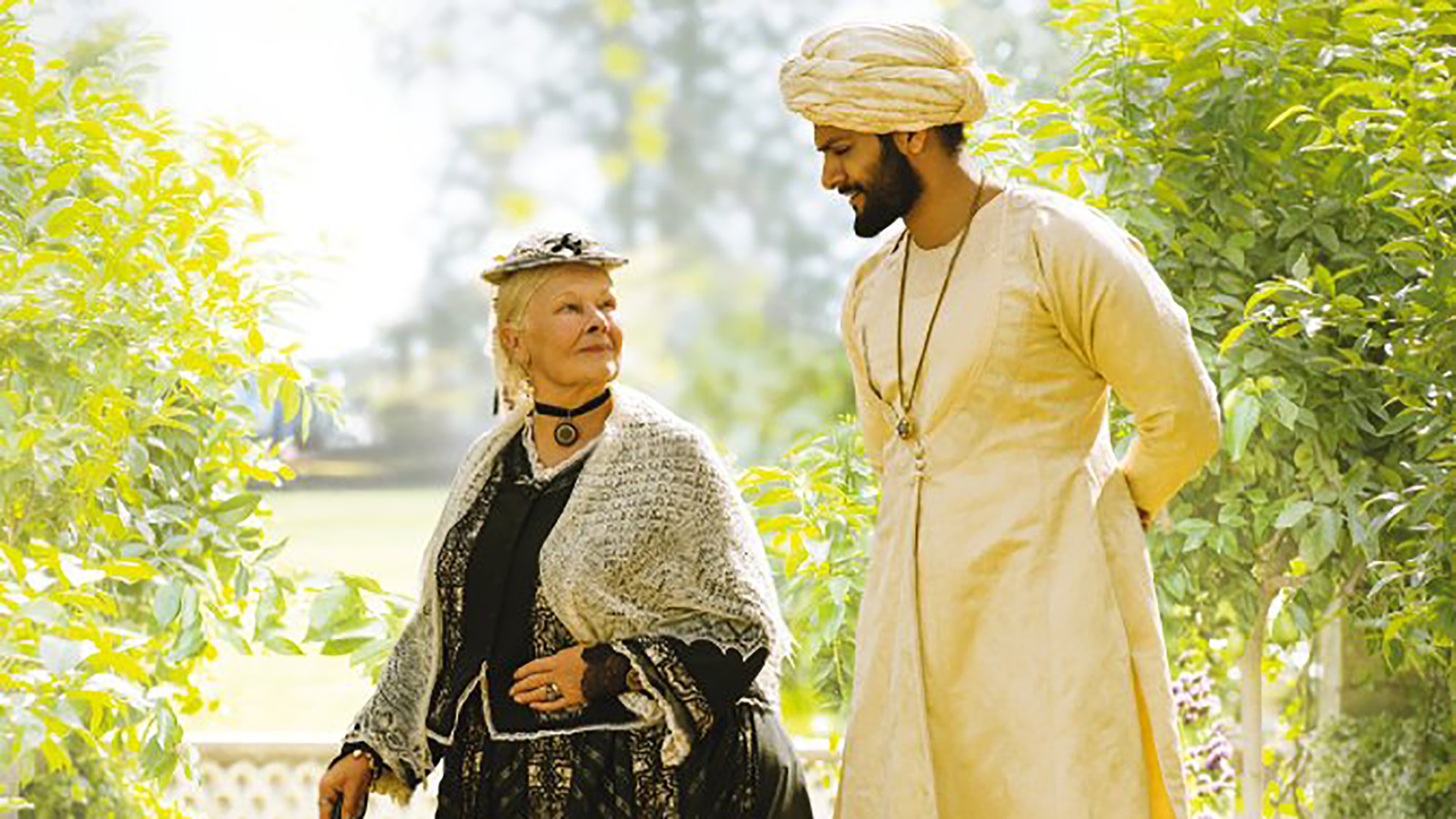
Rating: 6/10 – moderately absorbing, yet banal in execution, The Infiltrator suffers from being too much on an even keel, and not loosening up in its approach at telling Robert Mazur’s amazing story; Cranston is a pleasure to watch, even if you think Mazur was inordinately lucky in what he did, and he keeps things from disintegrating too quickly, leaving a movie that wants to be topical (despite being set in the late Eighties), but lacks the modern day relevance that could be assigned to it.
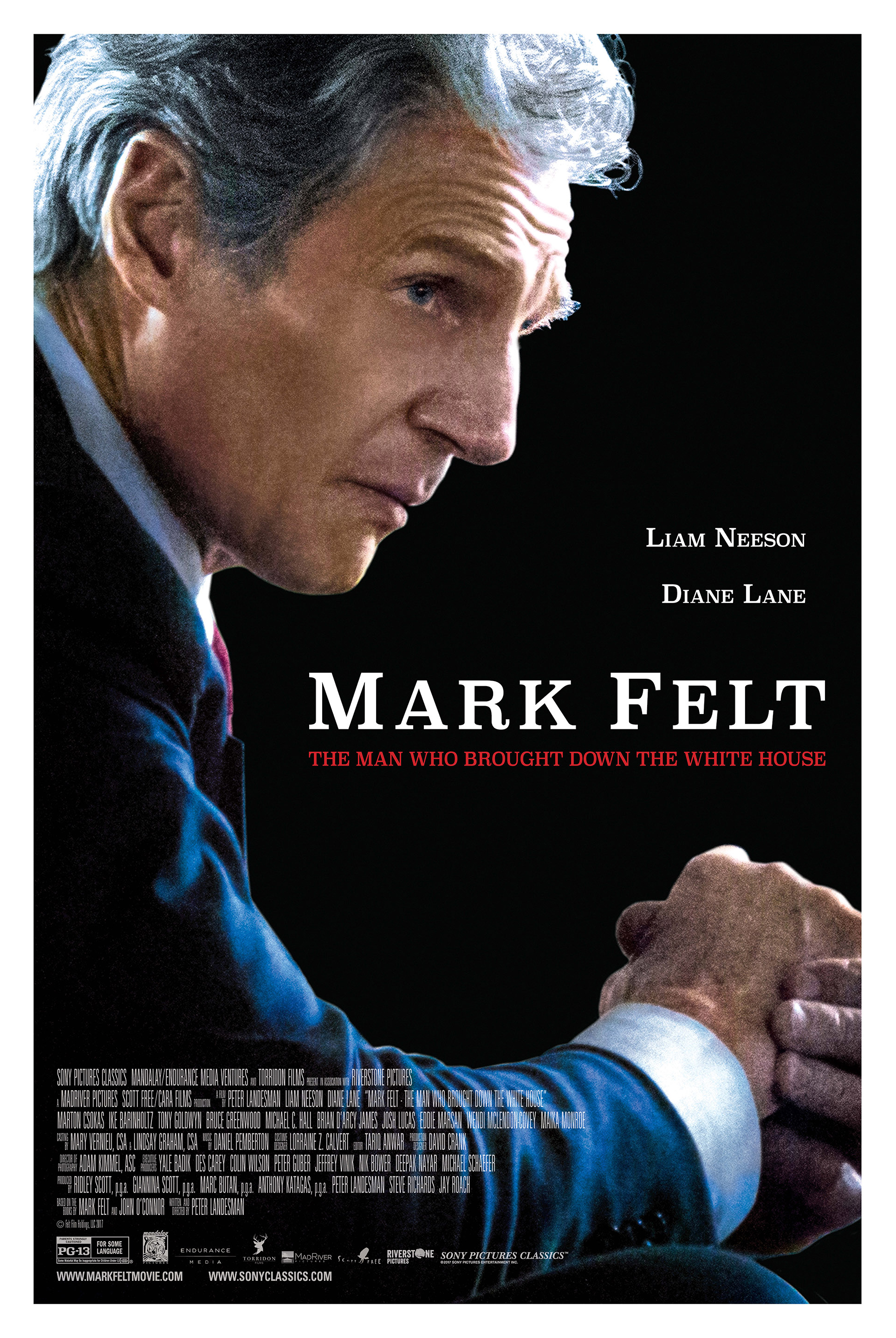
Share this:

  • Share on X (Opens in new window) X
  • Share on Facebook (Opens in new window) Facebook
  • More
  • Print (Opens in new window) Print
  • Email a link to a friend (Opens in new window) Email
Like Loading...
← Older posts
Newer posts →

Blog Stats

  • 495,206 hits

Recent Posts

  • 10 Reasons to Remember Bibi Andersson (1935-2019)
  • Fantasia (1940)
  • Dances With Wolves (1990) – The Special Edition
  • Kiss of the Spider Woman (1985)
  • The Three Musketeers (1973)

Top Posts & Pages

  • The Red Balloon (1956)
    The Red Balloon (1956)
  • The White Orchid (2018)
    The White Orchid (2018)
  • Cardboard Boxer (2016)
    Cardboard Boxer (2016)
  • Sorry to Bother You (2018)
    Sorry to Bother You (2018)
  • I Can't Think Straight (2008)
    I Can't Think Straight (2008)
  • 10 Reasons to Remember Bruno Ganz (1941-2019)
    10 Reasons to Remember Bruno Ganz (1941-2019)
  • Don Jon (2013)
    Don Jon (2013)
  • Predestination (2014)
    Predestination (2014)
  • Sand Storm (2016)
    Sand Storm (2016)
  • A Brief Word About Cineworld Unlimited
    A Brief Word About Cineworld Unlimited
Follow thedullwoodexperiment on WordPress.com

Blogs I Follow

  • Rubbish Talk
  • Film 4 Fan
  • Fast Film Reviews
  • The Film Blog
  • All Things Movies UK
  • Interpreting the Stars
  • Let's Go To The Movies
  • Movie Reviews 101
  • TMI News
  • Dan the Man's Movie Reviews
  • Film History
  • Jordan and Eddie (The Movie Guys)

Archives

  • April 2019 (13)
  • March 2019 (28)
  • February 2019 (28)
  • January 2019 (32)
  • December 2018 (28)
  • November 2018 (30)
  • October 2018 (29)
  • September 2018 (29)
  • August 2018 (29)
  • July 2018 (30)
  • June 2018 (28)
  • May 2018 (24)
  • April 2018 (21)
  • March 2018 (31)
  • February 2018 (25)
  • January 2018 (30)
  • December 2017 (30)
  • November 2017 (27)
  • October 2017 (27)
  • September 2017 (26)
  • August 2017 (32)
  • July 2017 (32)
  • June 2017 (30)
  • May 2017 (29)
  • April 2017 (29)
  • March 2017 (30)
  • February 2017 (27)
  • January 2017 (32)
  • December 2016 (30)
  • November 2016 (28)
  • October 2016 (30)
  • September 2016 (27)
  • August 2016 (30)
  • July 2016 (30)
  • June 2016 (31)
  • May 2016 (34)
  • April 2016 (30)
  • March 2016 (30)
  • February 2016 (28)
  • January 2016 (35)
  • December 2015 (34)
  • November 2015 (31)
  • October 2015 (31)
  • September 2015 (34)
  • August 2015 (31)
  • July 2015 (33)
  • June 2015 (12)
  • May 2015 (31)
  • April 2015 (32)
  • March 2015 (30)
  • February 2015 (37)
  • January 2015 (39)
  • December 2014 (34)
  • November 2014 (34)
  • October 2014 (36)
  • September 2014 (25)
  • August 2014 (29)
  • July 2014 (29)
  • June 2014 (28)
  • May 2014 (23)
  • April 2014 (21)
  • March 2014 (42)
  • February 2014 (38)
  • January 2014 (29)
  • December 2013 (28)
  • November 2013 (34)
  • October 2013 (4)

Create a free website or blog at WordPress.com.

Rubbish Talk

Film 4 Fan

A Movie Blog

Fast Film Reviews

The Film Blog

The official blog of everything in film

All Things Movies UK

Movie Reviews and Original Articles

Interpreting the Stars

Dave Examines Movies

Let's Go To The Movies

Film and Theatre Lover!

Movie Reviews 101

Daily Movie Reviews

TMI News

Latest weather, crime and breaking news

Dan the Man's Movie Reviews

All my aimless thoughts, ideas, and ramblings, all packed into one site!

Film History

Telling the story of film

Jordan and Eddie (The Movie Guys)

Movie Reviews & Ramblings from an Australian Based Film Fan

Privacy & Cookies: This site uses cookies. By continuing to use this website, you agree to their use.
To find out more, including how to control cookies, see here: Cookie Policy
  • Subscribe Subscribed
    • thedullwoodexperiment
    • Join 481 other subscribers
    • Already have a WordPress.com account? Log in now.
    • thedullwoodexperiment
    • Subscribe Subscribed
    • Sign up
    • Log in
    • Report this content
    • View site in Reader
    • Manage subscriptions
    • Collapse this bar
 

Loading Comments...
 

    %d