• 10 Reasons to Remember…
  • A Brief Word About…
  • About
  • For One Week Only
  • Happy Birthday
  • Monthly Roundup
  • Old-Time Crime
  • Other Posts
  • Poster of the Week
  • Question of the Week
  • Reviews
  • Trailers

thedullwoodexperiment

~ Viewing movies in a different light

thedullwoodexperiment

Yearly Archives: 2016

Happy New Year!

31 Saturday Dec 2016

Posted by dullwood68 in Movies

≈ Leave a comment

Tags

2017, Happy New Year, thedullwoodexperiment

To everyone who’s visited thedullwoodexperiment during 2016, and especially those of you who’ve elected to follow the site, let me take this opportunity to thank you all, and wish you all a very Happy New Year. Have a great 2017, and may all your dreams and aspirations come to fruition.

happy-new-year2017-55

Share this:

  • Share on X (Opens in new window) X
  • Share on Facebook (Opens in new window) Facebook
  • More
  • Print (Opens in new window) Print
  • Email a link to a friend (Opens in new window) Email
Like Loading...

Monthly Roundup – December 2016

31 Saturday Dec 2016

Posted by dullwood68 in Movies

≈ 2 Comments

Tags

50's sci-fi movie, A Perfect Man, Action, Alice Through the Looking Glass, Ana Girardot, Barry Sonnenfeld, Cameron Mitchell, Cat, Cell, Chandler Riggs, Christopher Walken, Comedy, David Tomlinson, Devil's Crag, Diana Dors, Drama, Edward Kemmer, Eliminators (2016), Flight to Mars, Frances O'Connor, Giant from the Unknown, Hard Target 2, Horror, Hostile takeover, Is Your Honeymoon Really Necessary, James Bobin, James Nunn, Jennifer Garner, John Cusack, Johnny Depp, Kevin Spacey, Lesley Selander, Literary adaptation, Marguerite Chapman, Mars, Maurice Elvey, Mercy (2014), Mia Wasikowska, Murder, Myanmar, Nine Lives, Peter Cornwell, Pierre Niney, Reviews, Rhona Mitra, Richard E. Cunha, Robert Knepper, Roel Reiné, Sally Fraser, Samuel L. Jackson, Scott Adkins, Sequel, Shirley Knight, Stephen King, The Mad Hatter, The Red Queen, Thriller, Tod Williams, Vargas, Wade Barrett, Wonderland, WWE Films, Yann Gozlan

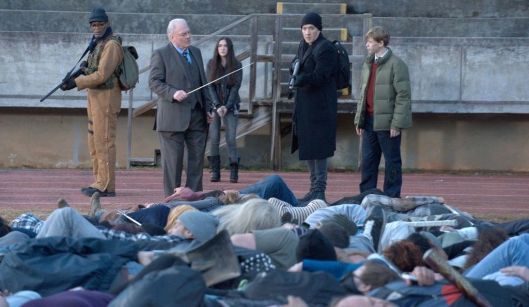
Cell (2016) / D: Tod Williams / 98m

Cast: John Cusack, Samuel L. Jackson, Isabelle Fuhrman, Clark Sarullo, Ethan Andrew Casto, Owen Teague, Stacy Keach, Joshua Mikel
cell_2

Rating: 4/10 – a mysterious cell phone signal turns people into crazed, zombie-like creatures, but one man (Cusack) is determined to find his son while society disintegrates around him; a Stephen King adaptation (and co-scripted by him), Cell is another reminder that his work rarely translates well to the screen, and this is no exception, being dramatically incoherent, a waste of its talented cast, and lumbered with an ending that makes absolutely no sense at all.

A Perfect Man (2015) / D: Yann Gozlan / 104m

Original title: Un homme idéal

Cast: Pierre Niney, Ana Girardot, André Marcon, Valéria Cavalli, Thibault Vinçon, Marc Barbé, Sacha Mijovic

a_perfect_man_still

Rating: 7/10 – aspiring author Mathieu Vasseur (Niney) isn’t getting anywhere until he finds an unpublished novel and claims it as his own, a move that leads to fame, fortune, blackmail, and ultimately, murder; a clever, twisty thriller that benefits from a splendidly nervous, anxious performance from Niney, A Perfect Man may have many familiar elements, but it’s a movie with a great deal of style, and it holds the attention in such a way that there are times when you won’t realise you’re holding your breath.

Is Your Honeymoon Really Necessary (1953) / D: Maurice Elvey / 80m

Cast: David Tomlinson, Diana Dors, Bonar Colleano, Sidney James, Diana Decker, Audrey Freeman, MacDonald Parke

aa56833cc4842c8ff89eb399e9116e7d

Rating: 5/10 – returning to the UK with his new bride (Decker), US soldier Laurie Vining (Colleano) is horrified to learn that he may still be married to his first wife, glamour girl Candy (Dors), a situation that leads to his desperately trying to avoid his new bride – or anyone else – from finding out; a bedroom farce based on a successful stage play, Is Your Honeymoon Really Necessary has dated somewhat, but for fans of the cast and this type of Fifties UK comedy, there’s much to enjoy, from the frantic mugging of Colleano and Tomlinson, Elvey’s efficient direction, and a surprisingly nuanced performance from Dors.

Eliminators (2016) / D: James Nunn / 94m

Cast: Scott Adkins, Wade Barrett, Daniel Caltagirone, James Cosmo, Ty Glaser, Olivia Mace, Lily Ann Stubbs

eliminators-2016-movie-free-download-720p-bluray-4

Rating: 3/10 – when a home invasion means his Witness Protection identity is compromised, ex-Federal Agent Martin Parker (Adkins) finds himself the target of a hitman (Barrett) and forced to go on the run; a WWE Films production shot on location in and around London, Eliminators is a bog-standard actioner that stretches credulity, invites disbelief, and warrants avoidance as it does its best to cram in as many dull action scenes as it can in ninety minutes, and serves as yet another reminder that being a WWE superstar doesn’t mean you can act.

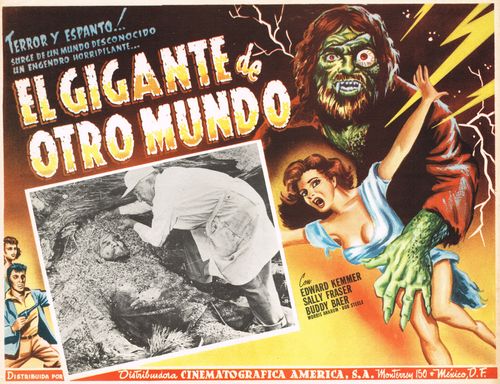
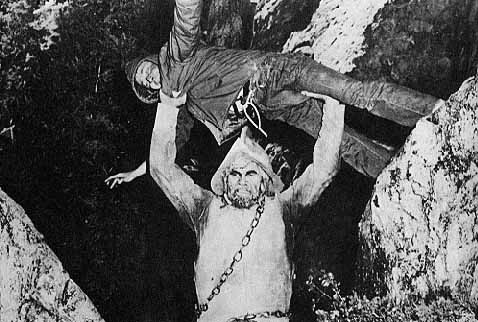
Giant from the Unknown (1958) / D: Richard E. Cunha / 77m

aka The Diablo Giant; Giant from Devil’s Crag; Giant from Diablo Point

Cast: Edward Kemmer, Sally Fraser, Bob Steele, Morris Ankrum, Buddy Baer, Jolene Brand, Gary Crutcher, Billy Dix
giantfromtheunknown-throw-jpg-html

Rating: 4/10 – animal mutilations and murder plague a small town – and that’s before a giant Spanish conquistador is released from suspended animation by a lightning bolt, and threatens both the town’s inhabitants and the research team trying to ascertain if the legend about him is true; not the best example of a Fifties “creature feature”, Giant from the Unknown takes so long to get going that it’s nearly over before it’s begun, features a raft of irritating performances, and is so flatly directed by Cunha that once the Giant is awakened, you can’t help but pray that he’s the first victim.

Alice Through the Looking Glass (2016) / D: James Bobin / 113m

Cast: Mia Wasikowska, Johnny Depp, Anne Hathaway, Helena Bonham Carter, Sacha Baron Cohen, Rhys Ifans, Matt Lucas, Lindsay Duncan, Leo Bill, Ed Speelers, Geraldine James, Andrew Scott, Alan Rickman, Stephen Fry, Michael Sheen, Barbara Windsor, Timothy Spall, Matt Vogel, Paul Whitehouse

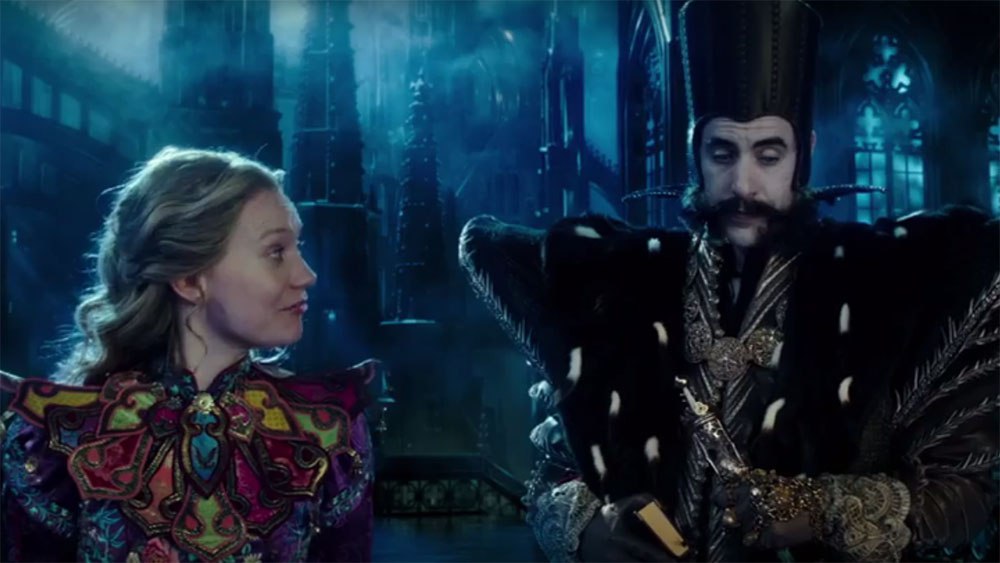
alice-through-the-looking-glass-tv-spot

Rating: 5/10 – Alice (Wasikowska) returns to Wonderland to save the Mad Hatter (Depp) from suicidal depression(!) and the attentions of Time (Cohen) and the Red Queen (Carter) who are working in tandem and holding the Hatter’s family hostage for no convincing reason you can think of; another sequel no one asked for (and nowhere near as successful as its predecessor), Alice Through the Looking Glass is ravishing to look at, boasts some fine visual effects, and a great performance by Cohen, but everything else is a mess: bloated, derivative, witless, and with yet another wasteful performance from Depp (who clearly can’t be bothered).

Hard Target 2 (2016) / D: Roel Reiné / 104m

Cast: Scott Adkins, Robert Knepper, Rhona Mitra, Temuera Morrison, Ann Truong, Adam Saunders, Jamie Timony, Peter Hardy

hrdtrgt_8

Rating: 4/10 – ex-MMA fighter Wes Baylor (Adkins) finds himself in Myanmar with one simple objective: reach the Thai border while he’s pursued by a motley group of “hunters” who are out to kill him; a movie that definitely comes under the heading of “another sequel no one asked for”, Hard Target 2 is betrayed by its low budget origins, a script that lurches from one unmemorable action scene to another, and Knepper’s one-note portrayal of the villain.

Nine Lives (2016) / D: Barry Sonnenfeld / 87m

Cast: Kevin Spacey, Jennifer Garner, Christopher Walken, Robbie Amell, Malina Weissman, Cheryl Hines, Mark Consuelos, Talitha Bateman

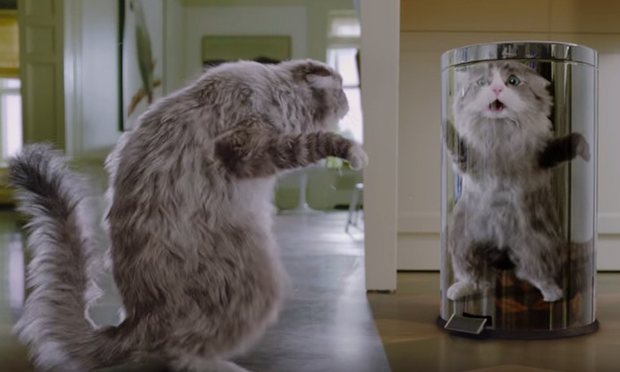
nine-lives-film-kevin-spacey

Rating: 3/10 – businessman Tom Brand (Spacey) has no time for his wife (Garner) and daughter (Weissman), so what better way for him to learn the value of family (and some humility in the process) than by stranding his mind in the body of a cat?; the kind of inane, superficial comedy that Hollywood churns out with mindless regularity, Nine Lives gives Garfield 2 (2006) a run for its money in the stupid stakes, and hammers another nail into the coffin of Barry Sonnenfeld’s once-glorious career.

Flight to Mars (1951) / D: Lesley Selander / 72m

Cast: Marguerite Chapman, Cameron Mitchell, Arthur Franz, Virginia Huston, John Litel, Morris Ankrum, Richard Gaines, Lucille Barkley, Robert Barrat

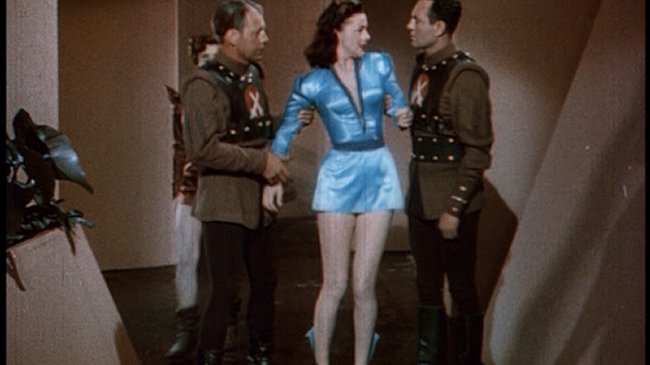
alita-flight-to-mars-1951-_129993-fli_1363015116

Rating: 5/10 – the first manned flight to Mars gets there safely only to learn that the planet is inhabited, and by a human-like race that may or may not have an ulterior motive for helping them return to Earth; early-Fifties sci-fi hokum that throws in a tepid romance and some very, very short skirts for the female cast, Flight to Mars retains an odd charm – perhaps because of its naïve approach – that helps alleviate some of the more daffy moments the script insists on doling out.

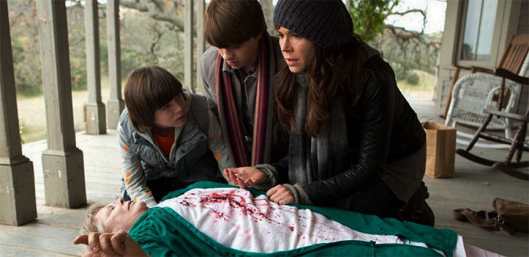
Mercy (2014) / D: Peter Cornwell / 79m

Cast: Frances O’Connor, Shirley Knight, Chandler Riggs, Joel Courtney, Mark Duplass, Dylan McDermott, Amanda Walsh, Hana Hayes, Pepper Binkley
mercy-horror-movie-news-3

Rating: 4/10 – after a spell in a nursing home, Grandma Mercy (Knight) comes home to be looked after by her family – daughter Rebecca (O’Connor) and grandsons George (Riggs) and Buddy (Courtney) – but soon exhibits strange behaviour, behaviour that includes warning George that a supernatural force is coming to get him; adapted from the short story Gramma by Stephen King (yes, him again), Mercy aims for creepy and menacing, yet succeeds instead in being confused and uninspired, and with laboured direction and performances, a situation that devotees of King adaptations will appreciate, having been there many times before.


Share this:

  • Share on X (Opens in new window) X
  • Share on Facebook (Opens in new window) Facebook
  • More
  • Print (Opens in new window) Print
  • Email a link to a friend (Opens in new window) Email
Like Loading...

Collateral Beauty (2016)

30 Friday Dec 2016

Posted by dullwood68 in Movies

≈ Leave a comment

Tags

Actors, Bereavement, Comedy, David Frankel, Death, Drama, Edward Norton, Grief, Helen Mirren, Jacob Latimore, Kate Winslet, Keira Knightley, Letters, Love, Michael Peña, Naomie Harris, Review, Time, Will Smith

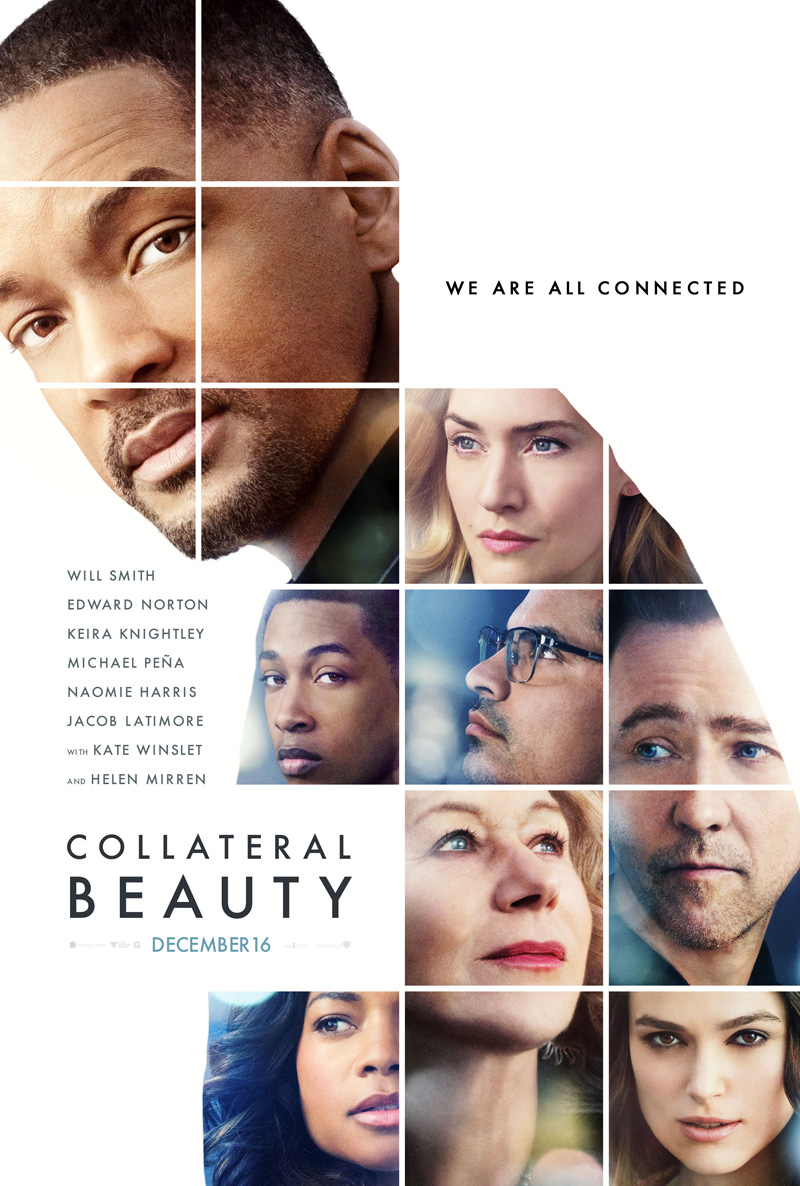
collateral-beauty_poster

D: David Frankel / 97m

Cast: Will Smith, Edward Norton, Kate Winslet, Michael Peña, Helen Mirren, Naomie Harris, Keira Knightley, Jacob Latimore, Ann Dowd

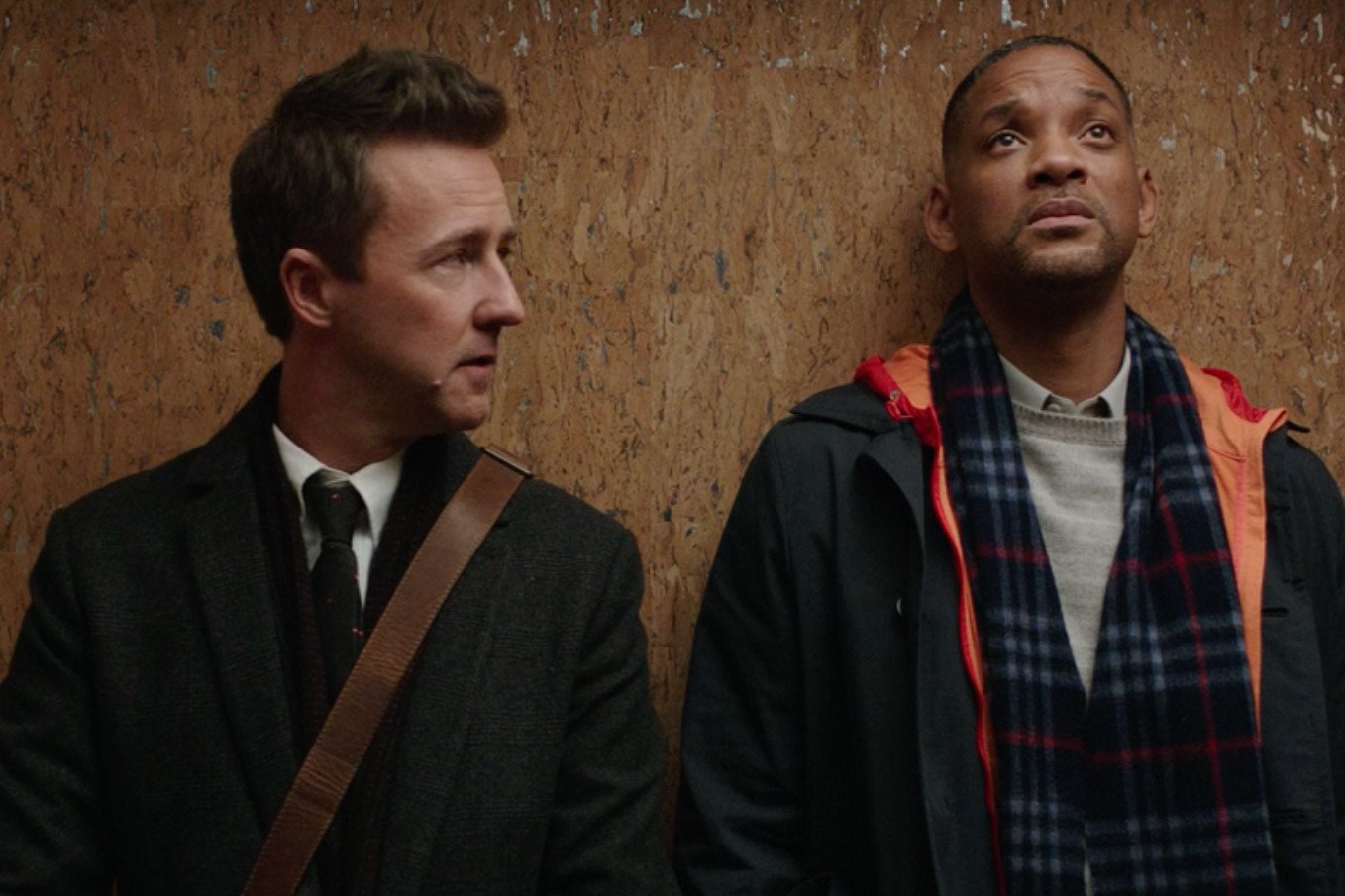
Sometimes, a movie arrives with very little fanfare or advance notice (in comparison to the supposed blockbusters of the day), and features a cast that makes the average viewer say to themselves, “Wow! What a cast! This movie’s got to be good!” Collateral Beauty is one of those movies, with its dream cast in service to a story that deals with unyielding grief, and which does so by employing magical realism as its main approach to telling the story. It’s meant to be an uplifting, emotionally dexterous movie – set at Xmas – that will leave viewers with a warm glow in their heart as they leave the cinema.

Alas, Collateral Beauty – and despite the best efforts of its dream cast – isn’t actually that movie. What it is, is a tragedy wrapped up in a comedy wrapped up in a magical realist fantasy wrapped up in an awkwardly staged feelbad movie. It’s a movie that revels in the pain and suffering of a group of individuals who are the very definition of stock characters. Some effort has been made with Smith’s character, a marketing executive whose six year old daughter has recently died from brain cancer. Unable to let go of his grief (and not really wanting to), Howard still shows up for work but spends his time creating elaborate domino structures and neglecting the business he built up with best friend, Whit (Norton). With the company on the brink of losing their biggest contract thanks to Howard having “zoned out”, Whit needs to prove to a prospective buyer that Howard, who has the controlling interest, is sufficiently non compos mentis for the sale to go ahead without his involvement.

8472687-922147

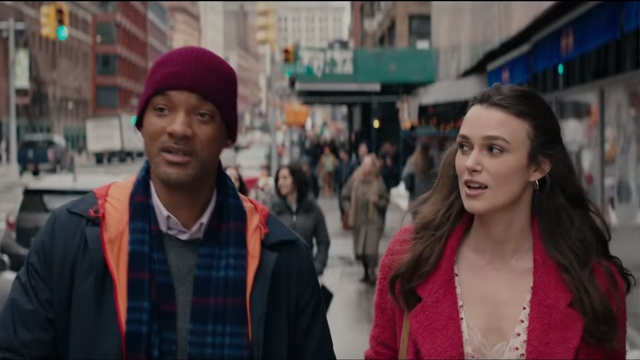
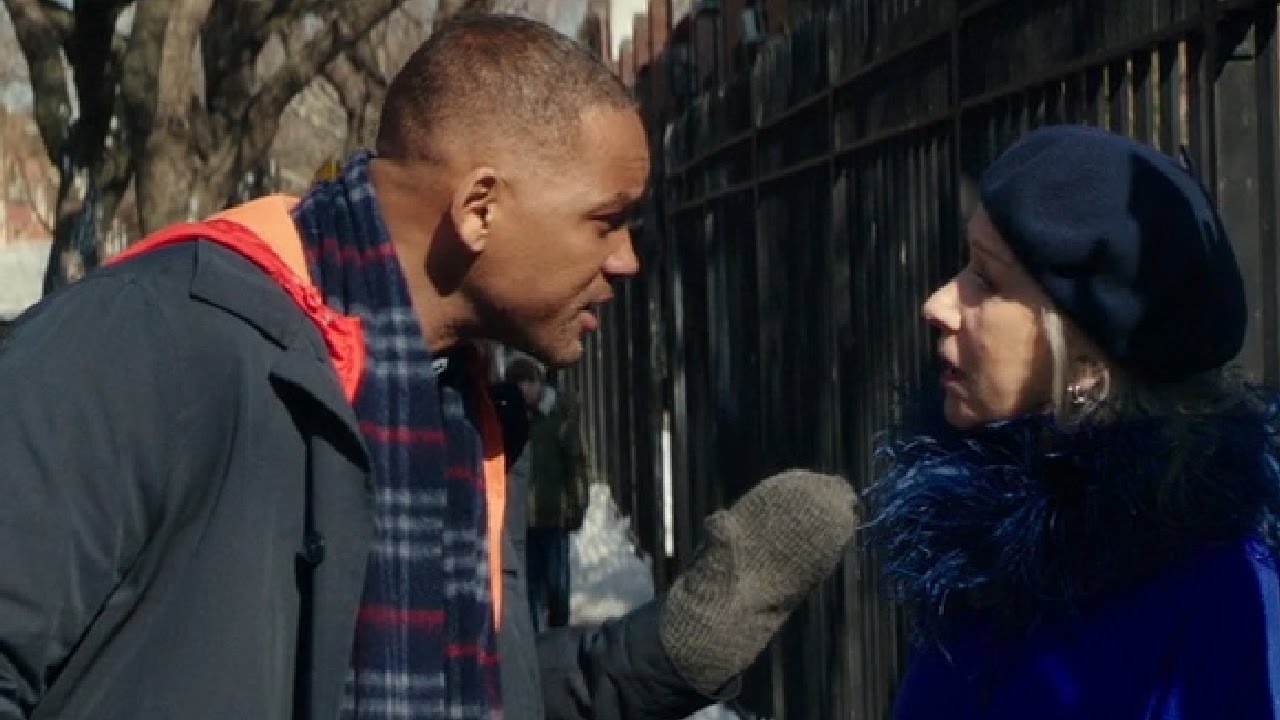
But how to prove this? How, indeed. The answer arrives, like a gift from Heaven, in the form of budding actress Amy (Knightley). Through a process too unlikely to relate here, he hires Amy and her friends, Brigitte (Mirren) and Raffi (Latimore) to act as Love, Death and Time respectively, concepts that Howard has been writing to. Yes, Howard has been railing against Love, Death and Time for stealing his daughter away from him. Whit’s idea is for the trio to pop up at random and talk to Howard in various public places. These encounters will be filmed by a private investigator (Dowd), and the actors removed digitally before the footage is shown to the buyer, thus making Howard seem, at the very least, delusional, or at worst, completely bonkers.

Now, the thing to remember here is that Whit, along with his colleagues, Claire (Winslet) and Simon (Peña), is Howard’s friend. Let’s let that sink in for a moment. His friend. Who with Claire and Simon decides to play charades with a man whose grief is all-consuming and all in order to save the company where they all work. They want to do this not, in the first place, to help Howard deal with his grief, but so that they can save their jobs. And this is meant to be a good idea, both in practice and as the basis for a movie.

But not content with having them play mind games with their boss, the script also gives them their own problems to deal with. Whit has a young daughter who hates him because he had an affair that led to her parents’ divorce (as she puts it, he broke her heart). Claire has sacrificed her longing for a child in order to be successful at work. And Simon, who has fought off a serious illness twice before, is having to face up to the possibility that the third time might not be the charm. Throw in Naomie Harris’s grief counsellor, Madeleine (the only person Howard seems able to talk to about how he feels), who has also lost a daughter, and you have a group of people you’d cross the room to avoid at a feelgood seminar. They do glum with a capital G-L-U-M, and each time the script – by Allan Loeb, who has penned such classics as Here Comes the Boom (2012) and Just Go With It (2011) – indulges in their suffering it does so in a way that’s detrimental to the central storyline: Howard and his grief.

499295-will-smith-keira-knightley-collateral-beauty

There’s also the problem of the movie’s tone. Collateral Beauty is about death, and the sorrow felt and experienced by the people left behind; it’s also about how grief can twist and contort feelings of pain and guilt into something much more violent and harmful. But Loeb’s script doesn’t want to address these issues head on, as quite rightly, this would make the movie a bit of a downer (and then some). So instead of making a straight-up drama about grief and loss, Frankel et al have made a middling comedy about grief and loss. While the themes in play remain serious, they’re all dusted with a light-hearted sheen that never feels right and never sounds right. The comedy elements distract from the drama of the piece, and in such an awkward, “oh no, they didn’t” way as to be confusing to the viewer. Is this a drama about grief, or a comedy about grief? But there’s no point in asking, as the movie doesn’t know any more than anyone else does.

With the whole premise undermined from the very beginning, Collateral Beauty becomes an exercise in perpetual wincing. When actors of the calibre of Norton and Winslet can’t make the material work then it’s time to head home and call it a day. Scenes come and go that make no sense dramatically, but seem intended to provide a level playing field for all the cast so they have enough moments to add to their showreels. As the actors with no background in psychotherapy but given carte blanche to say anything they can think of, Mirren, Knightley and Latimore are acceptable, but rarely do anything that takes them out of their thespian comfort zones (there’s also a suspicion that Mirren is playing a version of herself that fans have come to expect rather than an actual character).

maxresdefault

Smith at least tries to inject some much needed dramatic energy into his role, but until the very end, when Howard is required to undergo an about face because the script needs him to, he’s held back by the script’s decision to make him appear either vague or angry (or sometimes, vaguely angry). Norton and Winslet coast along for long stretches, and a restrained Harris is the voice of wisdom that Howard desperately needs to hear. That leaves Peña, whose performance elicits some real sympathy late on in the movie, and who proves once again that he’s a talented actor who needs to be given better opportunities and roles than this one.

Overseeing it all is Frankel, whose previous movies include Marley & Me (2008) and Hope Springs (2012). You can understand why he got the job, but with the script unable to decide what approach it wants to take, Frankel is left stranded and unable to find an effective through-line with which to link everything together. It never feels as if he’s got a firm grasp on the narrative, or any of the underlying subtleties that Loeb’s script managed to sneak in when the writer wasn’t looking. In the end, he settles for a perfunctory directing style that keeps things moving along on an even keel but which doesn’t allow for anything out of the ordinary to happen. There’s no real dramatic ebb and flow here, and sadly, like so many other directors out there today, he’s not able to overcome something that is one of the movie’s biggest flaws.

Rating: 4/10 – near enough to “meh” as to be on close, personal speaking terms, Collateral Beauty is bogged down by its schizophrenic script, and an over-developed propensity for ridiculousness; rarely has magical realism felt so false or poorly staged, and rarely has a movie about grief instilled the same feeling in its audience for having seen it in the first place.

Share this:

  • Share on X (Opens in new window) X
  • Share on Facebook (Opens in new window) Facebook
  • More
  • Print (Opens in new window) Print
  • Email a link to a friend (Opens in new window) Email
Like Loading...

Mini-Review: Passengers (2016)

29 Thursday Dec 2016

Posted by dullwood68 in Movies

≈ 3 Comments

Tags

Avalon, Chris Pratt, Drama, Homestead II, Jennifer Lawrence, Laurence Fishburne, Michael Sheen, Morten Tyldum, Review, Romance, Sci-fi, Spaceship

passengers_profil

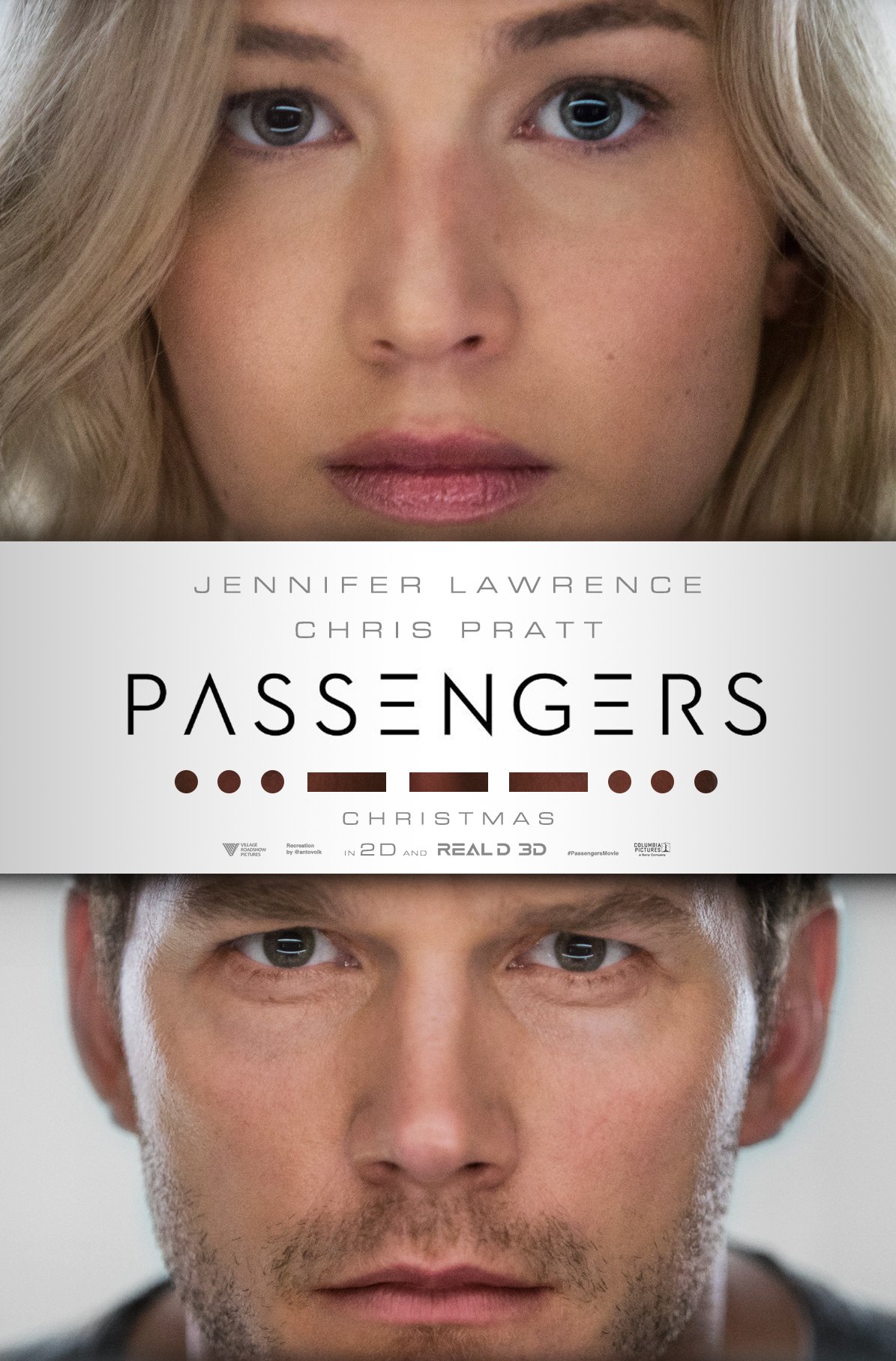
D: Morten Tyldum / 116m

Cast: Jennifer Lawrence, Chris Pratt, Michael Sheen, Laurence Fishburne, Andy Garcia

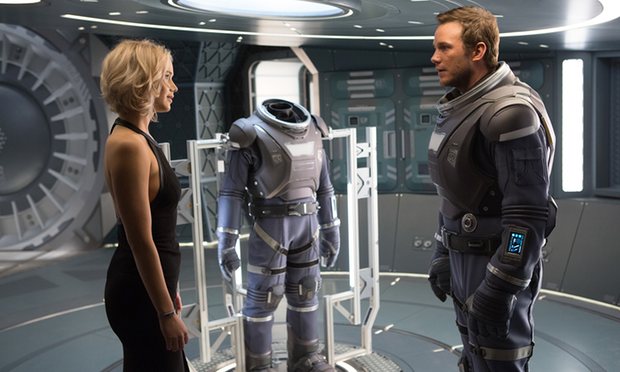
The spaceship Avalon is on its one hundred and twenty year journey from Earth to colony planet Homestead II. On board are two hundred and fifty-eight crew and five thousand passengers, people looking to build new lives on the colony planet. Everyone is in a state of suspended animation, asleep in hibernation pods until the Avalon is a few months from reaching its destination. Thirty years into the journey, the ship is struck by a massive meteorite. Following this, one of the passengers, engineer Jim Preston (Pratt) is woken from hibernation. The only passenger who’s awake, and with no way of resetting the hibernation pod to put him back to sleep, Jim finds the only company he has is that of an android barman named Arthur (Sheen).

After a year by himself, Jim is joined by Aurora Lane (Lawrence), a writer looking to find a story in the migration from Earth. As time goes by, a romance develops between them. But the ship is constantly malfunctioning, sometimes to the extent of putting Jim and Aurora’s lives at risk. They do what they can to fix things as they happen, but it becomes obvious that there’s a bigger problem to contend with – they just don’t know what it is. When crew member Gus Mancuso (Fishburne) is also awoken by mistake, the trio begin to make a concerted effort to locate the source of all the malfunctions. But when they do, the potential arises for one of them to have to make the ultimate sacrifice in order to save the ship…

passengers

Ostensibly a sci-fi movie about a stricken ship and the stranded souls on board, Passengers works best as a romantic drama, but even then it lacks the depth and the courage of its own convictions. Jim and Aurora make for a seemingly perfect couple, but thanks to the way in which the movie is advertised, what you don’t learn until seeing the movie is that their relationship is founded on a lie. So you have a broad, generic romance where two people inevitably fall in love, and just as inevitably part ways before coming together again for the sake of the movie’s big finish (and an unnecessary coda). Lawrence and Pratt work well together, and there’s a certain amount of chemistry between them, but unfortunately the emphasis is on the spaceship rather than their characters’ straightforwardly handled romance.

Tyldum’s last feature was The Imitation Game (2014), another movie that lacked a sense of tension (or urgency) as it told its story, and his work here is no different, failing to make the ever-expanding crisis on board into the pulse-pounding race against time it needs to be to be fully effective. Instead, Jon Spaihts’ script has Pratt mouthing romantic platitudes at every opportunity, while Lawrence endeavours to make her character’s novelistic intentions at all interesting. Only Sheen rises above the blandness of the material, and he does so by means of some very detailed micro-expressions. Unsurprisingly, the movie looks very good indeed, with Rodrigo Prieto’s cinematography highlighting and complementing the sterling production design of Guy Hendrix Dyas. But when a movie fails to make you care if either or both of the main characters lives or dies, then there’s definitely something that’s not working as it should be.

Rating: 5/10 – a decent premise that’s handled with too many broad brush strokes, Passengers wastes its cast on a characters in peril narrative that should have been given more prominence, and a romance that remains tepid throughout; Lawrence and Pratt do their best, but even they look as if they’ve lost interest by the time the third act hoves into view, and Tyldum never quite seems to know how to knit everything together into a satisfying whole.


Share this:

  • Share on X (Opens in new window) X
  • Share on Facebook (Opens in new window) Facebook
  • More
  • Print (Opens in new window) Print
  • Email a link to a friend (Opens in new window) Email
Like Loading...

10 Reasons to Remember Debbie Reynolds (1932-2016)

29 Thursday Dec 2016

Posted by dullwood68 in Movies

≈ Leave a comment

Tags

Actress, Career, Carrie Fisher, Debbie Reynolds, Hollywood Motion Picture Collection, Movie memorabilia, Musicals

Debbie Reynolds (1 April 1932 – 28 December 2016)

DRUG FREE PARTY IN HOLLYWOOD, AMERICA - 1991

As if 2016 already hasn’t been a terrible year in terms of the stars we’ve lost, it seems that none can have been so tragic as the death of Debbie Reynolds. Coming just twenty-four hours after the death of her daughter, Carrie Fisher, Reynolds’ passing is as much a jolt to the system as Fisher’s unexpected demise. There’s a saying that no parent should outlive their children, and it looks clear that the shock of losing her daughter contributed to Reynolds being added to the (too) long list of people the entertainment world has been robbed of this year. But like everyone else we’ve had to say goodbye to, Reynolds has left us with an impressive body of work to remember her by.

Her career began when she was just sixteen years old and she won a beauty contest where she impersonated Betty Hutton. Four years later, and with no practical experience, Reynolds was chosen to be Gene Kelly’s dance partner in Singin’ in the Rain (1952). It wasn’t her first movie, but it was certainly her biggest challenge to date, and she was so good it was like she was making her twentieth screen appearance, and not her sixth. Success after success followed throughout the Fifties, but in the Sixties her career began to slow down. She found other projects to occupy her time, such as buying a Californian hospital with plans to turn it into a profitable business venture. She also founded the Hollywood Motion Picture Collection, a museum dedicated to movie memorabilia that included over three thousand costumes, from Judy Garland’s ruby slippers in The Wizard of Oz (1939) to the white dress Marilyn Monroe wore in The Seven Year Itch (1955).

in the Seventies she made her Broadway debut, and though she appeared in only a handful of productions, her talent guaranteed her good reviews (it was also during this period that she picked up the nickname “Princess Leia’s mother”). Much later, she found her way into the consciousness of a younger generation through her recurring role as Grace’s mother in the TV show Will & Grace (1999-2006). She continued to work sporadically both in movies and on the small screen, but mostly she did voice work on animated productions such as Kim Possible (2003-2007), and even an episode of Family Guy.

She was a glamorous star who during her lifetime knew what it was to be down on her luck, even admitting at one point to living in her car. But throughout her career, whether she was up or down, Reynolds kept on smiling and proving herself to be a strong draw when a role came along. Her Fifties heyday was a remarkable period, and she was a remarkable performer during that period, and like many stars from that era, she became an instantly recognisable actress whose name equalled quality. Like everyone else we’ve had to say goodbye to this year, she’ll be sorely missed.

debbie-reynolds1

1 – Singin’ in the Rain (1952)

2 – Susan Slept Here (1954)

3 – The Tender Trap (1955)

4 – Bundle of Joy (1956)

bundle_of_joy-dvd-warner_archive-10629

5 – The Mating Game (1959)

6 – The Pleasure of His Company (1961)

7 – How the West Was Won (1962)

2910b47d436fce18cdfc271c3bb25320

8 – The Unsinkable Molly Brown (1964)

9 – Divorce American Style (1967)

divorce-american-style-1967-1

10 – Charlotte’s Web (1973)

Share this:

  • Share on X (Opens in new window) X
  • Share on Facebook (Opens in new window) Facebook
  • More
  • Print (Opens in new window) Print
  • Email a link to a friend (Opens in new window) Email
Like Loading...

Poster of the Week – Julie (1956)

28 Wednesday Dec 2016

Posted by dullwood68 in Movies

≈ Leave a comment

Tags

Doris Day, Louis Jourdan, Mystery, Poster of the week, Thriller

julie-1956-film-poster

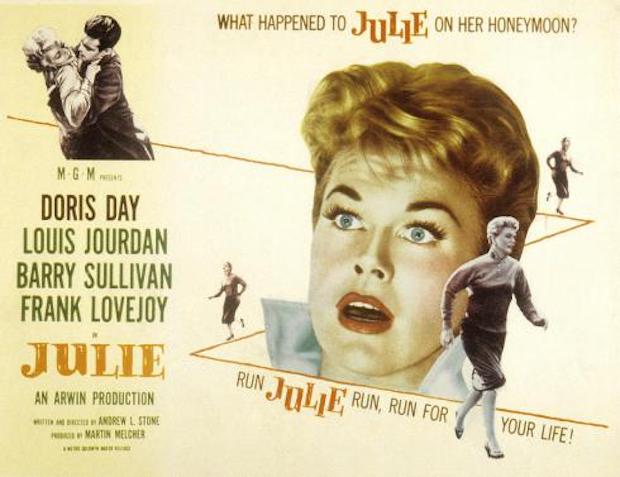
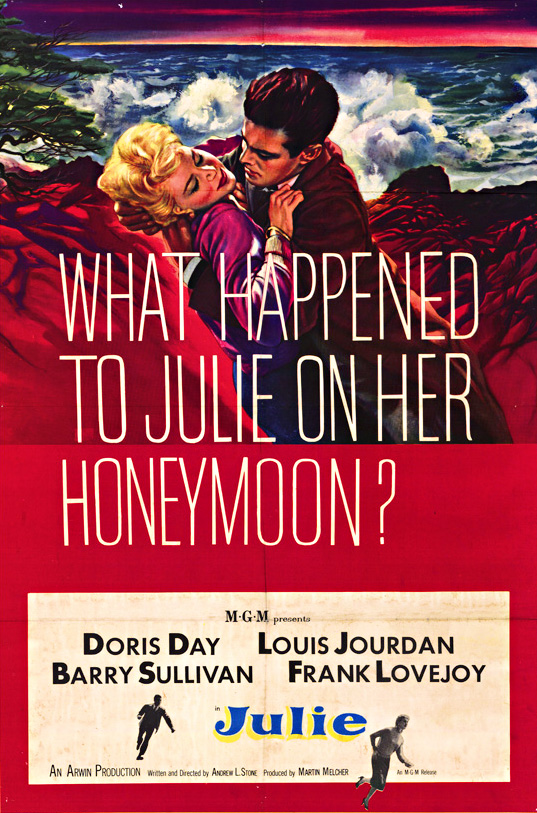
At first glance, the poster for Julie appears to lack anything that would make the movie a must-see, but that would be doing it a disservice, because while it does seem like it’s not even trying, there’s much more going on than you might be aware of.

A thriller where Day’s terrified wife tries to escape the murderous clutches of her husband (played by Louis Jourdan), the poster adopts a psychological approach to the plot that actually makes the movie a more enticing prospect than it actually is. First, there’s the image of Julie and husband Lyle shown in the top left hand corner. There’s a possibility that they’re enjoying a romantic clinch, but upon closer inspection it’s clear that Day is trying to resist Jourdan’s “advances”. It’s all you need to realise that something’s not quite right between them, and it acts as a kind of shorthand for the central dynamic that the movie will expand on.

But where the poster really excels is with its depiction of Day running – for her life – along the zigzag line that dominates the poster (even more so than Day’s shocked face). With her efforts to escape Jourdan precipitated by that dangerous embrace, the poster shows her running away from him, and getting further and further away, but it also highlights her fear and distress at the situation she’s found herself in. Her body language makes it all too obvious. This is the crux of the movie: Julie’s attempt to escape from Lyle, to save herself, and the poster and its kinetic imagery perfectly encapsulates the urgency of the character’s need to find safety.

Less successful – or necessary – is the inclusion of Day’s face and its shocked expression. There’s a phrase: “over-egging the pudding” that applies perfectly here, as Day’s head takes up too much room on the poster as a whole, and almost takes attention away from the clever inclusion of the fleeing Julie and her descent of the zigzag line. She looks like she’s just been told something so shocking that she doesn’t know quite how to respond to it, and while it’s easy to understand the image’s inclusion, it dampens the carefully constructed impact of the rest of the poster.

For the rest of the poster, it’s business as usual, with the four main cast members listed on the left and Day’s name given a slight twist to differentiate her from everyone else (black lettering not green). The title is given a pleasing orange tone to temper the awkward font used, and there’s the unsurprising highlighting of Arwin Productions, Doris Day’s own production company. And only then do writer/director Andrew L. Stone and producer Martin Melcher get a look in.

Lastly, there’s the tagline, a question designed to pique the potential audience’s interest, and one whose answer can be construed as “something bad” (as though the images of Day running for her life weren’t a big enough clue). It’s the kind of question that will always get people thinking, and hopefully intrigued enough to watch the movie. Overall it’s a poster that successfully advertises the movie it’s been tasked with promoting, and it does so in a far more subtle, and impressive way than this one:

julie56

Share this:

  • Share on X (Opens in new window) X
  • Share on Facebook (Opens in new window) Facebook
  • More
  • Print (Opens in new window) Print
  • Email a link to a friend (Opens in new window) Email
Like Loading...

10 Reasons to Remember Carrie Fisher (1956-2016)

27 Tuesday Dec 2016

Posted by dullwood68 in Movies

≈ 1 Comment

Tags

Actress, Career, Carrie Fisher, Princess Leia, Script doctor, Star Wars

Carrie Fisher (21 October 1956 – 27 December 2016)

gty_carrie_fisher_jef_151229_16x9_992

Carrie Fisher was the daughter of Hollywood “royalty”: Eddie Fisher and Debbie Reynolds, so it was perhaps fitting that she will be best remembered as Princess Leia Organa in Star Wars (1977) and three of its sequels. But there was more to Fisher than just a role in a space opera, even one cherished by millions, and away from that galaxy far, far away she was also a writer and well-liked celebrity. She wrote the novel Postcards from the Edge, and scripted the movie version too (it was released in 1990), and had a successful “career” as a script doctor, polishing dialogue and scenes for movies as diverse as Hook (1991), Outbreak (1995), Coyote Ugly (2000), and all three Star Wars prequels. She also wrote her cameo scene in Scream 3 (2000). Though she had several battles in her private life – with alcohol and prescription drugs – and was diagnosed with bipolar disorder, Fisher remained a fighter throughout.

Away from the Star Wars movies, Fisher’s acting career wasn’t always as compelling as she may have liked, but when she was asked if playing Princess Leia was the dark side of the Force in her professional career, she had this to say: “Oh, no. It was fun! I was young. People want it to be a problem for me. No. Those are great movies. Why shouldn’t I be proud of being in that? The dark side? You ever see Hollywood Vice Squad (1986) or The Star Wars Holiday Special (1978)? How about Under the Rainbow (1981)? Was Star Wars the dark side? There’s so much competition for that one.” While it’s true that playing the Princess with the bagel-bun hairdo has proved to be her career high, let’s not forget that she made significant contributions to a lot more movies besides. And here are just ten of them.

carrie_fisher_shampoo_1975_scdyxhk-sized

1 – Shampoo (1975)

2 – The Man With One Red Shoe (1985)

3 – Hannah and Her Sisters (1986)

4 – Appointment With Death (1988)

awd05

5 – The ‘Burbs (1989)

6 – When Harry Met Sally… (1989)

whenharrymsally_070pyxurz

7 – Sibling Rivalry (1990)

8 – This Is My Life (1992)

9 – Wonderland (2003)

carrie-fisher-in-wonderland

10 – Stateside (2004)

Share this:

  • Share on X (Opens in new window) X
  • Share on Facebook (Opens in new window) Facebook
  • More
  • Print (Opens in new window) Print
  • Email a link to a friend (Opens in new window) Email
Like Loading...

Blair Witch (2016)

27 Tuesday Dec 2016

Posted by dullwood68 in Movies

≈ 2 Comments

Tags

Adam Wingard, Black Hills, Burkittsville, Callie Hernandez, Drama, Horror, James Allen McCune, Review, Sequel, The Woods, Witch

cqzrohfueaaamq1-jpg-large

D: Adam Wingard / 89m

Cast: James Allen McCune, Callie Hernandez, Corbin Reid, Brandon Scott, Wes Robinson, Valorie Curry

Twenty years after his older sister, Heather, disappeared in the Black Hills woods outside Burkittsville, Maryland, James Donahue (McCune) comes into possession of a video that he believes is evidence that his sister is – somehow – still alive. Determined to find out for sure, he co-opts film student Lisa Arlington (Hernandez) – who is making a documentary about Heather’s disappearance and James’s search for answers – and friends Peter (Scott) and Ashley (Reid) into going with him. The night before they’re due to set off into the woods, they meet locals Lane (Robinson) and Talia (Curry), who agree to go with them.

Having set up camp on the first night, Lane tells the rest of the group stories he’s heard about the history of the Blair Witch. That night, noises from the surrounding woods wake James and Lisa; they discover Lane outside the camp and looking scared. The next day, the group discover lots of stick figures hanging from the trees and that they’ve slept until two o’clock. Freaked out by this, they decide to go back, but after several hours of trying to retrace their steps, they find themselves back at the campsite. Circumstances lead to Lane and Talia leaving the group and attempting to make their own way back.

blair-witch-2

The remaining four are forced to stay there overnight. Peter disappears, and when James tries to find him he encounters Lane and Talia instead. They tell him they’ve been lost in the woods for five days. The couple are allowed to stay in camp, though Lisa is suspicious of them. James sets his alarm for seven o’clock in the morning, but when it goes off it is still pitch dark. There are also, more, larger stick figures hanging from the trees. Lane runs off, and something happens to Talia that terrifies the rest. James, Lisa and Ashley become separated. When James and Lisa find each other again, they hear what they think is Ashley screaming. With it now raining heavily, they discover the same house where James believes he’ll find his sister…

When The Blair Witch Project was released in 1999, it was a massive, unexpected success. Made on a budget of $60,000, it accrued nearly $250 million worldwide and to this day, is one of the most successful independent movies ever produced. It spawned a sequel, Book of Shadows: Blair Witch 2 (2000) that was the antithesis of the original’s tone and approach, and which was so mangled in post-production by distributors Artisan Entertainment, that they wrecked any chances of it being even a fraction as successful as its predecessor. And now, we have a second sequel, one that ignores the events of Book of Shadows, and attempts to recreate the style and tone of the original movie.

3063621-poster-p-1-blair-witch-is-also-a-sequel-to-the-most-successful-movie-marketing-campaign

The key word here is “attempts”. Writer Simon Barrett and director Adam Wingard have decided, somewhat wisely, to take viewers back to the Black Hills woods, but in doing so, have unwittingly reminded everyone just why The Blair Witch Project was such a major success. It was a movie that dared its audience to say this isn’t real, that three people haven’t really disappeared in mysterious circumstances in the Black Hills woods in Maryland. It also made a virtue of its found-footage approach, and was all the more impressive for it. It was a simple, very effective way of detailing the increasing terror being experienced by Heather and her two friends, Mike and Josh. But since then, the found-footage genre has been done to death and back again, and its very moribund nature is the biggest obstacle any movie maker has to overcome in tackling a movie such as this one. We’ve seen too many people who are lost in the woods and are being menaced by malevolent forces. We’ve seen too many movies where the footage consists of distressed video images that tell us nothing of what’s happening, and are often set up just to provide jump scares.

And Blair Witch is no different. Barrett and Wingard – who are no slouches when it comes to horror movies – fail to provide us with anything new, or memorable. Instead they fall back on the tried and tested formula of several other, similar movies – A Night in the Woods (2012), Evidence (2011), and Willow Creek (2013), to name but a few – and make the same mistake that everyone else makes: they don’t provide us with anyone to care about. This leaves the movie feeling more like a (very) belated cash-in designed to wring a few more dollars out of an unsuspecting fanbase and/or potentially interested public. The makers went to a lot of trouble to ensure that Blair Witch wasn’t on anyone’s radar during its production, and right up until its first showing at this year’s Comic-Con, it was known as The Woods. Perhaps they already knew this wasn’t going to be as good as they’d hoped.

dd4ej8vfnf04ajyftimp

In the end, the movie falls way short of being a worthy successor to The Blair Witch Project, and it falls way short of being even an above average found-footage movie. Several times, and particularly during the events that take place in the house, there are shots that are clearly made by a third person. The editing, by Louis Cioffi, is haphazard and draining, stretching some scenes out to longer than necessary, while truncating others unnecessarily, and Wingard’s control of the material is similar in execution, with a lack of focus that undermines the narrative – such as it is – and keeps the audience at a distance.

The movie makes yet another huge mistake in showing the Blair Witch herself (however briefly), where the original didn’t have the inclination or the need, being scary enough without her – and it doesn’t help that she looks like the second cousin of the creature from [Rec] 2 (2009). When a sequel doesn’t follow through on one of the most important and effective decisions its predecessor made, then you know that no one’s paying close enough attention. And if they’re not, why should you?

Rating: 4/10 – professionally made but lacking in real smarts, Blair Witch arrives like an unwanted guest at a funeral – they knew the deceased, but can’t think of anything worthwhile to say about them; a sequel that squanders its predecessor’s legacy, it soon runs out of things with which to engage the audience and worse still, it can’t even come up with an ending that is even halfway as disturbing as the fate that befell Heather.

Share this:

  • Share on X (Opens in new window) X
  • Share on Facebook (Opens in new window) Facebook
  • More
  • Print (Opens in new window) Print
  • Email a link to a friend (Opens in new window) Email
Like Loading...

Xmas Classics – A Christmas Carol (1914)

23 Friday Dec 2016

Posted by dullwood68 in Movies

≈ Leave a comment

Tags

Bob Cratchit, Charles Dickens, Charles Rock, Drama, Ebenezer Scrooge, George Bellamy, Harold M. Shaw, Jacob Marley, Literary adaptation, Review, Silent Era, Three Ghosts, Xmas

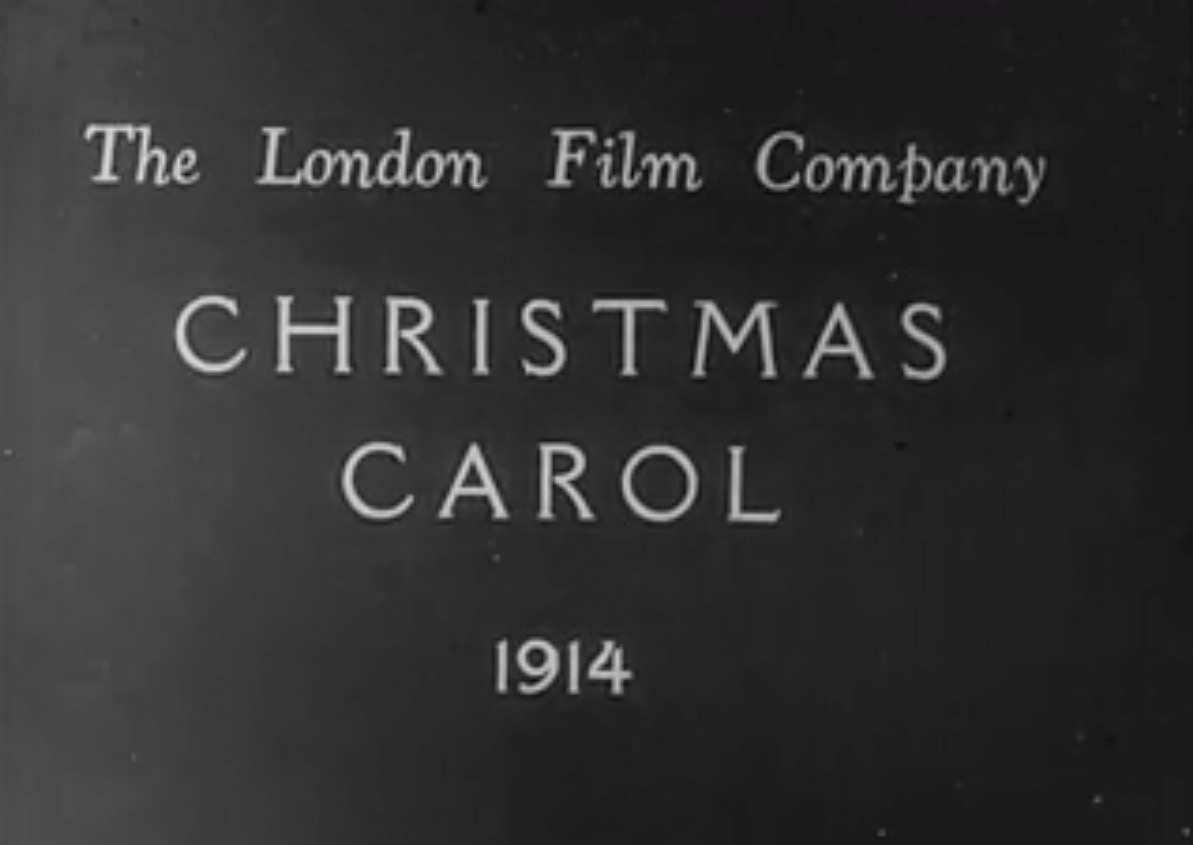
screen-shot-2016-12-23-at-23-55-01

D: Harold M. Shaw / 23m

Cast: Charles Rock, George Bellamy, Mary Brough, Edna Flugrath, Franklyn Bellamy, Edward O’Neill, Arthur M. Cullin, Wyndham Guise, H. Ashton Tonge

The third movie adaptation of Charles Dickens’ classic tale – after versions released in 1908 and 1910 – Harold M. Shaw’s masterful retelling remains a must-see for fans of the original story, and for fans of silent cinema as well. Shaw’s interpretation retains most of the key elements and scenes from Dickens’ novella, and thanks to a roster of good performances, brings them to life with a minimum of frenzied arm waving or histrionic face-pulling.

The story begins as ever in the counting house of Ebenezer Scrooge (Rock). His lowly clerk, Bob Cratchit (G. Bellamy), makes the mistake of lighting a piece of coal in the fireplace in an effort to keep warm. Enter Scrooge, aghast at Cratchit’s nerve, removing the coal, and throwing a couple of sprigs of holly down onto the floor for good measure. Not even a visit from his nephew, Fred (F. Bellamy) and his niece, Belle (Flugrath) with an invitation to join them at Xmas, can overcome his mean-spirited mood. And as if that wasn’t enough, he has to contend with a visit from two charity workers looking for donations. What’s a miser to do with all these demands on his time and his money?

promo230919576_2-1000x563

The answer is make no changes whatsoever. At the end of the day, Scrooge visits a local tavern; even there his attitude spoils the evening for the other patrons. Meanwhile, Cratchit has returned home to the bosom of his family, and with his wife (Brough) and children – including poor old Tiny Tim – is able to be happy and carefree. Scrooge arrives home, but is startled to see the face of his old business partner, Jacob Marley (O’Neill), appear in place of the door-knocker. Scrooge, rattled by this, retires to bed but is soon visited by Marley’s ghost, who warns the old skinflint that he’ll be visited in turn by three ghosts.

The first, the Ghost of Christmas Past (Cullin), is a jolly, holly-bedecked phantom who takes Scrooge firmly by the wrist and drags him away back into Scrooge’s childhood, back when he was a much happier person than he is now. Reminded of better times makes Scrooge upset. The Ghost of Christmas Present (Guise) shows him how he’s regarded by others, from Bob Cratchit and his family, and his nephew Fred’s family and friends, and he learns that his manner has alienated him from them. The third ghost, that of Christmas Yet to Come (Tonge), shows Scrooge his tombstone, the blunt summation of his life. Returned to his bedroom, Scrooge wakes the next morning, determined to make amends…

screen-shot-2014-12-13-at-08-00-03

This is a fine, straightforward adaptation that tells a very familiar story with a great deal of invention and, on occasion, wit. That it’s very faithful to its source is another aspect that helps the movie provide an entertaining experience, and Shaw handles the various scenes where Scrooge behaves atrociously with a restraint and a purpose that rescinds any idea that he wants to make an out-and-out melodrama. With his cast restricted from making too many broad, sweeping gestures with their arms – a staple of early movie making – or wild, gurning faces, Shaw ensures that, by playing it as naturally as possible, the audience reaps the reward of seeing more genuine feelings and emotions than would have been the norm back in 1914. Of course, there’s still the odd moment where this still happens, but they don’t detract from the overall effect.

Another plus is the decision to make Scrooge’s experiences with Marley and the three Ghosts a matter of his viewing things and events as seemingly a ghost himself. Using the simple technique of super-imposition, Shaw has Scrooge appearing as transparent as the Ghosts are themselves, a trick that reinforces the lack of control Scrooge has over these ghostly ministrations, and makes for some interesting scene transitions. If you look carefully as the Ghost of Christmas Past takes Scrooge away from the “safety” of his bedroom, you’ll see the old miser begin to dematerialise slowly as they leave the room. It’s not a flashy effect, by any means, but it is a neat little touch that adds greatly to the effectiveness of the scene.

hqdefault

Again, Shaw is helped greatly by his cast, who all portray their roles with a credibility that anchors the story, and stops it from becoming just another costume drama, albeit one derived from a much-loved classic of literature. Rock is a convincing miser, but is most effective when realising the error of his ways, his despair and dismay written plainly on his face; when Scrooge is confronted with his tombstone, a moment that could have provoked an excessive amount of gesticulating and wild expressions, Rock conveys his character’s shock and horror with a minimum of fuss, and still manages to convey the utter terror that has been instilled in him.

As Bob Cratchit, George Bellamy provides a more mirthful performance, his wide-eyed surprise at his employer’s behaviour always a pleasure to witness lurking in the background, and balanced by the mournful look he gives when he donates what little money he has to the charity workers. It’s a moment that perfectly encapsulates the difference between the two characters, and also the reason why Cratchit has no qualms about drinking a toast to Scrooge at Xmas-time: he’s too good at heart not to. Elsewhere, O’Neill is a suitably mournful Jacob Marley, Brough is an amiable presence as Mrs Cratchit, and each of the Ghosts is presented (mostly) in the way that Dickens originally conceived them (seeing Tonge’s face does let the side down, though).

Rating: 8/10 – an atmospheric, sensitively handled version of Dickens’ classic tale, A Christmas Carol proves that silent era movies weren’t all about the “grand gesture” but could be considered, thoughtful, and emotionally astute; it’s all too easy to overlook silent movies that adapt literary successes, but when one is as successful at condensing the material as well as this movie does, then it shows that anything is possible – just like a committed miser having a change of heart.

NOTE: Unsurprisingly, there is no trailer for this movie.

Share this:

  • Share on X (Opens in new window) X
  • Share on Facebook (Opens in new window) Facebook
  • More
  • Print (Opens in new window) Print
  • Email a link to a friend (Opens in new window) Email
Like Loading...

The Hollow Point (2016)

22 Thursday Dec 2016

Posted by dullwood68 in Movies

≈ Leave a comment

Tags

Bullets, Cartel, Drama, Gonzalo López-Gallego, Ian McShane, Jim Belushi, John Leguizamo, Mexico, Patrick Wilson, Review, Thriller

the_hollow_point_-_official_poster_1200_1778_81_s

D: Gonzalo López-Gallego / 97m

Cast: Patrick Wilson, Ian McShane, John Leguizamo, Lynn Collins, Jim Belushi, David H. Stevens, Karli Hall, Derek Boone, Nathan Stevens

In a small, dusty town near the US-Mexico border there’s a new sheriff about to settle in. He’s a replacement for the current sheriff, Leland Kilbaught (McShane) who’s been suspended pending an investigation into his shooting and killing a young man, Clive Mercy (Nathan Stevens), attempting to smuggle bullets across the US-Mexico border. The new sheriff, Wallace (Wilson), brings with him some emotional baggage, thanks to an old relationship with Marla (Collins) that still prompts some animosity on her part. While Wallace attempts to fit back into his hometown, Clive’s brother Ken (David H. Stevens) waits in Mexico for him to arrive. When his contact from the Mexican cartel threatens him with death if his brother doesn’t turn up, Ken figures he’s got nothing to lose. He kills the contact and steals a load of money in the process.

Ken’s actions have a knock-on effect he couldn’t have predicted. Wallace begins to look into his brother’s case and starts to put two and two together. Figuring out Ken’s involvement, Wallace begins to look for him, unaware that the cartel have tasked a killer called Atticus (Leguizamo) with getting to him first. Wallace and Atticus find Ken at the same time; in the ensuing fight, Atticus cuts off Wallace’s right hand. Wallace escapes and manages to reach Kilbaught’s home. While his successor recovers, Kilbaught discovers that a local businessman, a car dealer called Shep Diaz (Belushi), is behind the runs the Mercy brothers have been making. With his dealership on the rocks, Diaz has been using the smuggling operation to prop it up. But the cartel aren’t satisfied that he wasn’t involved in Ken’s actions, especially when the money he stole isn’t found straight away. With Wallace determined to bring Diaz to justice, and protect Marla who becomes unfortunately involved in it all, Atticus is sent once more to clean up all the loose ends…

la-et-mn-mini-hollow-point-review-20161213

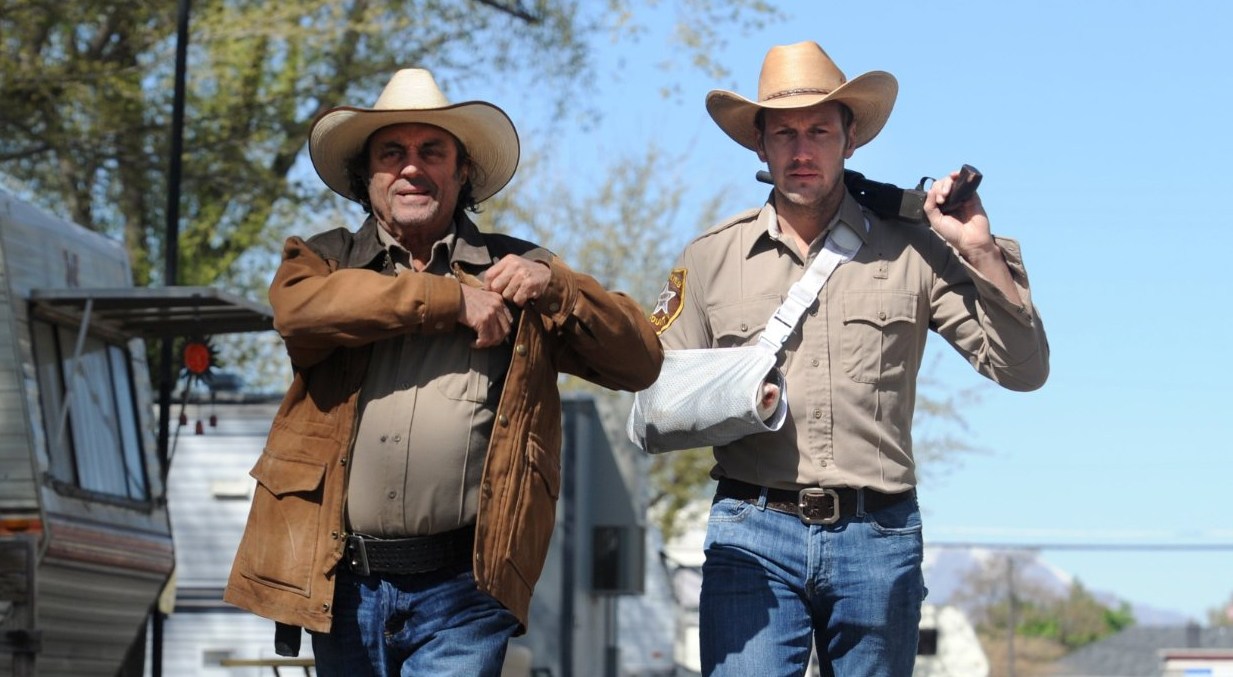
Fans of slow-burn, violent crime thrillers set in the American Southwest will find much to enjoy in López-Gallego’s latest feature. Assembling a great cast and setting them to work on a script that doesn’t provide anything new in the way the story pans out, but which nevertheless is admirable for its simplicity, López-Gallego has made a movie that resonates far beyond anything you might expect. One of the main reasons for this, is that well assembled cast. Wilson – a last-minute replacement for Timothy Olyphant – excels as the new sheriff who’s tested by the loss of his hand, but who won’t give up protecting the love of his life – even if she doesn’t want anything to do with him. Wilson has a knack for playing the everyday hero, and he uses that knack to provide an unexpectedly riveting performance, and one that makes the viewer wish he’d make more of these kinds of movies instead of any more Conjuring or Insidious sequels.

He’s more than ably supported by the likes of McShane – all grizzled disregard for the law and its finer distinctions – and Leguizamo as the hired killer who just won’t stop. Both are fine actors, and they inhabit their roles like second skins, with Leguizamo in particular, reminding us what a dangerous presence he can be. But both men are upstaged by a resurgent Jim Belushi, his performance as the duplicitous car dealer, Diaz, a shot in the arm for a career that has seen him take on too many undemanding minor roles in recent years. Diaz is as amoral as they come, and Belushi plays him to perfection, highlighting the sweaty, greedy machinations that will ultimately betray him.

maxresdefault

The script – by newcomer Nils Lyew – plays with relative notions of revenge and karma, property and theft, and sneaks in a thin line of religiosity via Atticus’s relationship with Lilly. He further grounds the various relationships – criminal and otherwise – through keen observation and how each character deals with a variety of physical pain and emotional distress. The self-contained nature of events, and the way in which Lyew isolates the characters against the bleached desert backdrop, adds further to the sense of tragedy that percolates through the narrative once Kilbaught fires his gun. And that last scene? Justice or revenge? Actually, it’s both, and completely understandable as both, thanks to the previous interaction of the characters involved.

It’s a very violent movie in places, and López-Gallego doesn’t shy away from showing both the violence and the often bloody aftermath (though one character does appear to cheat death very conveniently at one point). Consequences are the order of the day, for everyone, and no matter how hard they try to avoid them, those consequences have a way of catching up with them and adding an extra layer on top. Even Wallace, who becomes the anti-hero of the story, insists on taking a path that will lead to more and more pain, but he’s a fatalistic anti-hero, and in his own way, just as stubbornly recidivist as Kilbaught.

the-hollow-point-movie

Set against a pitiless desert backdrop, The Hollow Point has enough tension and undiluted malice for two movies, but López-Gallego is more than up to the task of maintaining that tension and then stretching it further, making some scenes feel hyper-realistic in the process. This isn’t a bad thing, as it all adds to the grim sense of inevitability that powers each confrontation and showdown, and each twist and turn in the narrative. As a result, the viewer is never too sure just how things will turn out, or even if the (relatively) good guys will triumph in the end. López-Gallego is also the movie’s editor, and he adopts an initially measured approach that develops over the course of the movie into a more rapid, insistent rhythm. It also helps that he has the assistance of regular DoP José David Montero, whose lensing brings out the rugged beauty of the desert surroundings, and the rundown, seen-better-days façades of the town and its buildings.

Rating: 8/10 – an underrated gem that could all too easily fail to atrract the attention it deserves, The Hollow Point benefits from a clutch of great performances, a tough, uncompromising script, and the careful ministrations of its director; it’s rare to see such a moderately budgeted project achieve so much and with such apparent ease, but this really is a movie that deserves a wider audience.

Share this:

  • Share on X (Opens in new window) X
  • Share on Facebook (Opens in new window) Facebook
  • More
  • Print (Opens in new window) Print
  • Email a link to a friend (Opens in new window) Email
Like Loading...

Poster of the Week – Masquerade (1965)

21 Wednesday Dec 2016

Posted by dullwood68 in Movies

≈ Leave a comment

Tags

Adventure, Cliff Robertson, Comedy, Masquerade (1965), Poster of the week

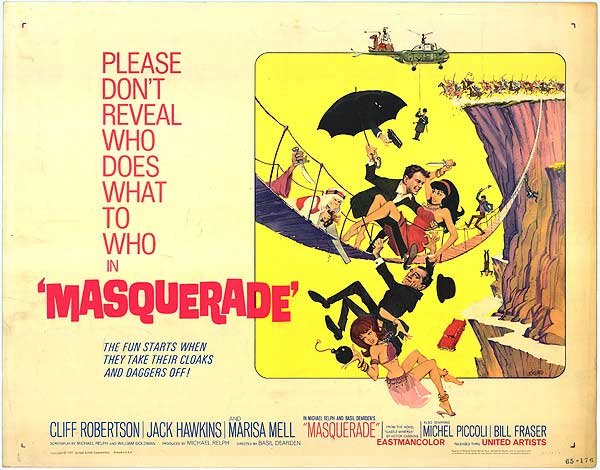
masquerade

In the Sixties, there were a plethora of adventure comedies born out of the success of the James Bond movies, and Masquerade was one of them. The movie itself is a spirited, engaging romp that takes a while to get going, but once it does, it’s hugely enjoyable. There are no such problems with the poster, though, as it happily tells you all you need to know about the movie and right from the first glance.

Like many similar-themed movies of the period, Masquerade‘s poster revels in a sense of uproarious fun that it hopes will attract viewers to its cause. There’s a lot going on, both here and in the movie, and the poster is a more than adequate reflection of the exploits that Cliff Robertson, Marisa Mell etc. get up to. From the very top of the image where we find an Arab sheik astride a camel settled on the tail of a helicopter, to the bottom where we see a dangling belly dancer juggling a bomb, the poster is practically yelling at us, “This movie is so much fun!” By carefully recreating the mood of the movie, the poster acts as an extension of the movie, and reinforces the idea that the viewer will have a whale of a time.

But there are plenty of strange things going on in the poster as well, things that easily draw the eye and furrow the brow. For one there’s the hand with the gun appearing from within the umbrella held by Cliff Robertson. Then there’s the disembodied arm seen to the right of the image and emerging from the bridge brandishing a blade. Why both of these elements are present is a puzzle as they have no equivalent in the movie, and their very random nature seems to point to the artist having a) free rein over the poster’s content, or b) been given some very bizarre, but specific instructions (or maybe he saw a different version of the movie).

There are other strange elements, all of which – when taken by themselves – leads to the inevitable conclusion that no small measure of anarchy was required in the creation of the poster. There’s the man plummeting head first (from the bridge?) whose identity is too obscure to recognise. There’s the man dangling from the helicopter, who’s equally hard to identify; the rush of horsemen seemingly intent on hurtling over the edge of the cliff; the red car that has left the cliff road; and the man hanging off the bridge and seemingly about to join the horsemen and the red car. All humorous elements, and all in service to the notion that there will be an awful lot of unintentonal and accidental deaths in the movie (which is funny, right? Well, of course it is).

But hang on, there’s romance on display as well, represented by Robertson’s deferential, protective attitude towards his glamorous co-star, Miss Mell. And yet, once again, malice and potential death aren’t too far away: she’s trying to stab him! The poster hints at a love/hate relationship (even though it’s obvious she’ll fall into his arms by the end of the movie), and Robertson’s grin surely means he’s not worried by her attempt to kill him, but again, it’s all part of the fun.

The various elements that go to making up the main image are crammed together in a relatively small space, but with enough space deployed to stop it all from looking too messy. To the left is one of those requests that were born in the Fifties, a plea from the producers meant to play on the goodwill of the audience, but also meant to imply that there was something so strange/wonderful/impressive that the audience would want to tell everyone about it. But here this intention is undermined by the completion of the tagline (or the second part), that mentions the removal of “cloaks and daggers”. It’s a smart and witty line, and again serves as a reminder: “this movie is so much fun!”

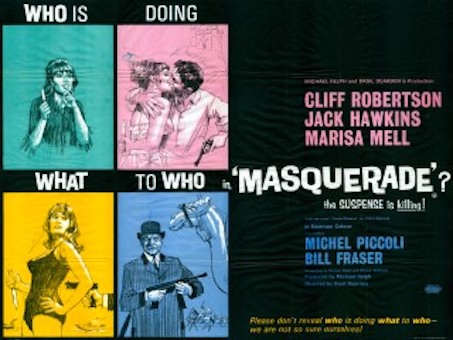
The text is an awkward mix of styles and colours, but fortunately the main credits and the way they’re listed don’t detract from the overall effect of the poster, although it would have been nice to see Michael Relph and Basil Dearden – the co-conspirators if you like on this project – given more prominence. But this poster isn’t bothered about the dry, academic stuff, this poster is all about giving its target or expected audience as good a time looking at it, as they’ll have a good time watching the movie. And for the most part, it succeeds, unlike this British example from the same year:

masquerade-320x240

Share this:

  • Share on X (Opens in new window) X
  • Share on Facebook (Opens in new window) Facebook
  • More
  • Print (Opens in new window) Print
  • Email a link to a friend (Opens in new window) Email
Like Loading...

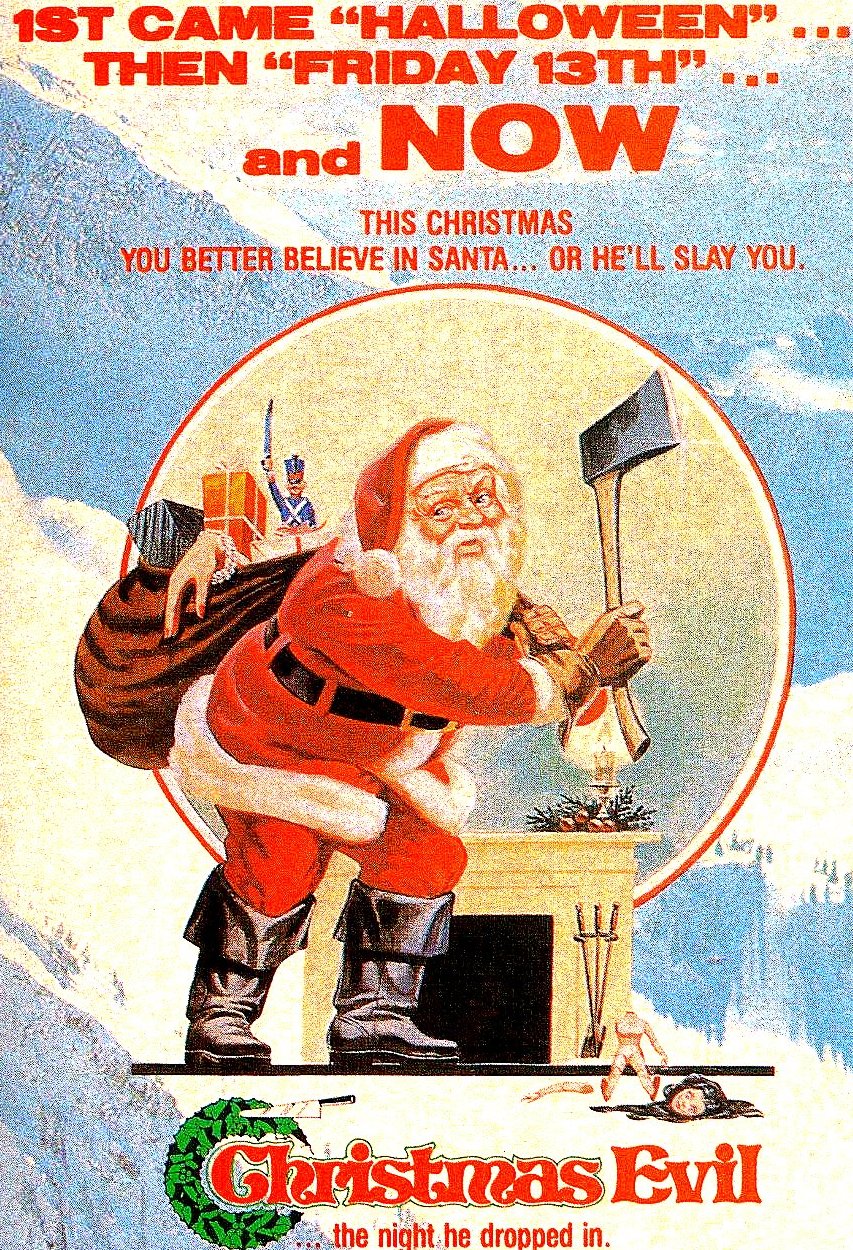
Xmas Classics – Christmas Evil (1980)

20 Tuesday Dec 2016

Posted by dullwood68 in Movies

≈ Leave a comment

Tags

Brandon Maggart, Drama, Horror, Jeffrey DeMunn, Jolly Dream, Lewis Jackson, Review, Santa Claus, Toy factory, Xmas, You Better Watch Out

christmas-evil-3a1

Original title: You Better Watch Out

D: Lewis Jackson / 100m

Cast: Brandon Maggart, Jeffrey DeMunn, Dianne Hull, Andy Fenwick, Brian Neville, Joe Jamrog

Xmas is a time for family – or so they say. If you’re young Harry Stadling, Xmas is a time for discovering that Santa Claus is actually your father playing dress-up and spending adult time with your mother rather than coming down the chimney and leaving presents for you and your brother, Philip. Disillusioned by this terrible discovery, Harry’s view on Xmas becomes twisted. As an adult, Harry (Maggart) spies on the children in his neighbourhood and makes notes on their behaviours in two large volumes: Good Boys and Girls 1980 and Bad Boys and Girls 1980. He works as a senior employee at a factory that makes children’s toys, but he’s tolerated more than respected, and one of the men who works the line, Frank Stoller (Jamrog), exploits his good nature. As Xmas approaches, Harry’s need to make people conform to his view of the importance of the Yuletide season – or his “tune” as he calls it – leads to his dressing up as Santa Claus on Xmas Eve and distributing presents.

Except, Harry’s plan doesn’t work out as he’d hoped. As well as handing out gifts for everyone at a children’s hospital, Harry finds himself handing out retribution to those who don’t share his love of Xmas, or respect how special it is. With his exploits attracting the attention of the police, Harry finds himself chased by a bloodthirsty mob who don’t take kindly to the “Xmas cheer” he’s dispensing. A narrow escape leads him to seek out his brother, but Philip (DeMunn) has his own issues surrounding Harry and the festive period, issues that mean a further escape for Harry, but not quite the one he’s looking for…

christmas-evil-1

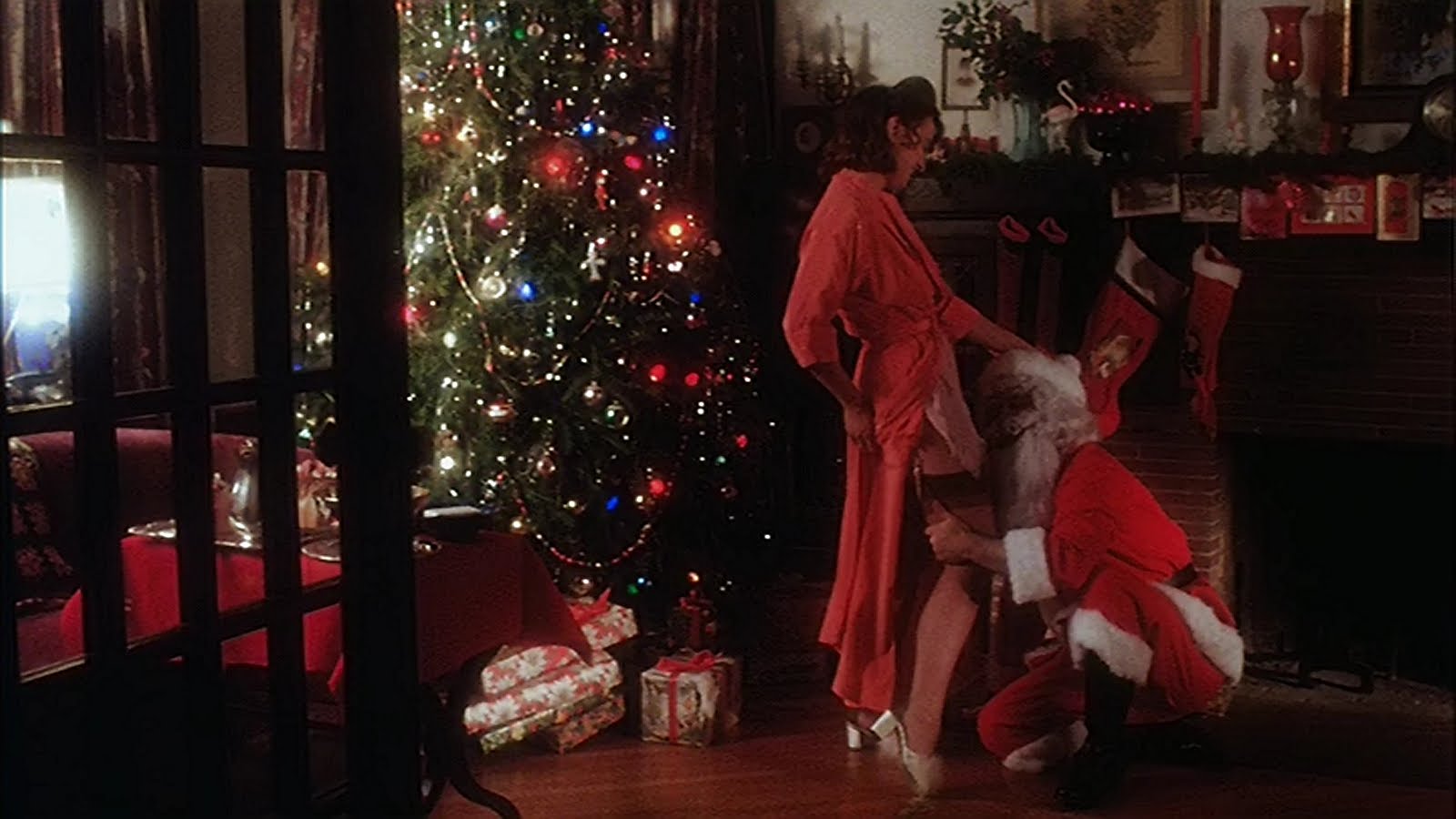
Christmas Evil is not your typical slasher movie set at Xmas, and is vastly different from movies such as Black Christmas (1974) or Silent Night, Deadly Night (1984). For one thing, it takes its time in establishing the mental state of its central character, the emotionally detached Harry. This is very important to the overall storyline, as writer/director Jackson strives to make Harry a character the audience can at least have some sympathy with, and not regard as just some whack job intent on killing people for no reason (or because he got a present without any batteries, or a Barbie doll instead of Action Man). This means the movie gets off to a slow start, as Harry struggles to maintain an outward air of calm – as much as he can, at least – while everyone around him fails to recognise how important Xmas is to him.

Once the prologue set in 1947 is over with (and Harry’s childhood rejection of the Xmas myth is in place), the movie begins a few months before Xmas actually comes around. This again allows Jackson the time and space to show the gradual deterioration of Harry’s mental state, and the casual malice he endures both at work and closer to home through his brother, Philip. With Philip feeling obliged to look after Harry as well as his own family, there’s a tension and an animosity there that Harry feels deeply. At one point he watches from outside his brother’s home, and sees the perfect picture of a happy family at Xmas-time. Etched on Harry’s face is a mixture of dismay and envy that explains everything you need to know about Harry’s view on Xmas, and why he’s so torn by his feelings about it. He can’t quite reconcile the good with the bad, or the notion that there can’t be one without the other.

christmas_evil1

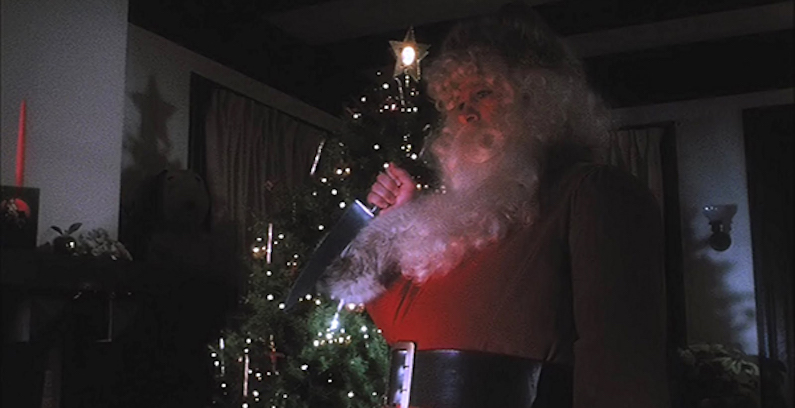
While Harry finds himself struggling to find a balance that will help him deal with his feelings, certain events conspire to push him towards more violent responses, including the offhand remarks of his bosses at the factory, and the (until then) suppressed need for revenge on Frank Stoller. It’s notable that for every bad thing that Harry does, he does an equally positive thing as well, and Jackson is clever enough to ensure – even if this is a “slasher” movie – that Harry’s predicament can’t be viewed in plain old black and white. He’s helped in large part by the performance of Maggart as Harry, a singular portrayal that is surprisingly nuanced beneath all the outer trappings of increasing mania and moral confusion. Maggart’s career is littered with television appearances (including an episode of ER in 1995 where he played a Santa Claus figure), and very few movies; this is his finest hour without a doubt. Imbuing Harry with a strangely affecting melancholy, and showing his descent into madness by reining in any possibility of histrionics, Maggart gives an intuitive, unforgettable performance, and Jackson is wise enough to give him the room to explore the character as fully as he can.

But while on the acting front this is Maggart’s movie, on the cinematography side it’s Argentinian DoP Ricardo Aronovich’s. Persuaded by Jackson to work on the movie, Aronovich’s sombre lighting design and tight close ups on Maggart’s face make for a claustrophobic, unnerving visual approach to the material. There are moments where he also creates a kind of chiaroscuro effect, particularly when Harry is being chased by the torch-wielding mob, the flames creating an odd halo effect that seems almost supernatural. His framing and spatial awareness is impressive too, making much of what takes place look and feel like the real world and not some composite assembled for yet another movie.

santas

In the end, Jackson’s commitment to his own script and the way in which it should be presented, pays off handsomely. At first glance, Christmas Evil looks like a hundred other gory slasher movies from the early Eighties, with their high body counts, splatter effects, and invincible killers. It also looks and feels like a low-budget slasher flick – Aronovich’s involvement notwithstanding – and it has a grimy, gloomy atmosphere that isn’t exactly an original approach. But as noted above, the movie takes its time before it provides its first kill, and it and all the subsequent kills are shot as cutaways, put together neatly and given a disturbing air by editors Corky O’Hara and Linda Leeds. These scenes have an almost sordid feel to them, thanks to the combination of mood and lighting, and Harry’s inability to quell his angry feelings.

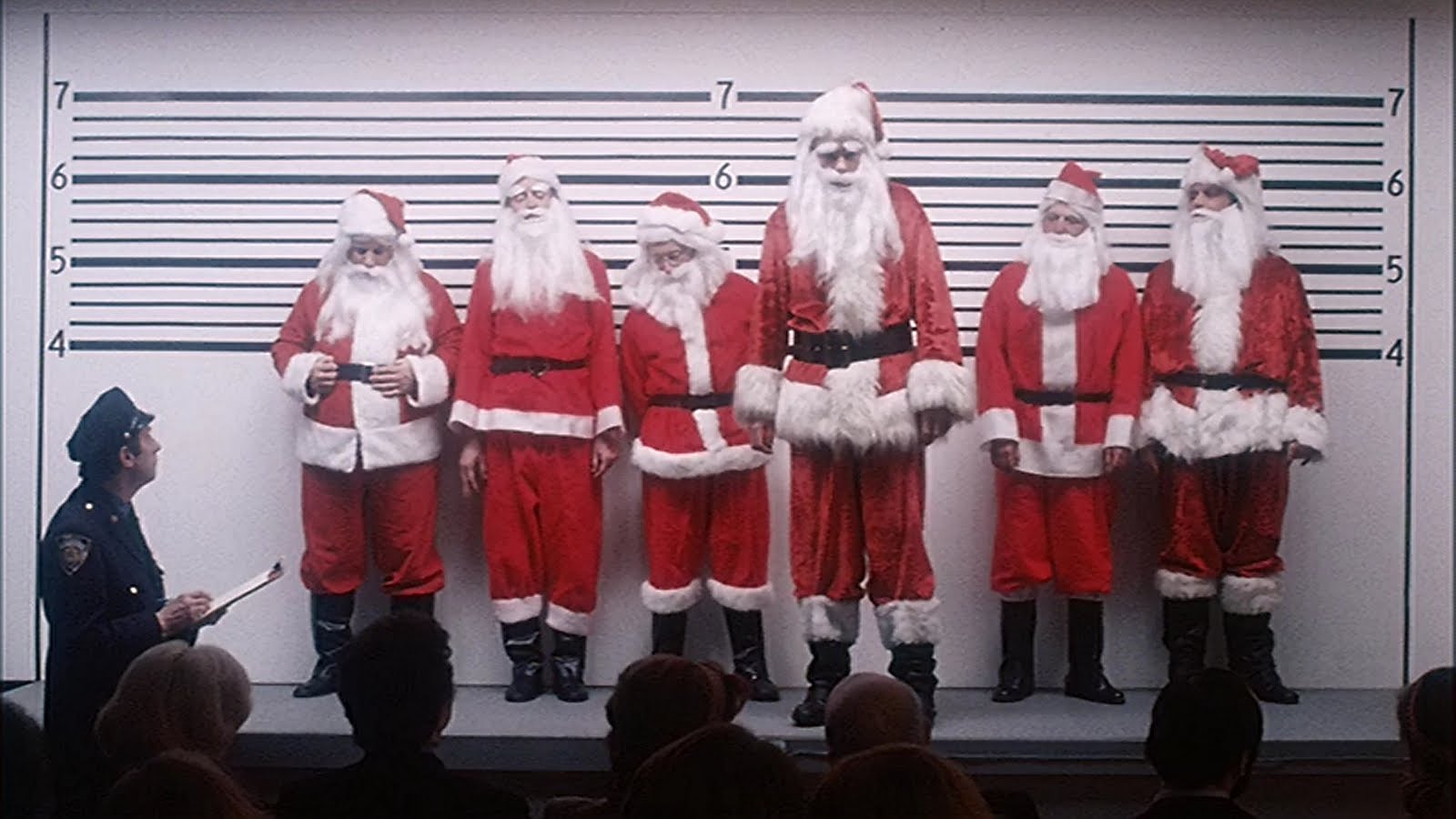
There’s humour too, threaded throughout the movie, and like in any good, serious drama, it’s allowed to take centre stage on just the one occasion, when the police are trying to get witnesses to identify Harry from a line up of Santas. Otherwise, Jackson focuses on themes relating to family, loyalty, unmerited expectations, greed, and the endemic hypocrisy that the festive season seems to instill in everyone, where the phrase “goodwill to all men” really is just that: a phrase. There’s a sense that he’s tried to “keep it real”, and while he may not succeed in everything he’s attempted, he’s definitely got more right than he has wrong.

Rating: 8/10 – a superior horror thriller, featuring a great performance from Brandon Maggart, and a remarkably astute screenplay from its director, Christmas Evil is a much better movie than anyone could have ever expected (John Waters calls it “the greatest Christmas movie ever made”); as a portrait of one man’s struggle to make sense of his own conflicted feelings about the Yuletide season (and with a subtext of PTSD thrown in for good measure), it’s unexpectedly compelling, and makes good use of its Xmas backdrop, limited budget, and confident, measured pacing.

NOTE: The following trailer has French subtitles.

Share this:

  • Share on X (Opens in new window) X
  • Share on Facebook (Opens in new window) Facebook
  • More
  • Print (Opens in new window) Print
  • Email a link to a friend (Opens in new window) Email
Like Loading...

Life, Animated (2016)

19 Monday Dec 2016

Posted by dullwood68 in Movies

≈ 3 Comments

Tags

Animation, Autism, Cornelia Suskind, Disney, Documentary, Family, Mac Guff, Owen Suskind, Review, Roger Ross Williams, Ron Suskind, Walter Suskind

life-animated-poster

D: Roger Ross Williams / 89m

With: Owen Suskind, Ron Suskind, Cornelia Suskind, Walter Suskind, Jonathan Freeman, Gilbert Gottfried

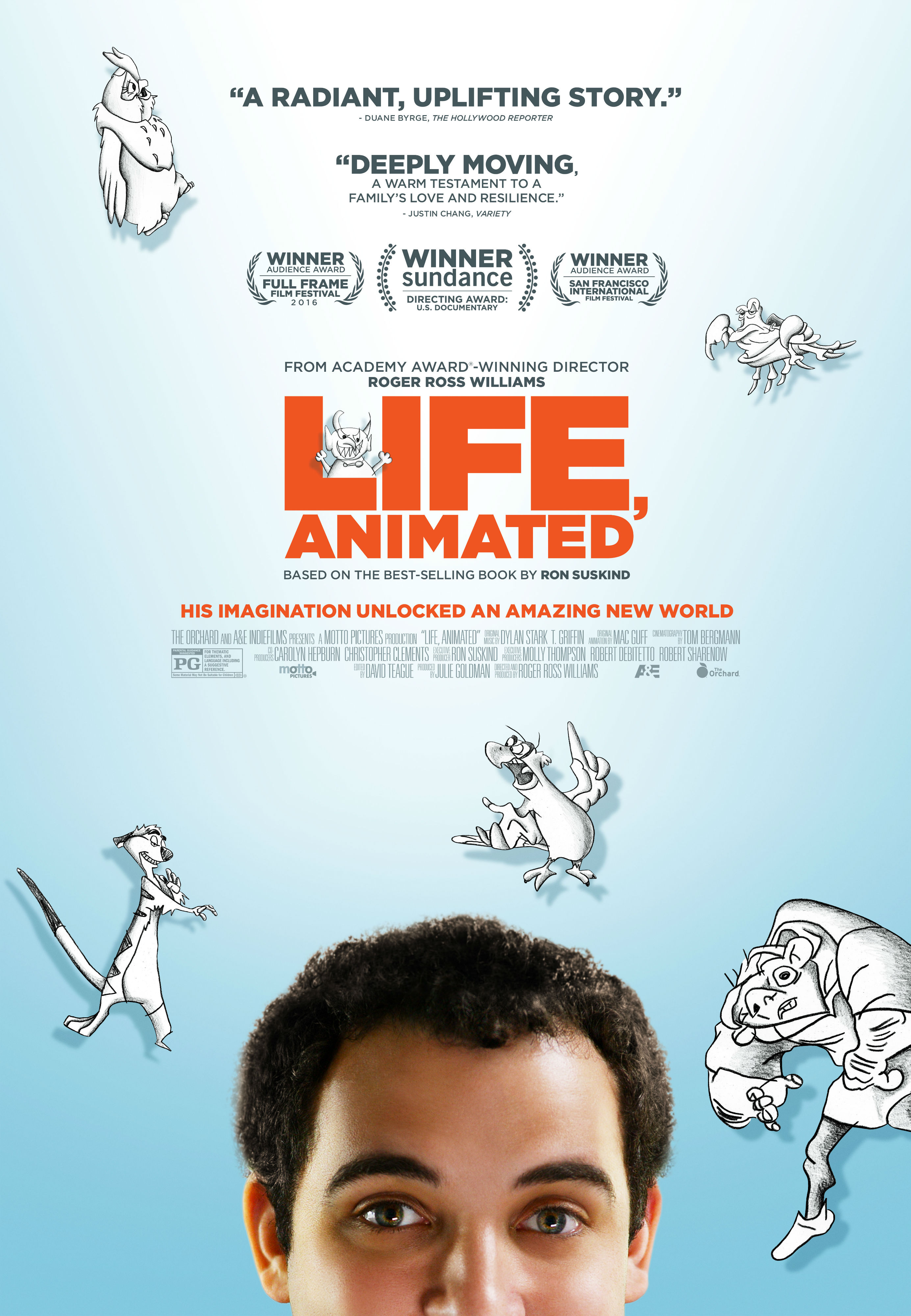
In Roger Ross Williams’ moving documentary, Life, Animated, we are introduced to Owen Suskind, a twenty-three year old on the verge of graduating from school and moving into his first apartment. There’s nothing special about that you might think, but for Owen it’s all an incredible achievement, because when he was three years old, Owen went from being an outgoing, happy child to a withdrawn, non-communicative autistic child. It happened virtually overnight, without any warning. But in one, very big way, Owen was fortunate. He had the love of his family: his father, Ron; his mother, Cornelia; and his older brother, Walter. After the initial shock of seeing Owen so unalterably changed, they all rallied round him and did their utmost to make his life as comfortable and as rewarding as possible. They simply never gave up hoping that Owen, somehow, would come back to them.

They had to wait four years, though, for the first sign that Owen wasn’t stranded in his own mind. A single line of dialogue from Disney’s The Little Mermaid – “Just your voice” – was said by Owen at a moment when that particular phrase related to what was happening in the Suskind home. The family began to realise that Owen could relate to what was going on around him by referencing dialogue from Disney movies. What they learned was astounding: Owen hadn’t just memorised certain lines of dialogue from Disney’s animated movies, he’d memorised all the dialogue from Disney’s animated movies. And later, Owen correctly deduced that Walter didn’t want to grow up like Peter Pan or Mowgli from The Jungle Book. By expressing such an emotionally complex idea, and at still a very young age, the Suskinds became convinced that they could communicate further with Owen, and using Disney movies, connect with him on a level they couldn’t have predicted before then.

160629_ntl_animated_1252_16x9_992

Fast forward fifteen years and Owen is a (largely) well-adjusted young man on the cusp of leading an independent, adult life, away from his family and on the verge of getting his first job. And he has a girlfriend, Emily (who’s also autistic). He still spends a lot of time re-watching Disney movies, but now he’s better able to make sense of the “real world” thanks to the life lessons that Disney includes in its releases (on his first night alone in his apartment he watches Bambi – the one time the correlation seems forced, even though there isn’t another movie that would fit the circumstance). But even though things are going well for him, Life – animated or otherwise – still has the ability to add to the challenges he already faces…

What makes Life, Animated such an appealing viewing experience is, in part, its refusal to push an agenda. Where the majority of documentaries want you to take sides on whatever issue they’re focusing on, here it’s a different matter entirely. The story of Owen Suskind is an unforeseen triumph against the odds, and Williams is canny enough to show the before, the during and the after of Owen’s descent into autism. He also gives plenty of time to Owen’s family, to show how they felt and how they adapted during the years Owen was growing up. You get a clear sense both of how difficult it was for them, but also how tight-knit and committed they all were, to each other, and to Owen. Just in case anyone might be thinking that Disney are getting all the credit for Owen’s “recovery”, then guess again; his very dedicated family must take most, if not all, of the credit.

lifeanimated

Williams tells the story of the Suskinds using a mixture of home movie footage – seeing Owen in his pre-autism years is particularly evocative, but is then trumped by a shot of him standing, just staring into space – talking heads recollections, and traditional hand-drawn animation courtesy of French outfit Mac Guff. It’s this last element that adds a huge degree of charm to a movie already in danger of charming its audience to death, but if that seems like a negative, then guess again. Charm is something the movie has in abundance, and the animated sequences act as further examples of the movie’s ability to bewitch and enchant, and tell the story in ways that talking about Owen and his journey just won’t do.

It’s through these sequences that we learn that Owen is an aspiring writer, with his tale of a hero whose job it is to keep Disney sidekicks such as Jiminy Cricket safe from harm. Mac Guff do a great job of expressing this tale, and also of replicating the world as Owen sees it himself. It’s easy to understand why Owen identifies so much with Disney’s sidekick characters, as he himself has always felt like someone on the outside, not the main hero. It’s interesting, also, that this is how Owen sees himself, as someone who needs to protect others, and the movie draws all this out thanks to some candid on-camera moments by Owen and by his quoting from his original story. From this also, we get a glimpse of just how vocal he is when challenged or cornered, and it all gets too much for him.

01life-master768

While Owen seems inordinately happy, there are plenty of moments where the audience is reminded that he’s really a “big kid” without all the manners or insights that go with being an adult. His relationship with Emily doesn’t go according to the Disney plan, which leaves him adrift, and there’s a wonderful moment where Walter laments the fact that Disney don’t “do sex”, something that would make certain things a lot easier to deal with if they did. There are references too to his time at school, and the bullying he experienced, as well as the dark days that shrouded that period, but again it’s the love and support from his selfless family that saw him through it all, and to a point now where he can travel to France to address a symposium on autism (and make his opening remarks in French).

While Owen’s remarkable comeback from a kind of catatonic autism is entirely worthy of Williams’ attention (not to mention the Disney movie club he runs, and which has two very special guests at one of the meetings), what really makes this documentary special is the love and care and determination of Owen’s family to ensure he has the best life possible that makes this such a moving and often incredibly profound movie. Ron, Cornelia and Walter all deserve the highest praise for how they tackled the issue of their son’s sudden onset of autism, and the moments where their love for him, and their commitment to him, shine through with an emotional honesty that can’t help but bring a tear – or two, or more – to the eye of the unwary viewer.

Rating: 9/10 – with Disney waiving any editorial control over the footage used in the movie, Life, Animated benefits immeasurably from Williams’ considered and astute use of the various storytelling formats used to tell Owen’s miraculous tale; a terrific achievement, and one that highlights the strengths in play within the Suskind family, this is immensely enjoyable, and a movie that makes the term “feelgood” seem hopelessly inadequate in describing the effect it can have on the viewer.

Share this:

  • Share on X (Opens in new window) X
  • Share on Facebook (Opens in new window) Facebook
  • More
  • Print (Opens in new window) Print
  • Email a link to a friend (Opens in new window) Email
Like Loading...

Impromptu Trailer/Question of the Week

17 Saturday Dec 2016

Posted by dullwood68 in Movies

≈ Leave a comment

Tags

Amy Schumer, Preview, Question of the Week, Snatched, Trailer

You’re an accomplished comedienne known for being “edgy” (whatever that really means), and for your award-winning TV show. In 2015, you appear in a comedy drama playing a thinly-veiled version of yourself that picks up a fair degree of critical acclaim. The world, it seems, is your oyster. You can choose your next movie project with the confidence of someone who has put a great big dent in people’s conceptions of who you are. The movie you made is Trainwreck, and you are Amy Schumer. And the project you’ve decided to make next is Snatched (2017).


So, with that in mind, this impromptu, unexpected Question of the Week is really quite simple:

Amy Schumer – what were you thinking?

Share this:

  • Share on X (Opens in new window) X
  • Share on Facebook (Opens in new window) Facebook
  • More
  • Print (Opens in new window) Print
  • Email a link to a friend (Opens in new window) Email
Like Loading...

Allied (2016)

16 Friday Dec 2016

Posted by dullwood68 in Movies

≈ 1 Comment

Tags

Action, Brad Pitt, Drama, French Morocco, Jared Harris, Marion Cotillard, Review, Robert Zemeckis, Spy, Thriller, World War II

alliedposter

D: Robert Zemeckis / 124m

Cast: Brad Pitt, Marion Cotillard, Jared Harris, Simon McBurney, Lizzy Caplan, Daniel Betts, Camille Cottin, August Diehl, Matthew Goode, Thierry Frémont, Anton Lesser

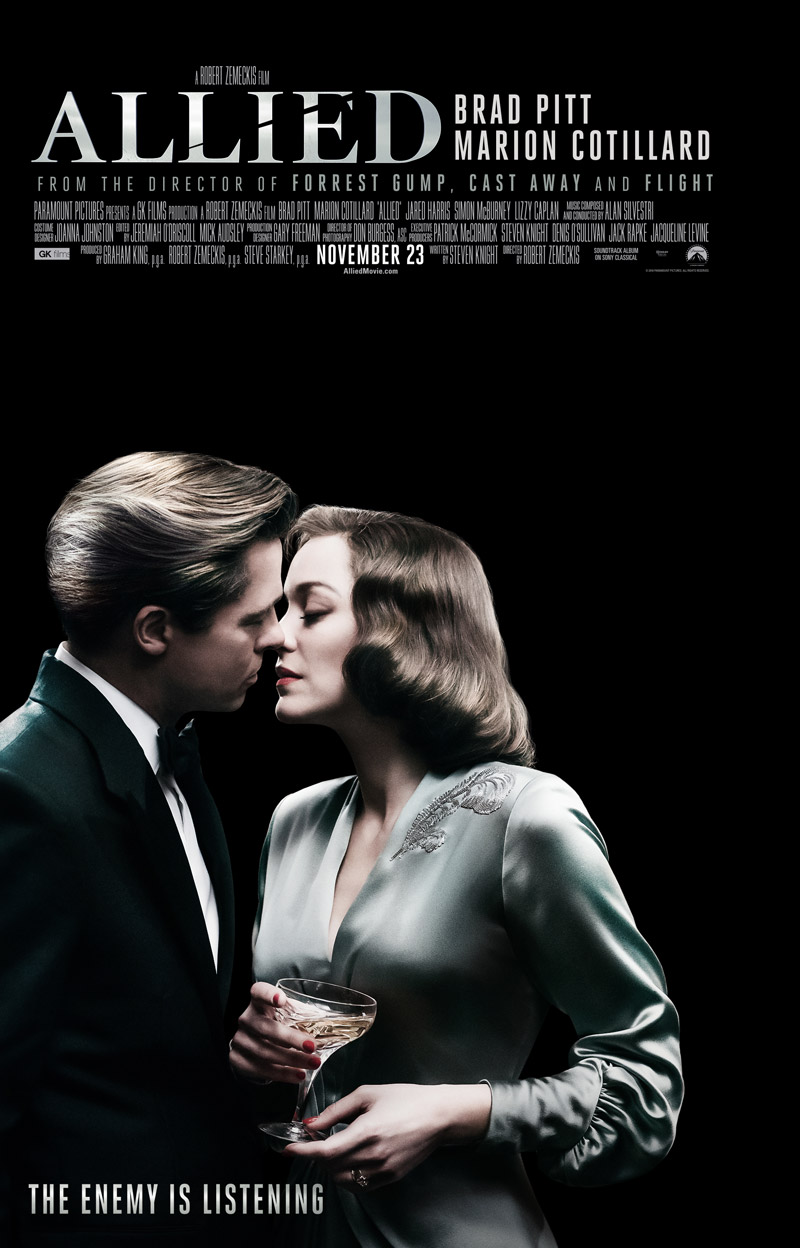
French Morocco, 1940. Max Vatan (Pitt), a Canadian officer attached to the British army, is on a mission to assassinate a Nazi ambassador. He rendezvous’s with a French resistance fighter called Marianne Beauséjour (Cotillard). Posing as a married couple, they obtain an invitation to a party that will be attended by the ambassador and several other high-ranking Nazi officials. In the meantime, their posing as a married couple begins to awaken in each of them feelings for the other. When the mission is over, Max and Marianne realise they have fallen in love; he asks her to come to London  so they can marry. After a few months waiting for the red tape to be worked through, Marianne is allowed to join Max, and when she does she reveals that she’s expecting their child.

With their child, a girl, born during an air raid, Max and Marianne’s life begins to settle down into a more sedate existence. With Max rumoured to be in the running for a promotion, he’s called in one day by his superior officer, Frank Heslop (Harris). Frank introduces him to an S.O.E. operative (McBurney) who wastes no time in telling Max that they suspect Marianne is a German spy. Max refuses to believe it, but he’s charged with aiding the S.O.E. in their investigation. He has to receive a telephone call later that night, write down the details of the call and leave them where Marianne will see them, and then wait forty-eight hours until the S.O.E. will know one way or the other if the details have been transmitted to Germany. And there’s a further catch: if Marianne is revealed to be a German spy, then Max has to be the one to kill her.

screen-shot-2016-08-12-at-9-10-35-am

Despite being told not to, the next day Max decides to launch his own investigation. Aiming to prove Marianne’s innocence, he tracks down a British officer (Goode) who knew her before Max did. But the officer is unable to help him. At a party they’re hosting that night, Max sees Marianne talking to an old man (Lesser) he doesn’t recognise; the man turns out to be a jeweller, but Max’s suspicions are increased. With time running out, Max has no option but to travel to Occupied France and seek out the one man he’s certain can tell him if Marianne is who she says she is, a resistance fighter named Paul Delamare (Frémont). He finds the man in gaol, and learns something about Marianne that will answer the question of her guilt or innocence once and for all.

Some directors – many, in fact – have careers that initially show a lot of promise, are very successful once they’ve made four or five movies and have become internationally well-known, but then find their later projects failing to attract both the same audience levels and continuing critical acclaim. Robert Zemeckis is just such a director. Used Cars (1980) is a great, largely unsung comedy that features one of Kurt Russell’s best performances. The Back to the Future trilogy cemented his place in movie history, and Forrest Gump (1994) reinforced his stature as a mainstream director. But since then, and with the possible exception of Cast Away (2000), Zemeckis’ output – including three excursions into the world of performance motion capture – has been less than stellar, and The Walk (2015), a movie that looked as if it could arrest the slow decline in Zemeckis’ career, proved not to be up to the task.

allied-e14604399752361

And sadly, with Allied, Zemeckis has still to reverse that decline. Working from a tired, ineffective screenplay by perennial under-performer Steven Knight, Zemeckis has tried to make an old-fashioned romantic drama that harks back to classic wartime movies such as Casablanca (1942), while also presenting said drama with a more modern visual sheen. The mix, though, doesn’t aid a movie that is difficult to engage with, and which never does enough to make you care about either Max or Marianne. With no one to root for, Knight’s screenplay becomes a matter of pushing the basic storyline through to an incredibly unsatisfactory ending, one that will have audiences shaking their heads in disbelief (though there are plenty of other occasions where they’ll be doing this as well). And Zemeckis, a director whose visual acuity shouldn’t be in doubt, doesn’t seem able to enhance the narrative in any meaningful way, leaving Don Burgess’s cinematography to look and feel as tired as everything else – which is an incredible thing to realise, as Burgess is Zemeckis’ usual DoP, and has lensed non-Zemeckis movies such as Enchanted (2007) and The Book of Eli (2010).

Against this surprisingly dour visual backdrop, Pitt and Cotillard are left “holding the bag” as they try to inject a sense of immediacy into proceedings, and also try to convince the audience that they’re involved in a great love affair. Thanks to Knight’s script, though, neither star has a chance, as they’re hampered by some awful dialogue – “There’s a thing called the soul. I’ve looked into her soul.” – and the kind of motivations that don’t sound credible once they’ve been said out loud. Cotillard fares better than Pitt, but that’s only because she has less to do. Left stranded by virtue of having to carry the movie’s second half on his own, Pitt looks pained and unhappy, and though this could be attributed to his character’s state of mind, it always seems more likely that it’s a reflection of the star’s awareness that the movie isn’t turning out as well as it should.

ALLIED

The rest of the cast pop in and out of the narrative, often for one or two scenes, and fail to make any impact. Harris is the kind of gruff, good-natured senior officer we’d all like to think existed at the Ministry of Defense, McBurney plays an historical predecessor of the role he portrayed in Mission Impossible: Rogue Nation (2015), and Caplan is tucked away at the back of a few scenes as Max’s (apparently) openly lesbian sister, Bridget. While some of these characters are important in terms of moving the story forward, none of them have any depth, and again, thanks to Knight’s tortuous way with dialogue, none of them sound convincing (check out the dialogue Harris is stuck with in the movie’s denouement).

With Zemeckis bringing very little to the project other than his name and an occasional flash of the visual style that he’s most famous for, it’s difficult to work out what attracted him to the project, and very seriously, why he completed it. Coming so soon after The Walk, perhaps he didn’t have as much prep time as he’s used to. Perhaps the initial concept became altered and irretrievably lost during production, leaving Zemeckis stuck with seeing it through. Perhaps he did, genuinely feel that this was a project that he could make an entertaining, thrilling, exciting movie out of. Whatever the reason for his participation, this leaden, dreary, unappealing movie is the result, and it does the man and his career no favours at all.

Rating: 5/10 – yet to recoup its $85 million budget at the international box office, Allied is a movie that tests its audience’s patience, and gives it very little to care about; a dismal experience overall, and a reminder that the combination of a big name director and big name stars doesn’t always guarantee good value or an entertaining couple of hours.

Share this:

  • Share on X (Opens in new window) X
  • Share on Facebook (Opens in new window) Facebook
  • More
  • Print (Opens in new window) Print
  • Email a link to a friend (Opens in new window) Email
Like Loading...

Rogue One (2016)

15 Thursday Dec 2016

Posted by dullwood68 in Movies

≈ 3 Comments

Tags

Action, Adventure, Alan Tudyk, Ben Mendelsohn, Darth Vader, Death Star, Diego Luna, Felicity Jones, Gareth Edwards, Jyn Erso, Prequel, Rebel Alliance, Review, Sci-fi, Star Wars

rogueone_onesheeta

aka Rogue One: A Star Wars Story

D: Gareth Edwards / 133m

Cast: Felicity Jones, Diego Luna, Alan Tudyk, Donnie Yen, Wen Jiang, Ben Mendelsohn, Forest Whitaker, Riz Ahmed, Mads Mikkelsen, Jimmy Smits, Alistair Petrie, Genevieve O’Reilly, James Earl Jones

Rogue One is like the bride at a wedding: it’s got something old – an implied storyline from Star Wars Episode IV: A New Hope; something new – characters we haven’t seen before; something borrowed – the plot of Star Wars Episode VI: Return of the Jedi; and something blue – Donnie Yen’s contact lenses. It also has a hard time deciding what kind of Star Wars movie it wants to be, whether it’s closer in spirit to Episode IV, or thanks to the technology employed, nearer to the look and feel of Episode I. With no clear decision made, the movie ends up being neither; instead it equates itself as an awkward mix of the two, where the perceived low tech of Episode IV clashes with the confused storytelling of Episode I. Make no mistake, this is a Star Wars movie, but it’s an amalgam of moods and irregular narrative necessities that stop it from becoming as impressive as it wants to be.

We’re in trouble right from the start, with a prologue that introduces us to Death Star designer and loving father Galen Erso (Mikkelsen). Having helped the Empire to begin building their big, bad planet killer, Erso has somehow managed to get away with his wife, Lyra, and young daughter Jyn, and avoid detection on a remote, largely uninhabitable planet. But big, bad Empire honcho Orson Krennic (Mendelsohn) has found him, and plans to take Galen back with him to help finish building the Death Star. Soon, Lyra is dead, Jyn is hiding in a hole in the ground, and Galen is whisked off to continue in his task of facilitating the Empire’s desire to commit repeated intergalactic genocide. Later, Jyn is discovered by half-human, half-tin man Saw Gerrera (Whitaker), and taken under his resistance fighter wing.

star-wars-rogue-one-970x539

There are several things wrong with this sequence, and they’re indicative of the problems the rest of the movie has to try and cope with (and largely unsuccessfully). First there’s the matter of the Death Star itself, which is still being built at this point, and which needs Galen’s presence in order to be completed. This begs the question, is the Death Star being built bit by bit as Galen comes up with the design bit by bit, or has he designed it all but there’s no one else who can understand what his design entails? And then Lyra, who has initially fled with Jyn, leaves her daughter, faces down Krennic with a blaster, and is killed for her trouble by his guards, making her death entirely pointless. Jyn sees all this and runs and hides in the aforementioned hole in the ground that is camouflaged by a large, fake rock. And while Krennic’s guards look for her, and are right next to where she’s hiding, we witness Jyn peering out through a gap in the “rock” – a gap that allows us to see her eyes and nose, and which even blind Jedi disciple, Chirrut Îmwe (Yen), could have spotted. But she remains there until Gerrera arrives to save her – even though there’s no reason for him to know she’s there in the first place.

There are more illogical steps throughout, and as it progresses the movie becomes more and more confusing, and narratively complex, as the plans for the Death Star require the Rebel Alliance – in the form of Cassian Andor (Luna), his robot sidekick, K-2SO (Tudyk), Îmwe and his friend, Baze Malbus (Jiang), and later, Empire pilot turned rebel Bodhi Rook (Ahmed), and not to mention a now adult Jyn – to trek here, there and seemingly everywhere in their efforts to track down a copy of its plans, and so enable the rebels to have something to do in Episode IV (when they’re not playing second fiddle to a farm boy, a scoundrel, an old man and a Wookiee, not to mention the wheezy guy in the black helmet who pops up here a couple of times).

33059df6-ac1d-4919-93f6-c15def5a6a0a-640-360

In the process of this search, mistrust between characters is overcome, an old villain (not Vader) makes a semi-welcome return (you might be excited until you get a closer look at him), battles are fought, lives are lost and/or sacrificed, stormtroopers are dispatched by the bucket load, good triumphs over evil, and the whole unconvincing mishmash of ideas dovetails nicely into the beginning of Episode IV. There are a couple of standout moments: Vader taking his red lightsabre to a corridor full of unlucky rebels, Îmwe’s martial arts takedown of a dozen or so stormtroopers (it’s always good to see Yen in action), and though they’re sometimes blatant (though also necessary) in their placement, there are plenty of riffs and pre-echoes of events in Episode IV to keep the fans happy.

Ultimately it’ll be the fans who will take this installment of the re-ongoing Star Wars franchise to their hearts, but for newcomers to the saga, or even those who are keen to see what all the more recent fuss is about, this will be a bit of a struggle. Part of the problem is that no matter what obstacles are put in the way of Jyn and the rebels, we all know the outcome. With a pre-ordained conclusion ahead of us, it’s also difficult to care about any of the characters, despite the best efforts of a cast who aren’t exactly lightweights. But Luna is too earnest; Jones runs him a close second; Tudyk contributes yet another robot-with-attitude performance (why do robots have to have an attitude?); Yen and Jiang make for a great, if underused, team; Mendelsohn vacillates between scowling menace and angry outbursts in a fruitless search for something to make Krennic more interesting as a villain; Whitaker and Mikkelsen both lack for screen time and never overcome their minor character status; Ahmed does wide-eyed and shell-shocked for too long; and the great James Earl Jones is brought in for a scene where, unfortunately, Vader’s dialogue only serves to muddy the waters of what’s happening even more than they’re muddied already.

rogue-one

With the script – by Chris Weitz and Tony Gilroy – moving safely from one join-the-dots scene to the next, and providing little in the way of depth, Rogue One has to fall back on its visuals, and in that respect, the movie holds a little potency. There’s still no one shot that will invoke awe or a sense of wonder (like the Star Destroyer taking up more and more room at the top of the screen at the beginning of Episode IV), and while there’s plenty of beautiful moments to take in, even the Death Star at one point emerging from hyperspace, there aren’t quite enough to make this installment stand out from the rest.

As a so-called stand alone movie, Rogue One doesn’t fit the bill, as it’s too busy reminding everyone of its connection to the series’ opener, and as an additional entry to the franchise timeline, it’s further entrenched in the overall story arc. In charge of it all, Gareth Edwards does a great job of arranging all the elements (even if he can’t overcome the clumsiness that comes with them), and he ensures that the movie hits the required number of beats on time and to its best advantage, but this is still Star Wars-by-numbers, a functional if unnecessary addition to the series, and if it doesn’t tarnish the legacy of the overall franchise, it still doesn’t quite add anything to it either.

Rating: 7/10 – superficially entertaining with its blockbuster mentality and slick, professional appearance, Rogue One lacks the heart and charm of the original trilogy, and plays out its tale efficiently and with any emotion firmly kept in check; a movie then that mimics the series’ best values without appreciating or embracing them fully, and which should leave the impartial viewer feeling more than a little let down by it all.

Share this:

  • Share on X (Opens in new window) X
  • Share on Facebook (Opens in new window) Facebook
  • More
  • Print (Opens in new window) Print
  • Email a link to a friend (Opens in new window) Email
Like Loading...

Xmas Classics – The Shop Around the Corner (1940)

14 Wednesday Dec 2016

Posted by dullwood68 in Movies

≈ Leave a comment

Tags

Budapest, Comedy, Drama, Ernst Lubitsch, Frank Morgan, James Stewart, Margaret Sullavan, Matuschek's, Review, Romance, Xmas Classics

5f63facf48265363ed61ccfe114eb954

D: Ernst Lubitsch / 99m

Cast: Margaret Sullavan, James Stewart, Frank Morgan, Joseph Schildkraut, Sara Haden, Felix Bressart, William Tracy, Inez Courtney, Charles Smith

The first thing to know about The Shop Around the Corner, is that, for roughly the first nineteen minutes, it’s set during the summer. There’s not a snowflake or jingle bell in sight. There’s just Matuschek’s gift store, and the people who work there, waiting for the owner, Mr Matuschek (Morgan), to open up the store for another day. There’s Pepi (Tracy) the errand boy, Alfred Kralik (Stewart), the senior sales clerk, and the other sales clerks: Mr Vadas (Schildkraut), Mr Pirovitch (Bressart), Flora (Haden), and Ilona (Courtney). Later, Kralik is approached by Matuschek with the idea of selling a musical cigarette box; Kralik dismisses the idea for a number of reasons, and Matuschek reluctantly acquiesces.

But Kralik hasn’t heard or seen the last of the musical cigarette boxes. When Klara Novak (Sullavan) comes to the store looking for work, it’s her impromptu sale of one of the boxes that gets her a job, Matuschek’s respect, and Kralik’s reluctant admiration. But a mutual animosity soon takes over, and Klara and Kralik bicker with each other over almost everything. By the time Xmas is just a couple of days away, nothing has changed between them, but the relationship between Kralik and Matuschek has. The store owner no longer takes Kralik’s advice, or delegates important work to him. A row over who should stay on after work on the window displays leads to Matuschek firing Kralik, and much to the dismay of everyone else.

shoparound05

Kralik leaves, dejected. The only positive thing he has going for him is a first date with a girl he’s been penpals with since before the summer. Their correspondence has led to this first meeting, but Kralik isn’t sure he should go, partly because he’s nervous, and partly because he’s feeling down. He takes Mr Pirovitch with him to the cafe where they’re supposed to meet, and gets him to see what his penpal looks like. Surprise, surprise, it’s Klara. Kralik goes in and acts as if he’s there by chance, and soon learns that Klara’s romantic idealisation of her penpal is so complete that he is regarded as far inferior in comparison.

Meanwhile, a major development involving Matuschek and the real reason for Kralik’s dismissal leads to the store needing a stand-in manager. Kralik takes on the role, much to everyone’s surprise (and relief), though Mr Vadas’ position has become untenable. With Xmas Eve upon them, Klara has arranged another meeting with her penpal, though she’s still unaware that the man of her dreams is also her boss. The only thing Kralik is unsure of is how she’ll react when she learns about his deception.

Well, we all know the answer to that one, don’t we?

role-of-love-in-human-freedom

The Shop Around the Corner, adapted from a stage play by Miklós László and scripted by Samson Raphaelson, is a sheer delight from start to finish, another feather in the cap of Ernst Lubitsch’s career that is as entertaining today as it was seventy-six years ago. From the opening scene where the staff at Matuschek’s gather outside the store, the viewer is treated to a mini-masterclass in characterisation, a narrative and acting shorthand that obviates the need for long stretches of dialogue. Each character is recognisable instantly, and with their individual quirks acknowledged from the start, from Mr Pirovitch’s amiable passivity to Ilona’s youthful, fun-loving exuberance, to Mr Vadas’s irritating peacock-like strutting. Stock characters, perhaps, but already the kind of characters the viewer knows they’re going to enjoy spending the next hour and forty minutes with.

And so it proves. With the further introduction of Mr Matuschek – gruffly pompous – and Klara – sweet yet determined – the roster of characters is complete, and the small matter of the central romance is instigated. Around this, Raphaelson’s superb script adds layer upon layer of throwaway moments, from Pirovitch’s disappearing every time Matuschek wants someone’s “honest opinion”, to Pepi’s impersonation of Flora on the telephone (to avoid carrying out an errand for Mrs Matuschek). There’s a wealth of little moments like this, all designed to add extra merriment to a romantic comedy that fizzes and sparks when its central characters are sparring (but not sparing) with each other. Sullavan and Stewart play their roles to perfection, she disparaging everything he does, while he tries to find a way of evening the score. Both actors are a pleasure to watch, never missing a beat – either comedic or dramatic – and Sullavan’s breezy demeanour is complimented by Stewart’s often bemused, distracted presence.

shop-around-the-corner_2

They’re matched by Morgan’s ebullient turn as Matuschek, his story arc taking a darker turn as the movie progresses. There’s a moment where Matuschek realises that he’s made a huge, dreadful mistake, and the actor’s mournful, disconsolate expression speaks volumes as to the depth of his misjudgment. What follows is the movie’s most dramatic, and most affecting moment. Lubitsch imbues this scene with a quiet power that allows it to linger in the memory long after the movie has concluded, and it’s a mark of his skill as a director that it in no way disrupts the otherwise sparkling dialogue and engaging narrative. The German émigré displays a tongue-in-cheek approach to the material and a stylish wit throughout (the so-called “Lubitsch touch”), and he finds nuances in Raphaelson’s screenplay that add further lustre to a movie that is funny, sad, uproarious, charming, elegant in its construction, and unrelentingly appealing.

Rating: 9/10 – a perennial favourite amongst fans of Xmas-based movies, The Shop Around the Corner is a movie that effortlessly raises the spirits and puts a lingering smile on the viewer’s face; undeniably entertaining, it’s like an old friend you haven’t seen in years but who also holds a very dear place in your heart, and once you’ve seen them, you can’t wait until you see them again.

Share this:

  • Share on X (Opens in new window) X
  • Share on Facebook (Opens in new window) Facebook
  • More
  • Print (Opens in new window) Print
  • Email a link to a friend (Opens in new window) Email
Like Loading...

Poster of the Week – Helena (1924)

13 Tuesday Dec 2016

Posted by dullwood68 in Movies

≈ Leave a comment

Tags

Avant garde, Edy Darclea, Helen of Troy, Historical epic, Movie poster, Paris, Poster of the week, Russia, Vladimir Gajdarov

rare-original-vintage-russian-avant-garde-movie-poster-for-helen-of-troy-1925

The oldest item yet to feature on Poster of the Week, this Russian-made poster for the German silent epic, Helena (1924, aka Helen of Troy), is a great example of avant garde design, and features the bold use of a limited range of colours. It’s striking, grabs the attention, and offers lots of detail that draws the viewer’s attention (and a little unwillingly at that).

The image is the key factor in the poster’s design, with Vladimir Gajdarov’s Paris posing regally as if bathed in the rays of the setting sun, his handsome, aquiline features made all the more dramatic by his closed eyes and proud bearing. He’s like a god, his striking countenance offering no doubt that here is the movie’s hero in all his costumed splendour. His tanned, sun-blessed skin tones and wavy brown hair complement each other perfectly, and they blend seamlessly into the burnt orange flare of his tunic, and then on down into his right arm. Only the silver-grey of his breastplate breaks up the effect, but its presence there works, the juxtaposition of the deep reds and the shiny silver-grey proving arresting.

As we pan across the bottom half of the poster, there’s Paris’s helmet, an almost isolated pocket of silver-grey that features strange whorls and curlicues. It’s as if there should be a pattern there, something to occupy the eye as it lingers on the helmet, but the effect isn’t that considered or organised. Each swirl is independent of the others, and each has its own flow and purpose (even if, ultimately, we don’t know what that purpose is). Paris holds his helmet in place with rigid formality, an extension of his pose to the left.

But what’s this? There’s something odd going on in the poster’s centre. There’s something keeping Paris and Helen of Troy apart. At one end, by Paris’s left hand, it looks like it could be a fur, but it’s clearly attached to some kind of material that at its other end is too sharply defined to be from an animal (it also looks as if Paris would impale himself on it if he leans forward too far). This part of the image doesn’t make any sense, even if you accept that it’s the cockade to Paris’s helmet, and especially with the way that Edy Darclea’s Helen is leaning over it in her efforts to be closer to Paris. She looks both uncomfortable and awkward in her positioning. Her gaze, such as it is with her eyes being closed, isn’t even in line with that of Paris’ gaze, and her smile seems both unlikely and inappropriate.

Helen is further let down by the artist’s choice of hat wear. With its truncated top and red circles it’s the Ancient Greek equivalent of a bobble hat, but without the telltale bobble to give it all away. Her skin tone is problematical as well, with its light orange appearance looking too pale against the reds and greys near to her. And what we can see of her tunic reveals a distinct “peasant blouse” effect, an unlikely choice given the period. All this – and let’s forget about the lone ringlet allowed to drape itself over her shoulder – serves to make Helen a less effective component of the overall image than her lover, Paris. Deliberate? We’ll never know, but it’s strange that one side grabs the attention for all the right reasons, and the other side does the same but for all the wrong reasons.

Of course, this being a Russian poster, the text is in Cyrillic, with the main title given prominence near to the top right hand corner. Down in the right hand corner we have the movie’s two sub-titles: Part 1 – The Elopement of Helen, and Part 2 – The Fall of Troy, while crammed into the space below Paris’s right hand is what appears to be details of a limited engagement at one of Moscow’s cinemas. But if you have to spare a thought for anyone connected with this production, then it’s the principal cast of Darclea, Gajdarov, and Albert Steinrück that come off worst: they’re the names squashed between the back of Paris’s head and the edge of the poster. However, the text does make for a nice counterpoint to the main image, and even if it’s been added wherever there’s a space, it’s still effective in terms of the overall image.

This type of avant garde poster was a common sight in Russia during the 1920’s and while there are issues with the depiction of Helen, this is still a poster that draws you in and rewards on several levels. The colours are a pleasing mix of saturated and restrained, and despite Paris’s rigid bearing, contains enough “fun” elements to make it an enjoyable poster to look at, and much, much better than this French version (apologies for the grainy resolution):

siege_troie

Share this:

  • Share on X (Opens in new window) X
  • Share on Facebook (Opens in new window) Facebook
  • More
  • Print (Opens in new window) Print
  • Email a link to a friend (Opens in new window) Email
Like Loading...

Southside With You (2016)

12 Monday Dec 2016

Posted by dullwood68 in Movies

≈ Leave a comment

Tags

Barack Obama, Do the Right Thing, Drama, Ernie Barnes, First date, Michelle Robinson, Parker Sawyers, Review, Richard Tanne, Romance, Tika Sumpter, True story

ckeh-dquyaaakue

D: Richard Tanne / 84m

Cast: Tika Sumpter, Parker Sawyers, Vanessa Bell Calloway, Phillip Edward Van Lear, Tom McElroy, Stephanie Monday

It’s 1989, and Michelle Robinson (Sumpter), a young lawyer with a firm in Chicago, is preparing to spend the afternoon with an associate who she’s mentoring. The young associate’s name is Barack Obama (Sawyers), and while Michelle’s parents (Calloway, Van Lear) tease her about it, she insists she’s not going on a date. When Barack arrives to pick her up, he’s late, there’s a hole in the passenger footwell of his car, and it’s clear that he smokes (which Michelle isn’t too keen on). And she learns that the community meeting he’s invited her to attend with him, isn’t until much later. Taking a further stand with Barack, she tells him they’re not on a date. He agrees (reluctantly), but adds that it won’t be a date until Michelle says so.

With time to kill, the pair attend an exhibition at a local arts centre. As they look at and voice their feelings about the artwork on display – by the artist Ernie Barnes – slowly but surely they begin to learn about each other. Michelle warms to Barack (though not too quickly), while he is obviously attracted to her. They talk about their backgrounds, make snap judgments about each other, and generally discover they have a liking for each other that Michelle, at least, is surprised by. From the arts centre, they go for a walk in the park, talk some more about their families, and in particular, Barack’s relationship with his mother and father.

southside-with-you-trailer-video-1

At the community meeting, Michelle witnesses Barack take on the role of confident, impassioned orator, as he takes up an issue that’s causing the community to feel disparaged. He encourages them to look at things from a different perspective. Afterwards, Michelle tells Barack how impressed she was – even if it did seem like a set up, what with her being there. Barack admits he may have hoped for such an outcome, but instead of taking him to task – as she would have done earlier in the day – Michelle appears to be okay with his minor subterfuge.

The two have dinner, and learn more about each other’s religious leanings, before attending a screening of Spike Lee’s Do the Right Thing. As they leave, Michelle is temporarily by herself, and she meets one of the partners at her law firm, Avery Goodman (McElroy), and his wife (Monday). When he asks her why one of the characters in the movie acted in the way that he did, she’s lost for an answer. When Barack reappears, he has an answer for Avery’s question. Avery is impressed, and suggests to Michelle that she ensure Barack’s time at the firm is beneficial. When they’re by themselves again, Michelle rounds on Barack and tells him why this should never have been a date: because of how it would look at the firm. Chastened, Barack takes Michelle home, but not before he makes one last stop…

southside-with-you-art-institute-scene-ernie-barnes-painting

It’s such an obvious conceit – show the first date between two famous people (and before they were famous) – that it’s somewhat surprising that it hasn’t been done before. A project begun by writer/director Richard Tanne back in 2007, Southside With You is a warm, big-hearted piece of romantic conjecture: what would that first date between Barack Obama and Michelle Robinson have been like? Would they have hit it off straight away, or would they have discovered a common enmity, a hurdle too big to overcome at the first attempt? The latter seems to be the case early on, what with Michelle’s refusing to classify their going out together as a “date”, while Barack’s oh-so-puppy-dog approach doesn’t appear to be gaining any traction either.

One of the things that makes this imagining of real life events so charming is its refusal to litter the script with presentiments of the future, those moments when (usually) dialogue hints at greater things to come. Even the one time that Michelle suggests Barack try his hand at politics, it’s all said and done with in a matter of seconds. The movie remains firmly in the here and now of 1989, never deviating from its carefully constructed sense of time and place, and keeping its two main characters anchored to their lives as they were then. This leads to a raft of information about the movie’s prospective lovebirds that most people won’t be aware of, such as Barack’s father dying at the relatively young age of forty-six, or that Michelle was living at home to help with her father, who has MS.

southside-with-you

Their verbal sparring, an often witty joust between two fiercely intelligent people certain (for the most part) about their place in the world, informs most of the movie’s running time, and makes for some spirited exchanges between the two. It’s here that the performances sparkle and come into their own, with Sumpter’s slightly waspish turn as Michelle slowly softening as the movie progresses. As she lowers her guard thanks to Barack’s easy-going presence, Michelle becomes more relaxed – and more likeable. It’s an impressive performance, subtly shaded for the most part, and hopefully will allow Sumpter the opportunity to take on more high profile roles in the future. But good as she is, it’s Sawyers’ performance as Barack “O-what-a” that holds the attention. Looking a good deal like the real Barack Obama, and sounding exactly like him, inflections and all, Sawyers inhabits the role with ease, avoiding any possible accusations of mimicry and providing viewers with a fully-rounded portrayal of a young man hoping to convince his “date” that that’s exactly what she is.

Tanne takes full advantage of his lead actors’ skill in their roles, and lets them do all the “hard” work, while he orchestrates things with deceptive ease. The time he’s spent writing and refining Southside With You has clearly paid off, and the simplicity of it all adds immeasurably to the movie’s charm and appeal. With a warmth to its cinematography – courtesy of Patrick Scola – and a winsome, winning score by Stephen James Taylor, the movie is a pleasure to watch from start to finish. The only question that remains is what Barack and Michelle think of the movie. They do have a copy…

Rating: 9/10 – with two standout performances from Sumpter and Sawyers, and a precision-tooled script, Southside With You entrances and beguiles in equal measure; a romantic drama with heart and soul, as well as humour, it’s the kind of low budget indie movie that wins heaps of praise, but is seen by very few – and in this case, that’s a crime, pure and simple.

Share this:

  • Share on X (Opens in new window) X
  • Share on Facebook (Opens in new window) Facebook
  • More
  • Print (Opens in new window) Print
  • Email a link to a friend (Opens in new window) Email
Like Loading...

The Birth of a Nation (2016)

11 Sunday Dec 2016

Posted by dullwood68 in Movies

≈ 1 Comment

Tags

1831, Armie Hammer, Drama, Historical drama, Jackie Earle Haley, Nat Turner, Nate Parker, Penelope Ann Miller, Rebellion, Review, Slavery, Southampton County, True story

birth_of_a_nation

D: Nate Parker / 120m

Cast: Nate Parker, Armie Hammer, Penelope Ann Miller, Jackie Earle Haley, Mark Boone Jr, Colman Domingo, Aunjanue Ellis, Dwight Henry, Aja Naomi King, Esther Scott, Roger Guenveur Smith, Gabrielle Union

The Birth of a Nation reaches our screens trailing controversy and dismay by being an historical movie focusing on certain direct issues, but having to deal with other indirect issues as well (but more of these later). A retelling of the Southampton County, Virginia rebellion led by Nat Turner in 1831, in which a slave uprising started by Turner led to the deaths of around sixty-five white people – men, women and children – and over two hundred and fifty black people. Turner managed to recruit around seventy slaves and free men to his cause, but the rebellion was quashed after a couple of days. Turner avoided capture for over two months before he was discovered hiding in a field. He was convicted at trial and sentenced to be hanged.

Those are the bare bones of a tale that director/writer/actor Nate Parker has chosen to make into The Birth of a Nation. For anyone unaware of the Southampton County rebellion, this movie will likely prove illuminating on a basic level, but Parker has chosen to make his own version of the rebellion, ignoring certain facts and events in order to make a more dramatic movie (as if a rebellion wasn’t dramatic enough). So, this isn’t an historically accurate movie, it’s an interpretation of the events that took place in Southampton County up to and including the rebellion. It’s important to make this point, “up front” as it were, because in doing so, Parker has actually managed to make a movie that lacks the impact the rebellion must have had at the time.

34314359_max

We see Nat first as a child. He’s taken by his mother (Ellis) to a tribe of blacks living in the woods. They tell him that the birthmark he has means he’s destined to be a prophet. This sets the tone of the movie: that Nat will grow up into an adult whose destiny is to change… well, actually, we never know, because Parker never gets around to telling us. Of course, he’ll eventually fight for freedom and seek to overturn injustice, but as a young child he’s encouraged to read by his owner’s mother (Miller), and is treated with all appropriate fairness for the time and the place he’s a part of. Young Nat takes to the Bible, and from there we see him grow into a young man who is a credit to both himself and the family who remain his owners, and who are now embodied by his childhood friend, Samuel Turner (Hammer).

So for the best part of an hour, Nat is well respected and regarded by Samuel and everyone around him, and life is good, despite the obvious limitations such as needing a written pass to travel outside the grounds of the Turner estate, and being struck repeatedly for offering a kindness to a white woman. He gains a reputation as a preacher, persuades Samuel to purchase a young woman, Cherry (King), who later becomes his wife, and manages to avoid raising the ire of local slave catcher, Cobb (Haley). But although Nat is well aware of the position that he and his fellow slaves are in, and the various ways that things can go wrong for them all, he lacks any will to do anything about it.

It’s only when Nat is hired out as a preacher, and begins to see just how bad things are at other plantations, that he begins to rethink things. One particular incident, followed by the brutal assault of his wife by Cobb and his men, leads Nat to anger, and a desire for revenge against “the white man”. He gathers a number of other slaves, and they begin their rebellion by attacking Samuel and his household before heading to other parts of the county, killing indiscriminately as they go. It’s not long before they come face to face with Cobb and his men, and a fight to the death ensues. Nat manages to escape and goes into hiding.

FILM-HORNADAY

All this is pretty standard fare, with Parker portraying Turner as a man who turns his back on the society that’s treated him well enough until he begins to question that society more closely. Which actually makes the small matter of motivation a bit of a problem, because Parker the screenwriter doesn’t give Parker the actor anything to work with, other than a handful of Bible passages that he gets to deliver in an angry fashion, or, when he’s confronted by Cobb, as a defiant call to arms. Parker struggles in all departments to show us the anger and the passion behind Nat’s decision to rebel, or why he would descend so quickly and easily into violence. Yes, there’s the appalling treatment of slaves, yes, there’s the institutionalised racism of the times, and yes, there’s the personal injuries done to him and Cherry, but in Parker’s hands none of this adds up to Nat being the instigator of a rebellion. The change comes about too quickly, and as with many movies, this change appears to come about solely because the movie needs to move on.

Against other movies such as 12 Years a Slave (2013) or A House Divided: Denmark Vesey’s Rebellion (1982), The Birth of a Nation – a title that doesn’t mean anything in the context of what happens in the movie itself – is too restrained in its approach to be entirely effective. Aside from one very disturbing scene involving a slave being force fed, Parker keeps everything on an even dramatic keel, with plot and story developments coming along when required, and all played out in a way that keeps the viewer at a distance. The look and feel of the movie owes a lot to the style and structure of Roots (1977), but without that series’ attention to character, or its narrative drive. Here, by the time Nat gets around to starting his rebellion, the average viewer will be glad to have gotten through all the sub-par dramatics that have gone before, and will be looking forward to the movie gaining some forward momentum.

birththumb-1460743741317_1280w

Performance-wise, it’s Parker’s movie, with the likes of Hammer (subdued surliness), Boone Jr (straggle-haired insouciance), Miller (pained resignation), Haley (gnarly aggression), and King (unfaltering sweetness) reduced to minor roles, and having the barest amount of depth or characterisation to work with. But it’s also Parker’s movie in terms of direction, and here he’s found wanting. And like so many other directors working from their own scripts, he’s not able to find solutions to the problems that one provides for the other. There are jarring moments where continuity is derailed (one involving Samuel will have audiences shaking their heads in confusion), moments where the pace of the movie slows to a crawl, and moments where Parker’s inexperience as a director leaves the movie avoiding any complexity in the story he’s telling.

In the right hands, Nat Turner’s story could have been a powerful, impassioned examination of an event that had far-reaching effects on how slavery was regulated, and which could be said to have made things far worse for the slaves of the antebellum South. But for now we’ll have to make do with Nate Parker’s version of events, which strives to make a hero out of an ordinary man who advocated wholesale bloodshed as the drive for his rebellion, and who was found hiding in a hole covered by fence rails rather than nobly giving himself up as Parker shows here. And Parker, whose past has distracted too many people from focusing in the right direction, has made a movie that ultimately lacks cohesion, and in doing so, has possibly done a greater disservice to Turner’s legacy than anyone since those tumultuous days in Southampton County, Virginia.

Rating: 4/10 – a broad, uninspired approach to an important moment in black history, The Birth of a Nation lacks finesse, complexity, and energy; Parker’s attempts at multi-tasking do the movie no favours, and there’s a stale air of tiredness about the whole thing that transmits itself to the viewer, all of which makes the movie a bit of a chore to sit through.

Share this:

  • Share on X (Opens in new window) X
  • Share on Facebook (Opens in new window) Facebook
  • More
  • Print (Opens in new window) Print
  • Email a link to a friend (Opens in new window) Email
Like Loading...

Morgan (2016)

10 Saturday Dec 2016

Posted by dullwood68 in Movies

≈ Leave a comment

Tags

Anya Taylor-Joy, Boyd Holbrook, Drama, Experiment, Kate Mara, L9, Luke Scott, Michelle Yeoh, Paul Giamatti, Review, Sci-fi, Thriller, Toby Jones

morgan-2016

D: Luke Scott / 92m

Cast: Kate Mara, Anya Taylor-Joy, Rose Leslie, Toby Jones, Michelle Yeoh, Boyd Holbrook, Jennifer Jason Leigh, Paul Giamatti, Michael Yare, Chris Sullivan, Vinette Robinson, Brian Cox

As the song has it, “If you go down to the woods today, you’re in for a big surprise…” Not once you see Kate Mara’s risk assessment consultant, Lee Weathers, driving to a facility hidden deep in the woods where a science experiment, codenamed L9, is going badly wrong. The experiment in question is the creation of a human/nano technology hybrid. The hybrid (Taylor-Joy) looks like a young woman, is called Morgan, is actually five years old, and has recently stabbed one of the team, Kathy (Leigh), repeatedly in the face and blinded them in their left eye. With a psych evaluation planned to take place that will determine whether or not the project continues, Lee’s role is to make the final decision, either to continue the work or to shut it down.

For everyone’s safety, Morgan is confined to a room that has toughened glass from wall to wall, and floor to ceiling. She appears to understand the need for this, but the team are overly apologetic about the incident with Kathy. They all state that it was their fault and not Morgan’s; they should have known better, should have been paying better attention to her current mental state. Lee takes none of this for granted, but does accept that they treat Morgan more as a human being than as a thing. When the psychiatrist, Dr Alan Shapiro (Giamatti), arrives the next day to conduct his assessment, his approach goads Morgan to anger, and a violent outburst means that Lee has no option but to shut down the project.

thumbnail_24494

She’s stopped, though, by the team. Rendered unconscious, she awakes in Morgan’s safe room, while the team’s own efforts to control the situation – and Morgan – start to unravel at an alarming rate. By the time Lee finds a way out of the room, Morgan’s determination to be free from the confines of the facility has proven disastrous for the team, and she makes her escape, taking along Amy (Leslie), who is the one member of the team that Morgan considers is her friend. But Lee is equally determined to find Morgan and make sure that the project is shut down once and for all.

Morgan is director Luke Scott’s first feature, a step up in terms of money and opportunity following his clever and impressive short movie, Loom (2012). That movie augured well for the future, but with Morgan it seems that Ridley Scott’s son has been let down by a poorly realised script, and the faint whiff of post-production interference. There’s little about the movie that works as well as it should, and long-time fans of this type of speculative sci-fi will be dismayed by the many ways in which the narrative shies away from making any kind of moral statement.

m5

Another screenplay picked out from the Black List (this time 2014’s), Morgan begins with a shocking act of violence, and continues with not one character reacting or behaving normally in its wake. Everyone carries on as if it was a minor incident, one that’s hardly worth bothering about. Morgan behaving strangely is to be expected, but when the team behave even more strangely than she does, and right from the start, then it only serves to undermine the drama that follows. Only Michelle Yeoh’s mother figure acts as if she has any idea of the consequences to Morgan’s actions, but she’s allotted so little screen time that she becomes the occasional, and token, voice of reason, trotted out to offer a limited balance to everyone else’s strange behaviour.

Things are further hampered by the character of Lee, played with stony-faced antipathy by Mara. It’s a role that’s difficult to talk about without revealing too much of why the character is at the facility in the first place, but while she’s an outsider given over to remaining so, Mara provides a better performance than expected, giving Lee an unexpected likeability even though she’s pretty much there to conduct a corporate hatchet job if necessary. As the movie progresses, her minimal social skills are stripped away, and Mara again strikes a careful balance between “assassin for hire” and consultant doing her job. She’s matched by Taylor-Joy, whose bleached looks and unnerving stare never quite manage to morph into the features of someone you could trust implicitly. Though her motivation becomes more and more strained as the movie continues, her performance highlights the emotions that Morgan has managed to express, even though she can’t understand them properly.

morgan-gallery6-gallery-image

Alas, the rest of the cast aren’t given nearly enough to make their roles worthwhile, and as you might expect, some are just waiting around until Morgan decides that everyone is surplus to requirements. The final half hour ups the ante in terms of action, and Mara and Taylor-Joy enjoy some well-choreographed fight scenes, but even then there’s a distinct lack of tension or energy. Scott seems unable to inject the necessary spark to make things that much more exciting, and the movie suffers as a result. As it heads towards an inevitable conclusion, one that it’s set up right from the moment we first see Lee in her car, Morgan begins to look and sound and feel like another great idea for a movie given the least amount of commitment by all involved. That’s not entirely true, but there are large stretches where the viewer won’t be able to shake off that feeling at all.

Watching Morgan, there’s an obvious correlation with Ex Machina (2015), but this is a different movie with a different agenda, and nowhere near as complex. The script by Seth W. Owen isn’t as fully rounded or well thought out as it needs to be, and Scott never really finds a way to avoid the pitfalls that Owen has left in situ. And watching the movie unfold, and the speed with which it changes direction from a somewhat intriguing sci-fi thriller to all-out action drama, it does smack a little of interference in the post-production stages, as if the producers had realised that the movie was in danger of losing its audience altogether if it didn’t change tack. On the plus side, the movie does have a decent score courtesy of Max Richter, and Tom McCullagh’s production design does help to anchor the movie in a more realistic fashion than the script does.

Rating: 4/10 – what could have been an intriguing, thought-provoking movie is scuppered by poor narrative choices, a lack of credible characterisations, and a shift in tone two thirds in that alters the movie’s trajectory as if no one would notice; a good idea given a lacklustre presentation, Morgan will only satisfy those viewers who don’t expect much from sci-fi thrillers, or are comfortable looking at things only on a superficial level.

Share this:

  • Share on X (Opens in new window) X
  • Share on Facebook (Opens in new window) Facebook
  • More
  • Print (Opens in new window) Print
  • Email a link to a friend (Opens in new window) Email
Like Loading...

Bleed for This (2016)

09 Friday Dec 2016

Posted by dullwood68 in Movies

≈ Leave a comment

Tags

Aaron Eckhart, Ben Younger, Boxing, Car accident, Ciarán Hinds, Drama, Halo, Miles Teller, Review, Sport, True story, Vinny Pazienza

bleed-for-this-poster

D: Ben Younger / 117m

Cast: Miles Teller, Aaron Eckhart, Katey Sagal, Ciarán Hinds, Ted Levine, Jordan Gelber, Amanda Clayton, Daniel Sauli, Peter Quillin, Jean Pierre Augustin, Edwin Rodriguez

True stories from the world of sport always aim for the inspirational, to show an individual or a team face up to and defeat the odds (which are often stacked against them). There’s room for self-doubt, absolutely there is, and there’s room for the odd setback or stumble along the way to – usually – championship glory, the miracle comeback, or both. Bleed for This, the true story of boxer Vinny Pazienza (Teller), is a movie that includes a miracle comeback and championship glory. As such it should be a powerful, gripping feelgood story that grabs the audience’s attention and sympathies from the start, and then puts them through the same emotional wringer that the main character(s) went through. Well, the key phrase is “it should be”. Bleed for This, however, looks and sounds as if it doesn’t know what an emotional wringer is, let alone be able to put an audience through it.

The problem here is that, prior to the car accident that saw Vinny Pazienza suffer a broken neck (which could have meant his not walking ever again, let alone boxing), and way before he decided he was going to ignore doctor’s orders and work out while still wearing the halo that allowed his neck to heal normally, the boxer’s life wasn’t one that warranted a movie being made about it. He’d had a relatively successful career early on as a lightweight, but fighting at junior welterweight he found himself on a title losing streak. He moved up to junior middleweight, and began winning again, culminating in winning WBA World Jr. Middleweight Championship against Gilbert Dele. But then came that fateful car accident, and four steel screws in his head.

bleed-for-this-pic5

Now, Pazienza’s life becomes interesting, now it becomes the kind of story that the movies would be interested in telling. And so, twenty-five years after that career-threatening injury, we have Bleed for This, the true(-ish) story of Vinny Pazienza’s recovery and return to the ring. It has all the hallmarks of a traditional tale of triumph over adversity, of how one man overcame tremendous physical trauma to continue doing the one thing that gives his life meaning. But as you watch the movie, as you see Vinny Pazienza’s story unfold, there’s one thing you’ll be asking yourself: namely, where’s the passion?

For, despite the drama and the incredible journey Pazienza took getting back into the ring, the movie version of that journey is about as exciting as watching the man train for two hours. Somewhere along the way, writer/director Ben Younger did something unforgivable: he forgot the passion. Sure there are times when Pazienza gets angry, but he’s also determined, sour, happy, uncertain, and resentful in equal measure. He experiences all the emotions you’d expect someone to experience in these circumstances, but the movie doesn’t allow any one of those emotions to have more screen time than the others, or to appear to have had any more effect on him. In essence, it’s all too neat.

bleed-for-this-film-miles-teller-the-new-terminator

Bleed for This is a movie that signposts a tremendous struggle ahead, as Pazienza begins working out in the basement of his parents’ home. Aided by his trainer, Kevin Rooney (Eckhart), Pazienza lifts weights, regains definition (and the small degree of self-respect the script allowed him to lose after the accident), and shocks everybody with his progress. At least, he would shock everybody, but Younger approaches this section of the movie as if it were nothing more than a necessary bridge between the Dele fight and the eventual showdown with Roberto Duran (which wasn’t his first fight after the accident, that was with Luis Santana). There’s roughly a year between the accident and the comeback fight, but you wouldn’t know it thanks to Younger. It feels like a much shorter period because Younger’s impatient to get Pazienza back in the ring, to get to that miracle moment he believes the audience is waiting for. He also can’t resist throwing in a bit of family drama, with Pazienza’s father (Hinds) suddenly revealing a sense of guilt for pushing his son too hard earlier in his career.

There are other times where the basic story gets padded out with superfluous moments that add little or nothing to the main narrative. It’s established from the very first shot of Rooney that he’s an alcoholic. But it keeps cropping up, and never goes anywhere; even when he’s arrested for attempted drunk driving, there’s no fallout or consequence to it. Where some movies would use this as an excuse to remove him from the corner for the big fight, thereby adding extra pressure on the fighter etc. etc., here it’s just padding, and flimsy, unnecessary padding at that. And then there’s the background machinations of fight promoters the Duva’s (Levine, Gelber), who are regularly accused of putting their interests ahead of Pazienza’s, as if the notion that they’re self-serving fight promoters has come completely out of left field (apologies for the mixed sports metaphor).

miles-teller-vinny-pazienza-bleed-for-this

But if that wasn’t enough, if the pedestrian plotting, and the stale characters, and the excessive padding, just weren’t enough to make the movie difficult enough to enjoy already, Younger executes the coup de grace by fumbling the fights themselves. A mess of choppy editing, awkward camera angles, tight close ups, and fragmented jabs and blows, the fights do all they can to hide the fact that Teller can’t box. Maybe he didn’t have enough prep time to look convincing, maybe he was hired for his acting ability and not his ability to throw a punch – either way, Teller isn’t going to be heralded for showing off his “skills” in the squared circle.

As for the performances, Teller is hampered by the restraint Younger shows in his script, and several of the more dramatic moments in the movie show Teller in a good light, but it’s in the sense that he’s realised he’s only going to get so many opportunities to really shine. Eckhart is stuck with the worst receding hairline since Richard Attenborough in 10 Rillington Place (1971), while Sagal and Hinds do their best with characters who are two steps removed from being Italian-American parental stereotypes.

There is a decent, emotionally gripping drama to be made from Vinny Pazienza’s comeback against the odds, but Bleed for This really isn’t it. It’s professionally made, and technically at least, doesn’t fault, but the way in which the story has been told is less than successful. Younger neutralises the drama that occurs outside the ring, and in doing so, fails to recognise that in this case, that’s where the drama ultimately lies. And by doing that he lets down his talented cast, the audience, and the man who went through all of it – and who now gets to see a movie about him that can’t focus on him properly, or present effectively the struggle he went through to be worthy of a movie about his life.

Rating: 5/10 – with Bleed for This lacking a cohesive screenplay and a real sense of its main character’s determination not to give up (which scares him because it’s too easy), this is one biopic that lets everyone down; it also lacks flair, and a sense of urgency, and only impresses thanks to Larkin Seiple’s gloomy, shadow-filled cinematography (a surprisingly good fit for the material), and a robust sound mix that at least makes the fight sequences feel more aggressive than we can actually make out.

Share this:

  • Share on X (Opens in new window) X
  • Share on Facebook (Opens in new window) Facebook
  • More
  • Print (Opens in new window) Print
  • Email a link to a friend (Opens in new window) Email
Like Loading...

Top 10 Animated Movies at the International Box Office

08 Thursday Dec 2016

Posted by dullwood68 in Movies

≈ 1 Comment

Tags

Animation, Disney, Dreamworks, Illumination Entertainment, International Box Office, Movies, Pixar

Animation can often provide a better, more enjoyable, and more memorable viewing experience than the majority – in fact, the vast majority – of live action movies. You could always count on Disney, and though they went through a creative rough patch during the Seventies and early Eighties, they bounced back and are now as strong a creative force as they’ve ever been (and perhaps more so). But in the last fifteen to twenty years the House of Mouse hasn’t had things all its own way. The arrival of animation studios from the likes of Dreamworks and Sony, as well as the emergence of Pixar, has brought animation into a new Golden Age, and so much so that animated movies are now some of the most consistently high-earning movies released each year. It shouldn’t be a surprise that two of this year’s animated releases have made over $1 billion at the international box office, or that the Top 5 in this list have all crossed that mark. So, here they are: the Top 10 animated movies at the international box office.

10 – Ice Age: Dawn of the Dinosaurs (2009) – $886,686,817

ice_age_3_04

The third entry in the Ice Age series is also the one where the rot began to set in, but like the previous chapters before it, Ice Age: Dawn of the Dinosaurs was the animated box office champ for its year, and proof that its creators, Blue Sky Studios, knew they had a franchise that would keep on paying dividends. On its own, the movie is an uneven, less humorous entry than its predecessors, but it does feature a great vocal performance from Simon Pegg, and some suitably over-the-top visuals, making it a treat for younger viewers but not so much for anyone over the age of, say, fifteen.

9 – Shrek 2 (2004) – $919,838,758

shrek-2

It may be hard to believe now but Shrek (2001) wasn’t quite as good as most people’s memories will tell them. It was certainly a novel approach by Dreamworks, but what worked most was the inspired voice casting, and a level of disrespect for fairy tales that raised most of the laughs. But Shrek 2 is the series’ pinnacle, a movie that embraces all those old fairy tale tropes and extracts the humour from them rather than by trampling on them first. It also has a decent story, the welcome addition of Antonio Banderas as Puss in Boots, and a sleeker, bolder visual style than its predecessor. Plus it deserves credit for keeping Eddie Murphy in the list of the Top 10 Actors at the Box Office.

8 – Finding Nemo (2003) – $940,335,536

open-uri20150608-27674-tmzm40_c7fa1a64

One of Pixar’s most enduring and well-loved movies, Finding Nemo is an almost perfect blend of storytelling, visual design, voice acting, and direction. Only the rhythm  and the pace of the movie’s middle section lets it down, but this is still head and shoulders above most of the movies on this list, and is a reminder that when Pixar get it right there’s no touching them. In its day a box office juggernaut, the movie has earned its place in cinema history and continues to delight successive generations of movie goers, a testament to its ingenuity and charm.

7 – The Lion King (1994) – $968,483,777

the-lion-king-1%c2%bd-3-movie-1080p-download

Although The Little Mermaid (1989) was the movie that showed Disney had turned the corner on the creative funk that had dogged them through the Seventies and early Eighties, it was The Lion King that really showed they were back on track. A perfect blend of traditional hand-drawn 2D animation with fleeting uses of rotoscoping, allied to one of the best musical soundtracks Disney have ever produced, and a story that was by turns, humorous, gripping, tragic, life-affirming, and satisfying, The Lion King is still the animated Disney movie that all the company’s successors have to live up to.

6 – Despicable Me 2 (2013) – $970,761,885

despicableme2-bo

Buoyed by the success of the first Despicable Me (2010), Illumination Entertainment probably knew they had a surefire winner when they began making this sequel, and so it proved. Landing just shy of the $1 billion mark, it’s not the best of sequels – indeed, its storyline is possibly the weakest of all the movies on the list – but it does have those little yellow cash generators, the Minions, and an infectious visual style that you can’t help but smile at, even while you’re groaning at the jokes. With a third movie to come in 2017, the continuing success of the franchise seems assured, which can’t be a bad thing now that Disney has consumed Pixar.

5 – Zootopia (2016) – $1,023,761,003

zootopia

This year’s surprise hit from Disney is possibly the House of Mouse’s finest hour, a whip-smart anthropomorphic comedy that has a strong storyline, subplots that enhance the main narrative, two wonderful performances from Ginnifer Goodwin and Jason Bateman, winning characters, and of course, Flash the sloth. A joy from start to finish, we can only hope that Disney doesn’t make any sequels, and that they allow this to stand alone as one of the best animated features of this or any year.

4 – Finding Dory (2016) – $1,027,190,583

maxresdefault

Not as good as Finding Nemo, but more successful (go figure), Finding Dory benefitted from a built-in audience who have been waiting for a sequel ever since the first movie was released, and because it didn’t stray too far from the set up of the original. Pixar needed this to be a hit, and they got their wish, but with Cars 3 up next – not the most auspicious of sequels they could have decided to release – it may be a while before the company that revolutionised computer animated movies adds another of its features to the list.

3 – Toy Story 3 (2010) – $1,066,969,703

TOY STORY 3 (L-R) Lots-o’-Huggin’ Bear, Buzz Lightyear, Woody ©Disney/Pixar. All Rights Reserved.

The ne plus ultra of animated movies – sorry, numbers one and two – Toy Story 3 is quite frankly, the best second sequel ever made. A bold gamble by Pixar to make a movie about the relinquishing of childhood, and to make the ending both sad and life-affirming at the same time, this shows Pixar in complete control of every aspect of the production and seemingly with ease, showing everybody else how it should be done. A perfect way to end a trilogy, and even though Toy Story 4 will be with us in 2019 (and which will answer the question, what happened to Bo Peep?), it’s got a long way to go before it’s as good as this entry in the series.

2 – Minions (2015) – $1,159,398,397

635721886036164061-minions-movie-image-2

Minions‘ place at the number two spot just goes to show what can happen when a minor character (or in this case, characters) proves more entertaining than the main character. Gru was fun, but the Minions were endlessly funny and endlessly adorable. A spin-off movie of their own was always likely, and Illumination Entertainment came up with a great idea for their solo outing, a kind of potted history of the little yellow devils search for a villainous boss down the ages. It’s still not their best outing – that would be Despicable Me (2010) – but with no immediate plans for a sequel, there’s a good possibility that their position so close to the top won’t remain that way for very long.

1 – Frozen (2013) – $1,276,480,335

1x-1

These days, Disney can do no wrong. In recent years they’ve released mega-successes at the box office, won Academy Awards, and thanks largely to the stewardship of John Lasseter, made successful animated movie after successful animated movie. Frozen is the studio’s most successful venture, a mighty crowd-pleaser that mixes great songs and inspired comedy, even if Sitron the horse is a dead ringer for Maximus from Tangled (2010). Inevitably, a sequel is in the works, but whether or not it will have the same emotional heft that Frozen has remains to be seen. And whether or not it has the ability to outdo its predecessor, well, only time and a billion pre-teen girls will decide.

Share this:

  • Share on X (Opens in new window) X
  • Share on Facebook (Opens in new window) Facebook
  • More
  • Print (Opens in new window) Print
  • Email a link to a friend (Opens in new window) Email
Like Loading...

Mini-Review: Blind Woman’s Curse (1970)

07 Wednesday Dec 2016

Posted by dullwood68 in Movies

≈ Leave a comment

Tags

Action, Drama, Hoki Tokuda, Japan, Kaidan nobori ryû, Meiko Kaji, Revenge, Review, Teruo Ishii, Yakuza

SONY DSC

Original title: Hîchirimen bâkuto – nôbarydu takahadâ

aka Black Cat’s Revenge; Strange Tales of Dragon Tattoo; The Tattooed Swordswoman

D: Teruo Ishii / 85m

Cast: Meiko Kaji, Hoki Tokuda, Makoto Satô, Hideo Sunazuka, Shirô Ôtsuji, Tôru Abe, Yoshi Katô, Yôko Takagi, Tatsumi Hijikata

Akemi (Kaji) is the head of the notorious Tachibana gang. During an attack on a rival gang, she kills the gang’s leader and inadvertently injures his sister. A spell in prison sees Akemi bond with five of her fellow inmates and they all have part of a larger dragon tattoo inked onto their backs. Three years later, and Akemi is head of the Tachibana clan again but she has determined to go straight. This doesn’t sit well with some of her followers, particularly Tatsu (Ôtsuji), who plots with a rival yakuza gang leader, Dobashi (Abe), to have her overthrown. Tatsu ensures that two of the Tachibana clan are killed by Dobashi’s men so as to incite war between the two gangs, but Akemi is forebearing and doesn’t rise to the bait.

Shortly after, Dobashi is approached by a blind woman, Aiko (Tokuda), who offers him her services as a swordswoman. Impressed by her skill with a blade, Dobashi accepts. But before he can devise the next stage of his plot against Akemi, one of her friends from prison is found murdered, and with her tattoo removed from her back. A note attached to the body promises further violence and makes it clear that Akemi is the ultimate target. Matters between the two gangs escalate, including the murder of Akemi’s uncle (Katô) and the kidnapping of his daughter, Chie (Takagi). With the aid of a wandering fighter-for-hire called Tani (Satô), Akemi eventually decides to face Dobashi head on, but finds herself facing the blind woman instead.

6499-original

Blind Woman’s Curse is a weird concoction, combining as it does a vengeful blind woman, warring yakuza gangs, an eye-rolling, wild-haired hunchback, an opium den full of topless female addicts, gory violence, references to William Tell, a curse involving a black cat, an underwater torture sequence, a hint of the supernatural, and a third gang leader who wears a bowler hat and a loose, buttock-revealing red loincloth. There’s rarely a dull moment, or a shot that doesn’t make the viewer sit up and take notice, but even with all this going on, there’s a nagging feeling that all these elements don’t quite add up to a satisfying whole. As the movie progresses, the various plot strands sometimes tie themselves up in so many knots that they need the aid of a samurai blade to solve things. By the time Tani and Chie escape the underwater torture devised for them by Dobashi, and do so miraculously and without explanation, it’s clear that the movie – scripted by director Ishii with Chûsei Sone – is in a hurry to reach a conclusion, and if the movie’s internal logic needs to be sacrificed, then so be it.

And yet, the bizarre combination of elements does work for the most part, and the movie does have its fair share of entertaining set-pieces – the opening slow-motion, rain-soaked battle between Akemi’s men and a rival gang is a good example. It’s all shot with a mix of painterly formality and tense immediacy by Shigeru Kitaizumi, and for once, the editing (by Osamu Inoue) doesn’t hamper the flow and rhythm of the movie in the way that a lot of similar Japanese movies of this ilk are affected. Ishii, better known for the ten-movie Abashiri Prison series, brings out the usual themes of honour and regret, and makes Akemi a more solemn character than might be expected. He also keeps any humour to a minimum, choosing instead to focus on the  theme of revenge. It all adds up to a better-than-average outing within the genre, and well worth seeking out.

Rating: 7/10 – Ishii’s take on yakuza versus yakuza is an intense, often thrilling example of Japanese movie making gone berserk; Blind Woman’s Curse throws in everything but the kitchen sink, and in the process proves largely rewarding, even if it does go off at a tangent too many times for its own good.

Share this:

  • Share on X (Opens in new window) X
  • Share on Facebook (Opens in new window) Facebook
  • More
  • Print (Opens in new window) Print
  • Email a link to a friend (Opens in new window) Email
Like Loading...

Poster of the Week – Giant from the Unknown (1958)

06 Tuesday Dec 2016

Posted by dullwood68 in Movies

≈ Leave a comment

Tags

Horror, Movie poster, Poster of the week, Richard E. Cunha, Screencraft Enterprises Inc

giant_from_unknown_poster_02

Giant from the Unknown (1958)

At first glance, the poster for Giant from the Unknown seems like a random collection of typographical styles, two primary colours and one secondary colour, a damsel in distress, and a lightning effect that appears to have been included for no particular reason at all. And that’s without the titular giant’s werewolf-like appearance (“My, what a lot of chest hair you have.” “All the better to frighten you, my dear… hopefully”). But it’s a poster that is deceptively effective – or effectively deceptive? – and which uses the apparently random nature of its elements to provide a strangely compelling overall image.

The movie itself is about – and I quote – “A very large, degenerate, Spanish conqueror [who] is freed from suspended animation by lightning and goes on a killing spree in a small town.” So that explains the lightning bolt. Then there’s the depiction of the Giant (who we now know is from Spain and not the Unknown – wherever that is). The artist has come up with an image that, ultimately, is misleading, but with its unruly hair and wild-eyed stare, and allied to a hairy, sharp-nailed hand, is much more of a beast than a giant. Fortunately he’s also proportionately bigger than the woman he’s menacing (though you do have to wonder what his little finger is doing). He’s a commanding figure when all’s said and done, and his stare seems to be directed right at you, which is unnerving considering he’s just an image on a poster.

The woman he’s towering over should be more eye-catching, what with her flimsy red dress, splash of hair, petrified gaze, and exposed flesh. The artist has seen fit to remove the strap from over the woman’s right shoulder, an excision that is at once exploitative and also a way to further highlight her vulnerability. The Giant doesn’t exactly look lascivious, but the inference is clear: that flimsy red dress won’t be there for long once he catches her. Of course, this is from 1958, and there was absolutely no chance of the poster image being replicated within the movie, but certain target audiences of the time would have hoped like crazy that it was.

The largely green background aids the two central images to stand out more, and gives the title a chance to “pop”, it’s sharp-edges and crowded conjoined lettering serving to accentuate the strangeness of the movie. (It’s also interesting to speculate that the woman is reaching desperately to grab the word “the” and maybe save herself.) Above the title is the movie’s tagline, a typical piece of hyperbole that even moviegoers of the time wouldn’t have been fooled by. The typeface used is unexpectedly dull, and doesn’t fit the random nature of the other elements – unless that’s the point of it, and a touch of random dullness was somehow a requirement.

The remaining type details the main cast members, and is in a more traditional black. But there’s an obvious – glaringly obvious – omission: the name of the director (in this case Richard E. Cunha, who was also the movie’s DoP). Either this was a tremendous oversight, or a deliberate decision by Screencraft Enterprises, Inc.; either way, not seeing a director’s name on a poster doesn’t exactly add confidence in the finished product’s likelihood of being good/entertaining/worth seeing, even if it is called Giant from the Mountain.

But all in all, this is a poster that, while largely generic for the time it was produced, exerts a strange fascination, and has an odd hypnotic nature to it. It’s a diamond in the rough, a poster that’s truly from the Unknown, and a better advert for the movie than it perhaps deserves. It’s certainly better than this Mexican lobby card that was used (note the difference between the artist’s impression and the actual Giant):

6a00d83451d04569e2019aff41468e970b-500wi

Agree? Disagree? Feel free to let me know.

Share this:

  • Share on X (Opens in new window) X
  • Share on Facebook (Opens in new window) Facebook
  • More
  • Print (Opens in new window) Print
  • Email a link to a friend (Opens in new window) Email
Like Loading...

Hell or High Water (2016)

05 Monday Dec 2016

Posted by dullwood68 in Movies

≈ 2 Comments

Tags

Bank robbers, Ben Foster, Brothers, Chris Pine, David Mackenzie, Drama, Jeff Bridges, Review, Texas, Thriller, Western

hell_or_high_water

D: David Mackenzie / 102m

Cast: Jeff Bridges, Chris Pine, Ben Foster, Gil Birmingham, Marin Ireland, John-Paul Howard, Kristin Berg, Katy Mixon, Dale Dickey, Kevin Rankin

Toby and Tanner Howard (Pine, Foster) are brothers who carry out bank robberies. They target branches of the Texas Midlands Bank, hitting two of them in the same morning. They are working to a plan of Toby’s devising, and they cover their tracks to the extent of burying the cars they use in the robberies, and taking the money across the state line into Oklahoma and laundering it at an Indian casino. Once the money has been laundered, they then get the casino to issue their “winnings” in the form of a cheque… which is made out to Texas Midlands Bank. Why? Because thanks to a reverse mortgage provided by the bank to the brothers’ recently deceased mother, their ranch will suffer foreclosure if the outstanding mortgage isn’t paid. And that’s without the oil that’s been found on their ranch as well…

The police investigation is headed up by Texas Ranger Marcus Hamilton (Bridges) and his long-suffering partner, Alberto Parker (Birmingham). Hamilton is near to retirement, and his experience tells him that the bank robbers have a specific sum they’re aiming for; once they’ve got it they’ll stop – even though Tanner carries out an impromptu robbery on another bank. Realising that they’ve got a beef with Texas Midlands Bank, Hamilton persuades Parker to stake out one of the bank’s other branches, and they wait for the robbers to show up. With only one more robbery needed to net them the rest of the money they need, Toby and Tanner arrive at another branch altogether, only to find it’s been closed down. They decide to rob another branch in a bigger town, which also means a bigger risk.

hell-or-high-water-graffiti

The robbery is not a complete success. The brothers get the money they need but find themselves pursued by gun-toting locals. They manage to split up, and soon Tanner finds himself followed by the police. As he heads into the nearby hills in an attempt to escape, Toby takes the money and tries to get across the border and return to the Indian casino. But first there’s the small matter of a police checkpoint…

A modern day Western set in West Texas (but shot mostly in Eastern New Mexico), Hell or High Water‘s sombre screenplay used to be known as Comancheria. Neither title really does justice to a story that revolves around money and the way in which its importance is felt keenly by those who don’t have it, or how casually it’s regarded by those that do have it. This part of West Texas is peppered with roadside signs offering both financial and religious solutions for dealing with personal debt, but none of these signs have been put there by the banks or the loan companies that are deemed responsible for so much of the debt and deprivation that the average West Texan endures as part of their daily life.

But Toby Howard isn’t going to accept the loss of his family’s ranch (or the oil found below it). He’s not going to become another victim of the financial institutions that plague the area with their fire-sale mentality and lack of humanity. Along with his brother, Tanner, he’s going to fight back, he’s going to make Texas Midlands Bank accountable to him. It’s a classic David vs Goliath tale, except that in this case, Goliath doesn’t even know he’s in a fight. Taylor Sheridan’s perceptive, yet harsh screenplay makes it clear who the villain of the piece is, and it’s not the brothers, even if Hamilton and Parker firmly believe they are. And it adds to the harshness of the story that Hamilton never stops viewing the Howards as villains, even when he begins to work out why they’re robbing banks in the first place. Where the viewer can have a large degree of sympathy for their plight and their solution, Hamilton has only one judgment to give: they’re criminals, pure and simple.

hell-or-high-water

Mackenzie keeps things this simple throughout, and does so against a backdrop of financial ruin and macho posturing that serves as a vindication for Tanner and Hamilton’s behaviour. Tanner’s a hothead, unpredictable and rash; you never know if he’s going to jeopardise Toby’s plan or see it through without incident. Foster has played this kind of role before, but here he injects a sense of melancholy that makes Tanner more tragic than perhaps he has a right to be. It makes his performance all the more impressive: Foster knows that Tanner is as close to a stereotype as this movie gets, but he ignores that and makes the character as intriguing and beguiling in an off-kilter way as he can.

Bridges is equally impressive, his brooding, jowly features looking out and around from behind his sunglasses, his massively non-PC comments about his partner’s racial background funny, but only in a “long-time married couple” sense. But Sheridan’s script doesn’t let Hamilton have it all his own way. When he says, proudly, “This is what they call white man’s intuition,” Alberto is quick to respond, and in a perfectly deadpan manner: “Sometimes a blind pig finds a truffle.” All humour aside, though, Bridges projects a stern, authoritarian personality for Hamilton; he’s a man caught at the end of a career that has seen so many changes it’s almost overwhelming, so much so that once his retirement arrives, he can’t rest or leave the past behind.

These two roles, and the complexity that both actors bring to them, threaten to leave Pine way behind in the acting stakes, but he’s more than a match as the mastermind behind it all, his downtrodden, put-upon character finally taking a chance on himself in a desperate time of need. Pine isn’t exactly the most intuitive of actors – you can see the wheels turning in most of his performances – but here he does something quite remarkable: he imparts a stillness to the role that makes Toby all the more worthy of our time and attention. Foster may have the flashier role, but it’s Pine who provides the moral and emotional compass for the movie to navigate by.

gil_in_front_of_car

All this is set against some stunning desert landscapes, perfectly lensed and lit by DoP Giles Nuttgens, and acting as unconcerned characters occasionally drafted into the story for effect. Those wide open expanses, with their unending vistas and rippling heat hazes speak of a far-off country where the promise of a better life is just over the horizon – if only the brothers could get there. But Toby’s plan is much more prosaic than that, and Mackenzie uses the character’s yearning for a better life for his children to highlight Toby’s innate nobility. Mackenzie and Nuttgens are aided by exceptional editing by Jake Roberts – the movie has an elegiac feel throughout that lends itself so well to the movie’s internal rhythm – and there’s a wonderfully melancholy, rueful score courtesy of Nick Cave and Warren Ellis.

Rating: 9/10 – a movie that rewards the viewer on so many levels, Hell or High Water takes its financial vigilante characters down a hard road indeed, but makes the prize as compelling and profound as possible, and without dumbing down the narrative; the three leads are magnificent, and the whole mise-en-scene is handled with care and confidence by all concerned, leading to a movie that is by turns haunting, complex, thrilling, and emotionally draining.

Share this:

  • Share on X (Opens in new window) X
  • Share on Facebook (Opens in new window) Facebook
  • More
  • Print (Opens in new window) Print
  • Email a link to a friend (Opens in new window) Email
Like Loading...

Sully (2016)

04 Sunday Dec 2016

Posted by dullwood68 in Movies

≈ 3 Comments

Tags

Aaron Eckhart, Airbus A320, Bird strike, Chesley Sullenberger, Clint Eastwood, Flight 1549, Hudson River, Laura Linney, NTSB, Pilot, Tom Hanks, True story

cmizrmkukaas8-9

aka Sully: Miracle on the Hudson

D: Clint Eastwood / 96m

Cast: Tom Hanks, Aaron Eckhart, Laura Linney, Mike O’Malley, Jamey Sheridan, Anna Gunn, Holt McCallany, Ann Cusack, Molly Hagan, Jane Gabbert, Sam Huntington, Michael Rapaport

On 15 January 2009, US Airways Flight 1549 from LaGuardia, New York to Charlotte, North Carolina, suffered a catastrophic bird strike that left both engines disabled. It had been in the air for approximately three minutes, and its pilot, Captain Chesley Sullenberger (Hanks) had to make a decision: to turn back and attempt an emergency landing at either LaGuardia or nearby Teterboro Airport, or make a forced water landing on the Hudson River. Sullenberger was certain he wouldn’t make it back to either airport and so adopted the latter option. With one hundred and fifty-five people on board, it was a manoeuvre that could have ended in tragedy, but thanks to Sullenberger’s forty year-plus experience, he was able to land the plane safely. And with the emergency services and local commercial vessels quickly on the scene, the passengers and crew were rescued in under twenty-five minutes. Later, a representative of the National Transportation Safety Board (NTSB) said that it “has to go down [as] the most successful ditching in aviation history.”

Such an event was always likely to be transferred to the big screen, and in the hands of veteran director Clint Eastwood, the story of Chesley Sullenberger and Flight 1549 has been granted a sober re-telling that suits both the man and the nature of the landing. On the surface, Sully is a movie that seems far removed from the intensity and heightened emotion of the event itself, as much of what occurs is played out against a wintry visual patina in keeping with the time the forced landing took place. But like Sullenberger himself, Eastwood – in terms of directing – has over forty years’ experience behind him, and in bringing Todd Karmanicki’s script to the screen he adopts a straitlaced, measured approach to the material that avoids any possibility of sensationalism or unnecessary hyperbole.

usp-fp-0102r

This is important because while the story of Flight 1549 is one of heroism on an unprecedented level – as Sully himself says at one point: “Everything is unprecedented until it happens for the first time” – the forced water landing isn’t the focus of the movie, even though we see it from two different perspectives. The focus is Sullenberger himself, a self-contained, humble man who found himself questioning his actions in the wake of the forced landing. It may seem counter-intuitive to examine the mindset of a hero suffering doubts in the aftermath of the very act that defines them as a hero, but it’s what makes Sully a much more rewarding experience than you might expect.

This decision is aided immeasurably by Hanks’s performance as Sullenberger. Anyone who’s seen Captain Phillips (2013) should remember the final scene where Phillips is being tended to by a navy medic, and the shock of what he’s been through begins to hit home. It’s a bravura moment, with Hanks’ expression telling you everything you need to know about how he’s feeling. He does the same here, brilliantly revealing the tremendous doubts Sullenberger experiences immediately following the landing and later during the NTSB investigation. As he imagines what could have happened, such as the plane crashing into the centre of Manhattan, Hanks is completely convincing as a man whose instinctive response to impending disaster saved the lives of so many. As he struggles to accept his own role in the forced landing, and what it means not just for himself and everyone else aboard, but for a wider public for whom plane crashes in New York have a whole different meaning, Hanks ensures that Sullenberger’s humility and humanity remain to the fore throughout. This is a man who wouldn’t rest until he knew everyone on board was safe and alive.

thumbnail_24608

Hanks’ performance anchors the movie in a way that allows the script to explore the complex relationship between a man and his view of himself in exceptional circumstances. The actor adequately portrays the effect of the enormity of what happened on Sullenberger, and the lingering, pessimistic anxiety that threatened to undermine his self-confidence. For the purpose of the movie, that anxiety is allowed to overshadow his heroism, and through the one-sided machinations of the NTSB investigation, to be brought into question. But while Sullenberger’s heroism is never in any doubt, the NTSB investigation reveals a tactless insincerity about the nature of corporate responsibility, as it puts more faith in computer simulations that say the plane could have landed safely at LaGuardia, than the experience and knowledge of one of the best pilots around.

This is not the script or the movie’s finest hour. Demonising the Board and its representatives is the movie’s one truly sour note, a decision no doubt arrived at to offset a perceived lack of drama elsewhere. In these instances, there aren’t any bad guys, but Karmanicki ensures that the Board in this movie are emotionally hostile, professionally obtuse, and working to an unspecified agenda. It’s like watching a McCarthy hearing all over again, and Eastwood doesn’t make any attempt to downplay the Board members’ hostility to Sullenberger and his co-pilot, Jeff Skiles (Eckhart), until the error of the Board’s ways can be confirmed once and for all as both unrealistic and a poor narrative choice.

sully_imax_trailer

Hanks aside, this isn’t a movie where the performances are required to be more than perfunctory, although Linney as Sullenberger’s wife, Lorraine, is memorable thanks to the odd cadence of her portrayal and an underlying, yet unconfirmed, sense that all isn’t well in their marriage. As Skiles, Eckhart sports a moustache that seems to have been flown in from the Seventies, while the three-headed “monster” that is the Board (O’Malley, Sheridan and Gunn) is treated so unfairly – and so at odds with what really happened – that all three border on caricature, an unfortunate choice that doesn’t do the movie any dramatic favours.

The movie concludes with Sullenberger achieving a victory over the Board that allows for a moment of narrative grandstanding, and which is at odds with Sullenberger’s introspective nature. It also appears to offer a feelgood moment when the feelgood moment of the movie has already passed: the moment when it’s confirmed that everyone got off the plane and everyone has survived. But Eastwood uses these moments to highlight just how much of a big deal Sullenberger’s actions actually were. And why shouldn’t he be feted and applauded? To everyone outside the Board, he’s a bona fide hero, doubts and all. He’s an heroic individual, and the movies love those kind of characters (possibly) above all else. And they love them even more if they don’t automatically embrace that heroism.

Rating: 7/10 – memorable more for its examination of a man uncomfortable with the notion of being a hero than the actions that gained him that title, Sully is a muted drama that never quite “soars” in the way that audiences may expect, but which hits home in several unexpected ways instead; bolstered by a terrific, awards-worthy performance from Hanks, this is a quietly impressive movie that benefits from not embracing the standard tropes of the “hero” drama, and proves surprisingly rewarding as a result.

Share this:

  • Share on X (Opens in new window) X
  • Share on Facebook (Opens in new window) Facebook
  • More
  • Print (Opens in new window) Print
  • Email a link to a friend (Opens in new window) Email
Like Loading...

Xmas Classics – Gremlins (1984)

03 Saturday Dec 2016

Posted by dullwood68 in Movies

≈ 1 Comment

Tags

Black comedy, Chris Columbus, Drama, Gizmo, Hoyt Axton, Joe Dante, Kingston Falls, Mogwai, Phoebe Cates, Review, Stripe, Xmas Classics, Zach Galligan

aaaa

D: Joe Dante / 106m

Cast: Zach Galligan, Phoebe Cates, Hoyt Axton, Polly Holliday, Frances Lee McCain, Scott Brady, Jonathan Banks, Dick Miller, Judge Reinhold, Glynn Turman, Corey Feldman, Keye Luke, Edward Andrews, Harry Carey Jr

In amidst all the destruction and mayhem caused by the Gremlins of the title, Phoebe Cates’s bank teller (and barmaid) Kate Beringer takes time out to tell fellow bank teller Billy Peltzer (Galligan) the reason why she hates Xmas. It’s an awful tale, simply but effectively told by Cates, and at the end of it, you can understand exactly what she means. And in a movie that thrives on being as subversive as possible, it’s the most subversive moment in the entire movie. Forget about the Gremlins singing along to “Hi-ho! Hi-ho! It’s off to work we go” from Snow White and the Seven Dwarfs (1937) – “They’re watching Snow White. And they love it.” – or having one of them “expose” himself to Kate, her monologue sums up everything that the movie wants to say about the festive season: it’s not all it’s cracked up to be.

And yet, despite this, Gremlins occupies a warm place in the hearts and minds of pretty much everyone who’s ever seen it. Despite the way in which it trashes several Xmas conventions – peace and goodwill to all men? Yeah, right – Gremlins is a movie that always satisfies, no matter how often you watch it. Right from the start, when Hoyt Axton’s terrible inventor, Randall Peltzer, tries to impress upon kindly Chinese store owner Mr Wing (Luke) the virtues of the Bathroom Buddy, it’s clear that nothing’s going to go right for him, or for anyone else in the movie. And that’s part of the movie’s charm: waiting to see just how bad it gets.

gremlins-2-1984-720p-bluray-x264-dimension-002

And so, we settle in to wait, to see just how bad it will get. Along the way we see some other examples of Randall’s knack for building inventions that don’t work, such as the clockwork egg slicer, and we meet the horrible Mrs Deagle (Holliday), a character so odious that she regales Billy with thinly veiled threats about what she would do to his dog, Barney, if she had her way. And then there’s Judge Reinhold’s preening, acid-tongued assistant bank manager, Gerald, a nasty piece of work who wouldn’t hesitate to fire Billy if he had the chance. And lastly, dear old Murray Futterman (Miller), an ex-GI with a racist streak that’s wider than the Grand Canyon. It seems the town of Kingston Falls isn’t quite the nice little town it appears to be.

Inevitably, little Gizmo begets a quintet of other furry Mogwai, led by the very anti-social Stripe. The story then introduces us to Mr Hanson (Turman), the local science teacher. Billy gives him one of the Mogwai, and though Mr Hanson’s intentions aren’t as cruel or nefarious as some of the other characters we’ve met, it’s when he starts performing multiple blood tests on the creature that we know he’s got to go on the Naughty List with Mrs Deagle et al. And then, the creature gets to eat after midnight…

While this particular Gremlin is claiming his revenge, Stripe and his scaly cohorts are wreaking havoc in the Peltzer kitchen. At this point, the movie does something unexpected. With all the horrible people living in Kingston Falls for the Gremlins to exact “justice” on, it’s the quiet, unassuming (and nice) Lynn Peltzer (McCain) that is one of the first targets (after the unfortunate Barney of course). What follows is one of the movie’s best sequences, as Lynn takes the fight to the Gremlins after the initial shock of finding them in her kitchen has worn off. Watch McCain closely as she goes from frightened housewife to tough-as-nails Gremlin-killer; it’s a standout moment for the actress, a once-in-a-career opportunity that she grabs with both hands and, in today’s modern parlance, “smashes”.

gerlg

And just as inevitably as Gizmo begat Stripe and friends, so Stripe begats hundreds more of the little blighters, and they proceed to go on a rampage through the town. The movie transforms itself from a charming, slightly innocuous looking family feature into a full-on riotous comedy horror, and for the next forty-five minutes there’s more mayhem and anti-social behaviour on display than in a raft of Seth Rogen movies. And Mr Hanson’s death isn’t the only one. What is happening? How can a movie that’s introduced us to such a cute and cuddly little creature suddenly go all psycho on us?

Of course, the movie is called Gremlins, and not Mogwai. But the best thing about Joe Dante’s inspired direction (working from an equally inspired script by Chris Columbus) is that he embraces the carnage. He’s keen to show off all the terrible things that the Gremlins are capable of, and he’s just as keen to revel in it all. He encourages the viewer to do the same, to enjoy the town’s destruction, to cheer it on even though the “good” townsfolk of Kingston Falls need to be saved from this unexpected retribution. It’s yet another example of how subversive Gremlins is: you can’t help but cheer them on.

gremlins-movie-image

With that in mind, it also explains why Billy and Kate are so dull. As central characters you should want to like them, but Dante isn’t interested in having us root for them. Sure, they have to win out in the end – in 1984, even the most subversive of mainstream movies couldn’t let evil triumph over good – but they’re just so uninspiring, and so bland. You get the feeling that if they were to have children their offspring would be the most boring kids alive. But against Stripe and his tribe of over-achieving disaster-mongers, Billy and Kate can’t help but look and feel tedious and simple-minded. It’s a contrast the movie has to stick with, but certainly, there are times when you wish they weren’t.

In the end, good does triumph over evil, and the Gremlins are vanquished. But just as the viewer prepares to endure the feelgood homilies that are part and parcel of ordinary US home life at Xmas (especially in the movies), the script has one last trick to play on the viewer, one last subversive moment to round things off with. Mr Wing shows up to collect Gizmo, and in the process, makes it clear that the Peltzer’s are entirely irresponsible, and don’t deserve to keep the furry little creature. Just as they’re congratulating themselves on saving the town (what’s left of it), the movie reins them in and reminds them (and us) that if it wasn’t for them, then none of it would have happened in the first place. It’s a great way to end a movie (even if they had to go and spoil it by hinting that Billy might have a shot at being responsible in the future), and leaves only one question unanswered: if all the Gremlins bar Stripe were blown up in the movie theatre, does that include the ones that were busy disrupting Rockin’ Ricky Rialto’s radio show?

Rating: 9/10 – an Eighties movie that – surprisingly – hasn’t dated, Gremlins is a classic of narrative misdirection and sly, devilish humour; watch it with a jaundiced eye and you’ll get much more out of it than if you were to take it at face value, and be prepared to be entertained on such a darkly comic level that you’ll be wondering for a long time to come, if Gremlins is really the family movie it appears to be.


NOTE: This is the first of four Xmas Classics to be featured on thedullwoodexperiment. The other three will appear between now and Xmas Day.

Share this:

  • Share on X (Opens in new window) X
  • Share on Facebook (Opens in new window) Facebook
  • More
  • Print (Opens in new window) Print
  • Email a link to a friend (Opens in new window) Email
Like Loading...

Come and Find Me (2016)

02 Friday Dec 2016

Posted by dullwood68 in Movies

≈ 2 Comments

Tags

Romance, Mystery, Disappearance, Aaron Paul, Thriller, Drama, Review, Garret Dillahunt, Zack Whedon, Annabelle Wallis

come-and-find-me-2016-movie-free-download-720p-bluray-1

D: Zack Whedon / 112m

Cast: Aaron Paul, Annabelle Wallis, Garret Dillahunt, Dean Redman, Zachary Knighton, Enver Gjokaj, Terry Chen, Michael Kopsa

The Black List is an annual survey of the “most liked” motion picture screenplays not yet produced. 2012 was a pretty good year, with screenplays for the likes of Arrival, John Wick, Me and Earl and the Dying Girl, and Hell or High Water all making the list. But so did the screenplay for Come and Find Me, which just goes to show that the Black List doesn’t always get it right.

Written by Zack Whedon (brother of Josh), the script aims for being several things at once: a romantic drama, a thriller, and a mystery. In addition, it seeks to include meditations on what it is to really know someone, and the permanence of love. It’s an ambitious script, and one that has clear intentions to be more than just another run-of-the-mill why-has-my-girlfriend-suddenly-disappeared-when-we-were-so-happy-together? style of movie. Signs of these intentions can be seen throughout Come and Find Me’s drawn-out running time, but however effective these elements may have been on the page, it’s Whedon the director who sabotages any chances they had of being just as effective on the screen.

come-and-find-me

At the beginning, Aaron Paul’s graphic web designer, David, gets on a bus where he spots an attractive blonde (Wallis). When she gets off the bus, so does he. He follows her. Eventually she turns and asks him bluntly if he’s following her. David looks appalled, says no, and carries on past her. Soon, she is following him until they reach a house that they both claim is where they live. David opens the door, the woman goes in without being invited. Inside they find a photograph that shows they know each other… Now, at this point, viewers who have seen way too many movies will know exactly what happens next. But for anyone who hasn’t seen way too many movies, this is an exciting start: how can two people live in the same house and apparently not know each other? Is this going to be some kind of variation on The Lake House (2006)?

Well, no, it isn’t. If Whedon had written a mystery drama that evolved from this opening sequence, and had kept the mystery unfolding piece by tantalising piece then Come and Find Me would have been an entertaining, enjoyable movie. But instead, he explains away this early “mystery” and goes in a different direction altogether – but one we’ve seen in the movies, and on television, and in books and plays, time and time again. And he doesn’t bring anything new to the table, or find a way of presenting his tale with any kind of visual flair or panache.

aaron

After watching Come and Find Me for a while – say, twenty minutes – the average viewer will be wondering if the bland shooting style, with its dour lighting scheme and flat imagery, is going to continue throughout. Well, it does. Whedon’s framing is a major letdown (which makes you wonder if DoP Sean Steigemeier had any say in the matter), and he constantly shoots from a low angle, as if this will add to the drama unfolding on screen. But all it does is prove annoying and distracting, and make the average viewer wonder if Steigemeier’s back was okay, what with all this low level camera work. With its drab interior design adding to the movie’s visual problems, even when it heads out into the countryside, Whedon and his crew do their best to downplay any of Nature’s beauty. A shot from the top of a hillside looking toward a row of other hills should be a jaw-dropper; instead it’s literally, just a backdrop.

But even that isn’t the worst of the movie’s problems under Whedon’s stewardship. The central mystery, once it’s explained, proves to be underwhelming, but there’s still a long way to go as David engages in a less-than-riveting series of bluff and counter-bluff in his efforts to bring the bad guys to… to… well, actually, we never know if he’s looking for justice, revenge, a combination of the two, or something else entirely, as Whedon doesn’t think to tell us. Throughout, David has one motivation: to find out what happened to his girlfriend, Claire. But he does so in such a ham-fisted, you-won’t-believe-he-did-that kind of way that it’s a wonder he gets as far as he does. He’s a passive-aggressive victim who’s never as ahead of the game as he thinks he is, and as a result, and despite Paul’s best efforts, he remains unsympathetic throughout.

come_and_find_me_-_aaron_paul_annabelle_wallis_-_still_-_h_-_2016

Paul is a good choice for the character of David, but like so much of the movie, is undermined by Whedon’s inexperience in the director’s chair. Everyone else is a supporting character, and though the likes of Dillahunt and Gjokaj do their best with less than challenging material, there’s no chance than anyone is going to stand out from the crowd. Even Wallis, whose role is largely seen through a variety of flashbacks, gets to be less than a fully fledged character and more of a cypher; or more awkwardly, a McGuffin.

When it comes to first-time writer/directors, Whedon is another in a long line of movie makers who believe they can get it right on their maiden attempt, but often the opposite is true. Such is the case with Come and Find Me. Perhaps there should be a moratorium on first-time writer/directors. Perhaps directors shouldn’t make their own scripts until they’ve been directing for a while, and have worked on other writers’ scripts. Perhaps then they’ll have a better understanding of how to assemble a movie without undermining it at the very same time. Who knows? It might lead to them making better movies.

Rating: 4/10 – leaden, and with an ending that will leave most viewers slack-jawed through disbelief, Come and Find Me is a misfire on almost every level; lacking a clear purpose, or any depth or subtext, the movie plods along, then stumbles along, then plods along again etc. in its quest to be an absorbing mystery thriller, when it’s plain to see that it’s so far from that ambition as to be in a different universe altogether.

Share this:

  • Share on X (Opens in new window) X
  • Share on Facebook (Opens in new window) Facebook
  • More
  • Print (Opens in new window) Print
  • Email a link to a friend (Opens in new window) Email
Like Loading...

Monthly Roundup – November 2016

01 Thursday Dec 2016

Posted by dullwood68 in Movies

≈ 1 Comment

Tags

Action, Adam Schindler, All'ultimo sangue, Andrew Stanton, Animation, Annalise Basso, Attack of the Lederhosen Zombies, Beth Riesgraf, Bury Them Deep, Colin Firth, Comedy, Craig Hill, Dominik Hartl, Drama, Elizabeth Reaser, Ellen DeGeneres, Ettore Manni, Felicity Jones, Finding Dory, Fort Osage, Gabriela Marcinková, Home invasion, Horror, Inferno (2016), Laurie Calvert, Lesley Selander, Literary adaptation, Mike Flanagan, Ouija: Origin of Evil, Paolo Moffa, Patrick Dempsey, Plague virus, Prequel, Renée Zellweger, Rod Cameron, Romance, Romantic comedy, Ron Howard, Rory Culkin, Sequel, Sharon Maguire, Shut In, Ski-ing, Thriller, Tom Hanks, Western

Bury Them Deep (1968) / D: Paolo Moffa (as John Byrd) / 109m

Original title: All’ultimo sangue

Cast: Craig Hill, Ettore Manni, Giovanni Cianfriglia (as Ken Wood), José Greci, Francesco Santovetti, Luciano Doria, Pino Patti (as Giuseppe Sorrentino), Ruggero Salvadori

4807-2

Rating: 5/10 – when an Army payroll is stolen by notorious outlaw Billy Gun (Cianfriglia), expert tracker Clive Norton (Hill) is hired to get it back, but in the process he finds himself up against a variety of obstacles, not the least of which is Billy’s brother, El Chaleco (Manni); an average Spaghetti Western given a much needed dose of energy thanks to Manni’s muscular, spirited performance as the conniving El Chaleco, Bury Them Deep rarely rises above its perfunctory level, and despite cramming in several lengthy action sequences.

Ouija: Origin of Evil (2016) / D: Mike Flanagan / 99m

Cast: Elizabeth Reaser, Annalise Basso, Lulu Wilson, Henry Thomas, Parker Mack

ouija-origin-of-evil

Rating: 6/10 – it’s 1965, and the Zander family – single mother Alice (Reaser) and her two daughters, Lina (Basso) and Doris (Wilson) – become imperilled by an evil spirit thanks to the misguided use of a ouija board; a prequel to the events seen in Ouija (2014), this does nothing new in terms of scares and special effects, but thanks to the involvement of Flanagan, at least gives you characters you can actually relate to and care about, and which is a rare and valuable thing indeed.

Finding Dory (2016) / D: Andrew Stanton, Angus MacLane / 97m

Cast: Ellen DeGeneres, Albert Brooks, Ed O’Neill, Kaitlin Olson, Hayden Rolence, Ty Burrell, Diane Keaton, Eugene Levy, Sloane Murray, Idris Elba, Dominic West, Bob Peterson, Kate McKinnon, Bill Hader, Sigourney Weaver

3083866-dory

Rating: 7/10 – Dory the blue tang fish (DeGeneres) starts having flashbacks to when she was younger and lived with her parents, and these in turn prompt her to try and find them, much to the continuing consternation of clown fish Marlin (Brooks) and his more positive son Nemo (Rolence); a sequel to one of Pixar’s most cherished movies, and one of this year’s most anticipated releases, Finding Dory lacks the original movie’s winning charm, and settles instead for being a guilty pleasure retread of Finding Nemo, while being saved from a lower score thanks to DeGeneres wonderful, and still inspired, vocal performance.

Bridget Jones’s Baby (2016) / D: Sharon Maguire / 123m

Cast: Renée Zellweger, Colin Firth, Patrick Dempsey, Sarah Solemani, Gemma Jones, Jim Broadbent, Emma Thompson, Neil Pearson, Joanna Scanlan, Kate O’Flynn, Celia Imrie, Ed Sheeran

160628142149-bridget-jones-baby-large-169

Rating: 7/10 – at the dreadfully old age of forty-three, Bridget (Zellweger) feels like love is passing her by, until two one night stands – with old flame Mark Darcy (Firth) and new beau Jack Qwant (Dempsey) – lead to her being pregnant but unsure as to which one of them is the father; a welcome return for Bridget, and with much of the pizzazz and feelgood humour of the first movie, but the whole “who’s the father?” storyline is a poor conceit to hang a whole movie on, and it shows, leaving standout moments such as Bridget miming to House of Pain’s Jump Around, as a much better reason for splurging on this latest installment.

Shut In (2015) / D: Adam Schindler / 90m

aka Deadly Home; Intruders

Cast: Beth Riesgraf, Rory Culkin, Martin Starr, Jack Kesy, Joshua Mikel, Leticia Jiminez, Timothy T. McKinney

shut-in

Rating: 5/10 – when Anna (Riesgraf), who’s agoraphobic, doesn’t attend her recently deceased brother’s funeral, the three men who arrive at her home to rob her soon find that Anna has a dark secret that will endanger them all; a brave attempt to do something different in the home invasion genre, Shut In nevertheless remains an intriguing idea that never coalesces into a completely successful whole, but does feature a terrific performance from Riesgraf.

Inferno (2016) / D: Ron Howard / 121m

Cast: Tom Hanks, Felicity Jones, Omar Sy, Irrfan Khan, Sidse Babett Knudsen, Ben Foster, Ana Ularu, Ida Darvish

inferno-teaser-trailer-tom-hanks-felicity-jones

Rating: 6/10 – despite suffering from short term memory loss, symbologist Robert Langdon must endure a race against time in order to stop the release of a deadly toxin that will wipe out billions of people; another year, another Dan Brown adaptation, but this time it’s an adaptation that’s at least bearable, thanks to Tom Elkins’ and Daniel P. Hanley’s editing skills, an enjoyable, knowing performance from Khan, and a script that doesn’t hang around getting bogged down by endless exposition, which, considering Brown’s reliance on it in his novels, is a massive step forward should The Lost Symbol or any further novels be adapted for the screen.

Attack of the Lederhosen Zombies (2016) / D: Dominik Hartl / 77m

Cast: Laurie Calvert, Gabriela Marcinková, Oscar Dyekjær Giese, Margarete Tiesel, Karl Fischer, Patricia Aulitzky, Kari Rakkola

attack-of-the-lederhosen-zombies-patient-zero

Rating: 5/10 – a formula for producing snow proves extremely harmful if ingested, and soon the guests at a remote mountain top ski resort are knee deep in zombies, both human and animal; similar in tone to the Dead Snow movies, Attack of the Lederhosen Zombies combines daft humour with gross-out gore and flying body parts a-plenty, but as usual with this type of movie, it pays lip service to cohesive plotting, or credible characters, and focuses instead on providing a series of inventive zombie kills – which is pretty much the only aspect it gets right.

Fort Osage (1952) / D: Lesley Selander / 72m

Cast: Rod Cameron, Jane Nigh, Morris Ankrum, Douglas Kennedy, John Ridgely

movie-photo-original-8x10fort-osage-1951-rod-cameron-2

Rating: 6/10 – homesteaders looking to head west through Indian country are exploited by a crooked businessman (Ankrum) and have their lives put at risk by his decision to cheat said Indians out of the rewards of a peace treaty, leaving would-be wagonmaster Tom Clay (Cameron) to get the bottom of all the corruption; an enjoyable way to spend seventy-two minutes thanks to Selander’s typically intuitive direction, Cameron’s no-nonsense approach to dialogue, and the joy of watching so many standard Western tropes being trotted out and given such a good airing.

Share this:

  • Share on X (Opens in new window) X
  • Share on Facebook (Opens in new window) Facebook
  • More
  • Print (Opens in new window) Print
  • Email a link to a friend (Opens in new window) Email
Like Loading...

Mini-Review: Ingrid Bergman in Her Own Words (2015)

30 Wednesday Nov 2016

Posted by dullwood68 in Movies

≈ Leave a comment

Tags

Alicia Vikander, Career, Diaries, Diary entries, Documentary, Hollywood, Home movies, Isabella Rossellini, Pia Lindström, Review, Stig Björkman, Sweden

ingridbergmaninherownwordsposter

Original title: Jag är Ingrid

D: Stig Björkman / 114m

With: Ingrid Bergman (archive footage), Alicia Vikander, Pia Lindström, Roberto Rossellini Jr, Isabella Rossellini, Isotta Rossellini, Sigourney Weaver, Liv Ullmann

An accomplished, award-winning actress, Ingrid Bergman was also an inveterate diarist and she kept hours upon hours of home movie footage across all three of her marriages, along with thousands of photographs. She charted her life and career through these recorded memories, and would often find herself looking back at favourite moments whenever the mood took her. And thanks to all this “memory hoarding”, Bergman has provided the platform on which movie maker Stig Björkman has assembled a captivating, insightful documentary on the star herself.

Told in the style of a not-quite linear autobiography, Ingrid Bergman in Her Own Words offers a succession of affecting, candid scenes from Bergman’s life that are punctuated by talking heads recollections from her children and others, and Vikander reading the actress’s personal letters and diary entries. Bergman’s childhood and close, formative relationship with her father is covered, as are her first excursions in front of the camera in a series of Swedish movies. Her first marriage to brain surgeon Petter Lindström reveals a young woman on the brink of stardom and enjoying every aspect of the Hollywood experience that would ultimately see them split up.

main-bergman-in-her-own-words

From this, it becomes clear that Bergman was committed more to her career than she was to her daughter, Pia, a circumstance that carried on when she had her children with Roberto Rossellini. Whether this was a conscious choice or not isn’t made clear but it does speak to Bergman’s desire to act above everything else. It also helps to explain how she was able to leave Hollywood for Italy and a period in her life when she was pilloried in the press for “abandoning” Petter and Pia. From there the movie covers the late Forties and her career resurgence thanks to Anastasia (1956), and her third marriage to theatrical producer Lars Schmidt. An inevitable collaboration with fellow Swede Ingmar Bergman on Autumn Sonata (1978) follows on, until her death from breast cancer in 1982.

The movie stresses Bergman’s dedication to her career (a little too much at times), but it also highlights just how much she enjoyed life and made as much of it as she could. Her children’s thoughts often provide an alternative viewpoint, but their love for her is evident throughout, even though she was largely an absent presence in their lives (all of them wish they could have had more time with her, but don’t begrudge her absence at all). The various archival elements are compiled with a great deal of care, and are fascinating for their candour and historical relevance. It all goes to prove that, despite some controversial (for the time) personal decisions, Bergman was admired and respected by pretty much everyone she came into contact with.

Rating: 7/10 – as a straightforward, no frills documentary, Ingrid Bergman in Her Own Words works incredibly well in spite of lacking any appreciable depth, but Björkman assembles the varied materials with skill; a knowing and affectionate tribute to an actress who David O. Selznick referred to as “the most completely conscientious actress” he had ever worked with, this is for fans and newcomers alike.

Share this:

  • Share on X (Opens in new window) X
  • Share on Facebook (Opens in new window) Facebook
  • More
  • Print (Opens in new window) Print
  • Email a link to a friend (Opens in new window) Email
Like Loading...

Kubo and the Two Strings (2016)

30 Wednesday Nov 2016

Posted by dullwood68 in Movies

≈ 3 Comments

Tags

Adventure, Animation, Art Parkinson, Charlize Theron, Drama, Fantasy, Laika, Matthew McConaughey, Moon King, Ralph Fiennes, Review, Travis Knight

kubo

D: Travis Knight / 102m

Cast: Charlize Theron, Art Parkinson, Matthew McConaughey, Ralph Fiennes, Rooney Mara, Brenda Vaccaro, George Takei, Cary-Hiroyuki Tagawa

In Ancient Japan, a young mother, Sariatu (Theron), is washed ashore with her infant son, Kubo. She is fleeing her family: her father, the Moon King (Fiennes) and her two sisters (both Mara). Her sisters have killed her husband, Hanzo, and stolen Kubo’s left eye for their father; and now he wants Kubo’s other eye. The infant grows into a young boy (Parkinson) who looks after his mother by night, and by day, tells stories to the folk in the nearby village, and who uses the magic he’s inherited from his mother to animate pieces of paper to help tell his tales. Kubo is well-liked, but often he can’t finish his stories because he has to be back before sunset, or his aunts will find him.

When an Obon festival proves too tempting to miss, Kubo finds himself still near the village when night – and his aunts – descend. They attack him, but he’s saved by the intervention of his mother; later she succumbs to her sisters and Kubo is left alone… though not for long. He finds he has a companion on a trek to track down his father’s sword, armour and helmet. The companion is called Monkey (Theron), and she was once a little wooden snow monkey charm that Kubo carried with him everywhere. Now she acts as his guide and protector, as the pair set off to find Hanzo’s equipment. Along the way they meet Beetle (McConaughey), one of Hanzo’s apprentices, who agrees to go with them.

kubo-and-the-two-strings-screenshot-11-1200x675-c

They find the sword in a cave full of bones, and cross the Long Lake in a boat woven together by leaves and thanks to Kubo’s magic. But they’re attacked by Sariatu’s sisters, just as Kubo attempts to retrieve the armour from the bottom of the lake. With only the helmet to be retrieved, the trio travel to Hanzo’s home where Kubo has a dream about an old man (Fiennes). Tricked into travelling to the village near where he lived, Kubo must face the Moon King alone, and find a way of avoiding the fates of his mother and father.

A vibrant, multi-layered fantasy adventure, Kubo and the Two Strings is animation company Laika’s fourth release, following Coraline (2009), ParaNorman (2012), and The Boxtrolls (2014). With such a track record already firmly in place, the chances of Kubo… not adding to that run of successes seems unlikely, and on a critical level, so it proves. But in a year when animation has accounted for three of the top five grossing movies, Laika’s latest has stumbled at the box office, only just earning back its budget. And yet, it’s easily better than two of those three top grossing movies – Finding Dory and The Secret Life of Pets – and on a par with the third, Zootopia. With its impressive visuals, cleverly constructed storyline, and accessible characters, Kubo and the Two Strings is a triumph that brings together those aforementioned elements, and compliments them with style, originality and verve.

kubo-and-the-two-strings-review-02

It’s all due to the script by Marc Haimes and Chris Butler, and the efforts of first-time director Knight (he’s also Laika’s president and CEO). There’s such a richess of detail, both in the dialogue and the characters, that the visual backgrounds and their immediate surroundings don’t always register as the beautifully created world that said characters exist in. Ancient Japan has been witnessed in so many other movies over the years that it should be hard to bring a fresh perspective to the period and the milieu. But Laika’s expert team of animators – working with CGI and traditional stop-frame animation – achieve the movie’s distinctive look with ease, blending the two animation formats to perfection and helping the viewer immerse themselves in this beautiful yet dangerous environment.

The animators have done their homework too. The sisters’ fighting styles are straight out of several highly successful martial arts/wire-fu movies, and there’s a crispness to the movements of the characters when in combat that is both arresting and profound (if you think that’s a little over the top for an animated movie, then just watch the scene where the sisters attack the boat, and see just how much effort has gone into making their actions so intense and so precise, and so exciting). There’s also an energy in these scenes that doesn’t appear anywhere else in the movie, and while that may sound like a criticism, there’s nothing anyone could – or should – do about it. (And that goes for the eyes in the sea, one of the most remarkable visual effects seen in recent years.)

kubo_and_the_two_strings-900x489

With its themes of loss and regret, and love and perseverance, the movie isn’t quite the children’s feature that some viewers may be expecting, but Laika have always been most impressive when introducing adult themes into their projects, and Kubo… is no exception. By adding depth to Kubo’s quest, and by introducing a layer of melancholy to it all, Knight and his team create a dynamic among the characters – good and bad – that can be appreciated by viewers of (nearly) all ages. It’s a delicate balancing act but one they pull off with unwavering conviction. And the way in which Kubo’s quest is resolved, and the Moon King’s threat is neutralised, it’s all accomplished in such a constructive, intelligent – and affecting – way that it offers viewers a much more satisfying conclusion all round.

As usual with a Laika production, the voice cast has been chosen with care. Theron brings a tenderness and subtlety to her performances that works perfectly for both characters, while McConaughey injects a mix of broad and pointed humour into his role as Beetle (even if his Southern drawl is allowed to slip through too often to maintain any consistency of voice). Parkinson effectively portrays the sadness and hopeful determination that combine to push Kubo ever forward, Mara essays the sisters as chilling echoes of each other, and Fiennes is formidable as the Moon King.

Rating: 9/10 – very minor quibbles aside, Kubo and the Two Strings is another triumph for Laika, and one of the very best animated movies of this or any other year; touching, poignant and thrilling, it features ravishing animation, terrifying villains, and speaks to the viewer on an emotional level that most live action movies fail to come even close to.

Share this:

  • Share on X (Opens in new window) X
  • Share on Facebook (Opens in new window) Facebook
  • More
  • Print (Opens in new window) Print
  • Email a link to a friend (Opens in new window) Email
Like Loading...

The Dressmaker (2015)

28 Monday Nov 2016

Posted by dullwood68 in Movies

≈ Leave a comment

Tags

1951, Australia, Comedy, Drama, Dressmaking, Dungatar, Hugo Weaving, Jocelyn Moorhouse, Judy Davis, Kate Winslet, Literary adaptation, Mystery, Revenge, Review, Sarah Snook

dressmaker

D: Jocelyn Moorhouse / 119m

Cast: Kate Winslet, Judy Davis, Liam Hemsworth, Hugo Weaving, Sarah Snook, Kerry Fox, Shane Bourne, Alison Whyte, Caroline Goodall, James Mackay, Sacha Horler, Gyton Grantley, Julia Blake, Barry Otto, Rory Potter

It’s Australia, and it’s 1951. The tiny rural town of Dungatar sees the return of Myrtle “Tilly” Dunnage (Winslet) after having been sent away as a child twenty-five years before for the suspected murder of Stewart Pettyman (Potter), the son of town councillor Evan Pettyman (Bourne). She’s back for two reasons: to look after her mother, Molly (Davis), who is suffering from dementia, and to discover the truth about what happened twenty-five years ago (Tilly doesn’t remember). The townsfolk aren’t exactly pleased to see her, with only Sergeant Farrat (Weaving) treating her fairly. Unconcerned, Tilly goes about caring for her mother, while also stirring things up around town, appearing in sexy, haute couture gowns and turning the heads of all the eligible and not-so-eligible men, and in particular, Teddy McSwiney (Hemsworth).

With the townsfolk treating her with suspicion and disrespect, she lets them know that she can make any of them bespoke dresses or outfits. Her first customer is young bride-to-be Gertrude Pratt (Snook). Going against her mother’s wishes, Gertrude is over the moon with the dress Tilly makes for her, and it’s not long before most of the women in town have followed suit. Pettyman employs the services of another dressmaker, Una Pleasance (Horler), but her efforts aren’t anywhere near as successful. Meanwhile, Tilly begins a tentative relationship with Teddy, while her mother’s memory improves, and her investigation into what happened to Stewart Pettyman starts to gather momentum.

maxresdefault

Along the way, town secrets are exposed, simmering animosities boil over, and Tilly’s skills as a dressmaker serve as a way of exacting revenge for the way she was treated as a child. Answers are revealed, lives are changed irrevocably, a tragedy ensues, and Dungatar’s entry into a local Eisteddfod affords Tilly the opportunity to carry out her ultimate revenge.

An adaptation of the novel by Rosalie Ham, The Dressmaker is a mixed bag indeed. Combining drama, comedy and romance, and mashing them all together (sometimes in the same scene), it’s a movie that is likely to divide audiences into two camps: those who prefer to have their revenge dramas played entirely straight throughout, and those who prefer to have their comedies unspoiled by dramatic stretches that restrict the belly laughs found elsewhere. Your tolerance for this mash-up will depend very much on going with the movie’s very particular flow, as Moorhouse and her co-screenwriter, husband P.J. Hogan, have embraced both the jaundiced drama and the wicked comedy inherent in Ham’s novel.

The result is a movie that’s tonally uneven and switches focus from comedy to drama and back again with unrestrained abandon. Moorhouse concentrates on the humour during the first hour, and gifts Davis with some great lines, some of them throwaways that make you wish the actress had made more comedies before this. When Tilly tells Gertrude the cost of the dress she wants made, Gertrude remarks that the cost is “outrageous”. Quick as a flash, Molly says, “So’s your bum.” Davis’ timing is simply brilliant. There are other moments that are equally as funny, and the cast can be seen to be enjoying themselves tremendously during these scenes. But all good things must come to an end, and the movie’s second half slowly sheds the comedy in order to concentrate more fully, and with more necessity, on the drama.

article-lead-wide1001981650gker0aimage-related-articleleadwide-729x410-gkjxzm-png1446177715341-jpg-620x349

But as well as shedding the humour, the script also sheds the shading and carefully orchestrated character beats, and leaves the viewer overwhelmed by increasing levels of melodrama. As well as the tragedy already alluded to, there is madness, murder, and extended bouts of retribution. There’s so much in fact, that Moorhouse struggles to find a way of making it all feel organic, with most scenes feeling forced by the need for resolution of the various subplots involving the townsfolk. By the time Tilly leaves Dungatar behind, the viewer may well be heaving a sigh of relief before laughing in gratitude at her final line of dialogue.

Thankfully, the movie’s flaws are more than compensated for by the performances. Davis steals the movie as the raddled, alcoholic, dementia-suffering Molly. It’s possibly the least glamorous role you’re likely to see for some time, but Davis is superb in it, caustic and sharp despite the dementia, and effortlessly dominating the scenes she’s in. Alongside her, Winslet gives another impressive performance, expressing Tilly’s determination and anger at how she was treated as a child, and yet also displaying an uncertainty and a mistrust surrounding her memories of her childhood. There are moments where Winslet is called upon to point up the character’s emotional fragility, and she does so in such an honest way that it’s entirely credible.

mgid-ao-image-mtv-com-209255

In support, Weaving is a delight as the crossdressing Sergeant Farrat, fey on the one hand, sturdy on the other, and a hoot as Rudolph Valentino. Hemsworth does enough to avoid giving an entirely wooden performance, but against Winslet still looks like a complete amateur. Further down the list there are good roles for, and good performances from, the likes of Kerry Fox as the acid-tongued schoolteacher, Bourne as the philandering town councillor, Blake as the ailing wife of the town’s doctor (Otto), Snook as the initially vapid but later viperish Gertrude, and Grantley as Teddy’s brother, Barney, who holds the key to what happened to Stewart Pettyman.

As befits a movie concerned with dressmaking, the costumes, designed by Marion Boyce and Margot Wilson, are fantastic, beautiful creations that flatter and enhance the female cast they were made for in exactly the way they were meant to flatter and enhance the characters. Winslet gets to show off her curves in a variety of figure hugging outfits, and there’s one scene where the dress she wears is – in terms of the time in which the movie is set – a precursor to the one worn by Anita Ekberg in La Dolce Vita (1960). And the overall look of the movie is like that of a Western, with Tilly “riding” back into town as an avenging angel á la Clint Eastwood in Hang ‘Em High (1968) or Pale Rider (1985). There are other references to other movies, some quite easy to spot, and some more subtly placed, but these don’t detract from the movie at all, but do add to the fun that can be had (in the first hour).

Rating: 7/10 – on balance, The Dressmaker‘s imbalance in terms of its storyline and tone should make this at least an awkward or unfulfilling watch, but somehow it’s a movie where it works more often than it doesn’t; with a standout turn from Davis, ravishing costumes, and a spare visual sense that suits the material, this is one of those movies where it’s unlikely for two different viewers to come to a consensus – but strangely, that’s one of its strengths.

Share this:

  • Share on X (Opens in new window) X
  • Share on Facebook (Opens in new window) Facebook
  • More
  • Print (Opens in new window) Print
  • Email a link to a friend (Opens in new window) Email
Like Loading...

Snowden (2016)

27 Sunday Nov 2016

Posted by dullwood68 in Movies

≈ 3 Comments

Tags

CIA, Drama, Eavesdropping, Edward Snowden, Hong Kong, Joseph-Gordon-Levitt, Laura Poitras, Melissa Leo, NSA, Oliver Stone, Review, Rhys Ifans, Shailene Woodley, Thriller, Tom Wilkinson, True story, Whistleblower, Zachary Quinto

snowden-movie-2016-poster

D: Oliver Stone / 134m

Cast: Joseph Gordon-Levitt, Shailene Woodley, Rhys Ifans, Melissa Leo, Zachary Quinto, Tom Wilkinson, Joely Richardson, Timothy Olyphant, Ben Schnetzer, Scott Eastwood, Lakeith Stanfield, Logan Marshall-Green, Ben Chaplin, Nicolas Cage

By now, most of us have heard of Edward Joseph Snowden (Gordon-Levitt), the NSA whistleblower who revealed the extent of the US’s surveillance programme both at home and abroad. In June 2013, Snowden flew to Hong Kong to meet with documentary movie maker Laura Poitras (Leo), and Guardian journalists Glenn Greenwald (Quinto) and Ewen MacAskill (Wilkinson). There, at the Hotel Mira, Snowden explained his reasons for disclosing the documents he appropriated from NSA data banks, and why he felt that the extent of the US’s “eavesdropping” was both inappropriate and damaging to the integrity of the US and its intelligence-gathering agencies. Following the publication of the files Snowden provided, he was charged with offences under the 1917 Espionage Act*, and though he tried to reach South America via Russia and Cuba, his passport was revoked while he was en route to Russia, and he was forced to remain in the transit area of Moscow’s Sheremetyevo Airport. And Moscow – though not the airport – has been his home ever since.

Snowden’s story is one that seems tailor-made for an Oliver Stone movie. Anyone who’s seen his documentary series The Untold History of the United States (2012-13), or read the accompanying book, will know that Stone is largely unimpressed with the way in which his country has become a land run by self-serving neo-conservatives for whom “by any means necessary” is a proud motto. And while you could argue that this has been the status quo in America for a lot longer than the last fifty years, what is without doubt is the extent to which the intelligence agencies have abused their remits post-911 to eavesdrop not just on suspected terrorists but everyone. But with all this now out in the open, and Snowden’s place in history assured – and already explored in Laura Poitras’s excellent, Oscar-winning documentary CITIZENFOUR (2014) – what is there left for Stone to bring to the screen that hasn’t already been explored? Unfortunately, the answer is not much.

snowden_movie_review_002-1200x675-c

Watching Snowden is a somewhat dispiriting experience. Stone does what he does best over two and a quarter hours: exposing the clandestine activities of several branches of the US government, highlighting the insidious effects these activities are having on an individual’s human rights, and revealing how those same human rights aren’t even protected by the courts (who seem to be bypassed at every opportunity). But Stone’s usual passion and sense of outrage seems to be muted here. This is like watching a movie made by someone who’s intellectually aggrieved by what the NSA has been up to, but doesn’t quite feel the need to get emotional about it as well. This is Oliver Stone in restrained, almost reflective mode – and it doesn’t feel right.

What all this means is that Snowden feels like objective reportage for much of its running time, with scenes placed and set up to impart relevant information, allowing Stone and co-screenwriter Kieran Fitzgerald to give audiences all they need to know about Snowden himself and the secret world he was a part of. But it’s this matter-of-fact way in which Stone has decided to present both the man and that world that curtails any tension, and thereby lessens the drama. The scene where Snowden downloads a mass of files right from the heart of the NSA’s base in Hawaii, a scene that many directors could have made into a nerve-shredding exercise in trepidation and anxiety, lacks all those elements and plays out with a minimum of fuss and bother.

snowdenshailenejosephgordonlevitt

Watching as Snowden becomes increasingly aware of the extent of his country’s malfeasance – and the ways in which he’s unwittingly contributed to that malfeasance – Stone shows Snowden’s baffled disbelief, and his somewhat naïve demeanour, but there’s a distance between the viewer and the beleaguered whistleblower that stops any real sympathy or connection from forming. As Joseph Gordon-Levitt goes about the process of making Snowden’s initial commitment to the NSA appear noble and necessary, he can’t quite overcome a lack of personality that keeps the man from registering as more than a name most people will recognise, but few outside the US will truly care about. This is partly due to the script, which, instead of showing the man behind the name through his commitment to the truth, attempts to do so through his relationship with his girlfriend, Lindsay Mills (Woodley). Would that these scenes had more of an impact, but there’s a pedantic, going-through-the-motions feel to them that Stone can’t quite shake off. There are times where they also border on soap opera, as Mills’s frustration with Snowden’s work leads to several moments where she invokes the whole “it’s me or the job” ultimatum.

Elsewhere, the movie plods along, only occasionally engaging with the material in a way that appears earnest or committed, but doing enough to keep interested viewers interested, while not doing enough to keep viewers new to Snowden’s story on board for the duration. It’s not that Stone is doing anything particularly wrong – he still has a strong visual sense (bolstered by crisp, insistent cinematography from Anthony Dod Mantle), and the movie is expertly edited by Alex Marquez and Lee Percy – but somewhere along the way, any sense of urgency about the subject and its ramifications seems to have been lost. Perhaps it’s due to the time that’s passed since Snowden blew the whistle; in today’s need-to-know-now society is his story relevant anymore?

19543332_303

There are good performances all round, but mostly amongst the supporting turns, with Ifans a standout as Snowden’s mentor and über-spook Corbin O’Brien. Its also good to see Nicolas Cage, albeit in a minor role, deliver the kind of performance that we know he’s capable of. Spare a thought though for the trio of Leo, Quinto and Wilkinson, stranded in a hotel room in Hong Kong and not really given much to do except listen and look amazed/appalled/astounded as appropriate (it makes the scene where Greenwald barks orders at his editor (Richardson) all the more striking – and out of place). Woodley is hamstrung by a role that requires her to be unsupportive and selfish for the most part, and which is left hanging by a script that doesn’t explain why she’s now living with Snowden in Moscow. And as Snowden, Gordon-Levitt gives a diffident, constrained portrayal of a man who made a momentous personal and professional decision, and the actor carries the gravitas of that with aplomb. If only he didn’t sound like Keanu Reeves…

Rating: 6/10 – Stone adds another American life to his list of movie subjects, but in doing so seems more like a director for hire than the tirelessly challenging agent provocateur he usually is; what hampers Snowden is a sense that its story is no longer important, and that the movie is aware of this, which stops it from being the impassioned, thought-provoking movie it should be.


*The 1917 Espionage Act is a particularly apt (and predictable) piece of legislation for Snowden to be charged under. Such is the loose nature of the Act, if Snowden were to return to the US and be put on trial, he wouldn’t be able to use any information relating to the offence as evidence that he wasn’t guilty; because of the nature of the information he released, it would still be regarded as classified and therefore not admissible, and the jury wouldn’t be privy to it. And that’s without the cost of the defense itself: anywhere between $1 million and $3 million.

Share this:

  • Share on X (Opens in new window) X
  • Share on Facebook (Opens in new window) Facebook
  • More
  • Print (Opens in new window) Print
  • Email a link to a friend (Opens in new window) Email
Like Loading...

Trailers – Claire in Motion (2016), The Comedian (2016) and The Zookeeper’s Wife (2017)

25 Friday Nov 2016

Posted by dullwood68 in Movies

≈ Leave a comment

Tags

Betsy Brandt, Comedy, Drama, Jessica Chastain, Previews, Robert De Niro, Trailers, True story

In Claire in Motion, the titular character finds her orderly world turned upside down when her husband disappears. What follows – at least as far as the trailer goes – is a search that takes some unexpected twists and turns, and which further undermines Claire’s sense of her marriage and her life. Featuring a breakout performance from Breaking Bad‘s Betsy Brandt, Claire in Motion is the creation of writing and directing team Annie J. Howell and Lisa Robinson, and looks like a strong, compelling mix of mystery thriller and a woman’s emotional struggle to make sense of what’s happened, that takes a well-worn storyline and does something unexpected with it. Will the husband be missing out of choice, or will there be a more sinister reason for his disappearance? What looks certain is that the answer won’t be as straightforward as might be expected.


De Niro’s third movie of 2016 – after Dirty Grandpa and Hands of Stone – The Comedian sees him playing Jackie Burke, an aging comic who’s performance style is somewhat “confrontational”. A burgeoning relationship with Leslie Mann’s charity worker sets the character off on a journey of personal reassessment, but along the way he still finds time to be obnoxious and insulting – which isn’t surprising as his stand-up routines were written by Jeffrey Ross. The movie has had several ups and downs on its way to our screens (director Taylor Hackford was preceeded by Martin Scorsese, Sean Penn, and Mike Newell, while Mann was third choice after Kristen Wiig and Jennifer Aniston), so it remains to be seen if it can maintain a “straight face” away from the moments where Burke indulges in his penchant for derogatory remarks and non-PC attitude.


Based on a true tale of wartime heroism, The Zookeeper’s Wife tells the story of Antonina Zabinska and her husband Jan Zabinski (Jessica Chastain, Johan Heldenbergh) who not only saved hundreds of animals from the Warsaw Zoo – where they lived and worked – but also hundreds of people fleeing from Nazi persecution. It’s a movie with some arresting imagery (wild animals prowling the streets of ghetto-ised Warsaw), a script adapted from the book by Diane Ackerman (itself based on the unpublished diaries of Antonina Zabinska), and all overseen by Niki Caro, the director of Whale Rider (2002) and North Country (2005). It all looks promising enough then, and with Daniel Brühl’s Nazi officer no doubt making things difficult, it remains to be seen if the movie adopts a typically polished approach to the Zabinskis’ story, or aims to be more gritty and realistic.

Share this:

  • Share on X (Opens in new window) X
  • Share on Facebook (Opens in new window) Facebook
  • More
  • Print (Opens in new window) Print
  • Email a link to a friend (Opens in new window) Email
Like Loading...

Question of the Week – 23 November 2016

23 Wednesday Nov 2016

Posted by dullwood68 in Movies

≈ Leave a comment

Tags

$10 billion, Box Office, Captain America: Civil War, Marvel Cinematic Universe, Question of the Week

First, the answer to the last Question of the Week from 13 November 2016: which of the five stars mentioned – John Goodman, Sandra Bullock, Bradley Cooper, Ryan Gosling, Kristen Wiig – didn’t appear in one of the following movies: Infamous (2006); Crazy, Stupid, Love. (2011); Lullaby (2014); Extremely Loud & Incredibly Close (2011); and The Midnight Meat Train (2008)?

The answer is Kristen Wiig, and she didn’t appear in Lullaby (2014).

mcu

This week’s Question of the Week is connected to the Marvel Cinematic Universe. This year, the release of Captain America: Civil War saw Marvel pass the $10 billion mark in box office returns. It’s an amazing feat – based on just thirteen movies – and Doctor Strange‘s returns have already passed the $500,000 mark, so there’s no sign of their success slowing down, or being curtailed, any time soon. With that in mind, this week’s Question of the Week is:

Could another studio ever achieve the same level of success as Marvel is currently enjoying?

NOTE: This will be the last Question of the Week for the foreseeable future. It’s making way for the return of Poster of the Week.

Share this:

  • Share on X (Opens in new window) X
  • Share on Facebook (Opens in new window) Facebook
  • More
  • Print (Opens in new window) Print
  • Email a link to a friend (Opens in new window) Email
Like Loading...

Mike and Dave Need Wedding Dates (2016)

22 Tuesday Nov 2016

Posted by dullwood68 in Movies

≈ Leave a comment

Tags

Adam Devine, Anna Kendrick, Aubrey Plaza, Brothers, Comedy, Craigslist, Hawaii, Jake Szymanski, Review, True story, Wedding, Zac Efron

mike-dave-need-wedding-dates-poster

D: Jake Szymanski / 98m

Cast: Zac Efron, Anna Kendrick, Adam Devine, Aubrey Plaza, Stephen Root, Stephanie Faracy, Sugar Lyn Beard, Sam Richardson, Alice Wetterlund, Mary Holland, Kumail Nanjiani, Jake Johnson

The Stangle brothers – Mike (Devine) and Dave (Efron) – are party animals who consistently disrupt and ruin any and all family occasions. Their parents (Root, Faracy) are fed up with their antics and provide them with an ultimatum: for their sister, Jeanie’s (Beard) upcoming wedding in Hawaii, the brothers have to bring dates with them, dates who will stop them from trying to impress all the single women there and causing chaos in the process. For two young men in their twenties, finding “nice girls” proves to be a bit of a challenge. So what’s the obvious answer? Easy – put an advert on Craigslist offering an all-expenses-paid trip to Hawaii for the two lucky women who are suitable companions.

Unsurprisingly, the vetting process isn’t as speedy as the brothers would like, and it’s not until they go on The Wendy Williams Show that best friends and equally riotous party girls Alice (Kendrick) and Tatiana (Plaza) take an interest in the offer, and decide that they are the perfect candidates for the “job”. They meet Mike and Dave, pretend to be a hedge fund manager and teacher respectively, and find that their machinations have done the trick: they’re off to Hawaii.

mike-and-dave-need-wedding-dates-2

The brothers’ parents, and everyone else for that matter, are impressed with their choice of partners. But as the stay continues, Alice and Tatiana’s true characters begin to express themselves. Tatiana refuses to have anything to do with a clearly infatuated Mike, while Alice begins a tentative relationship with Dave. They do their best to have a good time, while Mike and Dave do their best to behave themselves. But an unscheduled quad biking trip through Jurassic Park country finds Jeanie the victim of Mike’s carelessness, and suffering facial injuries that threaten her wedding day. Add to the mix a conniving cousin (Wetterlund), a massage therapist (Nanjiani) with a very “personal” touch, a groom considered by the bride to be boring, and increasing divisions between Mike and Dave, and there’s very little chance that their sister’s wedding is going to go ahead as planned. Far from it, in fact…

By now we should be used to the idea that women can be just as non-PC and crude as their male counterparts, and it’s an idea that Mike and Dave Need Wedding Dates clings onto with all its might. In fact, it clings onto the idea as if it were the only idea it could have. Even when it becomes clear that Alice and Dave are falling in love – and therefore it’s only a matter of time before the same happens to Tatiana and Mike – the movie wants to have its cake and eat it by trying to convince the audience that any redemption will be short-lived. But we’ve all been here way too many times for such a clumsy notion to work, and by the movie’s end, Mike and Dave and Alice and Tatiana are no longer the rough diamonds we’ve been encouraged to cheer on from the start, but polished individuals with an improved sense of propriety, and heading for a life of domesticated bliss.

mike_and_dave

It’s a well-worn road to Damascus that these characters take, and that familiarity breeds an acceptance that the script, by Andrew Jay Cohen and Brendan O’Brien, won’t try to do anything different in its closing stages. With examples of gross-out humour proving unforthcoming, the movie falls back on a handful (literally, in one scene) of sex jokes, and a short sequence where Alice and Jeanie get high on E’s. Elsewhere, Devine yells and shouts and makes agonised faces, while Efron adopts a strained, perpexed expression throughout, as if he’s read the script, passed on it, and is completely amazed that he’s actually making the movie after all. And Kendrick does what Kendrick does, not best, but all the time: plays Alice in the same perky, quirky way she plays all her other roles, from Martha in Mr. Right (2015) to Dana in The Accountant (2016). (Is there no beginning to her talent as an actress?)

Thankfully, there’s respite from all the stillborn humour and desperate attempts to instill laughter, and it comes in the form of Aubrey Plaza. Plaza has an uncanny ability to appear bored and engaged at the same time, and this apparent displacement allows her to give a performance that keeps the viewer on their toes; you’re never sure just what she’s going to say or do next. All you can be sure of is that the combination of her expressions and the way she delivers her dialogue won’t be as telegraphed or predictable as that of her co-stars. Plaza isn’t afraid to take risks in her performances, and it’s this that makes her so interesting to watch.

thumbnail_24385

With the movie proving entirely lacklustre, and relying on the kind of contrived set ups so familiar from a dozen or more similar movies – it even references Wedding Crashers (2005), a movie that makes this movie look like it was put together by people who haven’t actually seen Wedding Crashers – all the viewer can do is hope that it’ll all be over sooner rather than later. In the director’s chair, Szymanski makes his feature debut after years of writing and directing video shorts with titles such as Bat Fight With Will Ferrell and Denise Richards’ Funbags (both 2009), and makes a decent enough fist of things but can’t make it all flow together in a way that would make it more palatable. And with the performances being so wayward – Efron seems to be in a different movie from everyone else (maybe he was still wishing he was), Wetterlund sets back the cause of credible lesbian performances by about a thousand years – it’s a movie that doesn’t even do justice to its Hawaiian locations.

Rating: 4/10 – despite being based on a true story (two brothers really did advertise for wedding dates on Craigslist), Mike and Dave Need Wedding Dates takes the basic idea and doesn’t come up with anything it can run with; unfunny for long stretches, the movie lurches from one dispiriting confrontation to another without ever stopping to think if what it’s doing is actually working – which it isn’t.

Share this:

  • Share on X (Opens in new window) X
  • Share on Facebook (Opens in new window) Facebook
  • More
  • Print (Opens in new window) Print
  • Email a link to a friend (Opens in new window) Email
Like Loading...

Mini-Review: Deepwater Horizon (2016)

21 Monday Nov 2016

Posted by dullwood68 in Movies

≈ 2 Comments

Tags

BP, Disaster, Drama, Gina Rodriguez, Gulf of Mexico, John Malkovich, Kate Hudson, Kurt Russell, Mark Wahlberg, Mike Williams, Oil rig, Peter Berg, Review, Thriller, True story

cpbdmd7wgaafqfs-1-jpg-large

D: Peter Berg / 107m

Cast: Mark Wahlberg, Kurt Russell, John Malkovich, Gina Rodriguez, Kate Hudson, Ethan Suplee, Dylan O’Brien

Arriving at the Deepwater Horizon oil rig site in the Gulf of Mexico to learn that certain safety checks haven’t been carried out, general operational supervisor “Mr Jimmy” Harrell (Russell) and chief electrical engineer Mike Williams (Wahlberg) find themselves at odds with BP executive Donald Vidrine (Malkovich) who is advocating that drilling continue despite the absence of these checks. With many more of the crew of the rig expressing their concerns, Vidrine pulls rank and the drilling resumes. Pressure begins to build in the pipeline, and further signs point to a dramatic, and likely, system failure. When it does, a massive blowout ensues, and the resulting explosion causes tremendous damage to the rig, threatening the lives of everyone on it.

As fires rage all around them, the workers’ attempt to evacuate the rig. Williams finds himself rescuing several of his colleagues, including “Mr Jimmy” who has been badly injured. With the Coast Guard racing to the rescue, and with no guarantee that the fires won’t cause the rig to sink, Williams et al must rely on their own ingenuity in order to get to safety, while the world looks on at what will become the worst environmental disaster in US history.

deepwater-horizon-mark

Watching Deepwater Horizon‘s first forty minutes, with its depictions of bubbling air pockets within the drill shaft, and the pipe itself shifting in protest against the pressure being exerted on it, it’s not hard to find a degree of anxiety about what’s going to happen creep up on you. It’s during this stretch that director Berg, aided by editors Gabriel Fleming and Colby Parker Jr, ratchets up the tension as he sets the scene for what we all know will be a nightmarish tale of survival. He also does a good job of introducing the main characters – along with principal supporting character, “Mr Jimmy”‘s moustache – and making us care about them. But once the oil hits the fan and fire takes a hold of the rig, the movie takes a strange left turn and becomes a standard men-in-peril movie where it’s hard to distinguish who’s doing what, where and how.

Inevitably, the movie regales us with moments of sacrifice, heroism and incredible fortitude, but it also features various stock elements, such as Hudson’s anxious wife stuck at home watching it all unfold on TV, and Malkovich’s suitably oleaginous BP executive looking sheepish as he gets in a lifeboat. While it’s easy to see why Berg has included these moments, it’s the way in which they help dissipate the tension established earlier on that proves problematical. It’s equally unhelpful that despite all the pyrotechnics and practical effects on display, Deepwater Horizon feels at times like an extreme, sea-based version of The Towering Inferno (1974). It makes for a distracting viewing experience (even if it wasn’t Berg’s intention). That said, the performances are uniformly good (though Malkovich’s accent is distracting), and the script manages to avoid too much foreshadowing (e.g. “I can’t wait to get home and see my newborn child”, from someone who’s clearly going to snuff it).

Rating: 7/10 – curiously uninvolving once things go from bad to staggeringly worse, Deepwater Horizon is a visually impressive retelling of an incident that BP would probably like to forget about completely; but spectacle without a human element to guide us through it is just that, spectacle, and the movie never finds an answer to the way in which it shifts down a gear after such an effective opening.

Share this:

  • Share on X (Opens in new window) X
  • Share on Facebook (Opens in new window) Facebook
  • More
  • Print (Opens in new window) Print
  • Email a link to a friend (Opens in new window) Email
Like Loading...

Top 10 Actresses at the Box Office 2016

20 Sunday Nov 2016

Posted by dullwood68 in Movies

≈ 2 Comments

Tags

2016, Actresses, Box Office, Highest grossing movie, Movies, Top 10

As with the list of the Top 10 Actors at the Box Office 2016, this was meant to be posted back in September, but with some wholly expected box office successes this year it seemed prudent to wait to see if these successes had any effect on the list as a whole. As it turns out, there were quite a few changes to the list from last year, with only one actress not returning, and several of the other actresses on the list leap-frogging all over the place. So much so, in fact, that it’ll be even more interesting to see who’s on the list next year – and where.

NOTE: HGM stands for Highest Grossing Movie, and the figures represent the worldwide gross. And all figures are courtesy of boxofficemojo.com.

10 – Jennifer Lawrence / HGM: The Hunger Games: Catching Fire (2013) – $865,011,746

570_jennifer-lawrence-in-new-the-hunger-games-catching-fire-poster-3106

Replacing Sigourney Weaver on the list, Lawrence trades on her role as Katniss Everdeen to make the Top 10, but whether or not she stays here is another matter, as the likelihood of her making any more movies in her other franchise, the X-Men series, are dwindling thanks to the poor reception given to X-Men: Apocalypse (2016). With nothing too blockbuster-like on the horizon, expect Lawrence to be absent from the list come this time next year.

9 – Anne Hathaway / HGM: The Dark Knight Rises (2012) – $1,084,939,099

film_review_dark_knight_rises-085d2-4549

The Christopher Nolan effect keeps Hathaway in ninth place, and while her return to the role of the White Queen in Alice Through the Looking Glass (2016) has helped her cause, she may yet be a casualty come next year’s list, as the only potential money spinner ahead of her is the all-female Ocean’s Eleven reboot – and that’s not due until 2018.

8 – Sandra Bullock / HGM: Minions (2015) – $1,159,398,397

minions-trailer

Down one place from last year, Bullock is becoming less and less of a presence on our screens, and right now, won’t be seen until 2018 with Anne Hathaway in the Ocean’s Eleven reboot. Potentially then, Bullock may drop down (or be completely out of) the list come 2017, but even if she is, chances are she won’t be in that position for long, though again, right now, nothing can be relied upon.

7 – Emma Watson / HGM: Harry Potter and the Deathly Hallows Part 2 (2011) – $1,341,511,219

11film_harry_potter_deathly_hallows_2_rupert_grint_wand_emma_watson

Down three places from last year’s number four, Watson’s post-Harry Potter career continues to be sporadic, yet interesting for the choices she’s made, but it’s clear that she’s unlikely to feature in another box office juggernaut like the Harry Potter franchise anytime soon. Whether or not she’ll maintain her position next year is uncertain at this point, but she should still be with us – somewhere on the list – but what is certain is that a return to the top five isn’t on the cards.

6 – Elizabeth Banks / HGM: Spider-Man 3 (2007) – $890,871,626

video-spider-man-3-v-blog-elizabeth-banks-videosixteenbynine1050

Firstly, an apology to Elizabeth Banks and any of her fans who felt that The Hunger Games: Catching Fire (2013) couldn’t be her HGM; you were absolutely right. Due to an oversight, and the way in which boxofficemojo.com only regards starring roles in their deliberations, Banks’ appearance as Miss Brant, J. Jonah Jameson’s secretary, wasn’t given its box office due in last year’s list, so it’s only right that amends are made here and now. And she’s moved up two places from last year’s number eight, which is like icing on the cake.

5 – Julia Roberts / HGM: Pretty Woman (1990) – $463,406,268

pretty-woman

Another non-mover, Roberts’ HGM is the only movie on either list – Actor or Actress – that has a box office take of less than $500,000, proof that the actress has made some astute choices throughout her career, even if some of them recently have felt a little underwhelming – Secret in Their Eyes (2015) and Mother’s Day (2016) in particular. But she’ll remain on the list for a while to come it seems, though she only has next year’s Wonder wrapped and almost ready to go, which could mean a lower ranking come 2017’s list.

4 – Cate Blanchett / HGM: The Lord of the Rings: The Return of the King (2003) – $1,119,929,521

lotr-the-return-of-the-king-487

Last year’s number two drops two places, but with outings in the Marvel Cinematic Universe – Thor: Ragnarok (2017) – and that darned Ocean’s Eleven reboot still to come, it’s likely that Blanchett will find herself climbing back up the list in the next couple of years. If she does she’ll be the first person on either list to reverse a downward trend… and you wouldn’t write off that possibility, now, would you?

3 – Helena Bonham Carter / HGM: Harry Potter and the Deathly Hallows Part 2 (2011) – $1,341,511,219

tumblr_static_tumblr_static_3f71a1zasxkwgs8k4s4gko88w_640

The last non-mover on the list, Bonham Carter’s place is assured thanks to her roles in Cinderella (2015) and Alice Through the Looking Glass (2016). These should keep her in the top five for now, but where, say, Emma Watson’s place in the Top 10 seemed assured, Bonham Carter may find herself slipping down the list come next year, as the majority of her upcoming projects look unlikely to boost her box office returns.

2 – Cameron Diaz / HGM: Shrek 2 (2004) – $919,838,758

shrek-2-2

After two years at the top, Diaz drops to second place. With no projects in the works and her last movie having been Annie (2014), it’s likely that Diaz will find herself slipping even further down the list as time goes on and some of her fellow actresses align themselves with blockbusters and franchise money-grabbers. Of course, this isn’t Diaz’s fault, but it would be a shame if she decided to continue to cut back so drastically on acting as she seems to have done since 2014.

1 – Scarlett Johansson / HGM: The Avengers (2012) – $1,518,812,988

scarlett-johansson-in-marvels-avengers-assemble

To borrow a line from Russell Mulcahy’s Highlander (1986): “There can be only one.” On the 2014 list, Johansson was in ninth place; last year she’d jumped to sixth. Now she’s sitting head and shoulders above everyone else in the top spot and all thanks to a certain black leather-clad assassin she’s played five times now. She’s unlikely to be dethroned anytime soon, but if she is it’s unlikely that it’ll be anyone on this current list (unless they can rack up an overall box office success that amounts to over $8.5 billion).

Share this:

  • Share on X (Opens in new window) X
  • Share on Facebook (Opens in new window) Facebook
  • More
  • Print (Opens in new window) Print
  • Email a link to a friend (Opens in new window) Email
Like Loading...

Top 10 Actors at the Box Office 2016

20 Sunday Nov 2016

Posted by dullwood68 in Movies

≈ 3 Comments

Tags

2016, Actors, Box Office, Highest grossing movie, Movies, Top 10

Welcome to this year’s look at the great and good amongst movie actors (for the actresses, click here), those stars who keep us coming back to the cinema time after time, and help put as many bums on seats as they possibly can. As with last year’s list, I was going to do this post back in September, but wanted to wait and see if there were any surprising outcomes at the 2016 box office that might lead to some major changes to last year’s list. As it turns out there wasn’t, though we have lost Gary Oldman from the list, but overall it seems as if this is a year for positions and box office returns to keep the rest of the Top 10 in a kind of holding pattern, even if there’s a bit of shoving and pushing when it comes to the actual rankings.

NOTE: HGM stands for Highest Grossing Movie, and the figures represent the worldwide gross. And all figures are courtesy of boxofficemojo.com.

10 – Michael Caine / HGM: The Dark Knight Rises (2012) – $1,084,939,099

michael-caine

Down one place from last year’s number nine, Caine holds onto his place in the list thanks to his involvement in the Dark Knight trilogy. That those movies did so well at the box office is a testament to the visionary talents of Christopher Nolan, but the role of Alfred has probably never been portrayed as effectively as Caine did it. It was doubtful he’d remain on the list this year, but he’s held on. Again, though, it’s still unlikely he’ll be here this time next year.

9 – Johnny Depp / HGM: Pirates of the Caribbean: Dead Man’s Chest (2006) – $1,066,179,725

pirates_of_the_caribbean_2_02840

Also down one place from last year, Depp has the potential to be higher up the list next year if the latest, potentially overblown Captain Jack Sparrow-fest, Pirates of the Caribbean: Salazar’s Revenge, is successful enough. If not, Depp will still be on the list in 2017, and again probably higher up, thanks to his involvement in the Fantastic Beasts and Where to Find Them franchise.

8 – Anthony Daniels / HGM: Star Wars: The Force Awakens (2015) – $2,068,223,624

maxresdefault

This year’s newbie, Daniels has made it into the Top 10 by virtue of appearing as C-3PO in every one of the Star Wars movies so far – and not to mention the same role in The Lego Movie (2014) – so his inclusion could be construed as “just waiting to happen”. With two more movies to come in the third trilogy, Daniels’ place on the list is assured for some time to come, and he has the potential to be much higher in the list come 2018.

7 – Tom Cruise / HGM: Mission Impossible: Ghost Protocol (2011) – $694,713,380

mi11

Down one from last year, Cruise’s HGM has made the least amount of money of all the movies on the list, but thanks to his solid, dependable presence at the box office, he retains his mid-place ranking. His upcoming movies include Universal’s update of The Mummy (2017), and at some stage, Top Gun 2. Whether these will be enough to keep him on the list remains to be seen, but if you want to make a wager on who’ll be gone this time next year, the Cruiser isn’t such a bad outside bet.

6 – Eddie Murphy / HGM: Shrek 2 (2004) – $919,838,758

shrek_2-7

Another drop of one place, this time for possibly the least likely actor to be included in the list, and to remain in roughly the same position for three years running now. Murphy’s continued presence seems to be in spite of his recent movie choices – which have been so few as to mean just one movie in particular, Mr. Church (2016) – but if it gives thedullwoodexperiment another excuse to include a picture of Donkey then that’s absolutely fine.

5 – Robert Downey Jr / HGM: The Avengers (2012) – $1,518,812,988

the-avengers-tony-stark-robert-downey-jr-image

Downey Jr continues to ascend the list, moving up two places from last year’s number seven (and which was three places up from his spot in the 2014 list), and does so thanks to his co-starring role in Captain America: Civil War (2016). With at least two more Marvel appearances to come, as well as a third Sherlock Holmes movie in 2018, the acting capstone of the Marvel Cinematic Universe is definitely here to stay.

4 – Morgan Freeman / HGM: The Dark Knight Rises (2012) – $1,084,939,099

freeman-with-christian-sl-008

Down one place from last year, Freeman remains in the top five thanks to Christopher Nolan and the Dark Knight trilogy. Amazingly, the likes of Momentum (2015) and the ill-advised remake of Ben-Hur (2016), haven’t seriously damaged his chances of staying on the list, and it’s entirely probable that come next year he’ll still be placed around the midway mark.

3 – Tom Hanks / HGM: Toy Story 3 (2010) – $1,066,969,703

toystory-3

Slipping down another place after being in 2014’s top slot, Hanks is still an actor whose presence on the list is almost required. But the Toy Story sequel is still in the works, though not due until 2019, and after next year’s The Circle, Hanks has nothing else lined up. That can’t possibly stay the same, but even if it does, Hanks is unlikely to ever drop so far down the list that he’ll drop out altogether.

2 – Samuel L. Jackson / HGM: The Avengers (2012) – $1,518, 812,988

avengers-chris-evans-robert-downey-jr-samuel-l-jackson

A brief stay at the top for Jackson, but as with anyone in the top three, he’s not going anywhere anytime soon. Like Downey Jr, he’s got more Marvel time coming up, and he’s still landing roles in box office successes such as Miss Peregrine’s Home for Peculiar Children ($259,862,899 and counting), so it’s not just the MCU that’s keeping him here. But once Avengers: Infinity War (2018) is released, expect him to reclaim his place at the top of the list…

1 – Harrison Ford / HGM: Star Wars: The Force Awakens (2015) – $2,068,223,624

1446217060811

…because Harrison Ford can’t make any more Star Wars movies. The seventh outing for the Force and all its adherents has, unsurprisingly, pushed Ford up three places from number four and into the top spot before you can shout, “Look out, Han, he’s got a lightsabre!” But while it’s likely that Samuel L. Jackson will supersede him at some point (though probably not until 2018), it’s good to see the top spot change hands again, and to see franchise veteran Ford sitting (fairly) pretty on top.

Share this:

  • Share on X (Opens in new window) X
  • Share on Facebook (Opens in new window) Facebook
  • More
  • Print (Opens in new window) Print
  • Email a link to a friend (Opens in new window) Email
Like Loading...

Happy Birthday – 19 November

19 Saturday Nov 2016

Posted by dullwood68 in Movies

≈ 1 Comment

Tags

19 November, Actresses, Allison Janney, Black Robe, Hairspray, Happy Birthday, I Never Promised You a Rose Garden, Jodie Foster, Kathleen Quinlan, Meg Ryan, Nim's Island, Sandrine Holt, The Doors

Usually, the Happy Birthday post features one actor or actress and focuses on five of their movies that may have passed people by, or maybe don’t get the recognition they deserve. And today was going to see one of those posts hit thedullwoodexperiment, but when I looked more closely, it became impossible to choose just one actress from the following five, all of whom were born today. So, in recognition of the sheer versatility these incredible women embody, here’s just one movie from each of them (the usual rules apply).

Jodie Foster (19 November 1962 -)

Nim’s Island (2008) – Character: Alexandra Rover

gerard-butler-selon-jodie-foster-l-4

Foster portrays an author whose agoraphobic nature is challenged when a young girl, Nim (played by Abigail Breslin), needs help after a storm ravages the island she lives on. Alexandra’s nervous, pedantic nature is brought to vivid life by Foster in a role that calls for a great deal of comedy – not something Foster has attempted too often in her career, and certainly not as an adult. But she gives one of her most enjoyable and suitably “loose” performances, and the movie as a whole is one that you can appreciate time and time again.

Sandrine Holt (19 November 1972 -)

Black Robe (1991) – Character: Annuka

500full-black-robe-screenshot-jpg

Although best known for TV roles in series as diverse as House of Cards and 24, Holt has made some interesting movie choices over the years, but none more so than Black Robe, an absorbing and compelling story set amongst the Indian tribes in Canada in the 17th century. Holt is the chief’s daughter who falls in love with a Jesuit priest’s companion, and her performance is impressive for a feature debut, her youth helping to belie the ease with which she inhabits the part and expresses both the character’s uncertainty in love and her sense of honour to her tribe.

Allison Janney (19 November 1959 -)

Hairspray (2007) – Character: Prudy Pingleton

HAIRSPRAY, Amanda Bynes, Allison Janney, 2007. ©New Line

Rarely the lead in a movie, Janney has fashioned a solid, and wide-ranging, career as an actress you can rely on to nail a supporting role with accomplished ease. Such is the case in Hairspray, playing the ultra-conservative mother of Amanda Bynes’ “checkerboard chick”. Janney is magnificently vile as Prudy, the character’s right-wing religious attitudes allowing Janney lines of dialogue that she can sink her teeth into and deliver with just the right amount of blinkered vitriol; lines like, “You see? You see! If I let you leave the house right now, you’d be in prison, fighting whores for cigarettes.”

Kathleen Quinlan (19 November 1954 -)

I Never Promised You a Rose Garden (1977) – Character: Deborah Blake

5348d310776f72792dbc3f00

One of Quinlan’s earliest roles, what is impressive is that she’s playing a sixteen year old whose immersion in a childhood fantasy world has continued as she’s gotten older. Now in a mental institution and under the care of a sympathetic doctor (played by Bibi Andersson), Quinlan’s character begins to come to terms with reality, and does so in a way that’s heartfelt and powerful to watch. Quinlan was nominated for a Golden Globe for her portrayal of Deborah, and when you see the movie you realise what a shame it’s been that her career didn’t climb the heights it so clearly could have done.

Meg Ryan (19 November 1961 -)

The Doors (1991) – Character: Pamela Courson

meg_kilmer_620x348

As the combination muse/girlfriend/ornament of The Doors’ lead singer Jim Morrison (played here by Val Kilmer), Ryan holds her own in a movie that has more than its fair share of testosterone flying around. Courson was ultimately a tragic figure, and Ryan deftly and intuitively highlights the emotional instability that was triggered by Morrison’s treatment of her. Easily one of Ryan’s best roles, and one that serves as a reminder that romantic comedies don’t have to define her career, it’s worth seeing just for “the dead duck” scene alone.

Share this:

  • Share on X (Opens in new window) X
  • Share on Facebook (Opens in new window) Facebook
  • More
  • Print (Opens in new window) Print
  • Email a link to a friend (Opens in new window) Email
Like Loading...

Cardboard Boxer (2016)

18 Friday Nov 2016

Posted by dullwood68 in Movies

≈ Leave a comment

Tags

Boyd Holbrook, Diary, Drama, Fighting, Homelessness, Knate Lee, Review, Terrence Howard, Thomas Haden Church

cardboard-boxer_poster

D: Knate Lee / 88m

Cast: Thomas Haden Church, Terrence Howard, Boyd Holbrook, Rhys Wakefield, Zach Villa, William Stanford Davies, Macy Gray, Carlton Byrd, David Henrie, Conrad Roberts, Adam Clark

Willie (Church) is a homeless man who sleeps in a cardboard box at night, and who wanders the streets by day looking for food wherever he can find it (even if it’s not exactly fresh), and hoping to score money from passersby. He lives a lonely existence, keeping himself to himself and spending a considerable amount of his “downtime” on a rooftop that affords him a panoramic view of the city where he lives. Down at ground level, home is a place on a back street with a group of other homeless people.

Willie doesn’t engage with other people. He keeps himself to himself, and tries not to get in anybody else’s way, including a local man (Clark) who carries a skillet and threatens to hurt anyone in the homeless group who aggravates him. Fortunately, while his approach to the group is antagonistic, there’s a taxi driver everyone calls The Pope (Howard) who is supportive; he provides blankets and food when he can. Willie and The Pope have a grudging respect for each other, but there are also clear boundaries that The Pope keeps in place.

cardboard-boxer-600x306

One day, Willie finds a little girl’s diary in a rubbish container. It’s burnt around the edges, like the other stuff there, but curious, he begins to read it. He learns at the beginning that the little girl has started the diary after her mother has died. Finding himself affected by her story he attempts to continue reading it, but is defeated by its being in cursive (basically joined-up writing). He begins to ask others in the homeless group if they’ll read it for him but he’s rebuffed at every turn. It’s not until he helps a war veteran, a man named Pinky (Holbrook), that he finds someone willing to read the rest of the diary to him (though he does learn to read cursive as well).

Some time later, two young men, JJ (Wakefield) and Tyler (Villa), appear in the homeless group’s back street and, for fun, challenge skillet man to fight someone for fifty dollars. Willie just happens to be in the wrong place at the wrong time, and is attacked by skillet man. However, Willie defends himself and beats the man unconscious. JJ is impressed, and starts calling Willie his friend, something that makes Willie proud and self-conscious at the same time. But JJ has an ulterior motive: using Willie to curry favour with his friends, he persuades him to fight other homeless men for money while he makes even more money via side betting. But things begin to get out of hand when skillet man makes a return appearance…

cardboard-boxer

If there’s one thing that tales of the down-and-out and the dispossessed always do, is to inform the viewer just why the main character(s) are down-and-out or dispossessed. It’s like a courtesy feature. Here’s a man (or a woman) who’s down on their luck, and here’s the reason why. Except in Cardboard Boxer, the viewer has to make his or her own mind up about why Willie is homeless, and it’s not an easy thing to decipher, because writer/director Knate Lee isn’t about to tell you. That said, it’s not too diffcult, given Willie’s skill as a fighter – well, brawler might be a better term – that his slow-witted nature could have been caused by one too many blows to the head, but even that interpretation lacks confirmation. Here, Willie is extra handy with his fists, and that’s all you need to know.

Except it really isn’t. Willie isn’t exactly an ordinary character, despite his doing ordinary stuff and trying to fit in as an ordinary human being, his emotional attachment to a war veteran whose legs are missing below each knee, and a little girl whose name he doesn’t even know show a need to connect, and it surprises him as much as it does us. But as he works his way through the diary, and begins to express his need for human contact, Willie doesn’t become any more sympathetic, or any more likeable. This is someone who’ll batter a fellow homeless person for money and the apparent “respect” of a young man well over twenty years his junior. And he’s not looking to find a way out of his “predicament”. Instead, and despite sums of money coming his way that could begin to make a difference, Willie shows no sign of wanting to improve his life, even when he has enough money to do so. Sure, he rents a hotel room and takes a shower and eats snacks while watching TV, but this is literally the best that he can come up with. His life literally doesn’t get any better than that.

And so, the movie falls back on the little girl’s diary, with Knate Lee’s script painting a picture of abuse and despair that compliments Willie’s own life – or at least it would do if we ever knew what caused his fall through the cracks of society in the first place. In the end, Lee’s script is a bleak portrait of a disconnected man’s empty life and his belated attempts to give it meaning, even if his methods – fighting for money, treating his fellow down-and-outs with disrespect, latching onto a possibly dead girl’s memory – aren’t exactly forgivable. It all makes for a dour, miserable movie that relies too heavily on Church’s distracted, almost there performance, and which features way too many shots of Willie standing on his favourite rooftop, or on a street corner, or just trudging round the city aimlessly. His life lacks purpose, but that’s an easy call; unfortunately, writer/director Lee feels the need to remind us of this constantly. Take away all those “blank stare” moments and the movie would run at least twenty minutes shorter.

thc_bh_pawn-h_2016

Despite being on board as an executive producer, Church’s involvement doesn’t do anything to elevate or improve the material, and he does little to convince the viewer that there’s an interior life going on behind the placid-featured façade he adopts for the most part. Howard is stuck with a supporting role that probably didn’t require him to be on set for more than a few days, while Holbrook’s turn as the disabled war veteran Pinky is yet another in a long line of indistinguishable disabled roles that movie makers believe audiences still have a lot of time for. And as for Wakefield, well, JJ is a caricature role that follows a predictable arc that’s married to a predictable portrayal.

The movie has been shot in a nondescript, visually unappealing style by Peter Holland that is no doubt meant to be a reflection of the lack of glamour inherent in Willie’s life, but it’s too obvious a choice and feels like a better effort couldn’t be decided on or made. And under Lee’s guidance, Jeff Seibenick’s editing leaves several scenes feeling as if there should be more to them, or in a weird contradiction, that they should be shorter and more punchy – but the material won’t allow it. This is Lee’s feature debut, and it shows, the choices he makes as a director showing a lack of imagination and confidence. And this is borne out by the movie’s conclusion, a fairytale ending that is both unnecessarily mawkish and dramatically inept given what’s gone before. But at least it’s not as downbeat as the rest of the movie.

Rating: 4/10 – a lumbering attempt to find grace and purpose even amongst homeless people, Cardboard Boxer lacks depth and a sense of purpose, and a central character the audience can get behind; while it merrily (and that’s still not the best word) goes about telling its largely redundant, determinedly non-complex tale, viewers will be wondering when and if the movie’s ever going to grow and stretch into something more affecting and worthwhile.


//ws-eu.amazon-adsystem.com/widgets/q?ServiceVersion=20070822&OneJS=1&Operation=GetAdHtml&MarketPlace=GB&source=ss&ref=as_ss_li_til&ad_type=product_link&tracking_id=thedullwoodex-21&marketplace=amazon&region=GB&placement=B01KWN1ZOE&asins=B01KWN1ZOE&linkId=d46234aee881214ec33cc823ecd6f62b&show_border=true&link_opens_in_new_window=true

Share this:

  • Share on X (Opens in new window) X
  • Share on Facebook (Opens in new window) Facebook
  • More
  • Print (Opens in new window) Print
  • Email a link to a friend (Opens in new window) Email
Like Loading...

Jenny’s Wedding (2015)

17 Thursday Nov 2016

Posted by dullwood68 in Movies

≈ Leave a comment

Tags

Comedy, Drama, Gay marriage, Grace Gummer, Katherine Heigl, Lesbian, Linda Emond, Mary Agnes Donoghue, Relationships, Review, Tom Wilkinson

jennys_wedding_xlg

D: Mary Agnes Donoghue / 91m

Cast: Katherine Heigl, Tom Wilkinson, Linda Emond, Grace Gummer, Alexis Bledel, Sam McMurray, Diana Hardcastle, Matthew Metzger, Houston Rhines

Jenny Farrell (Heigl) is the eldest daughter of fireman Eddie (Wilkinson) and housewife Rose (Emond). She works at placing foster kids and orphans in suitable homes, is well liked and admired by everyone around her – except maybe her younger sister, Anne (Gummer) – and is in a lesbian relationship with her (ostensible) flatmate, Kitty (Bledel). Jenny has never come out to her family because she doesn’t think they’d be able to handle it. Of course, this means she’s lied to them for a number of years now, and as with all lies that are prolonged beyond any possible good they may have done in the first place, Jenny has at least understood that if she tells them, they’ll be hurt and disappointed. But a conversation with her father about marriage and having children and all the responsibility that comes with it, leads Jenny to realise that that’s what she wants: to be married and have kids too.

So, now she needs to own up about her sexuality, and try and do so in a way that won’t upset everyone. She tells her mother first, but Rose is upset; not for herself per se, but for the knock her standing in the local community will take if everyone else was to know. She makes Jenny promise not to tell anyone else except her father, and not even Anne. Not wanting to upset her mother further, Jenny agrees. She tells her dad and while he’s shocked at not having realised after all this time, he’s initially much more supportive than Rose, though he goes along with her wishes.

jennys-wedding-4

Jenny and Kitty begin to plan their wedding. While they do so, Eddie and Rose struggle with the knowledge that Jenny has lied to them, and that they don’t know how to react. The relationships between the three of them begin to unravel, and are thrown into even more chaos when Anne sees her sister and Kitty kissing in a bridal store. When she learns that her parents have known about Jenny being a lesbian, and haven’t told her, Anne is devastated. But it does make her begin to question her marriage to layabout Frankie (Rhines), and the reason their front lawn isn’t green (don’t worry, it does makes sense within the movie). Things reach boiling point, though, at a funeral for a friend and neighbour where a confrontation between her father and Jenny leads to them becoming estranged. As the big day approaches, loyalties are challenged, relationships are tested, and prejudices appear set to interfere with, and derail, Jenny’s happiness.

Okay, let’s get the obvious out of the way, right at the start: this is not a good movie. Jenny’s Wedding is tired, predictable, asinine in places, dramatically inert for most of its running time, features another performance from Heigl that makes you wonder how she’s still getting lead roles, and looks and sounds like a Bible reader for those who find lesbianism distasteful. It’s a movie that suffers from trite dialogue, an unconvincing scenario, poorly realised motivations, and some extremely dodgy sexual politics. It tries hard not to be offensive, but fails every time it tries to make Eddie and Rose’s feelings “acceptable” in terms of their characters. Not even Tom Wilkinson, an actor who can inject genuine feeling and credibility into (almost) every role he plays, is stymied here by a script – courtesy of Donoghue – that asks him to either spout platitudes or inanities as a matter of course, and hunch over as if the weight of the world (or the movie’s ineptitude) was on his shoulders.

jennys-wedding-2

But there is one area where the movie is interesting, and it’s one that’s far beyond any expectation of achievement you could have hoped for. While Donoghue piles agony after agony onto a much more deserving Jenny than she probably intended, the movie’s creator tells a much better story about the lies we tell and the reasons we tell them. Jenny lies from the start but puts the onus on her parents for doing so, an act of cowardice that should offset any sympathy we have for her. As the movie progresses, Jenny continues to justify her having lied to her family because she’s unable to trust them to be supportive, and then she acts all hurt and surprised when the amount of time she’s spent lying to them prompts the exact reaction she’s been afraid of. The movie actively punishes her for doing so, an act of retribution that’s far more effective than expected precisely because Jenny is the main character and the audience is – nominally at least – supposed to be on her side.

But Jenny’s parents are just as bad, and although it’s out of confusion, their lies are based around, first, their helplessness about how they feel, and second, about the repercussions they’re likely to experience amongst their friends (in Rose’s case) and colleagues (in Eddie’s case). They lie out of fear and mistrust of others, and it’s here that Donoghue unexpectedly provides the most interesting aspect of the movie as a whole: that daughter and parents are entirely alike. And yet when the inevitable last-minute reconciliation occurs between Jenny and Eddie (Rose comes around much sooner), this isn’t mentioned at all. Instead, Donoghue, clearly unaware of the connection she’s made through her own script, trots out a sorry tale of male emasculation for Eddie’s recalcitrance, and leaves Wilkinson looking embarrassed for having to explain it all.

395e3ca0-1849-0133-f529-0e18518aac2f

There are lies and lying behaviour elsewhere in the movie. Anne’s husband Frankie is always going out on “business” late at night, a clear indication that he’s having an affair, and Rose’s friend, Ellen (Hardcastle), is the kind of hypocritical busybody who’ll take any piece of bad news and use it to her own ends, and embellish her own role at the same time. Her faux sympathy and understanding are a kind of insidious lying, and all the more unforgivable. Again, it’s this element of the movie, whether deliberately included or not, that gives it an edge that the so-called drama of Jenny getting her wedding day as wished for and planned doesn’t have (of course she’s going to get married and have kids – eventually; this is a fairy tale dressed up as a middling drama of expectations).

Like many other romantic dramas, Jenny’s Wedding could be seen as a comedy at heart, but while there are a handful of comic moments, this is a serious attempt at exploring… something. If it’s not readily clear then it doesn’t really impact on any enjoyment that can be had, and aside from the waste of Tom Wilkinson’s time and effort – it really is a stinker of a role – there’s Gummer’s performance to be appreciated, and odd moments where Emond also elevates things by sheer dint of effort. Otherwise, Donoghue struggles at maintaining a consistent tone, and avoids making anyone a bad guy, something that might have upped the drama and made it more interesting. She also marginalises the very relationship that Jenny is involved in, leaving Kitty in the background like an afterthought, and making it all about a self-absorbed coward and liar who wants it all her own way… and if you pay close attention, that attitude never changes.

Rating: 4/10 – some interesting aspects set around lying as a form of personal protection aside, Jenny’s Wedding lacks focus and a central character you can warm to; pedestrian in both its ideas and its presentation, it’s a movie that you’ll forget about soon after seeing it, and serves as another reminder that Heigl’s career is heading nowhere fast.

Share this:

  • Share on X (Opens in new window) X
  • Share on Facebook (Opens in new window) Facebook
  • More
  • Print (Opens in new window) Print
  • Email a link to a friend (Opens in new window) Email
Like Loading...

Blue Jay (2016)

16 Wednesday Nov 2016

Posted by dullwood68 in Movies

≈ 1 Comment

Tags

Alex Lehmann, Drama, Improvisation, Indie movie, Mark Duplass, Relationships, Review, Role play, Sarah Paulson

blue_jay

D: Alex Lehmann / 80m

Cast: Mark Duplass, Sarah Paulson, Clu Gulager

Having been living and working in Tucson for a while, Jim (Duplass) returns to his childhood home in California following the death of his mother. He’s in the process of going through the house and clearing it when a trip to the local supermarket finds him bumping into Amanda (Paulson), his teenage sweetheart. She’s in town visiting her sister who’s having a baby. At first, their meeting up is awkward and their attempts at conversation are stilted. They part, but outside in the parking lot, Jim asks Amanda if she’d like to go get a coffee. She agrees, and they head for the nearby Blue Jay diner.

There they begin to catch up properly. Jim reveals that he’s been doing dry wall work with his uncle in Tucson, and is thinking of doing up his mother’s house and selling it, while Amanda speaks of her marriage to Chris, and finding herself a mother to his two kids when they got married. Both tell each other their lives are good, but it’s clear that Jim isn’t as happy as Amanda appears to be. From the diner they go to a store they used to frequent as teenagers, and where the owner, Waynie (Gulager), still remembers them after twenty-two years. From there they venture to a spot near the river where they used to go. There, Jim reveals that he doesn’t have a job at the moment due to a falling out with his uncle, and that he doesn’t have a clue what he’s going to do next.

bluejay_03-h_2016

Amanda tells him she wants to see his mother’s house. When they get there, Amanda is astonished by the amount of stuff that’s still there from the time they were together: from mixtapes to photos to notebooks and letters, and one unopened letter in particular that’s addressed to her, and which she hides in her coat pocket. Jim digs out an old cassette player and they listen to recordings they made, and one where they were pretending to be an old married couple celebrating their fortieth wedding anniversary. They reminisce further, and decide to recreate that fictitious anniversary through having a meal together. As the evening wears on, both Jim and Amanda begin to grow closer, until it seems that their past will overshadow the present…

Although there are several moments in Blue Jay where Mark Duplass’s “script” seems hellbent on striking a pose for lost love, and its reclamation, it’s thanks to said “script” being an outline around which both Duplass and Paulson have improvised their dialogue, that it avoids this likely pitfall, and in doing so makes Jim and Amanda’s predicament all the more credible. Make no mistake, the relationship and the conversations that occur in the movie, could only happen in a movie, and though this level of artifice has all the potential of feeling flat and awkward to watch, it’s a mark of the commitment and the intelligence of its two stars that Blue Jay never once feels forced or uncomfortably set up.

maxresdefault

However, this is an ex-couple who have secrets to reveal, and it’s the way in which these secrets are held at bay until the last ten minutes that is worrisome in terms of what goes before. At first, and despite their initial awkwardness with each other, Jim and Amanda appear to pick up from where they have left off over twenty years ago, and even though we don’t know the reason they split up, there aren’t any signs that it was contentious on either side, or that it’s left them embittered with each other. They’re open and (mostly) honest with each other, and they’re clearly enjoying being together again after such a long time. As well, both Duplass and Paulson seem at ease with each other as actors, and they have a confidence in each other’s abilities that helps the story and their characters along.

Back at Jim’s mother’s house – or his boyhood home, though it’s interesting that it’s rarely referred to as that – further reminders of the past spark what can only be described as an unsettling game of role playing. Watching these two ex-lovers play at being a couple celebrating their twentieth wedding anniversary, is an odd, worrisome turn of events that prompts the question, why would they do that? Or, why would they feel the need to revisit the games of their youth in that particular way? Are they that unhappy with their lives now? The answers to those questions remain unanswered for the most part, with only hints and clues dropped at random in the conversations that follow, but what is clear is that there’s a longing for some kind of connection that they don’t have with anyone else. Maybe the role playing facilitates that, and brings them back to the people, the couple, they once were. Maybe that period was their relationship peak.

07bluejay-facebookjumbo-v2

You can interpret their actions in many different ways, and the likelihood would be that no one interpretation would be completely wrong or completely right. Duplass and Lehmann (making his feature debut), don’t appear to want the movie to be that black and white (and despite it being shot in that format), but once the reason for their split is revealed it has such a jarring effect that it’s a bit like being slapped in the face. And it has the unfortunate effect of calling into question everything that’s gone before, and the ease with which these two have reconnected. Would their running into each other really have led to coffee and jelly beans and dinner and head rubs? Wouldn’t the wedge that drove them apart still be there, and as it happens, especially on Jim’s side?

In the real world, absolutely (it’s a very big wedge). But again this is a movie, and though we can allow some suspension of disbelief, and admire the consistency of tone and purpose that’s been achieved, the movie is derailed by its revelation; and by the scene that follows, which aims for some degree of closure, but ends up looking and sounding incomplete, the one time in the movie where Duplass, Paulson and Lehmann have decided that what they’ve got is just enough (or perhaps worse still, will have to do). In the end, it upsets the rhythms established earlier in the movie, and leaves the viewer feeling that they’ve been tricked into having to accept an ending that doesn’t match what’s gone before.
Rating: 8/10 – despite it’s unsatisfactory denouement, Blue Jay has much to recommend it, and Duplass and Paulson should be congratulated for maintaining the truth of their characters through improvisation and intuition; Lehmann’s shiny black and white photography enhances the sense of nostalgia the movie revels in, and its quiet, brooding nature is a perfect fit for the way in which the characters move around each other.

Share this:

  • Share on X (Opens in new window) X
  • Share on Facebook (Opens in new window) Facebook
  • More
  • Print (Opens in new window) Print
  • Email a link to a friend (Opens in new window) Email
Like Loading...

Nocturnal Animals (2016)

16 Wednesday Nov 2016

Posted by dullwood68 in Movies

≈ 4 Comments

Tags

Aaron Taylor-Johnson, Amy Adams, Art gallery, Drama, Ex-husband, Isla Fisher, Jake Gyllenhaal, Literary adaptation, Michael Shannon, Murder, Novel, Review, Thriller, Tom Ford

nocturnal-animals-new-poster

D: Tom Ford / 117m

Cast: Amy Adams, Jake Gyllenhaal, Michael Shannon, Aaron Taylor-Johnson, Isla Fisher, Ellie Bamber, Armie Hammer, Karl Glusman, Robert Aramayo, Laura Linney, Andrea Riseborough, Michael Sheen, India Menuez, Graham Beckel, Jena Malone

Back in 2009, Tom Ford, once the creative director at Gucci between 1994 and 2004, made a movie called A Single Man. He produced it, he wrote it, and he directed it. In the process, he ensured Colin Firth received his first Oscar nomination as the single man of the title, a grief-stricken English professor who finds it difficult to deal with the death of his partner. It won a shedload of awards, and Ford was heralded as an exciting new voice in contemporary cinema. But even in amongst the sterling notices, reviewers and critics were largely in agreement: Firth’s performance saved the movie from being an empty exercise in style over content. Now, seven years later, he’s back with another adaptation, this time swapping Christopher Isherwood’s work for that of Austin Wright, and his novel, Tony and Susan. Should be good, eh?

Well, actually, no. This is a movie that can be admired for several reasons. For instance, there’s Seamus McGarvey’s often exquisite cinematography, whether he’s using the lens to amplify the sterile environments lead character Susan (Adams) spends her life inhabiting, or the tactile desert locations where the novel within the movie takes place. And then there’s Abel Korzeniowski’s string-driven score, which adds a delicious sense of impending doom to both storylines. But despite these solid, unassailable elements, what Ford attempts with the twin narratives doesn’t pan out quite as well.

nocturnal-animals

With its performance art opening sequence, Nocturnal Animals wants to keep the viewer wrong-footed, and it wants to keep its secrets all to itself. As you’re confronted by several large, ultra-wobbly ladies who are gyrating in the nude, Ford has already placed the viewer on the back foot. What you’re seeing, he seems to be saying, will be explained; just not right away. And this is how the tone of the movie is set from the beginning: you’ll see a lot of things that won’t immediately make sense, but in time they will… except for the things Ford has no intention of making clear. So, the naked ladies are part of an art exhibition at the gallery Susan owns. But Susan doesn’t seem to be too impressed by this particular exhibit. She appears to be elsewhere, caught up in her own thoughts. But again – already – Ford isn’t about to tell you what those thoughts are, or what they’ll mean (if anything) going forward.

We soon learn that Susan is on her second marriage, to a diffident, disconnected lump of a man called Hutton (Hammer). It’s obvious he doesn’t love her anymore, and he’s likely having an affair, but Susan doesn’t seem interested either way. She makes an effort toward they’re going away together but Hutton is too busy, and Susan is too lethargic to insist or get him to clarify the dates they can go. And while the viewer wonders if this is going to be yet another mannered, “arthouse” examination of a marriage break up with plenty of wistful stares into the distance by the wife, while the husband is unable to talk in meaningful sentences, Ford changes tack and introduces Susan’s ex-husband, Edward (Gyllenhaal).

But not in person. No, instead, Edward is introduced to us through a novel he’s written, and one that he’s dedicated to Susan. Surprised – but more importantly so that the movie can proceed in a viable fashion, intrigued – Susan begins to read it. It’s not what she expects, though. But let’s think about that. What was she expecting? And why? Because, as we later discover, Susan had no faith in Edward’s abilities as a writer. So why does she even read it? Curiosity? To reinforce her opinion about his talent (or lack of it)? Because she’s bored? (At home, Susan doesn’t appear to do very much apart from drink the occasional glass of wine.) Actually, it doesn’t matter, as it’s one of the things Ford isn’t going to take the time to explain.

noct

The story is a brutal one. Tony Hastings (Gyllenhaal) is travelling through the desert with his wife, Laura (Fisher), and daughter India (Bamber). Run off the road by a trio of men led by the would-be charming Ray (Taylor-Johnson), the family is threatened and verbally abused until chance sees Ray and one of his cohorts take the Hastings’ car – with Laura and India in it – and drive off, leaving Tony at the mercy of remaining “drunk baby” Lou (Glasman). Tony is made to drive after them, but it soon becomes obvious that Lou is just stringing him along, and Lou eventually makes Tony stop the car and get out; and then he drives off. Ray makes it back to the highway and hitches a ride to the nearest town. There he meets Detective Bobby Andes (Shannon) who agrees to go back out into the desert and check for the whereabouts of Tony’s family. They find them, both dead, but no sign of Ray and his buddies.

At this point, viewers should notice one of two things: that the character of Bobby Andes is at once more interesting and vital than anyone else in the movie (even Taylor-Johnson, who’s menacing and feral in equal measure), and secondly, that Edward’s novel, while intended to act as an emotional counterpoint to Susan’s life up until then, does get less involving and more straightforward as it continues. This allows two other, distinct things to happen: one) for Susan to begin to rethink her tidily tucked away feelings toward Edward, and two) for Ford to indulge in the kind of macho Western-style movie making once epitomised by the likes of Nicholas Ray and Budd Boetticher. But by then it’s all too late. Tony’s story can only have one outcome (which it does in such a contrived way you can hardly credit Ford the director agreeing with Ford the writer that it’s even partway acceptable dramatically), and the resolution to Susan’s immediate tale hints at a new beginning that she won’t be able to grasp.

nocturnal-animals-2016-michael-shannon-aaron-taylor-johnson-jake-gyllenhaal2

Throughout, Ford places great stock on having Adams stare off into space and think deep thoughts about her past with Edward and her present with Hutton, but it’s largely to little or no effect. Part of the problem is that Susan isn’t particularly likeable. In her time with Edward we witness what a horrible person she is beneath the surface veneer of respectability that she’s gained by being a gallery owner. This leaves her storyline feeling (and looking) like a succession of still-life paintings waiting to be given three-dimensional expression. But this isn’t on Ford’s agenda; more shots of Adams staring into space most definitely are though. Adams is a fine actress – see Arrival (2016) if you’re not sure – but here she’s wasted in a role that requires her to internalise her character’s feelings… and then leave them there. The actress is called upon to make so little of her role it’s almost insulting; why hire someone who’s capable of doing so much more than you’ll let them?

Fortunately, Shannon and Taylor-Johnson are on hand to breathe distinct and recognisable life into their respective roles, elevating the material through sheer force of skill, and making it difficult to look away from either of them, even if they’re in a scene together. Gyllenhaal, though, is a cypher, playing two roles and being made to appear as more of a supporting actor than someone given second billing and the responsibility of portraying two important characters. There are times when Gyllenhaal can only shine when the material challenges him in such a way that he has no choice but to commit himself wholly to the part. Movies such as Enemy (2013) and Nightcrawler (2014) show this, but here Ford makes the character of Tony a bystander in his own story, while Edward’s contribution to Susan’s tale is limited by the decision to focus on that particular story from Susan’s entirely subjective point of view (you can’t trust her memories).

Ultimately, Ford makes the mistake of believing that his adaptation carries the necessary weight and complexity to make each narrative work both against and for each other. And this leads to the viewer being unable to connect with any of the characters, or feel able to show any sympathy towards them (only Shannon’s ailing cop elicits any credible feeling in the audience). It’s as if Ford has decided he wants to make a movie where the idea of leading a self-contained life (Susan’s) is preferable to one where hazards and risks (Tony’s) are more likely to happen. Either way, the one-time Gucci guru has made something that plays to its strengths as the new Tom Ford movie, but which lacks a clear identity all of its own.

Rating: 5/10 – too much smoke and too many mirrors means Nocturnal Animals isn’t as effective as its writer/director would like you to believe – or as persuasive; it goes without saying that the movie has a tremendous visual sense, but it’s a shame that a similar level of effort wasn’t afforded the script or the characters.

Share this:

  • Share on X (Opens in new window) X
  • Share on Facebook (Opens in new window) Facebook
  • More
  • Print (Opens in new window) Print
  • Email a link to a friend (Opens in new window) Email
Like Loading...

The Tip of the Iceberg (2016)

14 Monday Nov 2016

Posted by dullwood68 in Movies

≈ Leave a comment

Tags

Bárbara Goenaga, Bullying, Carmelo Gómez, David Cánovas, Drama, Fernando Cayo, Investigation, Maribel Verdú, Review, Spain, Suicides, Thriller

1e46c8hfocm0nmknhcywqealf4s

Original title: La punta del iceberg

D: David Cánovas / 96m

Cast: Maribel Verdú, Carmelo Gómez, Fernando Cayo, Bárbara Goenaga, Jesús Castejón, Carlo D’Ursi, Juan Fernández, Álex García, Ginés García Millán, Nieve de Medina

Why have three employees at the Tecnocentro offices committed suicide in the last few months? Is there a link between the three untimely deaths? And if there is, is their work the link? These and other questions, and any answers, become the responsibility of project manager Sofia Cuevas (Verdú). Tasked by her boss, Enzo (D’Ursi), with visiting the offices, speaking to the staff there, and compiling a report, Sofia isn’t too keen on the idea. Unable to get out of it, she arrives there and meets the head of the Tecnocentro division, Carlos Fresno (Cayo). He’s abrasive, abrupt, and won’t entertain the idea that there is any link between the three men other than that they were unable to deal with the pressures associated with their jobs.

Unimpressed by Fresno’s uncaring attitude, Sofia is further dismayed when she learns that the office she is allocated to work from, was the office of the last man to kill himself, Marcelo Miralles (Millán). She talks to Miralles’ secretary, Gabriela Benassar (Goenaga), and begins to get the feeling that not all is right at Tecnocentro. As she learns more about the demands made of the employees there, she begins to suspect that Fresno’s management skills leave something to be desired, and that he’s guilty of bullying people. But is it enough to link the three men, or even to explain why they took their own lives, and all at the Tecnocentro offices?

the_tip_of_the_iceberg-h_2016

Sofia eventually learns far more than she expected about Fresno’s management style, and is provided with enough evidence to see him dismissed. With a further tragedy looming, and Fresno making it clear to Sofia that if she writes the correct report she can expect a promotion and the commensurate raise, she is faced with the possibility that her investigation is merely a matter of protocol. But if it is, how can she proceed, and how can she ensure that Fresno’s bullying isn’t ignored or swept under the carpet?

The answer to that final question is, in the end, quite an obvious one. The viewer is given advance warning of how The Tip of the Iceberg will end soon after Sofia arrives at Tecnocentro and she receives a certain phone call. Everything that happens between that particular call and the one that closes the movie is largely filler; the viewer doesn’t have to have seen many corporate thrillers to know that the company is up to no good, that it views its employees as entirely expendable, and that the bigwigs in charge have no intention of making any changes – and especially if it will affect the bottom line.

So the movie offers nothing new in terms of plot or storyline. It’s clear from the start that Sofia is regarded by her male bosses as dependable in a way that is also patronising. She doesn’t have much of a life outside the offices where she works, she says she’s still in a relationship with a botanist when anyone asks but later reveals that she isn’t, and her reputation as being tough and uncompromising precedes her to the Tecnocentro building. She’s a “safe pair of hands”, expected to go in there, do her job (as instructed), and come back. She’s not expected to rock the boat.

la_punta_del_iceberg_0394_juliovergne

But while Sofia may be tough and uncompromising, she also has standards, and worse still for the company she works for – which is never named – she has principles too. When her investigation reveals levels of bullying for which there can be no justification, it’s Sofia’s quiet outrage that ensures this matter won’t be swept under the carpet, or left to wither and die for lack of attention. But despite all this, she’s still a woman in a predominantly man’s world, and the movie articulates this throughout, sometimes cleverly, though usually with a bluntness that is actually a little tarnished thanks to the way in which it’s driven home.

Elsewhere in the script, which is an adaptation of a play by Antonio Tabares, and was co-written by director Cánovas, José Amaro Carrillo, and Alberto García Martín, there are quite heavy doses of sexism, with Álex García’s super-confident Jaime Salas hitting on Sofia at every opportunity, and her role as investigator being undermined by almost everyone who she comes into contact with. This is meant to be a damning critique of the entrenched ideas at the heart of modern business ethics, but while it has some merit on that level, it’s laboured use within the movie doesn’t add anything to the basic storyline. The same goes for the way in which Goenaga’s exploited secretary, Gabriela, is treated by both Miralles and Fresno (and which leads you to wonder why she works at Tecnocentro in the first place).

the-tip-of-the-iceberg1200xx2500-1406-0-47

But while the movie doesn’t offer very much in the way of originality, it does feature impressive – and expressive – art direction by Uxua Castelló that is admirably enhanced and emboldened by Juan Carlos Gómez’s chilly cinematography. The Tecnocentro offices are open-plan yet claustrophobic at the same time, and there’s a surface glamour to everything that belies the distress and desperation being experienced by most of the employees. Adding to the sense of unease and dismay that permeates the visuals is a quietly angry performance by Verdú that anchors the movie and provides the viewer with someone to eventually root for (such is our first impression of Sofia: that she has adopted the don’t care attitude of her male colleagues in an effort to fit in, that we don’t trust her to see or understand the problems going on at Tecnocentro).

Making his feature debut, director David Cánovas has created a dangerous world of expediency and mistrust that doesn’t allow Sofia to be herself until she’s faced with the logical, and tragic, extension of the management style – profits before employees – that she is a willing part of. As he explores this notion, Cánovas makes some salient points about modern technology’s demands on people’s time and effort, and the way in which large corporations or companies justify their constant chasing after profits as the only way they can validate themselves. It’s just a shame that these points are used in service of a largely pedestrian plot, and aren’t expanded on to make sure that the somewhat tepid thriller elements are allowed to have more of an impact.

Rating: 7/10 – some viewers may be wondering, “Is that it?” by the movie’s end, but The Tip of the Iceberg is a slow-burn drama that seems like it’s not trying too hard, but which has a steeliness to it that makes up for the lack of originality; Verdú is on fine form as usual, and strong supporting turns from the likes of Gómez (as an unreliable union rep) and Goenaga help bring a strong sense of humanity to a movie that points out how badly some employers can behave – and deliberately so.

Share this:

  • Share on X (Opens in new window) X
  • Share on Facebook (Opens in new window) Facebook
  • More
  • Print (Opens in new window) Print
  • Email a link to a friend (Opens in new window) Email
Like Loading...

Question of the Week – 13 November 2016

13 Sunday Nov 2016

Posted by dullwood68 in Movies

≈ Leave a comment

Tags

Maribel Verdú, Matchstick Men, Odd One Out, Performances, Question of the Week, Sam Rockwell, Y tu mamá también

Sometimes, when you’re looking through an actor or actress’s filmography, you discover a movie you’d either forgotten they were in, or that you didn’t even realise they were in it in the first place. This happened to me earlier today when I was checking the career of Spanish actress Maribel Verdú, and was reminded that she was the “older woman” in Alfonso Cuarón’s Y tu mamá también (2001) (well, it was a while ago, and I haven’t seen the movie since it came out).

babe_large

It got me thinking about other stars and the movies they’ve appeared in “back in the day”. Not their first performances, but roles where the passage of time has meant that it’s unlikely you’d remember them being in a certain movie, such as Sam Rockwell in Ridley Scott’s Matchstick Men (2003). Using this as an example of early onset Alzheimer’s, here are five stars and five movies they may or may not have appeared in.

John Goodman                            Infamous (2006)

Sandra Bullock                            Crazy, Stupid, Love. (2011)

Bradley Cooper                           Lullaby (2014)

Ryan Gosling                              Extremely Loud & Incredibly Close (2011)

Kristen Wiig                               The Midnight Meat Train (2008)

All of which leads to this week’s Question of the Week:

Which star didn’t appear in which movie (and no looking it up on IMDb)?

Share this:

  • Share on X (Opens in new window) X
  • Share on Facebook (Opens in new window) Facebook
  • More
  • Print (Opens in new window) Print
  • Email a link to a friend (Opens in new window) Email
Like Loading...

Where There’s a Prank, There’s a Pay Off: Spider (2007) and Family Values (2011)

12 Saturday Nov 2016

Posted by dullwood68 in Movies

≈ Leave a comment

Tags

Alan Lovell, Australia, Black comedy, Comedy, David Michôd, Drama, Matthew Jenkin, Mirrah Foulkes, Nash Edgerton, Pranks, Reviews, Rubber spider, Ryan Johnson, Short movies

Here are two Australian short movies that not only play with the idea that karma isn’t something to mess with, but which also adopt a darkly comic approach to the stories they’re telling.

Spider (2007) / D: Nash Edgerton / 9m

hqdefault-2

Cast: Nash Edgerton, Mirrah Foulkes, Chum Ehelepola, Bruno Xavier, David Michôd, Sebastian Dickins, Tony Lynch, Joel Edgerton, Ashley Fairfield

In Spider, we soon learn that Jack (Edgerton) has done something to make Jill (Foulkes) really mad at him. As they drive around Sydney, Jack tries to make things right but Jill is resistant. When they reach a filling station, Jack takes the opportunity to go into the shop and buy Jill some things by way of an apology. But he can’t resist playing yet one more prank on her, and hides a rubber spider in the car where she’ll eventually find it. They drive off, and Jack’s purchase of chocolates begins to have an effect: Jill starts talking to him again (much to her personal disappointment).

But when she discovers the spider and freaks out, she nearly crashes the car. With the car brought to a halt, Jill gets out of the car in a hurry; Jack tries to placate her by saying the spider isn’t real, and by throwing it at her (not the smartest move). Jill jumps back and is immediately hit by another car, and badly injured. Overwhelmed by guilt, and fearful of what she might tell the police when she’s able to, Jack hovers around the paramedics when they arrive, and finds himself an unwitting victim of karma.

spider-nash-edgerton

There isn’t much of a story to Spider, but then there doesn’t need to be. It’s a self-contained short movie that’s concentrating as much on the dark humour of the piece, as well as the grim inevitability of the outcome of Jack’s pranking. Working with future helmer David Michôd – Animal Kingdom (2010), The Rover (2014) – director Edgerton fashions a script that the viewer is certain will lead to disaster, and he keeps the viewer waiting for that disaster to happen. And yet when it does, Edgerton is clever enough to delay the moment – and not just once – giving the viewer just enough time to wonder if the consequences of Jack’s prank will come from a different direction.

Edgerton is also wise enough to know that his main characters should be drawn in broad strokes and that any further depth isn’t required. This is a movie where Jack and Jill are merely conduits for the story’s blackly comic denouement. That both will suffer as the result of Jack’s stupidity is a given, and while what happens to Jill could be described as unnecessarily nasty, what happens to Jack tempers that by being appropriately cruel. Edgerton judges the tone perfectly, and is aided by his and Luke Doolan’s careful, purposeful editing.

Rating: 8/10 – not the first short movie made by Edgerton, Spider is nevertheless one of his more well-constructed offerings, and one that bears repeat viewings; with one of the more impressive person versus car collisions to recommend it as well, this is a movie that packs a lot into its short running time and to considerably good effect.

Spider can be viewed on YouTube here: 

Family Values (2011) / D: Matthew Jenkin / 7m

482369293

Cast: Alan Lovell, Ryan Jackson, Oliver Leimbach, Zoe Carides

In Family Values, a father (Lovell) who decides his two sons need to be taught a bit of a lesson, coerces his eldest son, Tom (Johnson), into helping him convince his youngest son, Jack (Leimbach), that he – the father – has suddenly passed away. The father hopes this will teach him to be more respectful and visit more often (by making Jack feel guilty). But when Jack arrives and hears the “sad news”, his reaction is unexpected: he’s pleased his father is dead, and especially as he’d changed his will and left the family business to Jack. Tom is horrified by this news, having spent the last ten years building it up to where it is today, and making it a success.

In a fit of rage he causes his father to “wake up”, and when he does, their father reveals he’s played a trick on both of them. Further enraged, Tom smothers his father with a pillow, and kills him. Both sons are horrified at what’s happened, and at how quickly and easily things have gotten out of hand. And then their mother (Carides) comes home, and at first, it’s very hard to convince her that the news of her husband’s death hasn’t been exaggerated, or is part of a prank. But when they do finally convince her…

family-values-2

Like Spider, Family Values doesn’t really have much of a story, but then it doesn’t need to have one. A straightforward tale of misfiring pranks where no one comes off any better than anyone else (well… mostly), it revolves around a situation that spirals out of control quickly and with unexpected consequences. As such it’s a tightly constructed and controlled movie that wants to have a lot of fun at its characters’ expense, while also providing solid entertainment for the viewer. Writer/director Jenkin skirts close to making a farce out of it all, but manages to rein in the obvious temptation to let his cast go over the top, and in doing so makes the heightened absurdity of the situation more credible (if still highly unlikely).

He also makes the most of his single location, moving the camera round the room to good effect, though by the time the mother arrives home, the room looks to have become too crowded, what with the actors, the camera crew, the director and anyone else involved apparently getting in each other’s way and forcing cinematographers Bradley J. Conomy and Max Seager into some awkward camera positions. This upsets the visual rhythm the movie has established up until then, and it’s unfortunate that it disrupts the flow, but Jenkin rescues the situation – and the framing – before it threatens to ruin things at the end. And as with Spider, it’s the instigator who ends up on the receiving end when his prank backfires, although here it isn’t quite as physically shocking as what happens to Jack – thankfully.

Rating: 7/10 – Jenkin is a movie maker who consistently tries to entertain his audiences as simply and easily as possible, and Family Values is no different in that respect from his other movies; smart and amusing, there’s much to enjoy here, and for once, the shallow nature of the relationships doesn’t detract from the fun to be had.

Family Values can be viewed on YouTube here: 

Share this:

  • Share on X (Opens in new window) X
  • Share on Facebook (Opens in new window) Facebook
  • More
  • Print (Opens in new window) Print
  • Email a link to a friend (Opens in new window) Email
Like Loading...

The Accountant (2016)

11 Friday Nov 2016

Posted by dullwood68 in Movies

≈ 1 Comment

Tags

Action, Anna Kendrick, Autism, Ben Affleck, Cynthia Addai-Robinson, Drama, Gavin O'Connor, J.K. Simmons, John Lithgow, Jon Bernthal, Living Robotics, Review, Thriller, Treasury

theaccountantgross

D: Gavin O’Connor / 128m

Cast: Ben Affleck, Anna Kendrick, J.K. Simmons, Jon Bernthal, Cynthia Addai-Robinson, John Lithgow, Jeffrey Tambor, Jean Smart, Andy Umberger, Robert C. Treveiler

To all intents and purposes, Christian Wolff (Affleck) is a public certified accountant who also happens to have high-functioning autism. He’s occasionally blunt to the point of rudeness, has trouble interacting with other people in certain situations, does his best to fit in, lives alone in a spartan apartment, and is the man to go to if you’re a big time criminal organisation and you want your “books” to look whiter than white. Over time he’s attracted the attention of the US Treasury Department, and in particular, soon-to-be-retired agent Ray King (Simmons), who wants to track Wolff down before he goes. To this end, he coerces Treasury analyst Marybeth Medina (Addai-Robinson) into helping him.

Meanwhile, Wolff is hired by a legitimate company, Living Robotics, to audit their accounts in full as one of their own analysts, Dana Cummings (Kendrick), has spotted what appears to be a huge, unaccounted loss. The company is owned by Lamar Blackburn (Lithgow), and it makes high-end prosthetic limbs. Wolff soon goes to work and it doesn’t take him long to identify just how much money has been stolen from the company – over $61m. But the apparent suicide of one of the company’s senior executives (and a lifelong friend of Blackburn’s) brings Wolff’s investigation to an abrupt halt. But Wolff is unable to leave it at that and intends to find out if the senior executive was responsible.

ben-affleck-accountant

There follows an attempt on his life which he foils, and he learns that Dana is being targeted as well. He gets to her in time and going against his usual “mission parameters” he determines to keep her safe. In the meantime, Medina has managed to put a name to the face of the “Accountant” and has tracked him to where he lives, but with Wolff having gone to ground after the attempts on his and Dana’s lives, the Treasury Department is no nearer to catching him. Holed up in a fancy hotel, he and Dana develop a friendship, while Wolff figures out that Living Robotics hasn’t been stolen from, but that they’re operating a scam designed to inflate their share price when the company goes public. Now that he knows what’s been going on and why, Wolff decides to pay Lamar Blackburn a home visit… but Blackburn has a small, private army, led by The Assassin (Bernthal), in place to ensure that Wolff doesn’t get to “finish the job” he started.

On the surface, The Accountant is a slightly above average Hollywood action thriller with a good cast and good production values. Its decision to make its central character suffer from autism – even if it’s at the high end of the range – is different, and for the most part, works thanks to Affleck’s studied, and muted, performance (the script does, however, have to keep reminding itself that Wolff is indeed autistic, and should show some ritual behaviour from time to time).  Also for the most part, it makes the usual unexplained narrative leaps that compromise the logic and flow of the story, and has many of its characters doing things in ways that are consistently at odds with their usual behaviour.

accountant-2

It’s also a movie that contains a number of scenes that are so redundant or unnecessary (and sometimes both) that you begin to wonder if a Director’s Cut due to be released on Blu-ray and DVD in six months’ time has been released to cinemas instead. When King coerces Medina into helping him track down Wolff, he does it by virtue of her having lied on her Treasury application form; she helps him or he’ll see that she’s prosecuted (forget that he appears to be the only one who’s vetted her properly since she applied). As the scene plays out, the viewer can only sit back and ask themselves, couldn’t he have just asked for her help, or used his seniority to get her working on the case? Wouldn’t that have been simpler? Of course it would, but the scene is there nevertheless, and the way it pans out it just doesn’t work.

Elsewhere, Wolff and Dana hit it off way too quickly, not only because her life is in danger and he’s yet another assassin who’s too good deep down to “walk away”, but because it’s an attempt to remind us that Wolff can connect when he tries, and the script seems to be saying, look, give the guy a break, he’s never had a girlfriend before. It’s the wrong kind of break, though, because Wolff gets close to Anna Kendrick in full on perky, quirky mode, the actress using all her standard comic traits and reactions in a role that is yet another too easy variation on the role she usually plays almost everywhere else. In their scenes together, Affleck doesn’t even have to try too hard: he’s inhabiting the role, she’s channelling the ghost of every eager-to-please young actress from the Sixties.
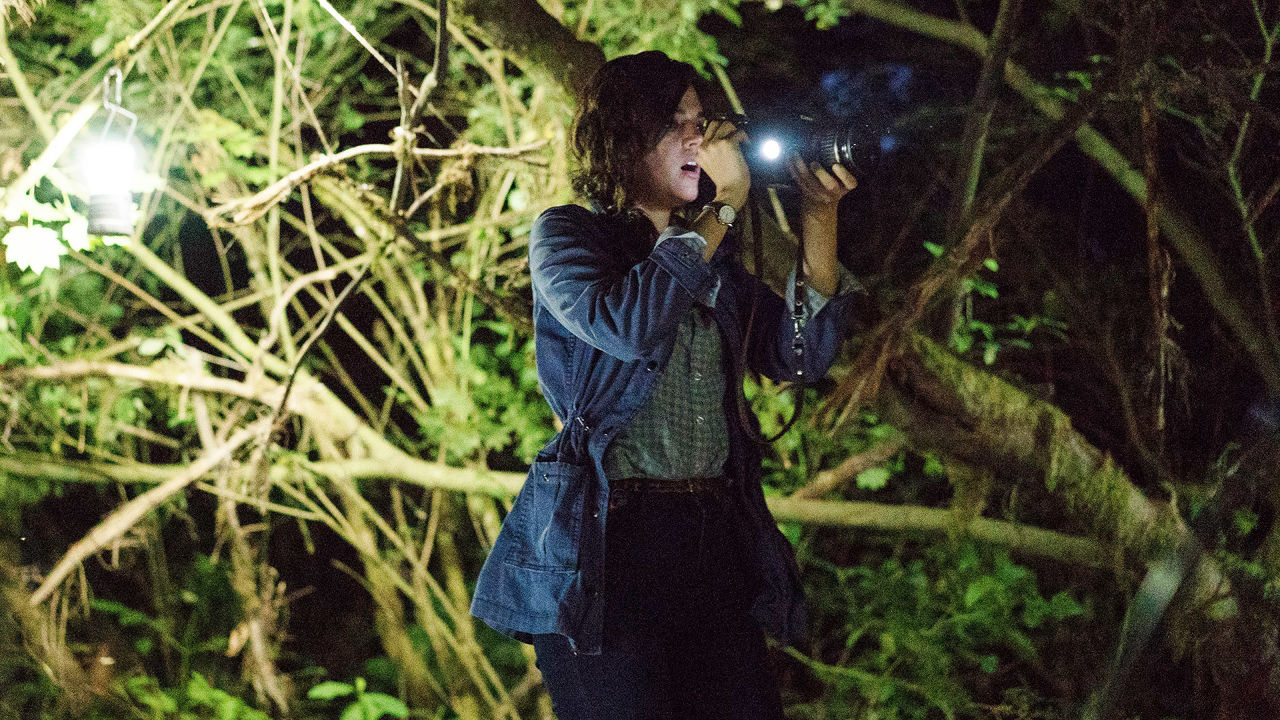
ben-affleck-accountant-images

And then there’s the moment, around two thirds in, where the movie decides to grind to a halt and spend around ten minutes detailing a back story involving King that nearly kills the movie’s momentum. And then there’s the final showdown between Wolff and the Assassin, which veers off into left field territory – unless you’ve been paying attention – and ends on an emotional note you won’t have seen coming. All of which adds up to a movie which is, appropriately or not, somewhat schizophrenic in places, or perhaps put more plainly, deliberately uneven.

In the end, The Accountant is yet another example of action movie making that only takes risks with its central character, and only when it doesn’t get in the way of his being an extremely talented assassin. The scenes where we witness Wolff grow from easily agitated pre-teen to kick-ass teenager thanks to his tough-as-nails father are weirdly compelling (when they shouldn’t be), and the action sequences are imaginative and well choreographed for the most part, even if they also lack the necessary “wow” factor that should have viewers hoping for more. By the end it’s clear that the producers are hoping that further on down the line there’ll be more adventures for Christian Wolff as he goes about writing other wrongs with his pocket protector and his high-calibre arsenal.

Rating: 7/10 – worth seeing for another committed performance from Affleck that elevates the otherwise pedestrian nature of the material on offer, The Accountant does its best to be more than a standard Hollywood action thriller, but can’t quite pull it off; with O’Connor handling things well from behind the camera, but without injecting too much pizzazz into proceedings, the movie ends up being exactly the kind of Saturday night choice that goes perfectly with pizza and beer.

Share this:

  • Share on X (Opens in new window) X
  • Share on Facebook (Opens in new window) Facebook
  • More
  • Print (Opens in new window) Print
  • Email a link to a friend (Opens in new window) Email
Like Loading...

Arrival (2016)

10 Thursday Nov 2016

Posted by dullwood68 in Movies

≈ 4 Comments

Tags

Aliens, Amy Adams, China, Denis Villeneuve, Drama, Forest Whitaker, Jeremy Renner, Literary adaptation, Michael Stuhlbarg, Montana, Mystery, Review, Sci-fi, Shells, Thriller, Translation

arrival_ver4

D: Denis Villeneuve / 116m

Cast: Amy Adams, Jeremy Renner, Forest Whitaker, Michael Stuhlbarg, Mark O’Brien, Tzi Ma

Louise Banks (Adams) is a linguistics professor whose private life has recently been shattered by the break up of her marriage and the death of her daughter from cancer. Getting by but still grieving, Louise is as unprepared as the rest of the world when twelve huge spaceships suddenly appear one day in different locations around the globe. Soon, though, she is approached by the US military – in the form of Colonel G.T. Weber (Whitaker) – to aid in communicating with the aliens on board the ship that hovers over American soil in Montana. The best in her field in terms of linguistics and translations, Louise joins Weber’s team along with mathematician and scientist Ian Donnelly (Renner).

In Montana, Louise and Ian are advised that the most important question is, What do they want? Later, they ascend into the ship – called a “shell” by the military – and have their first encounter with the aliens. A symbol is written on the screen that separates the aliens in their atmosphere from Louise and Ian et al in theirs. Using it as the basis of the aliens’ language, Louise soon deduces that the symbol doesn’t just translate into one word, but into many. From then on she is able to determine much more of how the aliens communicate. Meanwhile, at the other arrival sites, particularly in China, suspicion and distrust of the aliens’ intensions are leading to veiled threats of attack on the shells, while violent unrest occurs around the globe.

arrival-teaser-trailer

Louise begins to have visions of a little girl, who in various ways helps her to understand more of what the aliens are communicating. When she translates a symbol and the meaning is “Offer weapon”, it causes the CIA agent in charge of the whole operation in Montana, Halpern (Stuhlbarg), to order an evacuation. But Louise insists they should stay, to keep faith with the aliens, and to complete the mission to find out why they are here. She returns to the shell by herself, and by coming into direct contact with the aliens, Louise learns why they have arrived, and why she’s having visions of the little girl, a revelation that has a profound effect not just on her, but on her understanding of her marriage and also, her daughter’s death.
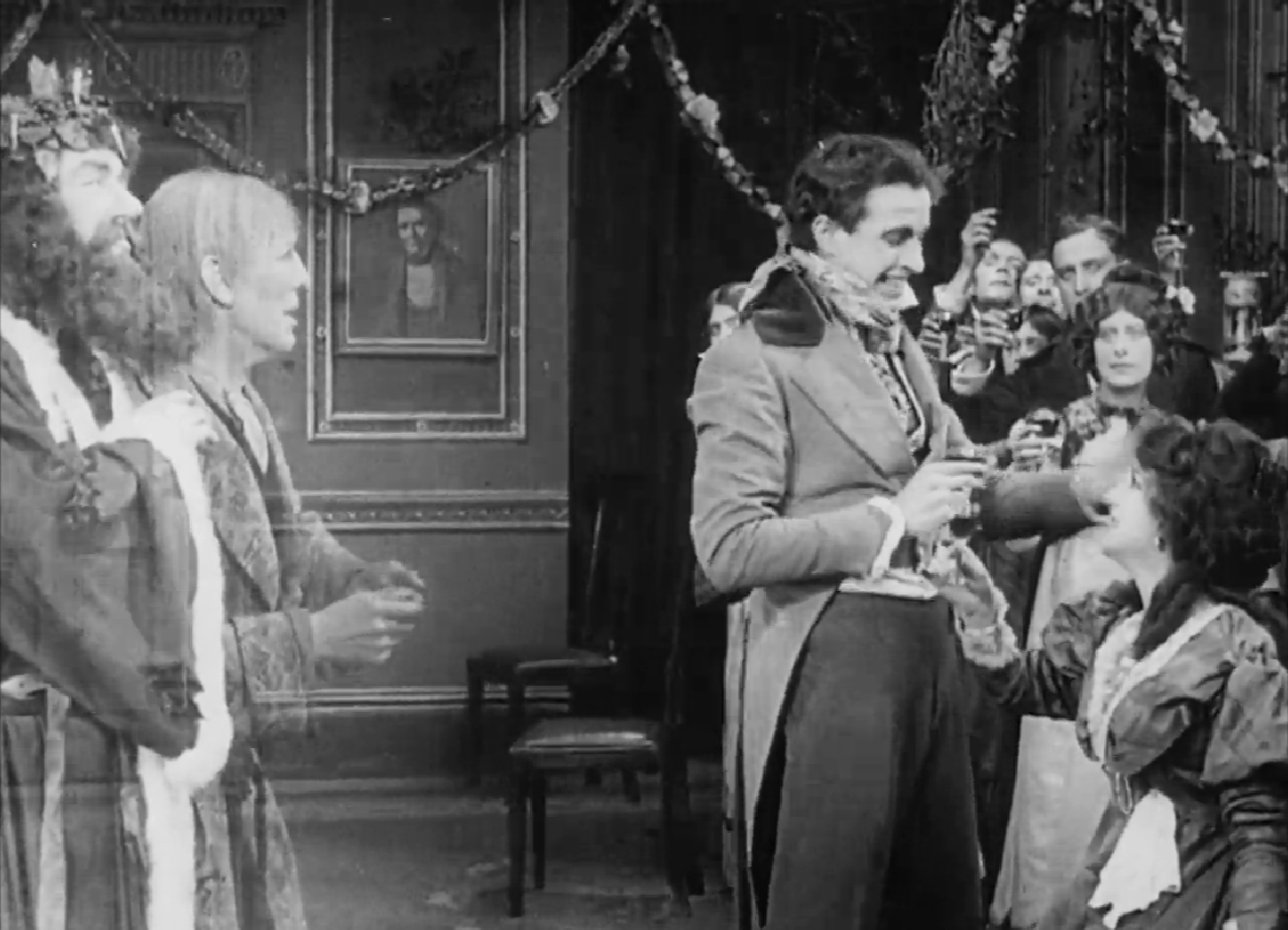
There’s a dearth of good, old-fashioned, serious sci-fi in the movies right now – in fact, it’s been that way for some time – but Arrival is here to redress the balance. Playing with notions of time and memory and the nature of happiness, the movie is a thought-provoking treatise on what it is to mourn a life while discovering at the same time that that life has much more to offer even though the person has passed away. It’s a bit of a mindbender at times, but Villeneuve confidently handles the narrative twists and turns of Eric Heisserer’s script – itself an adaptation of the short story Story of Your Life by Ted Chiang and heavily reworked by Villeneuve himself – so that the viewer can still grasp the subtleties of what’s happening and why.

arrival-movie-4-e1471529984165

Along the way, said viewer is treated to an intelligent story and plot that packs an unexpectedly emotional wallop towards the end, as the various strands of Louise’s life are brought into sharp relief, and the aliens’ reason for visiting Earth is revealed. Louise herself is brought to life by Adams in a performance that acts as a reminder that, away from the DC Extended Universe, she is still one of today’s finest actresses. As the emotionally distant Louise, Adams shows just how removed she is from everything going on around her – at first. But as Louise slowly begins to unravel the complex patterns of the aliens’ language, she begins to reconnect with herself and everyone around her; and particularly Ian. Adams is the movie’s chief ingredient for success, her succinct, subtle portrayal of Louise proving layered and intuitive, and deeply moving come the movie’s end.

But while Adams’ performance is the bedrock upon which the movie supports itself, there’s so much more to recommend it. Though she plays the central character, and the rest of the cast have essentially supporting roles, the likes of Renner and Whitaker still manage to contribute well-rounded and credible characters that are necessary to the plot, while even Stuhlbarg’s paranoid (and potentially one-note) CIA agent fits in to the overall set up without feeling extraneous or unnecessarily villainous. Villeneuve also allows each character to display their own fears and concerns, and a corresponding sense of wonder, at being in such close proximity to the aliens and their craft.

Visually, the movie is a gloomy-looking, though consistently well-thought out viewing experience, with Villeneuve choosing to dial down on any bright colours and in doing so, adding texture to the narrative. The aliens operate in a cloudy grey environment and “write” using appendages that produce a black inky substance that is surprisingly vibrant, while at the military base, the various comms rooms and private quarters also lack for vivid colours, with only computer screens providing any brightness to offset the gloom. Villeneuve is making a conscious choice here: the bleak, low-lit hive of activity reflecting the interior of the aliens’ ship, as if to insinuate that there is a greater level of connection between “us” and “them” than is immediately apparent.

maxresdefault

The visuals are more than ably supported by a distinctive sound design that unnerves far more than it reassures, and which also includes a suitably eerie and mournful score by Jóhann Jóhannsson, Villeneuve’s go-to composer. Keeping the viewer on edge as Louise deconstructs the alien message, the visuals and the sound design combine to create a haunting, other-worldly feel that is not only entirely appropriate given the nature of the story, but also serves to highlight the idea that if we aren’t alone in the universe, then ideas of melody and tone may still hold but are likely to be interpreted in completely different ways.

Ultimately though, it’s Villeneuve’s confident handling of the material that impresses the most. He’s not afraid to take his time in telling the story, and doesn’t drip-feed all the relevant information at regular points in the narrative. Instead he lets the story unfold at its own pace, revealing key plot points quietly and without the usual fanfare required in other sci-fi movies, and the result is a measured, affecting tale that contains a major twist, one that perhaps for the first time, is allowed to play out over much of the movie’s running time, rather than just suddenly and without warning, and which in its simplicity and emotional effectiveness, elevates Arrival over and above any other sci-fi movie you’re likely to see this year (and probably for some time to come).

Rating: 9/10 – a beautifully constructed movie with a clever, intelligent script, superb cinematography from Bradford Young, an intense soundtrack, heartfelt performances and all held together by a director at the top of his game, Arrival is a must-see movie that is less about why the aliens are here, and more about why we are here; quite simply, one of this year’s best movies.

Share this:

  • Share on X (Opens in new window) X
  • Share on Facebook (Opens in new window) Facebook
  • More
  • Print (Opens in new window) Print
  • Email a link to a friend (Opens in new window) Email
Like Loading...
← Older posts

Blog Stats

  • 508,562 hits

Recent Posts

  • 10 Reasons to Remember Bibi Andersson (1935-2019)
  • Fantasia (1940)
  • Dances With Wolves (1990) – The Special Edition
  • Kiss of the Spider Woman (1985)
  • The Three Musketeers (1973)

Top Posts & Pages

  • The White Orchid (2018)
    The White Orchid (2018)
  • Touchy Feely (2013)
    Touchy Feely (2013)
  • Speak (2004)
    Speak (2004)
  • Mark Felt: The Man Who Brought Down the White House (2017)
    Mark Felt: The Man Who Brought Down the White House (2017)
  • Pressed (2011)
    Pressed (2011)
  • Introduction
    Introduction
  • Cold Lunch (2008)
    Cold Lunch (2008)
  • Cardboard Boxer (2016)
    Cardboard Boxer (2016)
  • Short Cuts (1993)
    Short Cuts (1993)
  • The Corpse of Anna Fritz (2015)
    The Corpse of Anna Fritz (2015)
Follow thedullwoodexperiment on WordPress.com

Blogs I Follow

  • Rubbish Talk
  • Film 4 Fan
  • Fast Film Reviews
  • The Film Blog
  • All Things Movies UK
  • Interpreting the Stars
  • Let's Go To The Movies
  • Movie Reviews 101
  • TMI News
  • Dan the Man's Movie Reviews
  • Film History
  • Jordan and Eddie (The Movie Guys)

Archives

  • April 2019 (13)
  • March 2019 (28)
  • February 2019 (28)
  • January 2019 (32)
  • December 2018 (28)
  • November 2018 (30)
  • October 2018 (29)
  • September 2018 (29)
  • August 2018 (29)
  • July 2018 (30)
  • June 2018 (28)
  • May 2018 (24)
  • April 2018 (21)
  • March 2018 (31)
  • February 2018 (25)
  • January 2018 (30)
  • December 2017 (30)
  • November 2017 (27)
  • October 2017 (27)
  • September 2017 (26)
  • August 2017 (32)
  • July 2017 (32)
  • June 2017 (30)
  • May 2017 (29)
  • April 2017 (29)
  • March 2017 (30)
  • February 2017 (27)
  • January 2017 (32)
  • December 2016 (30)
  • November 2016 (28)
  • October 2016 (30)
  • September 2016 (27)
  • August 2016 (30)
  • July 2016 (30)
  • June 2016 (31)
  • May 2016 (34)
  • April 2016 (30)
  • March 2016 (30)
  • February 2016 (28)
  • January 2016 (35)
  • December 2015 (34)
  • November 2015 (31)
  • October 2015 (31)
  • September 2015 (34)
  • August 2015 (31)
  • July 2015 (33)
  • June 2015 (12)
  • May 2015 (31)
  • April 2015 (32)
  • March 2015 (30)
  • February 2015 (37)
  • January 2015 (39)
  • December 2014 (34)
  • November 2014 (34)
  • October 2014 (36)
  • September 2014 (25)
  • August 2014 (29)
  • July 2014 (29)
  • June 2014 (28)
  • May 2014 (23)
  • April 2014 (21)
  • March 2014 (42)
  • February 2014 (38)
  • January 2014 (29)
  • December 2013 (28)
  • November 2013 (34)
  • October 2013 (4)

Blog at WordPress.com.

Rubbish Talk

Film 4 Fan

A Movie Blog

Fast Film Reviews

The Film Blog

The official blog of everything in film

All Things Movies UK

Movie Reviews and Original Articles

Interpreting the Stars

Dave Examines Movies

Let's Go To The Movies

Film and Theatre Lover!

Movie Reviews 101

Daily Movie Reviews

TMI News

Latest weather, crime and breaking news

Dan the Man's Movie Reviews

All my aimless thoughts, ideas, and ramblings, all packed into one site!

Film History

Telling the story of film

Jordan and Eddie (The Movie Guys)

Movie Reviews & Ramblings from an Australian Based Film Fan

Privacy & Cookies: This site uses cookies. By continuing to use this website, you agree to their use.
To find out more, including how to control cookies, see here: Cookie Policy
  • Subscribe Subscribed
    • thedullwoodexperiment
    • Join 481 other subscribers
    • Already have a WordPress.com account? Log in now.
    • thedullwoodexperiment
    • Subscribe Subscribed
    • Sign up
    • Log in
    • Report this content
    • View site in Reader
    • Manage subscriptions
    • Collapse this bar
 

Loading Comments...
 

    %d